 Skip to content
Absolutely. You can bring back that lustrous, like-new shine to your hardwood floors without the dust, chaos, and disruption of a full sanding job. This process, known professionally as a screen and recoat, is a fantastic and budget-friendly way to erase surface-level wear—think minor scratches and general dullness—and revive your floors in as little as one day. For homeowners in Denver looking for expert hardwood floor refinishing using an advanced UV-Cure System, this sandless method is the perfect solution.
Your Guide To Reviving Floors Without Sanding
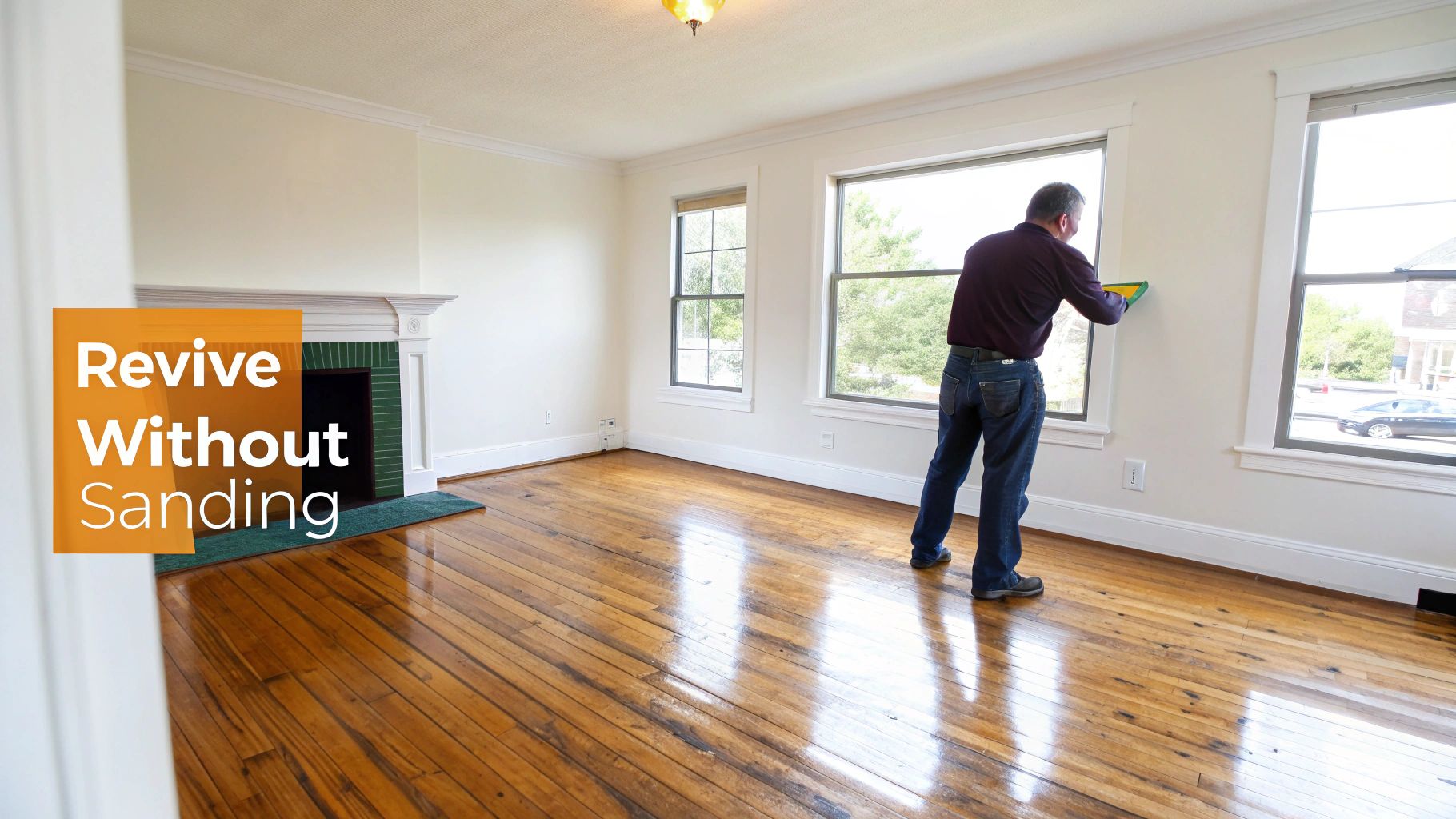
If you're looking at your hardwood floors and wishing you could turn back the clock on years of light wear, you're not alone. Many homeowners in Denver assume a huge, messy sanding project is their only option. But here’s the good news: restoring hardwood floors without sanding is a smart, efficient, and increasingly popular way to bring back their original glow.
This guide is all about the "screen and recoat" method—the professional standard for a sandless restoration. It's the perfect fix for floors suffering from surface-level issues. We're talking about those minor scratches from pets, scuffs from moving furniture, or a finish that's just lost its sheen over time in homes from Washington Park to the Highlands.
We'll walk through how this process works, when it’s the ideal choice for your Denver home, and what kind of damage really calls for a more intensive approach like full hardwood floor refinishing with our dust-free sanding and UV-Cure System.
The Rise of Sandless Hardwood Floor Refinishing in Denver
The move toward less invasive home improvement is undeniable. Homeowners are overwhelmingly choosing non-sanding methods to refresh their floors. In 2023, the National Wood Flooring Association reported that over 65% of hardwood restoration projects in major U.S. markets, including the Denver Metro Area, opted for methods like screening and recoating.
Why the shift? This approach saved homeowners an average of 45-60% compared to the cost of a full sanding job. The technique involves lightly abrading the surface with a 100-150 grit screen to remove the dulled top layer of polyurethane, which allows a fresh coat to bond perfectly without ever touching the raw wood.
What Is a Screen and Recoat, Really?
Let's clear something up: "screening" is not the same as sanding. Not even close. Instead of aggressively stripping away wood, screening is a gentle but effective abrading process. We use a professional buffer fitted with a fine-grit screen to lightly scuff the existing top layer of your floor’s finish.
This crucial step does two things at once:
- It whisks away the very top layer where all those minor scratches and dull spots live.
- It creates the perfect texture for a new coat of finish to grab onto, ensuring a durable, long-lasting result.
After a deep cleaning to remove every last particle, we apply a fresh, new coat of high-quality finish. At J.R. Hardwood Floor Refinishing & Cleaning, we take this a step further with our innovative UV-Cure System. This machine uses a specialized light to instantly harden the new finish, which means no waiting days for it to cure. You can move furniture back and walk on your floors the very same day.
For a detailed look at how this fits in with other services, check out our guide on hardwood floor restoration explained.
Expert Insight: The biggest win with a screen and recoat is preservation. Because we aren't removing any wood, you can do this multiple times over the life of your floors. This is a game-changer for the beautiful historic homes in Denver, allowing you to maintain their original character for decades.
Is Sandless Restoration Right For Your Floors?
So, how do you know if a screen and recoat is the right call for your floors, or if you need to bring in the big guns with a full sanding? It all comes down to the type of wear and tear. This quick table should help you figure it out.
| Floor Condition | Sandless Method (Screen & Recoat) | Full Sanding & Refinishing |
|---|---|---|
| Wear & Tear | Surface scratches, dull finish, light scuffs. | Deep gouges, widespread discoloration, water damage. |
| Wood Exposure | No bare wood is visible. The finish is intact. | The finish is worn through to the bare wood in spots. |
| Color Change | You want to keep the existing wood color. | You want to change the stain color of the wood. |
| Time & Disruption | 1 day, minimal disruption, no dust. | 3-5 days, significant disruption and dust. |
| Best For | Routine maintenance to keep floors looking great. | Major restoration for heavily damaged floors. |
Ultimately, if your floors are in decent shape but have lost their sparkle, a sandless restoration is your best bet. It’s a powerful tool for maintaining the beauty and value of your hardwood floors without committing to a full-scale renovation.
The Sandless Hardwood Floor Refinishing Process In Action
So, how does the magic actually happen? Let's pull back the curtain on what we do when we arrive to restore your hardwood floors without sanding. It’s a meticulous process we’ve perfected over the years, designed for maximum impact with minimal disruption. The goal is to transform your dull, tired floors into a dazzling centerpiece for your Denver home, fast.
The whole journey starts not with a tool, but with a conversation and a careful look at your floors. Whether you're in a modern Highlands Ranch home or a historic Denver bungalow, every floor has its own story. Our first step is always a thorough inspection to confirm that a screen and recoat is the right move, making sure your floor's condition is suitable for this sandless method.
The Foundation: A Crucial Deep Cleaning
Once we've agreed your floors are a perfect candidate, we get down to what is arguably the most critical prep step: a professional-grade deep cleaning. This isn't your average mopping. We use specialized solutions and equipment to hunt down and eliminate any contaminants that could stop the new finish from sticking.
This includes getting rid of:
- Household Oils: Residue from cooking, skin, and pets that creates an invisible barrier.
- Cleaning Product Buildup: Many store-bought cleaners leave behind waxy films that cause finish adhesion to fail.
- Hidden Grime: Dirt and dust that have been ground into the existing finish over years of foot traffic.
If we even suspect the presence of wax or acrylic polishes—common culprits for finish failure—we’ll perform a specialized wax removal first. Trying to coat over these substances is a recipe for disaster, so we make absolutely sure the surface is pristine.
Screening: The Gentle Art of Abrasion
Next up is the main event: the "screening." It’s so important to understand this is not sanding. We use a professional-grade buffer fitted with a fine-grit screen, which is basically a mesh pad designed to lightly abrade the surface. This gentle buffing process scuffs up the existing polyurethane topcoat, creating a uniform, slightly rough texture.
This one step accomplishes two essential goals at once. First, it effectively erases those surface-level issues like light scuffs and the hazy film that made your floors look dull in the first place. Second, and more importantly, it creates a perfect mechanical bond for the new finish to grip onto. Our dust-free system captures nearly all the fine particles created during this step, keeping your home clean and your air clear.
A common misconception is that being more aggressive is better. In reality, the success of a recoat lies in precision. We're only touching the very top layer of the finish, preserving the wood and stain underneath completely. This is what makes the process repeatable and extends the life of your original floors.
Applying The Final, Transformative Coat
With the floor perfectly prepped, it's time for the real transformation. We apply a fresh, even coat of high-quality, water-based finish. This is where you get to choose the level of protection that best fits your lifestyle. We’ll walk you through our different packages, from the excellent wear resistance of our Silver Traffic Plus to the premium, scratch-resistant Gold and Platinum Traffic Plus options.
For homeowners in Denver looking for the ultimate in convenience and durability, our Instant UV-Curable Finish is the clear winner. After applying this special finish, we use a portable UV light machine to instantly cure it, hardening the polyurethane in a matter of seconds.
This advanced UV-Cure system means:
- No Waiting: You can move furniture back and walk on your floors the very same day.
- No Odor: The process is virtually odorless, unlike traditional finishes that can linger for days.
- Maximum Durability: The finish reaches its maximum hardness immediately, providing superior protection from day one.
From the initial assessment to the final walk-through, this detailed process ensures a flawless, durable result every time. For a deeper dive into the specific steps we take, you might be interested in our hardwood screen and recoat workflow guide. This commitment to the process is how we achieve that like-new look without all the dust and downtime of a full sanding job.
Knowing When a Screen and Recoat is Your Best Option for Hardwood Floor Refinishing
Trying to decide on the right game plan for your floors can feel like a big deal, but figuring out if you're a candidate for a sandless restoration is actually pretty straightforward. It all boils down to one thing: correctly assessing the type of wear and tear your floors have seen. A screen and recoat is the perfect fix for floors with surface-level problems, not deep-seated damage.
Think about a gorgeous red oak floor in a Littleton home that's lost its glow from years of happy, bustling family life. Or maybe you're a property manager in Aurora, prepping a rental for new tenants and the floors just need a professional lift to look their best. In scenarios like these, a screen and recoat is exactly what the doctor ordered. It's designed to handle cosmetic issues and bring back that original luster and protection.
Green Flags For A Screen And Recoat
If you walk across your floors and spot any of the following, chances are you're an excellent candidate for this quick, dust-free service. This method only deals with the top layer of the finish—we never even touch the wood itself.
- Light Surface Scratches: We're talking about those fine, wispy scratches from pet nails or sliding chairs that haven't actually broken through the finish. If you can run your fingernail over them and it doesn't catch, a recoat will likely make them disappear.
- A Dull or Hazy Look: Over time, foot traffic scuffs up the protective polyurethane, creating a dull, lifeless appearance that no amount of cleaning can fix. A fresh topcoat restores that deep, crystal-clear shine.
- An Intact but Tired Finish: The original protective layer is still there—no peeling, flaking, or bare spots showing through—it just looks worn out. This is the absolute prime condition for a successful recoat.
We recently restored a red oak floor in Denver's classic Wash Park neighborhood. The floors were structurally sound but had gone hazy from years of use. The homeowner was adamant about avoiding a full sanding project. A screen and recoat, supercharged with our Instant UV-Cure System, brought back the floor’s original warmth and shine in just one day. It was a perfect example of this method's power.
Red Flags That Point To Full Sanding
On the other hand, some types of damage are just too deep for a new coat of finish to fix. In fact, trying to recoat floors with these issues will only make the problems more obvious, not hide them. This is when our full, dust-free sanding and refinishing service is the only real solution.
Keep an eye out for these clear signs:
- Deep Gouges and Scratches: If you can feel the scratch with your fingernail or see the raw wood underneath, the damage has gone straight through the finish. A screen and recoat won't fill these in.
- Dark Stains or Water Damage: That black or gray discoloration from pet accidents or water spills has soaked right into the wood fibers. The only way to get it out is by sanding down to a fresh, clean layer of wood.
- Peeling or Flaking Finish: If the polyurethane is chipping away and exposing bare wood, it means the original finish has failed. You can't put a new coat on top of an unstable surface; it just won't stick.
- You Want to Change the Color: A screen and recoat is like adding a new clear coat. If you want to transform your golden oak floors to a dark walnut, you’ll need a full sanding to remove the old stain and apply a new one.
Getting this distinction right is the single most important step to getting a flawless result that actually lasts. If you're still on the fence, our guide on the top 5 signs your hardwood floors need refinishing can offer even more clarity.
A Quick Professional Test: A simple way to check your floor's finish is the water drop test. Place a single drop of water on a high-traffic area. If it beads up nicely, your finish is probably intact and a great candidate for a recoat. If it soaks into the wood almost immediately, the finish has worn away, and a full sanding is most likely in your future.
Why Smart Homeowners Are Choosing to Screen And Recoat
Let's be honest. The idea of a full hardwood floor sanding project can be a nightmare. It means days of dust, disruption, and your house feeling more like a construction zone than a home. But what if you could get that "wow" factor back without all the chaos?
That's where a screen and recoat comes in. For savvy Denver homeowners, this isn't just a quick fix; it’s a smart, strategic move that fits a busy lifestyle. It's about getting stunning results without turning your life upside down.
The biggest win here is speed. A traditional sanding job can easily take your main living areas out of commission for the better part of a week. In sharp contrast, a screen and recoat—especially when we bring in our advanced UV-Cure System—is typically done in a single day. You can literally leave for work in the morning and come home to beautifully refreshed floors.
This efficiency translates directly to your wallet. By skipping the intense labor and time of a full sanding, a screen and recoat often costs less than half the price of a traditional refinish. It’s a high-impact upgrade without the hefty investment.
A Cleaner, Healthier Home Environment
One of the top reasons people put off floor refinishing is the mess. Traditional sanding is notorious for sending a fine layer of wood dust into every nook and cranny. For families with allergies, young kids, or pets, that's a serious concern.
Our modern screening process is virtually dust-free. We use specialized equipment designed for dust containment, so the air in your home stays clean and healthy from start to finish. This is a core part of our Denver hardwood floor refinishing service, whether we're sanding or not.
This flowchart gives you a good visual for when a screen and recoat is the right call.
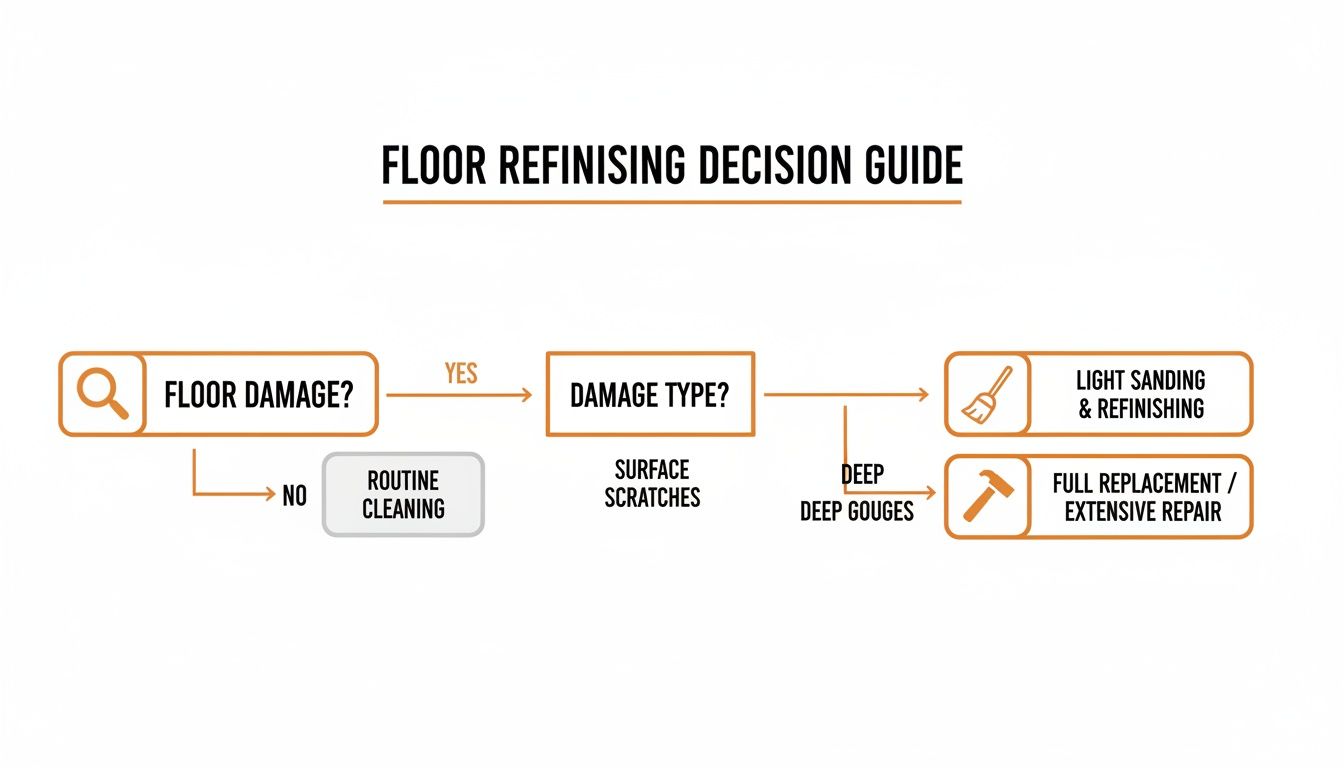
As you can see, the decision really boils down to one simple question: Is the damage just on the surface finish, or has it gotten down to the bare wood?
The Power of Preservation
Maybe the most important long-term benefit is what you don't do: remove wood. A full sanding literally shaves off a thin layer of your floor's life. A screen and recoat only abrades the top layer of polyurethane finish, leaving the actual wood untouched.
This is a game-changer, especially for historic homes in places like Cherry Hills Village where preserving the original floors is paramount. It’s also the only safe way to refresh most engineered hardwood floors, which have a very thin top layer of real wood that can’t handle aggressive sanding.
Screen & Recoat vs. Full Sanding: A Quick Comparison
Deciding between a light refresh and a full overhaul can feel tricky. This table breaks down the key differences to help you see which option is the right fit for your floors, your budget, and your schedule.
| Feature | Screen & Recoat (Sandless) | Full Sanding & Refinishing |
|---|---|---|
| Ideal For | Light scratches, dull finish, routine maintenance | Deep gouges, water stains, color change, heavy wear |
| Project Time | 1 day | 3-5 days (sanding, staining, multiple coats, drying time) |
| Cost | Less than 50% of full sanding | Higher initial investment |
| Dust & Mess | Virtually dust-free | Significant dust (even with containment systems) |
| Wood Removed | Zero. Preserves 100% of the wood | Removes 1/32-inch of wood with each sanding |
| Best Use Case | Maintaining existing floors every 3-5 years | Restoring badly damaged floors or for a complete style makeover |
Ultimately, the choice comes down to preservation versus restoration. A screen and recoat is all about proactive care, while a full sanding is a more intensive, corrective measure.
Key Takeaway: Every time you sand a floor, you remove a portion of its life. Restoring hardwood floors without sanding adds protection and shine while keeping the original wood completely intact, maximizing its lifespan for decades to come.
By choosing a screen and recoat, you’re not just getting a beautiful finish—you’re making a smart, forward-thinking choice that protects your investment. Dive deeper into the benefits of floor resurfacing in Denver on our blog. It's the fast, affordable, and clean solution that keeps your floors looking incredible for years.
Keeping Your Restored Floors Looking New
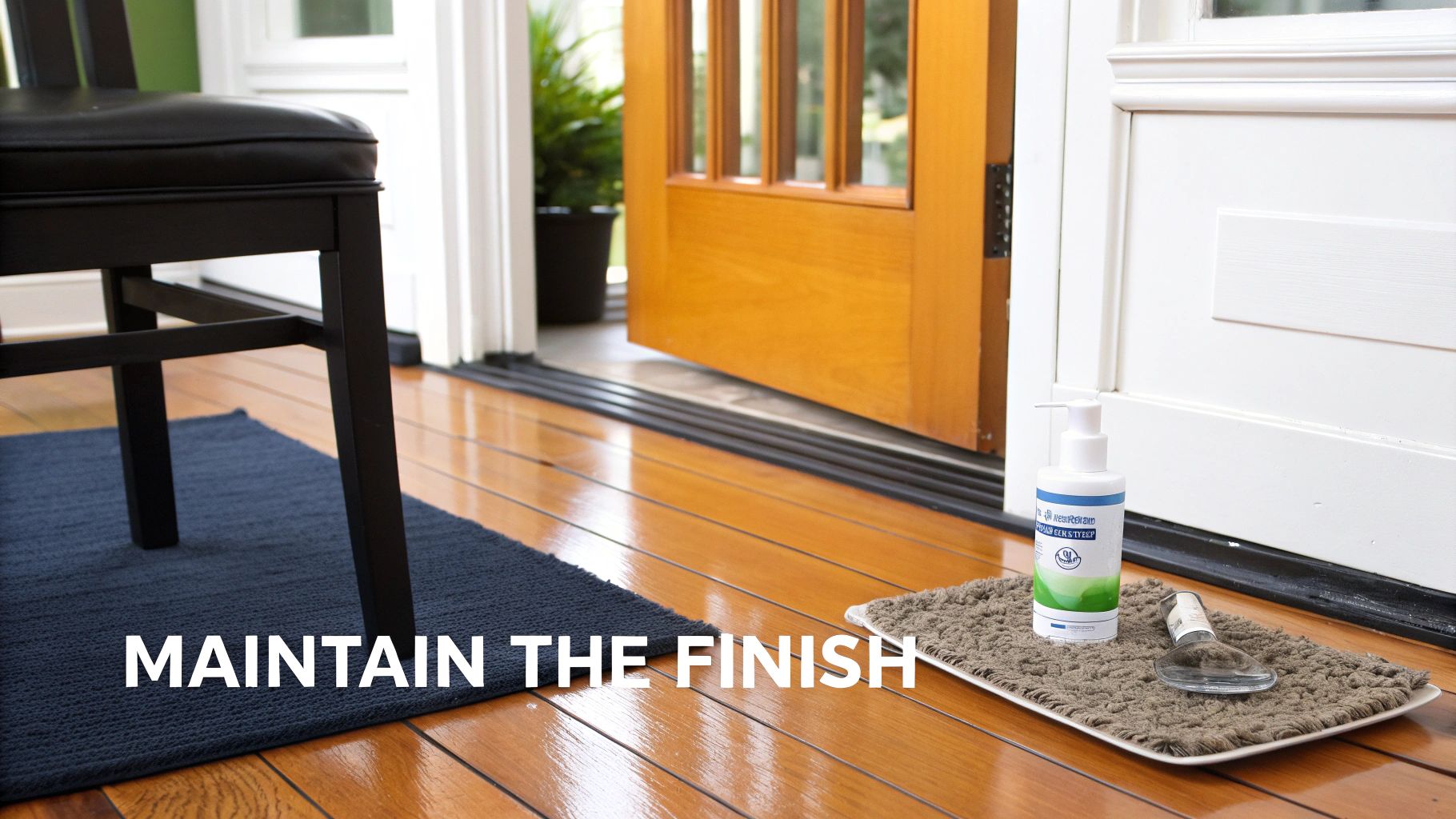
You did it. Your floors are beautiful again, and that fresh finish is a major investment in your home. So, how do you keep it looking that way? Proper, consistent care is everything, especially after using a non-sanding method where the new topcoat is your primary line of defense.
Here in Colorado, the dry climate can be tough on wood, so staying on top of maintenance is non-negotiable. The goal is simple: protect that new finish. A few smart habits will go a long way in keeping that just-recoated luster for years.
Your Essential Cleaning Routine
Forget what you might have heard about old-school cleaning methods. Many common household products can actually strip and dull your brand-new finish. A simple, modern approach is all you need.
- Sweep or Dust Mop Regularly: This is your daily or every-other-day task. Grab a soft-bristle broom or a microfiber dust mop to get rid of dust, pet hair, and tiny debris. These little particles are what cause micro-scratches over time.
- Use the Right Cleaner: When it's time to mop, your choice of cleaner is critical. Stick exclusively to a pH-neutral hardwood floor cleaner. These are engineered to clean without eating away at the protective polyurethane finish.
- Damp Mopping Only: Never, ever soak your floors. Just lightly mist the cleaner onto a small area (or directly onto a microfiber mop head) and wipe it clean. The floor should air-dry in a minute or two.
Critical Warning: Stay away from vinegar, oil soaps, ammonia-based cleaners, or steam mops. We see it all the time—these products are far too harsh. They will absolutely break down the finish, leaving it hazy, dull, and vulnerable to damage.
Preventing Damage Before It Happens
Honestly, the best maintenance is stopping the damage before it even starts. These small adjustments will make a massive difference in how long your finish lasts.
- Felt Pads are Non-Negotiable: Every single piece of furniture that touches the floor—chairs, tables, sofas, you name it—needs high-quality felt pads on its feet. Check them every few months and replace them when they get worn or dirty.
- Mats at Every Entrance: Think of doormats as your floor's bouncers. Put one outside and one inside each exterior door to catch the dirt, grit, and moisture that shoes track in.
- Keep Pet Nails Trimmed: We love our furry friends, but their claws can wreak havoc on a finish. Keeping your pet's nails trimmed is one of the kindest things you can do for your hardwood.
- Address Spills Immediately: Liquid is the enemy. Wipe up any spills the moment they happen with a soft, dry cloth. If you let a spill sit, it can damage the finish and potentially stain the wood itself.
For a deeper dive, check out our complete hardwood floor maintenance guide for lasting beauty.
Even with perfect care, everyday life can lead to a buildup that dulls the shine. When that happens, our professional wood floor cleaning service can safely lift away the grime and restore that fresh sparkle without harming your floor's protective layer.
Frequently Asked Questions About Sandless Refinishing in Denver
When it comes to your hardwood floors, you’ve got questions, and that's a good thing. We hear a lot of the same ones from homeowners all over the Denver area, from bustling Parker neighborhoods to quiet homes in Castle Rock. We believe in straight answers to help you make the best call for your home.
Let's clear up some of the most common queries we get about refreshing floors without all the dust and downtime.
How long does a screen and recoat last?
A professionally done screen and recoat is a solid investment that typically holds up for 3-5 years. Of course, that number really depends on your lifestyle. A busy house with kids, pets, and lots of foot traffic puts more stress on a finish than a quiet, shoes-off home. A fresh topcoat is your floor's first line of defense against all that daily action. Opting for a premium finish like our Diamond Traffic Plus with the instant UV-Cure System can significantly extend this timeframe. The real secret to longevity is consistent, proper cleaning.
Can you work on floors that have been cleaned with wax or polishes?
This is a big one. The short answer is a hard no—we absolutely cannot apply a new finish directly over floors that have been treated with products like Mop & Glo or Rejuvenate. Nothing will stick to that acrylic film, and a new coat of finish will inevitably peel and flake right off. It’s a guaranteed failure. That’s exactly why we offer a specialized wax removal service. It’s a non-negotiable first step if those products have been used. We must meticulously strip every last bit of that residue before we can apply a new, durable finish.
Will this process get rid of all my scratches?
It’s important to have the right expectations. A screen and recoat is fantastic at erasing light, surface-level scratches and scuffs—the kind of wear and tear that only sits in the top layer of polyurethane. It works wonders on floors that look hazy or dull. However, it will not fix deep gouges that have sliced through the finish and into the wood itself. A good rule of thumb: if you can feel the scratch with your fingernail, it’s probably too deep for a recoat alone. We’ll provide a totally honest assessment during your consultation and let you know if a dust-free full sanding service is the better option.
Is the UV-Cure System really worth it?
One hundred percent, yes. For any homeowner who can't afford to have their space out of commission for days, our UV-Cure System is an absolute game-changer. Your typical water-based finishes need several days to fully harden. Our advanced UV finish, on the other hand, is cured instantly with a specialized UV light. This gives you major advantages:
- Immediate Use: Move your furniture back and get back to your life the very same day.
- Maximum Durability: The finish hits its peak hardness and scratch resistance the second we're done.
- No Lingering Odors: The whole process is incredibly clean and has virtually no smell.
For busy families, commercial spaces, or anyone who values convenience and top-tier performance, our Instant UV-Curable Finish is one of the smartest moves you can make for your floors.
Homeowners in Denver trust J.R. Hardwood Floor Refinishing & Cleaning to restore the natural beauty of their hardwood floors with our dust-free sanding system and advanced UV-curable finishes. Unlike traditional methods, our UV technology cures instantly, so you can move furniture back the same day with no lingering odor or downtime. Choose the perfect refinishing service to match your needs and home traffic. Our dust-free process ensures a clean, beautiful finish every time.
📞 Phone: 720-327-1127
🌐 Website: jrhardwoodfloorrefinishingandcleaning.com
📍 Service Area: Denver, Arvada, Aurora, Boulder, Broomfield, Castle Rock, Centennial, Englewood, Highlands Ranch, Lakewood, Littleton, Parker, Thornton, Westminster, and surrounding Colorado communities.
📺 See Our Work: Watch us in action on YouTube!