 Skip to content
Pets and busy households leave their mark on every American hardwood floor, and regular care is key to preserving both beauty and value. In the heart of the Denver Metro Area, homeowners face unique challenges from active pets, outdoor debris, and fluctuating weather. Learning how to properly inspect, clean, and renew your hardwood floors helps prevent costly repairs and keeps surfaces looking fresh longer. This guide offers practical steps for maintaining resilient hardwood floors your family and pets will love.
Table of Contents
- Step 1: Inspect Hardwood Floors For Wear And Damage
- Step 2: Remove Dirt And Grime With Eco-Friendly Cleaning Methods
- Step 3: Address Scratches And Minor Imperfections With Screening
- Step 4: Apply The Optimal Finish To Renew And Protect Surfaces
- Step 5: Verify Results And Schedule Ongoing Maintenance For Durability
Quick Summary
| Key Point | Explanation |
|---|---|
| 1. Regularly Inspect Floors | Systematic checks help identify wear or damage early, reducing costly repairs and maintaining floor quality. |
| 2. Use Eco-Friendly Cleaning | Select non-toxic cleaning solutions to maintain your hardwood’s finish without harmful chemicals or excess moisture. |
| 3. Screen for Surface Imperfections | This technique refreshes floors by lightly removing scratches, preparing surfaces for a new protective finish. |
| 4. Choose the Right Finish | Selecting an appropriate finish enhances floor durability and appearance, ensuring long-lasting protection against wear. |
| 5. Create a Maintenance Calendar | Schedule regular cleanings and professional assessments to sustain floor integrity and address issues before they escalate. |
Step 1: Inspect hardwood floors for wear and damage
Inspecting your hardwood floors regularly helps you catch potential issues before they become expensive repairs. This essential maintenance routine allows you to assess surface conditions and identify areas needing professional attention.
Start by clearing the area and examining your floors systematically under good lighting conditions. Run your hand gently across the surface to feel for subtle texture changes or irregularities. Look for telltale signs of wear such as scratches, dullness, discoloration, or areas where the wood floor finish appears compromised. Pay special attention to high traffic zones like entryways, hallways, and areas near furniture.
Check for specific damage indicators including deep scratches, gouges, cupping, warping, or gaps between wood planks. Note any loose boards or sections that seem unstable. Take photos of concerning areas to track changes over time or share with professional floor specialists who can provide targeted recommendations.
Pro tip: Keep a dedicated notebook or digital file to document your floor inspections, tracking wear patterns and maintenance history for future reference and professional consultations.
Step 2: Remove dirt and grime with eco-friendly cleaning methods
Keeping your hardwood floors clean without harsh chemicals requires strategic and gentle cleaning approaches. Understanding how to remove dirt and grime while protecting your floor’s delicate finish will help maintain its beauty and longevity.
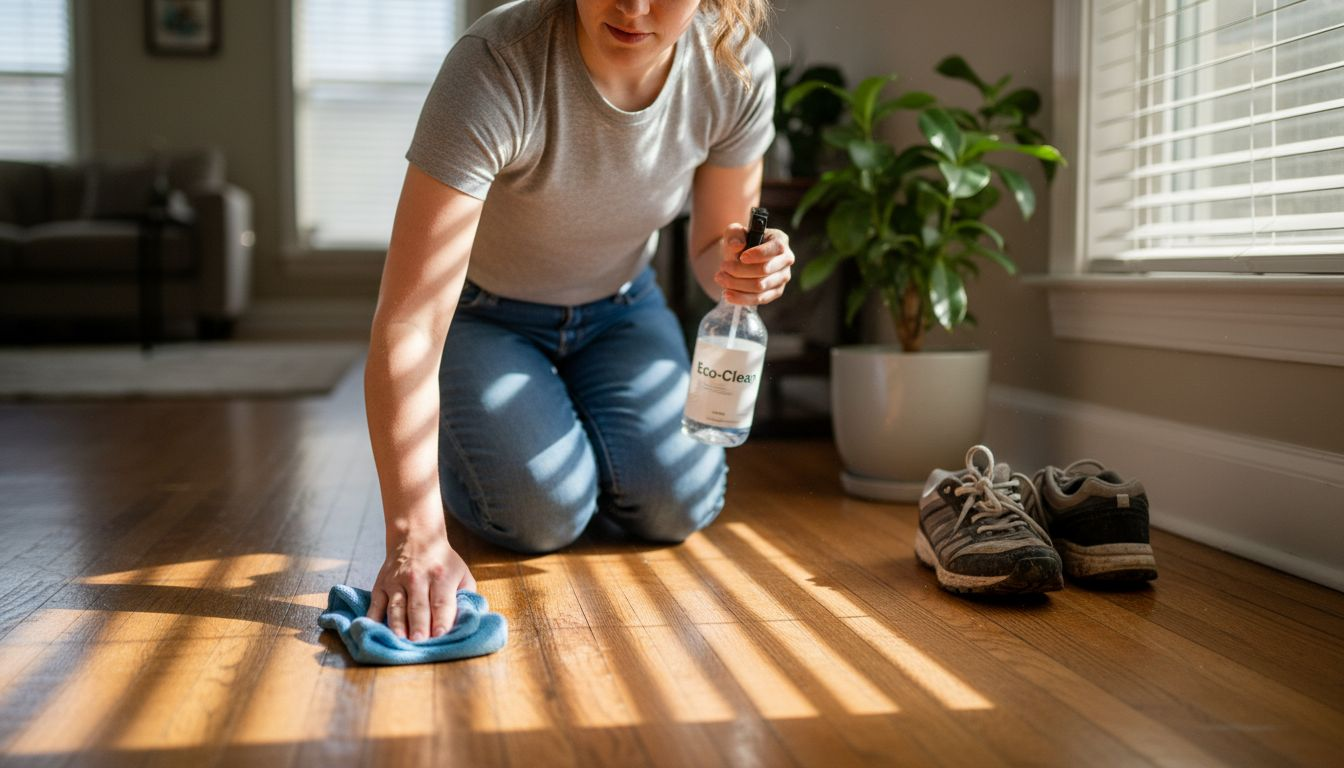
Start by selecting eco-friendly cleaning products that prioritize ingredient safety and environmental impact. Create a homemade solution using white vinegar mixed with warm water approximately one cup of vinegar per gallon of water. Always use a well wrung out microfiber mop or soft cloth to prevent excess moisture from penetrating the wood. Avoid soaking the floor or using steam cleaners which can damage the wood finish.
For stubborn dirt and grime, use gentle circular motions with a soft microfiber cloth. Wipe up spills immediately and pay extra attention to high traffic areas. Consider using natural essential oils like lemon or lavender for a fresh scent and additional antimicrobial properties. Always test any new cleaning solution on a small inconspicuous area first to ensure compatibility with your specific hardwood floor finish.
Pro tip: Invest in multiple microfiber cloths and wash them separately from other laundry to prevent cross contamination and maintain their cleaning effectiveness.
Step 3: Address scratches and minor imperfections with screening
Screening offers a gentle approach to restoring your hardwood floors aesthetic appeal by addressing surface level wear without aggressive sanding. This technique helps refresh your floor’s appearance while extending its overall lifespan.
Screening is a mechanical process that lightly abrades the wood floor’s finish surface using a specialized screening pad or buffer. This method effectively removes minor scratches and imperfections by creating a slightly rough surface that allows new finish to adhere properly. Begin by thoroughly cleaning the floor and ensuring all dust and debris are completely removed. Select an appropriate screening pad compatible with your floor’s specific finish type mild abrasiveness works best for most hardwood surfaces.
Carefully move the screening machine or buffer across the floor using smooth overlapping motions. Work in small sections and maintain consistent pressure to ensure an even treatment. The goal is to create a uniform scuffed surface that prepares your floor for a fresh protective coat. After screening, vacuum thoroughly and wipe the surface with a tack cloth to remove all screening dust before applying a new finish layer.
Pro tip: Always test your screening technique in a small inconspicuous area first to ensure the method works well with your specific hardwood floor finish.
Step 4: Apply the optimal finish to renew and protect surfaces
Applying the right finish to your hardwood floors is like giving them a protective shield that preserves their beauty and extends their lifespan. Understanding how to choose and apply the correct protective coating will help you maintain your floors for years to come.
Wood floor finishes provide essential protection against wear moisture and daily use. Select a finish that matches your specific lifestyle and floor usage water-based finishes dry quickly and have low odor, while oil-based options offer deeper penetration and richer color. Start by ensuring your floor surface is completely clean smooth and free of dust. Use a high-quality foam roller or professional applicator for even distribution and avoid overlapping strokes that can create uneven patches.
Apply multiple thin coats rather than one thick layer, allowing sufficient drying time between applications. Use long smooth strokes moving with the wood grain to create a uniform appearance. Pay special attention to high traffic areas and consider additional protective layers in those zones. Ventilate the room well and keep the area free from foot traffic during the application and curing process to ensure a flawless finish.
Here’s a comparison of common wood floor finishes to help you select the best option:
| Finish Type | Durability Level | Drying Time | Odor |
|---|---|---|---|
| Water-Based | Moderate | 2–4 hours | Low |
| Oil-Based | High | 8–24 hours | Strong |
| Hardwax Oil | Very high | 6–8 hours | Moderate |
| Aluminum Oxide | Extremely high | Not applicable | None |
Pro tip: Always purchase slightly more finish than you think you will need to ensure consistent color and coverage across your entire floor surface.
Step 5: Verify results and schedule ongoing maintenance for durability
The final stage of hardwood floor care is creating a sustainable maintenance strategy that preserves your investment and keeps your floors looking pristine. This step transforms your hard work into long lasting protection and beauty.
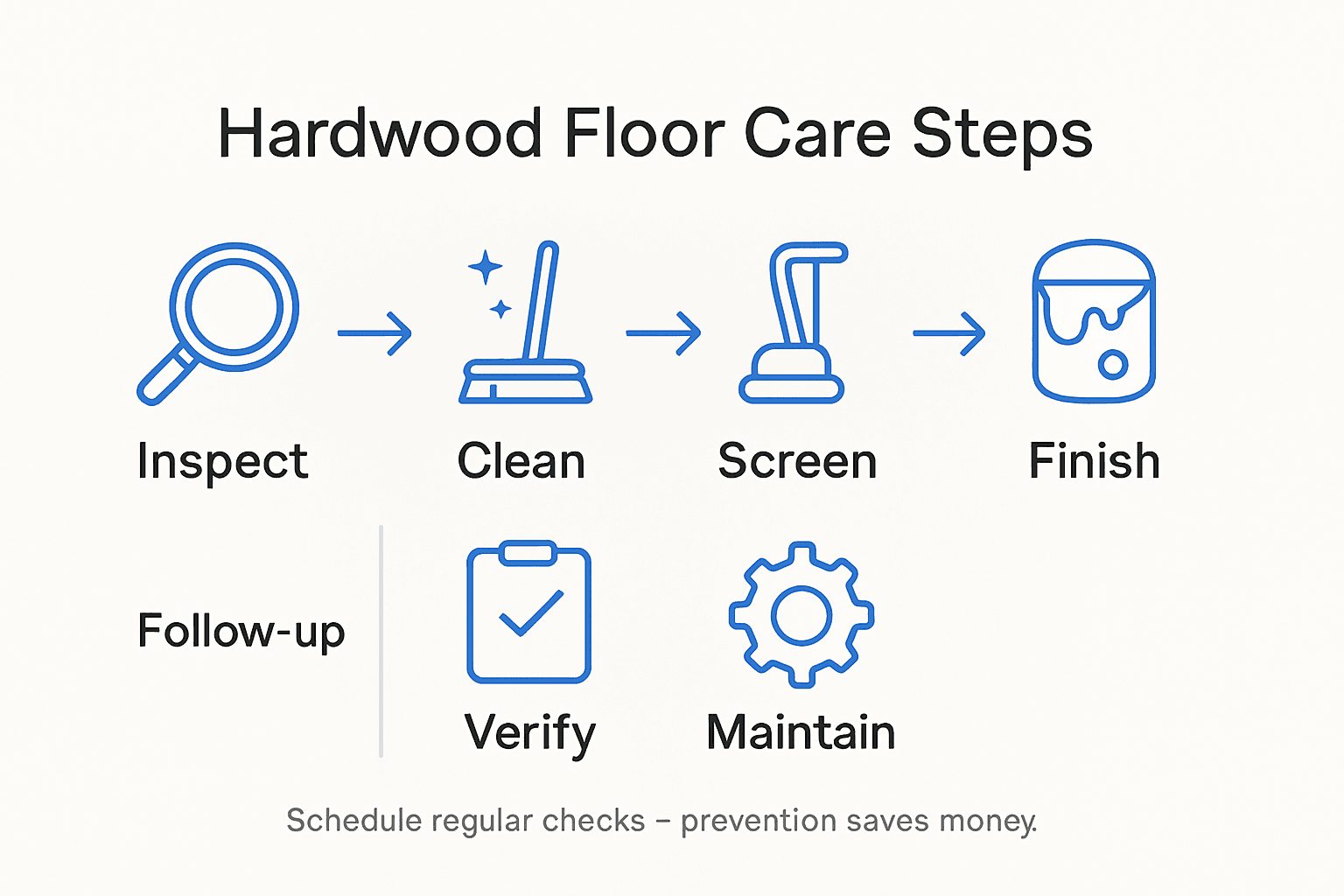
Regular inspection and personalized maintenance programs are crucial for sustaining hardwood floor durability. After completing your refinishing process, carefully examine the entire surface under bright lighting to check for consistency in color, finish, and smoothness. Look for any uneven spots, missed areas, or potential imperfections. Create a maintenance calendar that outlines routine cleaning schedules, specifying frequency of sweeping, mopping, and deep cleaning based on your specific household traffic and lifestyle.
Schedule professional floor assessments annually or biannually to catch potential issues early. During these check-ups, experts can identify early signs of wear, recommend targeted treatments, and help you adjust your maintenance approach. Pay special attention to high traffic zones, areas near entryways, and spaces beneath furniture where damage can accumulate gradually. Document your maintenance efforts by keeping a log of cleaning products used, dates of treatments, and any observations about floor condition.
This table summarizes recommended maintenance tasks to extend hardwood floor lifespan:
| Maintenance Task | Suggested Frequency | Area of Focus |
|---|---|---|
| Inspection | Monthly | High traffic and entryways |
| Gentle Cleaning | Weekly | Entire floor surface |
| Professional Assessment | Yearly or biannually | All areas, including corners |
| Finish Reapplication | Every 2–5 years | High use zones |
Pro tip: Take periodic smartphone photos of your floor from the same angles to create a visual maintenance record that helps you track subtle changes over time.
Preserve Your Hardwood Floors with Expert Care From J.R. Hardwood Floor Refinishing & Cleaning
Maintaining the lasting beauty of your hardwood floors requires careful attention to detail and the right professional support. If you are facing common challenges like scratches, dull finishes, or uneven wear captured in this Hardwood Floor Maintenance Guide, you deserve a trusted solution that understands these specific needs. Our local experts specialize in gentle screening, eco-friendly cleaning, and optimal finishing techniques that protect your floors and extend their lifespan while restoring their natural elegance.
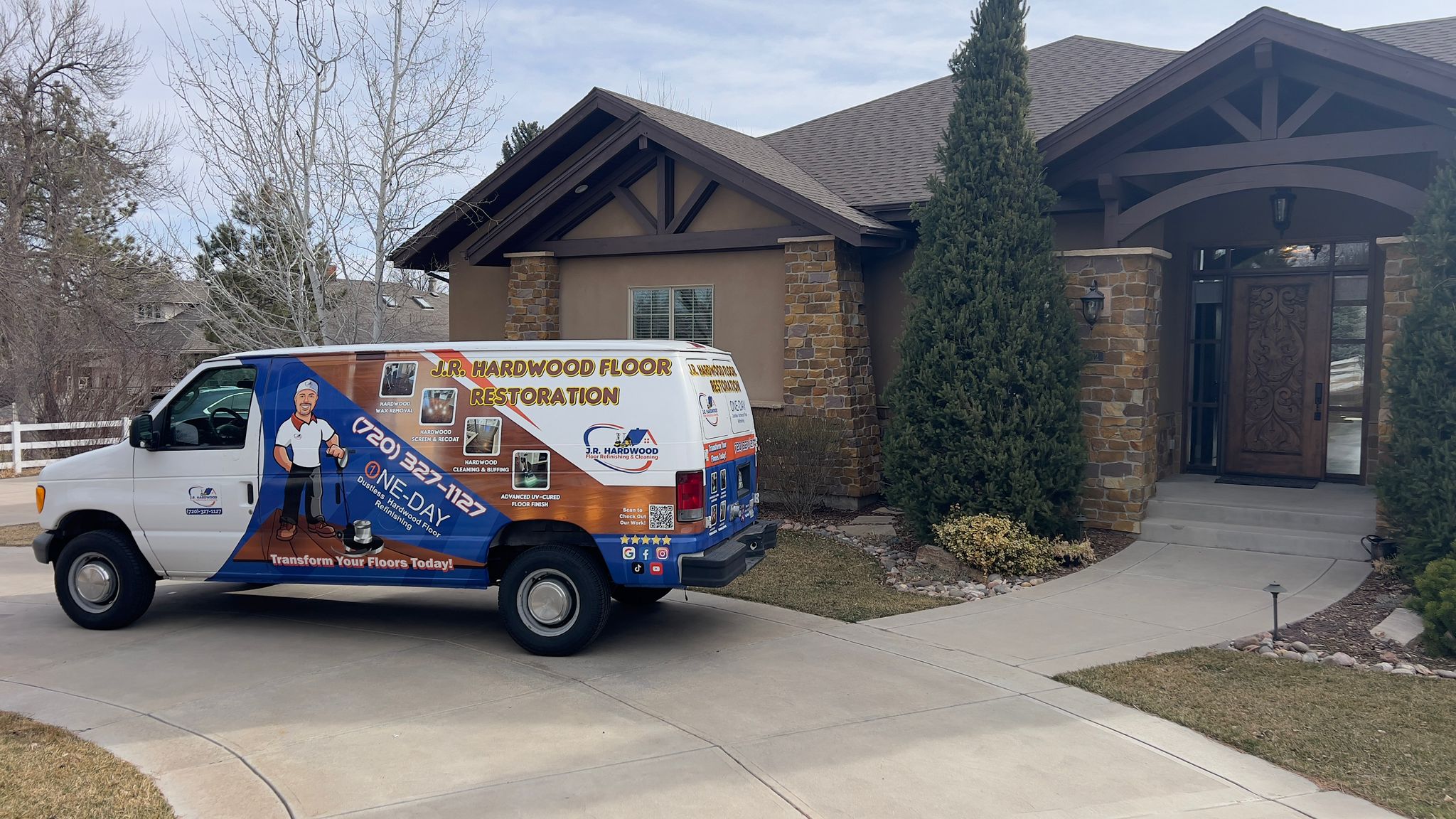
Schedule your personalized assessment today with J.R. Hardwood Floor Refinishing & Cleaning and experience the confidence of professional care tailored to your floors’ condition. Take the next step to revitalize high-traffic areas or aging wood surfaces using award-winning methods backed by 5-star reviews. Visit our Uncategorized Archives to learn more about our services and secure a free consultation based on your unique floor care challenges.
Frequently Asked Questions
How often should I inspect my hardwood floors for wear?
Regularly inspecting your hardwood floors is essential. Aim to check them monthly to catch any early signs of wear such as scratches or dullness.
What is the best way to clean hardwood floors without damaging them?
Use a well-wrung microfiber mop with a solution of one cup of white vinegar mixed with a gallon of warm water. Clean your floors weekly to maintain their shine and prevent dirt buildup.
How can I address scratches on my hardwood floors?
Consider screening as a method to address minor scratches. Lightly abrade the surface using a specialized screening pad, and follow with a new finish application to restore appearance.
How should I choose a finish for my hardwood floors?
Select a finish based on your lifestyle needs—water-based finishes dry quickly and have low odor, while oil-based options provide deeper protection. Apply multiple thin coats, allowing sufficient drying time between them.
What routine maintenance tasks should I perform for my hardwood floors?
Schedule gentle cleaning weekly and professional assessments annually to evaluate wear. Create a maintenance calendar that includes these tasks to ensure consistent care.