
If you live in Wash Park, Park Hill, Highlands Ranch, or near Sloan’s Lake, you’ve probably seen this happen. Your hardwood floors looked great when you moved in, then one winter of snow grit, one summer of dry air, and a year of pets, kids, chairs, and sun left them dull, scratched, or slightly gapped.
A lot of homeowners start searching for answers and run into the phrase highland hardwood flooring. The trouble is that the term sounds specific, but most of what you’ll find online is not written for Colorado homes. It rarely explains what matters most here. Dry air. Intense sunlight. Sharp temperature swings. Real life.
If you’re looking for Denver hardwood floor refinishing options and trying to understand whether a certain floor can handle local conditions, this guide is built for you. It also helps if you’re comparing finish systems and wondering whether a UV- Cure System is worth it for a busy household, rental, or commercial space.
Your Guide to Highland Hardwood Flooring in Denver
Search results for “highland hardwood flooring” usually point to specific companies, not to the actual questions Denver homeowners ask. There is little guidance focused on Colorado’s altitude, low humidity, and temperature swings, even though those conditions create wood movement and finishing problems that generic flooring articles miss, as noted by this overview of the search gap around Denver-specific flooring concerns.
That gap matters.
A floor that performs well in a mild, humid climate may behave very differently in Denver. Wood can shrink, boards can separate slightly, and the wrong finish can make everyday wear look worse faster. If your home has south-facing windows, big dogs, or heavy traffic from ski gear and backyard use, the details matter even more.
Why Denver homeowners get confused
Many homeowners think the label tells them everything. It does not.
With highland hardwood flooring, the name can suggest quality, style, or a collection, but it does not automatically tell you:
- What the core construction is: Solid and engineered floors do not react the same way in Colorado.
- How thick the wear layer is: That determines whether refinishing is even an option later.
- What finish is on top: A beautiful floor can still be a poor fit if the finish takes too long to cure or cannot stand up to heavy use.
- Whether the product matches your lifestyle: A quiet guest room and a busy kitchen need different priorities.
In Denver, the best flooring choice is rarely about the prettiest sample board. It is about how that floor will move, wear, and recover over time in your specific home.
Why local context changes the recommendation
A bungalow in Congress Park, a newer home in Parker, and a foothills property near Evergreen can all need different advice.
Some owners need dust-free sanding because they are living in the home during the work. Others want a screen and recoat instead of a full sanding because the boards are sound but the finish is tired. Others are deciding between new installation and saving existing wood that still has years of life left in it.
That is where a climate-aware approach matters. The right answer is not just “hardwood” or “engineered.” It is the right wood, the right construction, and the right finish system for Colorado.
What Is Highland Hardwood Flooring Anyway
The first thing to know is simple. Highland hardwood flooring is not one single wood species. It is better understood as a quality concept, collection name, or market label that can be associated with premium lumber, flooring, or millwork.
The term “Highland” appears in businesses tied to premium hardwood supply and specialized flooring work. In that context, the name points to natural beauty, durability, and practicality, especially for high-traffic homes and pet owners who want long-lasting finishes and less downtime, based on industry context around the Highland name and positioning.
What the label usually suggests
When homeowners hear “highland,” they often assume it means one of these things:
- A premium line
- A curated style collection
- A better grade or finish package
- A more design-forward wood floor
Sometimes that assumption is fair. Sometimes it is just branding.
That is why you should look past the name and ask better questions.
What to ask instead of relying on the name
A sample can be labeled “highland hardwood flooring” and still leave out the most important details. Ask for:
Species
Is it oak, maple, hickory, or something else? Species affects grain, color variation, and how visible wear becomes.Construction
Is it solid hardwood or engineered hardwood?Wear layer or board thickness
This affects future sanding and refinishing options.Factory finish or site finish
That changes repair options, sheen, and project timing.Plank width
Wider planks can look great, but they need smart installation planning in Colorado.
A plain-English way to think about it
Think of “highland hardwood flooring” the same way you might think about a trim package on a vehicle. It tells you something about the style and market position, but it does not replace the mechanical details underneath.
For homeowners, the useful definition is this:
Highland hardwood flooring usually refers to a higher-end hardwood concept centered on appearance, durability, and practical everyday use. The smart buying decision comes from understanding the actual wood and construction behind the label.
Why this matters before Denver hardwood floor refinishing
Some people discover the term while shopping for new boards. Others discover it after they already have a floor installed and want to know if it can be refinished.
Those are two different questions.
If you already have a “highland” floor, the next step is not guessing. It is identifying whether the floor is solid or engineered, what condition the finish is in, and whether the floor needs deep cleaning, wax removal, screen and recoat, or full sanding.
That is especially important in older Denver homes, where layers of old products can hide the true condition of the wood.
Solid vs Engineered Highland Hardwood for Colorado Homes
If you only remember one part of this article, remember this one. In Colorado, construction matters as much as species.
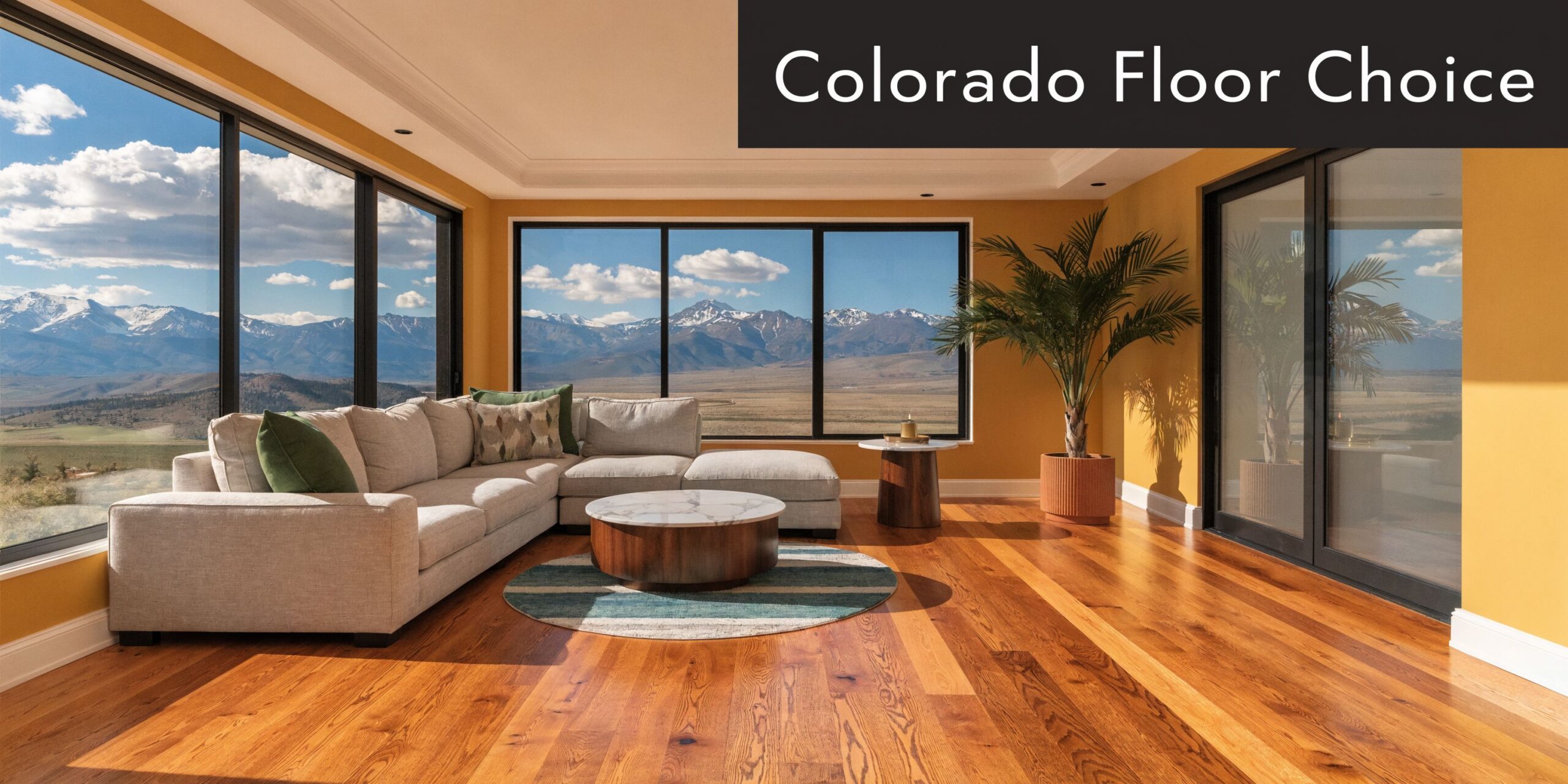
Solid hardwood in a dry climate
Solid hardwood is exactly what it sounds like. Each board is a single piece of wood.
That gives you authenticity and long-term refinishing potential, but it also means the board reacts more directly to environmental change. One cited example is hard maple with a Janka hardness rating of 1290, which puts it in a moderate durability range while still being more movement-prone than an engineered construction in Colorado conditions, according to this Highlands Pro Grade product information.
In a place like Denver, that can show up as:
- seasonal gapping
- slight cupping if moisture conditions swing
- more sensitivity to room humidity
- stricter installation requirements
Solid wood still has a place. Many homeowners love it. But it asks more from the house and the indoor environment.
Engineered hardwood in Colorado homes
Engineered hardwood uses a real wood top layer over a layered core. A cited Highland example uses 8-ply construction with a 2.0mm sliced oak veneer, and that structure offers stronger dimensional stability through 40+ degree temperature swings. The same source notes that the 2.0mm veneer allows at least one full sanding and refinishing, which matters for long-term maintenance in Denver-area homes. You can compare the broader construction differences in more detail at https://jrhardwoodfloorrefinishingandcleaning.com/difference-between-solid-and-engineered-hardwood/.
That layered build is the reason many Colorado homeowners do well with engineered options. It handles stress better.
A simple analogy helps. Solid hardwood is like a single wide board on a fence. Engineered hardwood is more like well-built plywood with a beautiful real-wood face. The layered construction makes it less likely to distort when conditions change.
Side-by-side decision guide
| Feature | Solid Highland hardwood | Engineered Highland hardwood |
|---|---|---|
| Top layer | One full piece of wood | Real wood veneer over layered core |
| Climate response | More reactive | More stable |
| Denver suitability | Good with the right conditions | Often easier to manage |
| Refinishing | Strong long-term potential | Depends on veneer thickness |
| Best fit | Traditionalists, stable interiors | Busy households, wide planks, variable interiors |
Where readers often get tripped up
A common myth is that engineered wood is “fake wood.” That is wrong. The visible surface is still real hardwood.
Another myth is that engineered floors cannot be refinished. Some cannot. Some can. The wear layer is what decides that, not the word “engineered” by itself.
For many Denver homes, engineered highland hardwood flooring hits the sweet spot. Real wood look, better dimensional stability, and enough wear layer for future maintenance if you choose carefully.
Lifecycle and Costs Investing in Your Floors
Hardwood is still a premium category. In 2024, the U.S. hardwood flooring market recorded $1.845 billion in sales, and residential replacement accounted for 66.4% of sales, which shows that homeowners still invest in wood when they want a durable, higher-end floor, according to Floor Covering News market data.
That matters for Denver homeowners because flooring decisions are rarely just about today’s invoice. They are about total life span, maintenance path, and whether the floor can be refreshed instead of ripped out.
Refinishing vs replacing
Replacing makes sense when boards are failing, water damage is severe, or the floor was never a good fit.
Refinishing makes sense when the wood is still structurally sound and the primary problem is wear at the surface. That is common in older homes near City Park, updated ranches in Lakewood, and family homes in Littleton where the boards are good but the finish is tired.
A practical example is an older red oak floor in Denver. If the floor has scratches, dull traffic lanes, and sun-faded finish but the wood itself is still healthy, refinishing is usually the more sensible path. Full replacement adds demolition, disposal, subfloor prep, new material, and new installation.
If you want a broader pricing framework for installation decisions, this cost guide is useful: https://jrhardwoodfloorrefinishingandcleaning.com/average-cost-to-install-hardwood-floors/
J.R. Hardwood Refinishing Service Tiers
| Tier | Price per Sq. Ft. | Finish Type | Key Feature |
|---|---|---|---|
| Diamond Traffic Plus | $5.50 | UV-curing + Nano Wear | Unmatched wear & scratch resistance |
| Platinum Traffic Plus | $4.80 | 2K Water-Based Finish | Nano Wear Oxide Additive |
| Gold Traffic Plus | $4.50 | 2K Water-Based Finish | Scratch resistance |
| Silver Traffic Plus | $4.20 | 1K Water-Based Finish | Excellent wear resistance |
Additional service pricing:
- Screen & Recoat: starts at $2.50/sq. ft.
- Wood Floor Cleaning: starts at $1.50/sq. ft.
- Wax Removal: starts at $2.50/sq. ft.
- Instant UV-Curable Finish: $1.5/sq. ft.
How to think about value instead of just price
A cheaper floor is not always less expensive over time.
Consider these questions:
- Can this floor be refinished later?
- Will this finish hold up to pets and traffic?
- How much downtime can your family or business tolerate?
- Are you paying now to avoid replacing sooner?
For landlords, property managers, and Realtors, those questions are even more practical. A floor that can be cleaned, recoated, or quickly restored between tenants has a very different lifecycle cost than one that constantly needs patchwork repair.
A useful decision path
If your floor still has good bones, start with condition, not replacement fantasies.
- If the finish is dirty and hazy, deep cleaning or buffing may be enough.
- If the finish is worn but the wood is not exposed, a screen and recoat may make sense.
- If scratches, discoloration, and wear run deep, full sanding and refinishing is usually the right move.
- If boards are unstable or badly damaged, then replacement moves higher on the list.
The best flooring investment is often the one that preserves good wood and uses the right finish system to extend its life.
The Finishing Touch Comparing Finishes for Durability and Speed
The finish is what you live on every day. It affects sheen, scratch visibility, odor, downtime, and how quickly your household can get back to normal.
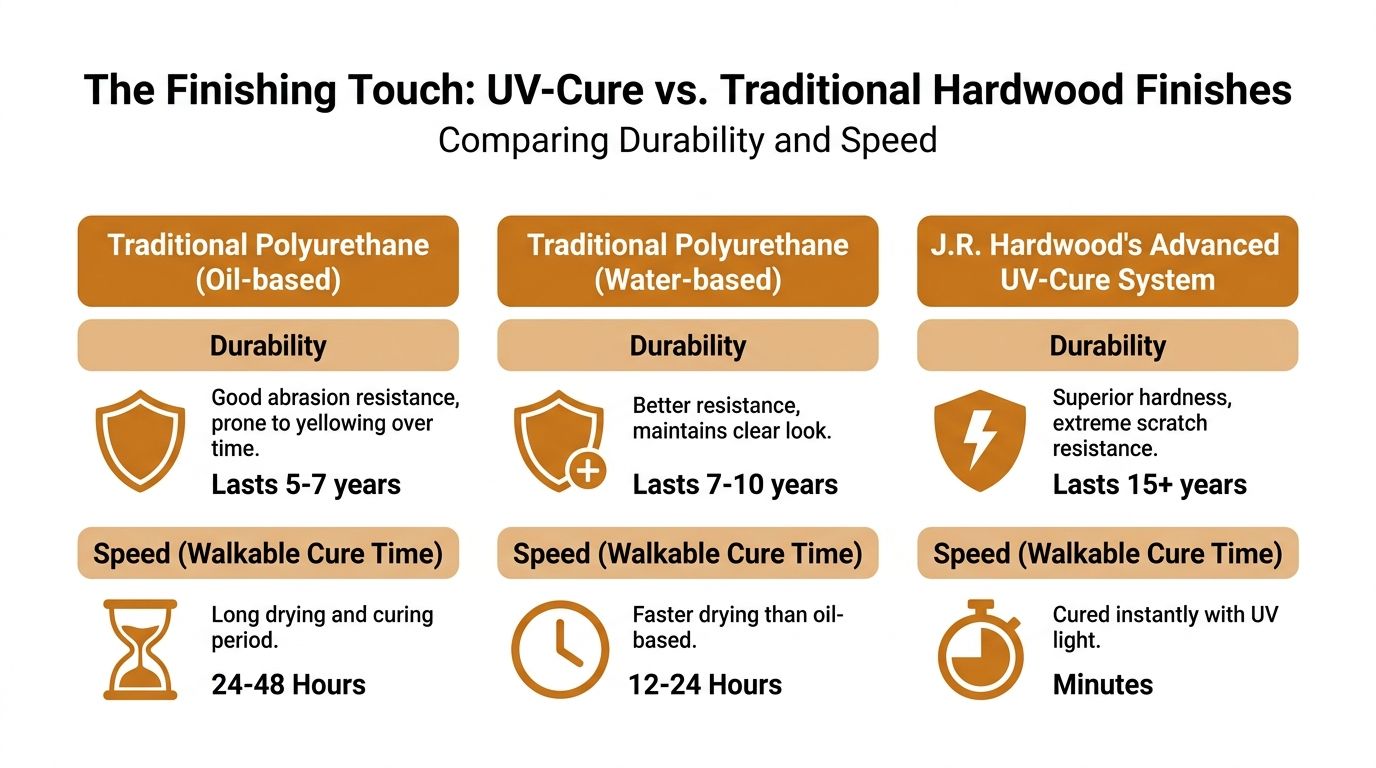
Traditional finishes and where they frustrate homeowners
Traditional finishes still have their place. Some homeowners like their familiar look and feel.
But they also bring the complaints flooring pros hear all the time:
- Long cure windows
- Rooms that stay off-limits
- Lingering finish smell
- Stress around pets, kids, and furniture timing
That becomes a bigger issue in occupied homes, storefronts, offices, and rentals where downtime creates real disruption.
Why the UV- Cure System stands out
For properties that need minimal interruption, engineered Highland products paired with instant UV-curable finishing allow foot traffic within hours, not the 7-10 days required for some traditional finishes, based on the cited finish specification details. If you want a broader look at finish options, this guide is worth reviewing: https://jrhardwoodfloorrefinishingandcleaning.com/the-ultimate-guide-to-hardwood-floor-finishes/
That timing difference changes the whole project experience.
For a homeowner, it can mean less disruption. For a pet owner, it can mean less juggling gates and routines. For a commercial property, it can mean far less interruption to normal use.
Plain-language comparison
| Finish type | Best known for | Main drawback | Good fit for |
|---|---|---|---|
| Oil-based polyurethane | Classic look | Longer odor and cure time | Some traditional residential projects |
| Water-based polyurethane | Clearer look, faster than oil | Still requires waiting | Homeowners who want a modern water-based system |
| UV- Cure System | Fast return to use | Requires specialized process | Busy homes, pets, rentals, commercial spaces |
When speed is not just a convenience
Some readers hear “fast cure” and think it is a luxury feature.
It is often a practical one.
If you manage a property in Parker, show homes in Greenwood Village, or run a business in Denver, every extra day matters. The finish choice affects scheduling, re-entry, furniture handling, and how soon the floor is fully protected.
If your top priorities are durability, speed, and getting your life back quickly, a UV- Cure System deserves serious attention.
Maintaining Your Highland Hardwood A Proactive Approach
A good floor lasts longer when you treat maintenance as routine care, not emergency repair.
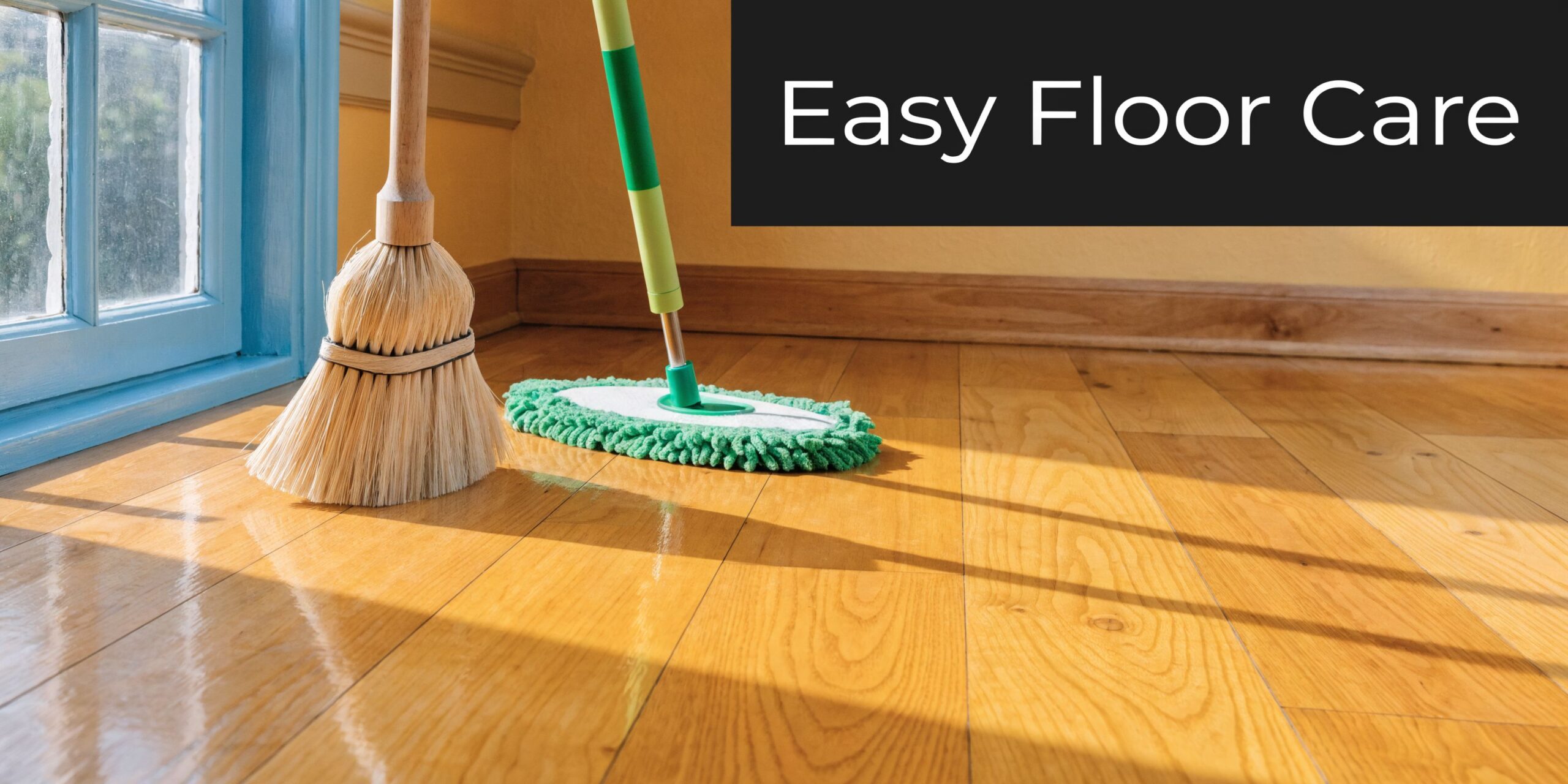
Weekly habits that help
Most finish damage starts with grit. Dirt acts like sandpaper under shoes and chair legs.
A simple maintenance routine goes a long way:
- Dry clean often: Use a microfiber dust mop or soft vacuum setting without an aggressive beater bar.
- Wipe spills promptly: Water left sitting is never your friend.
- Use entry mats: Denver snow, de-icer, and small gravel can be brutal on finish.
- Protect furniture feet: Felt pads make a real difference. For a helpful outside resource, see how to protect your floors from your furniture.
What to avoid
Homeowners damage good floors with the wrong products all the time.
Avoid:
- steam mops
- waxes unless the floor specifically calls for them
- oily polishes that leave residue
- harsh cleaners that dull the finish
- soaking wet mops
If your floor has buildup from old products, the answer may be wax removal, not more polish on top.
If your floor looks cloudy no matter how much you clean it, the issue may be residue, not dirt.
Screen and recoat vs full sanding
Many people get stuck at this point.
A screen and recoat is a maintenance service. It lightly abrades the existing finish and adds a new protective coat. It works best when the finish is worn but the damage has not cut far into the wood.
A full sanding and refinishing is restoration. It removes the old finish, addresses deeper wear, and starts over at the wood surface.
Good candidates for screen and recoat often show:
- light surface scratches
- dull traffic lanes
- loss of sheen
- no major gray wear-through areas
Good candidates for full sanding often show:
- deeper scratches
- exposed bare wood
- uneven color
- old stain problems
- widespread finish failure
A short visual explanation helps many homeowners understand the difference:
When to bring in professional help
DIY cleaning is maintenance. Diagnosis is harder.
If your floor has wax contamination, pet wear near doorways, blackened water spots, or inconsistent sheen from previous work, professional evaluation saves time and usually prevents the wrong fix.
The best maintenance plan is simple. Clean gently, protect high-traffic areas, and refresh the finish before the wood itself takes the hit.
Why Choose J.R. Hardwood for Your Denver Flooring Project
Local experience matters with hardwood. A contractor can be skilled and still miss what Colorado does to wood movement, finish timing, and sun exposure.
What good flooring help should look like
Whether the job is in Denver, Aurora, Castle Rock, or Parker, homeowners should expect a few basics:
- Clear diagnosis of whether the floor needs cleaning, recoating, sanding, or replacement
- Dust-free sanding options that reduce mess in lived-in homes
- Finish choices matched to lifestyle, not just appearance
- Experience with both older solid floors and modern engineered products
- Straightforward communication about timing and expectations
That matters in real homes. A historic floor in Capitol Hill does not have the same needs as a newer wide-plank engineered floor in a suburban build.
Why technology changes the outcome
The UV- Cure System is a good example. It is not just a fancy add-on. In the right setting, it solves one of the biggest pain points in floor refinishing, which is waiting.
That makes a difference for:
- families who do not want long disruptions
- pet owners managing daily traffic
- property managers turning units
- Realtors preparing listings quickly
- business owners who need the space back fast
A practical checklist before hiring anyone
Before you move forward, ask these questions:
- Do they understand Colorado climate issues?
- Can they explain solid vs engineered clearly?
- Do they offer dust-free sanding?
- Can they handle wax removal and corrective work if needed?
- Do they offer a UV- Cure System if speed matters to you?
A good flooring partner should make the decision clearer, not more confusing.
Your Highland Hardwood Questions Answered
Is highland hardwood flooring a brand or a type of floor
Usually it is better understood as a quality concept or collection label, not a single wood species. You still need to identify the actual species, board construction, and finish system.
Can engineered highland hardwood flooring be refinished
Sometimes yes. It depends on the wear layer. Some engineered Highland options cited earlier include a 2.0mm veneer, which allows at least one full sanding and refinishing.
Is solid hardwood always better than engineered
Not in Colorado. Solid wood offers strong long-term appeal, but engineered construction is often a better fit for homes with changing indoor conditions, wider planks, or more movement risk.
What is better for busy homes, a traditional finish or a UV- Cure System
If fast return to use matters, the UV- Cure System is hard to ignore. It is especially appealing for active households, pet owners, and properties where downtime creates hassle.
How do I know if I need refinishing or just maintenance
If the floor is dull with light wear, maintenance services such as cleaning, buffing, or screen and recoat may be enough. If the finish is worn through, severely scratched, or uneven in color, full sanding is more likely.
Can old Denver floors still be saved
Often, yes. Many older floors look worse than they are. Dirt, residue, old wax, and surface damage can hide solid wood that still deserves restoration rather than replacement.
Does dust-free sanding really matter
Yes. It makes the project cleaner and easier to live through, especially in occupied homes. It also helps homeowners feel more comfortable choosing refinishing instead of putting it off.
If you want expert help deciding whether your highland hardwood flooring needs cleaning, screen and recoat, full refinishing, installation, or a faster Denver hardwood floor refinishing option with a UV- Cure System, contact J.R. Hardwood Floor Refinishing & Cleaning. You can explore their services, learn more about the Instant UV-Curable Finish, review full sanding and refinishing, compare screen and recoat, see options for clean and buff, wax removal, and floor installation. You can also read testimonials, learn more about the company, watch projects on YouTube, browse recent work, or contact the team for a quote.
Homeowners on Parker trust J.R. Hardwood Floor Refinishing & Cleaning to restore the natural beauty of their hardwood floors with our dust-free sanding system and advanced UV-curable finishes. Unlike traditional methods, our UV technology cures instantly, so you can move furniture back the same day with no lingering odor or downtime. Choose the perfect refinishing service to match your needs and home traffic. Our dust-free process ensures a clean, beautiful finish every time.
📞 Phone: 720-327-1127
🌐 Website: jrhardwoodfloorrefinishingandcleaning.com
📍 Service Area: Denver and nearby towns across the Denver Metro Area, including Parker, Aurora, Littleton, Castle Rock, Highlands Ranch, Lakewood, Arvada, and surrounding communities.
