 Skip to content
When you start dreaming about new hardwood floors for your Parker home, one of the first questions that pops into your head is usually, "Okay, but what's this really going to cost me?" Let's get right to it.
On average, you can expect the cost to install hardwood floors to be somewhere between $6 and $25 per square foot. That price tag includes both the wood itself and the professional labor to get it installed perfectly. This is a crucial consideration whether you're looking at Parker hardwood floor refinishing or a brand-new installation with our UV-Cure System.
So, for a pretty standard 500-square-foot living room, your all-in investment would typically land between $3,000 and $12,500. The final number really depends on the type of wood you fall in love with and how complex the job is.
Understanding the True Cost of New Hardwood Floors in Denver
When you're budgeting for new hardwood, it helps to think of it as a complete project, not just the price of the planks. The final cost is a blend of the materials you choose and the expert craftsmanship needed to turn those raw materials into a stunning, durable floor.
Homeowners all over the Denver Metro area, from the classic Victorian homes in the Highlands to the newer builds out in Highlands Ranch, quickly realize that a professional installation is the best way to protect their investment. A great floor isn't just about the wood—it's about the prep work, the skilled hands laying each board, and the finishing touches that make it all come together.
Your total investment covers a lot more than just laying down wood. It's a whole process:
- Tearing out and hauling away the old flooring (goodbye, tired carpet!).
- Prepping the subfloor to make sure it's perfectly clean, flat, and solid. This step is non-negotiable for a floor that won't squeak or buckle.
- Purchasing the hardwood itself, which can vary wildly in price depending on the species and style.
- The professional installation, where the real magic happens—cutting, fitting, and securing every single plank.
- All the finishing touches, like installing new baseboards and trim for that seamless, polished look.
To help you get a handle on what to expect, let's break down the costs with a quick at-a-glance table.
Hardwood Installation Cost at a Glance
This table gives you a clear snapshot of the typical cost ranges, separating the materials from the labor so you can see where your money goes.
| Expense Category | Average Cost per Square Foot | Notes |
|---|---|---|
| Materials | $3 – $12 | Varies widely based on wood species, solid vs. engineered, and finish. |
| Labor | $3 – $13 | Includes subfloor prep, installation, and finishing touches. |
| Total Combined | $6 – $25 | Your all-in cost for a professionally installed, finished hardwood floor. |
As you can see, labor is a huge piece of the puzzle. That's because the quality of the installation is just as important as the quality of the wood you choose.
A Financial Overview for Your Project
This chart gives you a great visual of how those numbers break down between the materials you buy and the skilled labor needed to put it all together.
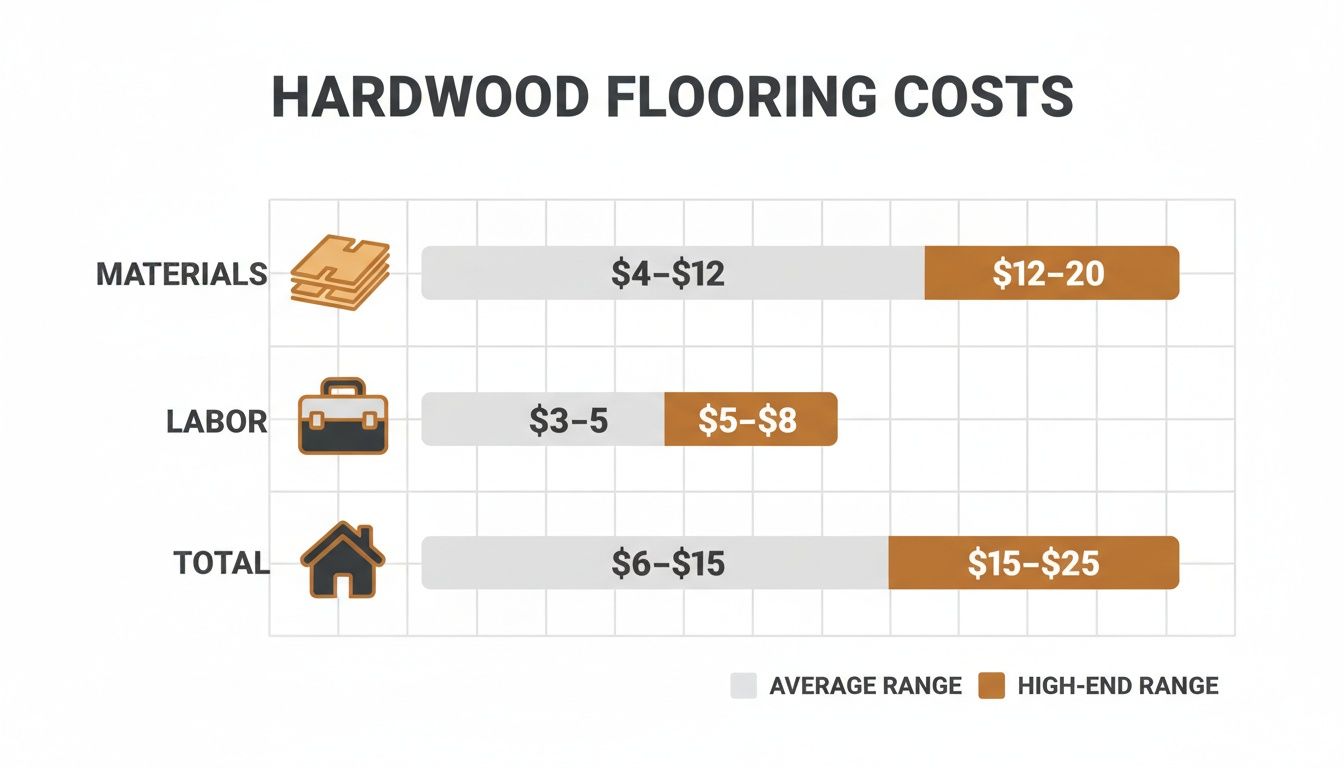
It’s pretty clear that craftsmanship makes up a huge chunk of the final price, and for good reason! A flawless installation is what makes a floor last for decades. If you want to see exactly what goes into the process from start to finish, you can learn more about what a professional hardwood floor installation involves.
National Averages and Local Realities for Parker Hardwood Floor Refinishing
Across the country, the numbers hold pretty steady: the installed cost for new hardwood floors generally sits between $6 and $25 per square foot. In the real world, it's not uncommon for labor to make up 50% to 70% of your total bill. That's because of all the detailed work—leveling the subfloor, making precise cuts, and getting the finish just right.
Here in the Denver metro area, we tend to see costs on the higher end of that national average, which is pretty typical for a major city. When you're putting together your budget, it’s a smart move to plan with these figures in mind and maybe even add a small 10-15% contingency fund. That way, if we pull up the old carpet and find a surprise with the subfloor, it won’t derail your entire project.
Key Factors That Influence Your Total Installation Cost
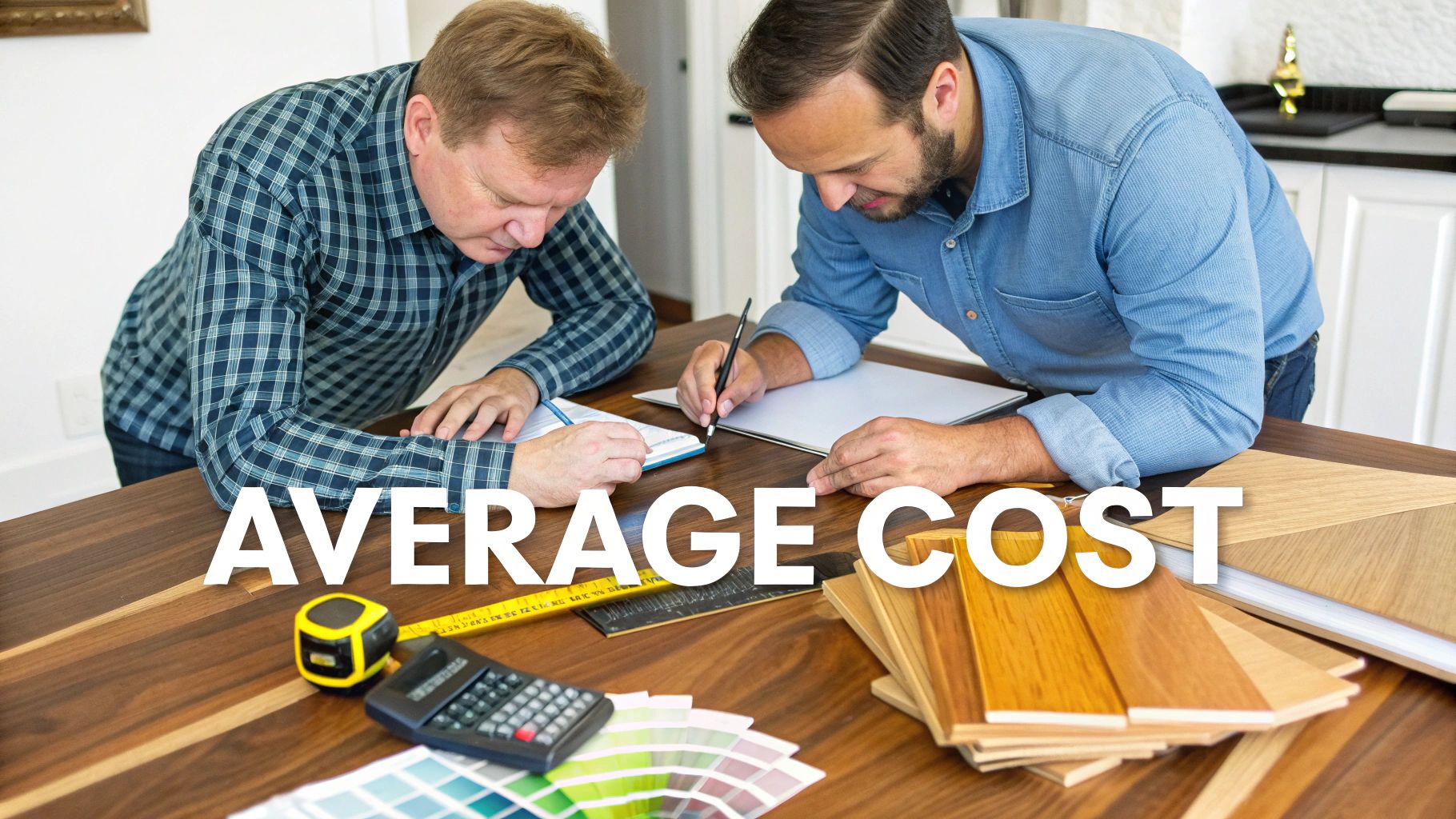
Ever wonder why one hardwood installation quote can be so different from another? It's the key to budgeting like a pro. While a general average cost gives you a starting point, a handful of big variables can swing that final price tag up or down. Whether you choose our instant UV-Cure System or another finish, understanding these factors is vital for any Parker hardwood floor refinishing project.
These factors break down into two main camps: the materials you fall in love with and the labor needed to get the job done right.
Think of it like building a custom car. The frame might be the same, but the final cost hinges on whether you choose a standard engine and cloth seats or go for the high-performance package with leather interiors. The same idea applies to your floors. Let's peel back the layers on what really shapes your total investment.
Material Choices That Drive the Price
The wood itself is almost always the biggest line item on your estimate. The choices you make here will have a direct, and often significant, impact on your budget. From how the plank is constructed to the specific tree it came from, every little decision adds up.
- Solid vs. Engineered Wood: Solid hardwood is the classic choice—milled from a single, solid piece of lumber. It has a timeless appeal and can be sanded down and refinished multiple times over its long life. Engineered wood, on the other hand, is built in layers with a real wood veneer on top of a high-quality plywood core. This structure makes it more stable in places with humidity swings, like basements or concrete slabs.
- Wood Species: This is a major cost driver. Common domestic species like Red Oak and Maple are typically the most budget-friendly options. But if your heart is set on exotic woods like Brazilian Cherry or Tigerwood, be prepared for a higher price tag due to their rarity and shipping costs.
- Plank Width and Thickness: Those beautiful, wide planks (think 5 inches or more) are hugely popular right now, but they often cost more per square foot than standard 2.25-inch or 3.25-inch strips. Why? Because you need a larger, clearer piece of lumber to produce them.
- Grade of Wood: Wood is graded based on its appearance. A "Clear" or "Select" grade will have very few knots and a uniform color, making it more expensive. A "Rustic" or "Cabin" grade, which proudly displays the wood's natural character and imperfections, is often more affordable.
Labor Costs and Project Complexity
Beyond the beautiful planks, the "how" of the installation is just as critical to the final number. The unique layout of your home and the condition of what’s underneath your current floors will determine how much skilled labor is required. A simple, empty square room will always cost less than a project with a bunch of tricky corners and prep work.
A professional installation is so much more than just laying down planks. It’s all about meticulous preparation and problem-solving to ensure a flawless, long-lasting result. Cutting corners here is a recipe for expensive repairs down the road.
Here are the key labor factors to keep in mind:
- Removal of Old Flooring: Before the new wood goes in, the old stuff has to come out. Tearing out and disposing of old carpet, tile, or even existing hardwood is a labor-intensive step that adds to the overall project cost.
- Subfloor Preparation: This is arguably the most important step of the entire job. If your subfloor is uneven, damaged, or squeaky, it has to be fixed before the new floor is installed. This creates a stable foundation and prevents a world of future problems. For a deeper dive, check out our guide on what homeowners need to know before installing hardwood floors.
- Room Layout: A straightforward, rectangular room is a breeze to install. But rooms with odd angles, curves, lots of closets, or features like a fireplace require tons of precise cuts and custom fitting, which drives up the labor time and cost.
- Stairs and Trim Work: Installing hardwood on a staircase is a highly specialized skill that can add a significant amount to your bill. It's detailed, painstaking work. Likewise, installing new baseboards or trim to complete the look also contributes to the final labor price.
Breaking Down Material Costs: From Wood Type to Plank Width
The single biggest line item on your hardwood flooring invoice will almost always be the material itself. Getting a handle on what drives that cost—from the type of wood to the width of the planks—is the first step toward building a realistic budget and choosing a floor you'll love for years to come.
Let’s start with the big one: solid vs. engineered hardwood.
Think of solid hardwood as the classic, old-school choice. It’s one solid piece of wood, top to bottom, milled from a single log. It’s incredibly durable and has a lifespan that can stretch for generations because you can sand it down and refinish it multiple times.
Engineered hardwood, on the other hand, is more like a high-tech wood sandwich. It has a beautiful layer of real hardwood on top, but underneath, it’s made of multiple layers of plywood bonded together in opposite directions. This construction makes it incredibly stable, so it won’t expand and contract as much with Colorado’s wild humidity swings. That stability makes it perfect for basements or installations over concrete slabs.
Comparing Hardwood Material Costs
Understanding the typical price ranges for different hardwood materials can help you narrow down your choices and align your vision with your budget. Here's a quick look at what you can expect to pay per square foot for the wood itself.
| Hardwood Type | Average Material Cost / Sq. Ft. | Best For |
|---|---|---|
| Domestic Solid (Oak, Maple) | $4 – $8 | High-traffic areas, classic look, long-term refinishing |
| Domestic Engineered (Oak, Hickory) | $5 – $9 | Basements, concrete subfloors, areas with moisture swings |
| Premium Domestic (Walnut, Cherry) | $8 – $14 | Statement rooms, luxury feel, distinctive grain patterns |
| Exotic / Imported (Brazilian Cherry) | $9 – $20+ | Unique aesthetics, high-end homes, exceptional durability |
Keep in mind, these are just ballpark figures for the materials. The final installed price will also include labor, prep work, and other factors we'll cover next.
From Classic Oak to Exotic Imports
Once you’ve settled on solid or engineered, the next big decision is the wood species. This is where your personal taste and budget really start to show.
- Domestic Woods (More Affordable): Species like Red Oak, White Oak, and Maple are the tried-and-true workhorses of the flooring world. They’re grown right here in North America, so they’re readily available, look fantastic, and are generally easier on the wallet.
- Exotic Woods (Premium Cost): If you want a floor that makes a statement, woods like Brazilian Cherry, Tigerwood, or Ipe offer jaw-dropping colors and grain patterns. Their rarity and the logistics of importing them put them at a much higher price point.
You'll often hear pros talk about the Janka hardness scale. Think of it as a "dent resistance score." The higher the number, the tougher the wood is, making it a better choice for busy households with kids and pets running around.
The material choice is the single biggest controllable driver of hardwood installation cost. Published material-only ranges are roughly $4–$20 per square foot for common domestic species and can exceed $15–$30 per square foot for exotic or premium grades. This wide spread can account for 30–60% of the total installed price depending on labor complexity.
Plank Width and Finish: The Final Touches on Cost
Beyond the wood itself, a couple of other details can nudge the material price up or down.
Plank Width: Standard planks usually run between 2.25 and 3.25 inches wide. But those wide, sweeping planks—often 5 inches or more—that you see in modern homes require larger, clearer cuts of lumber, which naturally costs more. Choosing a "wide-plank" style can easily add $2 to $12 per square foot to your material budget.
Finish Type: Your flooring will come in one of two ways:
- Unfinished: This is raw wood that gets installed, sanded, and finished right in your home. It’s the ultimate in customization—you can pick any stain color and sheen you want.
- Prefinished: The wood is sanded and finished in a controlled factory environment with an incredibly durable coating. This makes installation day much faster but gives you fewer custom color options.
For a deeper dive into material pricing, you can explore timbercloud's material and service pricing for some industry specifics. If you're still trying to figure out what style is right for your home, check out our guide on the different types of hardwood flooring available in Aurora. By getting a handle on these key factors, you can walk into a showroom and confidently pick a floor that fits your Denver home’s style, your family’s lifestyle, and your budget.
Understanding Professional Labor and Installation Costs
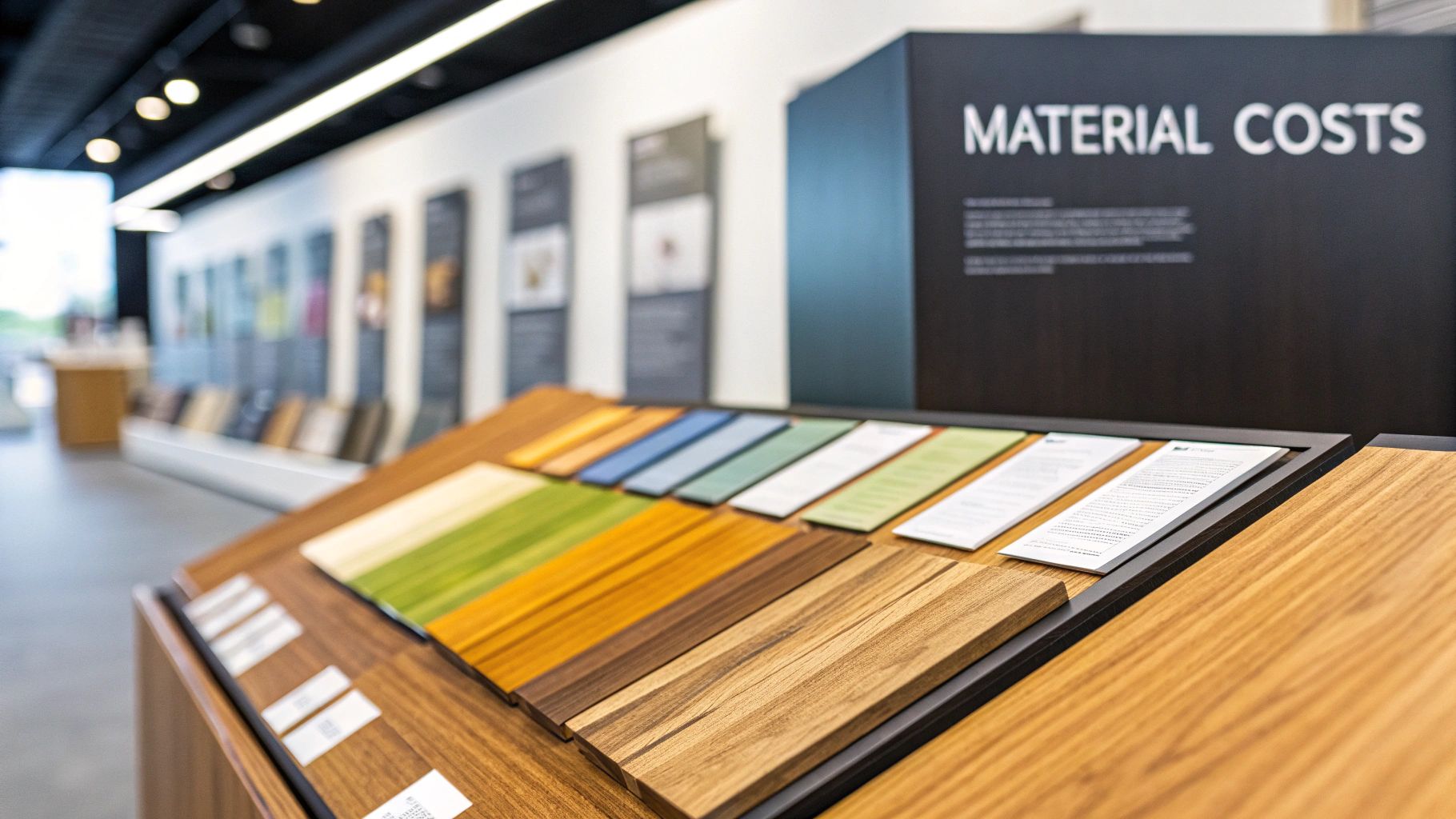
When you get a quote for new hardwood floors, it’s natural for your eyes to jump right to the cost of the wood itself. But that's only half the story. The labor portion of that quote is where the real magic happens—it’s the skilled craftsmanship that turns a stack of planks into a stunning, long-lasting floor. Our expertise in Parker hardwood floor refinishing and installation ensures your project is done right, whether you choose a classic finish or our advanced UV-Cure System.
This isn’t just about laying down boards. Professional installation is what ensures your floor has a rock-solid foundation, preventing those annoying squeaks, gaps, and warped boards that can show up down the line. Think of it as an investment in peace of mind, guaranteeing your new floor performs as beautifully as it looks.
What Is Included in Professional Labor Costs
When you hire an expert crew, you're not just paying for someone to nail down wood. You’re paying for a meticulous, multi-step process that covers everything from prep to the final walkthrough. This is what separates a weekend DIY job from a flawless, professional finish.
The labor fee typically covers a handful of crucial tasks:
- Removal and Disposal: The first job is tearing out the old flooring, whether it's shag carpet from the 70s, cracked tile, or old laminate. We haul away all the debris, giving you a clean slate.
- Subfloor Preparation: This is arguably the most important step. Our team inspects your subfloor, securing loose panels, grinding down high spots, and leveling uneven areas to create a perfectly flat and stable base for your new wood.
- Acclimation and Layout: We let the new hardwood acclimate to your home's unique temperature and humidity. This prevents ugly gaps or buckling later. We also map out the entire layout to ensure a balanced, beautiful look that minimizes waste.
- Precision Installation: This is the hands-on skill of cutting, fitting, and fastening each board. It's especially tricky around doorways, vents, and the unique quirks of historic Denver homes.
Comparing Hardwood Installation Methods
Not all hardwood is installed the same way. The best method depends on the type of wood you’ve picked—solid or engineered—and what kind of subfloor you have. Each technique has a different impact on the project's timeline and overall labor cost.
- Nail-Down/Staple-Down: This is the classic, tried-and-true method for solid hardwood over a wooden subfloor. Each plank is securely fastened with nails or staples, creating an incredibly durable floor that can last a lifetime.
- Glue-Down: This is the go-to for engineered wood, especially when installing over a concrete subfloor. A specialized adhesive is spread across the subfloor, and each plank is carefully set in place to form a strong, permanent bond.
- Floating Installation: Often used for engineered wood and luxury vinyl plank, this modern technique involves clicking the planks together over an underlayment. The floor “floats” over the subfloor without being nailed or glued, which can seriously speed up the installation time.
Investing in skilled labor is the best insurance policy for your new hardwood floors. A craftsman’s attention to detail ensures your floor not only looks spectacular on day one but also stands up to decades of daily life.
The complexity of the job directly impacts the labor hours needed. A meticulous glue-down installation, for example, is going to be more time-consuming than a click-together floating floor. Want to see how it all comes together? Explore The Complete Guide to Professional Hardwood Floor Installation for a deeper dive.
Ultimately, understanding what you’re paying for with labor helps demystify your quote. It shows you the true value of bringing in an expert to make sure your beautiful new floor is a sound, durable, and worry-free part of your home for years to come.
The Long Term Value and ROI of New Hardwood Floors
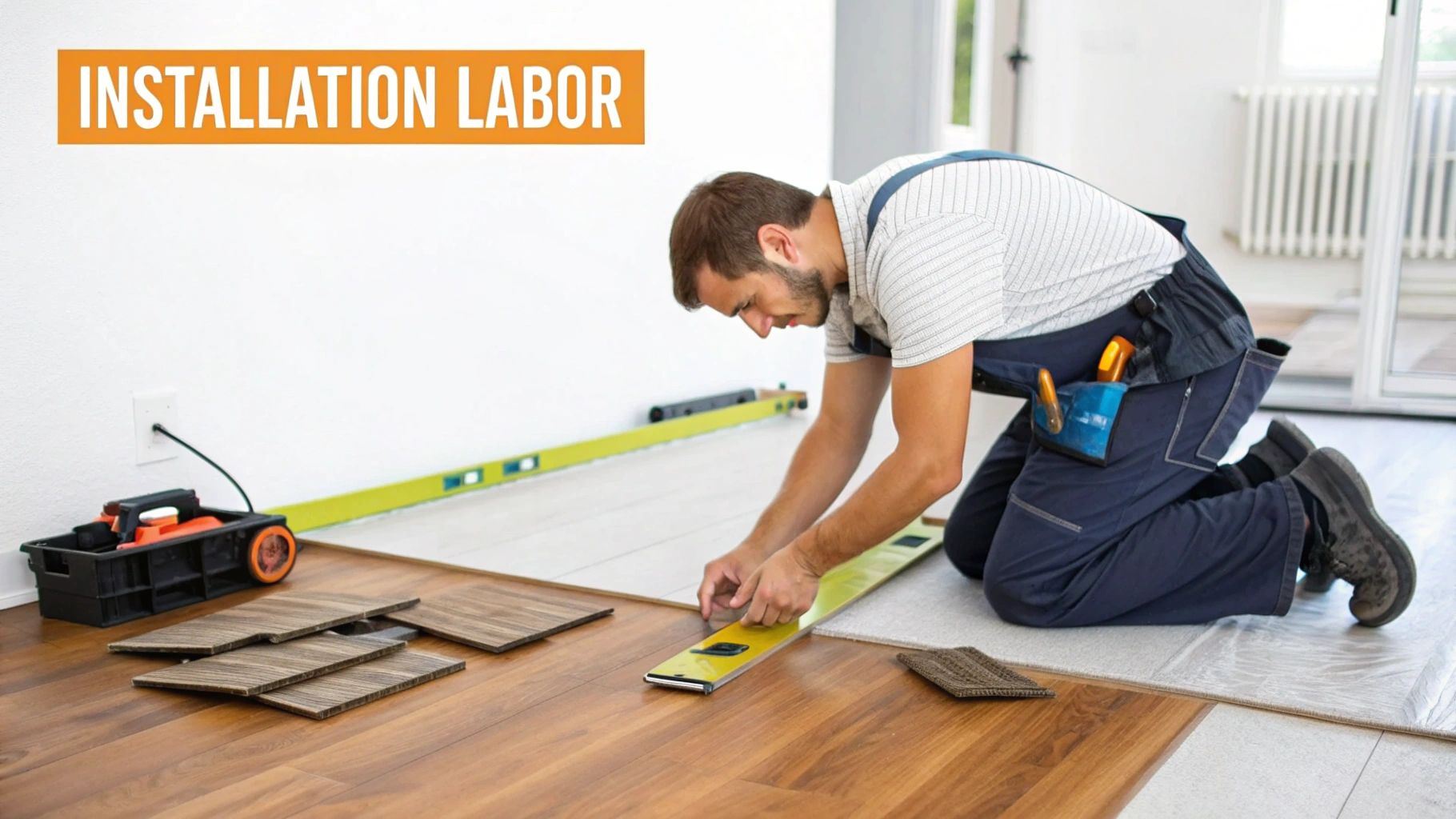
It’s easy to get caught up in the numbers when you’re figuring out the average cost to install hardwood floors. But looking past the initial price tag reveals one of the smartest investments you can make in your home. The real financial story isn't just about the upfront budget—it’s told over decades through boosted resale value, incredible durability, and lower overall costs.
Think about it: high-quality hardwood is consistently one of the top features homebuyers look for. In competitive Denver-area markets, from the luxury homes in Castle Pines to the sought-after neighborhoods in Boulder, hardwood floors can be the one thing that makes your property pop. Looking at broader home renovation trends and value confirms it—this isn't just an expense, it's a lasting investment in your home's beauty, health, and equity.
Thinking in Terms of Lifecycle Cost
One of the most powerful arguments for hardwood is its impressive lifecycle cost. This is just a fancy way of saying it’s built to last for the life of your home, unlike other flooring that you have to rip out and replace over and over again.
Let’s break it down:
- Carpet: Honestly, it needs to be replaced every 5–10 years. It gets worn down, stained, and packed with allergens you can’t see.
- Hardwood Floors: With a little care, they can last for 100 years or more. Seriously.
That incredible lifespan means that while hardwood might cost more upfront than carpet, it becomes way more cost-effective over time. You get to skip the recurring expense and headache of replacing your floors every decade.
Maintaining Your Investment for Decades
So, what's the secret to unlocking that incredible lifespan? It’s all about proper maintenance. A simple routine of regular cleaning, combined with a little professional help every few years, will keep your floors looking brand new for decades.
Instead of a full replacement, a professional screen and recoat every 3-7 years can refresh the top protective layer, erasing minor scratches and bringing back that original sheen.
And for floors that have seen a bit more life? A full sanding and refinishing service completely restores the wood to its original glory. You can do this multiple times over a solid hardwood floor’s life, making it a truly sustainable and financially savvy choice. The finish you pick plays a huge role here; you can explore The Ultimate Guide to Hardwood Floor Finishes to see how modern options protect your investment.
Hardwood flooring is not just a purchase; it's a permanent upgrade to your home. It's one of the few home improvements that you can enjoy for decades and that still holds significant value when it's time to sell.
Boosting Your Home's Resale Value
Talk to any real estate agent or home appraiser, and they’ll tell you the same thing: hardwood floors are a major selling point. They add a tangible value that can directly lead to a higher selling price and a much faster sale.
Here’s why buyers love them:
- Broad Appeal: Hardwood is timeless. It appeals to almost everyone, unlike trendy carpets or tiles that can look dated in just a few years.
- Perception of Quality: The moment someone walks in and sees beautiful hardwood, they get an immediate impression of a well-maintained, high-quality home.
- Health Benefits: This is a big one. Hardwood doesn't trap dust, pet dander, or other allergens, which is a huge plus for health-conscious buyers.
At the end of the day, the average cost to install hardwood floors is an investment that pays you back—both in the daily joy of living with them and in real, tangible financial returns down the road.
Got Questions About Hardwood Installation Costs? We’ve Got Answers.
When you're thinking about a project as big as new hardwood floors, questions are a given. And let’s be honest, most of them boil down to cost and process. To help you plan your project with total confidence, we’ve put together answers to the most common questions we hear from homeowners right here in the Denver area.
Think of this as your cheat sheet for understanding the investment, avoiding surprises, and making the best choices for your home.
Is It Cheaper to Refinish or Replace My Hardwood Floors?
Nine times out of ten, refinishing is the smarter, more budget-friendly move. A professional full sand and refinish service brings your existing wood back to its original glory for a fraction of what it costs to buy brand new materials and pay for a full tear-out and installation.
We typically only recommend a full replacement when the floors have serious structural problems—think deep pet stains that have soaked through the wood, warped boards from water damage, or anything else that’s beyond a simple repair. For most homeowners in places like Littleton or Parker, our dust-free refinishing can make your old floors look incredible without the hefty price tag of a total replacement. We recently restored a red oak floor in a Denver bungalow that the owner thought was unsalvageable, saving them thousands over replacement.
How Can I Get an Accurate Quote for My Project?
While an in-person look is always the gold standard, we've gotten really good at giving reliable estimates right over the phone. It's actually pretty simple.
First, grab a tape measure and get the approximate square footage of the rooms you want done. Then, snap a few clear pictures of the space, making sure to show us what kind of flooring we'll need to remove. If you have an idea of the wood species or color you’re leaning toward, that helps too. With just that little bit of info, we can build a detailed and transparent quote that breaks everything down, so you know exactly where your money is going.
Getting an accurate, upfront quote is the first step to a stress-free project. We believe in total transparency, breaking down the average cost to install hardwood floors so you know exactly what your investment covers from day one.
Should I Budget for Hidden Costs During Installation?
Absolutely. It’s always a savvy move to set aside a small contingency fund—think 10-15% of the total project cost—for the unexpected. This is just a smart home improvement best practice, especially when you're calculating the average cost to install hardwood floors.
The most common surprise we run into is discovering subfloor damage after we’ve pulled up the old carpet or tile. Things like hidden moisture damage, an uneven surface, or boards that squeak like crazy have to be fixed before new hardwood can go down properly. A good installer will stop, show you exactly what they found, and give you a clear change order for your approval before doing any extra work. You should always be in the driver's seat when it comes to the budget.
How Does a Premium Finish Like UV-Cure Affect the Overall Cost?
The finish you choose is a huge part of your floor's long-term health and durability. An advanced finish like our Instant UV-Cure system might have a slightly higher upfront cost than a standard polyurethane, but it delivers massive value down the road.
Because it cures instantly with a UV light, you can walk on your floors and move all your furniture back in the very same day. That means no extra costs for a hotel room or the headache of being displaced for a week. Plus, its superior hardness shrugs off scratches and scuffs way better, meaning you’ll go much longer before needing maintenance coats. It saves you time, hassle, and money over the life of your floor.
What is the Difference Between an Installation and a Screen & Recoat?
This is a great question because these two services solve very different problems and come with very different price tags.
- Installation: This is the whole shebang. We're tearing out your old flooring, making sure the subfloor is perfect, and laying down beautiful new hardwood planks. It’s a major renovation and a bigger investment.
- Screen & Recoat: Think of this as a maintenance refresh. It’s for existing hardwood floors that are in good shape structurally but are looking a little dull or have minor surface scratches. We lightly buff (or "screen") the top layer of finish and apply a fresh, durable top coat. A screen and recoat costs significantly less and can be done in a single day.
Knowing the difference is key to budgeting. If your floors are still solid, a quick screen and recoat might be all they need to get their shine back.
Homeowners on Parker trust J.R. Hardwood Floor Refinishing & Cleaning to restore the natural beauty of their hardwood floors with our dust-free sanding system and advanced UV-curable finishes. Unlike traditional methods, our UV technology cures instantly, so you can move furniture back the same day with no lingering odor or downtime. Choose the perfect refinishing service to match your needs and home traffic. Our dust-free process ensures a clean, beautiful finish every time.
📞 Phone: 720-327-1127
🌐 Website: jrhardwoodfloorrefinishingandcleaning.com
📍 Service Area: Parker, Denver, Aurora, Castle Rock, Highlands Ranch, Centennial, and surrounding towns.
📺 See Our Work: https://www.youtube.com/channel/UCLaTAi6KxwT-g8QCKqKTQ8Q?sub_confirmation=1