
Here’s the thing about hardwood floors: they’re not all created equal. The answer to "how many times can I refinish my floors?" comes down to one crucial question: are they solid hardwood or engineered wood? A good, thick plank of solid wood can take a beating and be sanded down again and again. An engineered plank? Not so much. For homeowners in Parker looking for expert Parker hardwood floor refinishing, understanding this difference is the first step. Our advanced UV-Cure System can extend the life of either type, but the floor's construction sets the ultimate limit.
Figuring Out Your Parker Hardwood Floor's Potential
If you're a homeowner here in Parker, knowing what kind of floor you have is the first step to protecting your investment. Our dry Colorado climate can be pretty tough on wood, which makes proper maintenance and a skilled Parker hardwood floor refinishing job absolutely critical, especially in neighborhoods like Stonegate or The Pinery where home quality is paramount.
At J.R. Hardwood Floor Refinishing & Cleaning, we've seen it all. Our job is to figure out exactly what your floors need, whether that’s a full-on restoration with our dust-free sanding system or a much lighter touch with a screen and recoat. We’re all about preserving the life of your wood, which is why our dust-free sanding system is so precise. We only take off the absolute thinnest layer of wood needed to get rid of scratches and wear—nothing more. This approach is key to getting the maximum number of refinishes out of your floors, enhanced by the durability of our UV-Cure System.
Solid Hardwood vs. Engineered Wood
Solid hardwood floors are the undisputed champions of longevity. Think of a single, solid plank of wood, usually about 3/4 of an inch thick. All that material gives you plenty to work with. Most experts agree you can refinish a solid hardwood floor 4 to 7 times over its lifespan, which is incredible.
Engineered wood is a different story. It's constructed with a thin layer of real hardwood (called the wear layer) on top of a plywood core. Because that top layer is so thin, you might get 1 to 2 refinishes out of it—and if it's a really thin wear layer, you might not be able to sand it at all.
To give you a clearer picture, here’s a quick comparison:
Hardwood Floor Refinishing Potential at a Glance
| Floor Type | Typical Refinishes | Average Lifespan | Best For |
|---|---|---|---|
| Solid Hardwood | 4 to 7 times | 75-100+ years | Long-term investment, high-traffic areas, historic homes |
| Engineered Hardwood | 1 to 2 times | 20-40 years | Basements, concrete slabs, areas with fluctuating humidity |
The bottom line? The thicker the real wood, the more life you can squeeze out of your floors. Understanding this helps you know how often to refinish hardwood floors based on how you live in your home.
After sanding, we seal the deal with our advanced UV-Cure System finish. It creates a much tougher barrier than old-school finishes, meaning you can go longer between refinishing cycles and keep your floors looking amazing for years.
Solid vs. Engineered Wood: The Deciding Factor
To get to the heart of how many times you can refinish a hardwood floor, let’s start with a simple analogy. Think of solid hardwood as a thick, sturdy block of cheese. You can slice off the top layer again and again, and what’s underneath is still the same quality cheese.
Now, picture engineered wood. It’s more like a fancy cracker with a delicious layer of that same cheese spread on top. If you scrape off that top layer too aggressively, you’ll hit the cracker underneath, and the whole thing is ruined.
That fundamental difference in construction is the single biggest factor in your floor's lifespan. For engineered floors, it all comes down to that top layer of real wood—what we call the wear layer. This is a key consideration for any Parker hardwood floor refinishing project, especially when using a powerful UV-Cure System that protects the surface for longer.
The Critical Wear Layer
The wear layer is that precious top surface of real hardwood on an engineered plank. Its thickness determines everything. A thick wear layer means you can do a full sand-and-refinish, while a thin one limits you to much lighter touch-ups. Here at J.R. Hardwood Floor Refinishing & Cleaning, we spend a lot of time in Highlands Ranch and Castle Rock homes carefully measuring this layer to make sure we only recommend a refinish that keeps your floor’s integrity intact.
This decision tree gives you a quick visual of how your floor type sets the rules for refinishing.
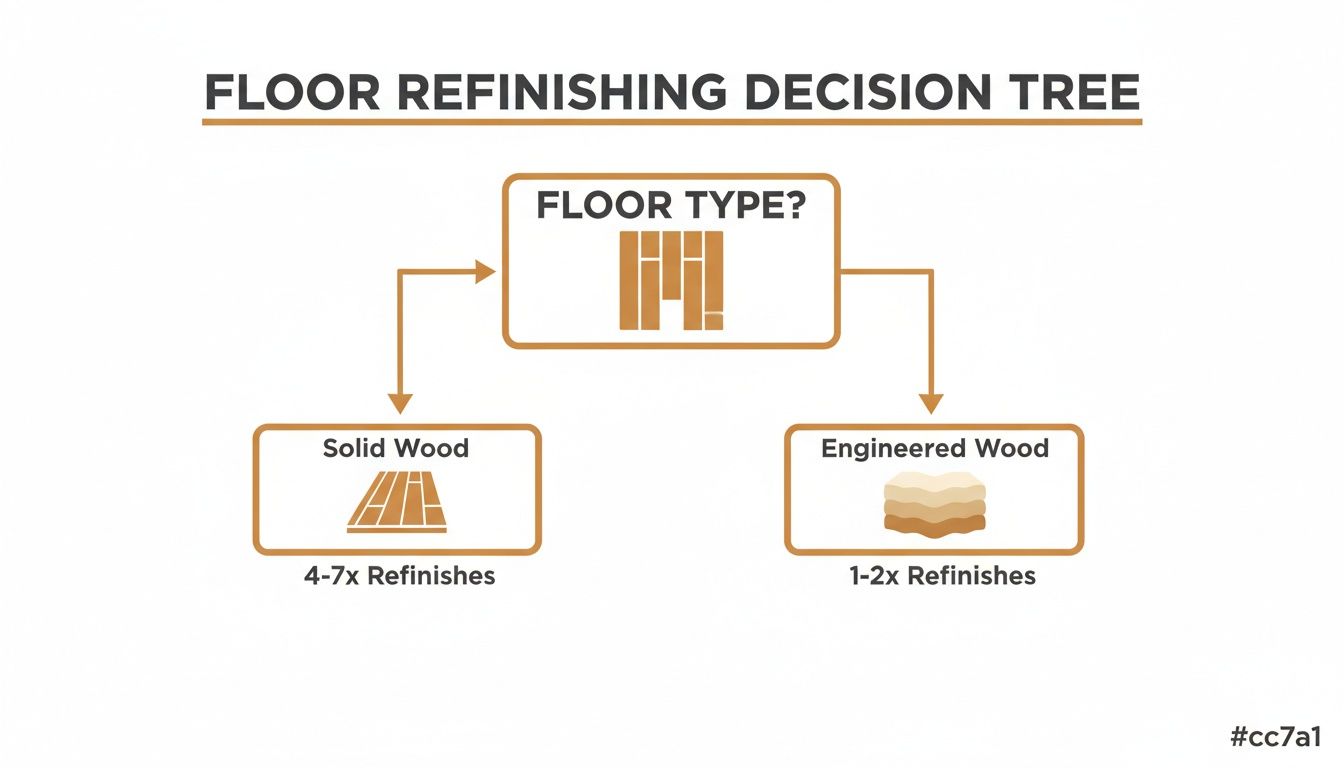
As you can see, solid wood is the clear winner for longevity, offering way more refinishing cycles because it's wood all the way through.
Engineered hardwood, a popular choice in modern Colorado remodels for its stability against our shifting humidity, has much tighter limits. Most can only handle 1-2 full refinishes, and that's only if the wear layer is at least 2mm thick. The budget-friendly options with paper-thin veneers might not even survive one sanding. On the other hand, premium engineered floors with a beefy 6mm layer can be refinished up to 4-5 times.
It's a stark contrast to solid wood, and for a simple reason: sand too deep on an engineered plank, and you hit the plywood core. Game over. A shocking 75% of engineered floors fail prematurely because of over-sanding by enthusiastic but inexperienced DIYers. A pro, however, can preserve 90% more lifespan by using precise buffing and sanding techniques.
Expert Insight: For our clients in Parker, we always stress that a professional assessment of the wear layer is non-negotiable for engineered floors. Trying to do a full sanding on a thin veneer is a costly mistake you can't undo.
Making the right choice from the beginning can save you a world of headaches later on. Understanding the best flooring options for different needs will give you a better grasp of longevity and refinishing potential, directly impacting your future maintenance costs.
If you already have engineered floors, learning about the best engineered wood flooring brands can also give you a clue about the quality and durability you're working with.
What Determines How Many Times You Can Refinish?
So, you know the difference between solid and engineered floors. But what really dictates how many times you can hit the reset button on them? It’s not just one thing. Several key factors come into play, and understanding them helps you see your floors less like a surface and more like a long-term investment you can actively protect. For a successful Parker hardwood floor refinishing project, these details matter, especially when deciding if a UV-Cure System is the right protective layer.
Think of it this way: the original quality of the wood and how it was installed is the foundation of your floor's entire life story. A thicker, well-milled plank, whether it's solid or a high-quality engineered board, simply gives you more wood to work with over the decades. A pro-level installation means the floor is flat, stable, and won't develop weird issues that force you into an aggressive sanding job down the road.
The Ghosts of Refinishing Past
How your floors were treated before you came along has a huge say in their future. Every single time a floor is sanded and refinished, a tiny layer of wood is removed—usually somewhere between 1/32 to 1/16 of an inch. The problem is, if the last crew was inexperienced or used overly aggressive sanders, they might have chewed off way more wood than was necessary.
This is something we run into all the time in older homes around Parker and Denver. A botched job from twenty years ago can seriously limit your options today, effectively stealing one or two future refinishes from you by wasting that precious top layer.
At J.R. Hardwood Floor Refinishing & Cleaning, we're all about preservation. Our advanced dust-free sanding system is built for surgical precision. We take off the absolute bare minimum needed to erase the old finish and smooth out damage. This careful approach is non-negotiable if you want to maximize the life of your floors.
Wood Species and the Depth of the Damage
The type of wood under your feet and the kind of damage it's seen also matter—a lot.
- Wood Hardness: Some woods are just tougher than others. Species like oak, hickory, and maple can take a beating from daily life and bounce back beautifully. They can generally handle more refinishing cycles than softer woods like pine or fir, which tend to dent and scratch more easily. We recently restored a beautiful red oak floor in a Denver home that had seen decades of traffic, bringing it back to life.
- Depth of Damage: Not all damage is created equal. Light, surface-level scuffs and a dull finish might just need a gentle buffing. But a deep gouge from moving a fridge or a dark pet stain that’s soaked into the wood requires a much more aggressive sanding to get the plank level again. That removes more wood, plain and simple, which shortens its refinishing potential.
Taking good care of your floors, combined with smart professional services like our UV-Cure System for hardwood floor refinishing, is the best way to ensure they stay beautiful and strong for as long as possible.
Signs Your Hardwood Cannot Be Sanded Again
Knowing when to stop sanding is every bit as important as knowing when to start. A full refinishing can be like a magic trick, erasing years of wear and tear. But there’s a tipping point—a moment where one more sanding session could cause permanent, irreversible damage to your floors. When it comes to Parker hardwood floor refinishing, our first goal is to protect your investment for the long haul.
At J.R. Hardwood Floor Refinishing & Cleaning, our first priority is the long-term health of your floor, not just a quick job. We've seen what happens when floors are pushed too far, and it's not pretty.
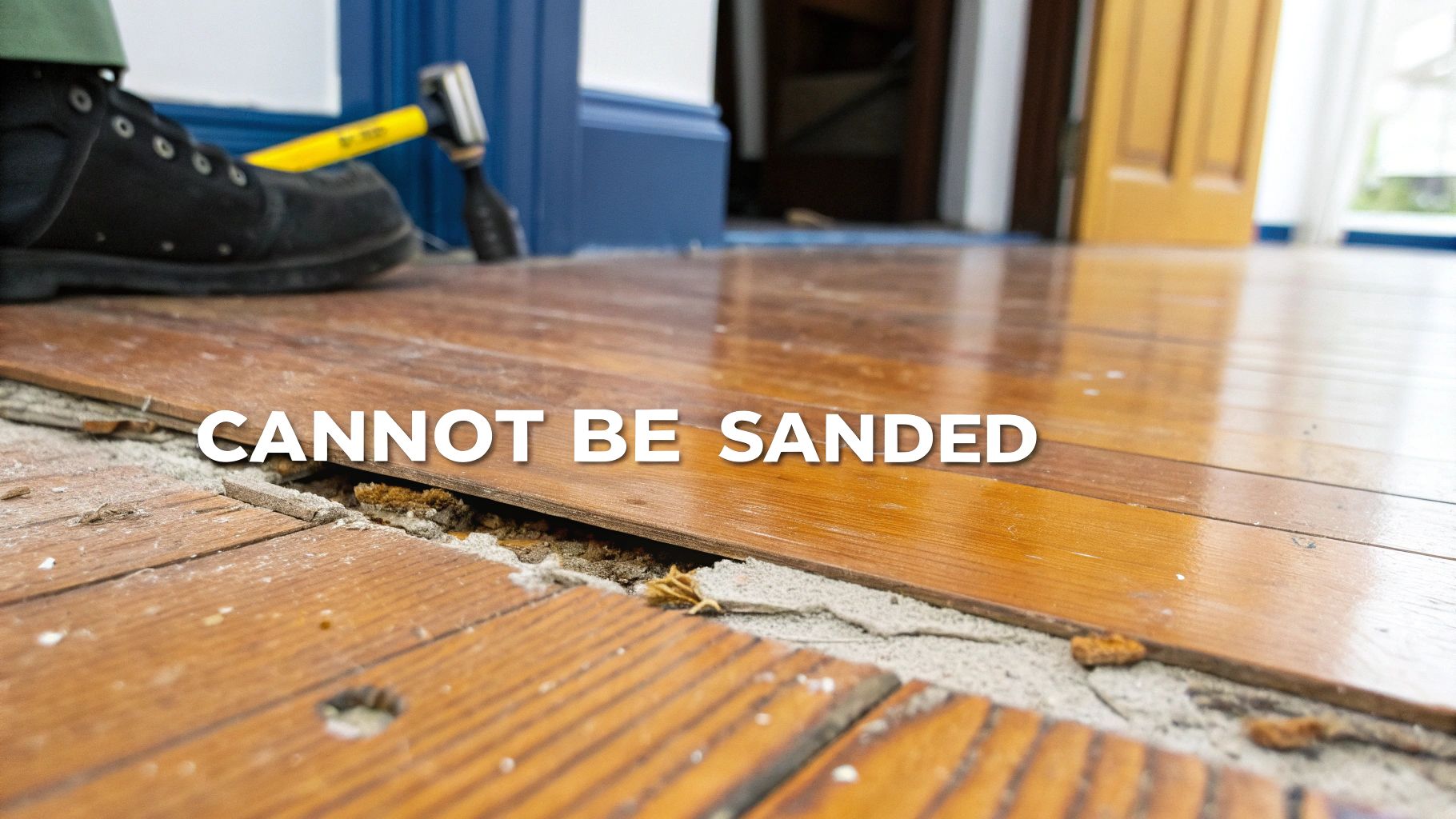
So, how can you tell when your floors have reached the point of no return? Thankfully, the wood itself usually gives us some very clear, unmistakable signals that it’s had enough.
Visual and Physical Warning Signs
The biggest red flags are often right there under your feet, you just need to know what to look for. Keep a sharp eye out for these telltale signs:
- Exposed Nail Heads: If you can see the shiny tops of nails poking through the surface of the boards, stop right there. This is a dead giveaway that the wood has been sanded down right to the level of the fasteners holding it to the subfloor. Sanding any further will destroy your equipment and your floor.
- Splintering or Chipping Tongues: Hardwood planks lock together with a tongue-and-groove system. When the wood above that little groove gets too thin, it becomes brittle and weak. You'll start to see it splinter or chip away, which seriously compromises the floor's stability.
- Bouncy or Spongy Boards: Does the floor feel unusually flexible or "give" a little when you walk across certain areas? This is a bad sign. It means the planks have lost their structural rigidity. One more sanding will only make them weaker and could lead to boards cracking right through.
We recently got a call to assess a beautiful old home in Littleton. The owner was hoping we could sand out some deep scratches. But during our inspection, we found exposed nail heads in a few high-traffic spots. We had to be the bearers of bad news and advise against a full refinish to prevent widespread damage. Instead, we recommended a less invasive service like a screen & recoat to improve the floor’s appearance without sacrificing its remaining integrity.
When a Professional Assessment Is Non-Negotiable
Sometimes the signs aren't so obvious, especially to an untrained eye. If you have no idea how many times your floors have been refinished, or if you have an engineered floor with an unknown wear layer, getting a professional inspection is a must.
Our experts can take precise measurements of the remaining wood thickness, giving you a definitive, data-backed answer on whether another hardwood floor refinishing is safe.
Before you make a final decision, it helps to understand what’s actually happening during the process. We break it all down in our guide where hardwood floor sanding is explained from start to finish. A little knowledge goes a long way in helping you see why sanding too deeply is a risk you just can’t afford to take.
When a Full Refinish Is Overkill: Smarter Alternatives
Sometimes, jumping straight to a full sand-and-refinish is like using a sledgehammer to hang a picture frame. It’s just too much. When your floor’s issues are only skin-deep, or the wood is getting too thin for another aggressive sanding, there are smarter, less invasive ways to bring back that beautiful shine. A smart Parker hardwood floor refinishing plan often involves these lighter-touch services, preserving your wood for longer.
Think of it as proactive maintenance rather than a major overhaul. For homeowners here in Parker, understanding these options can save you a ton of money and keep your original floors around for decades longer.
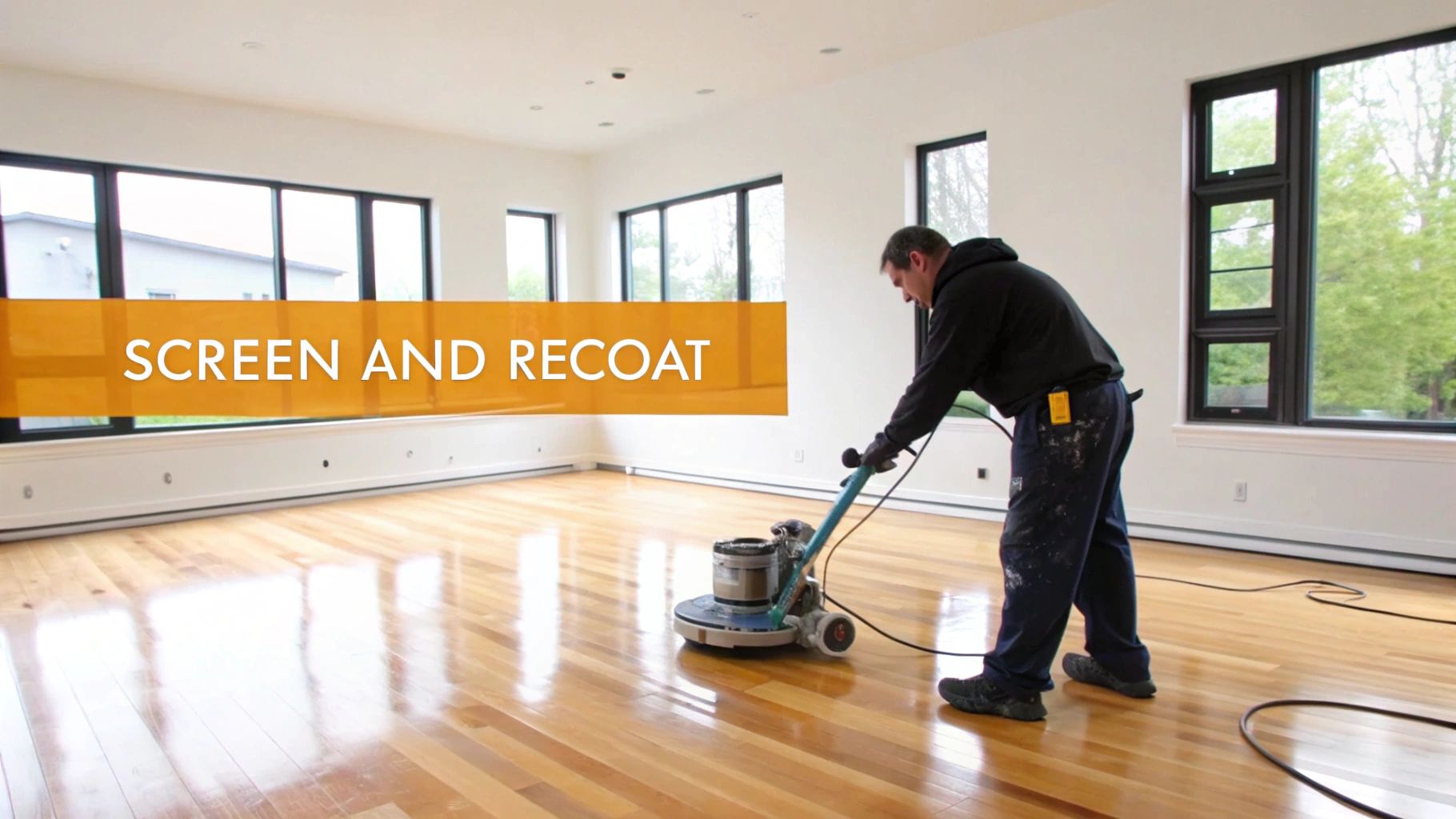
Screen and Recoat: The Smart Refresh
Our Screen and Recoat service is the perfect middle ground. It’s designed for floors that look dull and have light surface scuffs but no deep gouges that have broken through the finish to the raw wood.
Instead of sanding wood away, this process—also known as buffing—just lightly scuffs up the existing top layer of polyurethane. This creates a fresh, textured surface that a new coat of finish can grab onto, forming a strong, durable bond. It’s a fantastic way to add a new protective layer and seriously delay the need for a full sanding. If you want to see how it works, you can learn how to revive your floors in just one day with the sandless screen and recoat secret.
Hardwood Clean and Buff
Let’s be honest, sometimes your floors are just dirty. Not damaged, just covered in a stubborn layer of grime that household mops can't touch. Our Hardwood Clean and Buff service is the deep-clean your floors are begging for. We also offer specialized wax removal for older floors that have been treated with products that prevent modern finishes from adhering.
We use professional-grade equipment to lift away the ground-in dirt that builds up over the years, then we buff the surface to restore its natural luster. Think of it as an annual spa treatment for your floors that keeps the finish looking its best.
Expert Tip for Parker Homeowners: Proactive maintenance is always cheaper than reactive repairs. A periodic screen and recoat for your Parker hardwood floor refinishing project can add years to the life of your floor's current finish, pushing the next full sanding far into the future.
To help clarify which service is right for your floors, we've put together a simple comparison chart.
Floor Restoration Services Compared
| Service Type | Best For | Sanding Level | Frequency |
|---|---|---|---|
| Clean & Buff | Dull, grimy floors with no scratches | None | Annually |
| Screen & Recoat | Minor surface scuffs & dull finish | Lightly abrades the finish only | Every 3-5 years |
| Full Sand & Refinish | Deep scratches, worn-through finish, color change | Removes finish and a thin layer of wood | Every 10-15 years |
Choosing the right service at the right time is the secret to making your hardwood floors last a lifetime.
The Power of a Durable Finish
The type of finish on your floor plays a massive role in how it holds up to everyday life. At J.R. Hardwood Floor Refinishing & Cleaning, we use an advanced UV-Cure System that creates a shield far more durable than traditional polyurethane finishes.
Because it’s cured instantly with UV light, the finish becomes incredibly hard and scratch-resistant from the moment we leave. This superior protection means less wear and tear from kids, pets, and furniture, which can dramatically extend the time between refinishing cycles.
Ready to See What Your Floors Can Really Do?
So, what's the big takeaway here? It’s simple: figuring out how many times you can refinish hardwood floors isn't a simple numbers game. The real answer is hiding in your floor's construction, its wear layer, and what it’s been through over the years. Getting a professional to take a look isn't just a good idea—it's the only way to avoid a costly, irreversible mistake. This is the core of our expert Parker hardwood floor refinishing philosophy.
Your Go-To Team in Parker and Denver
For homeowners all across Parker and the greater Denver area, our crew at J.R. Hardwood Floor Refinishing & Cleaning is here to give you the straight answers you need to make the right call. We live and work here, so we get the unique challenges our Colorado climate throws at hardwood and know exactly how to protect your investment.
We bring out the big guns with our advanced dust-free sanding system. This isn't your average rental sander; it's designed for precision, taking off only the thinnest possible layer of wood. Why does that matter? It means we save the rest of that precious wear layer for future refinishes down the road.
After that meticulous prep work, we roll out our innovative UV-Cure System. This isn't just a topcoat; it's a super-durable finish that we harden instantly with a special UV light. You get incredible protection against scratches and daily wear, pushing your next refinish cycle way out. The best part? There’s zero waiting time. You can get back to living on your gorgeous new floors the very same day.
If you want to see exactly how we pull this off and why so many of your neighbors choose us, check out the benefits of working with a premier hardwood floor refinishing service near you.
Don't leave the most important feature of your home to guesswork. Let our team stop by for a free, no-pressure chat to check out your floors and show you their true potential. We're all about delivering that flawless, durable finish that makes your home shine for years to come.
A Few Questions We Hear All the Time
How Can I Tell if My Floors Are Solid or Engineered?
This is a great question, and one we get a lot from homeowners here in Parker. Figuring out what you have is the first step in any refinishing project. Luckily, there are a couple of simple tricks you can use.
The easiest way? Find a floor vent, pop off the cover, and take a peek at the cross-section of the board. If you see one solid, continuous piece of wood from top to bottom, you've got solid hardwood. If it looks more like plywood with distinct layers stacked on top of each other, that's engineered wood.
No floor vents? No problem. Check around the edge of a staircase, in an unfinished closet, or anywhere else you might find an exposed edge of a plank. That little cross-section tells the whole story and is critical for planning your Parker hardwood floor refinishing job correctly.
Why Does a UV-Cure Finish Extend My Floor’s Life?
Think of a UV-Cure finish as armor for your hardwood floors. It's a total game-changer for durability and is key to stretching the time between refinishing jobs. Traditional finishes need days, or even weeks, to air-dry and harden. Our UV-Cure System, on the other hand, uses powerful ultraviolet light to flash-cure the finish in seconds.
This instant hardening process creates an incredibly dense, non-porous shield over your wood. The result is a surface with way better resistance to scratches, scuffs, and spills. Because it's so much tougher against daily life, you can go a whole lot longer before you even think about sanding again. Fewer refinishes over the years means you get to keep more of that precious top layer of wood, giving your floors a much longer lifespan. This advanced technology is a cornerstone of modern Parker hardwood floor refinishing.
When Is a Screen and Recoat Better Than a Full Refinish?
Choosing between a "screen and recoat" and a full "sand and refinish" really boils down to one thing: the depth of the damage.
-
A Screen and Recoat is your best bet if: Your floors just look a bit tired and dull. We're talking about light, surface-level scuffs and scratches that are only in the top layer of the finish. If the actual wood underneath is untouched, a screen and recoat is the perfect, minimally invasive fix. It just lightly buffs the old finish to create a bond for a fresh, new topcoat.
-
A Full Refinish is necessary when: You're dealing with deep scratches, gouges, or dings that have broken through the finish and dug into the wood itself. You'll also need a full sanding if you want to change the stain color of your floors or if the finish has completely worn away in high-traffic spots, exposing the raw wood.
For many homes, a timely screen and recoat is the smartest, most cost-effective way to keep floors looking great and well-protected. It pushes the need for a full, wood-removing sanding job years down the road. It's a huge part of our strategic approach to Parker hardwood floor refinishing and long-term care.
Homeowners on Parker trust J.R. Hardwood Floor Refinishing & Cleaning to restore the natural beauty of their hardwood floors with our dust-free sanding system and advanced UV-curable finishes. Unlike traditional methods, our UV technology cures instantly, so you can move furniture back the same day with no lingering odor or downtime. Choose the perfect refinishing service to match your needs and home traffic. Our dust-free process ensures a clean, beautiful finish every time.
📞 Phone: 720-327-1127
🌐 Website: jrhardwoodfloorrefinishingandcleaning.com
📍 Service Area: Parker, Lone Tree, Castle Rock, Highlands Ranch, Centennial, and the surrounding Denver Metro communities.
📺 See Our Work on YouTube: Subscribe to Our Channel
