 Skip to content
So, how often should you really be refinishing your hardwood floors? The quick answer you’ll hear everywhere is every 7 to 10 years. But let's be honest, that’s just a ballpark. The real answer depends entirely on your life, your home, and how you use it. Think of it less like a rigid calendar reminder and more like a flexible guide that adapts to you. The key is to take actionable steps based on what your floors are telling you.
Your Guide to Hardwood Floor Refinishing Schedules
Figuring out the right time for a refinish isn't about guesswork; it's about paying attention to how you live. A guest bedroom that sees visitors twice a year has completely different needs than a bustling kitchen entryway—the command center for kids, pets, and daily life. Understanding your home’s traffic patterns is the first actionable insight for smart, proactive floor care.
Hardwood Floor Refinishing Frequency at a Glance
To make things a bit clearer, here’s a quick-glance table breaking down the typical timelines based on your home’s traffic and the type of flooring you have.
| Traffic Level | Typical Areas | Solid Hardwood (Years) | Engineered Hardwood (Years) |
|---|---|---|---|
| High | Kitchens, Hallways, Entryways | 3 – 5 | 3 – 5 |
| Medium | Living Rooms, Dining Rooms | 5 – 7 | 5 – 7 |
| Low | Bedrooms, Home Offices | 10 – 15+ | 10 – 15+ |
These numbers are a great starting point, but always let the actual condition of your floors be the final judge.
High, Medium, and Low Traffic Zones
The single biggest factor that determines how often to refinish hardwood floors is foot traffic. It's that simple. Homes buzzing with the energy of kids and pets might see wear and tear that calls for attention every 5 to 7 years. On the flip side, floors in quieter, low-traffic rooms can easily go 10 to 15 years—sometimes even longer—before needing a refresh.
For a quick visual, this chart shows just how much traffic impacts the timeline.
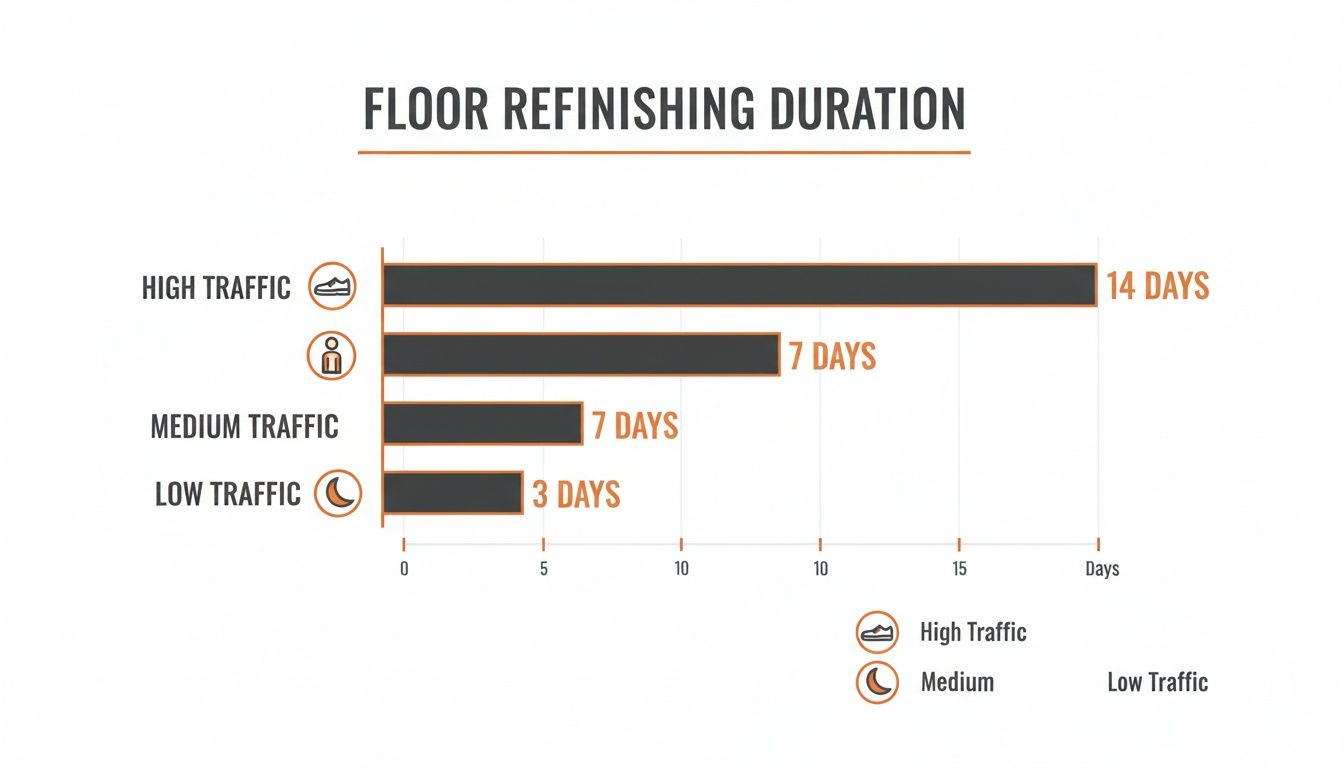
As you can see, the difference is huge. High-traffic zones need care far more frequently, often in half the time compared to the quieter corners of your home.
It makes sense when you think about it. According to the National Wood Flooring Association, a busy entryway can handle over 1,000 footsteps a day. That constant friction is what grinds down your floor’s protective finish, which is why those areas are always the first to look dull and show scratches. If you want to dive deeper into how traffic takes its toll, check out these expert insights on refinishing timelines.
Practical Example: A family with two big dogs and three active kids will probably need to refinish their living room and hallway every 5 years or so. But a retired couple living in the exact same house might wait 10-12 years for the same job, simply because their floors aren't under the same daily stress.
If you’re looking at your floors and feeling unsure about their condition, or you just want a professional eye on them, we're here to help. For a straightforward, no-obligation quote, give us a call at 720-327-1127. You can also see our team in action on our YouTube channel.
Recoating vs. Refinishing: What Your Floors Really Need
When homeowners hear the word "refinish," they often picture a huge, disruptive project—dust everywhere, a big bill, and days of inconvenience. But here’s an actionable insight from the pros: a full-blown refinish is often total overkill.
Knowing the difference between recoating and refinishing is probably the single most important piece of knowledge you can have. It’s the key to making a smart, budget-friendly decision for your home.
Think about it like taking care of a car. A recoat is just like getting your car detailed and waxed. It’s a maintenance step that spiffs up the existing protective top layer, brings back that lovely sheen, and adds a fresh shield against everyday scuffs and scratches. It’s the perfect fix for floors that look a little dull or tired but are otherwise in solid shape.
A full refinish, on the other hand, is the equivalent of taking that car to the body shop for a brand-new paint job. This is a serious restoration. We sand the floor all the way down to the bare, raw wood, which is the only way to completely erase deep gouges, ugly water stains, and years of built-up damage.
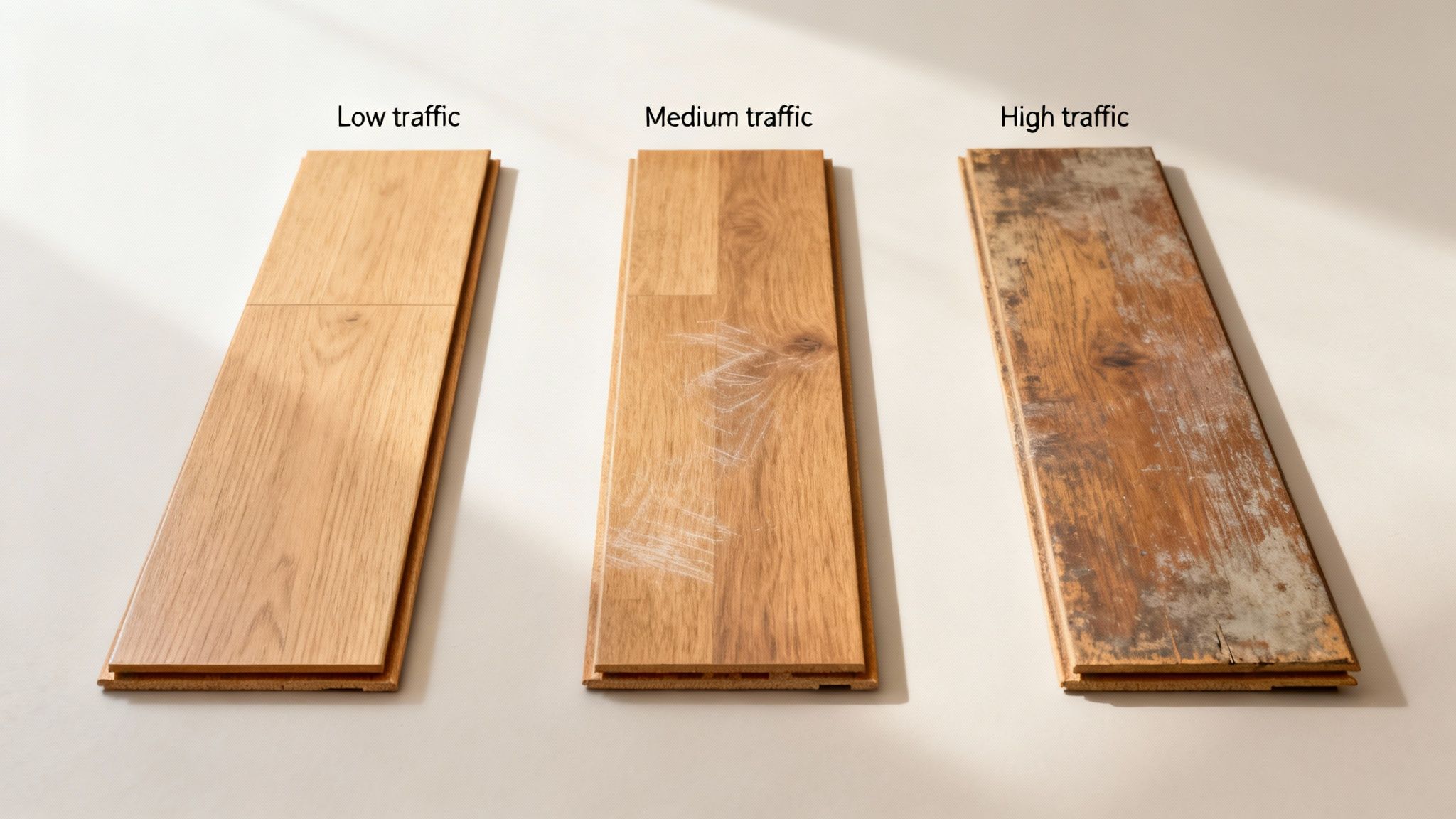
Making the Right Diagnosis
So, how can you tell what your floors are calling for? It all comes down to the depth of the damage. If the scuffs and wear are only sitting in that top layer of finish—meaning they haven't actually broken through to the wood itself—a recoat is your best friend.
Practical Example: Let's say you slide a dining chair back and it leaves a light, whitish line on the floor. If you run your fingernail over it and can’t feel a groove, and the wood's color hasn't changed, that's just a surface scuff. It’s a perfect candidate for a recoat.
But if your golden retriever’s frantic greetings have left deep claw marks where you can see the lighter, raw wood underneath, that damage has gone way past the finish. Sanding is the only solution for that kind of problem.
Actionable Insight: Proactive maintenance always beats reactive repairs. A timely recoat every 3-5 years in your busy spots can push the need for a big, disruptive refinishing project way, way down the road, saving you time and money.
The Value of a Screen and Recoat
A "screen and recoat" is our go-to for this kind of maintenance. It's a specific, less-invasive process where we lightly abrade (or "screen") the existing finish. This isn't sanding—it's more like a light exfoliation that creates a perfect surface for the new coat of finish to grab onto.
It’s fast, completely dust-free, and the results are amazing. In fact, most people are shocked when they find out we can revive their floors in just one day with a sandless screen and recoat.
Not sure which path is right for your home? Don’t guess. A professional eye can save you a lot of time and money in the long run. For a clear, honest assessment of your floor's condition, just give us a call at 720-327-1127. You can also see the kind of transformations we pull off every day over on our YouTube channel.
Reading the Signs Your Floors Need Attention
Your hardwood floors have their own way of telling you when they need some TLC. Forget marking a date on the calendar; the real trick is learning to spot the clues they give you every day. Think of it like learning their language. When you know what to look for, you can step in at just the right moment—often before a small issue turns into a major, expensive headache.
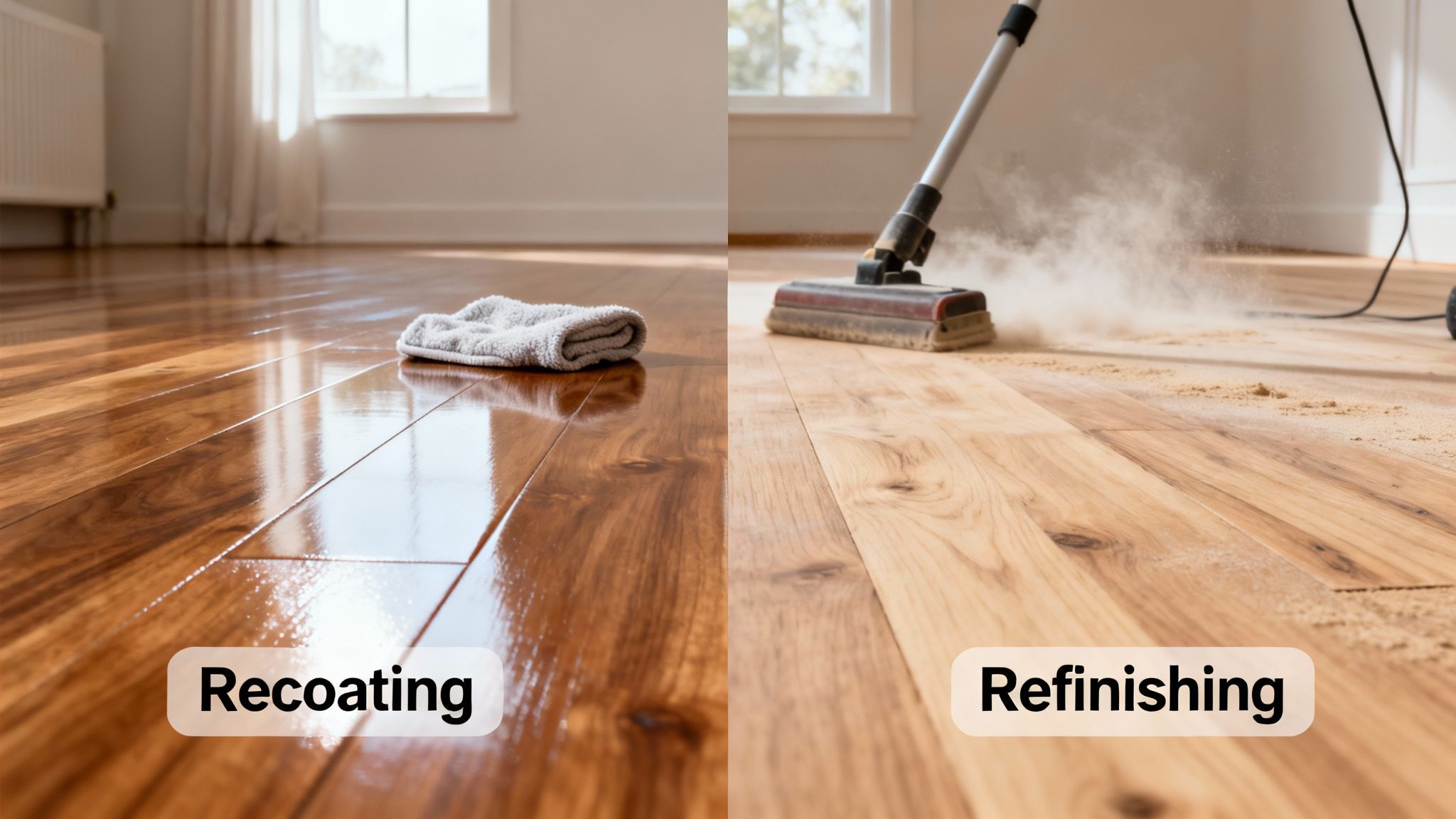
Catching these signs early usually means you can get away with a simple screen and recoat instead of a full-blown refinishing job, which saves you a ton of time and money.
The Simple Water Test
One of the quickest and most reliable ways to check your floor’s health is the water test. Your floor’s finish is its first line of defense, a protective shield against moisture. When that shield wears down, the raw wood underneath is left exposed and vulnerable.
Here’s an actionable test you can do in 60 seconds: sprinkle a few drops of water on a high-traffic spot, like the entryway or in front of the sofa, and watch what happens.
- If the water beads up nicely: Great news! Your finish is still holding strong.
- If the water slowly sinks in after a minute or two: This is a heads-up. The finish is getting thin, and it’s a good time to start thinking about a recoat.
- If the water soaks in right away and darkens the wood: Red alert. The protective seal is gone, and the wood is drinking up moisture. It’s time to call a pro, and fast.
Scratches, Dullness, and Discoloration
Beyond the water test, just using your eyes will tell you a lot about your floors' condition. Keep an eye out for these common red flags that scream, "It's time to refinish!"
Practical Example: We had a client in Denver who was going crazy because their floors looked perpetually dirty, no matter how often they mopped. The problem wasn't dirt; it was a worn-out finish in their entryway that had lost its sheen. It was trapping fine dust and creating a hazy, dull film. A professional screen and recoat brought back that shine and made cleaning effective again.
Here are the key visual cues to watch for:
- Tons of Scratches: A few surface scuffs are just part of life. But when your floor is covered in a web of scratches—especially deeper ones that reveal the lighter, raw wood underneath—it’s a clear sign you need a refinish. If your fingernail gets stuck in a scratch, it's definitely too deep for a simple recoat.
- A Stubbornly Dull Finish: Do your floors look flat and tired, even right after you’ve cleaned them? When cleaning no longer brings back the luster, it means the top layer of finish has been scuffed away by foot traffic.
- Gray or Black Areas: Now, this is a more serious warning. Gray patches mean the finish is completely gone, and water is starting to oxidize the wood fibers. Black stains are even worse, often signaling deeper, long-term water damage that needs immediate attention.
Spotting these issues early is the best way to protect your investment. For a deeper dive, check out our guide on the 5 signs your hardwood floors need refinishing. And if you see any of these warning signs in your own home, don't guess—get a professional opinion. Give us a call at 720-327-1127 for a free, no-hassle consultation.
How the Type of Wood and Finish on Your Floors Changes Everything
Not all hardwood is the same. The kind of wood you're standing on and the protective finish layered over it are the two biggest players in determining how often you'll need to refinish your floors—and if you even can. Knowing a little about the nitty-gritty details helps you make way smarter decisions for your home's future.
Think of your floor’s construction as its DNA. It sets the rules for its entire lifespan.
Practical Example: Think about a solid gold ring versus a gold-plated one. That solid ring can be buffed, polished, and repaired for generations. But the plated ring? It can only handle a few light cleanings before its thin top layer wears through, showing the cheaper metal underneath.
That’s exactly how it works with your floors.
Solid vs. Engineered Hardwood: What’s Under Your Feet?
The most important difference to understand is between solid and engineered hardwood. They might look similar, but they behave very differently over time.
- Solid Hardwood: This is the real deal—classic 3/4-inch thick planks of nothing but pure wood. Its thickness is its superpower, giving it enough material to be sanded down and brought back to life over and over again. A well-cared-for solid hardwood floor isn't just a floor; it's a lifetime investment that can handle 6-10 full refinishing cycles.
- Engineered Hardwood: This is a more modern construction, with a core of plywood or high-density fiberboard topped by a thin slice—or veneer—of real wood. That top "wear layer" is what matters. A flimsy veneer might only survive 1-2 light sandings, while a premium, thicker one could potentially handle up to 3 refinishes.
This is a make-or-break distinction. Each time a floor is refinished, the sanding process removes about 1/32 to 1/16 of an inch of wood. With solid hardwood, you have plenty to spare. With engineered, you have a much smaller window before you hit the core material. For a deeper dive, you can learn more about how refinishing impacts different oak floors.
How Protective Finishes Change the Game
The clear coat protecting your wood also dictates your maintenance schedule in a huge way. It’s the floor’s first line of defense against scratches, spills, and foot traffic.
Practical Example: A traditional oil-based polyurethane is a workhorse, known for its incredible durability and slow, even wear. It just lasts. The trade-off? It tends to "amber," or yellow, as it ages. On the other hand, water-based polyurethane stays crystal clear, won't yellow, and dries way faster, but you might find yourself needing to recoat it a bit sooner, especially in busy hallways or kitchens.
Figuring out what kind of floors you have is the first step toward caring for them properly. If you're scratching your head, wondering what's in your home or how many lives it has left, a professional can give you clear answers.
For a free, no-pressure evaluation in the Denver area, give us a call at 720-327-1127 or check out some of our transformations on our YouTube channel.
Simple Habits to Extend Your Floor's Lifespan
The secret to putting off a full refinish for years? It’s not some magic formula—it’s the small, smart things you do every day. Building a few simple habits into your routine can dramatically extend the life and beauty of your hardwood, pushing that big, disruptive job way down the road. These little steps are your best defense against premature wear and tear.
Think of your floor’s finish as a shield. The real goal is to protect that shield, not just patch it up after it’s been damaged. Every bit of dirt, grit, and sand that gets tracked into your home acts like fine-grit sandpaper, slowly grinding away that protective layer with every single footstep.
Your First Line of Defense
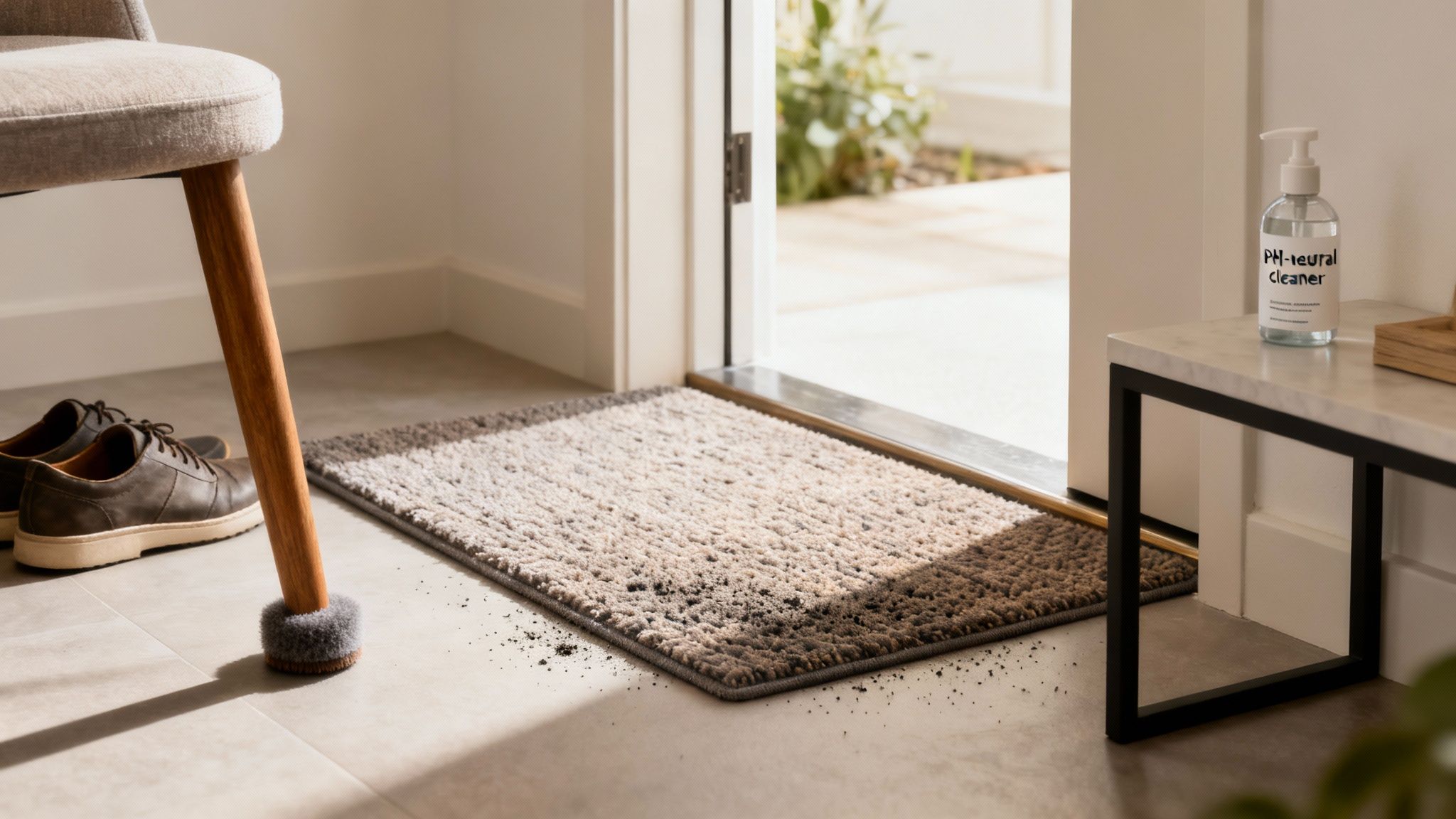
Honestly, the easiest win in floor protection starts right at your front door. A good quality doormat isn't just a suggestion; it's a must-have. Put one outside to catch the heavy stuff and another one just inside to grab the finer dust and grit. This simple two-mat system can trap up to 80% of the dirt before it ever even touches your hardwood.
Another incredibly powerful habit? A "no shoes in the house" rule. I know, it can feel a bit strict, but it’s one of the most effective ways to slash the constant abrasion that dulls your floor's finish over time.
Smart Cleaning The Right Way
When it comes to your weekly cleaning routine, how you clean is just as important as how often you do it. The trick is using the right tools and products so you don’t accidentally damage the very surface you’re trying to save.
- Sweep or Vacuum Regularly: Use a soft-bristle broom or a vacuum with a proper hardwood floor attachment. You’re just trying to get those abrasive little particles up and out of the way.
- Use a pH-Neutral Cleaner: When it’s time to mop, always grab a pH-neutral cleaner made specifically for hardwood. Harsh, all-purpose chemicals can strip the finish right off.
- Damp, Not Wet: Your mop should be lightly damp, never soaking wet. Standing water is hardwood’s absolute worst enemy.
Actionable Insight: Please, never, ever use a steam mop on your hardwood floors. The combination of intense heat and moisture forces water deep into the wood grain, which can cause permanent damage and completely ruin your finish. On that same note, stay away from those DIY vinegar solutions—the acid can slowly eat away at the polyurethane.
Little protective measures also make a huge difference. Stick felt pads under every piece of furniture—chairs, tables, sofas, you name it. This simple step prevents the thousands of tiny micro-scratches that build up over the years. For a visual guide on these easy but effective techniques, check out the videos on our YouTube channel.
If you have questions about the best products for your specific type of floor, just give us a call at 720-327-1127 for some straightforward advice.
Hiring a Pro: What to Expect and Key Questions to Ask
Let's be honest, the thought of a DIY floor refinishing project can be tempting. You save some money, get a good workout… what could go wrong? A lot, actually. When it comes to hardwood, small mistakes can quickly turn into big, irreversible damage.
That’s why hiring a seasoned professional is almost always the smartest (and safest) investment for your home. But what does that process actually look like from start to finish?
It all starts with a detailed consultation. A true pro will come to your home, get down on their hands and knees to assess your floor's condition, and then have a real conversation with you. They'll ask about your lifestyle—do you have kids? A 100-pound golden retriever? They’ll use that info to explain the best finish options for your life, not just the one that’s easiest for them.
Key Questions to Ask Your Contractor
This initial meeting is your time to vet them. Don’t be shy! A reputable contractor will welcome your questions and give you clear, confident answers. You’re inviting them into your home, so you deserve to know exactly what to expect regarding dust, fumes, and the project timeline.
Here’s an actionable checklist of questions you should always ask before signing on the dotted line:
- Are you licensed and insured? This is the first and most important question. It's a non-negotiable that protects you and your home from any potential accidents.
- What kind of dust containment system do you use? Modern "dustless" sanding systems are incredible, but they're not 100% dust-free. Ask about their specific equipment and what their cleanup process looks like. A pro will be upfront about this.
- What finish do you recommend for my floors, and why? The answer should be tailored to you. For example, a family with a big dog and active kids needs a much more durable, scratch-resistant finish than a single person living in a quiet condo. If they give a generic answer, it's a red flag.
- What's the full timeline, including curing time? Get a clear start and end date for the work itself, but also ask the critical follow-up: how long do we really need to stay off the floors for the finish to fully harden? A good contractor will explain the difference between "dry to walk on" and "fully cured."
Actionable Insight: Knowing the right questions to ask can make all the difference. While DIY seems cost-effective on the surface, hiring a professional can save you from costly mistakes that haunt you for years. To really dig into what's involved, check out our detailed comparison of DIY vs. professional hardwood floor refinishing.
Here at our company, we believe transparency is everything. We welcome these questions and are always happy to walk you through our entire process, from that first phone call to the final walkthrough.
Ready to chat with a pro who will give you straight answers? For a no-obligation consultation, give us a call at 720-327-1127.
A Few Final Questions We Hear All the Time
Even after you've decided to refinish, a few questions always seem to pop up. And that's a good thing! Getting clear, honest answers is the best way to avoid surprises and feel totally confident about the project. Here are some of the most common ones we get from homeowners just like you.
Can I Stay in My Home During the Refinishing Process?
Technically, you can for smaller jobs, but we really, really recommend finding somewhere else to crash for a night or two. Here’s why: even with the best dust containment systems in the world, the sanding process kicks up super fine particles into the air.
More importantly, the professional-grade finishes we use have some potent fumes for the first 24-48 hours. Staying away not only keeps you comfortable but also gives the finish a chance to cure perfectly, without any accidental footprints or dust settling in. It’s the secret to that flawless, glass-like result.
How Much Does It Cost to Refinish Hardwood Floors in Denver?
In the Denver area, you can generally expect to pay somewhere between $4 to $8 per square foot. The final price tag really depends on a few things, like the current state of your floors, the total square footage, and the type of finish you choose.
Practical Example: A simple screen and recoat is going to land on the lower end of that range. But if you need a full sand-and-refinish with repairs for deep gouges or serious stains, you’ll be looking at the higher end. The best way to know for sure is to get an exact quote for your home. Give us a call at 720-327-1127, and we’ll give you a detailed, transparent estimate with zero hidden fees.
Will Refinishing Get Rid of Pet Stains and Deep Scratches?
A full refinishing job is a miracle worker for most signs of wear and tear, including the vast majority of scratches. When it comes to pet stains, though, it all comes down to how deep the damage goes. If it’s just a surface-level spot, we can often sand it right out.
Practical Example: If a pet stain has soaked deep into the wood and turned it black, that means the damage is now part of the wood fiber itself. In those situations, sanding alone won't fix it—the board will likely need to be replaced to get rid of that deep-set stain for good.
We can take a look at any problem areas during an in-home visit and tell you exactly what it will take to get a beautiful, uniform look across your entire floor.
Ready to stop wondering and start planning? The crew at J.R. Hardwood Floor Refinishing & Cleaning is here to help. For a free, no-pressure quote or to see what we can do, check out our YouTube Channel or explore our services at https://jrhardwoodfloorrefinishingandcleaning.com.
Article created using Outrank