
TL;DR:
- Colorado’s dry climate causes hardwood floors to crack, warp, and develop gaps.
- Professional floor care preserves floor lifespan and boosts home resale value significantly.
- Choosing certified specialists who understand humidity control prevents costly damage.
Your floors can start showing serious damage within a single Colorado winter, and many homeowners never see it coming until the repair bill arrives. Colorado’s notoriously dry climate is harder on hardwood than almost any other environment in the country, and standard DIY cleaning routines often make things worse rather than better. Whether you own a cozy ranch home in Castle Rock or manage a busy commercial space in Denver, commercial floor maintenance is not a one-size-fits-all task. In this guide, we break down why hiring floor care specialists is one of the smartest decisions you can make for your home and your wallet.
Table of Contents
- The unique challenges of Colorado floor care
- Expert techniques vs. DIY: What homeowners often miss
- How specialists maximize the value and lifespan of your floors
- Choosing the right floor care specialist in Colorado
- The uncomfortable truth most homeowners don’t hear about floor care
- How J.R. Hardwood Floor Refinishing & Cleaning can help
- Frequently asked questions
Key Takeaways
| Point | Details |
|---|---|
| Colorado’s climate requires expertise | Dry winters can damage floors without proper professional care. |
| DIY risks costly errors | Homeowners often overlook humidity and cleaning guidelines, leading to expensive repairs. |
| Specialists maximize ROI | Professional care recovers most of your investment in resale value and extends floor lifespan. |
| Choosing the right specialist | Ask about certifications and maintenance routines to ensure quality floor care. |
The unique challenges of Colorado floor care
Colorado is beautiful, but the climate is not exactly kind to wood floors. The state sits at high altitude with extremely low humidity, especially during winter months. That dry air pulls moisture right out of your hardwood, and the results are not pretty.
Here is what low humidity does to your floors:
- Gaps between boards that widen over time
- Warping and cupping, where boards bend or bow at the edges
- Surface cracking, especially in older or thinner finishes
- Squeaking and shifting, which signals movement in the subfloor connection
- Finish peeling, because adhesion weakens without stable moisture levels
According to data on wood warping and gaps, Colorado’s low humidity is a leading cause of these issues in both residential and commercial properties. The wood literally shrinks as it dries out, and once those gaps form, dirt and debris work their way in and cause even more damage.
The good news? These problems are largely preventable. Floor care specialists know how to prevent hardwood floor damage by monitoring and stabilizing the environment your floors live in. Professionals recommend maintaining indoor relative humidity (RH) between 35 and 55 percent year-round, and floor care pros use calibrated tools to ensure that range is consistently met before and after any service.
Most homeowners skip this step entirely. They mop, sweep, and maybe use a store-bought cleaner, but they never think about what the air is doing to the wood itself. That is the gap between proper floor care and just going through the motions.
Pro Tip: Pick up a simple hygrometer (a device that measures indoor humidity) at any hardware store. Keeping tabs on your home’s humidity levels is one of the easiest and cheapest ways to protect your floors between professional visits.
Now that you know why floors in Colorado need special attention, let’s break down what professionals do differently.
Expert techniques vs. DIY: What homeowners often miss
There is a reason professional floor care is a skilled trade. It takes more than a mop and a YouTube tutorial to keep hardwood floors in top shape, especially in a state like Colorado.
The National Wood Flooring Association (NWFA) has clear guidelines: use pH-neutral cleaners, apply minimal moisture, and never use waxes or oils on factory-finished floors. Most DIYers unknowingly break at least one of these rules every time they clean.
Common DIY mistakes include:
- Using too much water when mopping, which soaks into seams and causes swelling
- Applying wax or oil-based products to factory finishes, which creates a cloudy buildup
- Using steam mops, which force heat and moisture directly into the wood grain
- Skipping regular maintenance, which lets scratches and dullness build up into bigger problems
- Ignoring humidity, as discussed above, which compounds every other issue
Here is a quick comparison so you can see the full picture:
| Factor | Professional care | DIY care |
|---|---|---|
| Product selection | pH-neutral, finish-compatible | Often harsh or incorrect |
| Moisture control | Carefully managed | Frequently overlooked |
| Technique | NWFA-aligned, tested methods | Trial and error |
| Warranty impact | Preserved | Often voided |
| Material waste | Minimized | 15 to 20% higher waste |
| Long-term cost | Lower overall | Higher due to repairs |
That last row is the one that stings. DIY might feel like savings in the moment, but mistakes can void your floor’s warranty and lead to expensive fixes that cost far more than a professional service would have. We have seen it happen more times than we can count.
The smarter move is to understand the real difference between DIY vs. professional refinishing before making that call. And if you have already run into some trouble, check out the most common floor refinishing mistakes Colorado homeowners make so you know what to watch for.
Pro Tip: Before buying any floor cleaner, flip the bottle and check the pH level. Anything above 7 (alkaline) can slowly break down your finish. If the label does not list pH, that is already a red flag.
With the differences in technique clear, let’s look at the real financial and practical benefits of hiring floor care specialists.
How specialists maximize the value and lifespan of your floors
Think of professional floor care like going to the dentist. A little preventive maintenance costs far less than a root canal later. The same logic applies to your floors, and the numbers back it up.
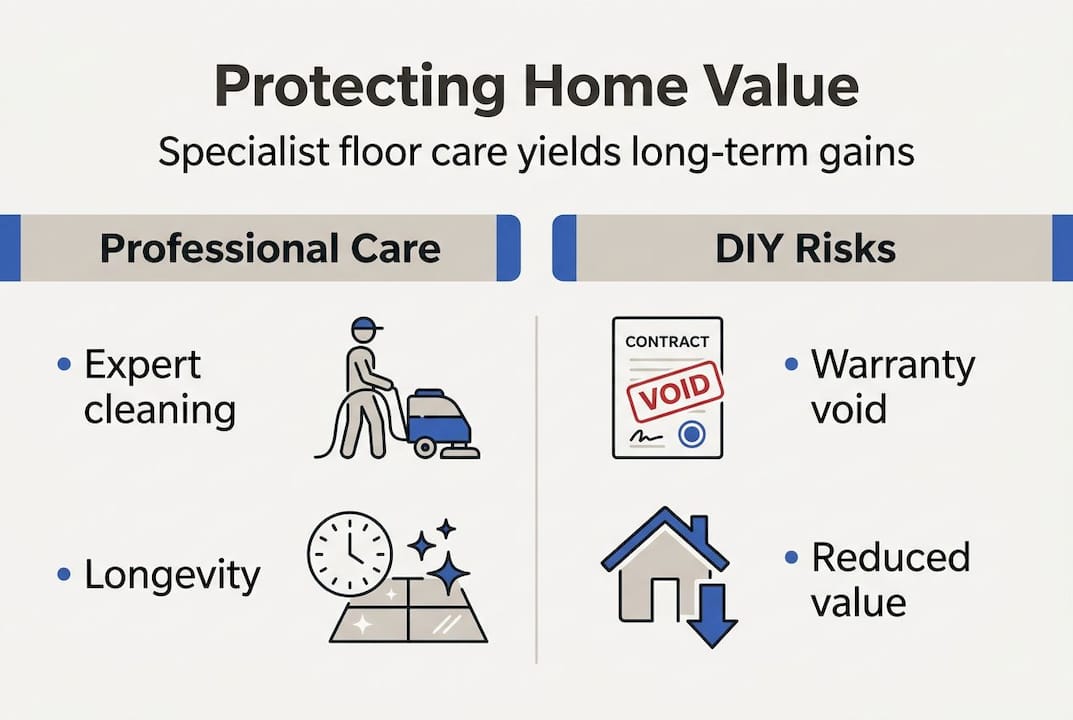
Professional floor care delivers a 70 to 80 percent recovery on investment when it comes to home resale value. That means if you spend $2,000 on refinishing before selling your home, you could recover $1,400 to $1,600 of that in your sale price. Floors are one of the first things buyers notice, and beautiful hardwood creates a warm, inviting feeling that photographs and showings can not fake.
Here is a look at how the numbers compare:
| Scenario | Estimated cost | Outcome |
|---|---|---|
| Professional maintenance (annual) | $200 to $500 | Extended floor life, preserved finish |
| DIY maintenance gone wrong | $300 to $800+ | Possible warranty void, surface damage |
| Full professional refinishing | $1,500 to $3,000 | Like-new appearance, 10+ years added |
| Floor replacement after neglect | $5,000 to $15,000+ | Complete disruption, high cost |
The case for specialists becomes even clearer when you think about floor lifespan. Properly maintained hardwood can last 100 years or more. Neglected floors rarely make it past 20 to 30 years before needing full replacement.
The benefits of specialist care go beyond just avoiding disasters:
- Early detection of small issues before they become expensive repairs
- Finish preservation that keeps floors looking fresh between refinishing cycles
- Expert product use that cleans thoroughly without stripping or dulling the surface
- Humidity monitoring that protects the wood at its core, not just on the surface
For homeowners thinking about selling, understanding floor refinishing ROI is a game changer. And if you are weighing your flooring options, knowing the best flooring for resale helps you make smarter choices. The goal is always to preserve hardwood floor life for as long as possible, and that starts with the right care team.
Choosing the right floor care specialist in Colorado
Not all floor care companies are created equal. Knowing what to look for saves you from hiring someone who does more harm than good.
To harness these benefits, knowing how to choose a reputable floor care specialist is key. Start by asking the right questions:
- Are you familiar with Colorado’s climate challenges? A good specialist will bring up humidity right away.
- What products do you use, and are they NWFA-compliant? This signals professional knowledge.
- Do you offer a satisfaction guarantee? Confidence in their work matters.
- Can you provide references or reviews? Verified 5-star reviews across multiple platforms speak for themselves.
- Do you assess my floor’s condition before quoting? A free phone quote with photo review shows transparency.
Look for these signs of quality workmanship:
- NWFA certification or affiliation
- Clear written scope of work before any service begins
- Eco-friendly, finish-safe products
- Detailed explanation of humidity control during and after the job
- Proven process documentation, like videos or before-and-after photos
“Professionals who follow proven maintenance procedures protect your floors from the hidden mistakes that most homeowners never even realize they are making.”
A good specialist also walks you through proper floor care tips so you can maintain your results between visits. They are not just there to do a job and leave. They want your floors to stay beautiful long after they pack up. Ask about their recommended step-by-step maintenance routines and whether they offer guidance between service visits.
Pro Tip: Always ask a potential specialist how they handle humidity control during the job itself. Sanding and refinishing can temporarily change the moisture balance in your home. A professional will account for this; an amateur will not.
The uncomfortable truth most homeowners don’t hear about floor care
Having explored how to find the right specialist, here is what most guides do not tell you about floor care in Colorado.
Most homeowners treat floor care as something reactive. The floor looks bad, so they call someone. But by the time visible damage shows up, the real damage has already been happening for months, sometimes years, beneath the surface. Low humidity causes micro-movement in wood boards constantly. Factory finishes absorb wrong products slowly. Subfloor connections loosen over time from temperature swings.
The homeowners who get the most value out of their floors are not the ones who refinish most often. They are the ones who prevent the need for refinishing in the first place. Real specialist care is about catching what you cannot see before it becomes what you cannot ignore.
We have seen floors that looked “fine” from the outside crumble during sanding because years of humidity neglect had weakened the wood internally. No DIY routine catches that. The common floor care mistakes we see most often are not dramatic errors. They are quiet, consistent oversights that quietly drain your floor’s life and your home’s value.
Investing in expert care is not a luxury. In Colorado’s climate, it is genuinely the smarter financial choice.
How J.R. Hardwood Floor Refinishing & Cleaning can help
If you are ready to protect your investment and enjoy lasting floors, here is how our team can help.
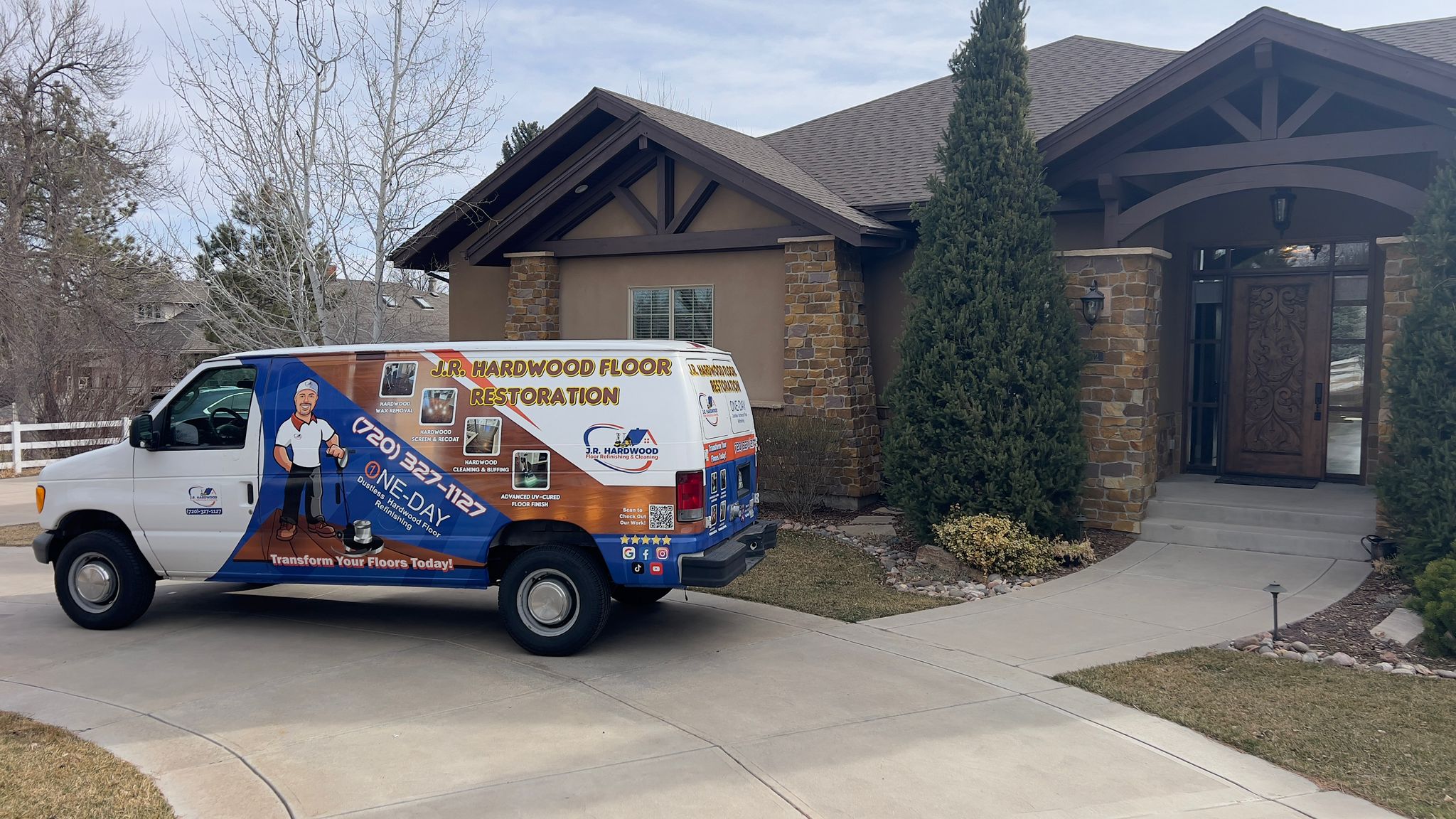
At J.R. Hardwood Floor Refinishing & Cleaning, we specialize in exactly the kind of care Colorado floors need. From hardwood refinishing and screen and recoat to eco-friendly clean and buff services, we handle it all with precision and care. Our team understands Colorado’s climate, uses only finish-safe products, and provides free over-the-phone quotes so there are no surprises. Whether you want to explore our professional refinishing services, read through our complete refinishing guide, or simply want to talk to floor care specialists who genuinely care about your home, we are here and ready. Let’s give your floors the attention they deserve.
Frequently asked questions
Why is humidity control so important for hardwood floors in Colorado?
Colorado’s dry climate causes wood to shrink and expand rapidly, which leads to warping and gaps unless indoor humidity stays between 35 and 55 percent. Maintaining that range year-round is the single most important thing you can do for your floors.
What are the most common DIY floor care mistakes?
The biggest DIY errors include using too much water, applying waxes or oils to factory finishes, and using harsh alkaline cleaners, all of which the NWFA advises against. These mistakes can damage the finish, void warranties, and shorten your floor’s lifespan.
Will hiring specialists increase my home’s resale value?
Absolutely. Professional floor care can recover 70 to 80 percent of the cost in added resale value, making it one of the highest-return home improvement investments you can make before listing.
What should I ask before hiring a floor care specialist?
Ask about their certifications, product choices, satisfaction guarantees, and how they handle humidity control. Specialists who follow proven maintenance procedures will answer these questions confidently and without hesitation.
