 Skip to content
Starting a flooring project in Denver usually begins the same way. You know the room needs help, you know the old floor isn’t cutting it anymore, and five minutes into shopping you’re staring at planks, adhesives, underlayments, finishes, and trim profiles that all claim to be the right choice.
That confusion gets worse when you’re balancing style with performance. A Denver Square near Capitol Hill may call for real hardwood floor refinishing, while a newer townhome in RiNo or a rental near Sloan’s Lake may be better served by LVP or laminate. Add pets, snow melt, dry air, and busy households, and the wrong material or finish can create a mess you’ll be living with every day.
The difference between a big-box aisle and a professional flooring supply denver co wholesaler is simple. One is built for broad consumer traffic. The other is built around jobsite performance, system compatibility, and repeatable results.
That matters even more if you’re comparing traditional coatings with a Denver hardwood floor refinishing UV- Cure System approach. The finish itself is only part of the story. The prep, adhesive choice, moisture control, flatness of the subfloor, and the supplier behind the materials all affect whether the job lasts or fails early.
Your Denver Flooring Project Starts Here
A homeowner in Wash Park might walk in wanting “something durable.” A property manager in Cherry Creek usually asks for “something that looks clean and holds up.” A small contractor in Lakewood is often trying to solve a different problem, which is getting pro-grade material quickly without risking callbacks.
Those sound like different jobs, but they all hinge on the same question. Are you buying flooring, or are you buying a full flooring system?
Big-box convenience versus supply-house logic
Big-box stores work well for basic browsing. You can compare colors, pick up a few tools, and get a rough sense of price tiers.
A professional supply house works differently. The staff usually thinks in terms of substrate, wear layer, moisture conditions, finish compatibility, and install sequence. That’s the mindset that keeps floors tight, flat, and serviceable years later.
Field reality: Most flooring failures don’t start with the plank you can see. They start with the material or prep choice you can’t.
For Denver homeowners, that distinction matters because local conditions are hard on bad decisions. Dry winters can stress wood. Entryways collect grit. Dogs track in moisture. Older homes in neighborhoods like Park Hill or Congress Park often hide uneven subfloors under existing finishes.
What good buyers ask before they buy
Before choosing a floor, pin down these basics:
- Room use: A main-floor family room needs a different strategy than a quiet upstairs bedroom.
- Moisture exposure: Basements, mudrooms, and lower levels need stricter product selection.
- Traffic type: Kids, dogs, rolling chairs, and tenant turnover all change the answer.
- Recovery plan: Some floors can be renewed. Others are more replacement-driven.
A strong local guide helps connect those dots. If you’re trying to sort through installation options, refinishing, or replacement, this overview of flooring services is a useful next step: https://jrhardwoodfloorrefinishingandcleaning.com/services/
Choosing Your Material Hardwood LVP and Laminate
Material choice is where many individuals either save their project or set up future regrets. In Denver, hardwood floor refinishing UV- Cure System projects make sense when the home already has quality wood worth preserving. In other homes, new LVP or laminate may be the more practical route.
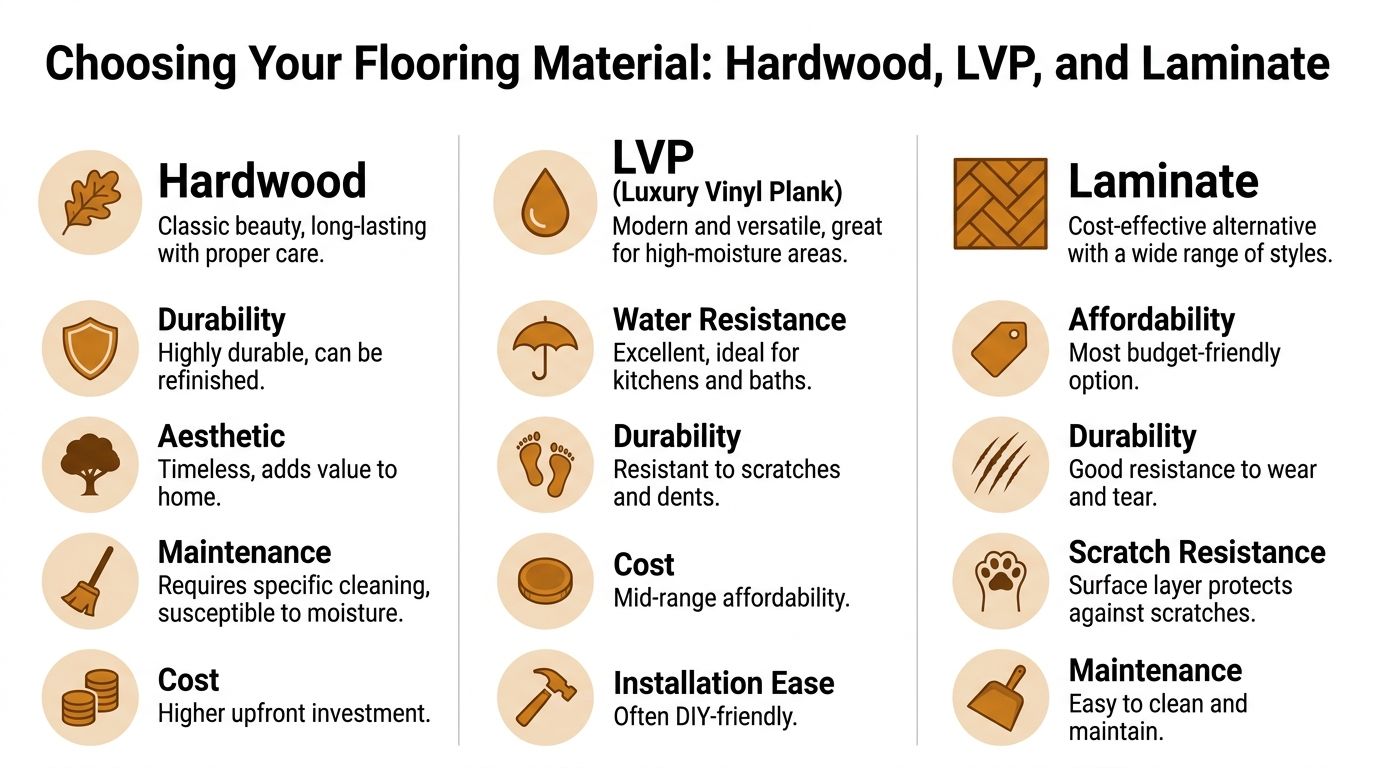
Flooring Comparison for Denver Homes
| Feature | Solid Hardwood | Luxury Vinyl Plank (LVP) | Laminate |
|---|---|---|---|
| Look | Natural grain and character | Wide design range | Good wood-look visuals |
| Repair path | Can often be refinished | Usually plank replacement | Usually board replacement |
| Moisture tolerance | Lower | Strong | Moderate, varies by product |
| Pet practicality | Good with the right finish | Very good | Good surface resistance |
| Long-term style | Classic | Modern and flexible | Budget-friendly versatility |
| Best fit | Historic homes, premium interiors | Busy families, rentals, commercial settings | Cost-conscious remodels |
Hardwood when the house deserves it
Hardwood still has the best visual depth. Nothing printed fully duplicates real oak, maple, or walnut under clean light.
In Denver, hardwood is often the right answer in older homes with original character. It also fits buyers who care about long-term renewal instead of disposable flooring. If the wood species and board thickness are right, refinishing keeps the floor in service far longer than a surface-only product.
The catch is that wood is less forgiving. It demands better moisture control, smarter seasonal expectations, and careful finish selection. That’s where a hardwood floor refinishing UV- Cure System often stands out for pet owners and busy households who want durability without extended downtime.
LVP when daily life is rough on floors
LVP earns its place because it handles chaos well. It’s practical for homes with dogs, kids, heavy kitchen use, and rental turnover.
It also works in areas where homeowners want the wood look without wood’s sensitivity. Many Denver basements, lower levels, and remodels near Central Park or Highlands Ranch are good candidates.
There’s also a commercial angle. According to this guidance on professional flooring product categories, 52% of Denver property managers prioritize low-VOC finishes and searches for eco-focused commercial floor supply information have climbed 41% in a recent period, which shows how much buyers want practical sustainability guidance without guesswork: https://www.professionalflooring.com/product-categories/
Laminate when value matters most
Laminate has improved a lot. The better lines look cleaner, feel sturdier underfoot, and can work well in bedrooms, offices, and moderate-traffic spaces.
It’s still a category where cheap product causes the most disappointment. Locking systems, core quality, edge integrity, and underlayment pairing all matter. If you’re exploring that path specifically, this Denver laminate flooring page helps clarify where laminate fits best: https://jrhardwoodfloorrefinishingandcleaning.com/laminate-flooring-denver/
Match the floor to the design, not just the sample board
Many people choose flooring in isolation, and that’s a mistake. The better move is to match the material to the home’s overall look, whether that leans modern, transitional, farmhouse, or classic. This guide to different types of interior design is useful if you’re trying to figure out whether wide-plank LVP, traditional strip hardwood, or a lighter laminate fits the room.
A floor doesn’t live on a showroom rack. It lives next to your cabinetry, trim, paint, furniture, and daylight.
How to Vet a Professional Flooring Supply in Denver CO
Not every supplier deserves the same level of trust. If you’re evaluating a professional flooring supply denver co source, look past the display racks and ask whether the business can support the job before, during, and after install.
Start with stability and local footprint
A supplier with staying power usually gives contractors and owners better odds of smooth reorders, matching transitions, and consistent product support. One local benchmark is Professional Flooring Supply in Denver. According to its Better Business Bureau profile, PFS was founded in 1977, its Denver branch has operated for 29 years, and the company has 16 stores across 8 states with $22.4 million in annual revenue, which signals the kind of supply stability pros value on active jobs: https://www.bbb.org/us/co/denver/profile/wholesalers-and-distributors/professional-flooring-supply-1296-1000106140
That kind of scale matters when a project can’t afford missing adhesive, delayed trim, or a mismatch on specialty prep materials.
Inventory depth matters more than showroom breadth
A polished showroom is nice. What matters more is whether the supplier stocks the parts that prevent failure.
Ask whether they carry systems for:
- Subfloor prep: Patches, leveling compounds, moisture-control products, and primers.
- Installation support: Underlayments, trims, transitions, reducers, and stair parts.
- Finish compatibility: Products that work with specific recoats, water-based systems, or UV-cure workflows.
- Commercial maintenance: Coatings, cleaners, and floor care materials that keep high-traffic spaces serviceable.
A supplier built for professionals usually stocks what the job needs, not just what looks good in a sample book.
Pay attention to the counter staff
Good counter staff can save a project. Weak counter help can sabotage it.
You want people who ask follow-up questions. What’s the substrate. Slab or wood. Grade level or below grade. Floating floor or glue-down. Existing finish or full removal. Those questions aren’t small talk. They tell you whether the recommendation is based on performance or guesswork.
If you want to compare local supplier options more broadly, this roundup of Denver flooring stores is useful: https://jrhardwoodfloorrefinishingandcleaning.com/flooring-stores-denver-co/
Questions smart buyers ask at the counter
Use these when you’re evaluating any supply house:
- What underlayment or adhesive does this product require? If the answer is vague, that’s a red flag.
- What usually goes wrong with this material in Denver homes? Good staff will tell you.
- How do you handle special-order lead times? Delays wreck schedules.
- Can this product work with a UV-cure finishing plan or later refinishing strategy?
- What prep materials do you recommend for a concrete subfloor with minor imperfections?
- If I need matching trim later, will this line still be available?
Counter test: If the person helping you can only talk about color and price, keep looking.
What works and what doesn’t
What works is a supplier with depth, local presence, and staff who understand install systems, not just surfaces.
What doesn’t work is buying from a place that treats every floor like a simple box of planks. Floors aren’t simple. The successful jobs are the ones where the supplier, installer, prep materials, and finish all agree with each other.
The Critical Supplies Hiding Beneath Your Floors
The visible floor gets all the attention. The hidden layers decide whether it stays beautiful.
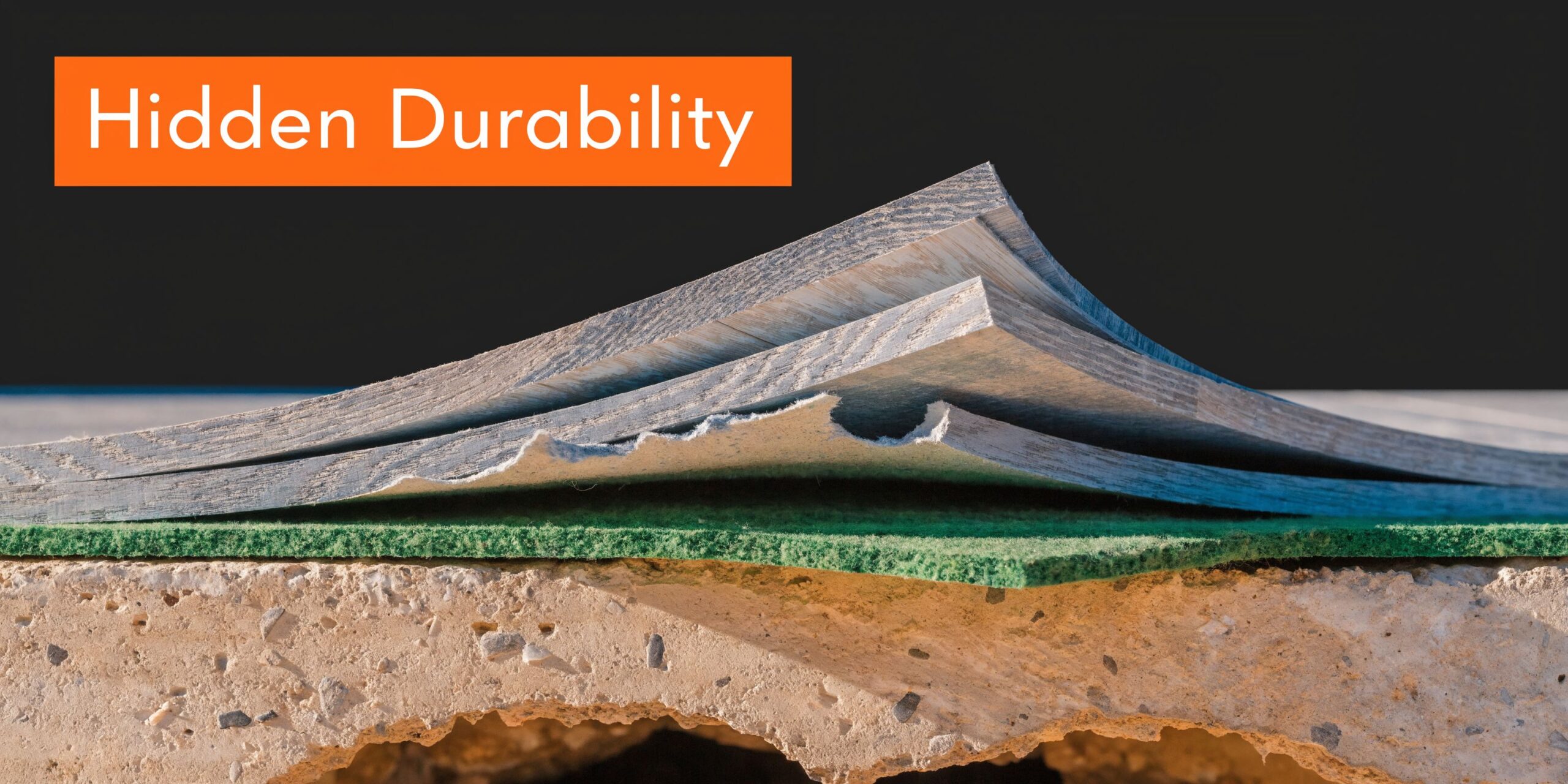
Subfloor prep decides the outcome
If the subfloor is dirty, damp, cracked, soft, or uneven, the finished floor inherits those problems. That applies to hardwood, LVP, and laminate alike.
According to this professional flooring installation overview, proper subfloor preparation includes thorough moisture testing, checking that the floor is flat, patching imperfections, and ordering an extra 5-10% of material to cover cuts, waste, and future repair needs: https://www.proflooringinstallers.com/what-to-expect-during-professional-flooring-installation/
That extra material isn’t wasteful. It’s practical. Running short in the middle of an install creates delays, dye-lot headaches, and rushed substitutions.
Adhesives and underlayments are not interchangeable
This is one of the biggest DIY misconceptions. People assume one adhesive is as good as another, or that any underlayment sold on a shelf will do the job.
It won’t.
Some floors need better sound control. Some need vapor management. Some demand a specific adhesive spread rate and cure profile. Others perform best as a floating assembly with the right pad beneath them. If you’re weighing those choices on wood flooring specifically, this guide to the best underlayment for hardwood floors is worth reviewing: https://jrhardwoodfloorrefinishingandcleaning.com/best-underlayment-for-hardwood-floors/
Finishes are where homeowners feel the difference
For homes with pets, finish choice often matters more than species choice. A beautiful floor with the wrong finish gets scratched, dulled, and stressed quickly.
Traditional finishes still have their place, especially when schedule flexibility isn’t a concern. But for homeowners who want fast return to service, cleaner indoor conditions, and stronger wear resistance, UV-cure systems solve problems older finish schedules don’t solve well.
The finish isn’t just about sheen. It’s about how the floor lives under dogs, chairs, spills, and everyday abuse.
That’s one reason professional selection matters. The right crew doesn’t just know how to sand or install. They also carry insurance, understand system compatibility, and manage risk correctly. If you’re comparing contractor credentials in general, this plain-English explanation of bonded vs. insured gives homeowners a helpful baseline.
DIY Supply vs Professional Installation A Cost and Risk Analysis
A lot of homeowners are tempted by pro-grade materials. That instinct makes sense. Better products can lead to better floors.
The problem is that product access and installation skill are not the same thing.
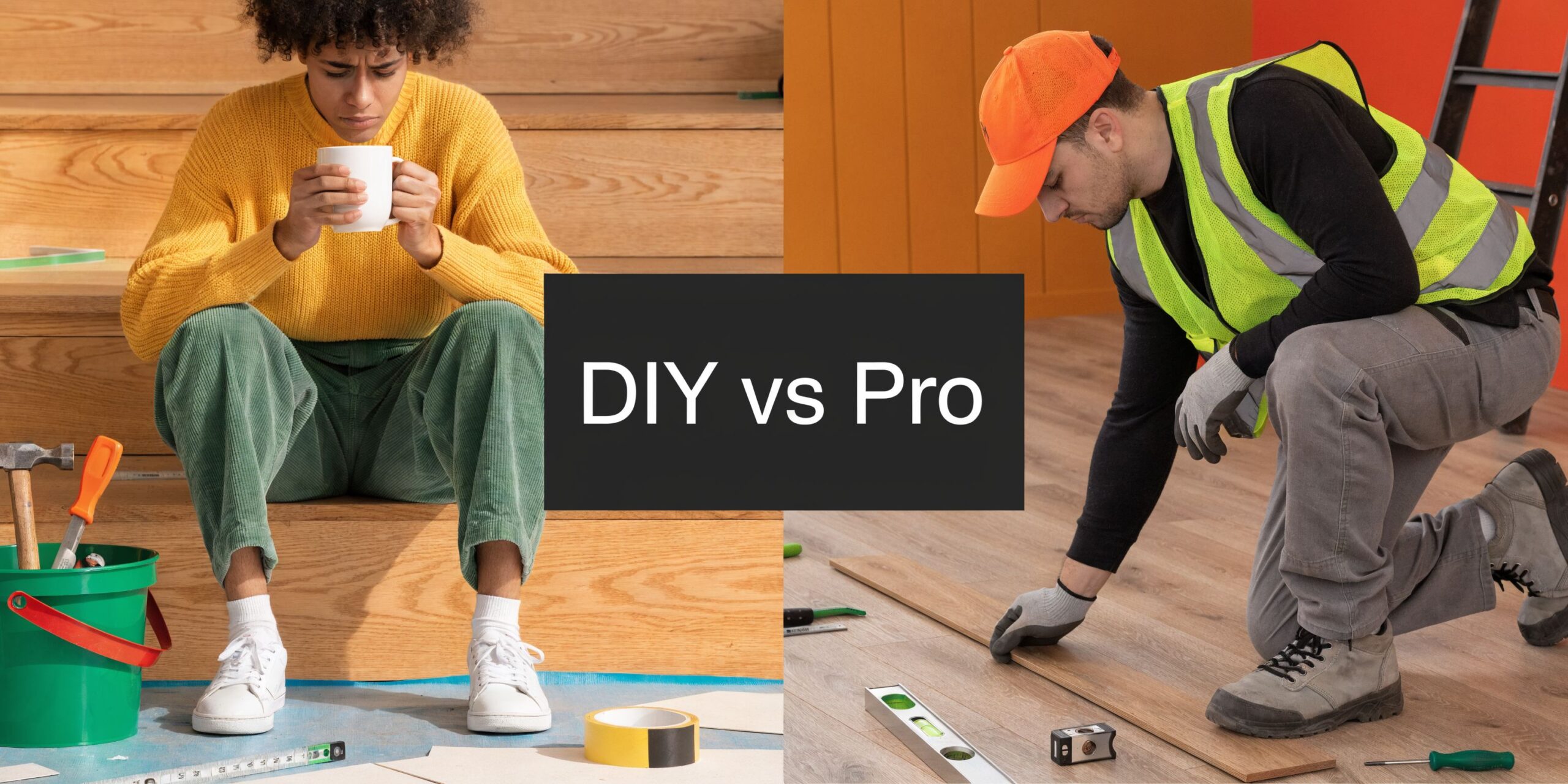
Where DIY can make sense
DIY can work in a simple room with a forgiving material, a flat subfloor, and a homeowner who’s realistic about detail work. It also appeals to buyers who want direct control over scheduling and material choice.
There’s also a documented knowledge gap here. One source discussing PFS Denver notes that homeowners exploring pro-grade products may see 25% cost savings, but the same source also says 65% of Denver households have pets and points out that suppliers often don’t explain the right pet-resistant product pairings to non-pros, which is where expensive mistakes start: https://www.xlnorth.com/locations/professional-flooring-supply-denver/
Where DIY usually breaks down
The failure points are consistent:
- Prep mistakes: The floor looks fine until boards separate, click, or bounce.
- Wrong system pairing: Good material gets matched with the wrong adhesive, pad, or finish.
- Tool limitations: Clean cuts, dust control, and finish quality suffer fast without the right setup.
- Warranty risk: Some manufacturers expect installation methods that many DIY jobs miss.
A common Denver-area pattern is this. The owner buys quality material, saves money up front, then loses those savings correcting telegraphed subfloor flaws, edge swelling, bad transitions, or a finish that can’t handle pets.
The risk is higher with wood refinishing
DIY gets especially risky on hardwood. Sanding pattern, grit progression, edge blending, stain acceptance, and final coat behavior all punish inexperience. One rushed pass can leave chatter, swirl marks, uneven sheen, or cut-through on edges.
That’s also why the hardwood floor refinishing UV- Cure System path is rarely a casual DIY lane. The payoff is excellent when done correctly, but the process depends on technical discipline and product knowledge.
Cheap mistakes on flooring are expensive because you live on them every day.
The smarter way to compare cost
Don’t compare only material totals. Compare the full risk picture.
A professional install usually buys you:
- Cleaner execution: Better layout, transitions, and perimeter detail.
- Predictable schedule: Fewer mid-project surprises.
- Correct prep: Problems get solved before the floor goes down.
- Better durability: The floor is built as a system, not assembled from guesses.
If the room is simple and the stakes are low, DIY may be reasonable. If the project involves pets, moisture, visible hardwood, resale concerns, or a commercial setting, professional installation is usually the lower-risk path.
Finding a Denver Flooring Partner You Can Trust
The best flooring partner isn’t just someone who can install boards. It’s someone who can make the right call before the first board comes off the pallet.
Look for proof, not promises
A trustworthy contractor should show real work, not just polished marketing. Look for project photos across different conditions and floor types. Oak refinishing in Parker. LVP in a Littleton basement. Screen and recoat work in Denver. Commercial touch-ups for retail or office wear.
Reviews help too, but the strongest proof is consistency across reviews, photos, and process. If those three line up, you’re usually dealing with a serious operator.
Supplier relationships tell you a lot
Strong contractors tend to have strong supply relationships. That matters because dependable installers need dependable material access.
According to ZoomInfo’s company profile, Professional Flooring Supply is part of a business doing $22.4 million in annual revenue with 118 employees, and that kind of long-running supplier stability supports the reliable timelines and material access professional installers depend on: https://www.zoominfo.com/c/professional-flooring-supply-co/72615315
That doesn’t mean a contractor is good just because they buy from a major wholesaler. It does mean serious contractors usually align themselves with suppliers who can support quality work consistently.
What trust looks like in practice
A reliable Denver flooring partner usually does a few things well:
- They ask sharper questions than you expected. That’s a good sign.
- They explain trade-offs clearly. Not every room needs the same system.
- They know local housing stock. A bungalow in Berkeley isn’t the same as a newer build in Lone Tree.
- They discuss maintenance clearly. Good floors still need the right care.
The best crews also know when not to oversell. Sometimes a screen and recoat is enough. Sometimes a full sanding is the correct move. Sometimes replacement is the honest answer.
Local experience still matters
Denver homes vary a lot. You’ve got older hardwood in Park Hill, contemporary layouts in RiNo, mountain-adjacent wear patterns in Evergreen, and high-turn rental realities in Aurora and Thornton.
A contractor who has worked across those conditions can spot the issues hidden in each job type. That judgment is what protects the floor long after install day.
From Supply to Stunning Your Path to Perfect Floors
The smartest flooring decisions usually happen before the floor arrives. Material choice, supplier quality, subfloor prep, finish compatibility, and installer judgment all shape the result.
That’s why understanding professional flooring supply denver co options matters. It helps you separate a real flooring system from a stack of attractive products. It also helps you ask better questions about durability, eco-conscious options, pet resistance, and long-term maintenance.
For homeowners weighing hardwood, LVP, or laminate, the right answer depends on room use, moisture exposure, traffic, and how much future flexibility you want. For owners considering a Denver hardwood floor refinishing UV- Cure System, the biggest advantages are fast return to service, cleaner project flow, and a finish strategy that fits busy homes.
The main lesson is simple. Good flooring work doesn’t come from one good product. It comes from the right products, matched correctly, installed carefully, and supported by someone who knows what can go wrong before it happens.
Homeowners in Denver trust J.R. Hardwood Floor Refinishing & Cleaning to restore the natural beauty of their hardwood floors with our dust-free sanding system and advanced UV-curable finishes. Unlike traditional methods, our UV technology cures instantly, so you can move furniture back the same day with no lingering odor or downtime. Choose the perfect refinishing or installation service to match your needs and home traffic. Our dust-free process ensures a clean, beautiful finish every time.
📞 Phone: 720-327-1127
🌐 Website: jrhardwoodfloorrefinishingandcleaning.com
📺 YouTube: https://www.youtube.com/channel/UCLaTAi6KxwT-g8QCKqKTQ8Q?sub_confirmation=1
📍 Service Area: Denver, Parker, Castle Rock, Boulder, Aurora, Highlands Ranch, Littleton, Colorado Springs and surrounding communities.
If you want a flooring partner who understands materials, prep, hardwood floor refinishing, and the practical advantages of a UV- Cure System, contact J.R. Hardwood Floor Refinishing & Cleaning. For homeowners and property managers across Denver and nearby communities, the team handles dust-free sanding, screen and recoat work, deep cleaning, wax removal, hardwood installation, LVP, and laminate with clear guidance from start to finish.