
Hardwood floors add warmth and elegance to any Colorado home, but scratches from pets, furniture, and daily foot traffic can quickly diminish their beauty. Whether you have energetic dogs racing through your living room or high-traffic areas near entryways, protecting your investment requires a strategic approach. This guide walks you through proven methods to prevent scratches, maintain your floors’ pristine appearance, and extend their lifespan with practical steps you can implement immediately.
Table of Contents
- Understanding What Causes Hardwood Floor Scratches
- Preparing Your Home And Floors For Scratch Prevention
- Step-By-Step Execution: Practical Ways To Prevent Scratches On Hardwood Floors
- Verifying Results And Troubleshooting Common Hardwood Floor Scratch Issues
- Protect Your Hardwood Floors With Expert Refinishing And Cleaning Services
Key takeaways
| Point | Details |
|---|---|
| Multiple scratch sources | Pet claws, furniture movement, and tracked-in grit each damage floors differently and require targeted prevention |
| Finish quality matters most | Premium polyurethane or UV-cure finishes provide superior scratch resistance regardless of wood hardness |
| Layered prevention works best | Combining nail care, furniture pads, area rugs, and regular cleaning delivers optimal protection |
| Consistent maintenance essential | Weekly cleaning removes abrasive particles while routine inspections catch issues before they worsen |
| Professional help available | Expert refinishing restores damaged floors and applies protective finishes for long-term durability |
Understanding what causes hardwood floor scratches
Identifying scratch sources helps you target prevention efforts effectively. Pet claws cause 20-50% of scratches in pet homes, while furniture dragging accounts for 30% and tracked-in grit contributes 40%. Each factor damages your floors through different mechanisms.
Pet claws create surface scratches as dogs and cats move across floors. The constant contact between sharp nails and wood finish wears away protective layers over time. Larger dogs with heavier body weight generate more pressure, deepening these marks. Cats jumping from furniture can leave concentrated impact scratches where they land.
Furniture movement produces deeper gouges than other scratch types. Dragging chairs, tables, or sofas across floors concentrates force on small contact points, cutting through finish and sometimes into the wood itself. Even careful homeowners create damage when rearranging rooms without proper protection. Heavy appliances pose the greatest risk during moves.
Grit and dirt act like sandpaper underfoot. Tiny particles of sand, soil, and debris get tracked inside from shoes and pet paws. As people walk over these particles, they grind against the floor finish, creating thousands of microscopic scratches that accumulate into visible wear patterns. High-traffic areas near doors show this damage first.
“Effective scratch prevention requires addressing all three major causes simultaneously. Focusing on just one factor leaves your floors vulnerable to damage from the others.”
Finish quality influences how easily scratches form. Janka hardness measures dents, not scratches, meaning even hard woods like oak scratch easily without proper finish protection. The protective coating on your floors matters more than the wood species underneath. Understanding hardwood floor protection methods pet owners can use helps target the most damaging factors first.
Key scratch contributors include:
- Untrimmed pet nails creating constant surface abrasion
- Furniture legs without protective pads concentrating pressure
- Outdoor debris tracked inside on shoes and paws
- Inadequate floor finish allowing easy surface damage
- Heavy objects dragged instead of lifted during moves
Preparing your home and floors for scratch prevention
Proper preparation creates the foundation for effective scratch prevention. Start by evaluating your current floor finish and identifying areas needing extra protection. Colorado’s dry climate can affect finish durability, making this assessment particularly important for local homeowners.
Choosing the right finish provides your first line of defense. Polyurethane finishes offer excellent scratch resistance in both oil-based and water-based formulations. Oil-based polyurethane creates a harder surface but takes longer to cure. Water-based versions dry faster with less odor while still providing strong protection. UV-cure finishes deliver the highest scratch resistance, curing instantly under ultraviolet light to form an extremely hard surface. Learn more about hardwood floor finishes and their protective qualities.
Protective accessories form your second defense layer. Furniture pads prevent direct contact between furniture legs and floors. Felt pads work well for chairs and light furniture that moves frequently. Rubber pads with felt backing suit heavier pieces like sofas and dressers. Replace pads every 6-12 months as they compress and lose effectiveness.
Area rugs protect high-traffic zones from both grit accumulation and pet traffic. Place rugs at all exterior doors to trap dirt before it spreads. Position runners in hallways where pets and family members walk most. Choose rugs with non-slip backing to prevent sliding that could scratch floors underneath. Avoid rubber-backed rugs on finished hardwood as they can trap moisture and damage finish over time.
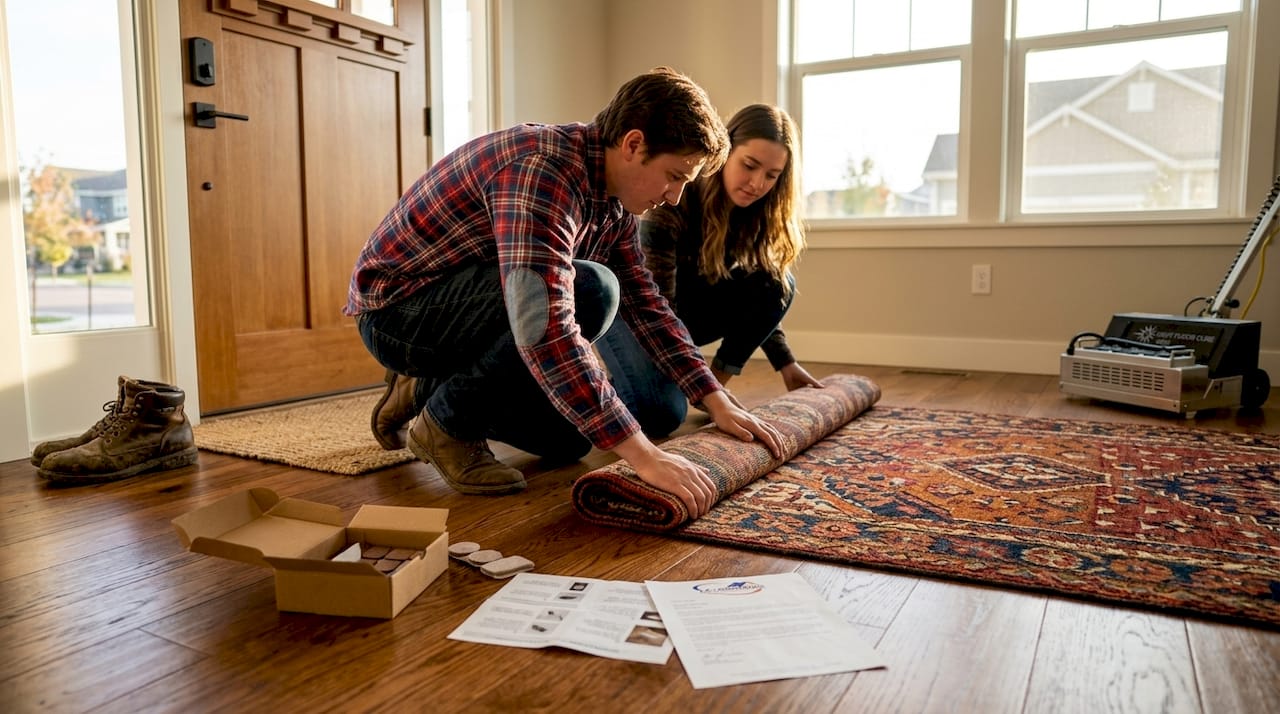
Inspecting floors before implementing prevention helps identify existing damage. Walk through each room in bright light, looking for scratches, worn areas, and finish deterioration. Mark problem spots needing repair before adding protective measures. Clean floors thoroughly to remove embedded grit using pH-neutral hardwood cleaners. This baseline assessment lets you measure prevention effectiveness later.
Pro Tip: Check your pets’ nails weekly by listening for clicking sounds on floors. If you hear nails tapping as they walk, trimming is overdue. Regular nail inspections prevent 20-50% of pet-related scratches before they occur.
Pet preparation reduces scratch risk significantly. Trim dog and cat nails every 1-2 weeks to maintain short, rounded tips. Use proper pet nail clippers designed for your animal’s size. Consider professional grooming if you’re uncomfortable trimming nails yourself. Some pet owners find floor protection methods for pets like nail caps or protective booties helpful for dogs who resist nail trimming.
Essential preparation items:
- Furniture pads in multiple sizes for all movable furniture
- Area rugs sized appropriately for entryways and hallways
- Pet nail trimming supplies or grooming appointments scheduled
- pH-neutral hardwood floor cleaner for initial deep cleaning
- Bright flashlight for thorough floor inspection
Step-by-step execution: Practical ways to prevent scratches on hardwood floors
Implementing prevention measures systematically ensures comprehensive protection. Follow these steps in order to build layers of defense against scratches.
-
Install furniture pads on every piece of furniture touching your floors. Start with dining chairs since they move most frequently. Apply felt pads to chair legs, ensuring pads extend slightly beyond leg edges. Add pads to table legs, sofa feet, dresser bases, and nightstands. For furniture you rarely move, use adhesive-backed pads. For frequently moved pieces, choose slip-on pads that stay attached during movement.
-
Position area rugs in strategic locations throughout your home. Place large rugs at each exterior door, extending at least 3 feet inside. These entry rugs trap 70% of tracked-in dirt before it reaches main living areas. Add runners in hallways connecting rooms where pets and family travel most. Use rugs under dining tables to catch chair movement and food debris.
-
Establish a pet nail care routine that fits your schedule. Set recurring reminders every 10-14 days for nail trimming sessions. Trim just the curved tip of each nail, avoiding the quick. Reward pets after trimming to build positive associations. For resistant pets, trim one or two nails daily rather than all at once. This gradual approach reduces stress while maintaining short nails year-round.
-
Create a shoe removal policy for your household. Designate a spot near each entrance for shoe storage. Provide comfortable slippers or indoor shoes for family members and guests. This single habit eliminates the majority of grit and debris that causes scratches. Colorado’s outdoor environment brings in sand, small rocks, and dirt that act like sandpaper underfoot.
-
Implement a regular cleaning schedule that removes abrasive particles. Vacuum or dust-mop high-traffic areas daily using soft-bristle attachments. Weekly, clean entire floors with damp microfiber mops and pH-neutral cleaners. Monthly, inspect floors closely for new scratches or worn areas needing attention. This routine prevents grit accumulation while maintaining finish integrity.
Pro Tip: Never use vinegar, ammonia, or oil soaps on hardwood floors. These products break down protective finishes over time, making floors more susceptible to scratches. Stick with cleaners specifically formulated for finished hardwood to preserve your floor’s scratch resistance.
Prevention method effectiveness varies by implementation consistency. The table below compares common strategies:
| Prevention Method | Scratch Reduction | Implementation Difficulty | Maintenance Required |
|---|---|---|---|
| Regular nail trimming | 20-50% | Moderate | Every 1-2 weeks |
| Furniture pads | 30% | Easy | Replace every 6-12 months |
| Entry area rugs | 40% | Easy | Vacuum weekly, wash monthly |
| Daily floor cleaning | 35% | Moderate | Daily dust mopping |
| Shoe removal policy | 40% | Easy | Consistent enforcement |
| Professional finish | 60% | Professional required | Every 3-7 years |
Combining multiple prevention methods delivers exponential benefits. Homeowners using nail trimming plus furniture pads plus area rugs see 70-80% fewer scratches than those using single methods. This layered approach addresses all major scratch sources simultaneously.
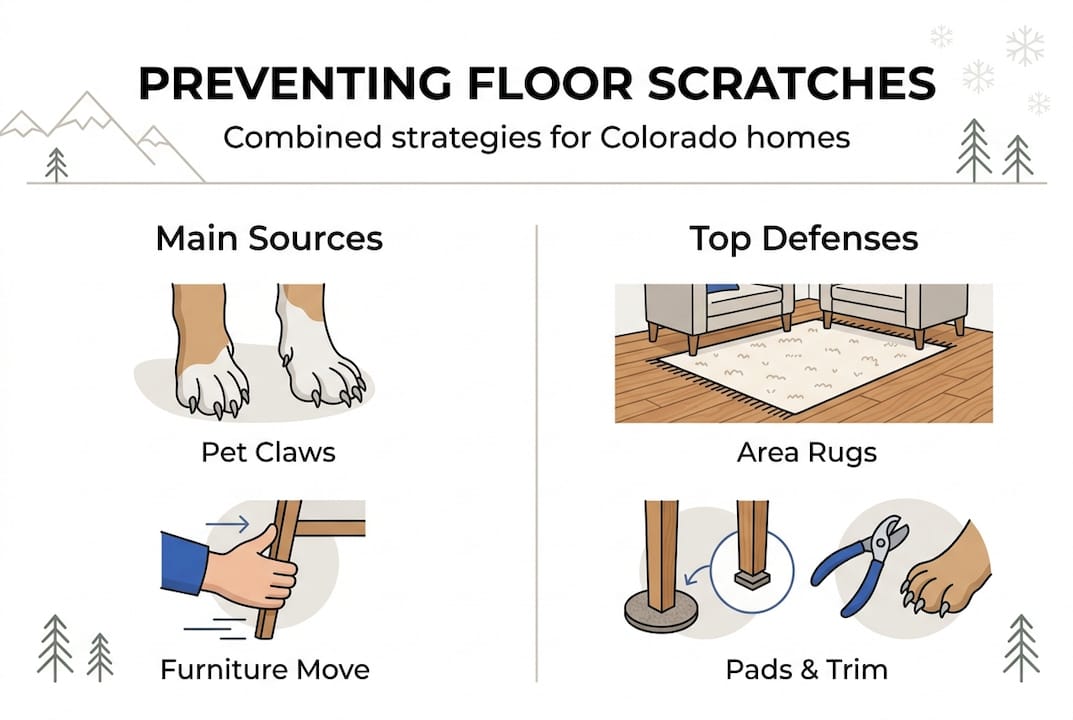
Monitor your prevention efforts by photographing floors monthly. Take pictures of the same spots in consistent lighting. Compare images over time to verify scratches aren’t accumulating despite prevention measures. If new scratches appear, identify which prevention layer failed and strengthen it. Following floor care best practices ensures long-term success.
Additional execution tips:
- Use furniture sliders when moving heavy pieces across floors
- Keep pet food bowls on mats to contain spills and debris
- Trim pet hair around paw pads to prevent debris collection
- Avoid high heels and cleats on hardwood surfaces
- Place protective mats under rolling desk chairs and pet crates
For homes with multiple pets, consider room-specific strategies. Restrict pet access to rooms with the most valuable or delicate flooring. Use baby gates to create pet-free zones while maintaining household flow. Apply hardwood cleaning tips for pet homes to maintain floors despite higher wear.
Verifying results and troubleshooting common hardwood floor scratch issues
Assessing prevention effectiveness helps you refine your approach over time. Successful prevention shows in several ways. Floors maintain their glossy appearance without visible wear patterns. High-traffic areas look similar to protected spaces. You notice fewer surface scratches when light hits floors at angles. Your monthly comparison photos show no new damage accumulation.
Common mistakes undermine even well-planned prevention efforts. Skipping regular nail trims allows pet scratches to accumulate gradually. Homeowners often underestimate how quickly nails grow, letting weeks pass between trimmings. Dragging furniture during cleaning or rearranging creates deep gouges that overshadow other prevention efforts. Using improper cleaning products strips protective finish, leaving bare wood vulnerable to every scratch source.
Persistent scratches despite prevention indicate overlooked causes. Check for these issues:
- Furniture pads that have compressed flat or fallen off completely
- Area rugs that have shifted away from high-traffic zones
- Pets accessing floors during unsupervised times
- Family members or guests wearing shoes inside
- Cleaning tools with hard bristles or rough surfaces
- Deteriorating floor finish needing professional renewal
Troubleshooting starts with identifying where new scratches appear. Scratches concentrated near specific furniture pieces indicate missing or ineffective pads. Scratches in paths between rooms suggest inadequate rug coverage or shoe-wearing. Random scratches throughout suggest grit accumulation from inadequate cleaning frequency.
“Consistent multi-layered prevention is essential because addressing only one scratch source leaves floors vulnerable to the others. Homeowners who combine nail care, furniture protection, area rugs, and regular cleaning see 70-80% fewer scratches than those using single methods.”
Adjusting your prevention strategy based on results maximizes effectiveness. If scratches appear near furniture, upgrade to thicker pads or add pads to previously unprotected pieces. If scratches concentrate near doors, expand area rug coverage or enforce shoe removal more strictly. If scratches spread throughout floors, increase cleaning frequency or switch to softer cleaning tools.
Some scratch situations require professional intervention. Deep gouges that expose bare wood need refinishing to prevent moisture damage and further deterioration. Widespread finish failure makes DIY prevention ineffective since unprotected wood scratches easily regardless of precautions. Floors showing 10+ years of wear benefit from complete refinishing that restores both appearance and scratch resistance. Consult a hardwood scratch removal guide to determine if damage requires professional repair.
When to seek professional help:
- Scratches penetrate through finish into wood grain
- Finish appears dull or worn despite regular cleaning
- DIY prevention methods fail to stop new scratches
- You’re preparing to sell your home and need pristine floors
- Floors haven’t been refinished in over 10 years
Professional refinishing provides the ultimate scratch prevention reset. Refinishers sand away existing damage, apply fresh finish coats, and restore floors to like-new condition. Modern UV-cure finishes applied by professionals offer superior scratch resistance compared to older finish types. Learn how to fix scratched floors through professional services when DIY methods prove insufficient.
Protect your hardwood floors with expert refinishing and cleaning services
Even with diligent prevention, Colorado hardwood floors eventually need professional care to maintain their beauty and protection. Expert refinishing removes years of accumulated scratches while applying premium finishes that resist future damage far better than DIY products. Professional cleaning services eliminate embedded grit that household methods miss, addressing a primary scratch cause at its source.
J.R. Hardwood Floor Refinishing & Cleaning serves Denver Metro Area homeowners with comprehensive floor care that extends well beyond basic maintenance. Our UV-cure finishing technology creates exceptionally hard surfaces that withstand pet traffic and daily wear. We combine eco-friendly products with proven techniques to deliver lasting protection. Whether you need complete refinishing to erase existing damage or professional cleaning to prevent future scratches, our team provides personalized solutions matched to your floor’s condition. Explore hardwood floor refinishing options to understand when professional service delivers better value than DIY approaches. Our complete hardwood refinishing guide walks you through the process, and following floor care best practices between professional services maximizes your investment.
FAQ
Can I prevent scratches on hardwood floors if I have large dogs?
Yes, large dogs require more intensive prevention but scratches remain manageable. Trim nails every 7-10 days since bigger dogs grow nails faster and apply more pressure when walking. Use thicker furniture pads and larger area rugs to distribute weight and protect high-traffic paths. Consider scratch resistant flooring for dogs if you’re installing new floors, as some finishes handle pet wear better than others.
What type of finish best protects hardwood from scratches?
Polyurethane and UV-cure finishes provide superior scratch resistance compared to other options. Finish quality matters more than wood hardness since even hard woods scratch easily without proper protection. UV-cure finishes cure instantly under ultraviolet light, creating the hardest surface available for residential floors. Water-based polyurethane offers excellent protection with faster drying times and less odor than oil-based versions. Review hardwood floor finishes to compare options for your specific needs.
How often should I trim my pet’s nails to protect floors?
Trim pet nails every 1-2 weeks to maintain optimal floor protection. Pet claws cause 20-50% of scratches in homes with pets, making regular trimming one of the most effective prevention strategies. Listen for clicking sounds when pets walk across floors as an indicator that trimming is overdue. Consistent nail maintenance prevents the gradual accumulation of surface scratches that dull floor appearance over time. Implementing floor protection methods pet owners can use alongside nail care provides comprehensive protection.
Do area rugs actually prevent hardwood floor scratches?
Area rugs prevent up to 40% of scratches by trapping grit and reducing direct pet and foot traffic on floors. Position rugs at every exterior door to catch dirt before it spreads throughout your home. Use runners in hallways where family and pets travel most frequently. Rugs also cushion furniture movement and provide comfortable surfaces for pets to walk on instead of hardwood. Choose rugs with non-slip backing to prevent sliding that could scratch floors underneath, and vacuum rugs weekly to remove trapped debris.
When should I consider professional floor refinishing instead of DIY prevention?
Consider professional refinishing when scratches penetrate through finish into bare wood or when finish appears dull despite regular maintenance. Floors over 10 years old typically need refinishing regardless of prevention efforts since finish naturally degrades over time. Deep gouges from furniture or extensive pet damage require sanding and new finish application that DIY methods cannot address. Professional refinishing also makes sense before selling your home or when you want to upgrade to more scratch-resistant modern finishes like UV-cure coatings.
