
If you’re searching for hardwood floor repair and refinishing near me in Denver, you’re probably looking at floors that used to feel warm and finished, but now show dog scratches, dull traffic lanes, water marks by the sink, or a finish that looks tired in afternoon sun. That’s common in older Wash Park bungalows, Park Hill homes, and newer family houses in Highlands Ranch where the main level gets used hard every day.
Denver homeowners usually want the same thing. They want the floors to look right again without turning the house into a dusty construction zone for days. They also want honest guidance on whether the floor needs repair, a simple maintenance coat, or a full sand and refinish.
The good news is that modern Denver hardwood floor refinishing UV- Cure System options are far better than the old process. Dust-control equipment keeps the job cleaner, and UV-cured finishes change the schedule completely for busy households, pet owners, landlords, and real estate prep.
Your Guide to Expert Hardwood Floor Refinishing in Denver
A lot of calls start the same way. A homeowner in Denver notices the floor still looks solid, but the finish is worn off in front of the fridge, the entry has gone gray, and scratches stand out when the morning light hits the room. In many cases, the wood itself still has years left. It just needs the right level of restoration.
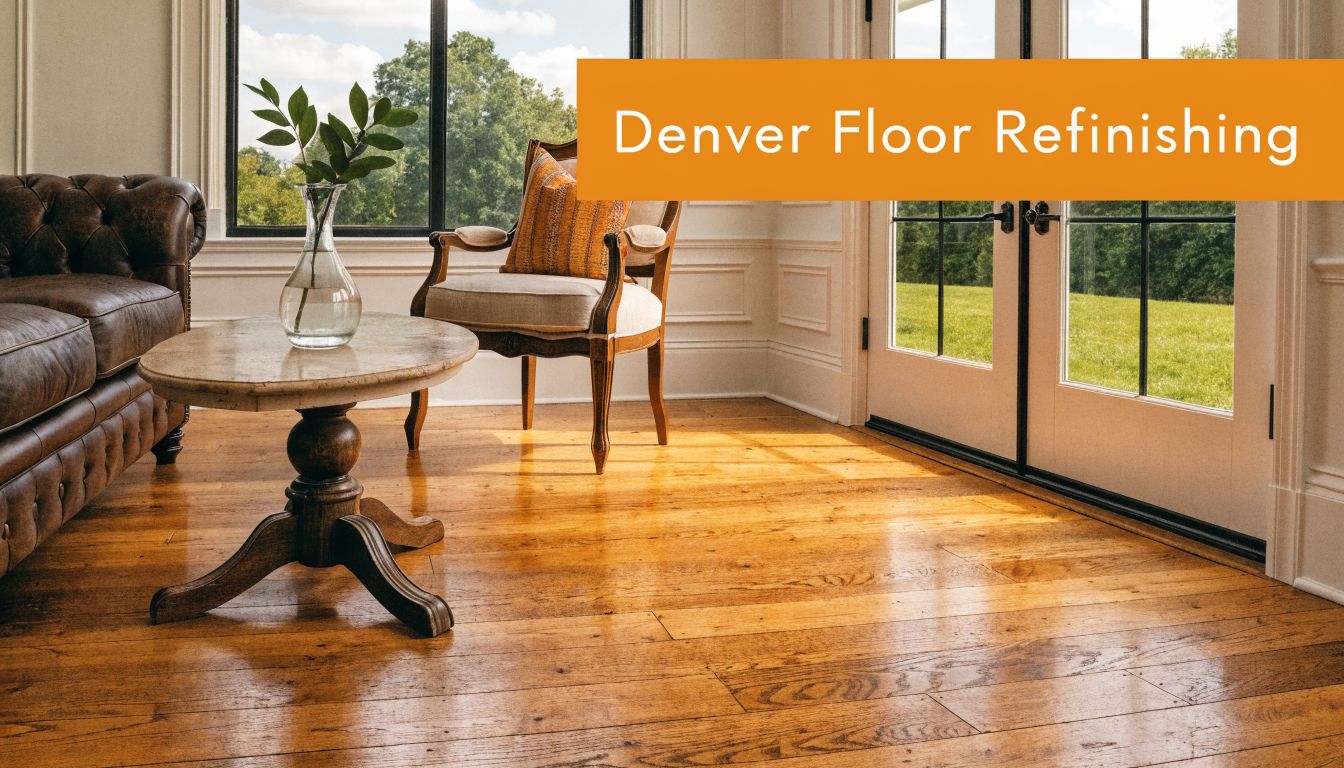
In Denver, that decision matters because homes vary so much. A Capitol Hill condo may need a lower-odor finish and tight scheduling. A Parker family home may need something that stands up to kids, dogs, and constant in-and-out traffic. A Boulder property manager may need fast turnover with minimal downtime.
The hardwood flooring market was valued at approximately $10.5 billion in 2023, and Denver Metro demand surged by 25% between 2020 and 2025 due to real estate and home improvement trends, according to this hardwood refinishing market overview. That lines up with what local homeowners have seen on the ground. More people are restoring original wood instead of covering it up.
What homeowners usually want most
Some want a full color change. Some just want the scratches gone. Others need the floor usable right away.
A practical refinishing plan usually comes down to these priorities:
- Appearance first: Remove dullness, uneven sheen, and surface wear.
- Durability second: Match the finish to pets, traffic, and maintenance habits.
- Downtime control: Choose a system that fits your household, not the other way around.
- Repair strategy: Fix bad boards, stained areas, or prior finish problems before coating anything.
Practical rule: The right service isn’t the most aggressive one. It’s the least invasive option that still solves the actual floor problem.
For Denver homeowners comparing traditional refinishing with a hardwood floor refinishing UV- Cure System, the biggest difference is disruption. Traditional finishing can work well, but UV curing is often the more practical fit when you need a tough finish and a faster return to normal life.
Diagnosing Your Floors Repair Recoat or Full Refinish
Before anyone sands a floor, the key question is simpler. What problem are you trying to solve?
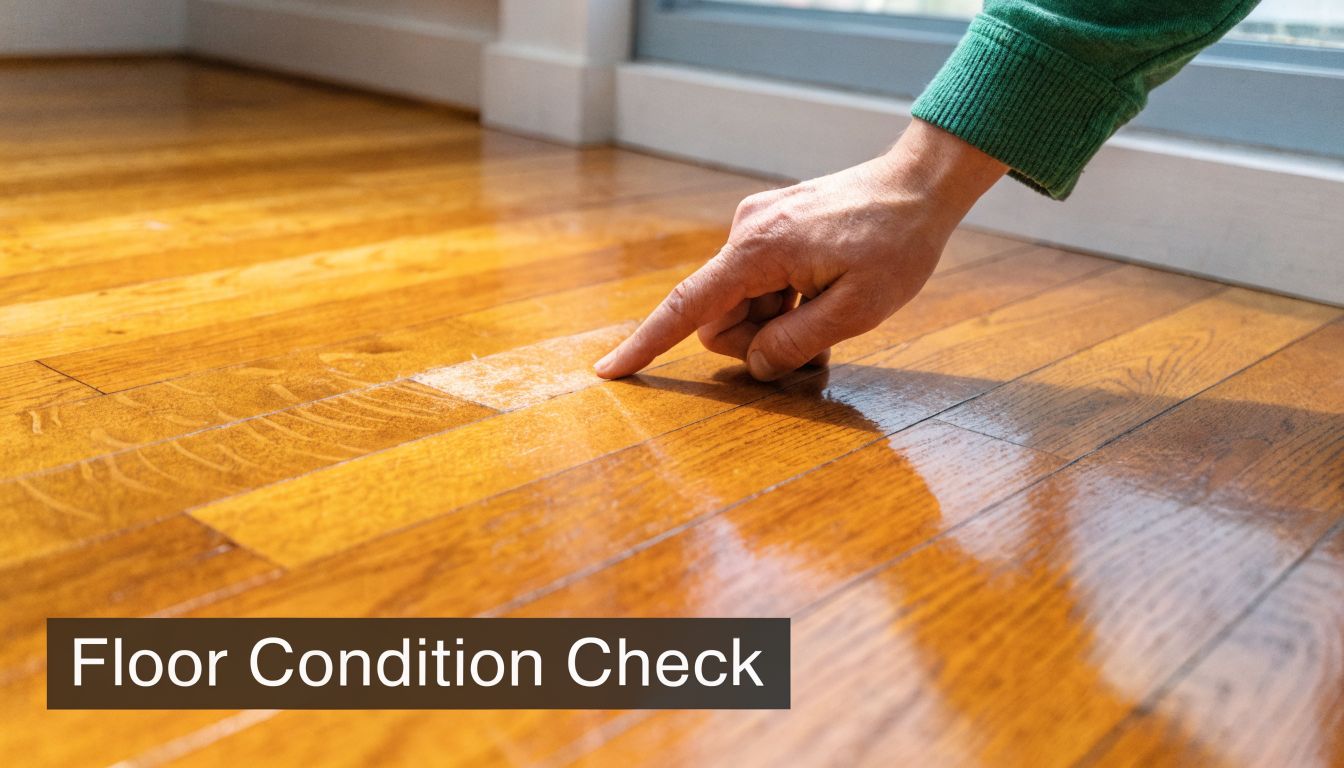
Older Denver homes often have oak floors with good structure but years of wear. Newer suburban homes in Littleton or Parker often show finish wear in lanes, around islands, and near patio doors. Those are different problems, and they call for different solutions.
According to HSW Floors, over 80% of hardwood floors in U.S. homes installed before 2000 require refinishing at least once, with water damage accounting for 40% of repair calls in regions like the Denver Metro area, where seasonal humidity fluctuations can exacerbate cupping and warping. That’s why diagnosis comes before pricing.
Signs you may only need repair
Local board repair makes sense when the damage is isolated.
Look for issues like:
- Single-board damage: One or two boards are split, gouged, or stained while the rest of the floor still looks stable.
- Pet or furniture impact: Deep scratches in one zone, not broad wear across the room.
- Small water event: A plant leak, dishwasher drip, or pet bowl issue that affected a tight area.
- Transition damage: Broken boards at doorways, vents, or stair nosings.
If that sounds like your floor, a targeted repair may solve it without redoing the whole space. If you’re comparing options, this page on hardwood floor repair in Denver, CO is a useful starting point.
When a screen and recoat is the right call
A screen and recoat works when the finish is worn but the wood below isn’t badly damaged.
This is usually a good fit when:
- The floor looks dull, not destroyed: Light surface scratches and traffic haze are present.
- Color is acceptable: You don’t want to change stain color.
- There’s no widespread board damage: The floor is flat and stable.
- You want less disruption: This is often the maintenance option for listings, rentals, and busy homes.
This short video shows the kind of finish refresh many homeowners are looking for.
When full sanding and refinishing is necessary
Some floors are beyond maintenance coating. If the finish has worn through, if stains are deep, or if the previous job was done poorly, full sanding is usually the honest answer.
Common triggers include:
- Gray or black traffic lanes
- Deep scratches through the finish
- Uneven stain from prior work
- Water marks that sit in the wood
- Orange, glossy, or blotchy finish you want corrected
- A color change request
If your floor has shine in one area and raw-looking wood in another, recoating usually won’t level that out. It needs sanding.
The best estimates come from seeing the floor in person or reviewing clear photos room by room. Good diagnosis saves money because it keeps you from paying for full refinishing when a maintenance service would do, or trying a recoat when the floor really needs restoration.
The Dust-Free Hardwood Refinishing Process Explained
Most homeowners don’t need every machine explained. They do want to know what happens in their house, what gets moved, how dusty it will be, and when they can walk on the floor again.
Step one is assessing the wood, not just the finish
A proper refinishing job starts with inspection. The contractor checks wear patterns, previous coatings, repairs, wax contamination, board movement, pet staining, and whether the floor is solid hardwood or engineered.
That matters because sanding isn’t unlimited. According to The Home Depot refinishing guide, professional refinishing typically removes about 1/16 inch of the wear layer per full sanding cycle, and floors are sanded through progressively finer grits, often starting at 36-40 grit and moving to 100-120 grit for a smooth surface ready for finish.
Prep work decides how clean the result looks
Before sanding starts, the space is cleared as much as possible. Base shoe may need to come off in some jobs. Appliances, rugs, and movable furniture are removed or protected. Vents, doorways, and adjacent rooms are isolated.
Dustless or dust-free sanding doesn’t mean zero particles in the universe. It means professional containment and collection equipment capture the vast majority of debris at the source, which keeps the house dramatically cleaner than old-school open sanding.
For homeowners comparing equipment and methods, this overview of dustless hardwood floor sanding shows what that process is designed to do.
Sanding happens in sequence, not in one pass
A clean-looking floor comes from the sanding sequence, not from rushing to the finish coat.
A typical full sand includes:
- Cutting the old finish off with a coarse grit.
- Flattening and blending high spots, traffic wear, and uneven finish.
- Running medium grit to remove the coarse scratch pattern.
- Finishing with finer grit so stain and finish lay down evenly.
- Detail sanding edges and corners where large machines can’t reach.
Bad refinishing jobs usually come from shortcuts here. Skipping grits, leaving edge marks, or failing to blend the field with the perimeter leaves chatter, swirl marks, and visible lap lines after finish goes on.
A shiny topcoat won’t hide poor sanding. It magnifies it.
Repairs and stain work come before finish
Once the floor is sanded clean, repairs are easier to judge accurately. This is when loose boards, patched areas, old vent cuts, and mismatched replacement boards get addressed.
If the homeowner wants a stain, samples should be tested on the actual floor. Colorado light changes color throughout the day. A stain that looks calm in the morning can look much darker by late afternoon in a south-facing room.
Not every floor should be stained. Some red oak and white oak floors look strongest in a clear or natural-toned finish, especially when the goal is a timeless look rather than a trend-driven color.
Finish choice changes the whole project schedule
Traditional finishes can produce a beautiful floor, but they ask more of the homeowner. You have to account for dry time, cure time, odor, and the risk of paw prints or traffic marks before the finish hardens.
That’s where the UV- Cure System changes the conversation. Instead of waiting through the usual vulnerable period, the finish is cured on site with UV equipment. For active homes, that often makes the project much easier to live with.
A practical service flow often looks like this:
- Full sanding for damaged floors
- Vacuum and detail cleaning between steps
- Stain if selected
- Apply finish coats based on system
- UV cure for immediate use when that system is chosen
The finish system should match the house. A rental turnover, a listing going live, and a family home with two dogs don’t all need the same schedule.
Why Denver homeowners ask for UV more often now
Colorado homeowners are busy, and many don’t have a spare week to work around floor curing. UV-cured finishing is especially useful in homes where:
- Pets would mark soft finish
- Kids need the main floor back quickly
- Property managers need faster turnover
- Realtors are staging on a deadline
- Commercial spaces can’t stay offline long
J.R. Hardwood Floor Refinishing & Cleaning offers an Instant UV-curable finish service for projects where immediate usability matters more than a traditional cure schedule.
Our Complete Range of Hardwood Floor Services for Colorado Homes
Not every floor needs the same level of work. The service should fit the condition, the budget, and how the home is used.
Full sanding and refinishing
This is the right service when the wood needs a reset.
Typical examples include a red oak floor in a Denver bungalow with heavy dog scratching, dark water marks at the back entry, or a glossy old finish that has yellowed unevenly. Full sanding gives the most flexibility because it removes the failed surface and rebuilds the floor from the wood up.
Explore the process at hardwood full sanding refinishing.
Screen and recoat
This is the smart maintenance option for floors that are worn on top but not severely damaged.
A real estate agent in Aurora, for example, may not need full restoration before listing photos. If the finish is dull and lightly scratched, a screen and recoat can refresh appearance without the bigger scope of a full sand.
More on that service is available at hardwood screen and recoat.
Deep cleaning and buffing
Some floors look bad because they’re dirty, hazy, or loaded with residue, not because the wood is failing.
That’s where hardwood clean and buff fits. This is often useful for maintenance in occupied homes, especially when owners have been using the wrong cleaner and the floor has lost clarity.
Wax removal
Wax is one of the biggest hidden problems in older homes. It blocks proper adhesion and can make a floor look streaky or cloudy even after cleaning.
If a floor has old maintenance product buildup, hardwood wax removal may be necessary before any recoat or restoration work.
Installation for new layouts and replacements
Sometimes repair and refinishing overlap with remodel work. A kitchen wall comes out. A patch is needed after cabinet changes. A basement finish calls for new flooring.
For those jobs, hardwood floor installation covers new hardwood, LVP, and laminate installations to blend function with the rest of the house.
A floor project often goes smoother when one team handles both restoration and any needed new flooring tie-ins.
Denver Hardwood Refinishing Costs and Project Timelines
Homeowners usually ask two things first. What will it cost, and how long will the house be disrupted?
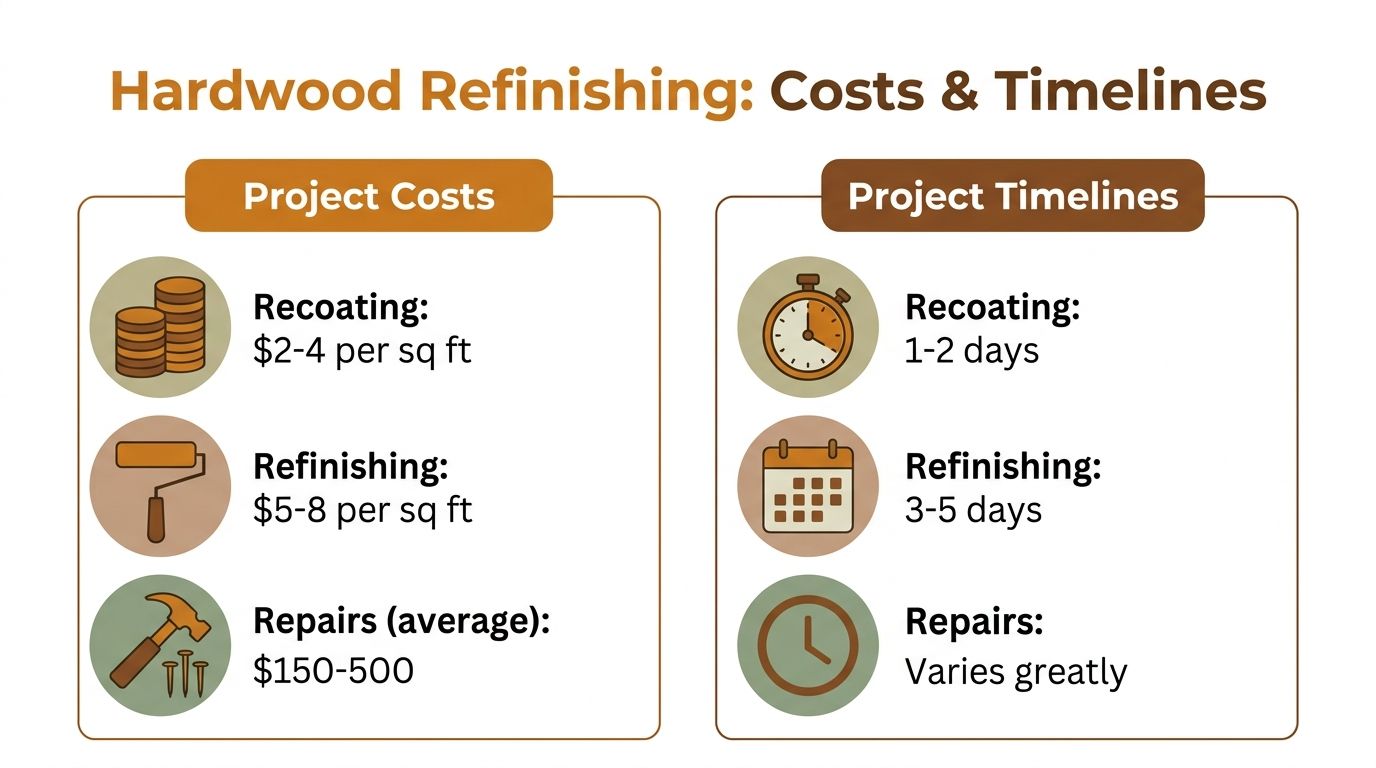
Demand for restoration has stayed strong. As noted earlier in the Denver market data, the hardwood flooring industry reached approximately $10.5 billion in 2023, and local demand in Denver Metro rose 25% between 2020 and 2025. For homeowners budgeting a project, condition matters as much as square footage.
For a broader explanation of variables that affect pricing, see this guide to floor refinishing cost per square foot.
J.R. Hardwood Floor Refinishing Service Tiers & Pricing
| Service / Finish Tier | Price (per sq. ft.) | Best For |
|---|---|---|
| Diamond Traffic Plus | $5.50 | High-traffic homes, pets, and property management use |
| Platinum Traffic Plus | $4.80 | Strong wear resistance with a 2K water-based finish |
| Gold Traffic Plus | $4.50 | Homeowners wanting scratch resistance and durability |
| Silver Traffic Plus | $4.20 | Solid wear protection for standard residential use |
| Screen & Recoat | Starts at $2.50 | Light wear, dull finish, maintenance refresh |
| Wood Floor Cleaning | Starts at $1.50 | Routine maintenance and residue removal |
| Wax Removal | Starts at $2.50 | Floors with old wax or incompatible maintenance products |
| Instant UV-Curable Finish | $1.5 | Projects where immediate use is a priority |
What changes the final quote
A per-square-foot number is only the starting point. Final pricing moves based on the floor itself.
Main variables include:
- Current condition: Deep scratches, stains, wax, and prior finish failure increase labor.
- Layout complexity: Stairs, closets, tight rooms, and mixed floor heights take more time.
- Board repair needs: Replacing damaged planks or blending patches adds scope.
- Finish choice: Higher-durability systems and specialty coatings change cost.
- Site logistics: Occupied homes, limited access, or phased scheduling can affect the plan.
Typical timelines in real homes
The timeline depends on service type more than house size alone.
- Screen and recoat: Often the faster option for lightly worn floors.
- Full sanding and refinishing: Usually takes longer because sanding, detail work, repairs, and finishing all stack together.
- Wax removal or correction work: Often adds time because the old contamination has to be fully addressed before new finish can bond.
For Denver homeowners, the hardwood floor refinishing UV- Cure System is often the easiest way to compress downtime when the project needs to move quickly.
Why Choose J.R. Hardwood for Your Denver Floor Refinishing
When homeowners compare flooring contractors, they’re not only comparing price. They’re trying to avoid the common problems. Dust everywhere. Poor communication. A finish that looks good for a week and then shows every paw print and lap mark.

The UV finish matters for real life
One of the biggest homeowner concerns is durability without long downtime. According to Thumbtack’s hardwood refinishing page, a key concern for Denver homeowners is finding a finish for pets with no downtime, and Instant UV-curable finishes, described there as a growing trend with 7.2% CAGR, allow immediate walk-on use, avoiding the paw prints and smears associated with traditional 24-72 hour cure windows.
That matters practically. If you have a lab that circles the kitchen every morning, or you manage a property that has to be market-ready fast, immediate use isn’t a luxury. It changes the project from difficult to manageable.
Local knowledge shows up in the details
Denver-area floors age differently depending on the neighborhood and home style. Mid-century homes often need a different repair eye than newer developments. Mountain-adjacent homes in places like Evergreen may show different moisture behavior than homes farther east. High-sun rooms in south-facing properties fade differently than shaded interiors.
That’s where local experience helps. It shows up in color guidance, repair blending, finish recommendations, and scheduling.
Results matter when the home is going on the market
For sellers and agents, floors are one of the first things buyers notice. Clean, well-finished wood supports the whole presentation of the home. If you’re preparing a listing, this guide on how home staging increases home value gives helpful context for why visual condition matters so much before showings.
Proof should be easy to review
Before hiring any floor company, look at actual work and actual homeowner feedback.
Useful places to review include:
If a contractor can’t clearly show past work, finish types, and realistic process details, keep looking.
Protecting Your Investment Post-Refinishing Maintenance Tips
A newly refinished floor can stay looking sharp for years if the maintenance is simple and consistent.
Daily habits that prevent early wear
The biggest problems usually come from grit, standing moisture, and furniture movement.
Use this checklist:
- Keep grit off the floor: Dry mop or vacuum regularly with a hardwood-safe attachment.
- Use felt pads: Chairs and stools do more damage than people expect.
- Trim pet nails: Even a durable finish will show repeated sharp claw contact over time.
- Clean spills fast: Don’t let water sit along board seams or transitions.
- Use rugs carefully: Entry mats help, but avoid rubber-backed products that can trap moisture.
What not to use
Don’t use random household cleaners just because they make the floor smell clean. Residue buildup dulls the surface and can complicate future recoating.
Avoid:
- Wax products on non-wax floors
- Soaking wet mops
- Harsh chemicals
- Improvised cleaner mixes
When to call for maintenance instead of waiting
Homeowners often wait too long. Once the finish wears through, the job gets bigger.
Call for help when you notice:
- Traffic lanes losing sheen
- Fine scratches collecting across main paths
- Cloudy residue that won’t clean off
- Early wear around pet zones, sinks, or exterior doors
A maintenance service at the right time is almost always easier than waiting for major restoration.
Your Top Hardwood Floor Restoration Questions Answered
Can a bad refinishing job from another company be corrected
Yes, often it can. The repair depends on what went wrong.
Common correction jobs include streaks, lap marks, bubbles, contaminated finish, uneven sheen, and floors that came out too glossy. According to this video source discussing correction work, a frequent but underserved question is how to fix a botched refinishing job, and while refinishing averages $2.70-$3 per sq ft, correction costs aren’t specific because the scope can vary widely and may require specialized work to avoid full replacement.
That matches real practice. Some bad jobs can be corrected with screening and recoating. Others need full sanding to get back to clean wood.
Can engineered hardwood be refinished
Sometimes, yes. It depends on the thickness of the wear layer and the condition of the floor.
Engineered hardwood isn’t an automatic no. But it needs a more careful assessment because aggressive sanding may not be appropriate. If the issue is only in the finish, a lighter restoration approach may be possible.
What finish is smartest for big dogs and heavy traffic
For active homes, durability and downtime matter together. A hard finish that still leaves you waiting around the house for days may not be the most practical choice.
Many Denver homeowners choose a hardwood floor refinishing UV- Cure System because it gives strong protection and immediate use. That’s especially useful for dogs, kids, and busy main-floor layouts.
How long will a professionally refinished floor last
That depends on traffic, maintenance, moisture control, and whether the finish was matched to the household.
A floor in a quiet guest room will age differently than one in a kitchen-family room with large dogs. The biggest factor homeowners control is timing. If you recoat while the finish is still intact, you can avoid a much bigger restoration later.
Get Your Free Hardwood Floor Refinishing Quote Today
If your floors are scratched, dull, water-marked, or just overdue for maintenance, the right next step is a real assessment. Some homes need repairs. Some need a screen and recoat. Some need full sanding and a Denver hardwood floor refinishing UV- Cure System finish that gets the space back in service faster.
You can request help, pricing, or project guidance through the main website at jrhardwoodfloorrefinishingandcleaning.com, browse the full service list at services, or reach out directly on the contact page.
Contact Information
| Phone | Website | Service Area |
|---|---|---|
| 720-327-1127 | jrhardwoodfloorrefinishingandcleaning.com | Denver, Parker, Aurora, Castle Rock, Littleton, Highlands Ranch, Boulder, Colorado Springs, and surrounding communities |
You can also watch project videos and floor transformations on YouTube: https://www.youtube.com/channel/UCLaTAi6KxwT-g8QCKqKTQ8Q?sub_confirmation=1
Homeowners on Parker trust J.R. Hardwood Floor Refinishing & Cleaning to restore the natural beauty of their hardwood floors with our dust-free sanding system and advanced UV-curable finishes. Unlike traditional methods, our UV technology cures instantly, so you can move furniture back the same day with no lingering odor or downtime. Choose the perfect refinishing service to match your needs and home traffic. Our dust-free process ensures a clean, beautiful finish every time.
📞 Phone: 720-327-1127
🌐 Website: jrhardwoodfloorrefinishingandcleaning.com
📍 Service Area: Denver + nearby towns
YouTube: https://www.youtube.com/channel/UCLaTAi6KxwT-g8QCKqKTQ8Q?sub_confirmation=1
