 Skip to content
TL;DR: In Denver, the cost to refinish hardwood floors denver usually runs $3 to $8 per square foot in 2026, and a 400-square-foot room often costs $1,200 to $3,200 based on floor condition, wood type, and process choice. If you want more concrete examples, service tiers like Silver at $4.20 per sq. ft., Gold at $4.50, Platinum at $4.80, Diamond Traffic Plus at $5.50, and Screen & Recoat starting at $2.50 per sq. ft. give you a practical way to compare options.
If you're standing in your living room noticing dull finish by the windows, scratch trails near the kitchen, and traffic wear where everyone cuts through the house, you're in the same spot as a lot of Denver homeowners. Floors in older bungalows near Wash Park, brick homes in Park Hill, and newer builds around Central Park all age a little differently, but the question is usually the same. Is this floor still worth refinishing, and what is it really going to cost?
The short answer is that most hardwood floors can look dramatically better without the expense and disruption of tearing everything out. The longer answer depends on the wood, the wear pattern, the finish system, and whether the floor needs a light refresh or a full reset.
Bringing Your Denver Hardwood Floors Back to Life
A worn hardwood floor rarely fails all at once. It starts with a faded path from the front door. Then the dog nails show up in the hallway. Then the old finish gets cloudy, and suddenly the whole floor looks tired even though the wood underneath may still be solid.
That’s why hardwood floor refinishing is so often the right move in Denver. In the metro area, average refinishing cost ranges from $3 to $8 per square foot in 2026, and a typical 400-square-foot room costs $1,200 to $3,200. It can also recover up to 147% of its cost in increased home value, according to NerdWallet’s breakdown of hardwood floor refinishing costs.
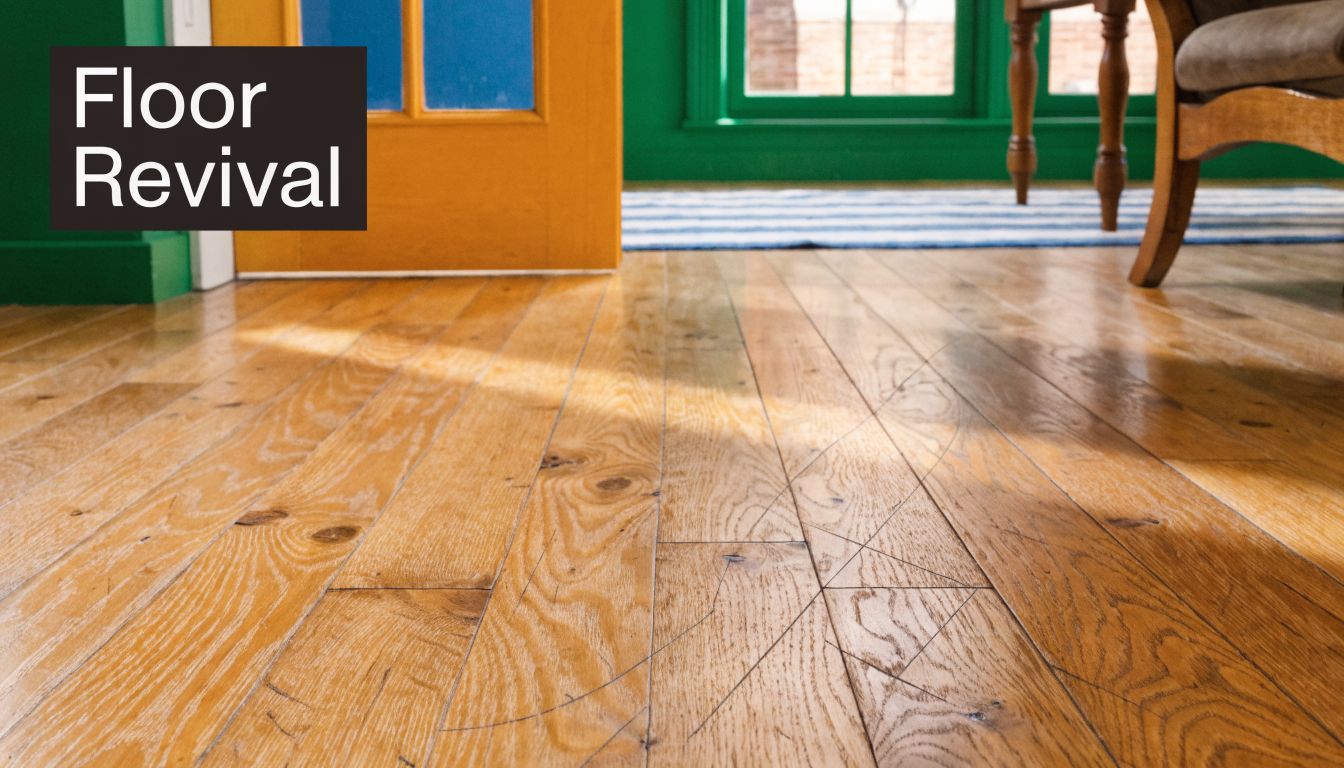
In real homes, the difference often comes down to whether the finish is failing or the wood itself is damaged. A floor in a Sloan’s Lake condo may only need the surface renewed. A heavily used family room in Highlands Ranch may need a full sanding to remove years of wear. The good news is that refinishing gives you options instead of forcing one expensive solution.
What homeowners usually notice first
- Dull traffic lanes that no longer reflect light evenly
- Surface scratches from pets, chairs, and daily use
- Discoloration near rugs, exterior doors, or sunny windows
- Sticky or cloudy residue from old cleaners, wax, or buildup
Good refinishing work starts with diagnosis. If the finish is the problem, you treat the finish. If the wood is the problem, you go deeper.
Before refinishing, it also helps to stop the same wear pattern from coming right back. Practical steps like felt pads, proper chair glides, and area rug protection matter. This guide on how to protect your floors from your furniture is worth a look if you want your next finish to last longer.
What actually works in Denver homes
The best results usually come from matching the process to the floor, not from choosing the cheapest line item on a quote. Dust-free sanding matters if you're living in the home. UV-cure finishes matter if downtime is a problem. Screen and recoat works well when the finish is worn but the wood hasn’t been chewed up.
That’s the practical side of cost to refinish hardwood floors denver. It isn’t just price per square foot. It’s choosing the right process the first time.
A Detailed Breakdown of Denver Hardwood Floor Refinishing Costs
Broad ranges are useful, but most homeowners want to know what actual service levels look like. A floor with light wear does not need the same system as a rental property with heavy traffic or a house with pets, kids, and constant chair movement around the dining table.
The pricing below gives a more tangible way to think about budget and finish performance.
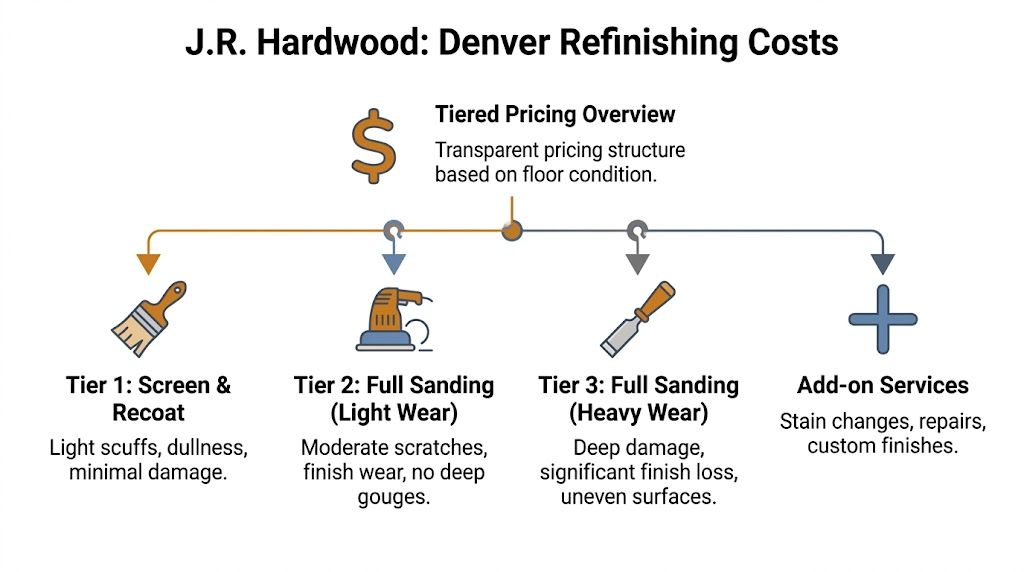
2026 Denver Hardwood Floor Refinishing Price Tiers
| Service Level | Price per Sq. Ft. | Key Features |
|---|---|---|
| Silver Traffic Plus | $4.20 | 1K water-based finish, excellent wear resistance |
| Gold Traffic Plus | $4.50 | 2K water-based finish, added scratch resistance |
| Platinum Traffic Plus | $4.80 | 2K water-based finish with nano wear oxide additive |
| Diamond Traffic Plus | $5.50 | UV-curing plus Nano Wear, built for unmatched wear and scratch resistance |
| Screen & Recoat | starts at $2.50 | Best for light scuffs, dull finish, minimal damage |
| Wood Floor Cleaning | starts at $1.50 | Deep cleaning for soiled or neglected floors |
| Wax Removal | starts at $2.50 | Removes wax buildup that blocks proper recoating |
| Instant UV-Curable Finish | $1.5 | Upgrade for faster return to service |
How to read these tiers
The Silver package fits homeowners who want a clean, dependable refinishing system without stepping into the highest-performance finish category. It’s a sensible fit for lower-wear rooms like bedrooms or guest spaces.
Gold and Platinum move into stronger water-based systems. That matters if your kitchen, main level, or hallway sees daily traffic. The jump isn’t just about gloss. It’s about how the finish stands up to abrasion, cleaning, and ordinary family use.
Diamond Traffic Plus is the premium option for people who care about same-day usability and stronger wear resistance. In practical terms, this is the tier many busy households look at first when they don’t want long downtime.
Practical rule: Don’t choose a finish only by the upfront rate. Choose it by how you live on the floor.
Add-ons and lower-intensity services
Not every floor needs full sanding. Sometimes a Screen & Recoat is the smarter value because the finish is dull but the boards don't have extensive damage. A clean and buff can help when grime and residue are masking a floor that still has life left in it. Wax removal becomes necessary when old maintenance products prevent a new coat from bonding correctly.
That’s why a good estimate should separate restoration from maintenance. When those two get blended together, homeowners either overpay for work they don’t need or underbuy and get disappointing results.
If you want a square-foot perspective that complements these service tiers, this page on floor refinishing cost per square foot is a useful reference point.
Key Factors That Influence Your Final Refinishing Price
Two homes can have the same square footage and very different quotes. That’s normal. Floors tell you what they need once you look at the wear, the wood, and the details around the edges.
Wood species changes the labor
Wood type significantly affects refinishing cost. In Denver-area pricing, oak runs $3 to $5 per square foot, maple runs $6 to $8, and pine often falls between $4 and $7 because it needs a more delicate approach and can increase labor time, as noted in Hallmark Floors’ overview of refinishing cost by wood type.
Oak is generally straightforward and common in many Denver homes. Maple is denser and less forgiving, so sanding and finishing take more care. Pine shows up in older homes and can be deceptively tricky because soft wood marks easily and responds differently under the machine.
Floor condition matters more than most people expect
A floor with light scuffs and a dull topcoat is one thing. A floor with pet stains, black water marks, deep gouges, wax contamination, or uneven old finish is another.
A quote usually rises when the crew has to do more than sand and coat. Typical drivers include:
- Deep damage: Gouges and heavy wear often require more aggressive sanding.
- Old coatings: Wax, polish residue, or incompatible products can add prep work.
- Repairs: Board replacement or patching needs color and texture matching.
- Stain changes: Moving from one tone to another adds process and testing.
If the floor has isolated damage, ask whether repair and blend-in work makes sense before assuming the whole floor is beyond saving.
Layout and details affect effort
Stairs slow a project down. Tight closets, railings, tricky transitions, and built-ins do too. So does a home where the floor runs continuously through multiple connected rooms with lots of cut-in work.
A simple open main level is more efficient than a house with many small rooms, landings, and detail work. That doesn't mean the second home isn’t a good candidate. It just means labor increases because the work gets more technical.
In neighborhoods with mixed home styles like Washington Park, Cherry Creek, and Greenwood Village, that difference shows up all the time. A broad-plank oak floor in one house may move quickly. A denser maple floor in a modern condo may require a slower, more controlled process.
Choosing Your Service Full Sanding vs Screen And Recoat
Most homeowners don’t need help deciding whether the floor looks worn. They need help deciding whether it needs a full refinish or a lighter restoration.
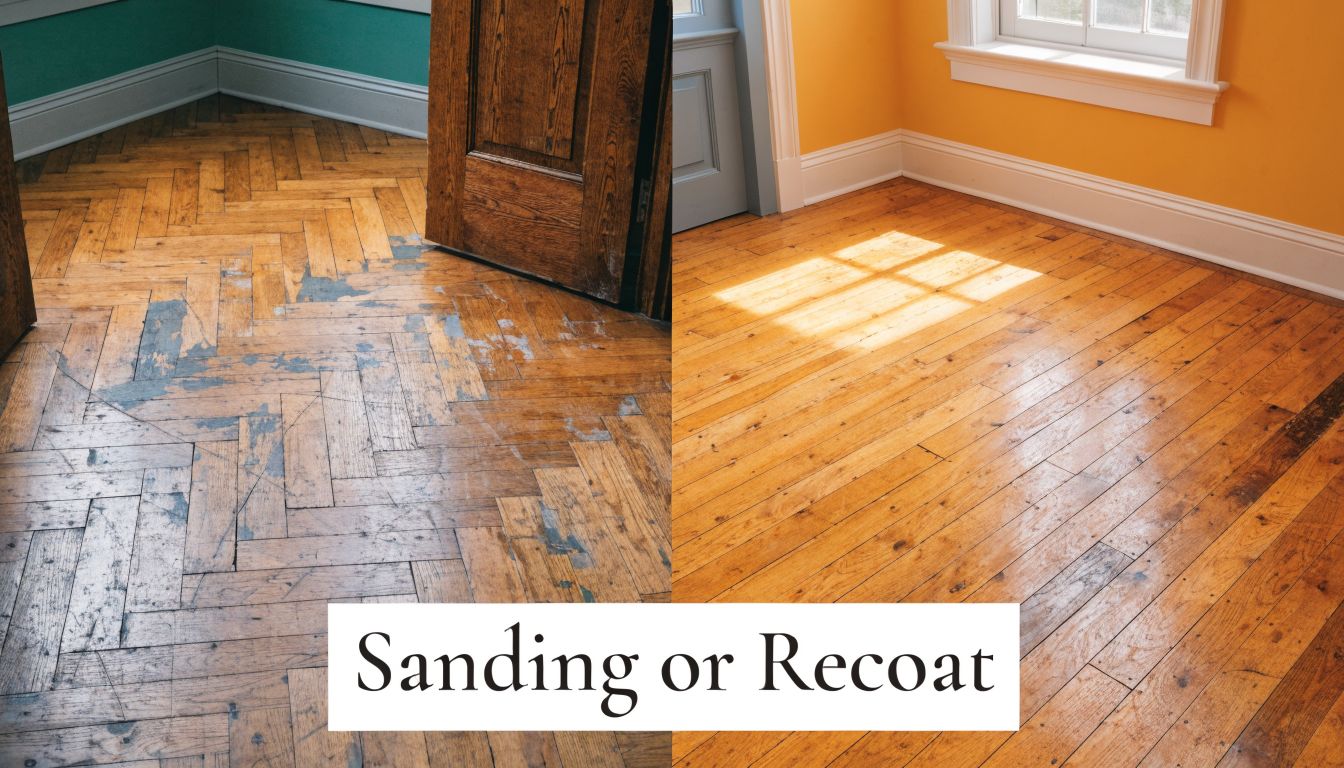
When full sanding is the right call
Full sanding removes the old finish and cuts down to fresh wood. That’s the service to choose when the floor has deeper scratches, obvious wear-through, stain damage, uneven color, or a finish that has failed in multiple areas.
It’s also the route to take if you want to change stain color. A screen and recoat cannot do that because it does not expose bare wood.
Full sanding is usually the better long-term answer when homeowners keep trying to “freshen up” a floor that has already passed the point of light maintenance. You spend more upfront, but you reset the surface properly.
When screen and recoat makes more sense
A screen and recoat is for floors with a mostly intact finish that have lost sheen and picked up light surface wear. The process abrades the existing top layer and applies a new coat without sanding down to raw wood.
This option works best when:
- The wood is not exposed in major traffic paths
- Scratches are shallow and mostly in the finish
- Color is staying the same
- You want less disruption than a full sanding job
For many homes, it’s the most cost-conscious service when the floor still has a healthy base.
If you want a deeper look at where this process shines, this article on the sandless screen and recoat approach lays out the logic well.
A screen and recoat can refresh a good floor. It won’t hide damage that should’ve been sanded out.
The UV-Cure Advantage for Denver Hardwood Floor Refinishing
Denver’s climate changes how finishes behave. That matters more than many homeowners realize when they’re planning around pets, furniture, kids, or a tight schedule.
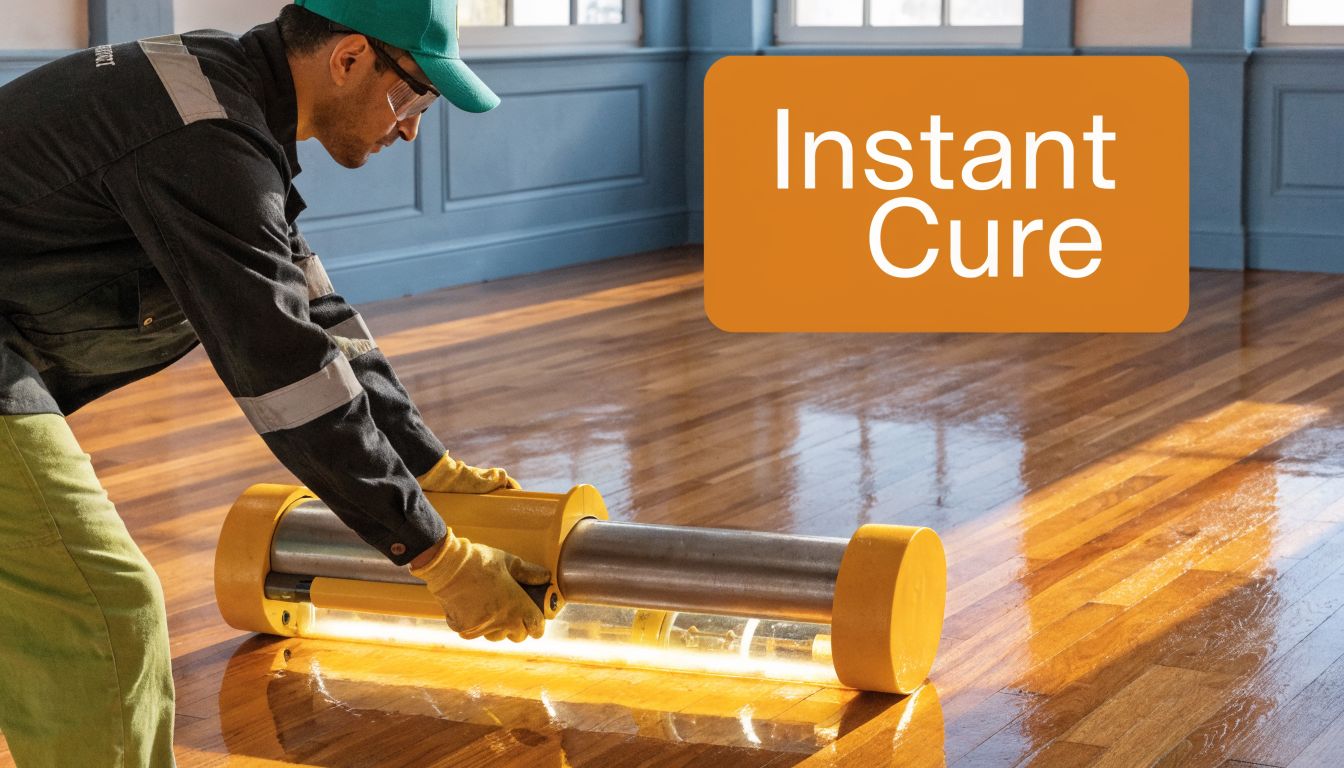
At Denver’s 5,280-foot elevation, lower humidity and air pressure can affect how traditional water-based finishes cure, which can extend project timelines. Modern low-VOC UV finishes have seen a 25% rise in demand in the Denver metro area because they cure instantly under UV light and cut downtime in half, according to Thumbtack’s Denver hardwood refinishing overview.
Why UV-cure works so well here
Traditional finishes depend on ambient conditions. If cure behavior shifts, homeowners often feel it in the schedule. They wait longer before normal use, longer before moving furniture back, and longer before the room feels settled again.
UV-cure changes that equation. The finish is hardened by a curing system instead of waiting on the room to cooperate. In practical terms, that’s one of the biggest quality-of-life upgrades available in hardwood floor refinishing.
Where UV-cure is strongest
Busy homes benefit the most. So do commercial spaces, rentals between tenants, and homes with pets that can’t realistically stay off the floor for long.
A few situations where UV-cure stands out:
- Families with pets: Faster return to use reduces the juggling act.
- Property managers: Less downtime helps turnover planning.
- High-traffic homes: Harder-wearing systems make sense where the floor gets tested daily.
- Odor-sensitive households: Low-VOC systems are easier to live with.
Here’s a quick look at the process in action:
UV-cure vs traditional finishes
Traditional water-based finishes still have a place. They can produce a very good result when the schedule is flexible and the right product is matched to the floor.
But if convenience matters, UV-cure is hard to beat. You’re not just paying for a coating. You’re paying for speed, predictability, and fewer interruptions to the household.
For homeowners comparing systems, this guide to instant UV-curable hardwood floor finish questions is a helpful next read.
The best finish is the one that matches your traffic, your schedule, and your tolerance for downtime.
Refinishing vs Replacing Floors A Denver Cost Analysis
When floors look rough, many homeowners jump straight to replacement. That’s understandable, but it’s often the expensive answer to a problem that refinishing can solve.
The cost difference is substantial
In Denver, labor accounts for approximately 80% of refinishing cost. Professional refinishing typically runs $3 to $10 per square foot, while installing new hardwood runs $8 to $25 per square foot. That means refinishing often delivers 60% to 70% cost savings compared with replacement, based on Angi’s Denver hardwood refinishing cost analysis.
For a homeowner looking at a large main floor, that gap matters. If the existing wood is structurally sound, refinishing usually preserves the floor you already paid for and avoids the bigger expense of new material and installation.
Replacement makes sense less often than people think
Replacement is the right move when the floor has severe structural failure, widespread board instability, or damage that can’t be corrected through sanding and repair. But many floors that look terrible are still good candidates for restoration.
That includes floors with:
- Heavy finish wear
- Pet scratching
- Old stain color
- Localized repairs
- Surface-level ugliness that looks worse than it is
The hidden part of replacement is the disruption. Tear-out, disposal, material delivery, acclimation, installation, and then finishing or factory-finished transitions all add complexity. Refinishing is usually simpler because the floor is already there.
The practical decision
If the boards are solid and the issue is wear, refinishing is usually the move. If the boards are failing, then replacement becomes worth discussing.
This is where an honest floor inspection matters. Homeowners don’t need a dramatic sales pitch. They need someone to tell them whether the wood still has life in it. In many Denver homes, it does.
Planning Your Denver Hardwood Floor Refinishing Project
A refinishing job goes smoother when the house is ready and everyone knows what to expect. Most stress around flooring projects comes from uncertainty, not from the work itself.
Before the crew arrives
Start with access. Clear small items, wall décor near work zones, and anything breakable. If the estimate assumes empty rooms, confirm whether furniture moving is included or if you need to handle that before the start date.
Also think through your daily routine. Pets, kids, work-from-home calls, and kitchen access all affect how comfortable the project feels while it’s underway.
A few smart prep steps:
- Remove floor-level items: Lamps, plants, baskets, and loose décor slow down prep.
- Protect pets: Keep them away from doors, cords, and active work areas.
- Plan room access: Decide which areas need to stay reachable during the job.
- Discuss special concerns: Tell the contractor about squeaks, loose boards, or old wax products before work begins.
What the project usually feels like
A full sanding job is more involved than a maintenance coat. You’ll hear machines, smell finish products depending on the system used, and need to stay out of active areas while the floor is being worked.
With dust-free sanding, the house stays cleaner than old-school refinishing methods. With UV-cure systems, the handoff back to normal life is much faster than with finishes that need longer cure time.
Homeowners are happiest when they prepare for logistics, not just color. The stain decision is important. So is knowing where the dog sleeps that night.
After the finish goes down
The first few days set the tone for how the floor wears. Use felt pads, avoid dragging furniture, and follow the cleaner recommendations for the finish system that was applied. Don’t guess with off-the-shelf products. The wrong maintenance product can dull the surface or interfere with future recoating.
If you’re staging a home for sale, this planning gets even more important. Coordinate painters, cleaners, movers, and photographers so the new floor doesn’t become the surface every other trade works over.
How to Get a Clear and Accurate Estimate
The easiest way to get a useful estimate is to give specific information up front. Vague descriptions lead to vague pricing.
What to have ready
Photos help a lot. Good estimates usually start with clear wide shots of the room and a few close-ups of problem areas. Include traffic paths, scratches, dark stains, worn thresholds, and any places where the finish has completely disappeared.
You should also know:
- Approximate square footage
- Type of wood, if known
- Whether you want the same color or a stain change
- Whether the floor needs cleaning, recoating, or full sanding
- Any special timing needs, especially if downtime is a problem
What makes an estimate more accurate
The best phone and photo estimates come from honest detail. If the floor has wax on it, say so. If the dog has damaged one section badly, show it. If stairs are involved, mention them early.
Many quote problems happen because homeowners send one flattering photo and leave out the hard parts. A better approach is to document the floor the way a contractor will find it.
Questions worth asking
A solid estimate conversation should answer practical issues, not just price.
Ask things like:
- Which process fits this floor best
- Can the current color stay, or should it be changed
- Will repairs blend well with the existing wood
- What finish system matches our traffic
- How soon can normal use resume
That kind of conversation gives you a real estimate, not just a number tossed out to get the call booked.
Frequently Asked Questions About Denver Hardwood Floor Refinishing
How much does hardwood floor refinishing usually cost in Denver
For cost to refinish hardwood floors denver, the most widely cited local range is $3 to $8 per square foot in 2026, but your actual price depends on condition, wood species, finish system, and whether the project is a screen and recoat or full sanding.
Is screen and recoat cheaper than full sanding
Yes, when the floor qualifies for it. A screen and recoat is designed for floors with a mostly intact finish and lighter wear. If the floor has deep scratches, exposed wood, or major discoloration, it usually won’t solve the underlying issue.
Do dust-free sanding systems make a difference
Yes. They help control airborne dust and make the project easier to live through, especially if you’re staying in the home. They also reduce the cleanup burden after sanding.
Is UV-Cure System worth it for Denver hardwood floor refinishing
For many households, yes. Denver hardwood floor refinishing UV-Cure System options are especially appealing if you want lower downtime, a cleaner-feeling handoff, and a finish that isn’t waiting on room conditions to cure in the same way traditional systems do.
Can old pine floors in Denver homes be refinished
Often, yes. Pine is softer and needs a more careful approach, but many older floors can still be restored attractively. Expectations matter, though. Softer wood tends to show character and wear differently than denser species.
Should I refinish or replace my hardwood floors
If the boards are structurally sound, refinishing is usually the smarter first option. Replacement makes more sense when the floor has severe structural problems or damage beyond what sanding and repairs can correct.
How do I maintain newly refinished floors
Keep grit off the surface, use felt pads under furniture, avoid dragging heavy items, and use the cleaner recommended for the finish system on your floor. Rugs at entries help a lot. So does stopping chair damage before it starts.
Can you change the stain color during refinishing
Yes, but usually only with full sanding. If you want a natural look, a darker tone, or a more updated color, the old finish has to come off so the new stain can absorb evenly.
What’s the best refinishing option for pets and high traffic
In many homes, the answer is a tougher finish system and a process matched to real wear patterns. That often points homeowners toward stronger water-based systems or UV-cure options instead of entry-level coatings.
How do I know if wax removal is needed
If the floor has been treated with wax or certain polishes over the years, recoating may fail unless that contamination is removed first. If you see odd buildup, cloudy residue, or a floor that reacts poorly to normal cleaning, it’s worth asking about wax removal.
For homeowners comparing options for Denver hardwood floor refinishing and the UV-Cure System, J.R. Hardwood Floor Refinishing & Cleaning offers practical solutions built around floor condition, traffic level, and downtime needs. You can explore their services, learn more about the company, view testimonials, check out recent work and videos, or contact the team for a quote.
Homeowners on Parker trust J.R. Hardwood Floor Refinishing & Cleaning to restore the natural beauty of their hardwood floors with our dust-free sanding system and advanced UV-curable finishes. Unlike traditional methods, our UV technology cures instantly, so you can move furniture back the same day with no lingering odor or downtime. Choose the perfect refinishing service to match your needs and home traffic. Our dust-free process ensures a clean, beautiful finish every time.
📞 Phone: 720-327-1127
🌐 Website: jrhardwoodfloorrefinishingandcleaning.com
📍 Service Area: Denver and nearby towns including Littleton, Parker, Aurora, Castle Rock, Highlands Ranch, Boulder, Lakewood, Centennial, and Colorado Springs
▶️ YouTube: See our floor refinishing videos