
TL;DR:
- Routine cleaning leaves behind fine particles that damage hardwood floors over time.
- Professional cleaning removes embedded contaminants and improves indoor air quality.
- Regular expert maintenance extends floor lifespan and prevents costly repairs.
Most homeowners sweep, mop, and call it done. It feels like enough. But here’s the surprising reality: routine cleaning removes what you can see, while leaving behind what actually damages your floors over time. Fine particles grind into the finish with every step. Allergens settle deep into wood grain. Improper cleaning solutions quietly strip protective coatings. Professional floor cleaning goes far beyond a surface shine. It protects your investment, improves your home’s air quality, and adds years to your floor’s life. In this article, we’ll walk you through exactly why professional care makes such a measurable difference.
Table of Contents
- Why regular cleaning isn’t enough for lasting beauty
- The hidden health and air quality benefits
- Longevity and protection: How professionals extend your floor’s life
- Professional cleaning vs. DIY: Costs, outcomes, and peace of mind
- What most people overlook about professional floor care
- Connect with trusted Colorado floor care experts
- Frequently asked questions
Key Takeaways
| Point | Details |
|---|---|
| Longer floor life | Professional cleaning preserves protective finishes and reduces damage, giving floors more years of use. |
| Healthier homes | Expert floor care eliminates hidden allergens and improves indoor air quality for all occupants. |
| Lower long-term costs | Routine professional cleaning prevents expensive repairs and adds value to your property. |
| Time and peace of mind | Leaving floors to the pros means less worry and more time for what matters most in your home. |
Why regular cleaning isn’t enough for lasting beauty
You vacuum. You mop. Your floors look fine. So what’s the problem? The issue is what you can’t see. Dust, fine grit, and microscopic debris settle into the texture of your floors every single day. Regular sweeping moves the big stuff but leaves the rest behind. Over time, that invisible buildup acts like sandpaper under your feet, slowly wearing down the finish that protects your wood.
DIY cleaning also comes with some real risks that most people don’t think about. Using the wrong product, too much water, or a steam mop on hardwood can cause warping, cloudiness, and finish breakdown. These aren’t dramatic, obvious disasters. They’re slow, quiet problems that show up months later when the damage is already done.
Here’s what routine cleaning typically misses:
- Fine grit and abrasive particles that scratch the finish with foot traffic
- Pet dander and dust mites embedded in wood grain and between boards
- Residue from DIY cleaning products that dulls the surface over time
- Moisture damage from over-wet mopping that seeps into seams
- Wax or soap buildup that creates a hazy, sticky film
Professional cleaning uses specialized equipment and pH-balanced solutions designed specifically for hardwood. These tools reach what your mop never can. They lift contaminants without over-saturating the wood, and they leave the finish intact rather than stripping it.
Our maintenance guide for lasting beauty breaks down exactly how to care for your floors between professional visits. Pairing that routine with scheduled professional service is the real formula for floors that stay beautiful for decades.
“The NWFA recommends deep cleaning hardwood floors every 12 to 18 months depending on traffic, which professionals perform safely using pH-balanced solutions and controlled moisture to avoid damage.”
That guidance exists for a reason. High-traffic areas in Colorado homes, especially entryways and kitchens, accumulate buildup faster than you’d expect. Our hardwood maintenance checklist gives you a simple way to track where your floors stand right now.
Pro Tip: If your floors look clean but feel slightly sticky or dull even after mopping, that’s a classic sign of product residue buildup. A professional cleaning can reset the surface without sanding or refinishing.
The hidden health and air quality benefits
Here’s something most people never connect: your floors and your air quality are directly linked. Every time someone walks across your hardwood, they stir up whatever has settled into the surface. Dust, pollen, pet dander, and other fine particles lift into the air you breathe. Regular cleaning disturbs these particles without fully removing them.
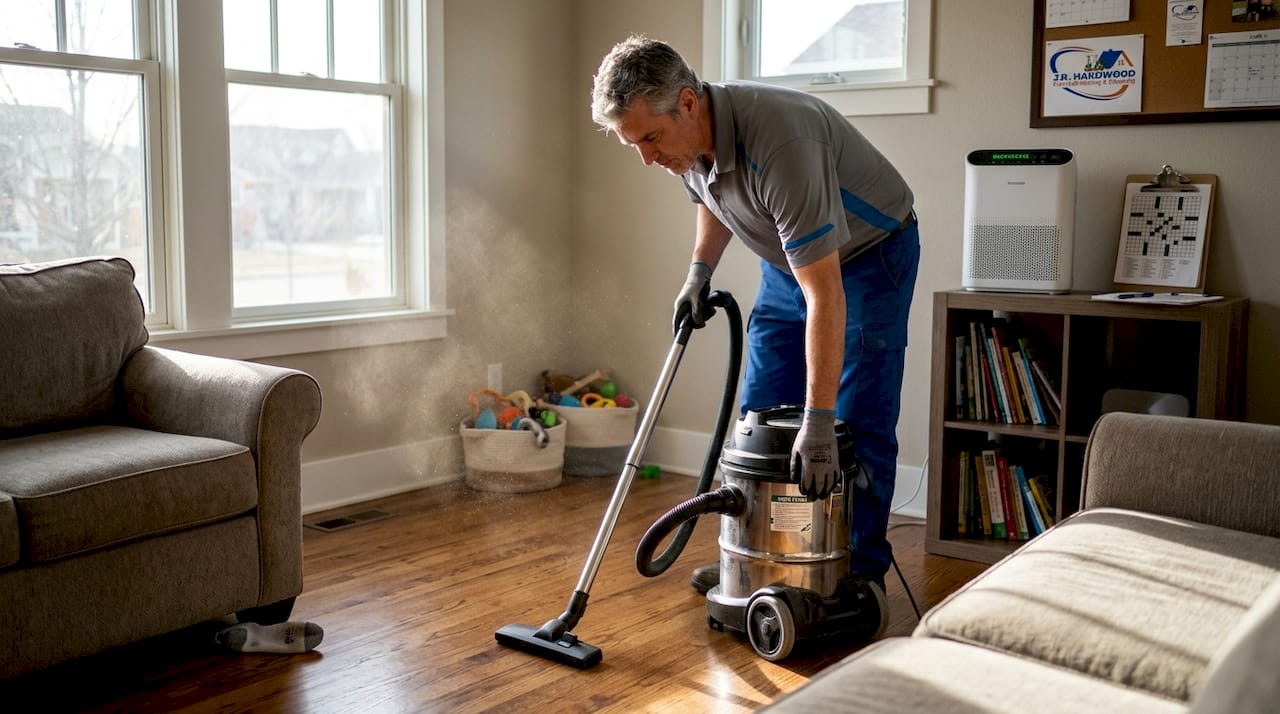
Professional cleaning changes that equation. Using controlled, low-moisture methods and professional-grade solutions, we remove contaminants that standard mopping leaves behind. The result is a measurably cleaner surface and better air quality throughout your home.
This matters especially for families with allergies, asthma, or young children who spend time on the floor. Improved indoor air quality reducing allergens and respiratory issues is one of the most significant but least talked-about benefits of professional floor care.
Contaminant removal: DIY vs. professional cleaning
| Contaminant | DIY cleaning | Professional cleaning |
|---|---|---|
| Surface dust and debris | Partially removed | Fully removed |
| Fine grit and abrasive particles | Mostly left behind | Extracted with equipment |
| Pet dander and allergens | Disturbed, not removed | Lifted and eliminated |
| Cleaning product residue | Often added | Neutralized and cleared |
| Mold-supporting moisture | May increase risk | Controlled and minimized |
The difference is significant. DIY cleaning often moves contaminants around rather than removing them. Professional equipment extracts them from the surface entirely.
Benefits you’ll notice after a professional cleaning:
- Fewer allergy flare-ups in household members sensitive to dust or pet dander
- Reduced respiratory irritation, especially in dry Colorado winters when homes are sealed up
- Less visible dust resettling on furniture and surfaces after cleaning
- A fresher smell throughout the home without added fragrances
For Colorado homeowners, this is especially relevant. Our dry climate means fine particles stay airborne longer. Proper floor care is one of the most practical steps you can take to support a healthier indoor environment.
Longevity and protection: How professionals extend your floor’s life
Hardwood floors are a major investment. Done right, they can last 50, 75, even 100 years. But that lifespan depends almost entirely on how well they’re maintained. Professional cleaning is one of the most cost-effective ways to protect that investment.
Here’s a straightforward comparison of what happens with and without regular professional care:
| Factor | With professional cleaning | Without professional cleaning |
|---|---|---|
| Finish lifespan | Extended by years | Shortened by buildup and grit |
| Refinishing frequency | Every 7 to 10 years | Every 3 to 5 years |
| Repair needs | Minimal | Scratches, warping, dullness |
| Overall floor lifespan | 50 to 100 years | Significantly reduced |
The numbers tell the story. Skipping professional care doesn’t save money. It accelerates wear and pushes you toward expensive refinishing sooner than necessary.
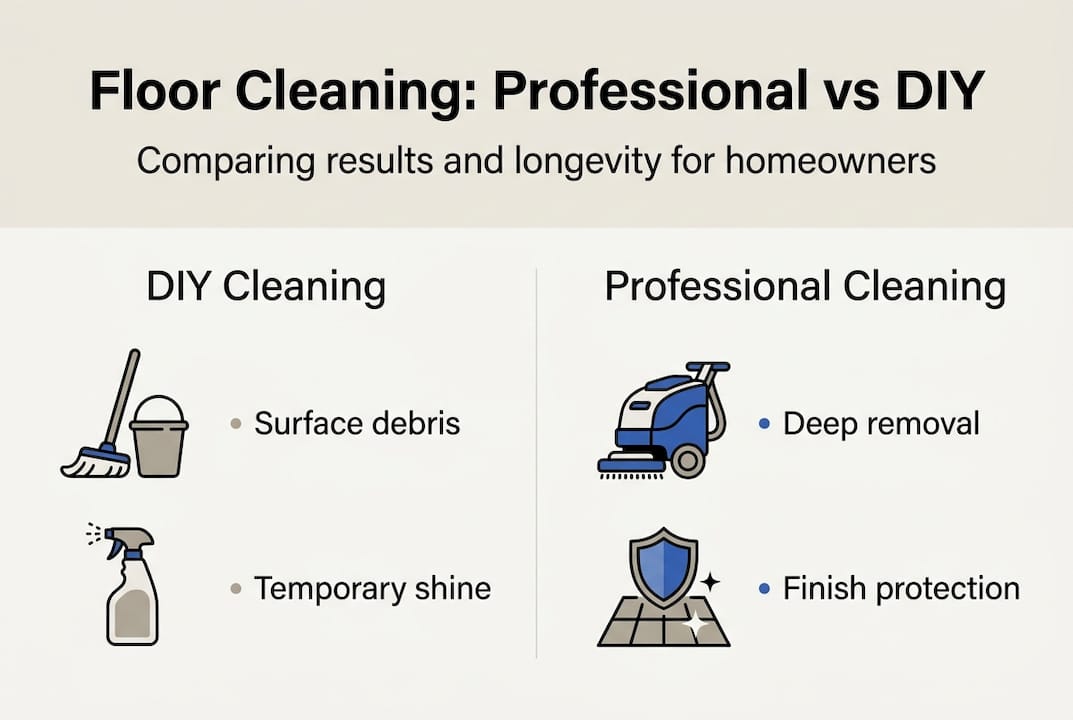
Professional cleaning safely removes buildup and applies protective finishes that enhance durability and make everyday maintenance easier. Think of it like giving your floors a protective coat of sunscreen before sending them into a long Colorado summer.
Here’s what a typical professional cleaning process looks like:
- Inspection to identify finish type, wear patterns, and any problem areas
- Dry debris removal using professional equipment before any solutions are applied
- pH-balanced solution application matched to your specific floor type
- Low-moisture scrubbing that lifts embedded contaminants without soaking the wood
- Buff and polish to restore the protective sheen and even out the surface
- Final inspection to confirm results and flag any areas that may need refinishing
Our professional floor care study shows how consistent maintenance dramatically reduces long-term wear. And if you want a full picture of the restoration process, our step-by-step floor restoration guide walks you through every stage.
Pro Tip: Schedule your professional cleaning before the holiday season when foot traffic spikes. Your floors will handle the extra wear much better with a fresh protective finish going in.
Professional cleaning vs. DIY: Costs, outcomes, and peace of mind
Let’s talk about the question we hear most often: “Can’t I just do this myself and save the money?” It’s a fair question. And the honest answer is that DIY cleaning can work for routine surface maintenance. But when it comes to deep cleaning and protecting your floors long-term, the math usually favors the professionals.
Here’s a direct comparison:
| Factor | DIY cleaning | Professional cleaning |
|---|---|---|
| Upfront cost | Low | Moderate |
| Risk of damage | High (wrong products, excess moisture) | Very low |
| Contaminant removal | Surface level | Deep extraction |
| Time required | 2 to 4 hours per session | Handled for you |
| Long-term cost | Higher (more frequent repairs) | Lower (extended floor life) |
| Peace of mind | Variable | High |
The hidden cost of DIY is damage you don’t see coming. Professionals offer safe deep cleaning without the risks of improper solution or moisture use. That protection alone can save you thousands in premature refinishing or board replacement.
For busy Colorado homeowners and property managers, time is also a real factor. Coordinating a professional service means you get your afternoon back while someone with the right tools and training handles the work correctly the first time.
Some things worth keeping in mind when weighing your options:
- Rental equipment for DIY deep cleaning can cost nearly as much as professional service, with a steep learning curve
- Wrong cleaning products can void manufacturer warranties on certain floor types
- Moisture damage from DIY methods is one of the most common and costly floor repairs we see
- Expert cleaning tips across your home, including floors, can extend the life of every surface
For a full breakdown, our DIY vs. professional floor cleaning comparison covers the real numbers. And our floor care best practices guide helps you get the most out of your floors between professional visits.
What most people overlook about professional floor care
After years of working on hardwood floors across Colorado, here’s what we’ve noticed: most homeowners judge their floors by how they look on a given Tuesday. If the surface looks clean, they assume everything is fine. But the biggest gains from professional floor cleaning are the ones you can’t immediately see.
The years added to your floor’s life. The allergens you’ll never breathe in. The finish damage that never happens because someone caught it early. These are the real wins. And they’re almost always invisible until they’re missing.
Conventional wisdom says clean your floors when they look dirty. We’d push back on that. The best time to clean is before the damage sets in, not after. Reactive maintenance always costs more than preventive care. That’s true for your car, your roof, and absolutely for your hardwood floors.
Well-maintained floors also need fewer costly repairs. It’s that simple. Protecting floors for years starts with a consistent schedule, not a panic call when the finish is already gone.
Pro Tip: Don’t wait until your floors look bad to schedule a professional cleaning. Book it on a calendar like any other home maintenance task, and your floors will thank you for decades.
Connect with trusted Colorado floor care experts
If this article has you thinking about what your floors might be hiding, that’s a good instinct to follow. Professional cleaning isn’t a luxury. It’s one of the smartest maintenance decisions you can make for your home’s value, your family’s health, and your own peace of mind.
At J.R. Hardwood Floor Refinishing & Cleaning, we serve homeowners and property managers across the Denver Metro Area and surrounding Colorado communities. We offer free over-the-phone quotes, clear scheduling, and expert guidance tailored to your floor’s specific condition. Whether you’re ready for a professional floor refinishing service or want to explore options with our complete hardwood refinishing guide, we’re here to help you take the next step with confidence.
Frequently asked questions
How often should hardwood floors be professionally cleaned?
The NWFA recommends professional deep cleaning every 12 to 18 months, depending on foot traffic levels in your home.
Does professional floor cleaning help with allergies?
Yes. Expert cleaning removes deeply embedded allergens and improves indoor air quality, which can meaningfully reduce allergy and respiratory symptoms.
What cleaning methods do professionals use for hardwood floors?
Professionals use pH-balanced solutions and low-moisture techniques that clean thoroughly without risking warping, cloudiness, or finish damage.
Will professional cleaning extend my floor’s life?
Absolutely. Regular expert cleaning maintains protective finishes and delays the need for costly refinishing or board-level repairs by years.
