 Skip to content
A Denver property manager usually notices the floor problem at the worst time. A tenant tour is scheduled. A retail space in Cherry Creek is about to reopen. A downtown office lobby still has dull traffic lanes, heel marks, and scratches that make the whole space feel older than it is.
That’s why commercial flooring services denver can’t be treated like a cosmetic afterthought. In busy buildings, flooring affects first impressions, safety, cleanup time, lease appeal, and how often you have to shut down a space for repairs. For many commercial spaces, the smarter move isn’t automatic replacement. It’s choosing the right combination of Denver hardwood floor refinishing and the right UV-Cure System when the existing floor still has useful life left.
Commercial decision-makers usually need the same three answers fast. What will hold up. How long will the space be offline. What option makes financial sense over the life of the floor. Those are the questions this guide is built to answer.
Your Ultimate Guide to Commercial Flooring Services in Denver
In Denver, commercial floors take a beating. Snow and de-icing residue come through front entries. Rolling chairs wear paths into office floors. Retail fixtures get dragged. Tenants judge a building before they ever ask about lease terms, and the floor is part of that judgment.
That’s one reason the market keeps investing in commercial flooring. The U.S. commercial flooring sector reached $7.34 billion in 2022 and represented 26.2% of total U.S. flooring sales, with about 70% of revenue coming from specified contract work in healthcare, institutional, and office settings, according to Floor Covering News commercial flooring recovery data. Denver decision-makers are dealing with the same reality on the ground. Flooring is operational infrastructure.
What commercial buyers actually need
Most facility managers aren’t looking for abstract design talk. They need practical guidance on:
- Downtime risk: Can the work happen between tenants, over a weekend, or in phases?
- Durability: Will the finish survive entry traffic, chair movement, and routine cleaning?
- Return on spend: Is restoration enough, or is full replacement the more sensible path?
- Appearance: Does the floor support the building’s brand and rental value?
A floor can be structurally fine and still be hurting the space commercially.
For hardwood and wood-look spaces, the decision often comes down to whether the surface needs sanding, a screen and recoat, deep cleaning, wax removal, or a full change to LVP or laminate. A UV-Cure System matters because it changes one of the biggest operational variables in commercial work: waiting time.
In neighborhoods like LoDo, Cherry Creek, and the Central Business District, that matters more than most vendors admit. The best flooring plan is usually the one that balances appearance, service life, and schedule without creating unnecessary disruption.
Why Your Commercial Flooring is a Critical Asset Not Just a Surface
A worn floor doesn’t stay a floor problem for long. It becomes a leasing problem, a customer experience problem, and sometimes a liability problem.
It shapes how people judge the property
People read floors the same way they read lighting, odor, and front-desk quality. If the lobby floor looks neglected, they assume maintenance standards are uneven everywhere else too. That’s especially true in office entries, retail storefronts, hospitality spaces, and common areas where tenants or customers pause long enough to notice detail.
A clean, properly finished floor sends a different message. It tells prospects the building is cared for. It tells existing tenants their rent is supporting visible upkeep. That matters for retention, even when people don’t say it out loud.
It affects safety and exposure
In high-traffic Denver environments, commercial flooring needs to meet durability and safety expectations. ASTM D3884 wear resistance is important for foot traffic, and ADA-compliant slip resistance above 0.6 coefficient of friction can reduce liability claims by up to 70% in hospitality and retail venues, as outlined in this review of commercial flooring standards for architects and builders.
For a facility manager, that translates into practical questions:
- Entry conditions: Will tracked-in moisture create a slip issue?
- Transitions: Are height changes manageable and compliant?
- Finish choice: Does the coating help or hurt traction once the floor gets wet?
- Maintenance plan: Are crews using products that preserve slip performance?
Practical rule: If the floor looks glossy but becomes slick at the entry during bad weather, the finish system is working against the building.
It changes the real cost of ownership
Cheap flooring decisions often look good only on bid day. Then the callbacks start. Scratched wear layers show early. Seams fail in wet entries. Coatings break down because the substrate wasn’t prepared properly. The floor starts asking for labor before it should.
Commercial owners should think in lifecycle terms:
- Initial installation or restoration cost
- How often the surface needs service
- How much downtime each service event creates
- Whether the material supports the image of the property
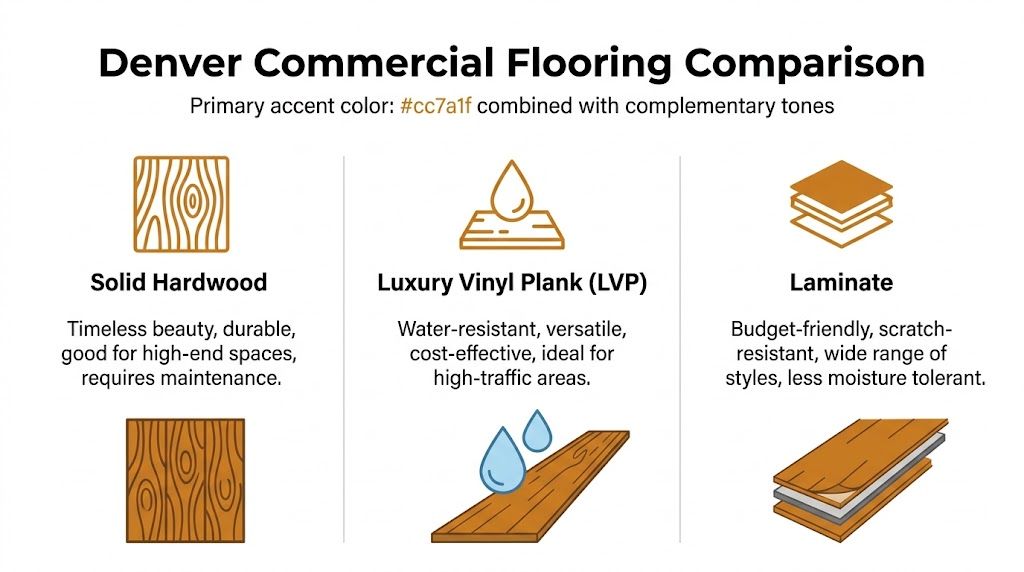
Hardwood in the right commercial setting can be a strong asset because it can often be restored rather than torn out. LVP can be the practical winner in wet or turnover-heavy environments. Laminate can work in lighter-duty areas, but it usually gives you less margin for moisture mistakes.
That’s why flooring isn’t just a finish choice. It’s part of operations.
Choosing the Right Flooring System for Denver's Commercial Demands
Denver commercial spaces don’t all need the same floor. A law office near Civic Center, a restaurant in LoHi, and a multifamily corridor in Lakewood deal with different wear patterns, cleaning routines, and appearance expectations. Material choice should match the job, not the trend.
Solid hardwood for image and long service life
Hardwood still makes sense in commercial interiors where appearance matters and the client wants a floor that can be renewed instead of discarded. Think boutique offices, executive suites, reception areas, and higher-end retail.
What works well:
- Refinishability: You can restore the surface when wear shows instead of replacing the whole floor.
- Design value: Hardwood gives depth and character that many synthetic materials can’t match.
- Long-term flexibility: If branding changes, stain and finish choices can change too.
What doesn’t:
- Poor moisture control: Wet entries and repeated standing water are hard on wood.
- Deferred maintenance: Waiting too long turns a recoat job into a sanding job.
- Wrong placement: Hardwood at an unprotected snow entry is often a bad idea.
For commercial managers comparing options in detail, this guide to best commercial flooring options is a useful next step.
LVP for practical durability in mixed-use spaces
Luxury Vinyl Plank is often the cleanest answer when a space needs wood-like appearance with less sensitivity to moisture and easier turnover scheduling. It fits many retail, tenant improvement, multifamily, and office applications.
LVP usually works best when the priorities are:
- Fast reset between occupants
- Simple cleaning routines
- Good appearance without ongoing refinishing
- Better tolerance for Denver slush and tracked-in debris
In pet-friendly offices, service corridors, and busier storefronts, LVP can be the lower-drama material. It’s less sentimental than hardwood, but that’s sometimes the point.
Laminate for budget-sensitive dry interiors
Laminate can fit lighter commercial use when budget is driving the project and moisture exposure is limited. It gives a broad style range and can handle everyday surface wear reasonably well in the right setting.
Its limits show up when:
- Water gets into edges or seams
- You need repairs that blend invisibly
- The building wants a more premium feel
Laminate is usually a better answer for back offices, lighter-use suites, or temporary value-engineering decisions than for high-visibility, high-moisture zones.
The decision filter that matters most
Instead of asking which material is “best,” ask four direct questions:
| Flooring type | Best fit | Main upside | Main caution |
|---|---|---|---|
| Solid hardwood | Premium offices, reception areas, boutique retail | Can be restored and refinished | Doesn’t forgive moisture neglect |
| LVP | Retail, multifamily, mixed-use, busy offices | Practical durability and easier upkeep | Less authentic visual depth than real wood |
| Laminate | Lower-impact commercial interiors | Budget-friendly wood-look option | Less tolerant of moisture issues |
A separate issue is compliance. High-traffic Denver floors need durability and traction that align with commercial use, not residential assumptions. If you’re evaluating a floor only by color and plank width, you’re missing the part that will cost money later.
The J.R. Hardwood Project Process for Commercial Spaces
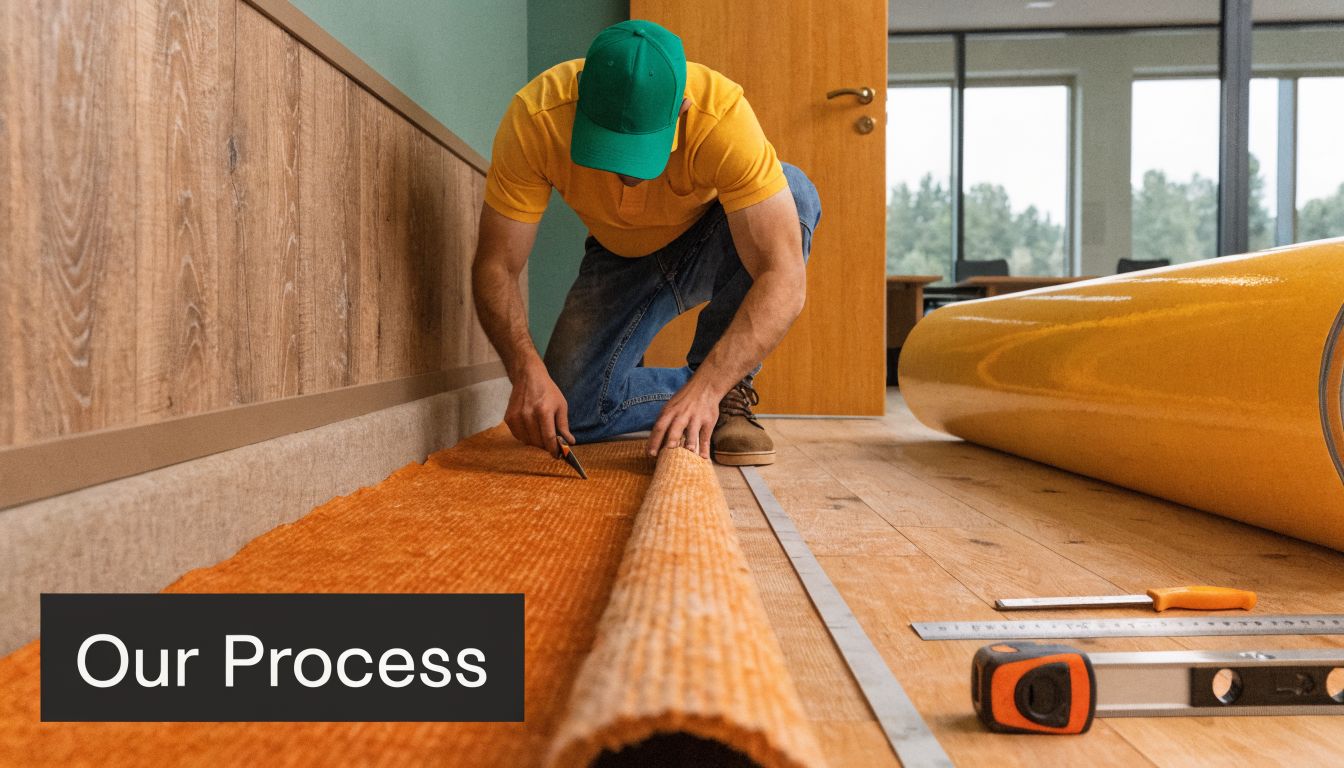
A Denver property manager usually feels the difference between a well-run flooring project and a bad one before the first board comes up. The good project has a clear work window, controlled access, and no surprises for tenants. The bad one starts with a vague quote and turns into extra days, added scope, and complaints from occupants.
Step one starts with scope, not guesswork
Commercial flooring decisions need more than square footage. A lobby with finish wear is one job. A tenant suite with moisture staining, failing adhesive, or damaged boards is another. If those conditions get lumped together in one rough estimate, the budget usually breaks later.
A useful intake covers the facts that affect cost and downtime:
- What flooring is in place now
- How the space is used each day
- Whether the building is occupied during the work
- What hours the crew can access the site
- Whether the floor needs recoat, repair, full restoration, or replacement
This part sounds basic. It is also where commercial projects are won or lost.
Site prep protects the building, not just the floor
Prep work matters because commercial buildings stay in motion. Deliveries still arrive. Tenants still need access. Dust still travels if containment is weak.
Good crews plan around elevators, loading paths, staging areas, and odor control before work starts. They also identify hidden risk in older spaces. If there is any chance previous flooring includes hazardous material, facility teams should review the basics of managing asbestos floor tiles before approving demolition.
In commercial work, demolition errors cost more than slow installation. One bad assumption can trigger abatement, schedule changes, and tenant issues that were never in the original number.
Execution should follow the building's schedule
The floor system has to fit operations. That often means phased work, night shifts, weekend production, or splitting a project by tenant turnover dates instead of doing the whole area at once.
That approach is not always the cheapest line item. It is often the better operating decision. A lower bid loses value fast if it forces a business to close longer, blocks revenue-producing space, or creates rework because other trades were not sequenced correctly.
J.R. Hardwood Floor Refinishing & Cleaning handles commercial projects with services such as photo-based quoting, hardwood restoration, screen and recoat, wax removal, clean and buff work, installation, and UV-curable finishing. For a facility manager, the point is simple. Match the method to the use of the space and the allowed downtime.
Final walkthrough should focus on day-two performance
A commercial handoff should answer the questions the operations team will have the next morning, not just confirm that the floor looks good under project lighting.
Review these items before sign-off:
- Which cleaning products the janitorial team should and should not use
- When foot traffic, furniture, and rolling loads can return
- What maintenance interval fits the traffic level
- Where entry matting or chair protection needs to be upgraded
- What issues should trigger a service call instead of routine cleaning
That last part gets missed often. A strong floor finish can still fail early if water sits at entries, grit is tracked in daily, or maintenance crews use the wrong cleaner. Installation and refinishing set the baseline. Building operations determine how long that result lasts.
A Commercial Guide to Finishes The Key to Durability and Low Downtime
Most commercial buyers focus on color and price first. Finish choice usually matters more. The finish controls how the floor behaves under traffic, how often it needs service, and whether the space can reopen quickly.
For Denver commercial wood floors, the most important trade-off is simple. Do you want a finish that keeps the space out of service longer, or do you want one that returns the floor to use almost immediately?
Why UV-cured systems matter in commercial settings
It is the UV-Cure System that changes the conversation. Traditional site-applied finishes can require longer wait time and staged curing. That’s manageable in some homes. It’s a bigger problem in a store, office, or managed property where downtime has a direct cost.
The practical appeal of UV curing is immediate usability. And compared with industrial coatings like epoxy, there’s another advantage. According to QuestMark's Denver flooring overview, epoxy can be highly durable but often requires specific substrate profiles, moisture testing, and more involved installation, while modern UV-cured hardwood finishes offer a compelling alternative with immediate use and less extensive prep.
If you’re evaluating non-wood hard-surface strategies for another part of the building, this overview of concrete grinding and polishing is useful context. It helps clarify when polished concrete belongs in the conversation and when a restored wood floor is the better fit.
Field advice: In a commercial project, the best finish isn’t the one with the fanciest label. It’s the one your building can actually live with operationally.
How to think about finish tiers
Not every commercial floor needs the most premium system. A back office with moderate traffic doesn’t need the same finish plan as a retail entry or a pet-friendly leasing office. The right question is how much abuse the floor will take before the next service cycle.
Here’s a practical way to compare options.
| Tier | Price per Sq. Ft. | Finish Type | Key Benefit | Ideal For |
|---|---|---|---|---|
| Diamond Traffic Plus | $5.50 per sqft | UV-curing + Nano Wear | Unmatched wear and scratch resistance | High-wear commercial areas |
| Platinum Traffic Plus | $4.80 per sqft | 2K Water-Based Finish + Nano Wear Oxide Additive | Higher durability for demanding use | Retail, active offices, heavier traffic |
| Gold Traffic Plus | $4.50 per sqft | 2K Water-Based Finish | Scratch resistance | General commercial interiors |
| Silver Traffic Plus | $4.20 per sqft | 1K Water-Based Finish | Excellent wear resistance | Moderate-traffic offices |
| Screen & Recoat | starts at $2.50/sq. ft. | Maintenance restoration service | Refreshes wear layer without full sanding | Floors with surface wear only |
| Wood Floor Cleaning | starts at $1.50/sq. ft. | Deep cleaning service | Removes grime and improves appearance | Routine maintenance and turnover prep |
| Wax Removal | starts at $2.50/sq. ft. | Surface correction service | Removes incompatible buildup before proper finishing | Floors with old wax or residue |
| Instant UV-Curable Finish | $1.5/sq. ft. | UV-cure add-on/service | Immediate use after cure | Time-sensitive commercial projects |
What works and what usually doesn’t
A few practical patterns show up repeatedly in commercial jobs.
Works well
- Matching a screen and recoat to floors that are worn but not severely damaged
- Using 2K water-based systems where stronger chemical and wear resistance matter
- Choosing Instant UV-Curable Finish when reopening speed matters more than anything else
- Removing wax buildup before trying to “fix” appearance with another topcoat
Usually doesn’t
- Trying to save money by coating over contamination
- Treating deep gouges like a maintenance issue instead of a sanding issue
- Picking the cheapest finish in a high-visibility entrance
- Ignoring chair protection, entry mats, and cleaning chemistry after the job is done
The simple ROI lens
If a finish lets a commercial tenant use the floor sooner, reduces future touch-ups, and keeps the space presentable longer, it usually wins even if the upfront line item is higher. That’s the commercial mindset. Don’t buy finish by gallon. Buy it by how well it protects your schedule.
Real World Results Denver Commercial Flooring Case Studies
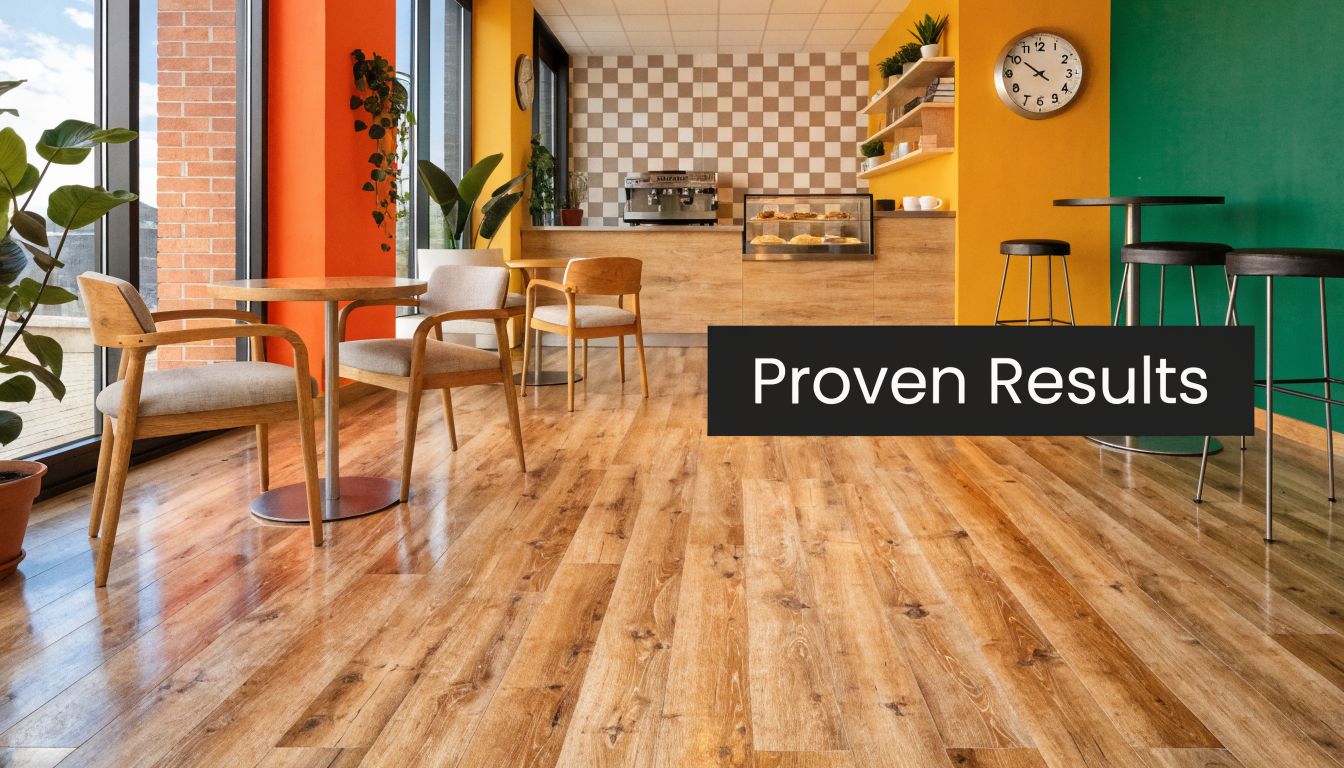
The Denver market has a blind spot. Many companies talk about new installation first, even when restoration would be the smarter move. That matters because commercial refinishing guidance in Denver remains underserved, even though refinishing can cut costs by 50-70% versus replacement and UV-curable finishes for zero-downtime commercial use have risen 25% in adoption over the last year.
LoDo office with worn original wood
A historic office suite had hardwood with strong character but visible scratch patterns, traffic dulling, and uneven old finish. Replacement would have stripped out part of what made the space marketable in the first place.
The better answer was full sanding and refinishing with a higher-durability commercial finish. The result wasn’t just cleaner boards. The whole suite felt intentional again, which matters when tenants are comparing unique older buildings against newer but less distinctive options.
Parker retail floor that couldn’t stay closed
A boutique needed its floor to look ready for customers without losing days to cure time. The wood itself wasn’t beyond repair. The wear was mostly in the finish layer.
That’s the kind of project where a maintenance-oriented solution can beat replacement by a wide margin. A screen and recoat paired with UV curing makes sense when the floor still has a good base and the business needs a short turnaround. For commercial owners weighing similar options, this page on restoring commercial floor spaces lays out the logic clearly.
A video example helps show what fast-turn restoration can look like in practice:
Castle Rock turnover work for managed units
Some properties don’t need premium hardwood restoration in every unit. They need durable, repeatable flooring decisions during turnover. In that setting, LVP can be the practical choice for units with heavier wear exposure, pets, or tighter re-rental schedules.
The key is not forcing one material into every application. Restoration makes sense when the underlying wood is worth preserving and the schedule can support it. New installation makes sense when the existing condition, use pattern, or maintenance history says the floor has already spent its best years.
Good commercial flooring work starts with an honest diagnosis. Not every floor should be saved, and not every floor should be replaced.
FAQs for Denver Property Managers and Contractors
How do you schedule commercial flooring work without disrupting operations
Most smooth commercial jobs are scheduled around how the building runs. That can mean nights, weekends, phased areas, tenant turnover windows, or short closures. The important part isn’t just start date. It’s sequencing, access, and whether the chosen system supports the timeline.
How do we know if hardwood floor refinishing is enough
If the boards are sound and the problem is mostly finish wear, surface scratches, dullness, or buildup, refinishing or recoating may be the smarter path. If there’s widespread board failure, moisture damage, or severe structural movement, replacement may be more realistic. Wax contamination also changes the plan because the floor may need wax removal before any proper finish work can happen.
What maintenance keeps a commercial wood floor looking good longer
Commercial floors last longer when the maintenance team uses the right cleaner, keeps grit off the surface, and protects the entry points. Dirt acts like sandpaper. Moisture at the doors does the rest.
A practical maintenance plan usually includes:
- Entry protection: High-quality matting where weather and debris come in
- Routine service: Clean and buff work when appearance starts to flatten
- Furniture protection: Glides on chairs and movable fixtures
- Correct products: No random shine products or incompatible waxes
For managers building a long-term plan, this guide to commercial floor maintenance in Denver is a useful reference.
Do low-odor and eco-friendly options exist for commercial spaces
Yes. Water-based systems and UV-curable finishing options are often a practical fit when buildings want a cleaner process and faster return to service. The important thing is matching the product to the floor condition and traffic level, not assuming every “green” label means the same thing in actual use.
Partner with Denver's Commercial Flooring Experts
A bad flooring decision usually shows up in operations before it shows up in accounting. Tenants complain about odor, crews lose access for an extra day, and a "cheaper" option turns into another disruption next year. In Denver commercial buildings, the better choice is usually the one that fits the traffic pattern, the service window, and the condition of the floor you already have.
In many office, retail, and managed property settings, restoration gives owners a better return than full replacement. If the wood is sound, refinishing or recoating can cut downtime and extend service life without the cost and mess of a full tear-out. If the schedule is tight, UV-cured systems are often the practical answer because the floor returns to service much faster than with traditional cure times.
J.R. Hardwood Floor Refinishing & Cleaning works with commercial clients who need clear recommendations, realistic scheduling, and flooring work that holds up under daily use. That includes offices, retail spaces, managed properties, and tenant turnover projects across Denver and nearby communities.
📞 Phone: 720-327-1127
📍 Service Area: Denver, Parker, Castle Rock, Aurora, Lakewood, Littleton, Boulder, Colorado Springs, and nearby Colorado communities
▶️ YouTube: See floor process videos and project demos