 Skip to content
Heavy foot traffic across Denver office lobbies and retail floors leaves visible signs of wear and tear. Restoring hardwood floors in these commercial spaces is a smart way to protect your investment while improving overall aesthetics, durability, and tenant satisfaction. With methods like full sanding, screen and recoat, or eco-friendly floor restoration technologies, you’ll discover how professional solutions minimize disruptions and bring lasting value to your property.
Table of Contents
- What Restoring Commercial Floor Spaces Involves
- Types of Restoration Methods and Technologies
- Benefits and Challenges of Each Approach
- Costs, Timelines, and Risk Factors
- Maintaining Floors After Restoration
Key Takeaways
| Point | Details |
|---|---|
| Comprehensive Restoration Process | Commercial floor restoration involves thorough assessments, repair methods, and protective measures to enhance aesthetics and durability. |
| Eco-Friendly Solutions | Utilize water-based finishes and sustainable materials to protect indoor air quality and improve space value. |
| Regular Maintenance is Essential | Schedule cleaning and buffing every 6 to 12 months to maintain floor appearance and prolong the integrity of refinishing. |
| Cost and Downtime Awareness | Understand the financial implications of different restoration methods and plan for potential downtime to minimize business disruption. |
What Restoring Commercial Floor Spaces Involves
Commercial floor restoration is more than just cleaning or minor repairs. It’s a comprehensive process that breathes new life into high-traffic spaces while protecting your investment and enhancing tenant or customer experience.
The restoration process begins with a thorough condition assessment. Our team evaluates the floor’s current state, identifies damage patterns, and determines what approach will deliver the best results for your specific space.
Key components of commercial floor restoration include:
- Full sanding and refinishing to remove years of wear
- Screen and recoat services for floors needing refreshing
- Dustless refinishing to minimize disruption to your business
- Deep cleaning and buffing between major restoration work
- UV-cure finishing for fast turnaround and immediate usability
- Wax removal and preparation for new finishes
Commercial buildings encompass a wide range of building types, from offices to retail spaces to warehouses, each with unique flooring challenges. Commercial floor materials vary widely—hardwood, concrete, laminate, and luxury vinyl plank (LVP)—requiring tailored restoration approaches based on composition and condition.
Successful restoration balances aesthetics, function, and long-term durability while minimizing business disruption.
The actual work depends on your floor’s current condition. Light wear might require a screen and recoat, which typically takes 6 to 8 hours. More significant damage demands full sanding and refinishing, a 2 to 6 day process that completely removes old finishes and restores the floor to near-original condition.
We use eco-friendly products throughout the restoration process. Water-based finishes and sustainable materials protect your indoor air quality while delivering professional results that enhance your space’s appearance and value.
One often-overlooked aspect is protection after restoration. Applying proper finishing coats—whether traditional polyurethane or advanced UV-cure technology—extends your floor’s lifespan and reduces future maintenance costs. The right finish acts like sunscreen for your floors, shielding them from UV damage, foot traffic, and spills.
Pro tip: Schedule maintenance services like cleaning and buffing every 6 to 12 months between major restoration work to protect your investment and keep floors looking sharp without the cost of full refinishing.
Types of Restoration Methods and Technologies
Different commercial floor situations call for different solutions. The restoration method we recommend depends on your floor’s material, damage severity, and your business’s operational needs.
Full Sanding and Refinishing is the comprehensive approach. This method removes the entire top layer of finish and any surface damage, exposing fresh wood beneath. It’s ideal for floors with deep scratches, stains, or worn finishes that won’t respond to lighter treatments.
Screen and Recoat serves as the lighter-touch option. This process lightly abrades the existing finish and applies a fresh coat without removing the underlying material. It’s perfect for floors that look dull but don’t have significant damage.
Key restoration methods include:
- Full sanding and refinishing for severe wear or damage
- Screen and recoat for maintenance and light restoration
- Dustless sanding to minimize business disruption
- Deep cleaning and buffing between major work
- UV-cure finishing for fast turnaround
- Epoxy and protective coatings for concrete floors
Technology makes a real difference in how we execute these methods. Epoxy floor coatings provide durable, chemical-resistant protection over concrete, addressing moisture and wear issues while ensuring long-lasting performance. These specialized coatings are tailored for abrasion resistance and environmental conditions specific to your space.
The right technology minimizes downtime while delivering superior durability and protection.
We use UV-cure finishing technology for faster results. This advanced system cures in hours rather than days, allowing you to put your space back in service immediately. It’s especially valuable for high-traffic commercial environments where extended closures cost money.
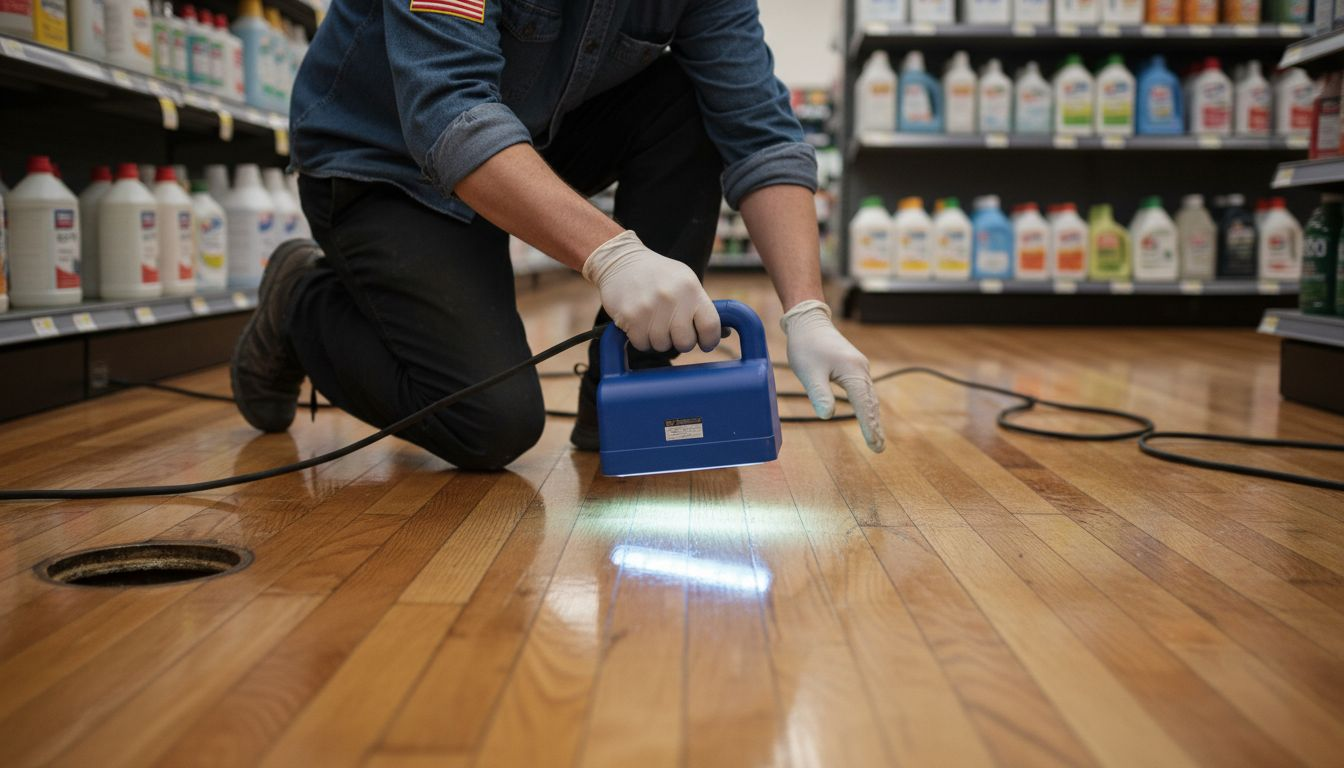
Dustless refinishing represents another technological advancement. Our systems capture up to 99 percent of airborne dust, keeping your business cleaner during the process and improving indoor air quality. Your team and customers experience minimal disruption.
Eco-friendly materials are increasingly available without sacrificing performance. Water-based finishes and sustainable coatings protect your indoor environment while delivering the durability commercial spaces demand.
The choice between methods comes down to your floor’s condition and your operational priorities. A professional assessment reveals which approach will deliver the best value for your specific situation.
Pro tip: Document your floor’s condition with photos before restoration work begins, then photograph the results afterward—this visual record demonstrates the value of restoration to stakeholders and justifies the investment.
Benefits and Challenges of Each Approach
Every restoration method offers distinct advantages and drawbacks. Understanding both sides helps you make decisions that align with your budget, timeline, and business needs.
Full Sanding and Refinishing delivers transformational results. This approach completely restores your floors to near-original condition, removing all damage and wear in one comprehensive process. The upfront cost is higher, but the dramatic improvement in appearance and durability justifies the investment for severely damaged floors.
The challenge with full refinishing is time. A complete restoration typically requires 2 to 6 days of closure, which impacts your business operations and revenue. However, the results last 10 to 15 years or longer with proper maintenance.
Screen and Recoat works best for preventative maintenance. This lighter approach costs significantly less and takes just 6 to 8 hours, allowing you to reopen quickly. Your floor regains its luster without major disruption.
The tradeoff is that screen and recoat only addresses surface-level wear. If your floor has deep damage, this method won’t fully resolve the problem, and you may need full refinishing within a few years.
Comparison of key differences:
Here’s how restoration methods compare across core business criteria:
| Method | Best For | Downtime Impact | Durability Gain |
|---|---|---|---|
| Full Sanding & Refinishing | Severely worn floors | Highest (2–6 days) | Longest (10–15 years) |
| Screen & Recoat | Maintenance/minor wear | Low (6–8 hours) | Moderate (2–5 years) |
| Dustless Refinishing | Businesses needing cleanliness | Minimal disruption | Similar to base method |
| UV-Cure Finishing | Fast turnaround needed | Fastest (hours) | High with immediate use |
- Full refinishing: Complete restoration, longer timeline, higher cost, longest lifespan
- Screen and recoat: Maintenance-focused, minimal downtime, lower cost, shorter results lifespan
- Dustless methods: Cleaner process, better air quality, works with either approach
- UV-cure finishing: Fast curing, immediate usability, premium technology cost
Environmental and operational considerations matter too. Extended building life and improved efficiency come from smart restoration choices, though material selection and waste management require planning. Using sustainable, eco-friendly products increases your environmental responsibility without compromising performance.
The best approach balances your immediate needs with long-term value and minimal business disruption.
Cost-benefit analysis shifts based on your situation. High-traffic retail spaces benefit from full refinishing to maximize durability between cycles. Office buildings with moderate traffic might prefer frequent screen and recoat services to spread costs over time.
Downtime costs are real. Calculate what closure expenses mean for your business—lost revenue, employee productivity, customer inconvenience. Sometimes paying more upfront for a faster solution saves money overall.
Waste and sustainability matter increasingly. Proper product selection and recycling practices minimize environmental impact while meeting durability requirements.
Pro tip: Request a detailed timeline and cost comparison for both full refinishing and screen and recoat before deciding, including calculations of your downtime costs—this reveals which approach delivers the best total value for your specific situation.
Costs, Timelines, and Risk Factors
Restoration projects involve multiple cost categories, and understanding each helps you budget accurately and avoid surprises. Costs include materials, labor, equipment, design oversight, and project management—all of which vary based on floor size and condition.
For a screen and recoat on a typical commercial space, expect to invest between $1.50 and $3.00 per square foot. Full refinishing runs $3.00 to $8.00 per square foot depending on wood type and current condition. These figures cover labor, materials, and equipment but assume no major structural repairs.
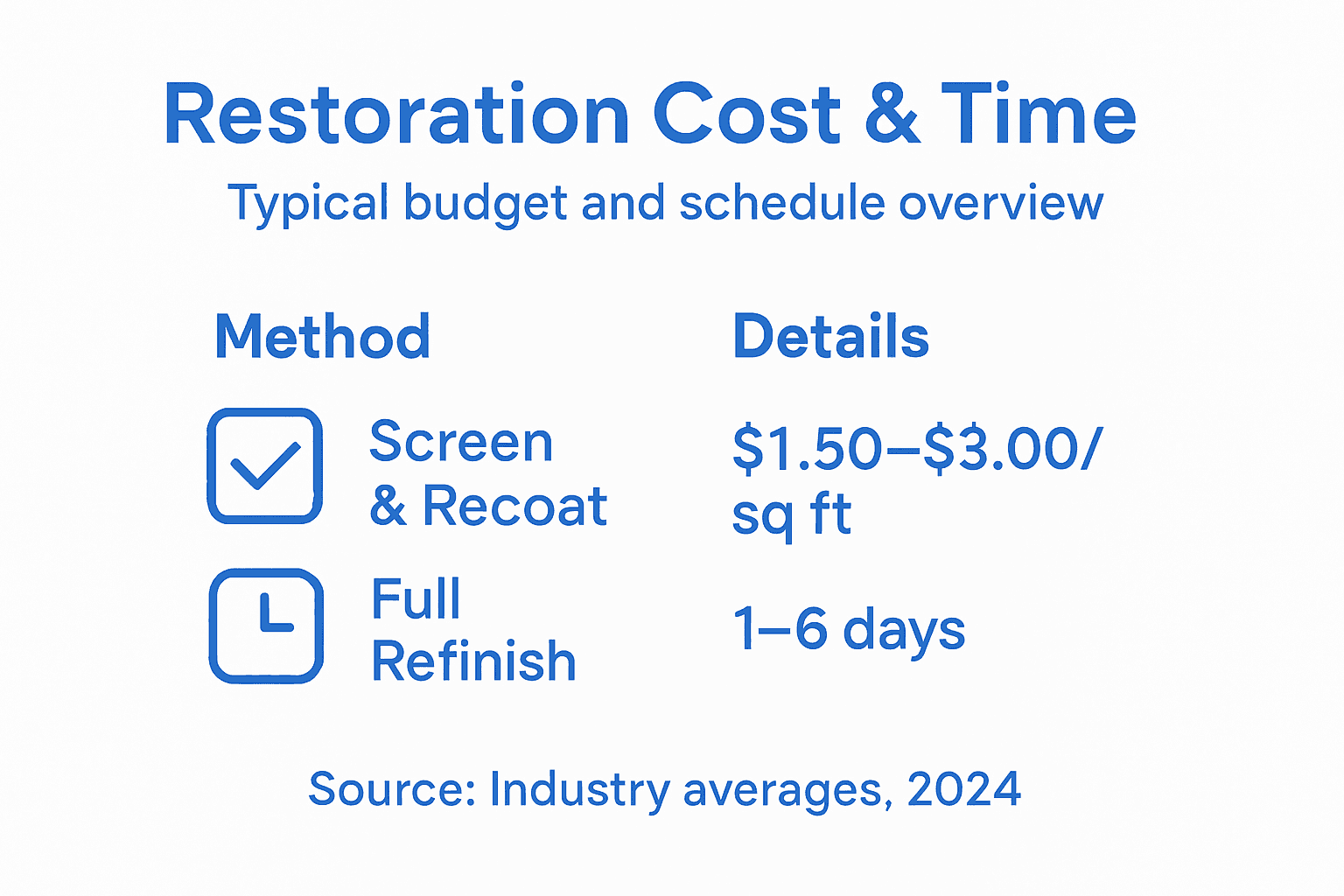
Timeline expectations are straightforward. Screen and recoat takes 6 to 8 hours, allowing reopening the next business day. Full sanding and refinishing requires 2 to 6 days depending on square footage and the number of finish coats applied.
Factors affecting cost and timeline include:
- Square footage and floor complexity
- Current floor condition and damage severity
- Wood type and existing finish
- Number of finish coats required
- Special requirements like dustless sanding
- Project scheduling and seasonal demand
Risk factors deserve serious attention. Cost estimation and schedule management help identify potential budget overruns before they happen. Site conditions—moisture, subfloor issues, or hidden damage—can increase costs beyond initial estimates. Supply chain delays and labor availability also impact timelines and expenses.
Plan for 10 to 15 percent contingency budget to handle unforeseen conditions that often emerge during restoration work.
Unforeseen damage is the biggest wild card. Once sanding begins, crews may discover water damage, subfloor rot, or structural issues invisible on the surface. These discoveries require additional work and expense. Detailed pre-project assessments minimize surprises, though some risk remains.
Weather and humidity affect timelines, especially for outdoor spaces or those without climate control. High humidity can extend drying times significantly. Denver’s climate generally favors predictable scheduling, but planning remains important.
Regulatory compliance and inspections vary by municipality. Building permits, lead paint protocols (for older buildings), and post-completion inspections can extend timelines by days or weeks.
Budget overruns happen most when scope creeps or hidden conditions emerge. Clear communication with your restoration partner about what’s included prevents misunderstandings.
Timing matters strategically. Scheduling during slower business seasons reduces disruption and may improve pricing. Planning ahead allows flexibility that urgent projects don’t have.
Pro tip: Request a detailed site assessment and written estimate that specifies what’s included, timelines, contingency planning, and conditions that might increase costs—this transparency prevents budget shocks and helps you schedule strategically.
Maintaining Floors After Restoration
Restoration is only the beginning. What happens next determines whether your investment lasts 3 years or 15 years. Smart maintenance protects your floors and keeps them looking fresh without breaking the bank.
Start with the basics right away. Routine cleaning prevents dirt and debris from scratching your newly restored surface. Sweep or dust mop daily in high-traffic areas, focusing on entryways where outside dirt enters.
Vacuuming works well if you use a soft-bristle attachment or a canister vacuum—avoid upright models with beater bars that can damage finishes. The goal is removing abrasive particles before they scratch your floor.
Immediate spill cleanup is non-negotiable. Water left sitting on hardwood causes swelling, warping, and finish damage. Wipe spills immediately with a dry or barely damp cloth, never letting liquid sit on the surface.
Key maintenance practices include:
- Daily sweeping or dust mopping in high-traffic zones
- Weekly gentle cleaning with pH-neutral floor cleaner
- Immediate cleanup of spills to prevent water damage
- Avoiding wet mops or steam cleaning systems
- Using felt pads under furniture legs
- Maintaining consistent humidity levels (30–50%)
- Placing mats at entries to trap dirt
Use professional cleaning and maintenance standards to ensure you’re following best practices that protect your investment. Using products compatible with your floor finish prevents damage from harsh chemicals or unsuitable cleaners that can strip or dull the surface.
The right cleaning products and methods preserve your finish while keeping floors beautiful and protected.
Monthly or quarterly deep cleaning maintains appearance without damaging finish. Use a damp microfiber mop with a pH-neutral cleaner designed for hardwood—avoid generic floor cleaners that leave residue or buildup.
Avoid wet or steam mopping at all costs. These methods force water into wood, causing expansion, cupping, and potential rot. Traditional mopping causes more damage than benefit.
Periodic buffing and recoating extends floor life dramatically. A screen and recoat every 2 to 3 years refreshes the shine and adds protective layers without the cost of full refinishing. This preventative approach saves thousands long-term.
Environmental control matters. Humidity fluctuations cause wood movement. Using humidifiers in winter and dehumidifiers in summer maintains stable conditions that prevent warping and checking.
Protect against furniture damage using felt pads under chair and table legs. Hard feet create dents and scratches. Felt costs pennies and prevents hundreds in damage.
Below is a summary of key post-restoration maintenance strategies and their impact:
| Practice | Frequency | Primary Benefit |
|---|---|---|
| Daily sweeping/dust mopping | Daily | Prevents surface scratches |
| Professional buffing | 6–12 months | Maintains finish luster |
| Screen and recoat | 2–3 years | Prolongs restoration lifespan |
| Humidity control | Ongoing | Prevents wood movement |
Pro tip: Schedule professional cleaning and buffing services every 6 to 12 months—this small investment prevents dirt buildup that dulls appearance and protects your floor’s finish from degradation caused by embedded particles.
Transform Your Commercial Floors with Expert Care and Lasting Results
Restoring commercial floor spaces requires precise techniques that balance durability with beauty while minimizing business interruptions. Whether you face deep wear needing full sanding and refinishing or prefer maintenance options like screen and recoat, understanding the right approach is crucial to protect your investment. At J.R. Hardwood Floor Refinishing & Cleaning, we specialize in these challenges, offering eco-friendly, advanced solutions including dustless sanding and Instant UV-curable finishing that restore your floors quickly without compromising your operation.
Ready to elevate the look and lifespan of your commercial floors? Visit our Uncategorized Archives to learn more about our comprehensive services and see how we combine craftsmanship with innovative technology. Get your free quote today by contacting us at https://www.jrhardwoodfloorrefinishingandcleaning.com/. Protect your floors with professional care tailored for Denver Metro Area’s unique demands and secure lasting value now.
Frequently Asked Questions
What is the process of commercial floor restoration?
Commercial floor restoration involves a thorough condition assessment, followed by methods such as full sanding and refinishing, screen and recoat, and deep cleaning. The goal is to rejuvenate high-traffic floor spaces while enhancing durability and aesthetics.
How long does the restoration process take?
The duration of commercial floor restoration varies. A screen and recoat generally takes 6 to 8 hours, while full sanding and refinishing can take between 2 to 6 days depending on the floor’s size and condition.
What maintenance should I perform after restoring my floors?
Post-restoration maintenance includes daily sweeping or dust mopping, immediate spill cleanup, consistent humidity control, and scheduling professional buffing or screen and recoat services every 2 to 3 years to extend the floor’s lifespan.
What are the benefits of using eco-friendly products in floor restoration?
Eco-friendly products help protect indoor air quality, ensure a safer environment for occupants, and deliver high-quality results. Using water-based finishes and sustainable materials reduces environmental impact while maintaining the durability required for commercial spaces.