 Skip to content
TL;DR:
- The wear layer in flooring is a clear protective topcoat that prevents scratches and damage, and it is measured in mils. Choosing the right wear layer thickness based on daily traffic and activity extends the floor’s lifespan significantly. The wear layer’s durability depends on its thickness, finish, and proper maintenance, not the total plank thickness.
The wear layer in flooring is defined as the clear, protective topcoat bonded to the surface of a plank that shields the decorative design layer from scratches, dents, and daily foot traffic. Think of it as sunscreen for your floor. Without it, every scuff, chair drag, and dog claw goes straight to the printed or wood design underneath. Understanding what is wear layer in flooring is the single most useful thing you can do before buying new floors, because this one measurement determines how long your investment actually lasts.
What is wear layer in flooring and how is it measured?
The wear layer is measured in mils, not millimeters. That distinction trips up a lot of homeowners, and it matters more than you might think. One mil equals one-thousandth of an inch, which is roughly 0.0254 millimeters. To put that in perspective, a single human hair is approximately 3–4 mils thick. Your wear layer is that thin, yet it does all the heavy lifting when it comes to surface protection.
Total plank thickness, on the other hand, is measured in millimeters and tells you how rigid and sound-absorbing the floor will feel underfoot. A 12mm plank is not more scratch-resistant than a 6mm plank. The wear layer is the only number that controls scratch resistance. Mixing up mils and millimeters is one of the most common and costly flooring mistakes homeowners make.
Here is a quick reference for common wear layer thicknesses:
- 6 mil (0.15mm): Entry-level protection, suitable for low-traffic rooms
- 12 mil (0.3mm): Mid-range protection for average residential use
- 20 mil (0.5mm): Strong protection for active households and light commercial use
- 28–40 mil (0.7–1.0mm): Heavy-duty, commercial-grade protection
Pro Tip: When comparing flooring products at a showroom, always ask for the wear layer spec in mils. If a salesperson only quotes total plank thickness, ask again. The two numbers are completely different.
What wear layer thickness is right for your home or property?
Matching wear layer thickness to your actual lifestyle is the smartest move you can make. A guest bedroom that sees traffic twice a year does not need the same protection as a rental property hallway that takes a beating every single day.
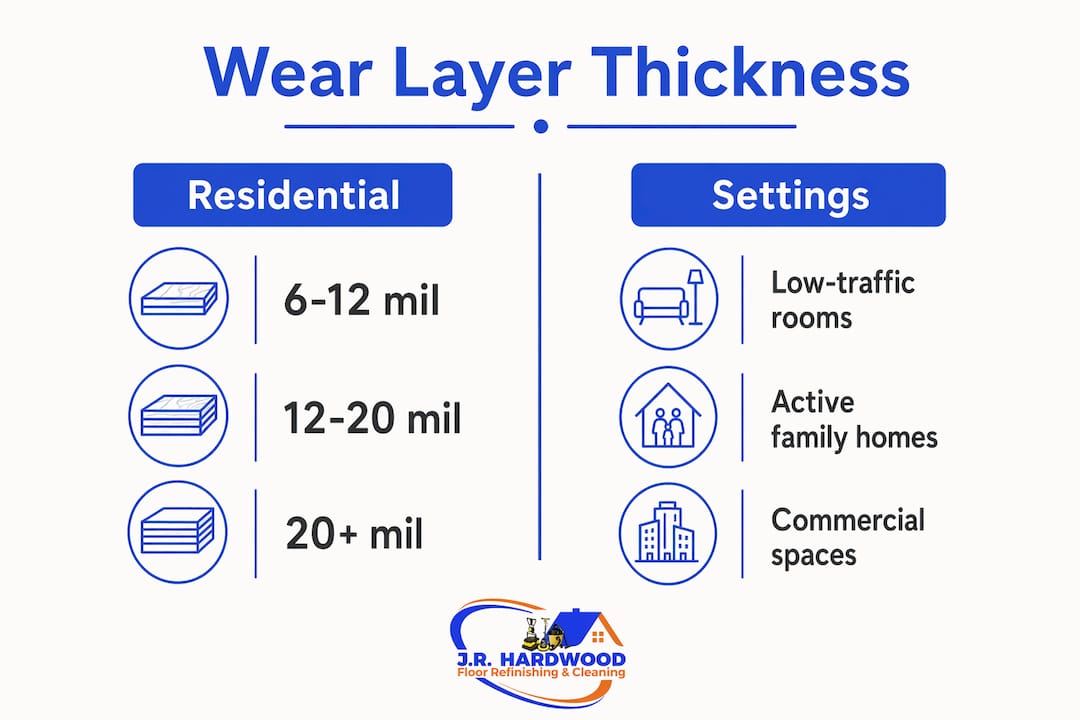
A 6–12 mil wear layer suits low-traffic residential areas like guest rooms, home offices, and formal dining rooms. These spaces rarely see pets, kids, or heavy furniture movement, so a thinner layer holds up fine for years.
Active family homes with kids and pets need more. A 12–20 mil wear layer handles the daily reality of dropped toys, pet claws, and sneakers tracking in grit from outside. This range gives you meaningful protection without jumping to commercial pricing.
For property managers overseeing rental units or commercial spaces, a 20+ mil wear layer extends floor life from the 8–12 year range up to 20–25 years in high-traffic environments. That kind of lifespan difference directly affects your replacement budget and tenant satisfaction. You can find more tailored advice in our guide on flooring for property managers.
Here is a simple breakdown by setting:
| Setting | Recommended wear layer | Why it fits |
|---|---|---|
| Guest room or home office | 6–12 mil | Minimal daily traffic, low abrasion risk |
| Active family home | 12–20 mil | Kids, pets, and regular foot traffic |
| Rental unit or light commercial | 20 mil | Higher turnover, more consistent wear |
| Heavy commercial or retail | 28–40 mil | Constant traffic, furniture, and equipment |
Pro Tip: If you have large dogs or regularly move heavy furniture, go one tier higher than you think you need. The upgrade cost is small compared to early floor replacement.
How does the wear layer affect maintenance and long-term performance?
The wear layer acts as an invisible shield over your floor’s decorative design. Every scratch, scuff, and spill hits the wear layer first. As long as that layer holds, your floor looks great. When the wear layer is compromised, scratches reach the printed or wood design layer underneath, and that damage is permanent. At that point, replacement is your only real option.
The good news is that a thicker wear layer gives you more time before that happens. It also gives you more room to maintain the floor without worrying about every little scratch. Here are the maintenance habits that protect your wear layer the longest:
- Use felt pads under all furniture legs to prevent point-load scratches
- Sweep or vacuum regularly to remove grit that acts like sandpaper underfoot
- Clean spills quickly to prevent moisture from working into seams and edges
- Avoid harsh chemical cleaners that can break down the protective finish over time
- Use mats at entryways to catch dirt and debris before it reaches the floor surface
Finish technology also plays a role alongside thickness. Premium finishes with ceramic beads or aluminum oxide outperform basic polyurethane coatings even at similar wear layer thicknesses. That means two floors with identical mil ratings can perform very differently depending on what the finish is made of. For a deeper look at how coatings affect durability, our guide on finish coats and flooring protection covers the details well.
Common misconceptions about wear layers and plank thickness
The biggest myth in flooring is that a thicker plank means a more durable floor. It does not. Total plank thickness influences sound absorption and underfoot comfort, not scratch resistance. A 12mm plank with a 6 mil wear layer will scratch far more easily than an 8mm plank with a 20 mil wear layer.
Here is how to think about it clearly:
- Plank thickness determines how rigid the floor feels, how well it hides subfloor imperfections, and how much sound it absorbs.
- Wear layer thickness determines how long the surface resists scratches, scuffs, and staining.
- Finish type determines how well the wear layer itself holds up to cleaning and UV exposure.
These three factors work independently. A floor can score well on one and poorly on another. Marketing materials often highlight total thickness because it sounds impressive. The wear layer number is the one that actually protects your floor.
Pro Tip: Always read the full product spec sheet before buying. Look for wear layer thickness in mils and finish type listed separately from total plank thickness. If only one number is shown, ask for the rest.
Wear layers in engineered hardwood vs. vinyl plank flooring
Wear layers work differently depending on the flooring type, and knowing the difference helps you set the right expectations.
Engineered hardwood uses a real wood veneer as its wear layer. The thickness of that veneer determines whether the floor can be sanded and refinished later. Engineered hardwood veneers thinner than 1mm cannot be sanded without cutting through to the core. Thicker veneers, ranging from 3mm to 6mm, allow multiple refinishes and can extend floor life to 80 years or more. That refinishing potential is a major long-term value advantage.
Vinyl plank (LVP) uses a clear synthetic coating as its wear layer, bonded over a printed design layer. It cannot be sanded or refinished. Once the wear layer is gone, the floor needs replacing. This makes the original wear layer thickness even more critical when buying LVP.
| Feature | Engineered hardwood | Vinyl plank (LVP) |
|---|---|---|
| Wear layer material | Real wood veneer | Clear synthetic coating |
| Refinishable | Yes, if veneer is thick enough | No |
| Lifespan with care | 20–80+ years | 10–25 years depending on mil rating |
| Best for | Long-term investment, classic look | Moisture-prone areas, rentals |
For high-traffic areas in Parker homes and across the Denver Metro Area, the right choice between these two types depends on your moisture levels, budget, and how long you plan to stay in the property.
Key Takeaways
The wear layer is the single most important spec to check when buying flooring because it directly controls how long your floor resists scratches and daily damage.
| Point | Details |
|---|---|
| Wear layer vs. plank thickness | Wear layer thickness controls scratch resistance; plank thickness controls comfort and sound. |
| Measurement unit | Wear layer is measured in mils (1 mil = 0.0254mm), not millimeters. |
| Thickness by setting | Use 6–12 mil for low-traffic rooms, 12–20 mil for active homes, and 20+ mil for commercial spaces. |
| Finish technology matters | Ceramic bead or aluminum oxide finishes outperform basic polyurethane at the same mil rating. |
| Engineered hardwood refinishing | Veneers thicker than 1mm can be sanded and refinished, dramatically extending floor lifespan. |
What I’ve learned after years of working with floors
After working with hundreds of floors across Denver, Parker, and the surrounding Colorado communities, I can tell you that the wear layer conversation almost never happens at the point of purchase. Homeowners pick a color, check the price, and move on. Then they call us three years later wondering why their “premium” floor looks worn out.
The floors that hold up the longest are almost never the thickest planks. They are the ones with the right wear layer for the actual traffic they see every day. I have seen 8mm LVP with a 20 mil wear layer outlast 12mm planks with a 6 mil coating by a decade. The marketing wins at the store. The wear layer wins in your home.
My honest advice: treat the wear layer spec the way you treat a car’s engine rating, not its paint color. The surface look matters, but what is underneath determines how long it lasts. And if you are a property manager, go thicker than you think you need. Tenant turnover is hard enough without adding early floor replacement to the list.
One more thing. If your floors already look tired and worn, the wear layer may not be gone yet. A professional screen and recoat or a clean and buff can restore the finish and buy you more years before full replacement becomes necessary. Floor restoration options are often more affordable than homeowners expect.
— J.R.
Your floors deserve expert care, not guesswork
Knowing your wear layer spec is a great start. Keeping that floor in top shape over the years is where professional care makes a real difference.
At Jrhardwoodfloorrefinishingandcleaning, we work with hardwood, LVP, and laminate floors across the Denver Metro Area and surrounding Colorado communities. Our team uses eco-friendly products and premium finishes to clean, restore, and protect floors at every stage of their life. Whether your wear layer needs a refresh through a screen and recoat or your hardwood is ready for a full professional refinishing service, we give you honest advice and a free over-the-phone quote based on your floor’s actual condition. Call us or send photos to get started.
FAQ
What is the wear layer in flooring?
The wear layer is the clear, protective topcoat on a flooring plank that shields the design layer from scratches, scuffs, and daily wear. It is measured in mils, where 1 mil equals one-thousandth of an inch.
How thick should a wear layer be for a family home with pets?
A 12–20 mil wear layer is the right range for active households with kids and pets. This thickness handles regular foot traffic, pet claws, and furniture movement without wearing through prematurely.
Does a thicker plank mean a more durable floor?
No. Total plank thickness affects sound absorption and underfoot feel, not scratch resistance. Wear layer thickness is the only measurement that controls surface durability.
Can engineered hardwood wear layers be refinished?
Yes, but only if the veneer is thick enough. Veneers thinner than 1mm cannot be sanded without cutting through to the core. Veneers of 3mm or more allow multiple refinishes and can extend floor life significantly.
What wear layer thickness do commercial spaces need?
Commercial and high-traffic spaces require at least 0.7mm (approximately 28 mil) to meet the highest wear resistance classifications and avoid premature floor failure. EN 649 and ISO 10582 standards use wear layer thickness as a primary performance benchmark.