 Skip to content
TL;DR:
- Knowing the type of finish on hardwood floors is essential to avoid damage during cleaning or refinishing.
- Simple tests like water drops and solvent rubs help identify whether the finish is film-forming or penetrating, guiding safe maintenance practices.
Knowing what floor finish is already on hardwood is the single most important step before you clean, repair, or refinish any wood floor. The finish type determines which cleaners are safe, whether you can spot-repair or need a full sand-down, and which new products will actually bond to the surface. Over 90% of residential floors installed in the US over the last 30 years carry polyurethane film finishes, yet many homeowners treat every floor the same way. That mismatch causes clouding, peeling, and adhesion failure. We put together this guide so you can identify your finish with confidence and make the right call every time.
What are the common types of hardwood floor finishes?
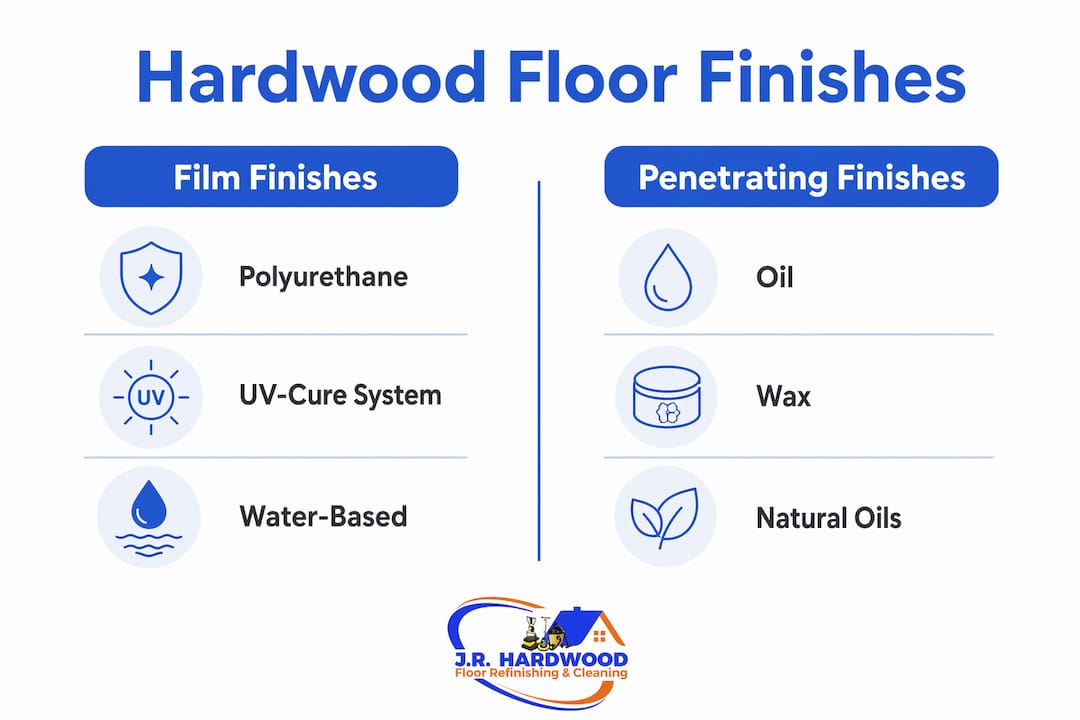
Hardwood floor finishes fall into two broad families: film-forming finishes and penetrating finishes. Understanding which family your floor belongs to shapes every decision that follows.
Film-forming finishes sit on top of the wood and create a protective layer:
- Polyurethane (water-based): Dries clear, resists moisture well, and is the most common residential choice. Water-based versions stay clear over time and dry quickly.
- Polyurethane (oil-based): Amber over time, giving floors a warm golden tone. Popular for durable, moisture-resistant film protection in residential settings.
- Varnish: Similar to polyurethane but less flexible. Less common on newer floors.
- Shellac: A natural resin dissolved in denatured alcohol. Dissolves easily with alcohol, which makes it simple to identify.
- Lacquer: Fast-drying and thin. Dissolves with lacquer thinner or acetone.
Penetrating finishes soak into the wood fibers rather than sitting on top:
- Hardwax oil: Penetrates wood fibers and crystallizes at the surface, giving a matte, natural look. Hardwax oil measures König 55–80s in hardness, compared to polyurethane at König 120–160s. That gap means oils scratch more easily.
- Traditional wax: The oldest finish type. Soft, low sheen, and highly sensitive to water and incompatible cleaners.
- Penetrating oil: Similar to hardwax oil but without the wax component. Feeds the wood and provides a low-gloss surface.
Penetrating oil finishes offer lower scratch protection than polyurethanes, typically scoring around 4/10 versus much higher ratings for film finishes. The trade-off is repairability. Oils let you fix one damaged board without touching the rest of the floor. Polyurethane requires full sanding when worn through.
How to test your hardwood floor finish at home
You can identify your existing hardwood floor finish with three simple tests. Always start in an inconspicuous spot like a closet or behind a door. Testing in multiple locations matters because finish build-up or layering can produce different results in high-traffic areas versus protected corners.
-
Water drop test. Place a few drops of water on the floor and wait 5 minutes. If the water beads up and sits on the surface, you have a sealed film finish, most likely polyurethane. If the water soaks in and darkens the wood, your floor has a penetrating finish such as wax or oil. This single test separates the two finish families quickly.
-
Mineral spirits test. Dampen a white cloth with mineral spirits and rub a small area. If the cloth picks up a white or yellowish residue, wax is present. Wax dissolves in mineral spirits. No residue points to a film-forming finish.
-
Denatured alcohol test. Rub a small area with a cloth dampened in denatured alcohol. If the finish gets tacky or dissolves, you have shellac. Shellac is the only common finish that dissolves in alcohol alone.
-
Lacquer thinner test. If the alcohol test shows no reaction, try lacquer thinner on a separate spot. Softening or dissolving indicates lacquer. No reaction to either solvent strongly suggests polyurethane or a factory aluminum oxide finish.
-
Scratch test. Use your fingernail to scratch a hidden area firmly. If a clear plastic-like film scratches away in thin flakes, you have a film-forming finish. If the surface just scuffs or shows no film, you have a penetrating finish.
Pro Tip: Always test in at least three spots: a high-traffic area, a low-traffic area, and a protected corner. Finish wear and layering can make the same floor behave differently in different zones.
| Test | Material used | Positive result | Likely finish |
|---|---|---|---|
| Water drop | Water | Beads up | Polyurethane or varnish |
| Water drop | Water | Absorbs into wood | Wax or penetrating oil |
| Mineral spirits | Mineral spirits | White/yellow residue | Wax |
| Denatured alcohol | Denatured alcohol | Finish softens or dissolves | Shellac |
| Lacquer thinner | Lacquer thinner | Finish softens | Lacquer |
| Scratch test | Fingernail | Plastic film flakes | Film-forming finish |
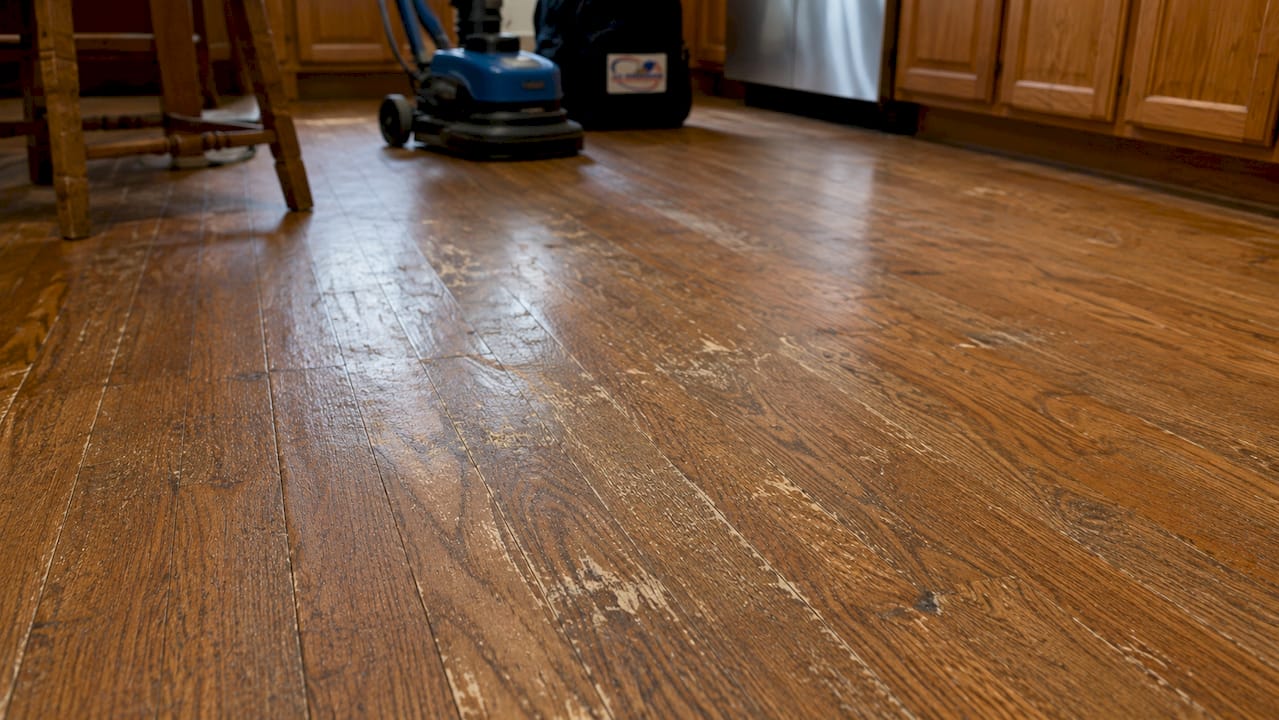
What does your finish type mean for cleaning and refinishing?
Your finish type controls which products are safe and which will cause damage. Getting this wrong is not a minor inconvenience. Using water-based cleaners on wax-treated floors causes immediate white clouding that requires professional stripping to fix.
Here is how each finish type shapes your care routine:
- Polyurethane floors: Use pH-neutral, isopropyl alcohol-based formulas for regular cleaning. These avoid micro-scratches and prevent residue build-up. Never use oil soaps, steam mops, or wax products on polyurethane. When the finish wears through, the floor needs full sanding and recoating.
- Hardwax oil and penetrating oil floors: Clean with oil-specific soaps designed for open-grain surfaces. You can repair localized damage by reapplying oil to the affected boards only. This is the biggest maintenance advantage of penetrating finishes.
- Wax floors: Buff regularly with paste wax. Avoid water-based products entirely. Wax floors need stripping and rewaxing every few years depending on traffic.
- Shellac and lacquer floors: These are rare in modern homes. Clean gently with a barely damp cloth. Avoid alcohol-based products on shellac and solvent-based products on lacquer.
Refinishing compatibility is where finish identification becomes critical. Applying a new finish over an incompatible existing finish leads to peeling or complete adhesion failure. Aluminum oxide finishes, common on factory-finished floors, require specialized bonding agents before recoating. Standard abrasion prep methods fail on aluminum oxide. Wax residues prevent new finish adhesion entirely, making complete wax removal or full sanding mandatory before any recoat.
Pro Tip: If you are unsure whether your floor has wax residue, rub a small area with mineral spirits before scheduling any recoat service. Residue on the cloth means wax is present and must be removed first.
Confusing a sealer with a topcoat is another common mistake. A sealer creates a uniform base for topcoat adhesion. Applying a topcoat directly over a penetrating oil, thinking it is a sealer, causes catastrophic adhesion failure. Knowing your finish type prevents this entirely.
How to determine wood type and wear layer for refinishing
Identifying the finish is only half the picture. You also need to know whether your floor is solid hardwood or engineered wood, and how much wear layer remains. These two factors decide whether refinishing is even possible.
-
Check the floor register. Remove a floor vent cover and look at the cross-section of the flooring from the side. Solid hardwood shows a single uniform piece of wood all the way through. Engineered wood shows distinct layers, with a thin top layer of real wood over a plywood or composite core.
-
Measure the wear layer. Engineered wood typically carries a 2–5 mm wear layer on top. Solid hardwood has a much thicker wear layer. The critical limit for drum sanding is 3/32 of an inch. Solid floors with a wear layer under 3/32 inch should not be drum-sanded.
-
Count previous refinishes. Each sanding removes roughly 1/32 of an inch of wood. A solid floor can typically handle multiple refinishes over its lifetime. Engineered floors with thin wear layers may only tolerate one or two light sandings before the top layer is gone.
-
Match finish type to substrate. A penetrating oil finish on engineered wood is often the smarter long-term choice because spot repairs avoid the need for sanding. A polyurethane finish on solid hardwood gives maximum durability and allows full refinishing when needed. You can learn more about refinishing limits by floor type to plan ahead.
Over-sanding engineered wood causes irreversible damage by cutting through the top veneer into the core. Once that happens, the floor cannot be refinished again and replacement becomes the only option.
Troubleshooting common finish identification mistakes
Finish identification is not always straightforward. Several factors can produce misleading test results or make the floor harder to read.
- Layered finishes: Some floors have been refinished multiple times with different products. A wax layer over old polyurethane, for example, will test positive for wax even though polyurethane sits underneath. Always strip the surface wax before testing the base finish.
- Factory aluminum oxide coatings: Many pre-finished floors from the last two decades carry aluminum oxide in the finish. This finish is extremely hard and resists standard solvent tests. If all solvent tests produce no reaction and the surface is very hard, aluminum oxide is likely. These floors need specialized bonding agents for any recoat to succeed.
- Improper cleaning history: Years of using the wrong cleaner can leave a waxy build-up on a polyurethane floor. This build-up mimics the look of a wax finish and can confuse visual inspection. Solvent testing cuts through the confusion.
- Uneven wear: High-traffic areas may have worn through the finish entirely, exposing bare wood. Testing only in those spots gives you a false reading. Always test in a protected area to find the original finish.
Testing in multiple spots before any maintenance or refinishing is the single most reliable way to avoid costly mistakes. One test in one location is never enough on a floor with an unknown history.
When tests produce conflicting results or the floor has a complicated history, consulting a professional before applying any product is the right call. Jrhardwoodfloorrefinishingandcleaning regularly helps homeowners in Denver, Parker, and Castle Rock sort out exactly this kind of situation. You can also review common refinishing mistakes in Colorado to see what goes wrong when finish identification is skipped.
Key Takeaways
Identifying your existing hardwood floor finish before any cleaning, repair, or refinishing is the only reliable way to avoid adhesion failure, surface damage, and wasted money.
| Point | Details |
|---|---|
| Film vs. penetrating finish | Water drop test separates sealed polyurethane from wax or oil finishes in under 5 minutes. |
| Solvent tests identify specific types | Denatured alcohol dissolves shellac; mineral spirits lift wax; no reaction suggests polyurethane or aluminum oxide. |
| Finish type drives cleaning choices | Polyurethane needs pH-neutral cleaners; wax floors cloud immediately with water-based products. |
| Wear layer limits refinishing | Engineered floors with under 2 mm of wear layer cannot be drum-sanded without irreversible damage. |
| Incompatible products cause failure | Wax residue and aluminum oxide finishes both block new finish adhesion without proper prep or bonding agents. |
What I’ve learned from years of finish identification in the field
I’ve walked into hundreds of homes where the homeowner had no idea what was on their floors. That’s not a criticism. Finish type is invisible once it’s cured, and most people inherit floors from previous owners with zero documentation. The problem is that a wrong guess leads to real damage fast.
The scenario I see most often is a polyurethane floor that someone has been cleaning with an oil soap for years. The oil soap leaves a film that dulls the finish and prevents any new coat from bonding. By the time we arrive, the floor looks tired and the homeowner thinks it needs full refinishing. Sometimes it just needs a good screen and recoat after stripping the build-up. That’s a fraction of the cost.
The other situation that catches people off guard is the factory-finished floor with aluminum oxide. These floors look like they should take a standard recoat easily. They don’t. Without a bonding agent, the new finish peels within weeks. Testing first saves that entire headache.
My honest advice: spend 10 minutes with a water drop and a cloth dampened in mineral spirits before you buy a single cleaning product or call anyone for a quote. Those two tests will tell you 80% of what you need to know. If the results are unclear or the floor has a complicated history, send us a photo. We give free consultations over the phone and can usually point you in the right direction before you spend a dollar.
— J.R.
Ready to get expert eyes on your floors?
If your tests left you with more questions than answers, or if you want a professional assessment before committing to any maintenance or refinishing plan, Jrhardwoodfloorrefinishingandcleaning is here to help. We serve the Denver Metro Area and surrounding Colorado communities with free over-the-phone consultations based on photos and a quick conversation about your floor’s history.
We use eco-friendly products and premium finishes matched specifically to your floor’s existing finish type. Whether you need a simple clean and buff or a full hardwood floor refinishing plan, we walk you through every option with clear pricing and no surprises. Not sure whether to go DIY or professional? Our DIY vs. professional refinishing guide breaks down exactly when each approach makes sense. Reach out today and let’s figure out what your floors actually need.
FAQ
What finish is on most hardwood floors in US homes?
Over 90% of residential floors installed in the US over the last 30 years carry polyurethane film finishes. Water-based and oil-based polyurethane are both common, with oil-based versions showing an amber tone over time.
Can you refinish hardwood floors without knowing the finish type?
Refinishing without identifying the existing finish risks adhesion failure, peeling, and surface damage. Wax residues and aluminum oxide coatings both block new finish adhesion without specific prep steps.
How do I clean hardwood floors without damaging the finish?
Polyurethane floors clean best with pH-neutral, isopropyl alcohol-based formulas. Wax and oil floors need finish-specific soaps. Using the wrong cleaner, especially water-based products on wax floors, causes immediate clouding.
How many times can you refinish a hardwood floor?
The answer depends on wear layer thickness. Solid hardwood allows multiple refinishes over its lifetime, while engineered wood with a 2–5 mm wear layer may only tolerate one or two light sandings before the top veneer is gone.
What happens if you apply the wrong finish over an existing one?
Applying an incompatible finish over an existing one causes peeling, bubbling, or complete adhesion failure. Aluminum oxide finishes require bonding agents, and wax-coated floors must be fully stripped before any new finish is applied.
Recommended
- The Ultimate Guide to Hardwood Floor Finishes – J.R. Hardwood Floor Refinishing & Cleaning
- A Complete Guide to Hardwood Floor Refinishing – J.R. Hardwood Floor Refinishing & Cleaning
- The Complete Guide to Professional Hardwood Floor Installation – J.R. Hardwood Floor Refinishing & Cleaning
- Hardwood Floor Restoration Guide for a Like-New Finish