 Skip to content
Sticky, cloudy hardwood floors are a struggle many Denver homeowners face after using store-bought cleaners promising extra shine. Over time, these products can leave behind layers of wax that trap dirt and hide the natural beauty of your wood. Not only does this buildup affect your home’s appearance, it can actually lower property value and leave your floors vulnerable to damage. Discover why removing wax buildup is key to protecting your investment and restoring your floors’ full potential.
Table of Contents
- The Problem With Wax Buildup On Hardwood
- Professional Wax Removal Process Explained
- Why DIY Wax Removal Is Risky
- Screening, Recoating, And Floor Maintenance
Key Takeaways
| Point | Details |
|---|---|
| Prevent Wax Buildup | Use pH-balanced wood floor cleaners to avoid wax accumulation that can damage your floors. |
| Professional Removal Recommended | Attempting DIY wax removal can lead to expensive damage; professional services ensure safe and effective removal. |
| Routine Maintenance is Key | Regularly dust and clean spills promptly to maintain floor beauty and prevent damage. |
| Screening and Recoating Benefits | Screening and recoating refresh floors and extend their lifespan without the need for full refinishing. |
The Problem With Wax Buildup on Hardwood
Wax buildup is one of the most common issues we see in Denver-area homes. Over time, store-bought hardwood cleaners leave behind residue that accumulates into a cloudy, dull layer covering your floors. This isn’t just a cosmetic problem—it’s damaging your investment.
When wax builds up, it traps dirt and dust underneath, making your floors look dirty no matter how often you clean. The wood’s natural grain and beauty disappear beneath that hazy film. Even worse, the buildup creates a slippery surface that poses safety concerns for families and pets.
The real trouble starts when wax prevents new finishes from bonding properly. Your floor’s protective coating becomes compromised, making the wood more vulnerable to scratches, stains, and moisture damage. What began as a shine-boosting product has actually weakened your floor’s defenses.
Why This Happens
Most homeowners don’t realize that wax buildup traps dirt and dust, accelerating wear and dulling appearance. Common household cleaners marketed for “shine” often contain wax as their primary ingredient. Each application adds another microscopic layer that never fully wears away.
The problem compounds with time:
- Initial applications create a subtle shine and seem to protect the floor
- Subsequent coatings build on previous layers, thickening the residue
- Dirt and grime get trapped beneath the wax film
- The wood’s ability to breathe and respond to humidity changes diminishes
- The finish becomes sticky in humid Colorado weather and slippery when dry
The Damage Wax Buildup Causes
Wax accumulation doesn’t just make your floors look bad. It actively damages the wood over time. Heavy wax buildup is notoriously challenging to remove safely without professional expertise and proper technique.
Your floors experience multiple problems from persistent wax:
- Finish deterioration: New stain or polyurethane won’t adhere to waxed surfaces, leading to peeling and uneven coverage
- Moisture issues: Trapped wax prevents proper moisture exchange, causing cupping or warping in Colorado’s dry climate
- Increased scratching: The wax layer makes floors more prone to visible marks and scuffs
- Professional refinishing complications: Any future restoration work becomes exponentially more difficult and expensive
Many homeowners attempt DIY removal using harsh solvents or aggressive scrubbing, only to discover they’ve damaged the finish or the wood itself. Testing chemicals in inconspicuous areas before full application is critical, but most of us skip this step.
Wax buildup doesn’t just dull your floors—it prevents new finishes from bonding and makes your wood floors more vulnerable to damage.
If you’ve been using store-bought floor cleaners for years, chances are you have some level of wax accumulation right now. The good news? Professional wax removal can restore your floors to their original condition and prepare them for proper protection.
Pro tip: Stop using any wax-based or “shiny” floor cleaners immediately, and switch to pH-balanced wood floor cleaner to prevent further buildup while you plan your removal service.
Professional Wax Removal Process Explained
Professional wax removal isn’t just scrubbing harder or using stronger chemicals. It’s a methodical process that safely lifts away years of buildup while protecting your wood’s integrity. At J.R. Hardwood, we follow a proven sequence that restores your floors without causing damage.
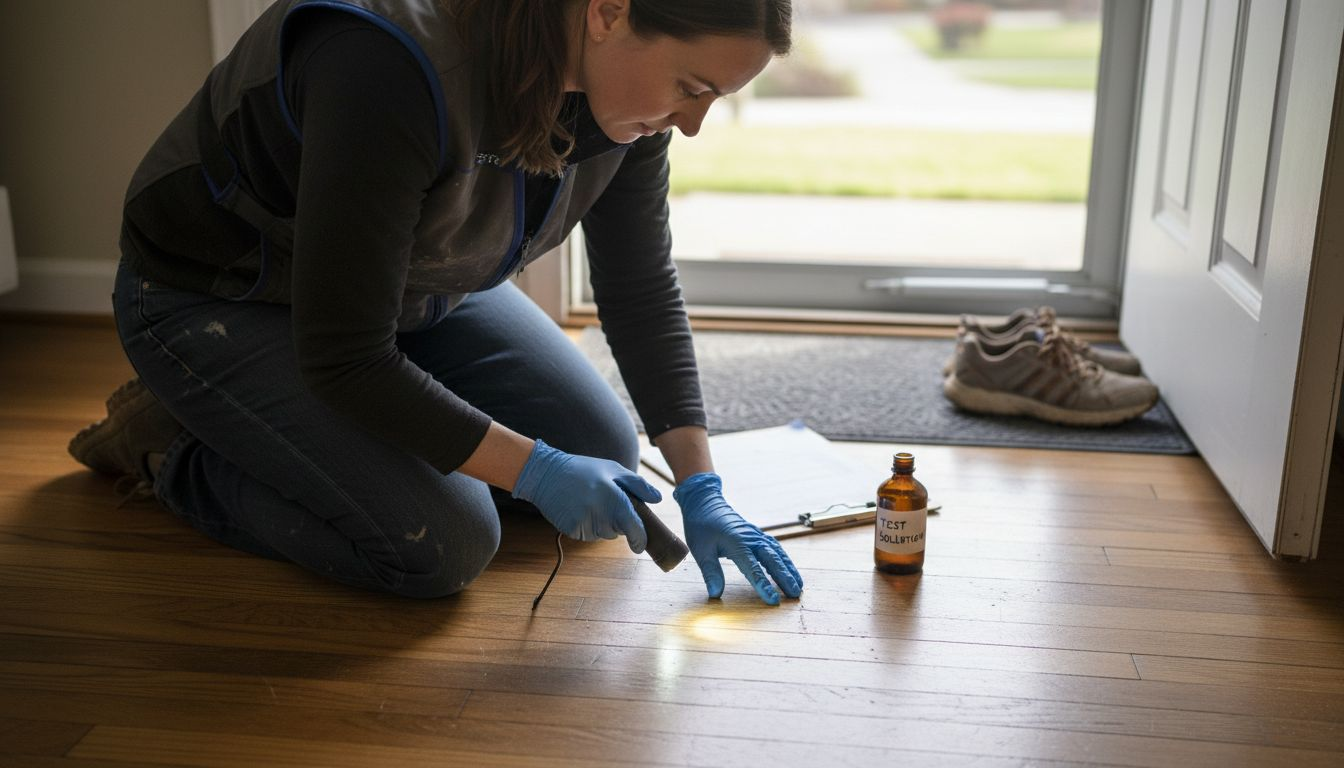
The process begins with a thorough assessment of your floor’s condition. We identify how much wax has accumulated, check for any finish damage underneath, and spot problem areas that need special attention. This inspection determines which techniques and products we’ll use.
The Step-by-Step Process
Our wax removal follows a systematic approach:
- Surface preparation – We protect your home by sealing off the work area and removing furniture from the space
- Chemical emulsification – We apply specialized eco-friendly solutions that break down wax molecules and lift them from the wood
- Agitation and scrubbing – Gentle yet effective agitation helps the chemical solution penetrate and release stubborn buildup
- Extraction – Powerful extraction equipment removes the wax-laden solution and moisture from your floors
- Rinsing and drying – We thoroughly rinse and dry the floor to remove all residue
- Restoration – The floor is now ready for screening, recoating, or refinishing
Each step matters. Certified wood flooring professionals use specialized equipment to ensure the wood surface is restored without damage, maintaining your floor’s aesthetic and structural integrity. We’re not improvising—we’re following proven industry standards.
Why Professional Equipment Makes a Difference
Your floor deserves more than mops and vinegar. Professional-grade extraction machines remove moisture that household methods leave behind. This is critical in Colorado’s dry climate, where trapped moisture can still cause problems.
Specialized solutions are formulated specifically for hardwood floors:
- Eco-friendly formulas break down wax without harsh chemical odors
- pH-balanced ingredients prevent stripping the underlying finish
- Deep penetration reaches wax trapped in grain and seams
- Safe for wood won’t cause bleaching, darkening, or damage
Professional wax removal restores your floor to bare wood (or existing finish) safely, preparing it for a fresh start.
After removal, your floors are ready for their transformation. Many homeowners choose to screen and recoat to refresh the shine, or fully sand and refinish for a brand-new appearance. The choice is yours, but either way, your floors are no longer compromised by wax.
The entire process typically takes one to two days, depending on your floor’s size and condition. Your family can return to normal activities within 24 to 48 hours once everything is fully dried and cured.
Pro tip: After wax removal, avoid applying any new wax products—stick with pH-balanced wood floor cleaner to maintain your restored floors and prevent buildup from returning.
Why DIY Wax Removal Is Risky
The appeal of DIY wax removal is obvious. You save money and work on your own schedule. But what seems like a budget-friendly solution often turns into an expensive disaster. The risks far outweigh any savings.
Wax removal requires understanding chemistry, wood behavior, and technique. One mistake can permanently damage your floors. You’re not just removing a layer—you’re working with solvents and moisture on a material that’s sensitive to both.
The Damage DIY Methods Cause
Homemade wax removal attempts frequently result in costly repairs. DIY wax removal can damage the wood finish through harsh chemicals or improper techniques, including warping, staining, or finish stripping that professionals must repair later.
Common DIY mistakes include:
- Excessive moisture – Too much water causes wood to swell, warp, and cup, especially in Colorado’s climate changes
- Wrong chemical choices – Harsh solvents strip finishes or bleach the wood permanently
- Over-aggressive scrubbing – Aggressive tools damage the wood grain and existing stain
- Incomplete removal – Leftover wax residue creates an uneven surface for new finishes
- Improper drying – Trapped moisture leads to mold, mildew, and structural issues beneath the surface
Health and Safety Concerns
Wax removal chemicals aren’t benign. Many produce fumes that accumulate in your home’s air, especially in closed spaces. Inadequate ventilation during DIY projects puts your family at risk.
Older homes have additional hazards. Attempting to remove coatings from historic wood flooring poses health risks from lead-based paint dust and chemical fumes exposure. Incorrect removal techniques also cause irreversible damage to floor integrity and finish.
You can’t see these dangers, which makes them even more problematic:
- Chemical fumes cause headaches, dizziness, and respiratory irritation
- Lead exposure (in homes built before 1978) causes serious health problems
- Skin contact with harsh solvents causes burns or allergic reactions
- Poor ventilation concentrates toxins in living spaces
One wrong move with DIY wax removal can turn a fixable problem into a floor that needs complete replacement.
The Cost Reality
Damage from DIY attempts typically costs more to repair than professional removal would have cost initially. You might pay $300 to $500 for supplies and rent equipment, only to spend $2,000 to $5,000 fixing the damage.
Professional wax removal includes assessment, proper technique, and warranty protection. If something goes wrong, they fix it. With DIY, you’re liable for all repairs.
Here’s how professional and DIY wax removal approaches differ:
| Aspect | Professional Wax Removal | DIY Wax Removal |
|---|---|---|
| Expertise | Certified techniques and assessment | Often lacks technical knowledge |
| Equipment | Specialized machinery and solutions | Household tools and chemicals |
| Risk Level | Minimal; protected by warranty | High; potential for costly errors |
| Time Required | 1-2 days, efficient process | Varies; can extend due to mistakes |
| Safety | Controls fumes and moisture | May expose family to toxins |
| Long-Term Outcome | Restores floors, prepares for recoating | Can cause permanent damage |
Pro tip: Get a free over-the-phone quote from J.R. Hardwood—most Denver-area homeowners are surprised how affordable professional wax removal actually is compared to the cost of fixing DIY damage.
Screening, Recoating, and Floor Maintenance
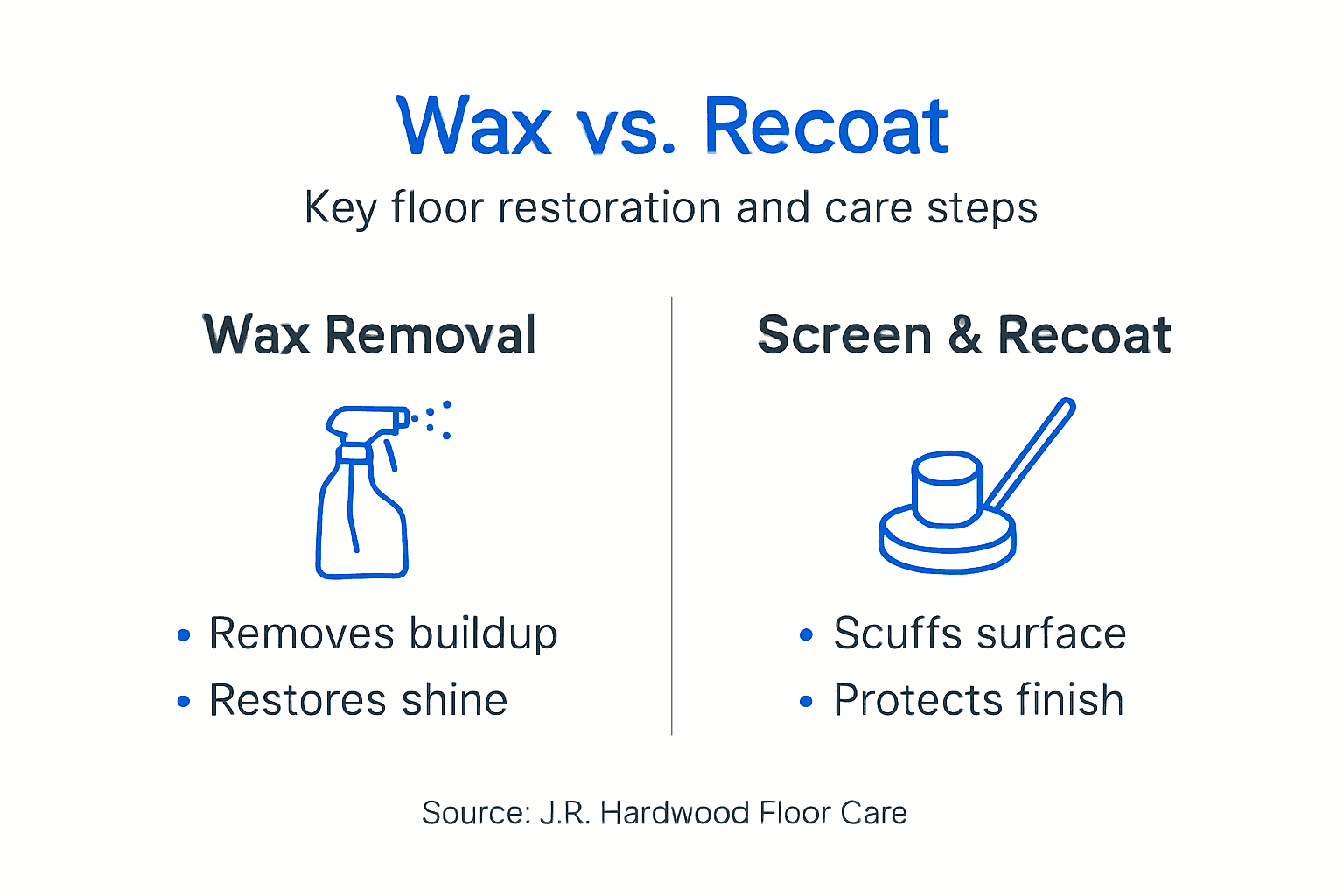
After wax removal, your floors aren’t finished. They’re ready for their next chapter. The best way to restore shine and protection is through screening and recoating, which refreshes your floors without the time and expense of full refinishing.
Screening and recoating are maintenance processes that lightly abrade the existing finish before applying a new coat to restore gloss and protective qualities. This approach extends floor life and is far less invasive than complete sanding and refinishing. For Denver-area homeowners, it’s the smart choice after wax removal.
What Screening and Recoating Do
Screening prepares the floor surface by scuffing the finish to ensure proper adhesion of the new coat. This creates a texture that allows fresh finish to bond strongly. Without screening, new coatings won’t stick properly and will fail within months.
Recoating applies that fresh finish, strengthening protection and restoring appearance. The result is a floors that looks new again without the disruption of full refinishing. The entire process takes just 24 to 48 hours, and you can walk on your floors within days.
The benefits stack up quickly:
- Restored shine – Your floors glow again without cloudiness
- Enhanced protection – New finish guards against scratches and stains
- Extended lifespan – Regular screening and recoating prevents major damage
- Cost-effective – Much cheaper than full refinishing
- Quick turnaround – Minimal disruption to your home
Daily Maintenance Keeps Floors Beautiful
Screening and recoating aren’t one-time solutions. They work best as part of an ongoing maintenance plan. Regular care between professional services keeps your floors durable and beautiful.
Routine maintenance includes regular dusting with microfiber cloths, prompt cleaning of spills, and using appropriate pH-balanced wood floor cleaners. This prevents buildup and keeps finishes intact. Dust and grit act like sandpaper under foot traffic, so frequent sweeping matters.
Screening and recoating restore shine and protection without the cost and disruption of full refinishing.
Monitoring moisture is critical in Colorado’s dry climate. Hardwood expands and contracts with humidity changes. Using a humidifier during winter and managing water spills prevents cupping, warping, and finish failure.
Schedule professional inspections annually to catch issues early. Small problems fixed now prevent expensive repairs later. Protective pads under furniture, area rugs in high-traffic zones, and avoiding dragging items all reduce wear.
Think of maintenance like brushing your teeth. Daily care (regular cleaning) prevents problems. Periodic professional care (screening and recoating) keeps everything healthy long-term.
See the recommended maintenance strategies for lasting hardwood floor beauty:
| Maintenance Step | Frequency | Business Impact |
|---|---|---|
| Dust with microfiber | Daily | Reduces surface wear and scratches |
| Clean spills promptly | As needed | Prevents stains and water damage |
| Use pH-balanced cleaner | Weekly | Maintains finish, prevents buildup |
| Annual inspections | Yearly | Identifies issues early, lowers costs |
| Screen and recoat | Every 1-3 years | Extends floor life, refreshes shine |
Pro tip: After wax removal and recoating, establish a maintenance schedule with professional inspections every 12 months to catch any issues before they become expensive repairs.
Restore Your Hardwood Floors with Expert Wax Removal from J.R. Hardwood
Wax buildup can silently damage your hardwood floors by trapping dirt, dulling the wood grain, and preventing new finishes from bonding properly. If you have noticed a cloudy or sticky surface on your floors or are worried about the safety risks of slippery wax layers, it is time to take action. The challenge lies in safely removing years of wax residue without harming your wood’s delicate finish or causing moisture damage especially in Colorado’s climate.
J.R. Hardwood Floor Refinishing & Cleaning specializes in professional wax removal that restores your floors to their natural beauty while preparing them for effective screening and recoating. Using eco-friendly products and certified techniques, the team carefully lifts away buildup with specialized equipment to protect your investment and extend your floor’s lifespan. With clear communication, free over-the-phone quotes, and expertise serving Denver and surrounding areas, you can trust us to deliver a transformation that lasts.
Ready to say goodbye to dull, waxy floors and hello to like-new hardwood beauty? Contact us today at J.R. Hardwood Floor Refinishing & Cleaning to schedule your professional wax removal service. Learn more about our expert floor refinishing services and the benefits of screening and recoating that follow to keep your floors protected and shining. Act now and protect your hardwood investment before the damage worsens.
Frequently Asked Questions
What are the signs of wax buildup on wood floors?
Signs of wax buildup include a cloudy or dull appearance, slippery surfaces, and difficulty achieving a clean look despite regular cleaning. Dirt and dust become trapped under the wax, making floors look dirty.
How can I safely remove wax buildup from my hardwood floors?
The safest way to remove wax buildup is through professional wax removal services. They use specialized eco-friendly solutions and techniques that protect the wood’s integrity, unlike harsh DIY methods that can cause damage.
Why is it important to remove wax from wood floors?
Removing wax is crucial because it allows new finishes to bond properly, helps prevent moisture damage and scratches, and restores the wood’s natural beauty. Wax buildup can weaken your floor’s protective coating.
What is the difference between waxing and screening and recoating my floors?
Waxing creates a protective layer that can build up and cause issues over time, while screening and recoating involve lightly abrading the existing finish to apply a new coat of protectant. Screening and recoating are maintenance processes designed to extend the life and beauty of your floors without the need for full refinishing.