 Skip to content
Hickory floors stop a lot of Denver homeowners in their tracks. The grain is bold, the color variation is full of character, and the floor feels tougher than most of what you see in older bungalows near Wash Park or newer homes around Central Park. Then the next thought hits. Can this wood be stained well, or is it one of those floors that looks great only until the first mistake shows up?
That hesitation is justified. Hickory is one of the most unforgiving species to stain, and Colorado makes it trickier. Dry air, altitude, fast evaporation, and uneven absorption can turn a promising stain sample into a blotchy floor if the prep and application aren't dialed in. That’s why Denver hardwood floor refinishing on hickory has to be handled differently than oak or maple, especially if you want a premium finish protected by a UV-Cure System.
Your Guide to Staining Hickory Floors in Denver
A lot of homeowners start with the same goal. They want to keep the dramatic look of hickory, tone down some of the contrast, and give the floor a cleaner or richer finish that fits the rest of the house. That sounds simple on paper. On hickory, it isn’t.
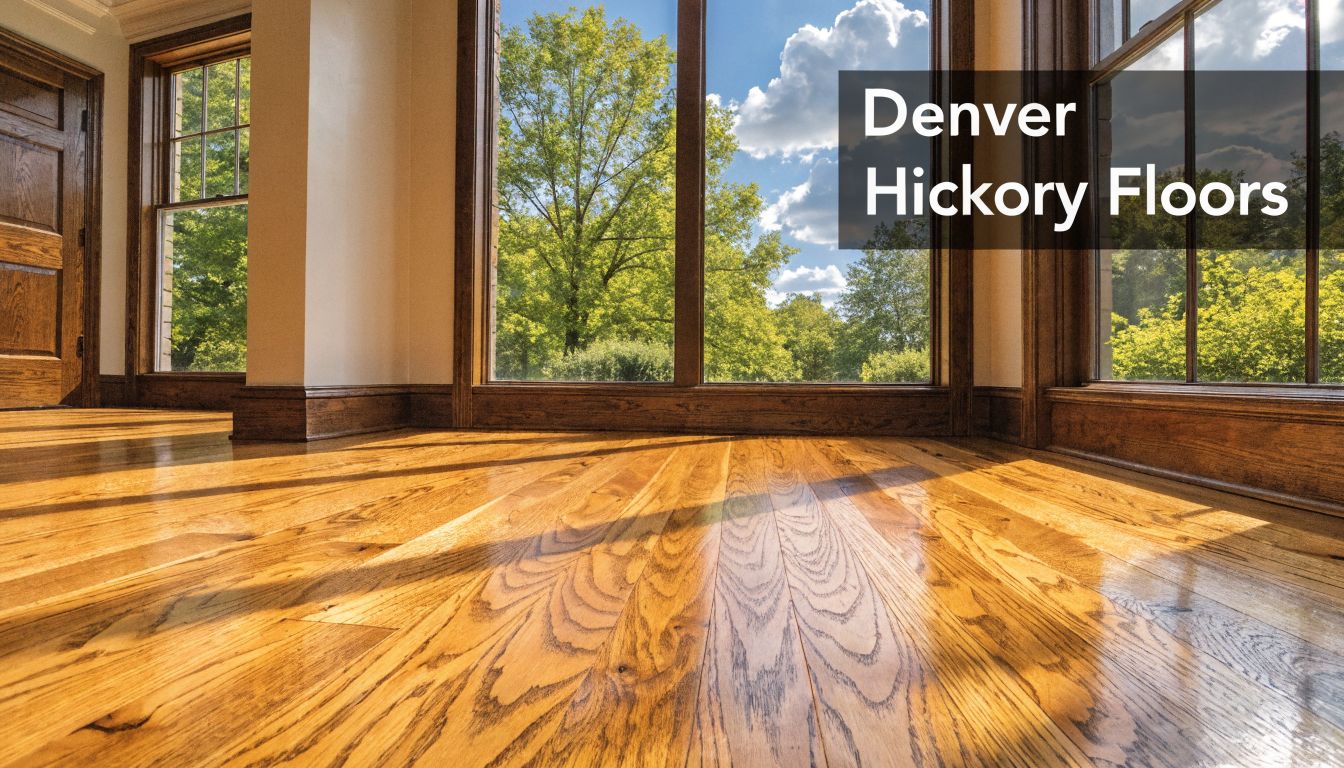
The main issue is that hickory doesn't forgive shortcuts. It can look beautiful with stain, but only when the sanding is exact, the surface is clean, the stain is tested properly, and the finish is matched to the wood’s toughness. In Denver hardwood floor refinishing, that last step matters just as much as the color. A weak topcoat over hickory is a mismatch from day one.
What homeowners usually want from stained hickory
The common objective isn't to fully obscure hickory. Instead, the desire is often for one of these outcomes:
- Less contrast: They want the sapwood and heartwood to feel more connected.
- Warmer tone: They want the floor to feel less raw and more finished.
- A cleaner modern look: They like hickory’s grain but want a more controlled color.
- Better durability after refinishing: They don’t want to redo the work because the finish couldn’t handle traffic, pets, or tenants.
Those goals are realistic. The problem is that generic staining advice usually comes from people working on easier species or in milder climates.
Practical rule: On hickory, the final color depends as much on prep and climate control as it does on the stain can.
Why Denver changes the conversation
Colorado conditions add another layer. In a dry Denver home, stain can dry fast on the surface before it settles the way you expect. That can make the floor look one way during application and another after cure. Homeowners often think the stain “changed.” What happened is that the wood and environment never gave a consistent result.
That’s why a smart Denver hardwood floor refinishing process includes test areas, pacing, and finish selection appropriate for the room conditions. If the floor is being protected with a UV-Cure System, the work has to be right before that finish goes on, because fast curing leaves little room to disguise a bad stain job underneath.
Why Hickory Is a Unique Hardwood Challenge
A lot of Denver homeowners call after the same surprise. The hickory floor looked great raw, but once stain went on, the contrast jumped, the grain got louder, and a few boards turned darker than expected. That is normal for this species, and Colorado’s dry air makes the behavior even less forgiving.
Hickory is one of the harder domestic flooring woods in regular use. That is part of its appeal. It holds up well to dogs, kids, chair movement, and daily traffic. It also means the wood does not respond like oak during refinishing. Sanding takes more control, stain absorption is less predictable, and weak finish systems tend to show wear sooner because the coating becomes the part that fails first.
If you are still comparing species, this guide on choosing the perfect hardwood for your home gives useful context on where hickory fits in both style and performance.
Hard, dense, and naturally inconsistent
Hickory has strong color variation by nature. Sapwood runs light. Heartwood runs darker. Some boards show both. Homeowners often love that movement until they try to stain it into a uniform color.
That is where expectations need to be realistic.
Stain does not erase hickory’s personality. It usually highlights it. In some rooms, that contrast looks rich and custom. In others, especially with darker colors, it can read blotchy if the floor was not sanded with real precision. A proper hardwood floor sanding and refinishing process matters more on hickory than on easier species because every inconsistency shows up once color hits the wood.
Denver conditions make hickory less forgiving
High elevation and low indoor humidity change how stain behaves. In many Denver homes, especially during winter or with forced-air heat running, the surface can dry fast while the boards still absorb unevenly. That shortens working time and makes lap marks, uneven wipe-off, and color shifts more likely if the crew treats hickory like a standard stain job.
Wide windows add another problem. Strong side light common in Front Range homes reveals sanding marks and color variation that looked minor under jobsite lighting. A floor can seem smooth before stain, then show chatter, stop marks, or uneven scratch patterns by mid-afternoon once sunlight hits it.
I tell homeowners this all the time. Hickory is honest. It shows the quality of the prep and the quality of the staining technique.
What usually works best
The best hickory stain jobs do not chase perfect uniformity. They control contrast, warm up the tone, and keep the floor looking intentional instead of forced.
A practical target looks like this:
- Reduce contrast, don’t erase it: Hickory still needs to look like hickory.
- Choose colors that work with natural variation: Mid-tones and warmer browns are often more forgiving than very dark stains.
- Test more than one area: A sample near a hallway can look different from a sample beside a sunny patio door.
- Build the system around durability: On a hard species, the finish has to match the floor’s wear demands.
Homeowners who want a quiet, consistent look can still get a beautiful result with hickory. The strategy just has to respect the wood, the room, and Denver’s dry climate.
The Critical Preparation for a Flawless Hickory Stain
A hickory floor can look clean, flat, and ready at noon, then show every sanding mistake once the afternoon sun hits it. In Denver homes, that happens all the time. Dry air, strong window light, and fast surface drying make prep more exacting than many national stain guides suggest.
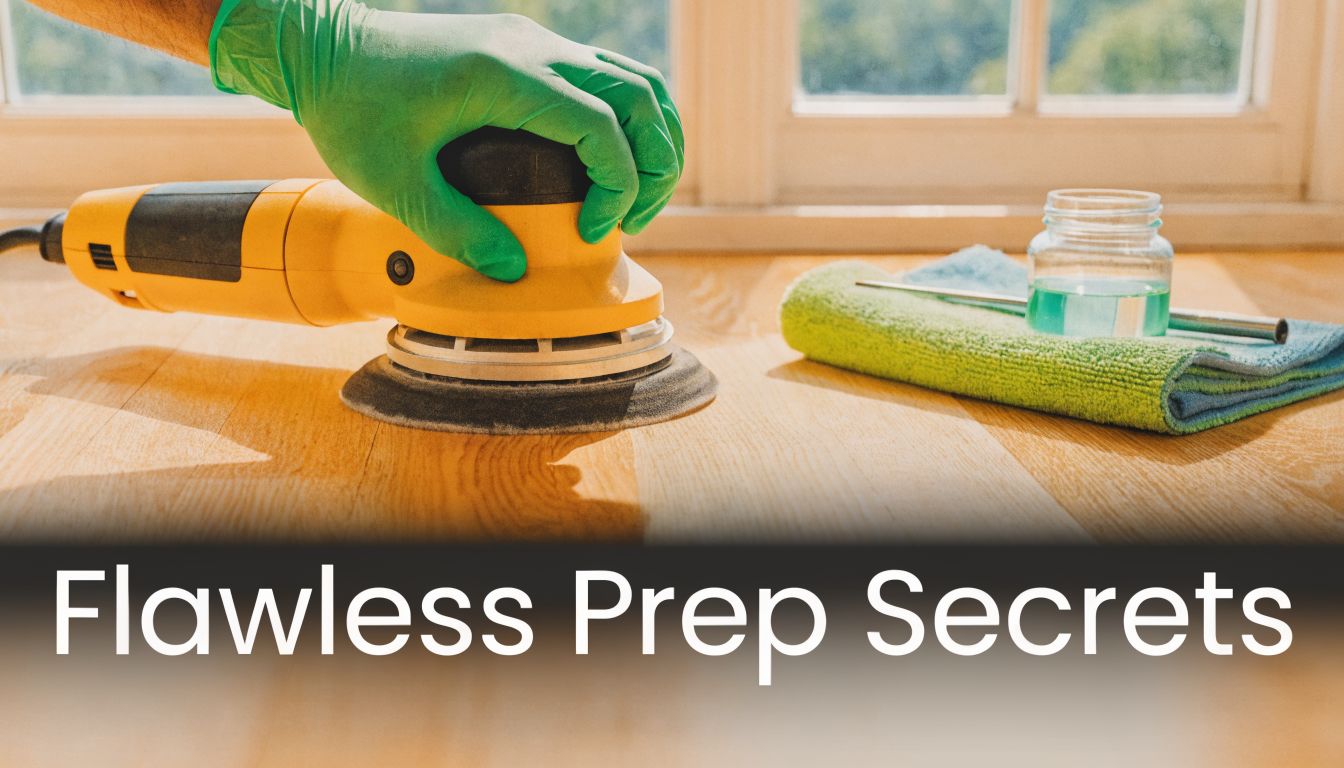
On hickory, prep sets the ceiling for the final result. If the scratch pattern is uneven, if old residue is still sitting in the grain, or if the floor is sampled too casually, the stain will make those problems easier to see, not harder.
Sanding has to be consistent, not just smooth
Hickory is dense, hard, and less forgiving than oak. A floor can feel smooth under your hand and still carry enough sanding variation to stain unevenly. What matters is a disciplined grit progression, careful edge work, and matching the field, perimeter, and corners so the whole room takes color the same way.
In Colorado, I pay close attention to moisture conditions before stain day. A very dry house can speed up parts of the process and make a floor seem ready before it is uniform. That is one reason hickory jobs benefit from patient sanding and repeated inspection under good light.
If you want to see what a full professional process involves, this guide to sanding and refinishing hardwood floors lays out the steps clearly.
Dust control is part of stain prep
Dust-free sanding helps for a simple reason. It allows you to read the floor.
Loose dust hides swirl marks, stop marks, and inconsistent scratch patterns. On hickory, those defects often stay hidden until stain goes down or sunlight crosses the boards at an angle. A cleaner work area makes it easier to check each section before the color stage starts.
The cleanup after sanding matters just as much. Fine dust in open grain lines can muddy the stain. Cleaner residue near kitchens or entry areas can repel color. Wax contamination can interfere with both stain acceptance and finish adhesion.
Good prep usually includes:
- thorough vacuuming, including edges and board seams
- close inspection of traffic lanes, kitchen perimeters, and pet areas
- wipe-downs only when the stain system calls for them
- extra attention to corners and under bright side light
Test boards and sample areas prevent expensive surprises
Hickory varies board to board. One plank may stay light while the next goes dark fast. That is why sample areas are part of the prep process, not an optional extra.
I prefer testing in more than one location, especially in Denver homes with large south- or west-facing windows. The same stain can read warmer, flatter, or more uneven depending on the light and the board mix in that part of the room. A sample also shows whether the floor needs any adjustment before full application, such as more blending in the sanding pattern or a different approach to color.
Conditioner can help in some cases, but it is not a blanket rule for every hickory floor. The value of testing is that it answers practical questions before the whole room is committed:
- Is the floor taking color too aggressively?
- Are lighter sapwood boards standing out more than expected?
- Does the conditioner improve control or mute the look too much?
- Does the sample still look right after finish is applied?
Here’s a good visual example of floor prep and refinishing work in action:
Common prep mistakes that show up after stain
Bad hickory stain jobs usually trace back to a short list of prep errors.
Skipping steps in the sanding sequence
Hidden scratch patterns show up once color hits the floor.Treating the room as if one test patch tells the whole story
Hickory has too much natural variation for that.Leaving behind old maintenance products
Residue causes random light spots and adhesion problems.Using oak standards on a hickory floor
Hickory needs tighter prep, more checking, and better sample discipline.
That extra effort is what makes the final color look intentional instead of blotchy, harsh, or uneven.
Choosing Your Stain and Mastering the Application
Once the floor is prepped correctly, stain selection becomes much easier. The wrong order is common. Many homeowners pick a color first, then hope the process supports it. On hickory, the process comes first.
The best stain choice depends on how much variation you want to keep, how quickly you need workable open time, and how much control you want during application. This guide on how to choose hardwood floor stain color is a useful starting point if you’re narrowing the look before samples are made.
Hickory stain type comparison
| Stain Type | Best For | Pros | Cons |
|---|---|---|---|
| Oil-based stain | Homeowners who want longer working time and a traditional rich look | More open time for wiping and blending, often helpful on challenging floors | Slower process, stronger odor, can become messy if overapplied |
| Water-based stain | Faster projects and cleaner application environments | Lower odor, quicker dry, often fits modern finishing schedules well | Can dry fast, which makes technique more demanding on hickory |
| Gel stain | Floors or trim where more color control is needed on difficult areas | Sits more on the surface, can help manage uneven absorption visually | Not always the best fit for every full-floor system, can look heavy if handled poorly |
Color selection that respects the wood
The smartest hickory stains usually do one of two things. They either soften the contrast without trying to erase it, or they go intentionally darker so the variation reads as depth instead of chaos.
What tends to work well in real homes:
- Mid-tone browns: Good if you want warmth without making every light board jump out.
- Richer, deeper tones: Better when you want to mute strong natural contrast.
- Natural or light-enhancing looks: Best only when the sanding is excellent, because flaws stay visible.
Test your stain where daylight, shade, and evening light all hit the floor. Hickory can look different hour to hour in Denver homes with big windows.
Application technique that avoids lap marks
The technique matters as much as the stain itself. A controlled application usually works better than flooding the floor.
A practical sequence looks like this:
- Apply stain in manageable sections.
- Keep the spread even.
- Wipe back consistently.
- Blend the edge before moving too far ahead.
- Watch board transitions, not just overall color.
The biggest application mistakes are overloading the floor, waiting too long to wipe, and trying to fix drying sections after they’ve already started setting. Hickory punishes hesitation. The floor needs a clear plan and a steady pace.
If you want to see finished floors and color outcomes in real spaces, the video gallery of completed projects is worth reviewing before choosing a final direction.
The Ultimate Protection Your Pet-Friendly UV-Cure System
You pick the stain, the color looks right, and the floor finally has the character you wanted. Then the everyday wear begins. In Denver homes, that usually means dry air, big temperature swings, strong sun, dogs coming in from the yard, and grit that gets tracked across the finish long before the wood itself has a problem.
That is why I tell homeowners to spend as much time choosing the topcoat as they do choosing the stain. Hickory can handle a lot, but the finish takes the daily abuse first. If the coating scratches easily, cures slowly, or stays vulnerable for days, the job can look tired much sooner than it should.
Why finish choice matters so much on hickory
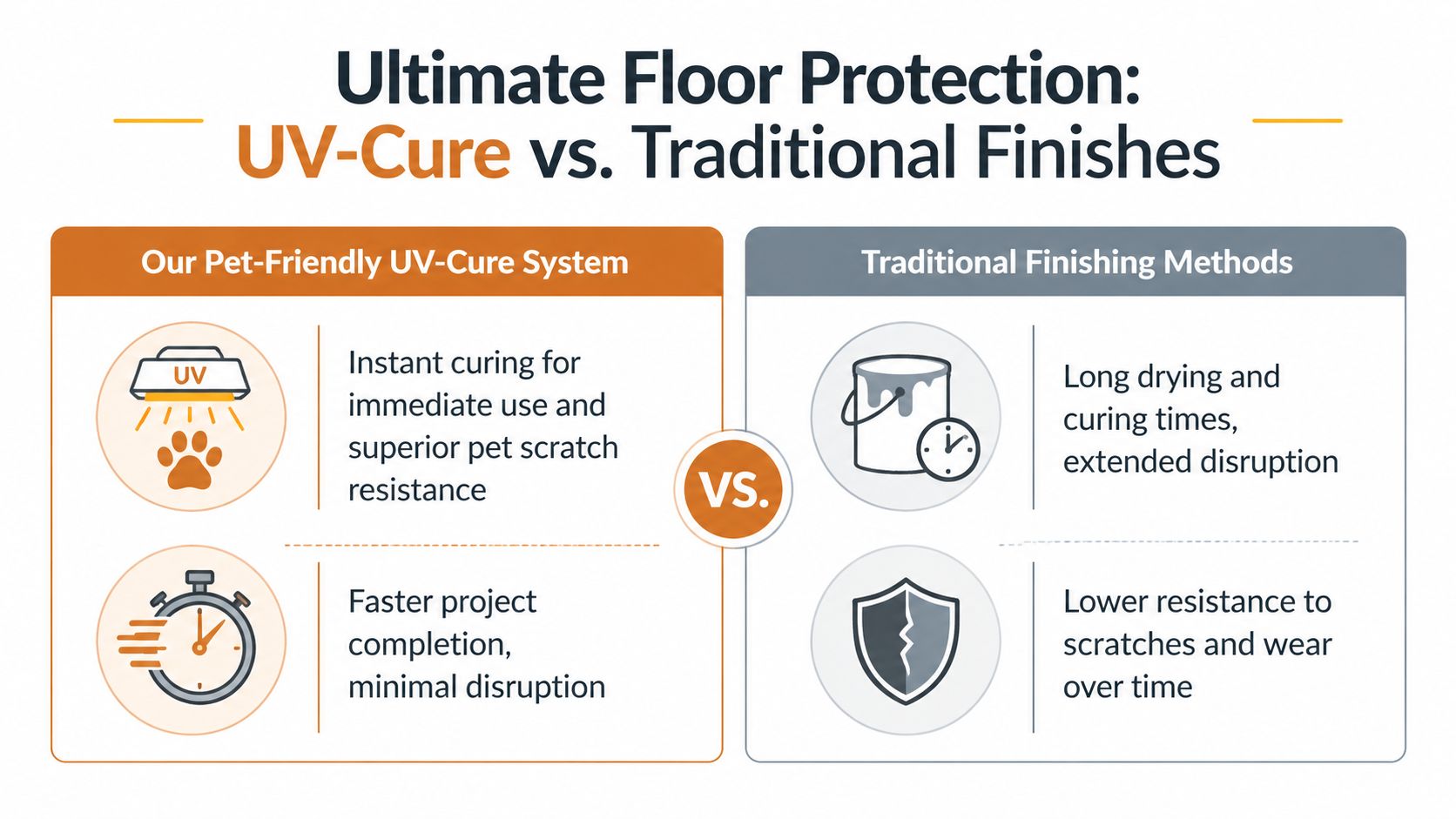
A good stain job on hickory still needs a finish that cures hard, stays clear, and holds up under traffic. Traditional site-finished systems still have their place, especially when budget drives the decision or when a homeowner is comfortable giving the floor a longer recovery window. The trade-off is downtime. You often have a longer period where socks, pets, furniture, and everyday movement all need more caution than people expect.
UV-cured finish systems solve a lot of that frustration.
The practical advantages are straightforward:
- Immediate cure: The floor is ready for use right away after the process is complete.
- Less disruption: Shorter downtime matters in occupied homes.
- Better wear resistance: Helpful for active families, pet owners, and busy entry paths.
- Lower odor during recovery: A big plus if you are living in the house during the project.
If you want the details on what homeowners usually ask before choosing this option, this guide to instant UV-curable hardwood floor finish questions and answers explains the process clearly.
Better for pet owners and high-traffic homes
Pet owners usually notice finish damage before they notice wood damage. Nails, water bowls, doorway traffic, and quick turns on the floor all work on the topcoat every day. A tougher cured finish gives you more margin before those marks turn into visible wear patterns.
Colorado conditions add another wrinkle. Dry air can make dust and grit more abrasive, and that fine debris acts like sandpaper under paws and shoes. A harder-wearing finish helps, but maintenance still matters. Keeping nails trimmed reduces scratching, and Pet Magasin's nail trimming guide is a useful reference for that part of the routine.
Matching finish level to the way the house is used
I do not recommend the same finish system for every home. A low-traffic condo with no pets has different needs than a family home in Denver with two dogs, kids, and constant trips in and out from a dry backyard or snowy walk.
The main decision points are usually:
- How much daily traffic the floor gets
- Whether pets are on the floor every day
- How quickly the home needs to be back in service
- Whether the property is a primary residence, rental, or part-time home
For households that want durability and minimal downtime, UV-cure systems are often the better fit. They protect the stain, shorten the disruption, and hold up well in the kind of real-world use Denver floors see every week.
Pro Tips for Staining Hickory in Colorado's Climate
Most online advice on staining hickory floors ignores where the floor resides. That’s a mistake in Colorado.
Basic Coatings points out a major issue for mountain states like Colorado. Low relative humidity at high elevation can cause rapid surface drying, hide the true stain shade, and lead to blotchiness even when standard prep steps are followed, which is why professionals adjust with techniques such as targeted water-popping or specific conditioners in their discussion of stain challenges. That lines up with what Denver-area pros see all the time.
What dry air does to a stain job
In a very dry house, stain can flash off on the surface before the color settles the way you expect. The floor may look acceptable while wet, then uneven after it cures. That’s especially frustrating on hickory because its dense structure already makes absorption less forgiving.
Common signs of climate-related trouble include:
- Blotchy areas that weren't obvious during application
- Sections that look lighter or duller a day later
- Unexpected color shifts near windows or vents
What helps in Denver homes
The best approach is controlled and local, not generic.
Helpful methods include:
- Targeted water-popping: Done carefully to support more even stain response.
- Multiple test panels: Not one sample only.
- Humidity awareness: Rooms facing strong sun or forced air often behave differently.
- Pacing the application: The crew has to work with the room, not against it.
On hickory in Colorado, a stain sample that looks good for five minutes isn't enough. The sample has to be judged after it settles.
When to call a pro
If a homeowner has already started and the floor is showing patchiness, it’s usually smarter to stop than to keep layering products. Hickory doesn’t respond well to panic fixes.
A common rescue scenario is a DIY stain in a Greenwood Village home where the sanding looked fine, the stain went on fast, and the finish later revealed inconsistent absorption across the room. At that point, the answer is often to re-sand and restart properly. That’s frustrating, but it’s still better than living with a floor that looks wrong every time the afternoon light hits it.
Frequently Asked Questions About Hickory Floor Refinishing
| Question | Answer |
|---|---|
| Can hickory floors be stained evenly? | Yes, but "evenly" on hickory means controlled and intentional, not perfectly uniform like some softer-looking species. The sanding, test samples, and application method decide the outcome. |
| Why does hickory show blotches so easily? | Its tight grain and density make surface prep extremely visible under stain. Any scratch pattern, inconsistent pressure, or uneven absorption tends to stand out after color is applied. |
| Is refinishing better than replacing a hickory floor? | If the boards are structurally sound, refinishing is usually the first option to consider because it preserves the existing floor and lets you update the color and protection system. Replacement makes more sense when boards are badly damaged, unstable, or the layout is changing. |
| Can a screen and recoat fix stained hickory floors? | Only if the color and wood surface are already in good shape. A screen and recoat service refreshes the protective layer. It doesn't correct deep stain problems, sanding errors, or major color inconsistency. |
| What if my floor has buildup from old cleaners or wax? | That has to be addressed before refinishing. Contamination can interfere with stain and finish adhesion. In some cases, hardwood wax removal or a deep prep service is the right first step. |
| Are UV-cured finishes worth considering on hickory? | Yes, especially for busy homes, pet owners, and properties that need fast turnaround. Hickory is a very durable species, so pairing it with a stronger finishing system is a practical match. |
| Can hickory be cleaned and improved without full sanding? | Sometimes. If the issue is dullness, embedded soil, or light wear rather than stain failure or raw wood exposure, a hardwood clean and buff service may help restore appearance. |
| Is professional installation important if I'm adding new hickory? | Yes. Because hickory is hard to work with, installation quality matters. If you’re starting from scratch, hardwood floor installation is worth handling carefully from the beginning. |
| How do I know what service my floor actually needs? | Photos, wear patterns, old coatings, and the goal for the space all matter. The fastest next step is usually to contact a floor refinishing specialist with photos and a description of what you want changed. |
Trust Denver’s Experts for Your Hickory Floor Transformation
Staining hickory floors can produce some of the best-looking hardwood in a home, but only when the work respects the wood. Hickory demands careful sanding, smart testing, climate-aware application, and a finish tough enough to protect the result. In Denver hardwood floor refinishing, Colorado’s dry air changes the process in ways most generic guides miss.
If you want stained hickory that looks refined instead of blotchy, the winning formula is simple. Prep thoroughly. Test carefully. Protect the floor with a finish system that fits the species and the way you live. For many homes, that means pairing beautiful stain work with a modern UV-Cure System.
Homeowners in Denver trust J.R. Hardwood Floor Refinishing & Cleaning to restore the natural beauty of their hardwood floors with dust-free sanding and advanced UV-curable finishes. Whether you're in Wash Park, Park Hill, Central Park, Cherry Creek, Lakewood, Littleton, Aurora, Parker, Castle Rock, Boulder, or nearby communities, the team handles challenging wood species with practical skill and durable systems built for Colorado homes. Learn more about their services, see what past customers say on the testimonials page, or get to know the company on the about us page.
Homeowners on Parker trust J.R. Hardwood Floor Refinishing & Cleaning to restore the natural beauty of their hardwood floors with our dust-free sanding system and advanced UV-curable finishes. Unlike traditional methods, our UV technology cures instantly, so you can move furniture back the same day with no lingering odor or downtime. Choose the perfect refinishing service to match your needs and home traffic. Our dust-free process ensures a clean, beautiful finish every time.
📞 Phone: 720-327-1127
🌐 Website: jrhardwoodfloorrefinishingandcleaning.com
📍 Service Area: Denver and nearby towns including Aurora, Lakewood, Littleton, Parker, Castle Rock, Greenwood Village, Highlands Ranch, Westminster, Arvada, Boulder, and surrounding Colorado communities
▶️ YouTube: Watch our floor refinishing videos