 Skip to content
Busy families in the Denver Metro Area know how quickly hardwood floors can lose their shine in high-traffic spaces. Caring for your floors often means finding a way to restore surface luster and protection without the hassle of a full replacement or the mess of deep sanding. Discover how an eco-friendly screen and recoat approach can transform your flooring, offering a practical solution to renew beauty and durability while being kind to your home and the environment.
Table of Contents
- What Screen And Recoat Actually Means
- How The Screen And Recoat Process Works
- When To Choose Screening Over Refinishing
- Typical Costs And Lifespan Extension
- Common Mistakes And How To Avoid Them
Key Takeaways
| Point | Details |
|---|---|
| Screen and Recoat Benefits | This technique is a cost-effective maintenance method that revives hardwood floors with minimal disruption and dust. |
| Ideal Conditions for Screening | Use screening for minor surface wear and when the wood remains structurally sound, avoiding deep gouges. |
| Cost Efficiency | Screening costs significantly less than full refinishing, saving homeowners 50-60% while extending floor lifespan. |
| Importance of Preparation | Proper cleaning and preparation are essential for optimal adhesion and finish quality, preventing long-term damage. |
What Screen and Recoat Actually Means
Screen and recoat is a specialized hardwood floor maintenance technique that provides a fast, efficient renewal process without extensive sanding or replacement. This method involves lightly abrading existing floor surfaces to prepare them for a fresh protective coating, offering homeowners an economical and time-saving floor restoration solution.
The process works by carefully screening the existing floor finish, creating a slightly rough surface that allows new coating to adhere effectively. Unlike full refinishing, screen and recoat targets only the topmost layer of your floor’s finish, preserving the underlying wood’s integrity. This makes it an ideal solution for floors that have minor wear but aren’t severely damaged.
Key characteristics of screen and recoat include:
- Minimal disruption to your living space
- Significantly reduced dust compared to traditional refinishing
- Restoration of floor’s protective layer
- Improved appearance without complete replacement
- Cost-effective maintenance strategy
Floor screening involves using a specialized buffing machine with a screening disc to gently abrade the existing finish. This step removes light scratches, scuffs, and worn areas while creating microscopic texture for optimal new finish adhesion. After screening, a fresh coat of polyurethane is applied, effectively sealing and protecting the surface.
Pro tip: Schedule screen and recoat services every 3-5 years to maintain your hardwood floors’ optimal appearance and protection.
How the Screen and Recoat Process Works
The screen and recoat process is a meticulous floor maintenance technique designed to restore hardwood floors with minimal disruption. Floor surface preparation begins with thorough cleaning to remove dirt, oils, and accumulated grime that could interfere with the new finish’s adhesion.
After comprehensive cleaning, professionals use specialized equipment to screen the existing floor finish. This involves a floor buffer equipped with a fine screening disc that gently abrades the surface, creating microscopic texture without removing significant wood material. The screening process serves two critical purposes: removing light surface imperfections and creating an optimal bonding surface for the new protective layer.
Key steps in the screen and recoat process include:
- Thorough floor cleaning with professional-grade detergents
- Careful surface screening using fine-grit screening discs
- Repairing minor surface imperfections
- Applying a fresh protective polyurethane coat
- Allowing proper drying and curing time
Once the screening is complete, any small cracks or holes are repaired using appropriate wood-matching compounds. Professional technicians then apply a fresh coat of high-quality polyurethane using precise brush and roller techniques. The new finish is carefully applied to ensure even coverage, creating a smooth, protective layer that restores the floor’s original luster and shields it from future wear.
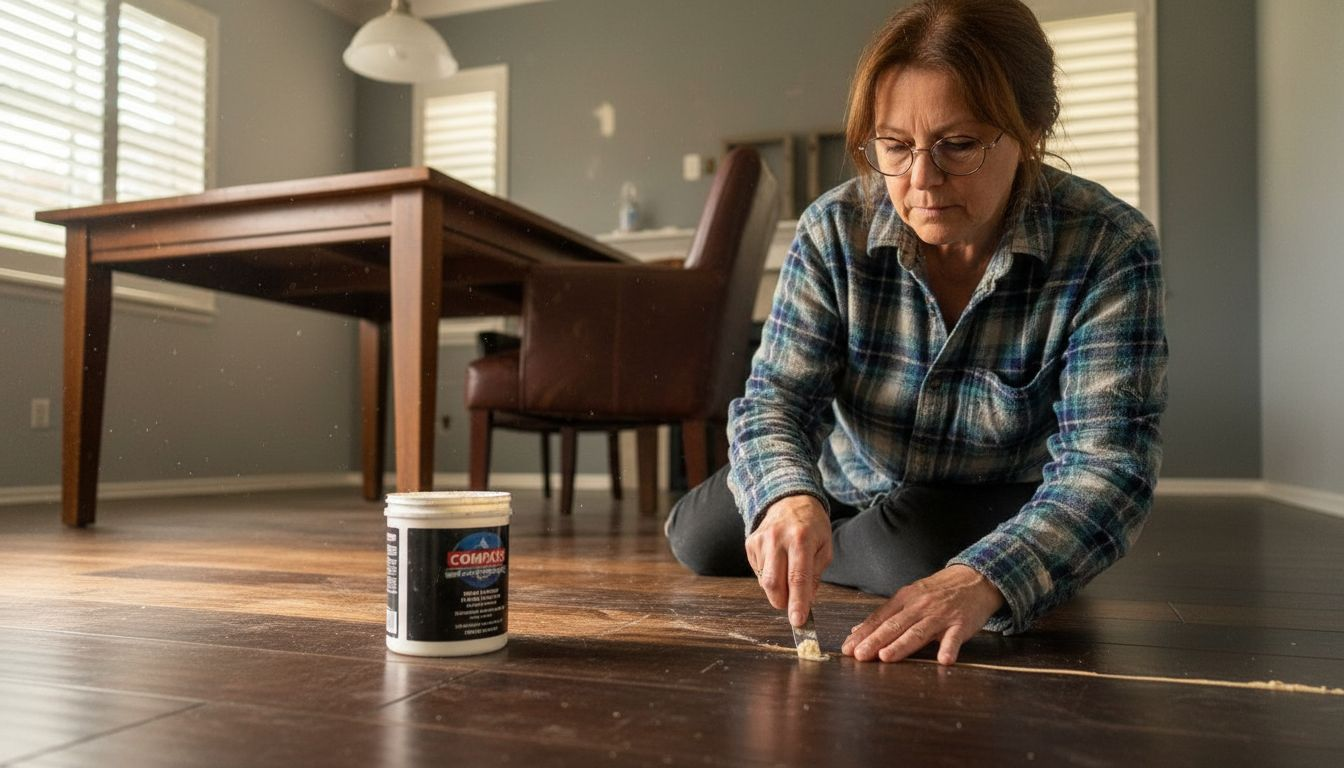
Pro tip: Ensure your floor is completely clean and free of wax or oil-based products before scheduling a screen and recoat service to guarantee optimal finish adhesion.
When to Choose Screening Over Refinishing
Homeowners face an important decision when their hardwood floors start showing signs of wear. Industry standards recommend screening for specific floor conditions that don’t require extensive restoration. Screen and recoat is an ideal maintenance approach when your floor’s finish has dulled but the underlying wood remains structurally sound and free from significant damage.
Critical indicators that screening might be the right choice include:
- Light surface scratches and scuff marks
- Dull or worn finish appearance
- Minimal wear in high-traffic areas
- No exposed bare wood
- No deep gouges or structural damage
The screening process differs significantly from full refinishing. While a complete refinish involves sanding down to bare wood and removing substantial material, screening is a gentler, less invasive technique. This method preserves more of the original floor thickness and provides a cost-effective solution for maintaining your hardwood’s appearance and protection. Professional technicians can quickly evaluate whether your floor is a good candidate for screening by assessing the extent of surface damage and overall floor condition.
Screening is a strategic maintenance approach that extends your floor’s life without the extensive time and expense of full refinishing.
Pro tip: Schedule a professional floor assessment annually to determine whether screening or full refinishing is the most appropriate maintenance strategy for your specific hardwood floors.
Typical Costs and Lifespan Extension
Innovative floor renewal methods offer homeowners a cost-effective alternative to complete hardwood floor replacement. Screen and recoat services typically range from $1,000 to $2,500 for average-sized rooms, translating to approximately $3 to $8 per square foot. This pricing depends on the floor’s current condition, room size, and local market rates.
Cost comparison between screen and recoat and full refinishing reveals significant advantages:
- Screen and recoat: $3-$8 per square foot
- Full floor refinishing: $8-$15 per square foot
- Potential savings: 50-60% compared to complete refinishing
- Minimal disruption to home environment
- Faster completion time
The lifespan extension of hardwood floors through screening is remarkable. By applying a fresh protective layer, homeowners can typically add 3 to 5 years to their floor’s finish life. This method effectively reduces wear, prevents deeper damage, and maintains the floor’s aesthetic appeal without the invasive process of complete sanding and refinishing. Professional technicians can strategically apply new coatings that protect against daily wear, UV damage, and moisture exposure.
The following table highlights the main differences between screen and recoat and full refinishing for hardwood floors:
| Category | Screen and Recoat | Full Refinishing |
|---|---|---|
| Process Invasiveness | Minimal sanding, surface only | Deep sanding, removes wood layers |
| Project Duration | 1-2 days typical | 3-5 days or more |
| Cost Range | $3-$8 per square foot | $8-$15 per square foot |
| Wood Preservation | Preserves floor thickness | Removes some wood material |
| Dust Generation | Low | High |
| Recommended For | Minor wear, lack of deep damage | Extensive damage or exposed wood |
Screen and recoat provides an economical solution that preserves your floor’s beauty while extending its functional lifespan.
Pro tip: Request multiple quotes from certified professionals and ask about their specific screening techniques to ensure you receive the most effective and cost-efficient floor renewal service.
Common Mistakes and How to Avoid Them
Wood floor maintenance requires careful preparation to prevent costly errors during the screen and recoat process. Homeowners often unknowingly compromise their floor’s integrity by skipping critical preparation steps or using incorrect techniques that can cause long-term damage.
Common mistakes to avoid include:
- Insufficient surface cleaning before screening
- Using incorrect sanding grit or aggressive techniques
- Neglecting to repair surface defects
- Applying finish in unsuitable environmental conditions
- Skipping manufacturer’s recommended preparation guidelines
The screening process demands precision and attention to detail. Professional technicians understand that improper surface preparation can lead to poor finish adhesion, uneven coating, and potential long-term floor damage. Humidity, temperature, and dust levels dramatically impact the quality of the screen and recoat procedure. Homeowners should ensure proper room ventilation, maintain consistent temperature between 65-75 degrees Fahrenheit, and eliminate potential contamination sources like pet hair or dust.
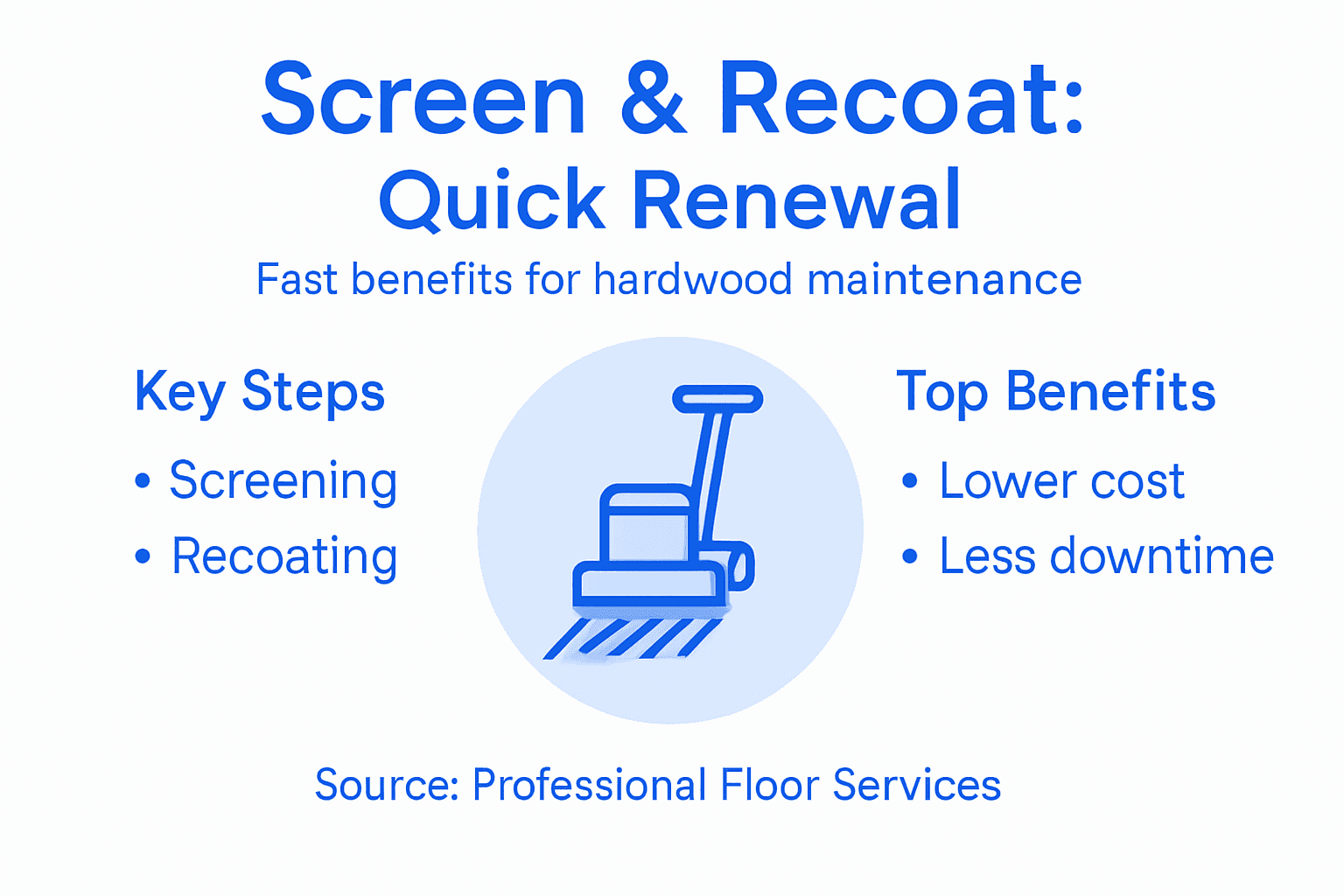
Here’s a quick reference for avoiding common screen and recoat pitfalls:
| Potential Mistake | Resulting Problem | How to Prevent It |
|---|---|---|
| Incomplete cleaning | Poor finish adhesion | Deep clean before screening |
| Wrong grit selection | Uneven or damaged surface | Use fine, recommended grit |
| Unrepaired floor defects | Visible flaws post-coating | Patch cracks or holes beforehand |
| High humidity during application | Cloudy or bubbly finish | Control temperature and humidity |
| Skipping manufacturer guidance | Unsatisfactory finish result | Follow all product instructions |
Proper preparation is the foundation of a successful screen and recoat service, determining the longevity and appearance of your hardwood floors.
Pro tip: Invest in professional consultation before attempting DIY screen and recoat to understand your specific floor’s unique requirements and potential challenges.
Renew Your Floors Quickly and Affordably with Expert Screen and Recoat Services
If you are facing dull finish, light scratches, or worn areas on your hardwood floors but want to avoid the disruption and expense of full refinishing you need a proven and efficient solution. The screen and recoat method preserves your floor’s original wood while restoring its protective layer with minimal sanding and downtime. At J.R. Hardwood Floor Refinishing & Cleaning we specialize in this fast floor renewal technique, using eco-friendly products and premium finishes to bring out the beauty and durability your floors deserve.
Experience our skilled craftsmanship and clear, personalized guidance to extend your floor’s life by years without the dust and cost of deep sanding. Whether you live in Denver Boulder or Colorado Springs our team delivers like-new transformations that protect your investment. Don’t wait until damage worsens schedule your free consultation today to explore how screen and recoat can refresh your floors with lasting results at J.R. Hardwood Floor Refinishing & Cleaning. Learn more about our hardwood refinishing solutions and enjoy a seamless renewal experience.
Frequently Asked Questions
What is the screen and recoat process for hardwood floors?
The screen and recoat process involves lightly abrading the existing finish on hardwood floors to prepare them for a fresh coat of protective polyurethane. This method helps restore the floor’s appearance without the need for extensive sanding or replacement.
When should I choose screening instead of full refinishing?
You should consider screening when your hardwood floor has light surface scratches, a dull finish, or minor wear without exposing bare wood. This approach is ideal for floors that are overall structurally sound and do not require extensive refurbishment.
How often should I schedule screen and recoat services?
It is recommended to schedule screen and recoat services every 3 to 5 years to maintain the optimal appearance and protection of your hardwood floors, extending their lifespan and enhancing their visual appeal.
What are the typical costs associated with screen and recoat services?
Screen and recoat services typically cost between $3 and $8 per square foot, making them a more economical alternative to full refinishing, which can range from $8 to $15 per square foot. This method can save you 50-60% compared to complete refinishing.