 Skip to content
Yes, you can refinish most bamboo floors, and the results can genuinely look like a brand new install. But before you rent a sander, there’s one thing that decides everything else: what kind of bamboo you have and how thick its wear layer is.
Solid bamboo (horizontal or vertical grain) behaves a lot like traditional hardwood and tolerates multiple full sandings over its life. Strand-woven bamboo, despite being incredibly hard, is far less forgiving because sanding too deep exposes its compressed fiber pattern in a way that can’t be undone. Engineered bamboo falls somewhere in between, and everything depends on the thickness of that top wear layer. Generally, very thin wear layers mean sanding is not recommended.
Here’s your immediate next step before you do anything else:
- Check the plank edge, leftover box, or your original invoice for wear-layer thickness or bamboo type.
- Do a quick water-droplet test on the surface (we’ll show you how below).
- Look for obvious red flags: delamination, cupping, or wide gaps that no amount of sanding will fix.
Once you know what you’re working with, the rest of this guide walks you through testing, tools, technique, and when to just call in a pro.
Key Takeaways
Whether you can refinish bamboo floors comes down to construction type and wear-layer thickness, not the fact that it’s bamboo at all.
| Point | Details |
|---|---|
| Type determines limits | Solid bamboo tolerates multiple sandings; strand-woven usually allows only one to two before fiber exposure risk. |
| Wear layer under 2 mm | Engineered bamboo this thin should stick to screening and recoating instead of sanding. |
| Test before you sand | Run a water-droplet test and a small test patch to confirm finish condition before committing. |
| Costs scale with scope | Screen and recoat runs $1 to $2 per square foot; full refinishing runs $2.50 to $7, higher for strand-woven. |
| Call a pro for high-risk floors | Jrhardwoodfloorrefinishingandcleaning offers free phone quotes and handles strand-woven, moisture damage, and UV-cure finishing for Denver Metro homeowners. |
Table of Contents
- How Bamboo Types Affect Your Refinishing Options
- How Do You Test Whether Your Bamboo Floor Needs Sanding or Just a Recoat?
- Should You Refinish Bamboo Floors Yourself or Hire a Pro?
- What Tools and Materials Do You Need for Bamboo Floor Refinishing?
- Step-by-Step: How to Refinish Bamboo Floors
- Which Finish Is Best for Bamboo Floors?
- Common Refinishing Mistakes and How to Fix Them
- How Much Does It Cost to Refinish Bamboo Floors?
- How Do You Maintain Bamboo Floors After Refinishing?
- When Does It Make Sense to Call a Professional?
- Editorial Take: Where the Conventional Advice Falls Short
- Get an Expert Assessment Before You Commit to a Sander
- Frequently Asked Questions
- Sources
How Bamboo Types Affect Your Refinishing Options
Not all bamboo flooring is built the same way, and that construction difference is the whole ballgame when it comes to refinishing bamboo hardwood.
Solid bamboo is milled from bamboo strips glued face-to-face (horizontal grain, showing the knuckle pattern) or edge-to-edge (vertical grain, giving a more linear look). Structurally, it acts a lot like solid oak or maple. You can sand it down and refinish it multiple times over its lifespan, following roughly the same rules as traditional hardwood.
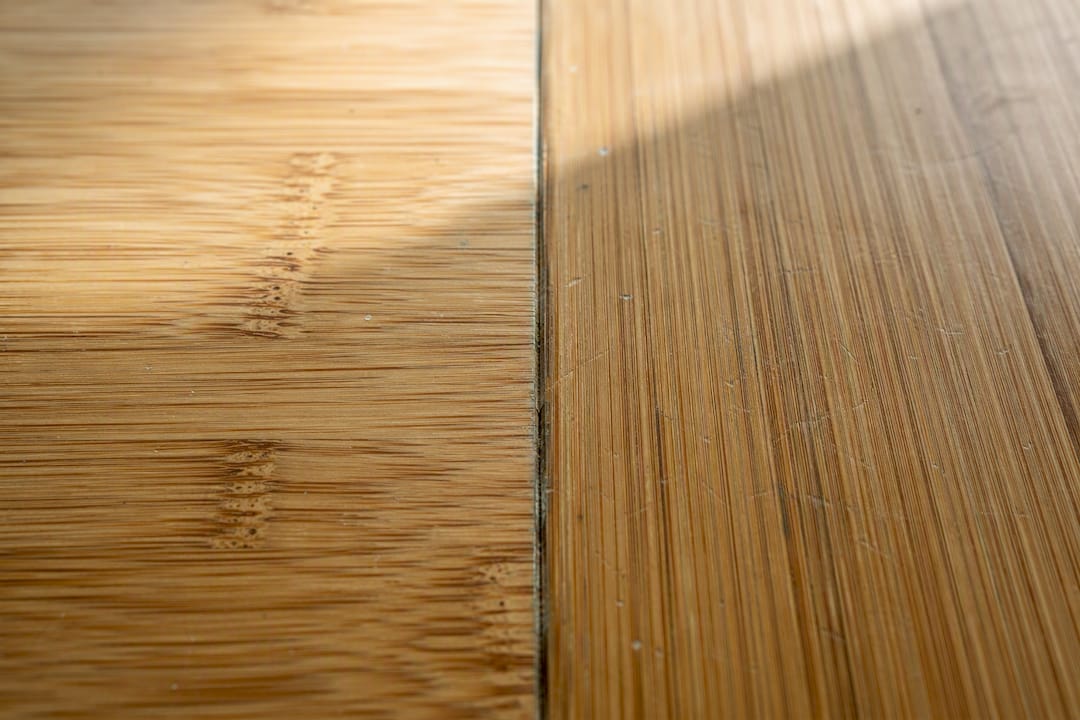
Strand-woven bamboo is a different animal entirely. Manufacturers shred bamboo fibers and compress them under extreme heat and pressure into dense planks, which is why strand-woven often tests harder than oak on the Janka scale. That density is a blessing and a curse. It resists dents beautifully, but it usually only tolerates one to two full sandings in its lifetime before you risk exposing the compressed fiber pattern underneath, and that damage is often permanent. The National Wood Flooring Association specifically recommends testing finish compatibility on strand-woven bamboo before committing to a full job.
Engineered bamboo has a thin bamboo veneer bonded over a plywood or composite core, and here the wear-layer measurement is everything.
- Under 2 mm: Screening and recoating only. Sanding through the veneer exposes the substrate.
- 2 to 4 mm: One cautious sand is usually possible, done by someone experienced.
- 4 mm or more: Multiple light sands are realistic over the floor’s life.
Solid bamboo generally supports the widest range of refinishing, while strand-woven bamboo usually tolerates only one to two full sandings and engineered bamboo depends entirely on wear-layer thickness, with anything under 2 mm typically ruling out sanding altogether.
One more wrinkle: carbonized bamboo (the darker, caramel-toned finish achieved through a heat process) is softer than its natural-colored counterpart because carbonization weakens the fiber structure. Sand it a touch more conservatively. And if your floor is a prefinished, UV-cured plank from a big-box retailer, assume a thinner wear layer unless you find documentation proving otherwise.
How Do You Test Whether Your Bamboo Floor Needs Sanding or Just a Recoat?
Before you commit to a full sand, run through this quick assessment. It takes fifteen minutes and can save you from ruining a floor that only needed a light touch-up.
- Do the water droplet test. Place a few drops of water on the floor in a low-traffic spot and watch what happens. If the water beads up and sits on the surface, your finish is intact and you’re likely a candidate for screen-and-recoat. If it soaks in or darkens the wood within a minute or two, the finish is worn through and you need sanding.
- Find your wear-layer documentation. Check the original box, a leftover plank in a closet, your installer’s invoice, or the retailer’s product page. Manufacturers list wear-layer thickness in millimeters, and it’s the single most useful number you can find.
- Walk the room looking for structural issues. Delamination (layers separating, often visible as bubbling or lifting at seams), cupping (edges higher than the center, usually from moisture), and wide gaps between boards all signal problems sanding won’t fix. These call for board replacement or a professional moisture assessment first.
- Run a small test patch. Pick an inconspicuous spot, like inside a closet, and sand it with your finest starting grit. If you see fiber strands smearing or a fuzzy, feathered texture on strand-woven bamboo, stop. That’s your warning sign you’ve hit the danger zone.
Pro Tip: Keep a small sample of your test patch finish nearby while you shop for stain or topcoat. Bamboo’s color shifts more than people expect once sealed, and matching it in a dim hardware store aisle is nearly impossible without a physical reference.
Should You Refinish Bamboo Floors Yourself or Hire a Pro?
DIY refinishing makes sense in a specific set of circumstances: you have solid bamboo, you’ve sanded a floor before (even a small one), and you can rent or borrow real equipment rather than muscling through with a handheld sander. If your test patch showed no fiber smearing and your wear layer is comfortably thick, you’re a reasonable DIY candidate.
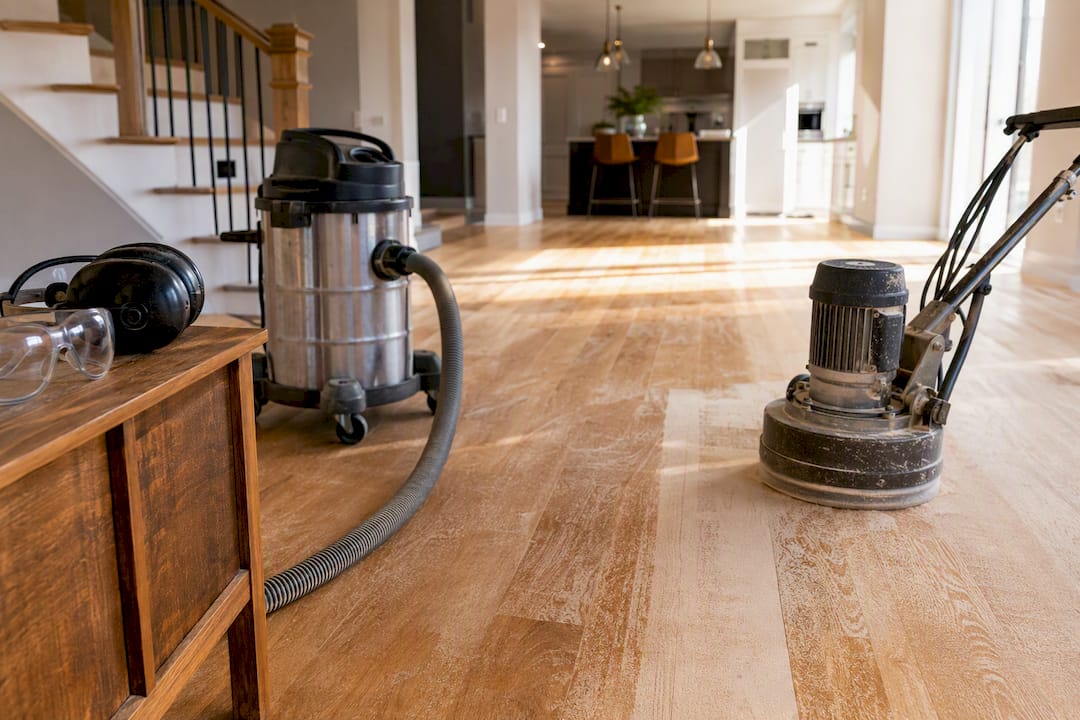
Hiring a pro becomes the smarter call when you’re dealing with strand-woven bamboo, a wear layer under 2 mm, a floor that’s already been sanded once or twice before, or any sign of moisture damage. The margin for error on these floors is thin enough that one wrong pass with a drum sander can cost you the whole floor.
Professionals bring a few real advantages beyond experience:
- Dust containment systems that keep sanding debris from coating your entire house, not just the room you’re working in.
- Edge and corner machines built specifically for tight spaces where a drum sander can’t reach safely.
- Access to UV-cured finishes, which cure in minutes rather than days and aren’t available to most DIYers.
- Insurance and workmanship warranties that protect you if something goes wrong mid-job.
If you decide to get quotes, ask contractors a few pointed questions: Do they follow NWFA sanding guidelines? Can they show photos of past bamboo jobs specifically (not just oak or maple)? Are they insured, and do they carry references? Before calling, take clear photos of the floor, measure your square footage, and note any visible damage, scratches, or discoloration. That prep alone speeds up quoting and gets you a more accurate number. Our own breakdown on DIY versus professional refinishing walks through this decision in more depth.
What Tools and Materials Do You Need for Bamboo Floor Refinishing?
Getting the right gear matters more with bamboo than with standard oak, mostly because bamboo’s hardness and layered construction punish the wrong equipment fast.
Sanders. Skip the heavy drum sander on strand-woven bamboo if you can help it. Drum sanders remove material aggressively and unevenly, and on dense strand-woven planks, that unevenness shows up as visible gouges. A random orbital floor sander or an oscillating floor buffer with sanding screens gives you far more control for the final passes, and many pros use them exclusively on bamboo.
Grit progression. Starting and finishing grits vary by bamboo type and condition:
- Solid bamboo, moderate wear: start around 60 to 80 grit, finish at 100 to 120.
- Strand-woven, light touch-up only: start no coarser than 80 grit, finish at 120.
- Engineered with adequate wear layer: start at 80 grit, finish at 100 to 120.
The NWFA’s technical guidelines recommend a finer final sanding grit for bamboo than you’d typically use on oak, since bamboo’s tighter fiber structure scratches more visibly under coarse abrasives.
Dust control and safety gear. A HEPA-filter shop vac attached directly to your sander cuts airborne dust dramatically. If you’re sanding more than one room, consider negative-pressure containment (plastic sheeting with a box fan exhausting outdoors) to keep dust from migrating through the house. For personal protection, wear an N95 respirator at minimum, safety glasses, and hearing protection since floor sanders run loud for hours at a stretch. Keep tack cloths on hand for the final cleanup pass before finish goes down.
Finish materials. Plan on roughly one gallon of finish per several hundred square feet per coat, though coverage varies by product and applicator. A quality applicator pad, natural bristle brush for edges, and a lint-free roller cover round out the basics. Choose low-VOC, water-based products where possible; the EPA notes that ventilation and low-VOC finishes reduce indoor air quality risks during application, which matters a lot when you’re working in an occupied home.
Step-by-Step: How to Refinish Bamboo Floors
Once you’ve confirmed your floor is a good sanding candidate, here’s the process from start to finish.
1. Prep the room
Move out every piece of furniture, including area rugs and floor vents you can remove. Control the room’s humidity to between 30% and 50% before you start; bamboo is sensitive to moisture swings, and sanding in a humid room can cause the wood to swell slightly, throwing off your finish coat later. If your baseboards are painted a different color or you want the cleanest possible edge, pull them off carefully with a pry bar. Seal doorways to adjacent rooms with plastic sheeting and painter’s tape, because dust travels farther than you’d expect even with a vacuum-attached sander.
2. Sand in stages
Start with your chosen coarse grit (60 to 80 for solid bamboo, no coarser than 80 for strand-woven) and work in the direction of the plank seams, overlapping each pass by a few inches. Move to the next grit only after you’ve fully removed the scratch pattern from the previous one. This usually means two to three grit stages before you land on your final 100 to 120 grit pass.
Edges and corners need separate attention since a full-size sander can’t reach them. Use an edge sander or a random orbital handheld sander, matching the same grit progression as the main floor. Rushing this step is the single most common reason DIY refinishing jobs look uneven along the walls.
3. Clean between every pass
Vacuum thoroughly after each grit change, then wipe with a tack cloth before moving to the next grit. Skipping this step means coarser grit particles get dragged into your finer sanding pass, creating fine scratches that only show up once finish is applied and it’s too late to fix easily.
4. Test your stain (if using one)
Bamboo absorbs stain unevenly compared to oak or maple, largely because of its density and grain direction. Always test stain on an inconspicuous area, like a closet or under an appliance, and let it dry fully before judging the color. If the test patch looks blotchy, a wood conditioner applied before stain can even out absorption. Many bamboo owners skip stain entirely and let a clear finish highlight the natural tone, which also sidesteps the blotching issue altogether.
Pro Tip: If you do stain, apply it with a rag in small sections rather than a brush across the whole floor. Working in sections keeps the stain from drying unevenly before you can wipe off the excess, which is where most blotchy results come from.
5. Apply the finish
Vacuum and tack the floor one final time, then apply your first coat with a lint-free applicator pad, working with the grain. Most bamboo floors need two to three coats of finish for adequate protection. Let each coat dry per the manufacturer’s stated recoat window (water-based finishes typically run 2 to 4 hours; oil-based finishes need much longer), and lightly screen or buff between coats to help adhesion.
Full cure (meaning the point where furniture and rugs are safe to place back) usually takes several days to a couple of weeks depending on the finish type, even though the floor may feel dry to the touch much sooner.
Which Finish Is Best for Bamboo Floors?
Choosing a finish comes down to how much yellowing you can tolerate, how fast you need the room back in use, and whether you’re doing this yourself or hiring it out.
Water-based polyurethane is the go-to choice for most bamboo refinishing projects. It dries clear with minimal yellowing over time, which matters on bamboo’s naturally light tone, and it has a much faster recoat window than oil-based products. The tradeoff is a slightly less warm look and a price point a bit higher per gallon.
Oil-based polyurethane gives bamboo a warmer, amber-tinted look that some homeowners prefer, and it tends to be more forgiving during application for beginners. But it cures far more slowly, often requiring 24 hours or more between coats, and carries higher VOC content. If indoor air quality is a concern, especially in a home with kids, pets, or anyone with respiratory sensitivity, factor that in before choosing it.
UV-cured finishes are essentially a professional-only option since they require specialized curing equipment. The payoff is speed (cured in minutes instead of hours) and exceptional durability, which makes UV-cure a strong option for high-traffic commercial floors or homeowners who can’t be without a room for days.
Hardwax oils sit in a smaller niche. They penetrate the wood rather than sitting on top like polyurethane, giving a more natural, matte look. The catch is maintenance: hardwax oils need periodic reapplication and don’t hold up to heavy traffic as well as polyurethane, so they suit lower-traffic rooms better than busy hallways or kitchens. For a broader breakdown of product options, our guide to wood floor refinish products covers more ground.
Common Refinishing Mistakes and How to Fix Them
Even careful DIYers run into a handful of predictable problems. Here’s what to watch for.
- Over-sanding strand-woven bamboo. Sanding too aggressively exposes the compressed fiber pattern underneath, and this damage is frequently permanent since there’s no clean layer left underneath to recover. Field reports from flooring contractors consistently point to this as the most common way strand-woven jobs go wrong.
- Raised grain after sanding. Water in the air or from cleaning can cause bamboo fibers to swell and stand up slightly. Water-popping (lightly dampening the floor before your final sanding pass) helps knock these fibers down before finish locks them in place.
- Blotchy stain absorption. Bamboo’s density varies slightly across a plank, causing stain to soak in unevenly. A pre-stain wood conditioner usually solves this; if blotching already happened, sometimes a toned finish coat can help visually blend the inconsistency.
- Dust nibs and orange peel texture in the finish. These come from dust settling into wet finish or from applying too thick a coat. Once cured, lightly screen the affected coat with fine-grit sandpaper and apply a fresh coat rather than starting over completely.
Pro Tip: If you spot fiber exposure on strand-woven bamboo mid-sand, stop immediately. Continuing to sand in hopes of “evening it out” almost always makes the damaged area larger rather than fixing it.
How Much Does It Cost to Refinish Bamboo Floors?
Costs vary quite a bit depending on how much work your floor actually needs. Screening and recoating is the budget-friendly option because it skips sanding altogether. Full refinishing costs more since it involves complete sanding and multiple finish coats, and strand-woven jobs often run at the higher end because of the extra care and slower technique required to avoid fiber damage.
| Service | Typical Cost Range | Time Estimate |
|---|---|---|
| Screen and recoat | $1 to $2 per square foot | 1 to 2 days including cure time |
| Full refinish (solid/engineered) | $2.50 to $7 per square foot | 3 to 5 days including sanding, drying, and cure |
| Full refinish (strand-woven premium) | Toward the higher end of the range above | 4 days due to cautious sanding technique |
| DIY materials and rental | Roughly $150 in equipment and finish, excluding your labor | 2 to 4 days depending on room size and experience |
These ranges reflect industry cost surveys and contractor pricing guides, which note that strand-woven jobs cost more specifically because of the slower, more deliberate sanding approach needed to avoid fiber exposure.
If your floor has already been sanded to its limit, shows delamination, or has widespread water damage, replacement often becomes the financially smarter move rather than sinking money into a refinish that won’t hold up. A screen-and-recoat approach without full sanding is worth exploring first if your finish is only superficially worn.
How Do You Maintain Bamboo Floors After Refinishing?
Give your new finish time to fully cure before putting furniture and rugs back, typically several days to two weeks depending on the product label. Rushing this step is one of the easiest ways to leave permanent indentations in a finish that hasn’t hardened all the way through.
For everyday cleaning, stick to a slightly damp microfiber mop and a pH-neutral hardwood cleaner. Avoid abrasive cleaners, vinegar-based solutions, and steam mops entirely. Steam mops in particular push moisture into seams and can cause cupping or delamination over time, undoing the work you just paid for or did yourself.
- Sweep or vacuum (with a hard-floor setting, not a beater bar) a few times a week to prevent grit from scratching the finish.
- Use felt pads under furniture legs and rugs in high-traffic zones.
- Keep indoor humidity in that same 30% to 50% range year-round with a humidifier or dehumidifier as seasons shift.
- Plan on screening and recoating every few years, well before the finish wears through to bare wood, to extend the time before you need a full sand again.
When Does It Make Sense to Call a Professional?
Some bamboo floors are simply better left to someone who does this for a living, and that’s not a knock on your DIY skills. It’s a reflection of how unforgiving strand-woven fiber exposure and thin wear layers really are.
Jrhardwoodfloorrefinishingandcleaning is a locally owned floor care specialist serving the Denver Metro Area and the surrounding Colorado communities, handling everything from full sanding and screen-and-recoat to Instant UV-curable finishing. The team works with eco-friendly products and premium finishes, and offers free over-the-phone quotes based on photos and a quick description of your floor’s condition, so you get a real number before committing to anything.
Consider calling in a pro when you’re facing any of these situations:
- Strand-woven bamboo that’s never been professionally assessed for wear-layer thickness.
- A floor that’s already been sanded once or twice before, leaving little margin for error.
- Visible moisture damage, cupping, or delamination.
- A desire for UV-cured finish, which requires equipment DIYers don’t have access to.
Pro Tip: When you call for a quote, have a few clear, well-lit photos ready along with your room’s approximate square footage. It speeds up the estimate and helps identify whether you’re dealing with a simple screen-and-recoat or a more involved job.
You can browse process videos and real project results on the company’s YouTube channel, and see the full scope of services on the full sanding and refinishing page before you decide which direction fits your floor.
Editorial Take: Where the Conventional Advice Falls Short
Most guides to refinishing bamboo floors treat bamboo like it’s just another hardwood species, and that’s the mistake that gets DIYers into trouble. The construction, not the material, is what actually dictates your limits. A solid bamboo floor and a thin-veneer engineered plank can look nearly identical to the eye and behave completely differently under a sander.
What gets underrated is the water test and the wear-layer check. They take fifteen minutes combined, yet most people skip straight to renting a sander because it feels like the “real” first step. It isn’t. The real first step is figuring out which category your floor falls into, because that answer changes everything downstream.
If there’s one thing to prioritize, it’s restraint on strand-woven bamboo specifically. The damage from over-sanding it doesn’t announce itself gradually. It shows up fast, and it doesn’t reverse.
Get an Expert Assessment Before You Commit to a Sander
If your test patch showed fiber exposure, your wear layer measured thin, or you’d just rather not spend a weekend covered in bamboo dust, Jrhardwoodfloorrefinishingandcleaning gives you a faster path to the same result: a floor that looks new without the trial and error of a first-time DIY sand.

Unlike a rental-sander weekend where mistakes on strand-woven bamboo can mean irreversible damage, our crews assess wear-layer thickness and bamboo type before a single pass of the sander touches your floor. We serve homeowners across the Denver Metro Area and surrounding Colorado communities, using eco-friendly products and premium finishes, including Instant UV-curable options for faster turnaround. Every quote starts with a free phone consultation based on your photos and a quick description of the space, so you know the cost and timeline before we schedule anything.
If your floor fits the DIY profile we outlined above, more power to you. But if you’d rather hand off the risk, especially on strand-woven or previously sanded floors, request your free quote for hardwood floor refinishing and send us a few photos to get started.
Frequently Asked Questions
Can you refinish bamboo flooring the same way you refinish hardwood?
Mostly, yes, but with adjustments. The sanding sequence and finish application follow similar steps to traditional hardwood, but bamboo, especially strand-woven, needs a finer final grit and more caution to avoid exposing fiber patterns.
How many times can you sand bamboo floors before they’re done?
Solid bamboo can typically handle several full sandings over its lifetime, similar to oak. Strand-woven usually maxes out at one to two, and engineered bamboo depends entirely on wear-layer thickness, often just one sanding if the veneer is thin.
What’s the best finish for bamboo floors if I want minimal yellowing?
Water-based polyurethane is the top choice for clarity and resisting yellowing over time. Oil-based finishes add warmth but darken more noticeably as they age.
Is it cheaper to screen and recoat instead of fully refinishing bamboo?
Yes, significantly. Screening and recoating runs roughly $1 to $2 per square foot compared to $2.50 to $7 for a full refinish, and it’s a good first option whenever your finish is worn but the wood underneath is undamaged.
How do I know if my bamboo floor needs replacing instead of refinishing?
Signs like delamination, extensive cupping, wide structural gaps, or a wear layer that’s already been sanded to its limit usually mean replacement makes more financial sense than another refinish attempt.
Sources
For readers who want to go straight to the technical source material, these organizations back much of the guidance in this article:
- What are volatile organic compounds (VOCs)? — EPA
- National Wood Flooring Association (NWFA)
- Bamboo Flooring Refinishing: Real Limits by Type — Bambooscope