 Skip to content
Hardwood floors maintained with proper finishing techniques can last over 25 years under heavy traffic in Denver. That longevity surprises most homeowners and commercial property managers who assume constant wear means constant replacement. This guide reveals how selecting the right materials, applying advanced finishes, and maintaining floors with Denver’s unique climate in mind transforms high-traffic areas into durable, beautiful spaces that protect your investment for decades.
Table of Contents
- Understanding High-Traffic Floor Challenges In Denver
- Choosing The Right Flooring Material For High-Traffic Areas
- Advanced Finishing Technologies To Boost Floor Longevity
- Routine Maintenance Practices For Sustained Floor Health
- Debunking Common Misconceptions In High-Traffic Floor Care
- Real-Life Case Studies And Best Practices From Denver
- Making Informed Floor Care Decisions For Your Property
- Expert Floor Refinishing And Maintenance Services In Denver
- Frequently Asked Questions About High-Traffic Area Floor Care
Key takeaways
| Point | Details |
|---|---|
| Denver’s dry climate accelerates floor wear through moisture loss, UV damage, and dirt accumulation that scratches protective finishes. | |
| Choosing between hardwood, laminate, and luxury vinyl plank balances durability, aesthetics, cost, and resale value based on traffic type and property use. | |
| UV-curable and eco-friendly finishes increase surface hardness and resistance to scratches while reducing harmful emissions and curing time. | |
| Professional refinishing every 3 to 5 years prevents deep damage and extends floor lifespan far beyond DIY maintenance alone. | |
| Common myths about hardwood durability and eco-friendly finishes lead to poor decisions that compromise floor health and appearance. |
Understanding high-traffic floor challenges in Denver
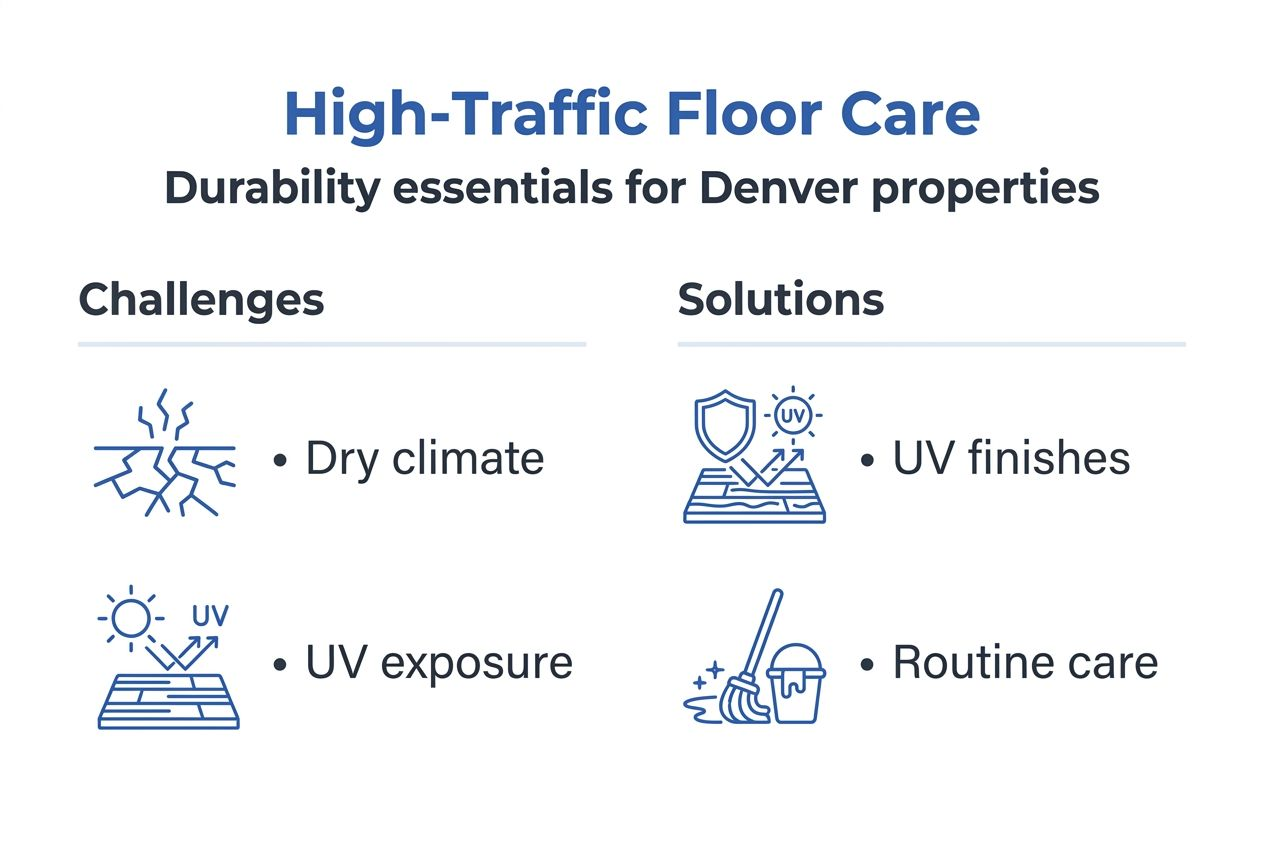
Denver’s environment creates unique obstacles for floors in busy spaces. The city’s dry climate causes floors to lose moisture, leading to cracks and warping without humidity control. Residential high-traffic areas like entryways and hallways face pet claws and dirt tracked from outside, while commercial spaces endure constant foot traffic that wears finishes unevenly.
UV exposure through large windows fades and degrades protective coatings faster than in other climates. Dirt particles act like sandpaper on floor surfaces, grinding away finishes with every step. High foot traffic combined with dirt and UV exposure accelerates wear patterns that destroy floors prematurely.
Understanding these common hardwood floor risks helps you make informed decisions about materials and maintenance. Denver’s altitude and dry air require specific strategies that differ from coastal or humid regions.
Key damage factors include:
- Low humidity causing wood contraction and gaps
- Intense UV radiation breaking down finish chemistry
- Abrasive dirt and sand particles creating surface scratches
- Temperature fluctuations between seasons stressing wood fibers
- Heavy foot traffic concentrating wear in specific zones
Recognizing floor finish durability in Denver requires accounting for these combined environmental stresses. The right approach protects against all threats simultaneously rather than addressing them individually.
Choosing the right flooring material for high-traffic areas
Selecting flooring that withstands Denver’s conditions while meeting aesthetic and budget goals requires understanding material tradeoffs. Hardwood offers timeless beauty and strong resale value but demands proper finishing and maintenance. Laminate provides affordability and scratch resistance but cannot be refinished when worn. Luxury vinyl plank delivers exceptional moisture resistance and durability but may reduce property value.
This comparison clarifies how materials perform under real-world Denver conditions:
| Material | Durability Rating | Moisture Resistance | Maintenance Needs | Resale Impact |
|---|---|---|---|---|
| Hardwood | High with proper finish | Moderate, requires humidity control | Professional refinishing every 3 to 5 years | Increases value 3% to 5% |
| Laminate | Moderate, cannot refinish | Good, but water damage irreversible | Simple cleaning, replace when worn | Neutral to slight decrease |
| Luxury Vinyl Plank | Excellent, highly durable | Excellent, waterproof | Easy maintenance, long lifespan | Reduces value up to 35% versus hardwood |
Pro Tip: Residential properties with pets benefit from hardwood with UV-curable finishes that resist scratches better than laminate, while high-traffic commercial offices may prioritize LVP for its unmatched durability and low maintenance despite aesthetic compromises.
Durability differences matter most in Denver’s dry environment. Hardwood expands and contracts with humidity changes, requiring stable indoor conditions. Laminate handles temperature shifts well but chips easily under heavy impacts. LVP offers superior durability and moisture resistance but lacks the warmth and authenticity buyers seek in premium homes.
Balancing best flooring for high traffic with long-term value means matching material strengths to your property type. Commercial spaces prioritize function over resale, making LVP ideal. Residential properties gain more from hardwood’s aesthetic appeal and refinishing potential.
Consider these decision factors:
- Traffic volume and type: rolling carts versus foot traffic
- Budget for initial installation and ongoing maintenance
- Property value goals and target buyer expectations
- Moisture exposure from spills, pets, or outdoor access
- Desired aesthetic matching architectural style
Understanding hardwood vs laminate flooring economics helps you invest wisely in floors that serve both immediate needs and future plans.
Advanced finishing technologies to boost floor longevity
Modern floor finishes transform hardwood into a high-performance surface that rivals engineered materials in durability. UV-curable finishes cure in minutes rather than days, creating an extremely hard surface that resists scratches and stains far better than traditional polyurethane. This rapid curing minimizes dust contamination and allows immediate use after application.
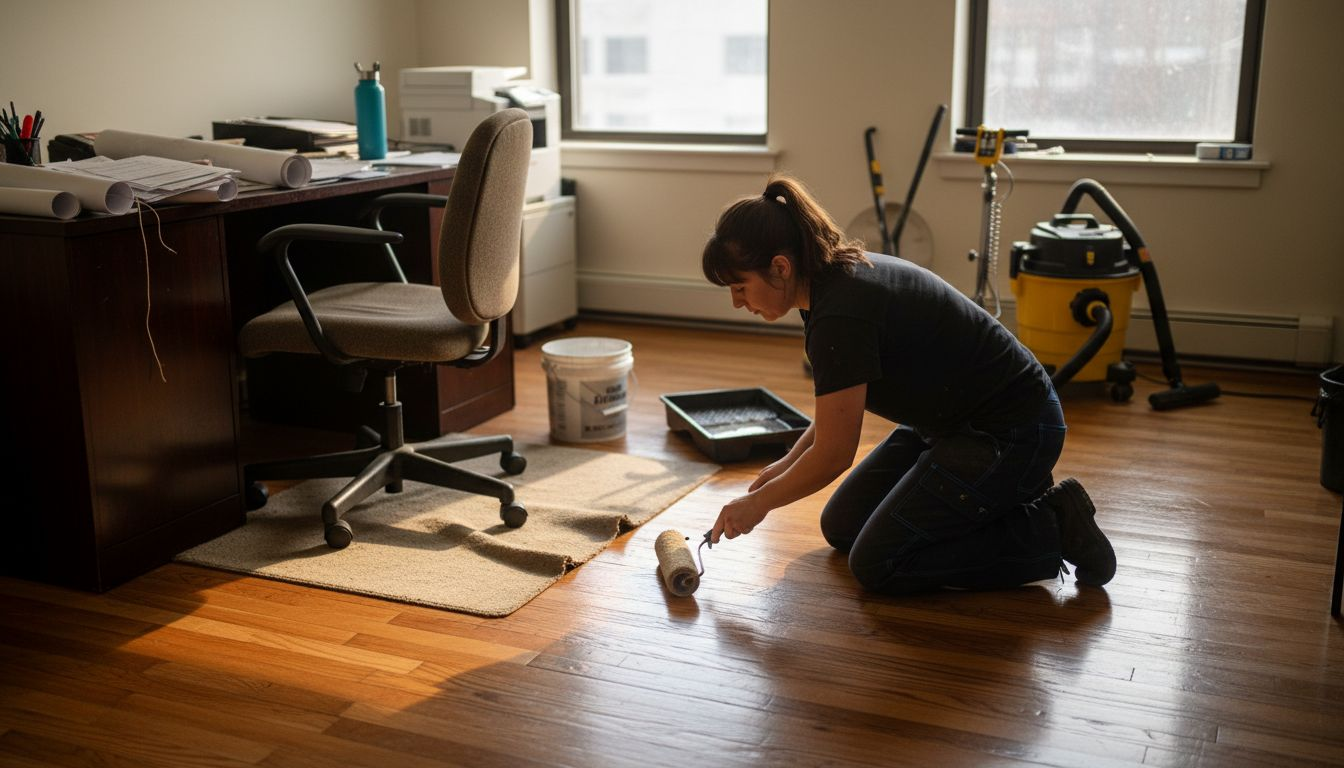
Water-based eco-friendly finishes reduce volatile organic compound emissions by up to 90% compared to oil-based products while maintaining comparable durability. These finishes dry faster, emit less odor, and create healthier indoor air quality without sacrificing protective qualities. Denver’s dry climate accelerates curing times further, making water-based options practical even in humid-sensitive applications.
UV-curable finishes offer rapid curing and increased surface hardness, significantly improving resistance to daily wear. The technology bonds directly to wood fibers at a molecular level, creating a protective barrier that flexes with natural wood movement.
Pro Tip: Pair UV-curable finishes with aluminum oxide additives in high-traffic zones to maximize scratch resistance where foot traffic concentrates, extending time between refinishing cycles from 3 years to 5 years or more.
Protective qualities that extend floor life include:
- Enhanced scratch resistance from harder cured surfaces
- UV blockers preventing sun damage and color fading
- Moisture barriers reducing water penetration and staining
- Chemical resistance protecting against cleaning product damage
- Faster curing reducing downtime and contamination risk
Understanding floor finish durability insights helps you select technologies matched to Denver’s environmental challenges. Advanced finishes address multiple threats simultaneously rather than providing single-function protection.
These technologies prove critical for extending lifespan in high-traffic areas where traditional finishes fail within months. Professional floor care benefits multiply when combining premium materials with advanced finishing systems designed for demanding conditions.
Routine maintenance practices for sustained floor health
Consistent care preserves floor appearance and structural integrity far more effectively than reactive repairs after damage occurs. Denver’s dry climate demands specific maintenance adjustments that differ from standard recommendations.
Follow this maintenance routine to maximize floor longevity:
- Sweep or vacuum daily using soft-bristle attachments to remove abrasive dirt before it scratches finishes
- Damp mop weekly with pH-neutral hardwood cleaners, avoiding excess water that penetrates seams
- Monitor indoor humidity levels, maintaining 35% to 55% year-round using whole-home humidifiers in winter
- Place protective mats at entrances to trap dirt and moisture before reaching floors
- Trim pet nails regularly and use furniture pads to prevent scratches from moving chairs
- Schedule professional refinishing every 3 to 5 years before visible wear reaches wood
Pro Tip: Schedule refinishing proactively when finishes show light dulling rather than waiting for deep scratches that require full sanding, saving 40% to 60% in restoration costs while maintaining appearance.
Humidity control prevents the seasonal expansion and contraction that creates gaps and cupping. Denver’s winter humidity often drops below 20%, causing wood to shrink and crack. Portable or whole-home humidifiers stabilize moisture levels, protecting your investment.
Avoid these common maintenance mistakes:
- Using steam mops or excessive water that warps wood and damages finishes
- Applying wax or oil-based products over modern polyurethane finishes
- Ignoring humidity levels and allowing extreme seasonal fluctuations
- Delaying refinishing until deep scratches expose bare wood
- Using harsh chemicals or abrasive cleaning tools that strip protective coatings
Commercial floor maintenance Denver strategies differ from residential care due to higher traffic volumes requiring more frequent professional cleaning and refinishing cycles. Understanding benefits of floor refinishing helps you time interventions for maximum protection and minimum cost.
Debunking common misconceptions in high-traffic floor care
Misunderstandings about flooring lead property owners to make costly mistakes that shorten floor life and increase maintenance expenses. Clearing up these myths enables smarter care decisions.
Myth: Hardwood floors always wear out faster than laminate in high-traffic areas. Modern hardwood with UV-curable finishes and aluminum oxide additives matches or exceeds laminate durability while offering refinishing options that extend lifespan decades beyond laminate’s replacement timeline.
Myth: Eco-friendly finishes sacrifice durability for environmental benefits. Current water-based formulations perform identically to traditional oil-based products in scratch resistance and longevity while reducing harmful emissions and curing faster.
Myth: Frequent refinishing damages hardwood and should be avoided. Professional refinishing every 3 to 5 years removes only a thin finish layer through screening rather than deep sanding, preserving wood thickness while preventing damage from reaching the substrate.
Clarifying these misconceptions:
- Advanced hardwood finishes outperform many engineered alternatives in real-world durability tests
- Eco-friendly products meet or exceed performance standards while improving indoor air quality
- Regular professional maintenance costs less than major restoration after neglect
- Modern finishing technology makes hardwood practical for demanding commercial applications
- Proper care makes hardwood a lifetime investment rather than a replacement cycle
Understanding hardwood vs laminate myths prevents choosing inferior materials based on outdated information. Professional floor care myths discourage owners from investing in maintenance that would save thousands in replacement costs.
Informed decisions based on current technology and proven practices protect floors better than assumptions rooted in past limitations.
Real-life case studies and best practices from Denver
Local examples demonstrate how proper care and professional refinishing deliver measurable results in Denver’s challenging climate. A Boulder commercial office refinished their oak floors with UV-curable finishes in early 2024, reducing visible scratches by 70% over 18 months compared to their previous polyurethane-coated floors. The harder finish withstood constant employee foot traffic and rolling desk chairs without showing wear.
A Parker residential property with two large dogs maintained laminate floors through daily sweeping and humidity control, avoiding gaps and edge damage common in dry climates. The homeowners scheduled professional deep cleaning annually, preserving appearance and preventing grit buildup that would have scratched the surface.
These cases prove that combining appropriate materials with consistent maintenance and professional refinishing creates durable, attractive floors regardless of traffic levels. Data from multiple Denver properties shows professional care extends floor life an average of 40% beyond DIY maintenance alone.
Best practices from successful local installations:
- Start with quality materials matched to specific traffic patterns and environmental conditions
- Invest in advanced finishes that address multiple threats simultaneously
- Maintain consistent humidity levels year-round using automated systems
- Schedule professional refinishing on fixed intervals before damage appears
- Document floor condition with photos to track wear patterns and adjust care routines
Understanding floor restoration case studies from similar Denver properties helps you anticipate challenges and plan effective solutions. Exploring floor restoration options Denver reveals the range of professional services that address specific damage types and preservation goals.
These real-world results confirm that informed material selection and proactive professional care deliver superior outcomes compared to reactive repairs and budget shortcuts.
Making informed floor care decisions for your property
Effective high-traffic floor care requires balancing multiple factors specific to Denver’s environment and your property type. Synthesizing the insights above into actionable guidance ensures your floors perform beautifully for decades.
Key decision factors:
- Match flooring materials to traffic volume, moisture exposure, and resale value priorities
- Select finishes with UV blockers and hardness ratings appropriate for your specific wear patterns
- Establish maintenance routines addressing Denver’s dry climate through humidity control and gentle cleaning
- Schedule professional refinishing proactively rather than waiting for visible damage
- Budget for long-term care rather than minimizing upfront costs at the expense of durability
Residential properties benefit most from hardwood with premium finishes that enhance home value while withstanding family activities and pets. Commercial spaces gain efficiency from materials like LVP that minimize maintenance downtime and replacement frequency.
Understanding flooring choice guidance helps you weigh immediate costs against lifetime value. Recognizing floor refinishing benefits shows how preventive care costs far less than emergency restoration.
Local environmental factors make generic flooring advice inadequate for Denver properties. Humidity control matters more here than in coastal regions. UV protection proves critical with high-altitude sun exposure. Professional expertise tailored to Colorado conditions ensures your investment delivers expected performance and appearance.
Take action by assessing your current floors, identifying specific challenges from traffic patterns and climate exposure, and developing a comprehensive care plan that includes professional refinishing on a schedule matched to wear rates. Proactive decisions based on accurate information protect your investment and maintain beautiful floors year after year.
Expert floor refinishing and maintenance services in Denver
J.R. Hardwood Floor Refinishing & Cleaning brings specialized expertise to high-traffic floor care across Denver Metro Area properties. Professional refinishing removes scratches, restores protective finishes, and extends floor life far beyond what DIY methods achieve. Our UV-curable finishing technology delivers commercial-grade durability while minimizing downtime, and eco-friendly products ensure healthy indoor air quality.
Whether you manage a busy commercial office requiring durable floors or own a family home needing pet-resistant surfaces, our team provides solutions matched to your specific traffic patterns and environmental conditions. We offer free phone quotes, clear scheduling, and detailed guidance on maintaining floors between professional services. From full refinishing to screen and recoat maintenance, our comprehensive services protect your investment and preserve appearance. Explore our hardwood floor refinishing professional service comparison to understand quality differences, review our hardwood floor refinishing guide for process details, or discover our complete floor refinishing and cleaning services designed for Denver’s unique climate challenges.
Frequently asked questions about high-traffic area floor care
What flooring material lasts longest in Denver high-traffic areas?
Hardwood with UV-curable finishes and aluminum oxide additives lasts longest, offering 25-plus years of service with professional refinishing every 3 to 5 years. LVP provides comparable durability but cannot be refinished and offers lower resale value despite excellent moisture resistance.
How often should I refinish hardwood floors under heavy foot traffic?
Schedule professional refinishing every 3 to 5 years depending on traffic volume and finish type. UV-curable finishes extend this interval toward 5 years, while traditional polyurethane may require attention closer to 3 years in demanding conditions.
Are eco-friendly floor finishes effective in durability and appearance?
Modern water-based eco-friendly finishes match traditional oil-based products in scratch resistance and longevity while reducing VOC emissions by up to 90%. They cure faster and maintain clarity better, making them ideal for Denver’s dry climate.
Can professional refinishing prevent scratches and wear better than DIY?
Professional refinishing applies premium finishes with specialized equipment that creates harder, more uniform protective layers than DIY methods. Hardwood refinishing professional vs DIY approaches show professionals achieve 40% to 60% better durability through proper surface preparation and controlled application.
What maintenance changes should I make for dry Denver climate?
Maintain indoor humidity between 35% and 55% year-round using humidifiers to prevent wood shrinkage and cracking. Increase cleaning frequency to remove abrasive dirt before it scratches finishes, and schedule professional refinishing proactively before Denver’s intense UV exposure degrades protective coatings.