 Skip to content
TL;DR:
- Using improper cleaning products can cause irreversible damage to floors by eroding finishes and trapping dirt. VOCs from floor cleaners also degrade indoor air quality and pose long-term health risks. Choosing pH-neutral, floor-specific cleaners and ensuring proper ventilation protects both your floors and indoor air health.
Most homeowners grab whatever is under the sink and call it a cleaning day. That “multi-surface” spray might look perfectly safe, but the impact of cleaning products on floors is far more specific and far more damaging than the label lets on. The wrong cleaner does not just leave a dull surface. It strips protective finishes, creates residue films that trap dirt, releases chemicals into your indoor air, and quietly shortens the life of your flooring. This guide walks you through exactly what is happening at the chemical level, which floor types are most vulnerable, and how to clean smarter starting today.
Table of Contents
- Key Takeaways
- How cleaning products affect different floor types
- Health and indoor air quality effects
- Common damage from improper cleaning
- Selecting and using floor cleaners safely
- My take on cleaning products and floor longevity
- Let Jrhardwoodfloorrefinishingandcleaning protect your floors
- FAQ
Key Takeaways
| Point | Details |
|---|---|
| Chemistry matters by floor type | Alkaline and acidic cleaners affect hardwood, laminate, and vinyl very differently. |
| VOCs threaten indoor air quality | Common floor cleaners release chemicals that can accumulate to harmful levels indoors. |
| Damage is cumulative and hidden | Early floor damage from improper cleaners is invisible until it becomes irreversible. |
| pH-neutral cleaners are the safe choice | Non-ionic, fully rinsing formulas protect finish integrity and avoid residue build-up. |
| Ventilation is non-negotiable | Airing out your space after every cleaning session protects your family’s respiratory health. |
How cleaning products affect different floor types
Not all floors are built the same, and they definitely do not respond the same way to cleaning chemicals. The key factor is pH. Cleaners below 7 are acidic, above 7 are alkaline, and right at 7 is neutral. Your floor’s finish has a very narrow tolerance, and pushing outside that range causes real damage.
Hardwood floors are sealed with polyurethane or similar resin-based finishes. These finishes are vulnerable to alkaline cleaners. Frequent alkaline cleaning at around pH 11.5 shortens hardwood finish lifespan by 30 to 45 percent. That is not a dramatic one-time disaster. It is a slow erosion happening every time you mop with the wrong product.
Laminate and vinyl floors have a protective aluminum oxide wear layer on top. This layer is their entire defense system. Acidic cleaners like vinegar and lemon-based solutions at around pH 2.5 erode this coating and cause dullness that cannot be buffed away. Once that wear layer is gone, no amount of cleaning restores it. You are left with a floor that looks permanently tired.
Stone and tile floors seem tough, but grout and certain stones like marble and travertine are highly sensitive to acids. Acidic cleaners dissolve the calcium carbonate in natural stone and etch the surface, leaving a matte patch where the shine used to be.
Here is a quick reference for compatibility:
| Floor Type | Safe pH Range | Avoid | Risk of Wrong Cleaner |
|---|---|---|---|
| Hardwood | 6.5 to 7.5 | Alkaline (pH 9+) | Finish degradation, cloudiness |
| Laminate | 6.5 to 8 | Acids (pH below 6) | Wear layer erosion, dullness |
| Vinyl / LVP | 7 to 8 | Acids, oil-based cleaners | Surface clouding, residue film |
| Natural stone | 7 to 8 | Any acid | Etching, permanent surface dull |
| Ceramic tile | 5 to 9 | Oils, wax-based cleaners | Grout staining, residue build-up |
Pro Tip: Before switching to any new floor cleaning product, check the cleaner’s pH on the label or manufacturer’s website. If the pH is not listed, that is a red flag. A quality, floor-specific cleaner will always disclose this.
Health and indoor air quality effects
Your floors cover more square footage than any other surface in your home. So when you apply a cleaning product to them, you are essentially coating your entire living space with that chemistry. The health implications are real.
Common floor cleaners emit VOCs that worsen indoor air pollution. EPA data shows that indoor air can be 2 to 5 times more polluted than outdoor air, partly because of cleaning chemicals. Ammonia, a common ingredient in many floor cleaners, is a known respiratory irritant. When you mop a large kitchen or hallway floor and walk away, that ammonia sits in your air.
The long-term picture is alarming. A 20-year study tracking over 6,000 individuals found that frequent chemical cleaner use correlates to lung function decline comparable to smoking a pack of cigarettes daily for 10 to 20 years. That is not a number to shrug off, especially for property managers running high-traffic commercial spaces where cleaning happens daily.
Certain rooms make this worse. Bathrooms present the highest risk for chemical exposure because warm, humid conditions accelerate evaporation, which means VOC concentration rises faster and lingers longer. Bleach and ammonia in a small bathroom with the door closed is a serious exposure event.
Here is what to watch for and do:
- Choose certified low-VOC or zero-VOC products labeled for your specific floor type.
- Open windows and run exhaust fans during and after every cleaning session.
- Ventilate for at least 15 minutes after cleaning to reduce chemical accumulation, even with non-toxic products.
- Keep children and pets out of freshly cleaned rooms until the floor is fully dry and the air has cleared.
- Avoid mixing products. Bleach plus ammonia creates chloramine gas. It sounds extreme, but it happens in homes more often than people realize.
Choosing environmentally friendly floor cleaners is not just better for the planet. It is directly better for the air you and your family breathe every single day.
Common damage from improper cleaning
Floor damage is cumulative and microscopic in the early stages. You will not notice it after the first few bad cleaning sessions. By the time it becomes obvious, the damage is usually permanent without professional refinishing.
The three most common culprits are excess water, residue build-up, and pH-related finish breakdown.
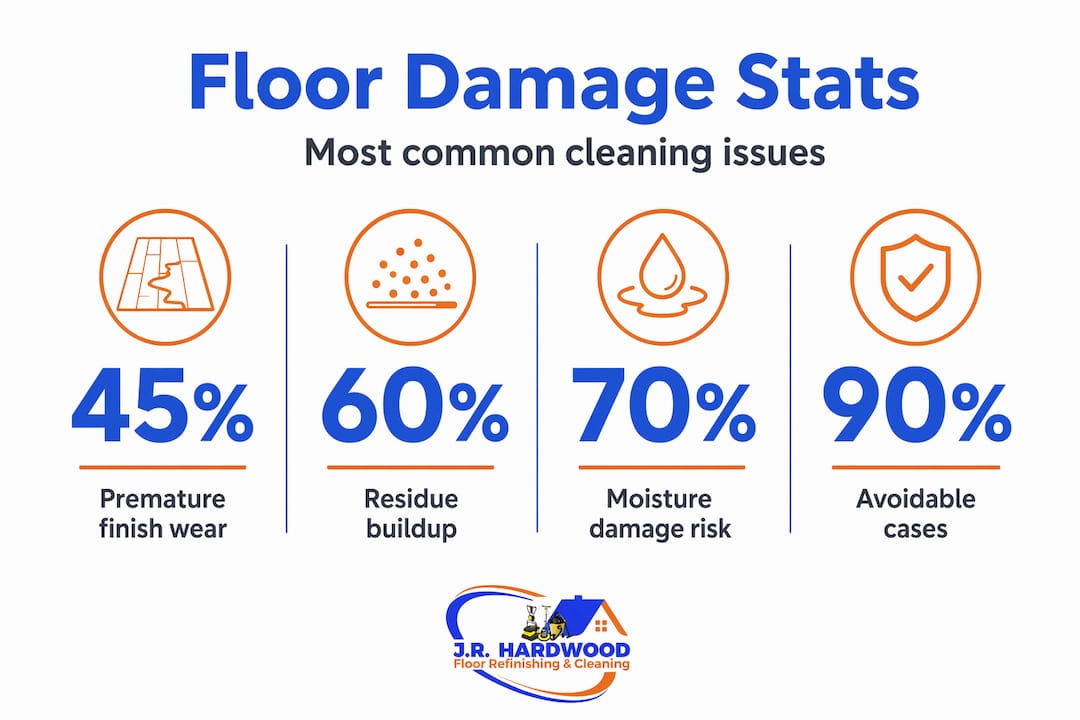
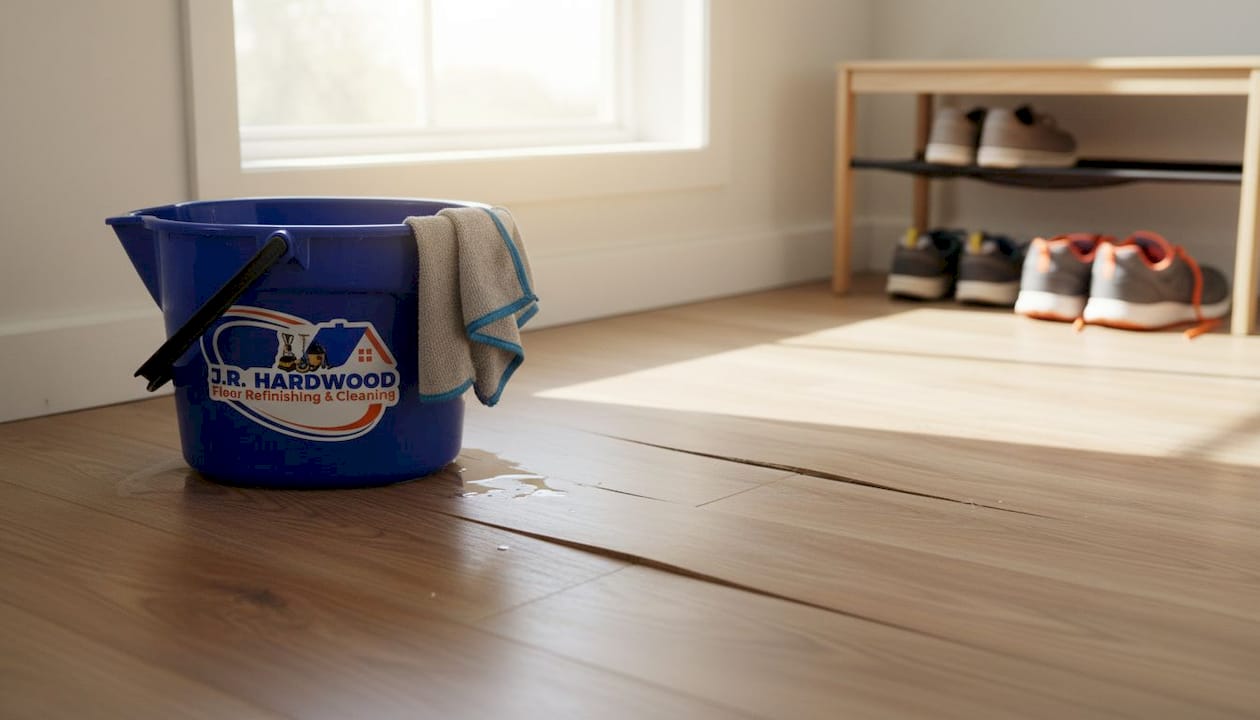
Excess moisture is probably the most underestimated threat to hardwood and laminate. Soaking mop usage causes swelling, finish delamination, and surface warping. Professional standards prohibit steam mops and saturated cleaning methods on hardwood specifically because water expands wood fibers in ways that cannot be reversed.
Residue films are the sneaky villain in this story. Hydrophobic surfactant residues from certain cleaners persist in the micro-pores of your floor, increasing dust adhesion and creating cloudiness. If your floors look sticky after mopping or attract more dirt than before, that is residue, not dirt. Many homeowners clean damaged surfaces by adding more cleaner, which compounds the problem.
pH-related micro-etching happens slowly. Alkaline or acidic products do not visibly scratch your floor. They chemically weaken the finish layer so that everyday foot traffic causes micro-abrasions that would not otherwise occur. The floor starts to look dull in the center of high-traffic paths, which most people attribute to wear. Often, it is accelerated chemical damage.
Here are the top mistakes to stop making right now:
- Using a soaking wet mop on hardwood or laminate. Wring your mop until it is barely damp. The floor should dry within a few minutes.
- Applying undiluted cleaners. Even floor-specific products should be diluted per instructions. More product does not mean cleaner floors.
- Cleaning over residue without rinsing first. If you have residue build-up, address it with a proper residue remover before returning to your regular routine.
- Using the same product on every floor type. Your hardwood, tile, and vinyl all need different chemistry.
- Skipping the test patch. Test new cleaners on an inconspicuous area first. Early signs of incompatibility include darkening, cloudiness, and increased dust sticking.
Pro Tip: Think of your floor’s finish like sunscreen on your skin. Using the wrong product strips that protective layer. Once it is gone, the surface underneath is exposed and vulnerable to everything.
Selecting and using floor cleaners safely
The good news is that choosing the right floor cleaning solutions does not need to be complicated. The guidelines are straightforward once you know what to look for.
For most flooring types, these principles hold:
- pH-neutral is your baseline. pH-neutral, fully rinsing cleaners preserve finish integrity and avoid both residue build-up and VOC concerns.
- Look for non-ionic formulas. These are less likely to leave the surfactant films that dull floors over time.
- Use the right tool. Microfiber mops apply product evenly and require less liquid than string mops, which is better for every floor type.
- Dilute properly every time. A half-cap too much product over dozens of cleaning sessions adds up to visible residue and finish damage.
- Skip oil soaps on finished hardwood. Despite their natural reputation, oil-based cleaners leave hydrophobic films that attract dust and cause cloudiness. They are appropriate only for unfinished or oil-treated wood floors.
- For tile and stone, choose specialty formulas. A dedicated stone and tile cleaner at a neutral pH protects grout and stone surfaces without etching.
- Go eco-friendly where you can. Products certified as non-toxic and biodegradable are generally safer for your floors and your air. Check out how floor maintenance routines can make a real difference in long-term durability.
For laminate specifically, the list of things to avoid is long. Vinegar, steam mops, wax-based cleaners, and anything with a buffing agent are all off the table. A little warm water with a pH-neutral cleaner on a nearly dry mop is genuinely all you need. For more detail, laminate cleaning steps make the process easy to follow without guessing.
Quick comparison of cleaning approaches
| Cleaning Approach | Floor Durability Impact | Air Quality Impact | Best For |
|---|---|---|---|
| pH-neutral, non-ionic cleaner | Preserves finish long-term | Low VOC risk | All floor types |
| Alkaline multi-surface spray | Degrades hardwood finish over time | Moderate VOC, ammonia risk | Hard surfaces only, not floors |
| Acidic (vinegar, lemon) | Erodes wear layer on laminate and vinyl | Low chemical risk but damages floor | Avoid on most flooring |
| Oil soap or wax-based cleaner | Creates residue film | Low direct VOC | Unfinished wood only |
| Steam mop | Causes swelling and delamination | No chemical VOC | Avoid on wood and laminate |
For any floor type, the pattern is the same. Low pH (meaning acidic cleaners) and high pH (meaning alkaline cleaners) both cause damage through different mechanisms. Neutral chemistry applied with minimal moisture and good ventilation is the formula that protects both your floors and your air.
My take on cleaning products and floor longevity
I have walked through hundreds of homes where the floors looked old before their time, and the culprit was almost never wear. It was cleaning. I have seen beautiful oak floors stripped of their finish by a homeowner using the same alkaline bathroom cleaner on everything. I have seen vinyl plank floors turned permanently cloudy by weekly vinegar mopping, because the person read a DIY blog that called it a “natural solution.”
What frustrates me most is that the damage is invisible early on. People think they are doing the right thing. They are mopping regularly, keeping things tidy, and buying products that say “cleans all surfaces.” By the time the floor looks wrong, we are usually talking about a full refinish or even replacement.
The connection between cleaning and indoor health is also something I think gets buried under the floor durability conversation. You are not just protecting your floors. You are protecting the air your kids breathe while they play on that floor.
My honest advice: treat floor maintenance like hardwood floor care. Be specific, be consistent, and use the right product for each surface. The floors that come through our doors for refinishing that still have life in them almost always belong to homeowners who paid attention to this.
— J.R.
Let Jrhardwoodfloorrefinishingandcleaning protect your floors
If you have been using the wrong products and your floors are showing the signs, cleaning better from here forward helps. But some damage requires professional attention to truly restore what was lost.
At Jrhardwoodfloorrefinishingandcleaning, we specialize in reversing the kind of damage that years of improper cleaning causes. Our team serves homeowners and property managers across Denver, Parker, Castle Rock, Boulder, and Colorado Springs with services ranging from screen and recoat to full sanding and restoration. We use eco-friendly finishes and products matched specifically to your floor type and condition. Whether you need to understand your refinishing options or want a full floor restoration that brings your space back to life, we are here to help. Call us for a free over-the-phone quote and get expert guidance tailored to your floors today.
FAQ
Do alkaline cleaners damage hardwood floors?
Yes. Alkaline cleaners used weekly can shorten hardwood finish lifespan by 30 to 45 percent through resin degradation, based on adhesion testing standards.
What cleaning products are safe for laminate floors?
pH-neutral, non-ionic cleaners applied with a barely damp mop are safe. Avoid vinegar, steam, wax-based products, and anything with a buffing agent.
How do cleaning products affect indoor air quality?
Many floor cleaners emit VOCs that make indoor air 2 to 5 times more polluted than outdoor air. Ventilating for at least 15 minutes after cleaning reduces this risk significantly.
Why do my floors look cloudy after mopping?
Cloudiness is almost always caused by surfactant residue from cleaning products, not dirt or wear. Switching to a fully rinsing, pH-neutral cleaner and using less product usually resolves it.
How do I know if a cleaner is safe for my floor type?
Check the pH on the label and look for floor-specific certification. Test any new product on a small, hidden area and watch for darkening, stickiness, or cloudiness before using it widely.