 Skip to content
TL;DR:
- Hardwood restoration in Denver costs between $3 and $12 per square foot, depending on damage and service type. Proper assessment and choosing the right service prevent unnecessary expenses and protect your investment.
The cost of hardwood restoration in the Denver area runs $3 to $12 per square foot, depending on how much work your floors actually need. That wide range exists because “restoration” covers everything from a light buff and recoat to full sanding with board replacement. Labor accounts for roughly 80% of the total bill, so understanding what drives that number puts you in control of your budget. This guide breaks down every cost factor, compares service types side by side, and gives you the tools to get the most from your investment.
What is the cost of hardwood restoration in the Denver area?
Hardwood floor restoration is the industry term for returning worn, scratched, or damaged wood floors to a like-new condition. It ranges from cosmetic refinishing to structural repairs, and the service you need determines where you land on the price scale.
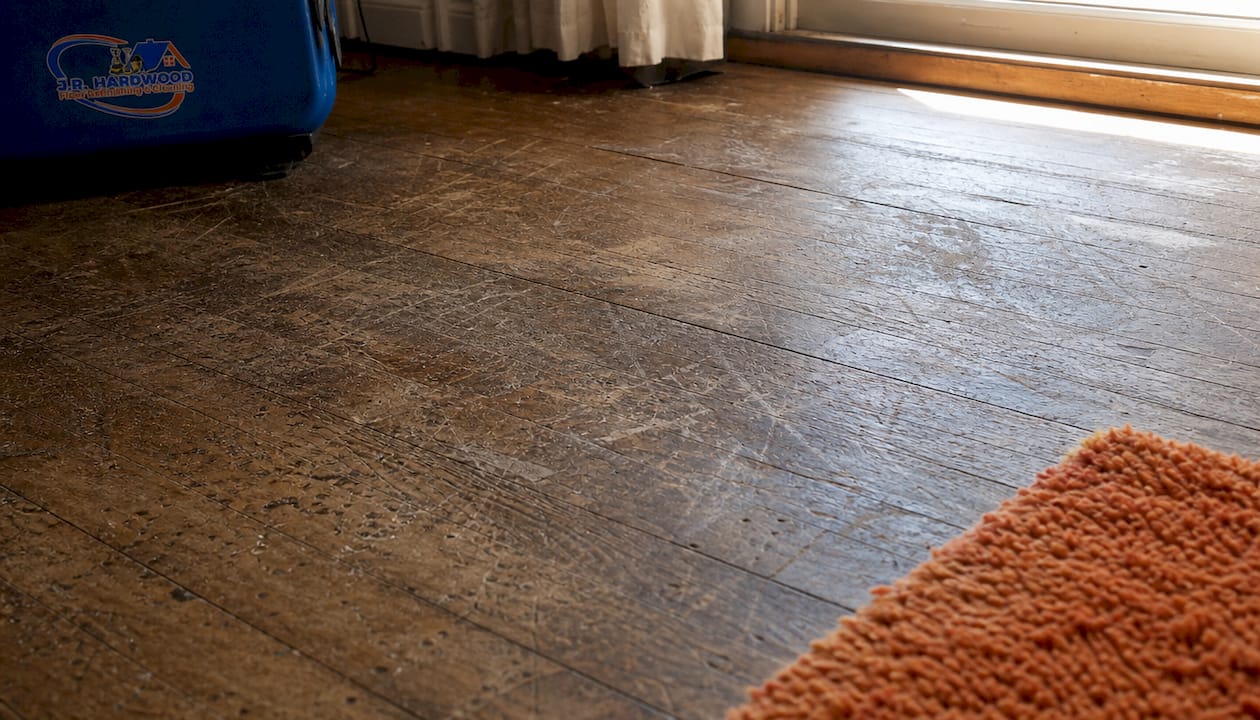
Full restoration costs $5 to $12 per square foot, while lighter services like screen and recoat sit closer to $2 to $4 per square foot. A 300-square-foot room requiring complete restoration typically runs $1,500 to $3,600. That is a meaningful investment, and it pays to know exactly what you are buying before you sign anything.
Denver adds one more layer to the math. Denver homeowners budget for 9.15% sales tax on materials, which adds up on larger jobs. Labor rates in the metro area reflect the region’s higher cost of living, so Denver hardwood repair pricing tends to run at the upper end of national averages.
What factors influence the cost of hardwood floor restoration in Denver?
Several variables push your quote up or down. Knowing them helps you ask the right questions when you call for estimates.
- Labor rates. Pros in Denver charge $2.50 to $7 per square foot for labor alone. Since labor is roughly 80% of the total cost, even a small hourly rate difference changes your final number significantly.
- Extent of damage. A floor with surface scratches needs cosmetic refinishing. A floor with cupped boards, deep gouges, or rot needs structural repairs. Distinguishing cosmetic refinishing from structural restoration is the single most important step before any work begins.
- Floor size and layout. Larger rooms cost more in total but often less per square foot. Tight spaces, stairs, and awkward angles add labor time and push the per-foot rate up.
- Finish and stain choices. Water-based polyurethane costs more than oil-based but dries faster and emits fewer fumes. Custom stain colors add material and labor time.
- Dustless refinishing technology. Dustless systems require specialized containment and handling, which places them at the higher end of pricing. The tradeoff is a cleaner job site and less post-work cleanup.
- Local taxes. Denver’s 9.15% sales tax applies to materials. On a mid-range job, that can add $100 to $300 to your total.
Pro Tip: Ask every contractor to separate labor and material costs in their quote. That breakdown tells you whether you are paying a fair rate or getting bundled pricing that hides markup.
What are the typical hardwood restoration services and their costs?
Three main service tiers cover most residential and commercial hardwood restoration needs in Denver. Choosing the right one saves you money and protects your floor.
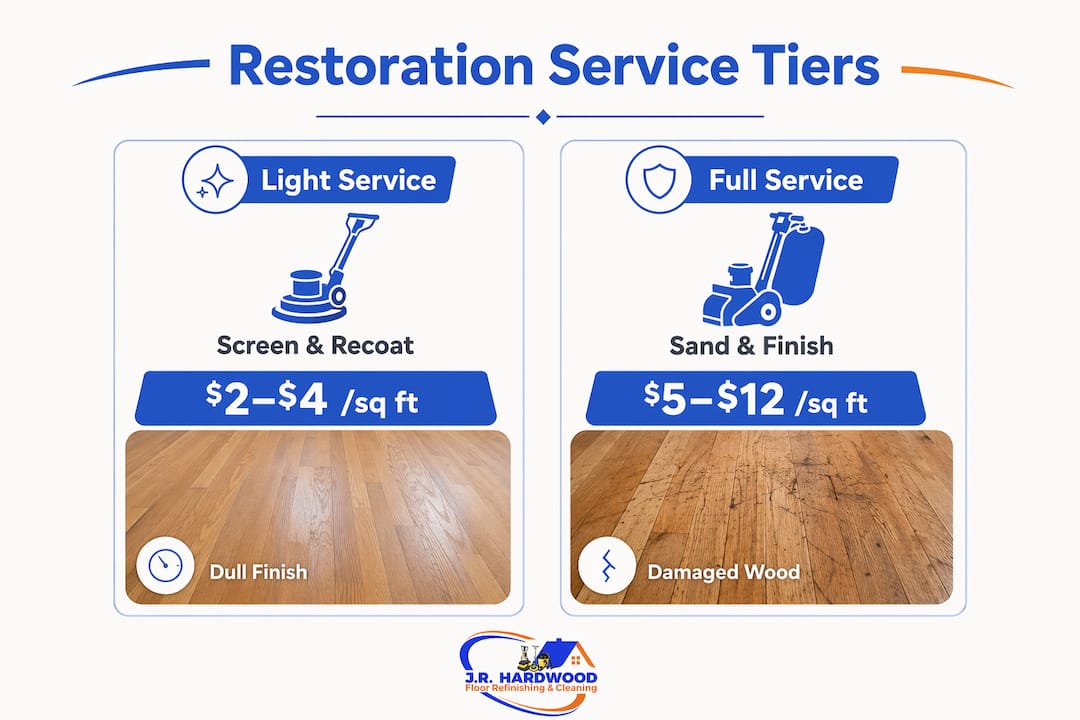
Screen and recoat (buff and coat)
Screen and recoat is the lightest service. A technician scuffs the existing finish with a buffer, then applies a fresh coat of finish on top. No sanding down to bare wood occurs. Screen and recoat typically costs $2 to $4 per square foot and works best on floors that look dull but have no exposed wood or deep scratches. Think of it as a spa day for your floors, not a full reset. For a 300-square-foot living room, expect to pay $600 to $1,200. Learn more about when this service fits your floor’s condition before booking.
Full sand and finish
Full sanding removes the old finish entirely and sands the wood down to a fresh surface. A new stain and finish are then applied. Full sanding and refinishing ranges from $3 to $8 per square foot, making it the right call for floors with visible scratches, uneven color, or worn-through finish in high-traffic areas. A 300-square-foot room runs $900 to $2,400. This is the most common service Jrhardwoodfloorrefinishingandcleaning performs for Denver homeowners who want a genuine reset.
Heavy sanding with repairs and board replacement
This is full restoration. It includes everything in a full sand and finish, plus board replacement, subfloor repairs, and gap filling where needed. Full restoration with board replacement can reach $12 per square foot, and board replacement materials and labor add $5 to $15 per square foot installed. A 300-square-foot room at this level costs $1,500 to $3,600. This service makes sense when damage is structural, not just cosmetic.
| Service type | Cost per sq ft | Best for |
|---|---|---|
| Screen and recoat | $2–$4 | Dull finish, no exposed wood |
| Full sand and finish | $3–$8 | Scratches, worn finish, color change |
| Heavy sanding with repairs | $5–$12 | Structural damage, board replacement |
Pro Tip: Choosing the wrong restoration method is one of the most expensive mistakes homeowners make. Unnecessary full sanding removes wood you can never get back. Always get a condition assessment before committing to a service tier.
How to prepare for your hardwood floor restoration project in Denver
Good preparation cuts surprises on both sides of the job. Here is a practical checklist to get you ready.
- Assess your floor’s condition honestly. Walk the floor and note scratches, dull patches, cupping, squeaks, and any boards that feel soft or spongy. Photos help enormously when calling for quotes.
- Get at least two local estimates. Jrhardwoodfloorrefinishingandcleaning offers free over-the-phone quotes based on verbal descriptions and photos. Use that option to compare pricing without scheduling multiple in-home visits.
- Clear the space completely. Move all furniture, rugs, and fragile items before the crew arrives. Most contractors do not include furniture moving in their base quote.
- Plan for dry time. A screen and recoat needs 24 hours before light foot traffic. A full sand and finish needs 48 to 72 hours. Heavy restoration with multiple coats can take three to five days. Plan accordingly, especially for commercial spaces.
- Ask about eco-friendly finishes. Colorado’s dry climate and altitude affect how finishes cure. Water-based finishes cure faster in Denver’s low humidity and produce fewer fumes, which matters if you have kids or pets.
- Verify licensing and insurance. A reputable Denver contractor carries general liability insurance and can show proof on request. This protects you if anything goes wrong during the job.
Pro Tip: Timing matters more than most homeowners realize. Spring and fall in Denver offer moderate humidity levels, which help finishes cure evenly. Avoid scheduling restoration during the driest winter months if possible.
Cost-saving tips to get the most from your restoration investment
Restoration is a long-term investment. These strategies help you spend wisely and protect that investment for years.
- Match the service to the damage. Screen and recoat suits dull finish without exposed wood, while full sanding suits damaged floors. Paying for full sanding when a recoat would do wastes money and wood.
- Maintain regularly between restorations. A clean and buff service every one to two years keeps your finish in good shape and delays the need for full sanding. Regular maintenance is the cheapest restoration you can do.
- Consider dustless refinishing for occupied spaces. Dustless refinishing costs more upfront but reduces cleanup time and keeps your home or business cleaner during the process. For commercial spaces, that reduced downtime often pays for itself.
- Bundle rooms when possible. Contractors price larger jobs at a lower per-square-foot rate. If two rooms need work, doing them together almost always costs less than two separate visits.
- Weigh DIY carefully. DIY hardwood restoration can reduce costs to $2 to $8 per square foot, but it requires skill, equipment rental, and significant time. A poor DIY sanding job can permanently damage your floor. Read the DIY vs. professional comparison before deciding.
- Choose a durable finish the first time. A premium water-based polyurethane costs more upfront but lasts longer than budget alternatives. Spending a little more on finish now means fewer recoats later.
What I have learned about hardwood restoration costs in Denver
Working with Denver floors for years has taught me one thing above all else: most homeowners underestimate the scope of what their floors actually need. They call asking for a screen and recoat, and when we look at the floor, it needs a full sand. That gap between expectation and reality is where budgets blow up.
The Denver market has its own quirks. Our altitude and dry climate mean finishes behave differently here than in humid cities. Water-based products cure faster, which is great for scheduling, but they also raise the grain more aggressively on older wood. An experienced local crew knows how to account for that. A contractor who learned their trade in a humid climate may not.
I also see homeowners skip the condition assessment to save time, then end up paying for the wrong service. Accurate floor assessment is not optional. It is the foundation of every good restoration quote. The five minutes you spend walking the floor with a professional saves you hundreds of dollars and weeks of regret.
The best investment you can make is not in the fanciest finish or the most aggressive sanding. It is in finding a local crew that tells you the truth about what your floor needs, then does exactly that work, nothing more and nothing less.
— J.R.
Jrhardwoodfloorrefinishingandcleaning: local Denver restoration you can count on
Jrhardwoodfloorrefinishingandcleaning serves homeowners and business owners across the Denver Metro Area, from Parker and Castle Rock to Boulder and Colorado Springs. We offer free over-the-phone quotes based on your description and photos, so you get a real number without waiting for an in-home visit.
Our team handles everything from screen and recoat to full hardwood restoration and board replacement, using eco-friendly finishes suited to Colorado’s climate. We use dustless refinishing systems to keep your space clean during the process. With 5-star reviews across multiple platforms and detailed YouTube videos showing our work, you know exactly what to expect before we arrive. Call us today for your free quote and let’s get your floors looking their best.
FAQ
How much does hardwood floor restoration cost in Denver?
Hardwood floor restoration in Denver costs $3 to $12 per square foot, depending on the service type and extent of damage. A 300-square-foot room typically runs $1,500 to $3,600 for full restoration.
What is the difference between refinishing and full restoration?
Refinishing removes the old finish and applies a new one, while full restoration includes structural repairs like board replacement. Full restoration costs more because it addresses damage below the surface, not just the finish layer.
Is screen and recoat cheaper than full sanding?
Screen and recoat costs $2 to $4 per square foot, compared to $3 to $8 for full sanding and refinishing. It is the right choice only when the finish is dull but the wood itself is undamaged.
Does Denver sales tax affect hardwood restoration costs?
Denver applies a 9.15% sales tax to materials used in restoration projects. On a mid-range job, that adds a noticeable amount to your total, so ask your contractor to itemize material costs in the quote.
How long does hardwood floor restoration take?
Screen and recoat takes one day with 24 hours of dry time. Full sanding and refinishing takes two to three days. Heavy restoration with board replacement and multiple finish coats can take three to five days total.
Key takeaways
The most cost-effective hardwood restoration starts with an accurate floor assessment that matches the service tier to the actual damage, not the other way around.
| Point | Details |
|---|---|
| Cost range in Denver | Restoration runs $3–$12 per square foot depending on service type and damage extent. |
| Labor drives the price | Labor accounts for roughly 80% of total cost, making contractor selection the biggest budget lever. |
| Match service to condition | Screen and recoat suits dull floors; full sanding suits scratched or worn-through finishes; heavy restoration suits structural damage. |
| Denver adds tax on materials | Budget for 9.15% sales tax on materials when calculating your total project cost. |
| Maintenance extends floor life | Regular clean and buff services delay the need for full sanding and reduce long-term restoration costs. |