 Skip to content
Hardwood floors in Colorado take a beating in ways homeowners from other states don't always expect. A family in Parker can come in from trails and soccer fields, a bungalow in Wash Park can get hammered by dry winter air, and a mountain-view living room in Castle Rock can see strong sun through big windows all afternoon. The result is familiar. Fine scratches, dull traffic lanes, shrinking gaps in winter, and that moment when a floor still looks solid but no longer looks cared for.
That’s where Denver hardwood floor refinishing and a practical UV-Cure System matter. The right floor strategy in Colorado isn't just about color or sheen. It's about choosing wood, finishes, and maintenance methods that can handle dry air, pets, boots, kids, sunlight, and constant use without creating avoidable problems.
Colorado has a long history with wood flooring. Historical data shows an estimated 6 million square feet of wood flooring went into new residential construction in the state in 1998, which helps explain why so many Front Range homes still need expert care today, as noted in this Colorado hardwood flooring market reference. Homeowners searching for practical help with Colorado hardwood flooring usually don't need theory. They need to know what lasts here.
Your Guide to Flawless Hardwood Floors in Colorado
A lot of calls start the same way. The floor looked great when the home was purchased, then one or two Colorado seasons passed and the surface changed. In newer homes around Parker and Highlands Ranch, we often see finish wear at the entry, kitchen, and great room first. In older Denver homes, it may be original oak with years of traffic, old coatings, or sun fade.
Homeowners usually want one clear answer. Should the floor be cleaned, recoated, fully sanded, or replaced?
That answer depends on two things. First, how much of the wear is in the finish versus the wood itself. Second, whether the material and coating are a good fit for Colorado conditions. A floor with surface scratching and no deep raw wood exposure may be a good screen and recoat candidate. A floor with heavy damage, wax contamination, deep staining, or uneven boards may need a more involved reset.
Practical rule: If the floor still has a healthy finish film, preserving that wood with the least invasive method usually gives the best value.
The good news is that hardwood floors Colorado homeowners already own can often be saved and strengthened. The better news is that modern finishing systems make the process much easier on the household than older methods did. That matters when you're living in the home, working from home, or managing a rental turnover with a tight schedule.
Why Colorado's Climate Demands a Smarter Approach to Hardwood
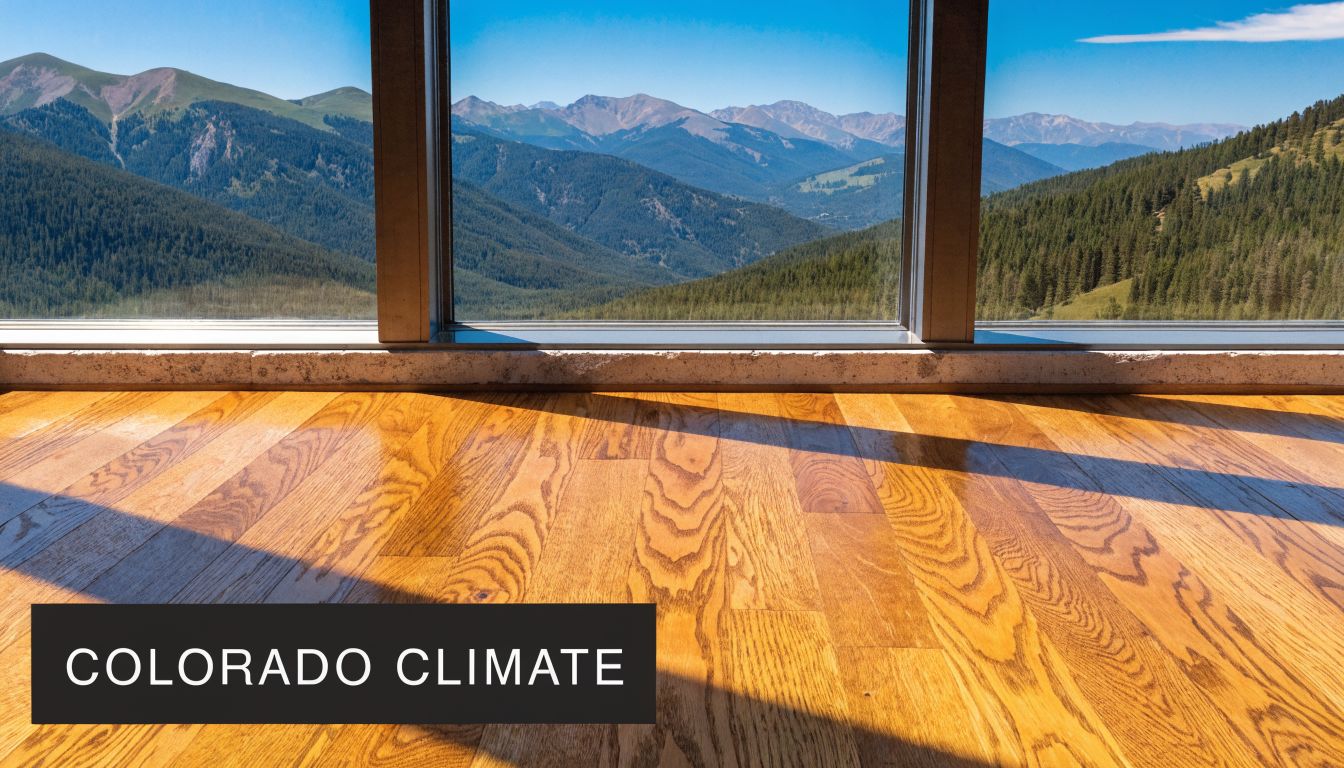
You see it every winter in Colorado. A floor that looked tight and smooth in September starts showing hairline gaps by January, especially near heat vents, sunny windows, and wide-open great rooms. That does not always mean the floor was installed badly. It usually means the house and the wood are reacting to very dry air.
Wood flooring constantly exchanges moisture with the indoor environment. In Colorado, that cycle is more aggressive because of high altitude, long heating seasons, and low indoor humidity. We see the same pattern across Parker, Denver, Castle Rock, and mountain homes. Boards shrink during dry periods, then swell again when moisture comes back. If the product choice, installation method, or finish system was wrong from the start, those seasonal shifts show up faster.
What that looks like inside your home
The warning signs are usually easy to spot once you know what to watch for.
In winter, many homeowners notice:
- Small gaps between boards that were less visible in warmer months
- More movement around vents, exterior doors, and large window walls
- A rougher surface feel as the wood shrinks and the edges become easier to feel underfoot
Then spring and summer can bring the opposite problem. Boards pick up moisture, expand, and press against each other. In stressed floors, that can lead to cupping, raised edges, or localized buckling.
Sun exposure adds another layer. Colorado light is intense, and south- and west-facing glass can fade color faster than homeowners expect. We often see it in open layouts where one section of the floor gets hammered by afternoon sun while the rest stays shaded.
What a smarter approach looks like
Colorado hardwood needs to be chosen and finished like a material that will live through dry winters, active households, dogs, ski gear, and daily temperature swings.
A better plan usually includes:
- Acclimating the flooring to the home before installation
- Choosing the right construction for the room and plank width
- Keeping indoor humidity in a reasonable range
- Using a finish that cures fast and resists wear in dry conditions
This is also why product selection matters so much. In many homes, the difference between solid and engineered hardwood shows up after the first full heating season, not on installation day. A floor can look perfect at handoff and still become a headache if it was not matched to Colorado conditions.
Shortcuts usually show up later. Tight installs without enough expansion room, poor acclimation, weak coatings, and big humidity swings can leave homeowners with recurring gaps, finish stress, or boards that never quite settle down.
The practical goal is not to stop wood from moving. Wood moves. The goal is to manage that movement, protect the surface, and use materials and finishes that hold up in a state that is hard on floors. That is the smarter approach in Colorado.
Engineered vs. Solid The Best Hardwood for Your Colorado Home
Material choice matters as much as finish choice. For hardwood floors Colorado homeowners want to keep stable and attractive, the right answer often depends on where the floor is going and how the household lives.
Solid hardwood and where it makes sense
Solid hardwood has one big advantage. It can be sanded and refinished multiple times over its life. In the right setting, it’s a strong long-term floor.
But in Colorado, solid wood asks more from the environment. If indoor conditions swing hard, the floor moves more. That's why wide-plank solid floors in dry homes can become frustrating for owners who expected a perfectly uniform look year-round.
Solid hardwood often makes the most sense when:
- The home has stable indoor conditions
- The homeowner understands seasonal movement
- The floor layout and species choice reduce stress on the boards
Engineered hardwood and why many Colorado homes benefit
Engineered hardwood is often the safer choice in this climate because it's designed for better dimensional stability during seasonal humidity changes. For mountain homes, main-level remodels, and families who want natural wood with less drama, engineered products solve a lot of Colorado-specific problems before they start.
That doesn’t mean every engineered floor is equal. Core construction, veneer quality, and finish system all matter. Cheap engineered products can still disappoint. A well-made engineered floor, installed correctly, is a very different product from a bargain board chosen only by color.
A helpful side-by-side view:
| Flooring type | Main strength | Main trade-off | Best fit in Colorado |
|---|---|---|---|
| Solid hardwood | Long refinishing life | More seasonal movement | Homes with controlled interior conditions |
| Engineered hardwood | Better stability | Product quality varies widely | Homes dealing with seasonal swings, larger spans, and active family use |
For a more detailed material comparison, homeowners often benefit from reviewing this guide on the difference between solid and engineered hardwood.
Species and finish matter too
In the Denver Metro area, harder species like oak, maple, and hickory are commonly recommended for active homes because they handle traffic better and pair well with stronger finish systems. That matters if you've got dogs, kids, frequent guests, or a rental property that sees a lot of turnover.
Prefinished hardwood also deserves serious attention. Factory-applied aluminum oxide coatings can provide hardness up to 20-30% higher than site-applied finishes, making them especially useful for pet claws and high-traffic wear, as explained in this prefinished hardwood overview.
What we tell homeowners is simple:
- Choose stability first
- Choose durability second
- Choose color third
The wrong order causes regret. The right order gives you a floor you still like living with years later.
The Ultimate Finish Our Instant UV-Cure System vs Traditional Methods
Most floor problems homeowners complain about are really finish problems. The wood may still be good, but the top layer has worn down, scratched up, dulled out, or failed in the busiest areas. That's why the finish system is where a lot of Colorado jobs are won or lost.
Why traditional finishes frustrate homeowners
Traditional polyurethane systems can look good, but the dry time is the issue for many households. Furniture stays out longer. Pets need to be managed. Families wait to get normal use back. In busy homes and commercial spaces, that downtime is often more painful than the refinishing itself.
Traditional cures can also be less forgiving in Colorado's dry environment. If the schedule is tight and the house needs to function quickly, older systems can become a logistical headache.
Where UV-cure changes the experience
UV-curable finishes cure in seconds and achieve 3,000+ Taber abrasion cycles, which is double that of traditional finishes, while also allowing same-day walkability and helping mitigate gapping tied to Colorado's dry air, according to this UV-curable finish reference.
That translates into benefits homeowners feel:
- You can walk on the floor the same day
- The finish stands up better to dog nails and traffic
- The job fits real family schedules better
- The coating is a strong match for dry Colorado conditions
This is why the UV-Cure System has become such a practical option for occupied homes, rental turnovers, and properties where downtime isn't acceptable.
What this looks like on a real project
Take a high-traffic main floor in Parker with a dog, a back patio entry, and heavy kitchen use. If the finish is failing but the boards are still sound, a dust-free refinishing approach followed by UV curing gets the floor protected and usable quickly. The homeowner doesn't have to block out days of uncertainty waiting for a traditional cure window to pass.
J.R. Hardwood Floor Refinishing & Cleaning offers an Instant UV-curable finish guide that helps homeowners understand when this system fits and when a different process makes more sense.
Here's a look at the process in action:
UV-cure versus traditional finish
| Finish type | Walkability | Wear resistance | Best use case |
|---|---|---|---|
| Traditional finish | Slower return to use | Good, depending on product | Homes that can tolerate downtime |
| UV-curable finish | Same-day use | Extremely strong for traffic | Busy homes, pets, rentals, commercial settings |
If you need durability and you don't want your house tied up for days, UV-cure is usually the conversation to have first.
Our Denver Hardwood Floor Refinishing Services Explained
Homeowners often know their floors look worn. They don't always know which service fits the condition. The right process saves wood, money, and unnecessary disruption.
Hardwood full sanding and refinishing
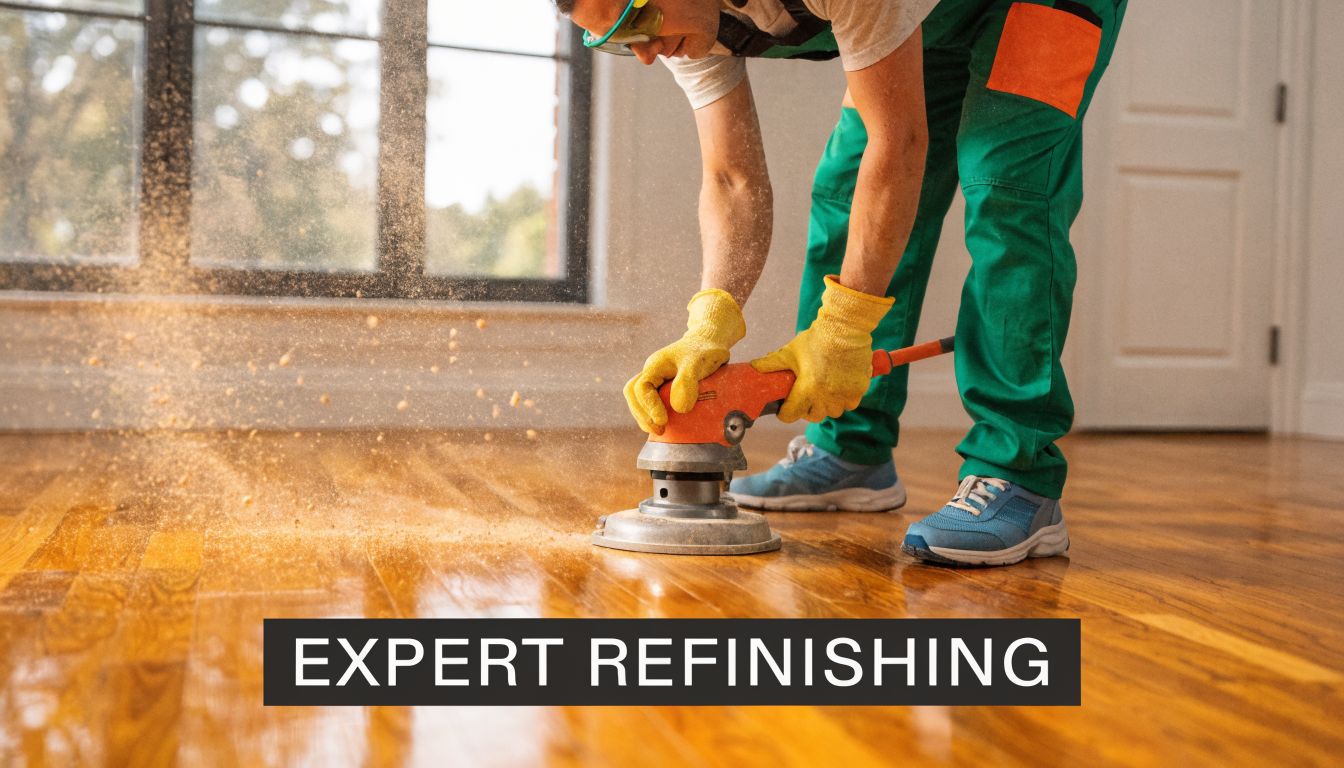
This is the reset button. Full sanding removes old finish, levels the surface, and prepares the floor for fresh stain and protective coats. It's the right move when the floor has deep scratches, heavy wear, old coatings, discoloration, or patchy repair history.
A historic Denver home with original red oak is a classic example. If the finish is worn through in lanes, earlier touch-ups don't match, and the floor has embedded damage, a screen and recoat won't solve the underlying problem. Full sanding will.
Good candidates include:
- Older homes with multiple layers of wear
- Floors with bare wood showing
- Surfaces with stain issues, pet wear, or uneven sheen
Hardwood screen and recoat
This service refreshes the protective top layer without cutting significantly into the wood. It's ideal when the floor looks tired but the damage is still mostly in the finish.
A newer home in Erie or Parker often fits this category. Entry traffic may dull the sheen, and light scratching may be visible in kitchen lanes, but the boards themselves are still in good shape.
Screen and recoat is often a smart choice for:
- Homes preparing for sale
- Property managers between tenants
- Owners who want protection before wear gets worse
Hardwood clean and buff
Some floors aren't ready for recoating and definitely don't need sanding. They need a professional cleaning and buffing service to remove built-up grime and restore the appearance of the existing finish.
This is useful when homeowners say, "It looks dirty all the time," even after mopping. Often the issue is residue, traffic film, or dullness rather than actual finish failure.
Wax removal
Wax over hardwood creates problems. It traps dirt, creates an uneven look, and interferes with modern finish systems. Before a floor can be recoated properly, that contamination has to come off.
This is common in older homes where past maintenance used products that looked helpful short term but created bonding issues later.
Floor installation
Installation works best when it's planned around the house, not just the square footage. Room transitions, subfloor condition, board width, species, and finish strategy all matter. In Colorado, so does acclimation and climate awareness.
Installation may involve:
- Solid or engineered hardwood
- LVP or laminate in selected spaces
- Matching new sections to older adjacent floors
The right service is the least aggressive one that still solves the problem completely.
Budgeting Your Project Hardwood Flooring Costs in Colorado
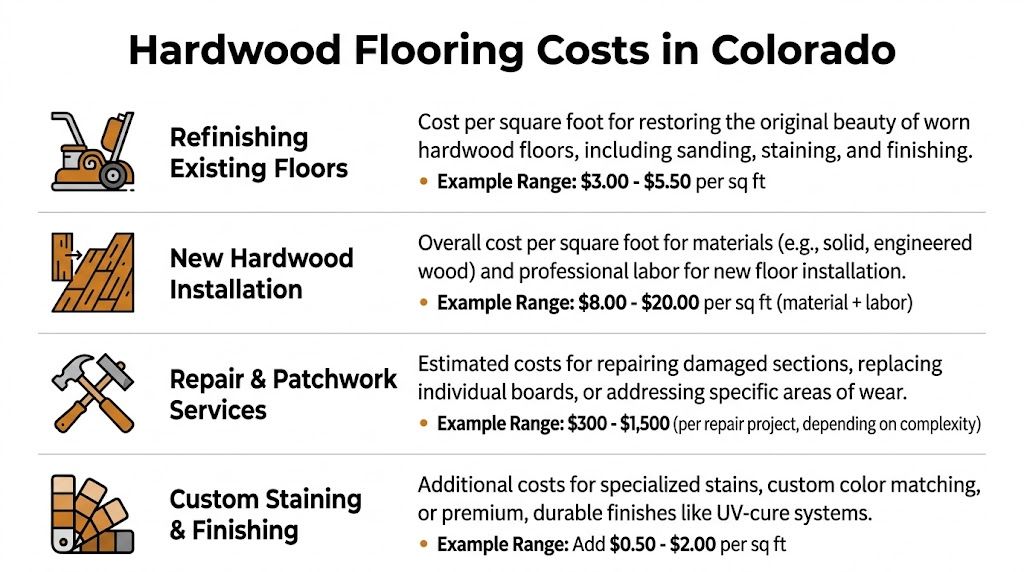
A floor in a Colorado home can look fine at first glance and still carry hidden costs. We see that a lot. Dry air opens small gaps, pet traffic grinds finish off in paths, and older coatings can create bonding problems that turn a simple recoat into a bigger project. The smartest budget starts with the condition of the floor and how you use the space.
Price matters, but what you are paying for matters more. A guest bedroom, a mountain rental, and a busy main level with dogs and kids should not all get the same finish plan. In Colorado, the cheap option often costs more later if it cures slowly, wears early, or fails because the floor was not prepped correctly for our dry conditions.
J.R. Hardwood Refinishing Service Tiers & Pricing
| Service | Price per sq. ft. | Best For | Key Features |
|---|---|---|---|
| Diamond Traffic Plus | $5.50 per sqft | Heavy-use homes, property management, pet traffic | UV-curing + Nano Wear, strong wear and scratch resistance |
| Platinum Traffic Plus | $4.80 per sqft | Busy family homes | 2K water-based finish, Nano Wear Oxide Additive |
| Gold Traffic Plus | $4.50 per sqft | Everyday residential refinishing | Scratch resistance, 2K water-based finish |
| Silver Traffic Plus | $4.20 per sqft | Budget-conscious refinishing | Excellent wear resistance, 1K water-based finish |
| Screen & Recoat | starts at $2.50/sq. ft. | Floors with finish wear but no major wood damage | Refreshes top protection layer |
| Wood Floor Cleaning | starts at $1.50/sq. ft. | Dull, dirty floors with intact finish | Removes grime and refreshes appearance |
| Wax Removal | starts at $2.50/sq. ft. | Older floors with wax contamination | Preps floor for modern treatment |
| Instant UV-Curable Finish | $1.5/sq. ft. | Owners wanting fast return to use | Same-day cured protection |
What changes the final price
The square-foot price is the starting point. This number shifts based on what the floor needs before we put finish down.
Common cost drivers include:
- Floor condition, especially deep scratches, black pet stains, sun fade, cupping, or failed older coatings
- Repairs, such as board replacement, patching around walls or vents, and lace-in work where new wood meets old
- Layout complexity, including stairs, railings, closets, angled rooms, and multiple floor transitions
- Finish selection, whether the home is a fit for a standard water-based system or a faster UV-cure upgrade
- Occupied-home logistics, like moving furniture in phases or scheduling around a family still living in the house
The best budgeting approach is to match the system to the traffic and the timeline. A low-use office may do well with a simpler finish system. A kitchen, entry, or rental usually benefits from stronger wear protection and faster cure times, because those floors get tested every day.
Builders and remodelers should also budget for coordination, not just materials and labor. If several trades are stacked on the same project, virtual assistant services for general contractors can help keep scheduling, homeowner communication, and follow-up from slipping through the cracks.
A good estimate should explain what is included, what may change once prep starts, and which option gives you the best value for your home, not just the lowest number on paper.
Hiring a Pro How to Choose the Right Contractor and Maintain Your Floors
The right contractor in Colorado isn't just someone who can sand a floor. You want someone who understands climate movement, finish compatibility, and how to evaluate whether a floor should be cleaned, recoated, fully refinished, or replaced.
What to ask before you hire
Use this checklist when you compare flooring contractors:
- Ask how they assess floor condition. A good pro should explain whether damage is in the finish, the wood, or both.
- Ask what finish systems they use. Not every contractor offers UV-cure or understands when it's the better fit.
- Ask how they manage dust and household disruption. This matters if you're living in the home.
- Ask for local project examples from neighborhoods and home styles similar to yours.
- Ask to see actual work. A visual portfolio tells you more than broad promises. J.R. Hardwood shares examples on its see our work page.
Contractors who communicate clearly usually run cleaner projects. If you're a builder or remodeler coordinating several trades, support systems such as virtual assistant services for general contractors can also help keep scheduling, follow-up, and homeowner communication organized during busy job cycles.
A flooring bid should tell you what problem is being solved, not just what machine is being brought into the house.
Simple maintenance that actually helps
Most hardwood floors don't need constant treatment. They need consistent habits.
A workable maintenance routine looks like this:
- Daily or as needed. Remove grit at entries and wipe up spills quickly.
- Weekly. Dust with a microfiber system that won't grind debris into the finish.
- Seasonally. Watch indoor humidity and sunlight exposure, especially in dry winter months and window-heavy rooms.
- As wear appears. Schedule a clean and buff or screen and recoat before traffic lanes burn through the finish.
Signs it's time to call a pro
You should bring in a pro when:
- The floor still looks dull after cleaning
- Scratches are multiplying in traffic lanes
- Older products left waxy buildup
- You see uneven wear near doors, kitchens, or large windows
Waiting too long usually turns a lighter-touch service into a heavier one. Catching finish wear early protects the wood underneath.
Your Trusted Parker Hardwood Floor Refinishing Partner
A lot of Parker homeowners call us after the same Colorado winter pattern shows up. New gaps between boards, a dull traffic lane by the kitchen, and scratch marks that seemed minor in the fall now stand out in the dry light.
J.R. Hardwood Floor Refinishing & Cleaning handles those problems with methods that fit Colorado homes, not generic flooring advice. We use dust-free sanding to keep the job cleaner, and our UV-curable finish system hardens right away, which matters if you have kids, pets, or a busy household that cannot give up a room for days. In mountain-adjacent and Front Range homes, fast cure times and a durable finish help reduce the disruption while giving the floor better day-to-day protection against pet nails, chair movement, and heavy traffic.
The right service depends on the condition of the wood, the age of the finish, and how you use the space. Some floors need a full sand and refinish. Others need a screen and recoat before wear cuts into bare wood. Our job is to give you a straight answer, explain the trade-offs, and recommend the option that makes sense for your floor and your budget.
For Parker hardwood floor refinishing, Denver hardwood floor refinishing, and UV-Cure System service across the Front Range, reach out for a quote and a clear assessment of what your floors need. You can contact the team by phone at 720-327-1127, visit the J.R. Hardwood Floor Refinishing & Cleaning website, or watch project videos on the company YouTube channel. Service areas include Parker, Denver, Aurora, Castle Rock, Highlands Ranch, Littleton, Boulder, Colorado Springs, Centennial, Lakewood, Westminster, Thornton, Arvada, Englewood, Greenwood Village, Lone Tree, Castle Pines, and nearby communities.
If your hardwood floors in Colorado are showing wear, gaps, dullness, or pet damage, J.R. Hardwood Floor Refinishing & Cleaning can help you choose the right path, whether that’s cleaning, screen and recoat, full sanding, installation, or a fast-return UV-cure finish.