 Skip to content
Many Denver homeowners believe hardwood floors last decades without professional care. Reality paints a different picture. High foot traffic can cause hardwood floors to wear out 40% faster, especially in Colorado’s unique climate. Understanding wear mechanisms helps you protect your investment and avoid costly repairs down the road.
Table of Contents
- Introduction To Hardwood Floor Wear
- Environmental And Traffic Causes Of Hardwood Floor Wear In Denver
- Common Types Of Hardwood Floor Wear And How To Identify Them
- Finish Types And Their Resistance To Wear
- Maintenance Practices To Prevent Or Minimize Hardwood Floor Wear
- Restoration Methods Based On Wear Level
- Common Misconceptions About Hardwood Floor Wear And Maintenance
- Conclusion: Maximizing Hardwood Floor Longevity In Denver
Key Takeaways
| Point | Details |
|---|---|
| Traffic Impact | Heavy foot patterns accelerate wear by approximately 40% compared to light use areas. |
| Finish Durability | Polyurethane finishes last up to 50% longer than traditional wax in Denver conditions. |
| Maintenance Frequency | Professional refinishing needed every 3 to 5 years due to local climate stressors. |
| Prevention Methods | Regular cleaning, protective pads, and strategic rug placement significantly slow damage. |
| Environmental Factors | Low humidity and temperature swings cause wood movement that accelerates surface breakdown. |
Introduction to Hardwood Floor Wear
Hardwood floor wear represents progressive surface and structural degradation affecting both the protective finish and underlying wood fibers. The process goes beyond simple aesthetics, compromising floor integrity over time.
Wood properties determine wear resistance. Hardness ratings, grain patterns, and finish quality create barriers against daily damage. Dense species like oak withstand traffic better than softer woods. Basic mechanisms of wear include surface abrasion, finish degradation, and wood fiber damage that compound when left unchecked.
Denver’s climate intensifies these processes. Low humidity causes wood to contract during winter, then expand in summer. This constant movement stresses finish adhesion and creates microscopic cracks where dirt penetrates.
Common common risks damaging hardwood floors appear as visible warning signs:
- Surface scratches from tracked debris and pet claws
- Dullness indicating finish breakdown and loss of protective layer
- Exposed wood showing through worn finish in traffic paths
- Color changes from UV exposure and moisture infiltration
- Rough texture where finish has completely worn away
Recognizing these indicators early enables targeted intervention before damage reaches the structural wood layer.
Environmental and Traffic Causes of Hardwood Floor Wear in Denver
Denver’s elevation and continental climate create unique hardwood floor challenges. Denver’s temperature and humidity fluctuations contribute significantly to hardwood floor wear through constant expansion and contraction cycles. Winter indoor heating drops humidity below 30%, causing wood to shrink. Summer brings moisture back, making boards swell.
These cycles stress finish bonds. Microscopic cracks develop at plank edges where finish flexes repeatedly. Once compromised, moisture and dirt penetrate deeper, accelerating deterioration from within.
Denver’s dry environment generates persistent dust problems. Accumulated dust and grit increase abrasive wear by 30% annually without proper upkeep. Fine particles act like sandpaper underfoot, grinding finish with every step. High altitude winds carry more outdoor debris inside, compounding the issue.
Foot traffic patterns concentrate damage. Entryways, hallways, and kitchen pathways show wear first. The 40% acceleration in high traffic zones results from:
- Repeated pressure breaking down finish molecular structure
- Tracked dirt concentrating in predictable patterns
- Furniture movement creating localized deep scratches
- Pet activity adding claw marks and moisture exposure
Understanding Denver hardwood floor finish durability requirements means addressing both environmental stress and usage intensity. Combined impacts explain why Denver floors need refinishing more frequently than similar homes in humid climates. Protective measures must account for both factors to effectively slow wear progression.
Pro Tip: Place walk off mats at every exterior door to capture 80% of tracked debris before it reaches hardwood surfaces.
The common hazards to hardwood floors in Colorado demand proactive defense strategies. Simply reacting to visible damage means you are already years behind optimal maintenance schedules.
Common Types of Hardwood Floor Wear and How to Identify Them
Identifying wear stages guides appropriate intervention timing. Surface scratches, finish degradation, and exposed wood are key indicators of hardwood floor wear progression that signal different repair needs.
Surface scratches appear first. These fine lines catch light but do not penetrate the finish completely. You can often feel them with your fingernail but they do not expose bare wood. Light scratches respond well to screen and recoat processes.
Finish degradation shows as dullness. High traffic areas lose their sheen first, appearing cloudy or flat compared to protected zones. This stage means the protective layer is thinning but still covers the wood. Check kitchen walkways and entryway paths for the earliest signs.
Exposed wood represents advanced wear. Here the finish has worn completely through, leaving wood fibers vulnerable to moisture and staining. These areas appear darker or lighter than surrounding floor and feel rough to touch. Immediate attention prevents permanent damage.
Denver homes typically show distinct patterns:
- Entry halls wear through finish within 2 to 3 years
- Kitchen paths show heavy traffic marks at 3 to 4 years
- Living room centers maintain finish 5 to 7 years
- Bedroom floors often last 8 to 10 years before refinishing
High traffic discoloration appears as darkened paths where dirt embeds in worn finish. Light colored woods show this more dramatically than dark species. Once you see color changes, the finish no longer protects effectively.
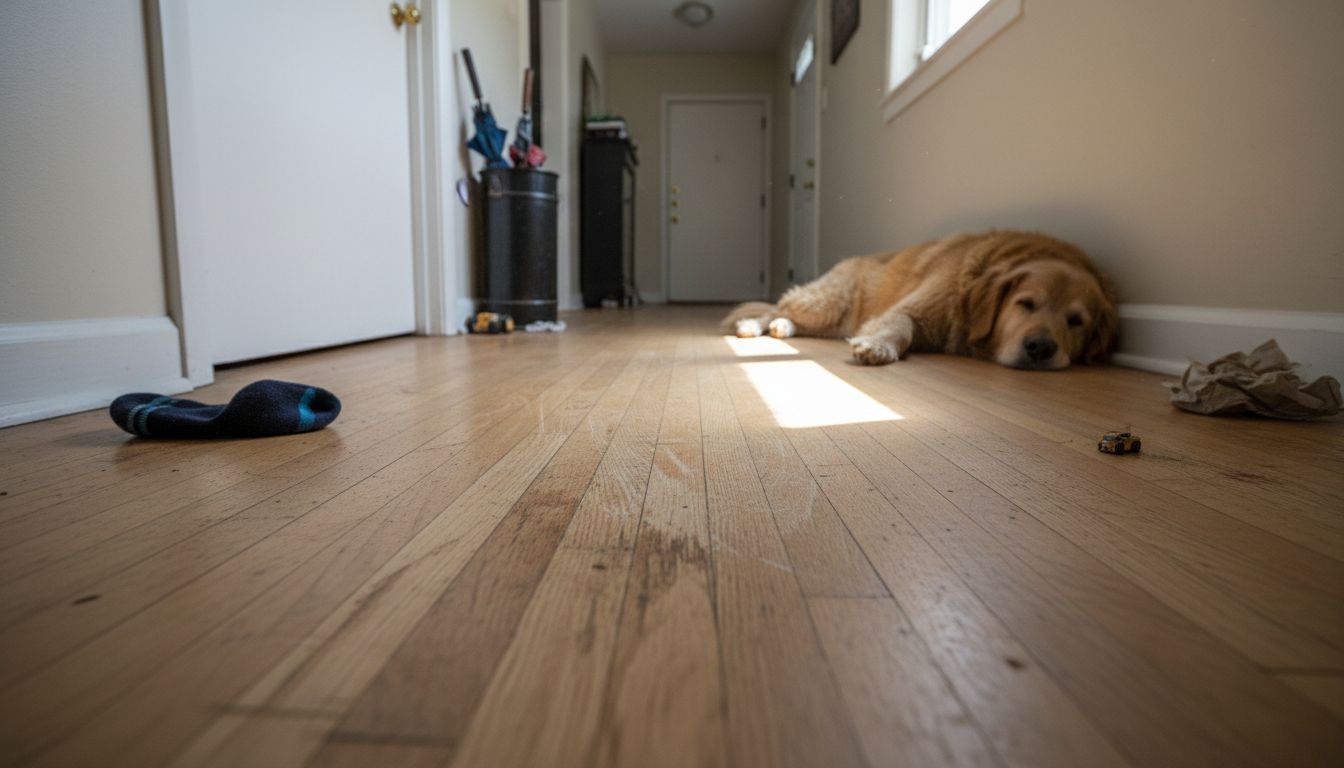
Severity assessment requires close inspection. Get down at floor level with good lighting. Look across the surface at an angle to spot finish loss invisible from standing height. The hardwood floor wear identification and refinishing guide provides visual examples for accurate diagnosis.
Finish Types and Their Resistance to Wear
Choosing the right finish determines how well your floors withstand Denver’s demanding environment. Polyurethane finishes offer up to 50% longer wear resistance than traditional wax finishes in Denver conditions due to superior hardness and moisture resistance.
| Finish Type | Abrasion Resistance | Denver Lifespan | Curing Time | Maintenance |
|---|---|---|---|---|
| Polyurethane | High | 5 to 7 years | 24 to 48 hours | Low, damp mop only |
| Traditional Wax | Low | 2 to 3 years | 2 to 4 hours | High, regular buffing |
| UV Curable | Very High | 7 to 10 years | 10 to 30 seconds | Very Low, minimal upkeep |
| Water Based Poly | Medium High | 4 to 6 years | 12 to 24 hours | Low, gentle cleaning |
Polyurethane dominates residential applications. Oil based versions penetrate deeper and cure harder than water based alternatives. They handle temperature swings better, making them ideal for Denver homes with seasonal climate extremes. The amber tone adds warmth to wood grain.
Water based polyurethane offers faster drying with less odor. Perfect for occupied homes needing quick turnaround. The clear finish preserves natural wood color without amber tinting. However, it requires more coats to match oil based durability.
Instant UV curable finishes provide rapid curing and high durability favored for commercial use. UV light polymerizes the finish in seconds, allowing immediate use. Commercial spaces benefit from zero downtime. The rock hard surface resists impacts and chemicals better than conventional finishes.
Traditional wax and shellac finishes suit historic restoration projects. They provide authentic appearance but demand constant maintenance. Denver’s dry air causes wax to dull quickly, requiring monthly buffing. These finishes absorb moisture readily, leading to water stains and early failure.
Pro Tip: Schedule refinishing when existing finish shows wear but before bare wood appears to minimize sanding depth and preserve floor thickness.
Cost versus durability analysis favors polyurethane for most Denver homeowners. Initial material costs run higher than wax, but the extended lifespan reduces refinishing frequency. Commercial properties should explore UV curable hardwood finish advantages for maximum uptime and longevity.
Environmental compatibility matters in Denver’s dry climate. Finishes must flex with seasonal wood movement without cracking. Hardwood floor finish comparison for durability shows polyurethane maintains adhesion through expansion cycles better than rigid alternatives.
Maintenance Practices to Prevent or Minimize Hardwood Floor Wear
Consistent maintenance extends floor life by 20 to 30% compared to reactive care approaches. Regular cleaning and protective measures like rugs and furniture pads reduce wear progression significantly when applied systematically.
Daily and weekly cleaning routines for Denver homes:
- Sweep or vacuum daily using soft bristle attachments to remove grit
- Damp mop weekly with pH neutral hardwood cleaner diluted properly
- Wipe spills immediately to prevent moisture penetration and staining
- Place walk off mats at all entries to capture 80% of tracked debris
- Rotate area rugs quarterly to even out wear patterns and UV exposure
Protective measures reduce concentrated damage. Felt pads under furniture legs prevent deep scratches during rearrangement. Replace pads every 6 months as adhesive weakens and felt compresses. Use larger pads on heavier furniture to distribute weight.
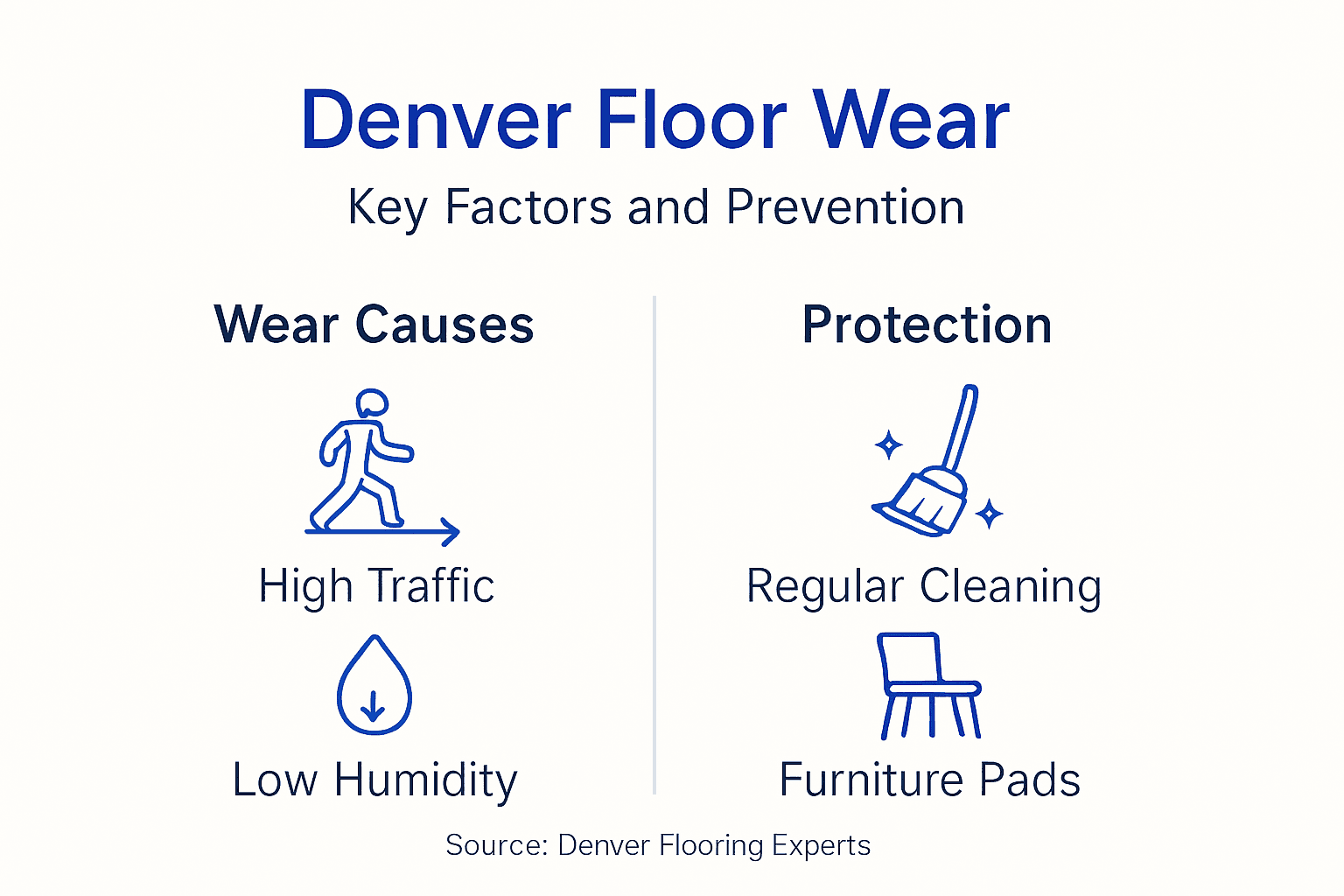
Professional maintenance schedules matter. Screen and recoat every 3 to 5 years refreshes the protective layer before it fails completely. This process costs 70% less than full sanding while extending finish life substantially. Schedule inspections annually to catch problems early.
Pro Tip: Avoid using vinegar, oil soaps, or wax based cleaners that leave residue buildup requiring professional removal later.
Common maintenance errors accelerate wear:
- Wet mopping that introduces excessive moisture into wood
- Using steam cleaners that damage finish and wood structure
- Applying furniture polish that creates slippery residue
- Neglecting mat replacement allowing dirt accumulation
- Delaying refinishing until bare wood shows extensively
Denver’s dust environment requires extra vigilance. Microfiber mops trap particles better than cotton alternatives. Vacuum with HEPA filtration to prevent redistribution of fine dust. The maintenance best practices for hardwood floors emphasize prevention over correction for maximum cost efficiency.
Pet owners need additional protocols. Trim nails monthly to minimize scratching. Place bowls on mats to contain water spills. Clean accidents immediately with enzymatic cleaners safe for hardwood finishes.
Restoration Methods Based on Wear Level
Matching restoration method to wear severity optimizes results and cost efficiency. Screen and recoat processes are effective for moderate wear, while full sanding is necessary for severe damage requiring complete finish removal.
| Method | Best For | Cost Range | Durability Added | Downtime |
|---|---|---|---|---|
| Screen & Recoat | Light to moderate wear | $1 to $2 per sq ft | 3 to 5 years | 1 to 2 days |
| Full Sanding | Heavy wear, deep scratches | $3 to $5 per sq ft | 7 to 10 years | 3 to 5 days |
| Clean & Buff | Maintenance only | $0.50 to $1 per sq ft | 1 to 2 years | Same day |
| Spot Repair | Localized damage | $150 to $300 per area | Varies | Hours |
Screen and recoat suits floors showing surface dullness without exposed wood. The process lightly abrades existing finish to create bonding surface for fresh topcoat. No dust containment needed since minimal sanding occurs. This method works only if current finish remains intact.
Full sanding addresses severe damage. Belt sanders remove all existing finish plus a thin wood layer, eliminating deep scratches and stains. Dust containment systems capture 99% of particles. Multiple grit progressions create smooth surface for new finish application. This approach resets floor condition completely.
Denver climate considerations affect method choice. Low humidity speeds finish curing, reducing downtime. However, rapid drying can cause finish defects if application is not timed properly. Professional expertise ensures proper environmental controls.
Signs indicating screen and recoat suffices:
- Finish appears dull but intact across surface
- Minor surface scratches do not penetrate to wood
- No water stains or dark spots present
- Even color throughout with no bare patches
Signs requiring full sanding restoration:
- Bare wood visible in traffic patterns
- Deep scratches exposing wood grain
- Water damage creating dark stains
- Previous finish failure with peeling or flaking
- Desire to change wood color or finish type
Decision framework starts with professional assessment. Experienced technicians evaluate finish thickness, wood condition, and damage depth. The floor restoration options based on wear level guide helps property managers budget appropriately for upcoming needs.
Cost analysis favors early intervention. Addressing wear at the screen and recoat stage costs 60% less than waiting for full sanding needs. However, attempting screen and recoat on floors requiring full sanding wastes money on temporary fixes.
Common Misconceptions About Hardwood Floor Wear and Maintenance
Myths about hardwood care lead to premature damage and unnecessary expense. In Denver’s climate, wear can reach the wood surface within 3 to 5 years, contrary to belief that refinishing is needed only every 10 years due to environmental stressors unique to the region.
Myth versus reality breakdown:
-
Myth: All hardwood finishes protect equally well.
Reality: Polyurethane finishes outperform traditional finishes by up to 50% in local wear resistance due to superior hardness and moisture barriers. -
Myth: Regular cleaning prevents all floor wear.
Reality: Cleaning removes dirt but cannot stop finish breakdown from UV exposure, foot traffic abrasion, and wood movement cycles. -
Myth: Refinishing damages floors and should be delayed.
Reality: Timely refinishing removes minimal wood thickness while waiting until severe wear requires deeper sanding that reduces floor lifespan. -
Myth: DIY maintenance matches professional results.
Reality: Improper products, techniques, and timing often accelerate damage requiring costly correction later. -
Myth: Newer floors do not need professional attention.
Reality: Builder grade finishes often fail within 2 to 3 years, making early recoating essential for long term protection.
These misconceptions cause homeowners to delay necessary maintenance. Waiting until finish fails completely means sanding removes more wood than early intervention would require. Each refinishing cycle removes approximately 1/32 inch of wood. Floors tolerate 6 to 8 sandings before becoming too thin.
Denver’s unique conditions make national advice unreliable. Humidity controlled climates allow longer refinishing intervals. Colorado’s extreme dryness and temperature swings demand more frequent attention. The hardwood maintenance truths and myths resource clarifies local best practices.
Finish quality varies dramatically. Contractor grade polyurethane applied during construction often uses fewer coats than premium refinishing. These thin finishes wear through faster, making 3 year recoating schedules necessary for adequate protection.
Understanding hardwood floor maintenance myths empowers better decisions. Professional assessments provide accurate condition reports and realistic maintenance timelines based on actual wear patterns rather than generalized assumptions.
Conclusion: Maximizing Hardwood Floor Longevity in Denver
Denver’s environment accelerates hardwood floor wear through low humidity, temperature extremes, and persistent dust. Understanding these causes enables proactive protection strategies. Regular maintenance combined with appropriate finish selection extends floor life significantly. Professional assessments every 3 to 5 years catch problems before expensive repairs become necessary. Traffic patterns concentrate damage predictably, making targeted protection practical and cost effective. Polyurethane finishes outperform traditional options by 50% in local conditions. Timely refinishing before finish fails completely preserves floor thickness for decades of beauty. Implementing these evidence based practices gives you confidence your hardwood investment will deliver lasting value.
Protect and Restore Your Hardwood Floors with Expert Denver Services
Your floors deserve specialized care that accounts for Colorado’s unique challenges. 
J.R. Hardwood Floor Refinishing & Cleaning brings award winning expertise to every Denver Metro project. Our team uses premium finishes and eco friendly products tailored to local climate demands. From screen and recoat maintenance to complete restoration, we deliver predictable results backed by 5 star reviews. Free over the phone quotes and detailed process videos give you confidence before work begins. Whether you need professional hardwood floor refinishing services or want to explore floor restoration options in Denver, our experienced technicians guide you to solutions that extend floor life and protect your investment. Discover proven floor care best practices for Denver homeowners that keep hardwood beautiful for years.
Frequently Asked Questions
How often should hardwood floors be refinished in Denver’s climate?
Professional refinishing every 3 to 5 years maintains optimal protection in Denver conditions. High traffic areas may need attention sooner, while bedrooms extend to 7 years. Annual inspections help determine precise timing based on your specific wear patterns.
What causes hardwood floor scratches to worsen despite cleaning?
Cleaning removes surface dirt but cannot repair finish damage already present. Scratches expose underlying layers to moisture and debris penetration, causing progressive deterioration. Once finish integrity breaks down, only recoating restores protective barriers.
Which finish type is best for high traffic homes in Denver?
Polyurethane finishes deliver superior durability for residential high traffic applications. Oil based versions handle temperature fluctuations better while water based options offer faster curing with less odor. Commercial spaces benefit from UV curable finishes providing maximum hardness.
Can I prevent dust related wear without professional cleaning?
Daily sweeping or vacuuming with soft attachments removes most abrasive particles. Walk off mats at entries capture 80% of tracked debris. However, periodic professional deep cleaning removes embedded grit regular methods miss, significantly extending finish life.
How do I know when a full sanding restoration is necessary?
Full sanding becomes necessary when bare wood shows in traffic patterns, deep scratches penetrate finish completely, or water damage creates dark stains. If screen and recoat cannot address visible damage, complete refinishing provides the only effective solution.
Does furniture placement affect hardwood floor wear patterns?
Heavy furniture concentrates weight on small contact points, creating indentations over time. Regular rearrangement distributes pressure more evenly. Felt pads reduce friction during movement, preventing deep scratches that accelerate finish breakdown in localized areas.