 Skip to content
Picking the final finish for your hardwood floors is a huge decision. It's not just about color; the choice between oil- and water-based polyurethane shapes everything from the look and feel of the wood to how long your project will take. For homeowners considering a Highlands Ranch hardwood floor refinishing project, understanding this choice is the first step toward a beautiful, long-lasting result.
For years, oil-based polyurethane was the go-to. It gives floors that classic, warm amber glow and is famous for its tough-as-nails durability. But now, water-based polyurethane, especially when paired with a modern UV-Cure System, has stepped up as a powerhouse, offering a perfectly clear coat, incredibly fast dry times, and low VOCs that are much kinder to your home's air quality.
Choosing Your Hardwood Finish: Oil Vs. Water Polyurethane
When we're working on a Highlands Ranch hardwood floor refinishing project, this is one of the first and most important conversations we have with a homeowner. The finish you choose impacts the final look, the project timeline, and even the air you breathe. Each one has a totally different chemical makeup, and that's what dictates how it behaves.
Oil-based polyurethane is old-school, in a good way for some. It uses mineral spirits as its solvent, which creates a thicker, more viscous liquid and that signature strong smell while it's being applied. As it cures, it gives the wood a warm, amber tint that many people love. This "ambering" effect gets richer over time, which can really bring out the beauty in woods like red oak, but it might not be what you want for lighter woods like maple, as it'll change their natural color.
On the flip side, water-based polyurethane is the modern champ. It uses water as its main solvent, so the formula is thinner and has almost no odor. The biggest selling point? It dries completely clear and stays that way. No yellowing over time. This makes it the perfect choice if you want to preserve the true, natural color of your wood, especially for those light and airy contemporary styles.
This chart breaks down the key differences at a glance.
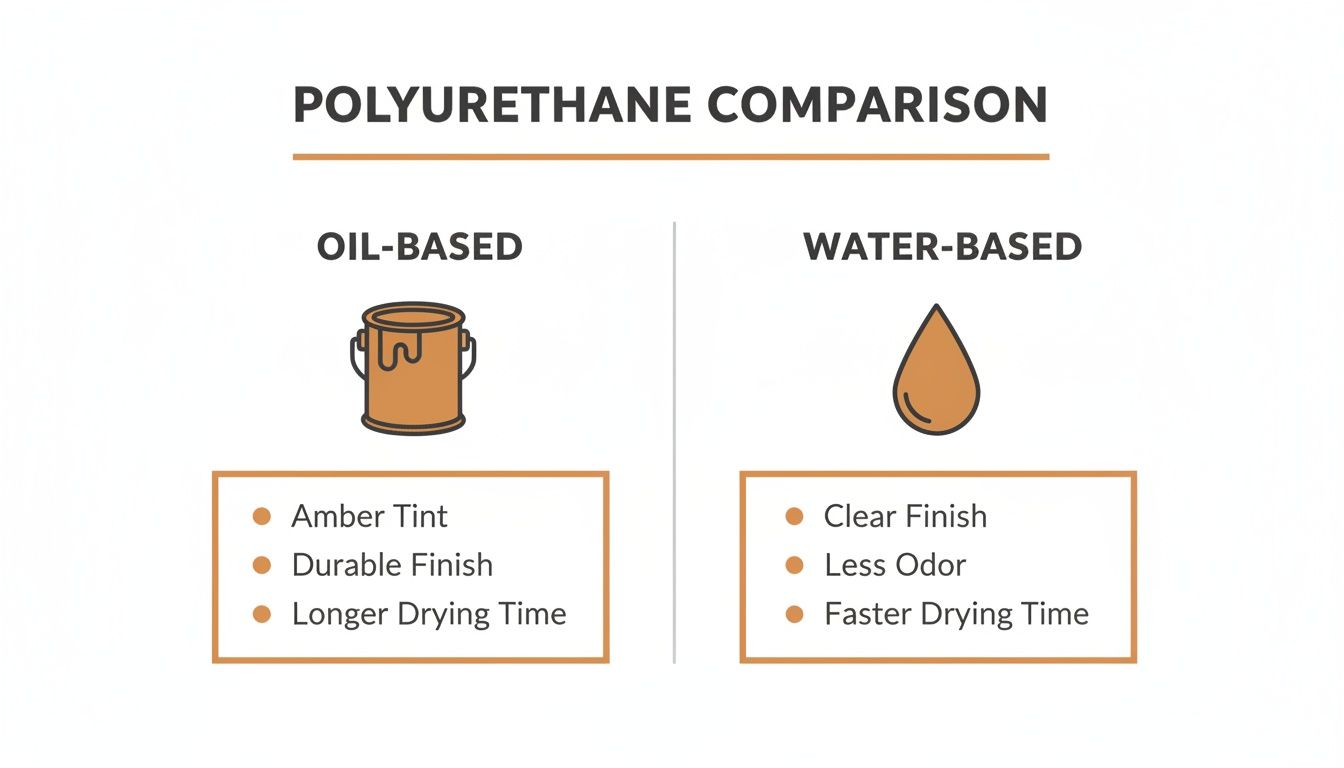
As you can see, the quick cure time and environmental benefits of water-based finishes, especially our UV-Cure System, are pretty compelling reasons why they’ve become so popular in today's homes.
Quick Comparison: Oil-Based Vs. Water-Based Polyurethane
To make things even clearer, here’s a simple table that puts the two head-to-head. It’s a great way to quickly see which finish aligns with your priorities for your Highlands Ranch hardwood floor refinishing project.
| Feature | Oil-Based Polyurethane | Water-Based Polyurethane |
|---|---|---|
| Appearance | Warm, amber tint that deepens over time. | Crystal clear and non-yellowing. |
| Dry Time | Slow. 8-12 hours between coats. | Fast. 2-4 hours between coats. |
| Full Cure Time | Takes up to 30 days to fully harden. | Cures in about 72 hours (or instantly with our UV system). |
| Odor & VOCs | Strong odor, high in Volatile Organic Compounds (VOCs). | Low odor, very low in VOCs. |
| Durability | Traditionally very durable but can be more brittle. | Modern formulas are extremely tough and flexible. |
| Cost | Lower material cost per gallon. | Higher material cost, but project time is shorter. |
| Best For | Traditional looks, darker woods, lower-traffic areas. | Lighter woods, modern aesthetics, high-traffic homes with pets. |
Ultimately, the "better" finish really depends on what you value most—be it a specific aesthetic, a quicker turnaround, or a healthier indoor environment.
What Really Matters for Your Highlands Ranch Home
Let's get practical. Here's how these differences play out in the real world:
-
Dry Time and Curing: This is a big one. A water-based finish can dry in just a couple of hours, meaning we can often apply multiple coats in a single day and get you back on your floors faster. Oil-based finishes can drag a project out, needing up to 12 hours between coats and a full month to cure. Of course, with our advanced UV-Cure System, we can eliminate that waiting game entirely.
-
VOCs and Odor: If you've ever been around an oil-based finishing project, you know the smell. Those are high levels of Volatile Organic Compounds (VOCs), and they require serious ventilation. Water-based finishes are low-VOC, making them a much healthier and more pleasant choice for families, especially those with kids, pets, or sensitivities.
-
Durability: For a long time, oil-based poly had the reputation for being tougher. But technology has come a long way. Today's premium two-component water-based finishes actually offer superior scratch resistance. When we pair that with our UV-Cure System, the durability is off the charts.
The principles of choosing the right finish apply to other wood projects in your home, too. Knowing the difference between oil and water based polyurethane helps you make informed decisions for a lasting, beautiful result.
Aesthetic Impact for Your Highlands Ranch Hardwood Floor Refinishing
The biggest, most in-your-face difference between oil- and water-based polyurethane is what you see the moment we pack up our gear after a Highlands Ranch hardwood floor refinishing project. The finish you choose is the single most important factor controlling the color, warmth, and overall vibe of your floors. Honestly, it's a make-or-break decision for your home's entire look.
The Classic Amber Glow of Oil
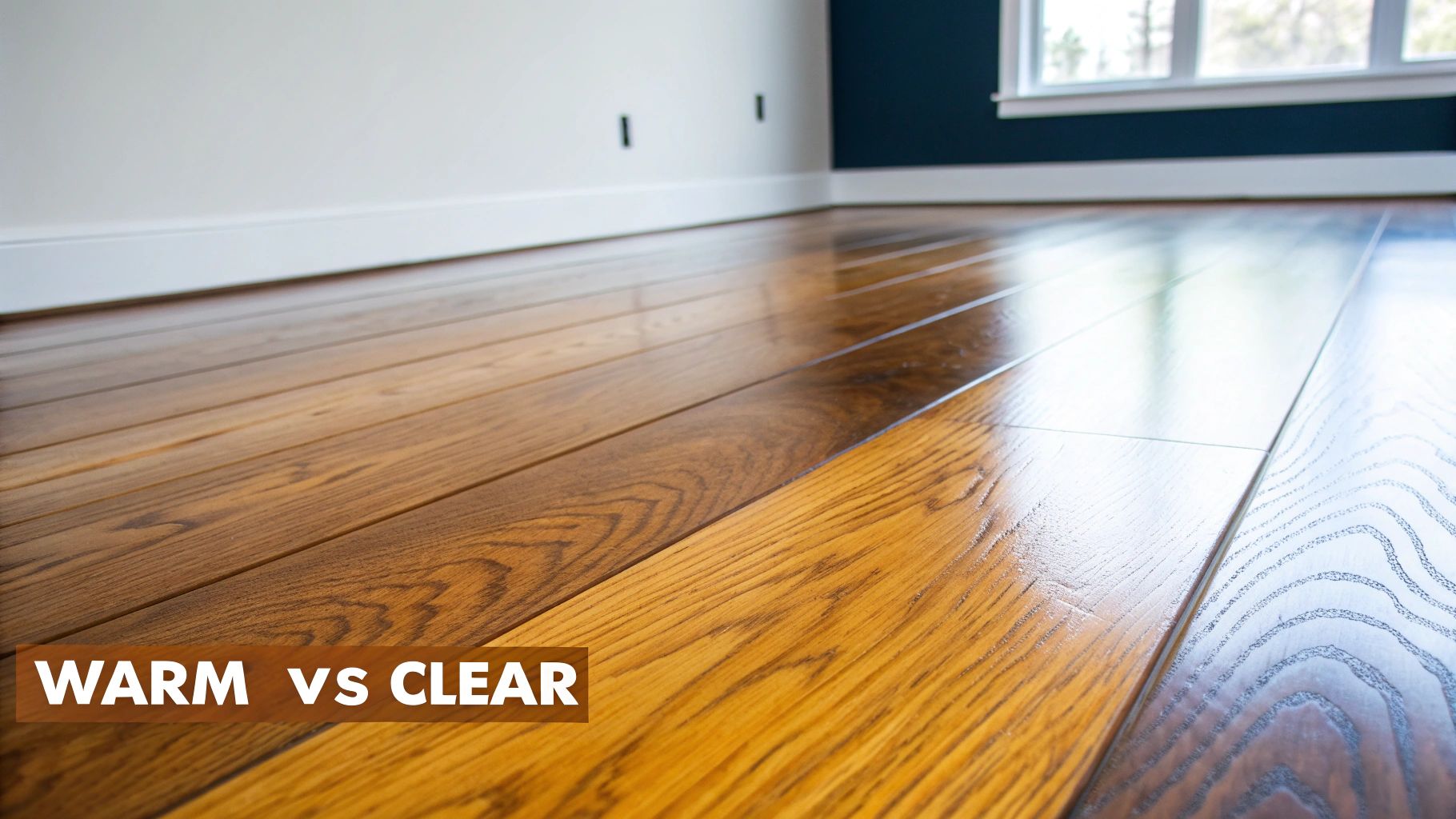
For decades, oil-based polyurethane has been the go-to for that rich, warm amber tone it gives to wood. This isn't a stain; it's just what the finish does. As it cures, it wraps the wood in a golden glow that actually keeps deepening and darkening over the years.
If you have red oak floors, this ambering effect is gorgeous. It punches up the natural grain and creates that classic, traditional look you see in so many historic Denver homes, like those in the Highlands neighborhood. It feels warm and lived-in from day one.
But that signature ambering can be a real problem for certain woods. Slap it on a light-colored species like maple or birch, and that golden glow suddenly looks more like a sickly yellow tint. And if you've painstakingly chosen a modern grey or white stain? An oil-based topcoat will steamroll right over it, turning your cool grey into a muddy, brownish mess.
Water-Based: The Clear Choice for Natural Beauty
This is where water-based polyurethane really shines—or rather, doesn't. Modern water-based formulas are engineered to be crystal-clear and completely non-yellowing. Think of them as an invisible shield that protects the wood without changing its true, natural color one bit.
- Preserves Natural Tones: It lets the raw beauty of maple, ash, or white oak come through without adding any color whatsoever.
- Keeps Stains True: You spent hours picking that perfect custom stain, and a water-based finish makes sure that color stays exactly how you envisioned it. No surprises.
- Creates a Contemporary Look: Its clean, bright appearance is perfect for modern, minimalist, and Scandinavian-inspired designs that are so popular right now.
For homeowners in Highlands Ranch who are chasing that light, airy, wide-open feel, a water-based polyurethane is the only way to go. We recently restored a red oak floor in a Highlands Ranch home, and the water-based finish kept the wood looking bright and natural, perfectly complementing the home's modern aesthetic.
Sheen Levels and the Feel of the Finish
Both oil and water-based polys come in a full range of sheens, from flat-out matte and subtle satin to semi-gloss and high-gloss. This gives you total control over how much light reflects off your floor.
Even though the sheen options have the same names, they don't look identical. Because oil-based polyurethane builds a thicker film on the wood, it can sometimes have a deeper, almost plastic-like luster, especially in the glossier sheens.
Water-based finishes, on the other hand, tend to look and feel more like they're in the wood, not just sitting on top of it. They provide an incredibly durable layer of protection that feels closer to the wood's natural texture. This choice—between a warm, traditional glow and a clear, modern finish—is one of the biggest forks in the road in the oil vs. water-based polyurethane debate.
Analyzing Durability for Highlands Ranch Hardwood Floor Refinishing
For any high-traffic Highlands Ranch household, especially one with kids and pets, the durability of a hardwood floor finish isn't just a feature—it’s a necessity. When you’re comparing oil-based and water-based polyurethane, you're really asking: "Which one will stand up to my life?" The answer to that question has changed dramatically over the years.
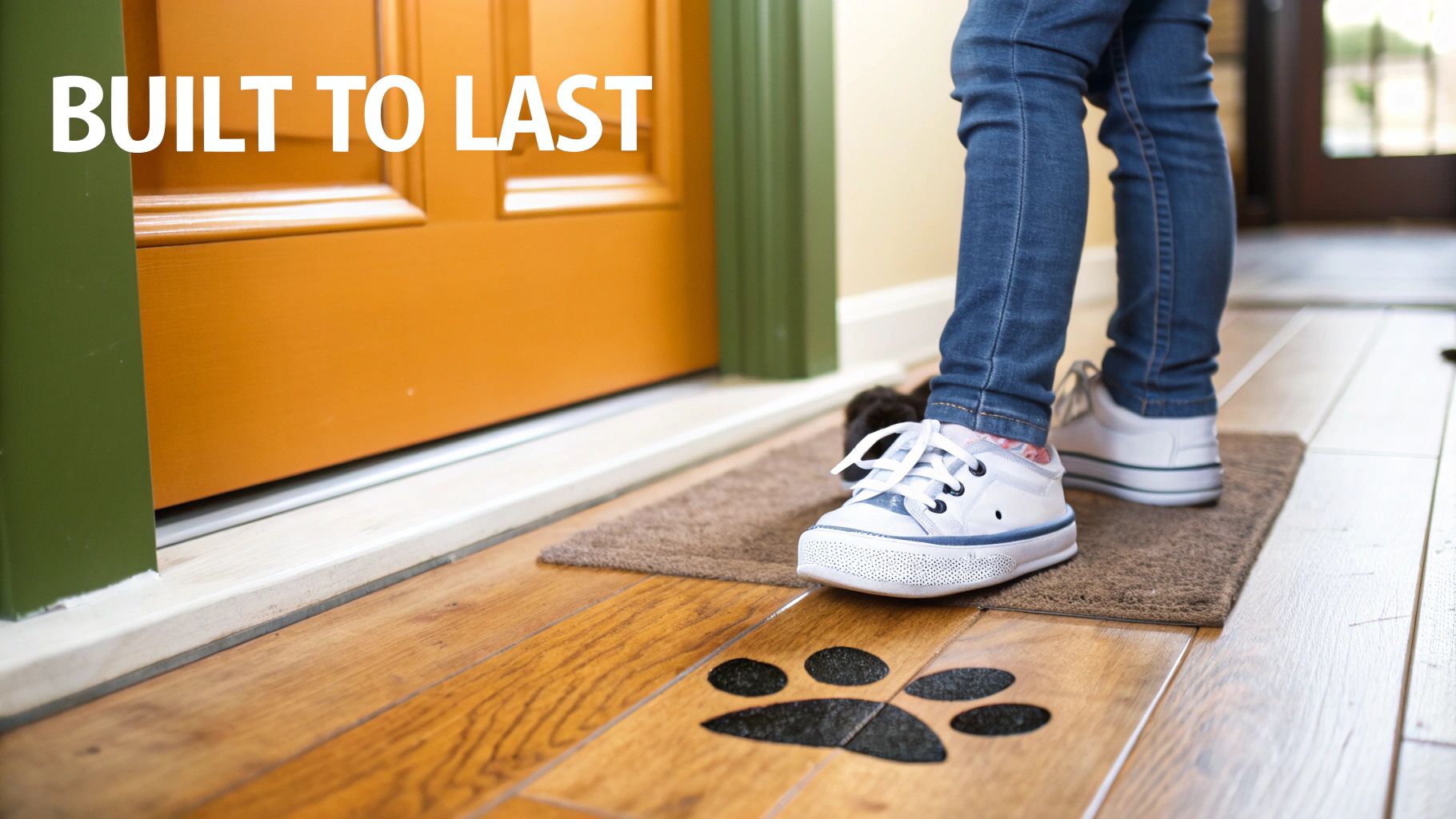
For decades, oil-based polyurethane was the undisputed king of toughness. It cures into a thick, slightly flexible layer that’s fantastic at absorbing impacts and resisting general wear and tear. Its softer nature made it less prone to becoming brittle, which is exactly why it built such a bulletproof reputation for durability.
This legacy of performance is why it remained a top choice for so long. The global market for these traditional coatings was valued at USD 2.5 billion and is still projected to grow, partly because they offer that proven resilience—a huge plus for the demanding climate conditions we see here in Colorado.
The Modern Evolution Of Water-Based Durability
But here’s the thing: the game has completely changed. Modern water-based technology hasn't just caught up; in many cases, it has blown right past its oil-based predecessor. The secret is in the chemistry, specifically the advanced two-component (2K) systems we use today.
Premium water-based finishes, like our Platinum Traffic Plus option, are fortified with a hardener that’s mixed in right before we apply it. This kicks off a chemical cross-linking process as the finish cures, creating an incredibly hard and scratch-resistant surface that old-school oil-based polys just can't compete with.
We recently completed a hardwood floor refinishing project in a busy Highlands Ranch home with a big, energetic dog. The homeowners chose our Platinum Traffic Plus finish specifically for its scratch resistance. Months later, the floors still look brand new, withstanding constant traffic from paws and kids without a problem.
This superior hardness means better protection against the everyday scuffs, scrapes, and fine scratches that can quickly make a floor look tired. While oil-based finishes are good at resisting dents from dropped objects, high-end water-based formulas are the champs at defending against the micro-scratches that build up in hallways, kitchens, and entryways.
Real-World Performance And The UV-Cure Advantage
When you're thinking about durability, you have to look at the entire lifespan of the finish. Here’s a practical breakdown of how they stack up:
- Flexibility vs. Hardness: Oil-based finishes are more flexible, which helps absorb impacts. Water-based 2K finishes are harder, giving them superior resistance to scratches and even chemical spills.
- Long-Term Wear: Over the years, the softer oil-based finish can start to show wear patterns in high-traffic lanes. The harder surface of a quality water-based product keeps its integrity and sheen longer, pushing back the need for a screen and recoat service.
- Repairability: Modern water-based systems bond exceptionally well during maintenance, making upkeep simple and effective.
For the absolute pinnacle of durability, nothing beats our UV-Cure System. This process uses a powerful ultraviolet light to harden the finish instantly, creating a surface that is a whopping 40% more durable than even the best conventionally cured water-based products. The best part? There's no waiting period. You get maximum protection the moment we walk out the door. If you want to dig deeper into this topic, check out our guide on the best polyurethane for hardwood floors.
Application Process, Cure Times, And Our UV-Cure System
Beyond looks and durability, the actual refinishing process is where the practical differences between oil- and water-based polyurethane really hit home. The timeline, the disruption to your family's routine, and the environmental impact all hinge on this one choice. For any family in Highlands Ranch planning a hardwood project, this stuff matters.
Let's talk oil-based poly first. It's a slow, methodical process, and there's no rushing it. Each coat needs a good 8 to 12 hours to dry before the next one can even be considered. This means a standard three-coat job can easily stretch across several days, keeping your furniture piled up in other rooms and your life on hold.
But the waiting doesn't stop there. Even after that last coat feels dry, the floor is far from ready for real life. Oil-based finishes need up to 30 days to fully cure. For a whole month, you have to be extra gentle—no rugs, no dragging furniture, and careful with pet traffic—to avoid messing up the still-soft finish.
The Low-Odor, Low-Impact Advantage of Water-Based Finishes
Water-based polyurethane completely changes the game. It dries incredibly fast, which massively speeds up the whole timeline. We can often apply a new coat every 2 to 4 hours, allowing us to get all the coats down in a single day. That alone drastically cuts down on the inconvenience for you and your family.
For many homeowners, the biggest win is the minimal environmental impact. Water-based poly has very low levels of Volatile Organic Compounds (VOCs)—those are the chemicals behind that powerful, lingering "new floor" smell you get with oil.
Here's what that means for your home:
- Minimal Odor: The smell is faint and gone in a flash, making the whole process much more pleasant.
- Better Indoor Air Quality: It's a much safer choice for households with kids, pets, or anyone with respiratory sensitivities.
- Faster Return to Normal: Your floors are usually ready for light foot traffic in just a few hours and fully cured in about 72 hours, not a month.
This shift toward healthier, more convenient solutions isn't just a local trend. Consumer demand and environmental regulations are driving the global market for water-based polyurethane, which is projected to grow to over US$ 3 billion. For homeowners, that means better access to advanced, eco-friendly products that perform beautifully.
Instant Gratification With Our UV-Cure System
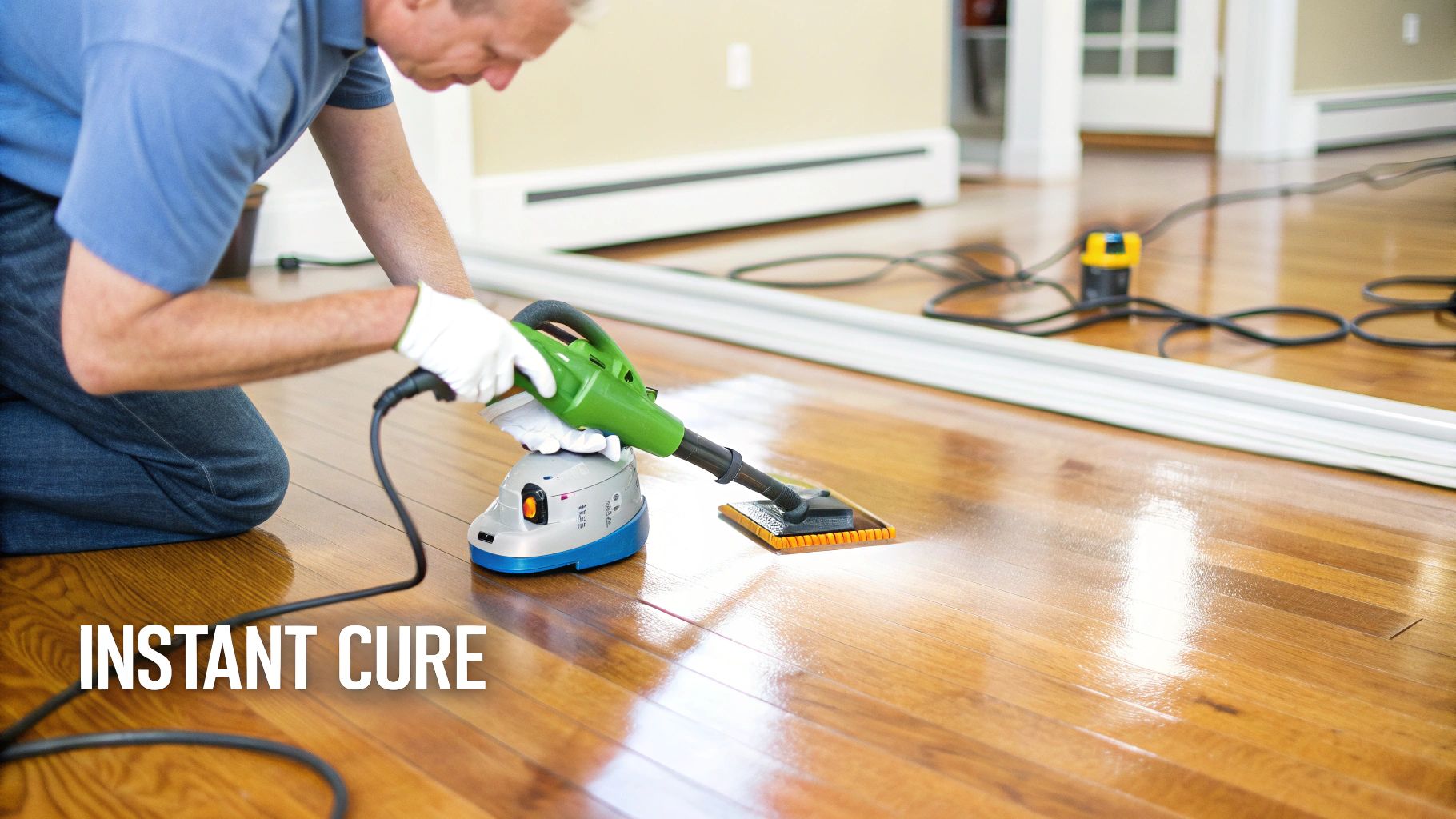
Want the ultimate in speed and convenience? Our UV-Cure System takes the benefits of water-based tech and puts them on hyperdrive. After we apply the specialized finish, we use a powerful UV light to cure it instantly. I mean, seconds. There is absolutely no waiting period. You can literally move your furniture back and get back to normal life the moment we walk out the door.
This instant cure is a game-changer for busy families and commercial spaces that simply can't afford days of downtime. To get a better handle on the different timelines, you can learn more about how long polyurethane takes to cure. And for those who prioritize a healthy home, looking into things like sustainable adhesives and sealants can give you even more peace of mind. The application and cure time truly highlight why modern water-based solutions—especially with our UV-Cure System—are the clear winner for today's hardwood floor projects.
So, Which One Costs More? Let's Talk Dollars and Sense.
When you're trying to decide between oil- and water-based polyurethane for your floors, it’s easy to get stuck on the upfront price tag. But honestly, that’s only half the story. The real cost comes down to lifetime value, maintenance, and how much disruption you’re willing to put up with. Let's break down the numbers so you can make a smart choice for your Highlands Ranch hardwood floor refinishing project.
On paper, a gallon of oil-based polyurethane is almost always cheaper. That lower material cost can seem like a win, right? But here’s the catch: the dry time is painfully slow. We’re talking 8-12 hours between coats, which means a refinishing job stretches out over several days. More days on the job can mean higher labor costs.
The Real Value of Getting Your House Back Faster
This is where modern water-based polys really shine. Sure, the materials cost more per gallon, but they save you big time in other ways. They dry in just 2-4 hours, so our crew can often apply multiple coats in a single day. That efficiency shrinks the project timeline, which can lower labor costs and—most importantly—gets your life back to normal fast.
You're not just buying a floor finish; you're buying back your time. The entire polyurethane coatings market, valued at a whopping $20.53 billion, is shifting toward these fast-curing, low-odor formulas for a reason. Homeowners demand solutions that protect their floors without kicking them out of their own house.
Thinking About Long-Term Value
Let’s look beyond the initial job. The durability of today's premium water-based finishes delivers way more value down the road. A high-end two-component water-based system creates a much harder, more scratch-resistant surface than any traditional oil-based poly can.
This tougher finish means your floors can go years longer before needing maintenance. While you might pay a bit more upfront for a superior water-based system, you end up saving money by pushing future maintenance way down the line.
We designed our pricing tiers to reflect this balance of cost and performance, helping folks in Highlands Ranch pick the perfect finish for their lifestyle:
- Silver & Gold Tiers: These are our go-to options for fantastic wear resistance using high-quality water-based finishes at a really accessible price.
- Platinum & Diamond Tiers: For the ultimate protection, these tiers feature advanced 2K water-based formulas with nano additives for unmatched scratch resistance. Our top-of-the-line Diamond package even includes the UV-Cure System, giving you an instantly hardened, bomb-proof surface.
By matching the finish to your home’s foot traffic, you get the best possible return on your investment. At the end of the day, the best value isn’t the cheapest can of poly—it’s the finish that keeps your floors looking incredible for years.
So, Which Finish Is Right for Your Highlands Ranch Home?
Okay, let's get down to it. Picking the right finish after a Highlands Ranch hardwood floor refinishing project can feel like a huge decision, but it really boils down to one simple question: which product fits your lifestyle? The whole oil vs. water-based debate isn't about finding a single "best" finish—it's about finding the finish that's best for you.
If you're dreaming of that deep, golden warmth you see in traditional floors—maybe in a historic Capitol Hill home—and your house doesn't see a ton of foot traffic, an oil-based finish could be a perfect fit. It definitely delivers that classic, cozy vibe that many of us picture when we think of hardwood.
When Water-Based Is The Clear Winner
But for most modern families here in the Denver Metro Area, today's advanced water-based polyurethanes are just too good to pass up. The real difference between oil and water based polyurethane shines through in busy, active households.
You'll want to go with a water-based system if any of these ring true for you:
- You love your wood's natural color. If you have light woods like maple or you've picked out the perfect stain, a water-based poly is the only way to get a crystal-clear finish that won't turn yellow over time.
- You need your life back, fast. With its quick dry times, a water-based finish means way less disruption. You can get your rooms back in order so much faster.
- Health and air quality are a top priority. The low odor and minimal VOCs make it a no-brainer for families, pets, and anyone sensitive to harsh chemical fumes.
- You need serious durability. Modern two-component (2K) water-based formulas create a harder, tougher surface that stands up to the daily chaos from kids and pets far better than oil.
The Ultimate Solution: Our UV-Cure System
At J.R. Hardwood Floor Refinishing & Cleaning, we're huge believers in our premium water-based systems. Especially our game-changing UV-Cure System. Honestly, this technology is the best of all worlds. It starts with a top-of-the-line water-based finish, which we then cure instantly with a specialized UV light.
What does that mean for you? A floor that's 40% more durable than even the best conventionally cured finishes. There’s zero wait time. You can move furniture back and get back to your normal life the very same day we're done.
Whether you're updating a family home in a newer Highlands Ranch neighborhood or restoring the floors in a bustling Littleton entryway, this instant-cure technology gives you durability and convenience you just can't get anywhere else. It takes all the guesswork and waiting out of the equation, leaving you with a stunningly clear, incredibly tough finish that’s ready for anything. For modern homeowners, this is the definitive choice.
Your Top Polyurethane Questions, Answered
Homeowners from Highlands Ranch to the heart of Denver always have a few key questions when it comes to polyurethane. It's a big decision! Here are the straightforward, no-fluff answers we give our clients every day to help them plan their refinishing project.
Can I Put a Water-Based Finish Over My Old Oil-Based Poly?
Absolutely, but this is a step you can't afford to get wrong. The key is perfect preparation to make sure the new coat sticks for good. Your existing oil-based finish has to be fully cured, squeaky clean, and then lightly abraded—a process we call a screen and recoat. This gives the surface just enough "tooth" for the new water-based poly to grab onto.
If you try to slap a water-based finish over a dirty or unprepared oil-based floor, you're asking for trouble. It will peel, bubble, and fail in no time. For any Highlands Ranch hardwood floor refinishing project where you're switching finish types, this prep work is non-negotiable.
With Kids and a Dog, Which Poly is Actually Tougher?
For a modern, active household, a high-quality two-component (2K) water-based polyurethane is the clear winner for durability. While old-school oil-based poly is certainly tough, it’s a softer finish that tends to show fine scratches more easily, especially from dog nails and the daily grind of family life.
Premium water-based finishes are chemically hardened, creating a much more scratch-resistant surface. And if you want the absolute toughest floor possible? Our UV-Cure System is the answer. It instantly hardens the finish to a level that is 40% stronger than even the best conventionally cured products. It's maximum protection from the moment we leave.
Does Oil-Based Polyurethane Really Smell That Bad?
Yes, it’s a night-and-day difference. That strong, chemical smell from oil-based polyurethane comes from a high concentration of Volatile Organic Compounds (VOCs). The fumes are intense, demand a ton of ventilation, and can linger for weeks. Honestly, it's not a pleasant experience to live through.
Water-based polyurethane, on the other hand, has very low VOCs and only a mild, fast-disappearing odor. This makes it a far healthier and more comfortable choice, particularly for families with kids, pets, or anyone with respiratory sensitivities.
How Does Denver's Climate Impact My Choice of Finish?
Denver's dry air and high altitude can definitely play a role in how finishes cure. The low humidity can sometimes cause oil-based poly to "skin over"—drying too fast on the surface and trapping solvents underneath. Water-based finishes are generally much more stable and predictable in our unique climate.
But here’s the thing: our UV-Cure System takes climate completely out of the equation. By using powerful UV light to cure the finish instantly, we get a perfect, factory-hardened floor every single time, no matter the temperature or humidity. It’s the ideal solution for any home here in Colorado and a key reason people choose us for Highlands Ranch hardwood floor refinishing. Knowing the real difference between oil and water based polyurethane ensures you get a floor that lasts.
Homeowners in Highlands Ranch trust J.R. Hardwood Floor Refinishing & Cleaning to restore the natural beauty of their hardwood floors with our dust-free sanding system and advanced UV-curable finishes. Unlike traditional methods, our UV technology cures instantly, so you can move furniture back the same day with no lingering odor or downtime. Choose the perfect refinishing service to match your needs and home traffic. Our dust-free process ensures a clean, beautiful finish every time.
📞 Phone: 720-327-1127
🌐 Website: jrhardwoodfloorrefinishingandcleaning.com
📍 Service Area: Highlands Ranch, Littleton, Centennial, Lone Tree, Parker, Castle Rock, and the greater Denver Metro Area.
📺 YouTube: See Our Work in Action!