 Skip to content
If you manage a commercial property in Denver, you’ve probably seen the same pattern. The floors get swept, mopped, and spot-cleaned every day, yet the hardwood still looks tired. In a LoDo office, that means scuffed entry paths and dull traffic lanes. In Cherry Creek North retail, it means a floor that no longer matches the brand experience you’re trying to create.
That’s why commercial hardwood floor cleaning has to be treated as asset management, not janitorial upkeep. Hardwood is one of the first things people notice when they walk into a lobby, showroom, restaurant, or conference space. It affects appearance, safety, and how long you can postpone expensive restoration work.
For Denver properties, the conversation also has to include hardwood floor refinishing UV- Cure System options. Businesses here often need the floor back fast, and downtime is usually more expensive than the cleaning itself. That’s one reason UV-curable finishes in high-traffic Denver retail and hospitality have reportedly surged 40% after post-2025 guidance focused on minimizing business interruption (video reference).
Your Complete Guide to Commercial Hardwood Floor Cleaning in Denver
A commercial hardwood floor rarely fails all at once. It declines in stages. First the finish loses clarity. Then the traffic lanes turn gray. After that, grit starts working like sandpaper under shoes, rolling carts, and chair casters. By the time most facility managers call, they’re not dealing with “a dirty floor.” They’re dealing with wear that daily cleaning can no longer hide.
In Denver, that problem shows up in every kind of property. A professional office near Union Station needs a polished look for clients. A hospitality venue near the Convention Center needs durable floors that can recover quickly between events. A boutique in Cherry Creek needs finish clarity, not cloudy residue from the wrong cleaner.
The right plan depends on condition, use, and how much downtime the site can tolerate. Some buildings need professional deep cleaning and buffing. Others need wax removal because the floor has been maintained with the wrong products. High-traffic spaces often benefit from screen and recoat service before finish loss reaches the wood itself. And for facilities that can’t shut down for days, Denver hardwood floor refinishing UV- Cure System service changes the equation because it makes same-day return to use realistic.
Clean floors protect image. Protected floors protect budget.
Why Professional Cleaning Is a Strategic Asset Not Just a Cost
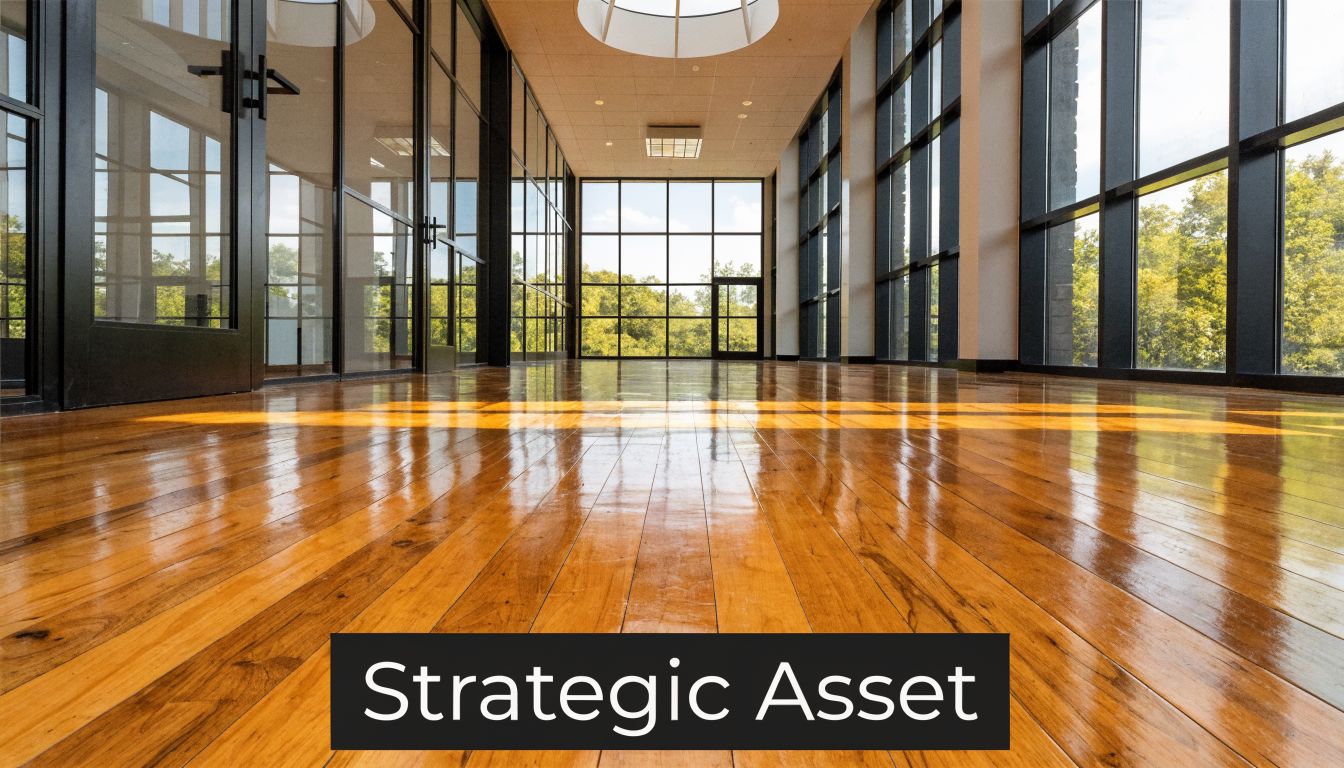
Commercial hardwood isn’t just another finish surface. It’s a capital asset with a visible job. It has to take abuse and still look intentional. When it’s maintained correctly, it supports brand presentation, tenant satisfaction, and longer service life. When it’s neglected, it starts costing money in more than one way.
The market tells the same story. The global industrial and commercial floor cleaning market is projected to reach $124.49 billion by 2035 according to Allied Market Research’s floor cleaning market outlook. Businesses don’t invest in professional floor care at that scale because it’s cosmetic fluff. They do it because appearance, hygiene, and floor longevity matter operationally.
What professional care actually protects
A facility manager usually has four priorities with hardwood:
- Appearance control. A clean floor reflects light evenly and looks maintained rather than patched together.
- Wear management. Removing grit early reduces abrasion before it cuts through finish.
- Operational continuity. The right service matches the building schedule instead of disrupting it.
- Deferred replacement. Proper maintenance helps you avoid moving too quickly from upkeep to full restoration or replacement.
Matching the service to the condition
Not every floor needs refinishing. Some floors need the right intervention at the right time.
| Floor condition | Most likely need | Business outcome |
|---|---|---|
| Surface soil, haze, traffic film | Deep cleaning and buffing | Cleaner look without major interruption |
| Finish looks dull but wood isn’t exposed | Screen and recoat | Restores protection before damage deepens |
| Sticky buildup or cloudy residue | Wax removal | Removes films that attract more dirt |
| Deep scratches, finish failure, color inconsistency | Full sanding and refinishing | Resets the floor system |
A common mistake is paying for the wrong level of service. A janitorial mop routine won’t fix embedded grime. Full sanding isn’t always necessary when the finish layer can still be renewed. Skilled commercial hardwood floor cleaning sits in that middle ground and protects the budget by avoiding overreaction and underreaction.
Why Denver facilities feel the difference quickly
In office corridors, retail entries, and common areas, the floor is part of the customer experience whether anyone talks about it or not. People notice clean wood subconsciously. They also notice dull traffic lanes, sticky residue, and scuffed edges.
That’s why the best maintenance programs don’t wait for visible failure. They treat the hardwood like a lobby HVAC system or a roof membrane. You service it before the damage turns expensive.
The Spectrum of Commercial Hardwood Cleaning Services
Commercial hardwood care works best when you think in layers. Surface care handles daily soil. Corrective cleaning removes what routine mopping leaves behind. Finish renewal restores protection. Full refinishing comes later, only if the earlier steps were skipped or the wear is too advanced.
Deep cleaning and buffing
This is where many facilities should start. A nightly crew can remove loose dirt and spills, but they usually can’t remove embedded traffic film, sticky residue near entries, or the fine grit that settles into the grain and low spots of the finish.
Professional deep cleaning uses the right chemistry and controlled moisture to lift contamination without soaking the wood. After cleaning, buffing can improve clarity and even out the visual wear pattern. That’s especially useful in reception areas, corridors, conference zones, and retail aisles where the floor still has a finish but looks flat.
Screen and recoat
A screen and recoat is the smart middle option when the floor has wear in the finish layer but doesn’t need full sanding. The process lightly abrades the existing finish so a fresh coat can bond properly. You’re not cutting down into bare wood. You’re renewing the protection on top.
This service is ideal for:
- Office suites with worn chair paths and entry traffic
- Retail stores where shine is uneven but the wood color still looks good
- Hospitality spaces that need refreshed protection without a full restoration cycle
Denver property managers often overlook this window. If they wait too long, the finish fails and traffic starts marking the wood itself. At that point, the repair path gets more invasive.
Wax removal when the floor was maintained the wrong way
Some commercial floors look dirty even after they’re cleaned because the issue isn’t dirt alone. It’s product buildup. Embedded polish or wax residues can reduce light reflectance by 30% to 50% and increase micro-scratches at 2 to 3 times the normal rate under heavy traffic according to JAN-PRO’s commercial hardwood cleaning guide.
That’s why wax removal matters. Acrylic polishes and incompatible cleaners can create a film that traps abrasives and dulls the floor. The surface may look shinier at first, but it usually gets dirtier faster and wears unevenly.
If a hardwood floor looks cloudy, smears easily, and never seems fully clean, residue is often the real problem.
For in-house teams trying to avoid that cycle, WipesBlog's wood floor cleaning advice is a useful reminder that product choice matters as much as cleaning frequency.
Full sanding and refinishing
When scratches run through the finish, stain has penetrated, or previous maintenance has left the floor patchy and uncoatable, full sanding becomes the right move. That resets the floor to raw wood and allows a new finish system to be built from the ground up.
For multi-service providers, options typically include full sanding and refinishing, screen and recoat, clean and buff, and wax removal. The value isn’t in selling the biggest job. It’s in choosing the least invasive process that still solves the problem.
The J.R. Hardwood Deep Cleaning and Refinishing Process
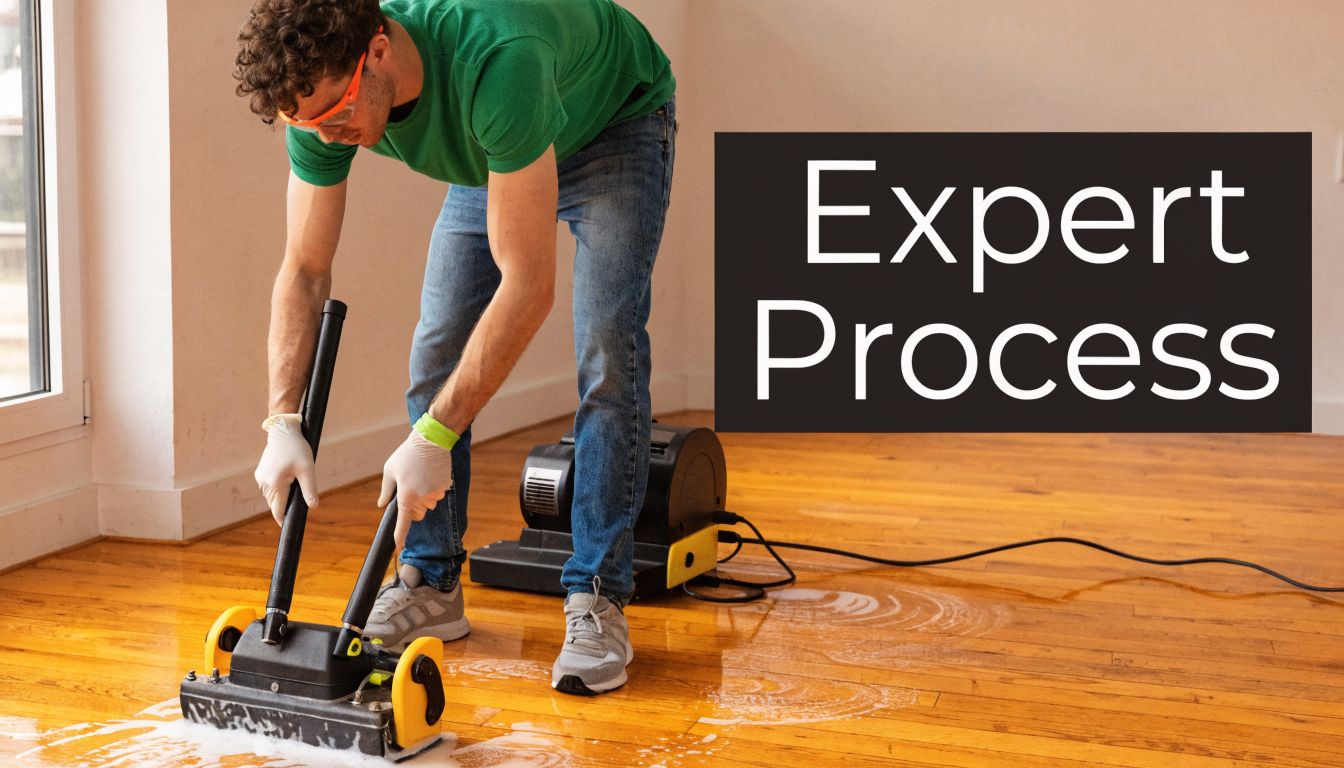
The fastest way to damage a commercial hardwood floor is to clean it like tile. Too much water, aggressive pads, and the wrong detergent can turn routine maintenance into structural damage. Excessive moisture causes permanent warping and delamination of wood fibers, and professionals use low-speed rotary scrubbers with pH-neutral cleaners because they remove contaminants 5 to 10 times more effectively than mopping without causing water damage according to Parterre’s commercial hardwood maintenance guidance.
What a proper deep clean looks like
A commercial hardwood floor should be cleaned in controlled stages, not flooded and chased with a mop.
- Dry soil removal first. Backpack vacuums or hard-floor vacuum systems pull out loose grit before any wet process begins.
- Targeted machine scrubbing. Low-speed rotary equipment agitates embedded grime without digging into the finish.
- Neutral, wood-safe chemistry. pH-neutral cleaners lift residue without leaving films behind.
- Controlled moisture recovery. The slurry is picked up quickly so water doesn’t sit on the floor.
- Inspection for next-step decisions. Once the grime is gone, you can see whether the floor needs buffing, recoating, or sanding.
What doesn’t work
Steam cleaning is one of the most common mistakes. So is over-wetting microfiber pads and assuming “more water means cleaner.” Hardwood doesn’t reward that thinking. Wood absorbs moisture at seams, edges, and finish breaks. Once the floor starts cupping or delaminating, cleaning is no longer the main issue.
A second mistake is trying to polish over contamination. That can lock residue under a new layer and create a short-lived improvement that fails under traffic.
Field rule: If the floor hasn’t been stripped of incompatible residue, no recoat decision is reliable.
A recent example involved a large event-floor restoration in the south metro where the visible problem looked like dullness. After proper dry extraction and machine cleaning, the actual issue turned out to be embedded residue and uneven finish wear. The floor didn’t need a full tear-down immediately. It needed the contamination removed first so the finish condition could be judged accurately.
Later in the process, the right media matters too:
Where dust-free refinishing fits
For sites that do need a more intensive correction, dust containment changes the experience. Systems tied to dust extraction make sanding far more manageable for occupied commercial buildings, especially in mixed-use properties and professional offices.
One provider serving that range of work is J.R. Hardwood Floor Refinishing & Cleaning, which offers commercial floor cleaning, screen and recoat, wax removal, and sanding-based restoration. The practical advantage for a facility manager is having one contractor who can diagnose the floor accurately before choosing the service level.
The UV-Cure System A Revolution for Denver Business Operations
Traditional finish schedules are hard on commercial operations. You clean, coat, rope off the area, control foot traffic, wait, and keep waiting. That model can work in a vacant space. It’s far less friendly in a restaurant, office, boutique, or occupied building with a narrow service window.
Why UV curing changes the schedule
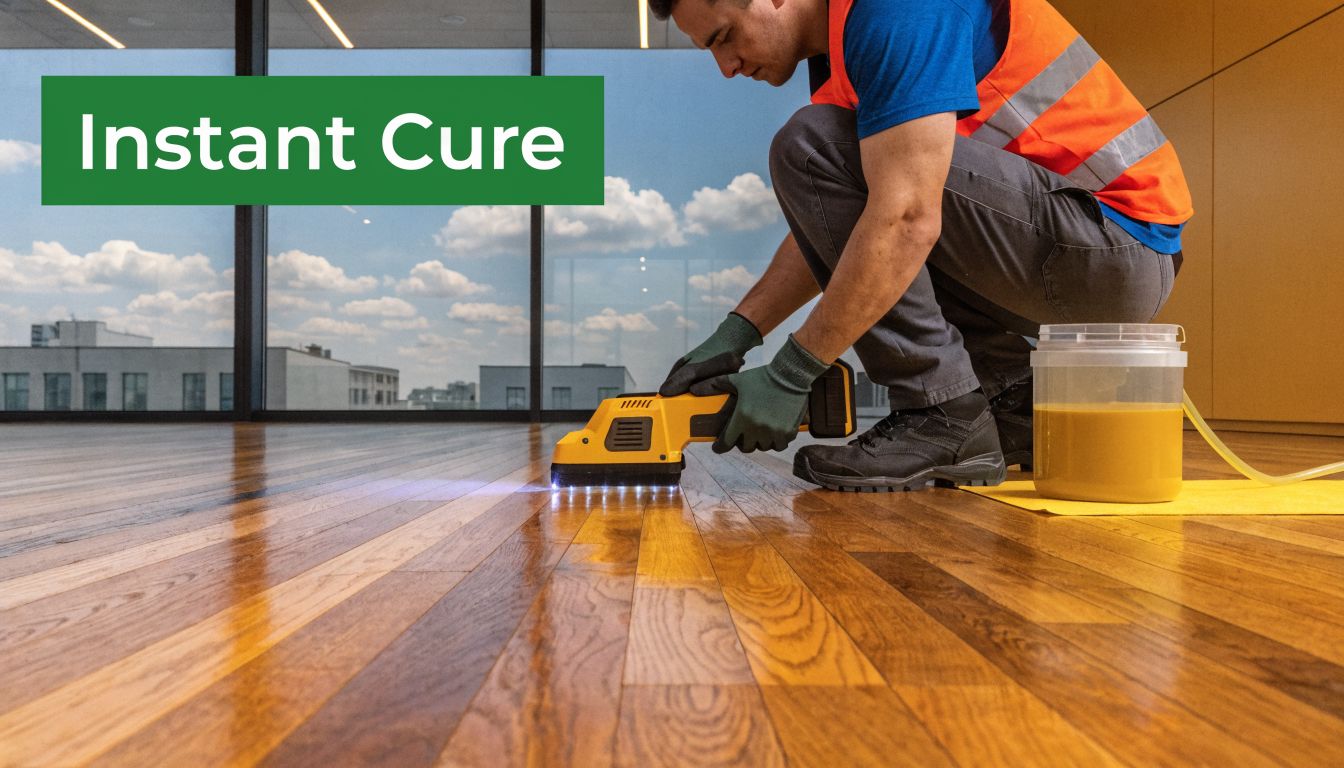
With UV-curable systems, the finish is hardened by UV light instead of waiting through a long ambient cure period. For commercial clients, the biggest advantage is simple. The floor comes back into service much faster. That’s why hardwood floor refinishing UV- Cure System work has become so relevant for Denver businesses that can’t afford extended shutdowns.
For a facility manager, this creates a different planning conversation:
- Night work becomes more practical because the floor can be returned to service quickly.
- Phased projects become easier in properties that need to stay open.
- Tenant and customer disruption drops because the area isn’t offline for days.
If you want a deeper technical walkthrough, this UV-curable hardwood finish guide answers common questions.
Where UV curing makes the most sense
Not every commercial floor needs UV curing, but some environments benefit from it immediately.
| Environment | Why UV curing helps |
|---|---|
| Retail | Limits closure time and protects presentation |
| Hospitality | Supports fast room, corridor, or venue turnaround |
| Office common areas | Reduces disruption to staff and visitors |
| Property management turnovers | Speeds readiness for incoming occupants |
Building a maintenance ladder around UV technology
The smartest use of UV curing is usually as part of a broader floor strategy, not as a standalone buzzword. A good ladder looks like this:
- Routine care first so grit and residue don’t wear through the finish early
- Professional deep cleaning when appearance drops
- Screen and recoat when the finish is tired but recoverable
- UV-cured finish when the operation needs quick return to use
That’s the primary value. UV isn’t just faster chemistry. It’s a scheduling tool for occupied buildings.
Developing a Custom Maintenance Plan for Your Commercial Facility
A law office in the Denver Tech Center doesn’t need the same floor plan as a RiNo taproom. A boutique showroom in Cherry Creek has different wear patterns than a school corridor or common-area lobby. Good commercial hardwood floor cleaning starts with that reality.
The product market is moving in the same direction. The global wood cleaners segment for commercial settings is forecast to reach $758.2 million by 2033, driven by offices, retail, and hospitality where hardwood requires specialized maintenance products and services, according to this commercial wood cleaner market summary.
Recommended Commercial Hardwood Maintenance Schedule
| Business Type | Daily Action | Weekly Action | Annual Professional Service |
|---|---|---|---|
| Office | Dry dust removal at entries, halls, and break areas | Damp microfiber maintenance with wood-safe cleaner | Deep cleaning, with recoat evaluation for high-traffic lanes |
| Retail | Entry grit control and spot cleanup | Machine-assisted corrective cleaning in traffic paths | Deep cleaning and finish assessment before wear reaches wood |
| Hospitality and restaurant | Immediate spill response and debris removal | Detailed cleaning around tables, host stands, bars, and corridors | Deep cleaning, residue removal if needed, and finish renewal planning |
| Healthcare and wellness | Dry soil removal with careful edge cleaning | Low-moisture cleaning using approved wood-safe products | Scheduled professional maintenance based on traffic concentration |
What should be in the plan
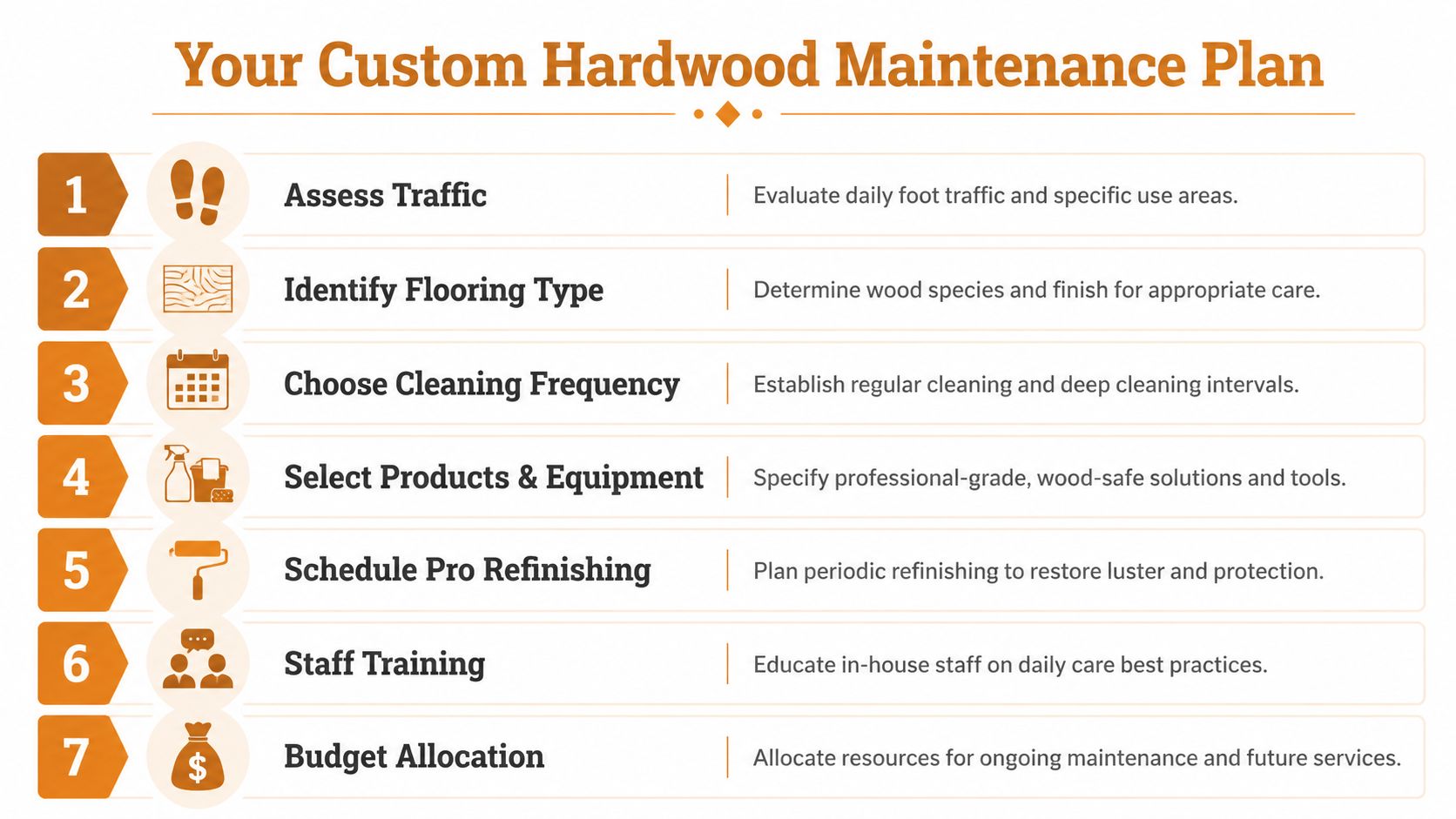
A usable maintenance plan should answer a few specific questions:
- Where is the traffic concentrated. Entrances, waiting areas, and service counters usually fail first.
- What finish is currently on the floor. Recoat decisions depend on compatibility.
- What products are the staff using daily. Wrong cleaners create haze and buildup.
- What downtime window exists. Some buildings can only service overnight or in phases.
A maintenance plan should fit the building’s traffic pattern, not a generic calendar.
For managers who want a localized service overview, Denver commercial floor maintenance support is the kind of resource worth reviewing before you lock in your annual schedule.
A practical budgeting mindset
The cheapest plan on paper often becomes the most expensive in practice. If in-house care uses the wrong cleaner or too much water, the floor may need corrective work long before it should. If you intervene early with proper deep cleaning and finish renewal, you usually preserve more options and avoid a more disruptive restoration later.
Understanding Commercial Hardwood Cleaning Costs and ROI in Denver
Commercial pricing makes sense only when tied to the condition of the floor and the cost of disruption. A simple deep clean has a different purpose than wax removal. A screen and recoat is a different investment than full sanding. And a hardwood floor refinishing UV- Cure System project has value beyond finish appearance because it can compress the downtime window.
For Denver-area budgeting, the current service pricing provided for Parker property management and realtor work offers a useful reference point:
- Wood floor cleaning starts at $1.50 per sq. ft.
- Screen and recoat starts at $2.50 per sq. ft.
- Wax removal starts at $2.50 per sq. ft.
- Instant UV-curable finish is $1.5 per sq. ft.
- Silver Traffic Plus is $4.20 per sq. ft.
- Gold Traffic Plus is $4.50 per sq. ft.
- Platinum Traffic Plus is $4.80 per sq. ft.
- Diamond Traffic Plus is $5.50 per sq. ft.
How to think about ROI
The right question isn’t “What does floor care cost?” It’s “What does neglect force me to pay for later?”
A practical way to evaluate commercial hardwood floor cleaning is to compare three scenarios:
- Routine maintenance only. Lowest immediate spend, but performance depends heavily on product choice and technique.
- Planned professional intervention. Higher scheduled cost, but it protects finish life and appearance.
- Reactive restoration. Usually the most disruptive path because it happens after visible failure.
A useful budgeting exercise is to compare your likely service path against per-square-foot floor refinishing cost guidance. That helps you judge whether a corrective clean or recoat today is likely to postpone a larger restoration bill.
Choosing the right finish tier
For some sites, the premium finish is worth it. High-traffic corridors, pet-friendly mixed-use spaces, and managed turnovers often justify stronger wear systems. Lower-stress professional offices may not need the top tier. The key is matching finish performance to actual traffic instead of buying either too little or too much.
Frequently Asked Questions for Denver Facility Managers
How does Denver’s climate affect commercial hardwood floors
Dry conditions can make existing gaps, finish brittleness, and seasonal movement more noticeable. That doesn’t mean hardwood is a bad commercial choice. It means the floor needs a cleaning and maintenance program that avoids excess moisture and watches finish wear closely, especially at entries and sun-exposed areas.
What’s the difference between nightly janitorial care and professional commercial hardwood floor cleaning
Nightly care handles loose dirt, spills, and general appearance. Professional service deals with embedded grime, residue, finish wear, and compatibility issues. One maintains day-to-day order. The other protects the floor system itself.
Can you work around an active business schedule
Yes, if the work is planned correctly. Many commercial projects are phased by zone, completed after hours, or scheduled around low-traffic windows. For facilities that need the floor back quickly, hardwood floor refinishing UV- Cure System service is often the best fit because it reduces the return-to-use delay.
How do we know if we need deep cleaning, screen and recoat, or full refinishing
Look at the wear pattern. If the floor is dirty and dull but the finish is still intact, deep cleaning may be enough. If the finish is worn but the wood isn’t exposed, screen and recoat is often the right next step. If scratches and traffic have broken through the finish into the wood, sanding is usually the proper correction.
Which finish tier makes sense for heavy use
That depends on traffic type, cleaning discipline, and how much downtime you can tolerate. Higher-durability systems such as Diamond Traffic Plus, Platinum Traffic Plus, Gold Traffic Plus, and Silver Traffic Plus make the most sense when the building sees steady foot traffic and appearance matters every day.
Partner with Denver’s Commercial Hardwood Experts
Commercial floors perform best when maintenance is timed properly and matched to the condition of the wood. That means using low-moisture cleaning methods, removing residue before it becomes a wear problem, refreshing the finish before it fails, and choosing fast-curing systems when your building can’t sit idle. In Denver, that’s the difference between preserving a floor for the long haul and constantly chasing decline.
For commercial properties in Denver, Parker, Castle Rock, Boulder, Greenwood Village, and surrounding communities, the goal is simple. Keep the floor looking sharp, keep downtime low, and spend money at the point where it delivers the best return.
Homeowners on Parker trust J.R. Hardwood Floor Refinishing & Cleaning to restore the natural beauty of their hardwood floors with our dust-free sanding system and advanced UV-curable finishes. Unlike traditional methods, our UV technology cures instantly, so you can move furniture back the same day with no lingering odor or downtime. Choose the perfect refinishing service to match your needs and home traffic. Our dust-free process ensures a clean, beautiful finish every time.
📞 Phone: 720-327-1127
🌐 Website: jrhardwoodfloorrefinishingandcleaning.com
📍 Service Area: Denver and nearby towns including Parker, Castle Rock, Aurora, Littleton, Highlands Ranch, Greenwood Village, Boulder, Lakewood, Westminster, and surrounding Colorado communities
▶️ YouTube: Watch J.R. Hardwood videos