 Skip to content
When you're looking for the best waterproof flooring for basements, it's easy to get overwhelmed. But time and again, homeowners find that Luxury Vinyl Plank (LVP) hits that perfect sweet spot of 100% waterproof protection, serious durability, and looks that could fool a lumberjack. It's the modern answer to an age-old problem, taking moisture worries completely off the table.
Navigating Basement Flooring in Denver Homes
Turning a basement from a concrete box into a cozy living space is a rite of passage for many Denver homeowners. Whether you're in a classic Tudor in Wash Park or a newer build out in Central Park, the biggest hurdle is always the same: moisture. Basements are ground zero for water issues, thanks to Colorado's notorious expansive soil, heavy spring snowmelt, and wild humidity swings.
This reality makes your flooring choice one of the most important decisions you'll make in any basement remodel. Get it wrong, and you're looking at a soggy, expensive mess.
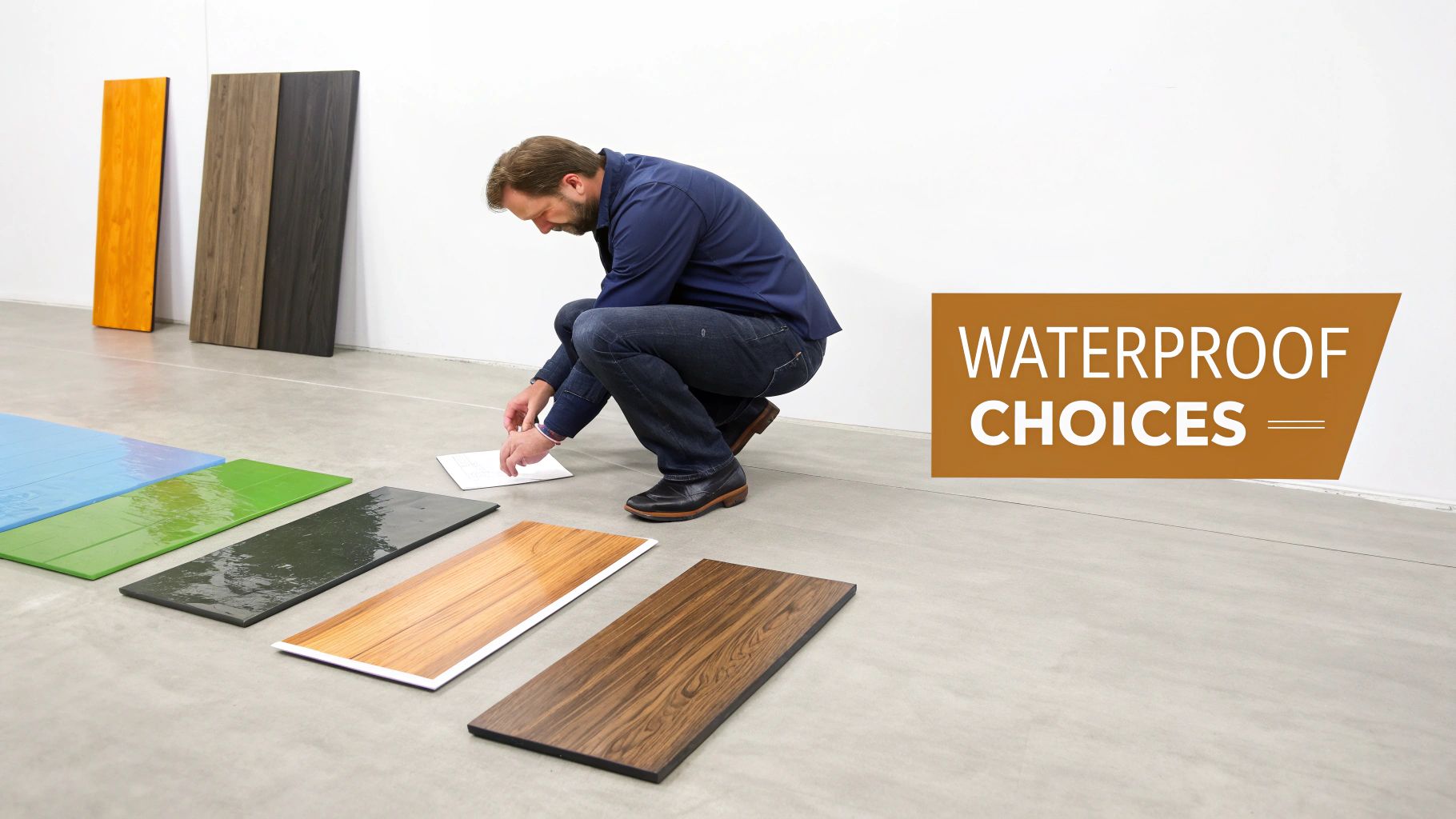
The good news? Flooring technology has come a long, long way. The days of choosing between cold concrete and mildew-prone carpet are over. Today’s market is full of materials built to be completely immune to water. If you want to dig deeper, this guide on finding the best flooring options for basements is a great resource.
Top Waterproof Contenders for Your Basement
Making the right call comes down to balancing durability, cost, and how you actually plan to use the space. Here are the heavy hitters we see homeowners choosing again and again:
-
Luxury Vinyl Plank (LVP): This is the undisputed champ for basements, and for good reason. LVP is 100% synthetic, which means water can't make it swell, warp, or delaminate—ever. It offers stunningly realistic wood and stone looks, feels warmer underfoot than tile, and is tough enough for a high-traffic family room or playroom.
-
Ceramic & Porcelain Tile: When it comes to being flood-proof, nothing beats tile. It’s completely waterproof and practically indestructible. This makes it a no-brainer for basement bathrooms, laundry rooms, home gyms, or any area where you anticipate higher moisture levels.
-
Waterproof Laminate: Not your grandma's laminate. The new generation of waterproof laminate features a beefed-up core and sealed top layer, giving you a budget-friendly and super scratch-resistant alternative to LVP. It’s a durable surface that looks fantastic in any finished space.
-
Engineered Hardwood Alternatives: Hold on—wood in a basement? While traditional solid hardwood is a definite no-go, some advanced engineered products are designed to handle below-grade conditions better. For those who can't part with the idea of real wood, checking out the best engineered wood flooring brands can point you toward options with better moisture resistance.
The secret to a successful basement floor is choosing something that is 100% waterproof, not just "water-resistant." That single word makes all the difference when you're protecting your investment from the unique challenges of a space below ground.
Why Waterproof Flooring Is a Must-Have for Denver Basements
For so many of us here in Denver, a basement is more than just a foundation—it's prime real estate waiting to become a cozy family room, a home gym, or that guest suite you’ve always wanted. But this below-grade space has one persistent enemy: moisture. Slapping down standard flooring in a basement isn’t just a design mistake; it’s practically an invitation for expensive, heartbreaking damage down the road.
To really get why this is so critical, you have to understand the importance of keeping your basement dry and moisture free. Unlike the rooms upstairs basking in the sun, your basement is hugged on all sides by soil, making it uniquely vulnerable to water trying to sneak in.
The Unique Moisture Challenges We Face in Denver
The Front Range climate creates a perfect storm for basement moisture problems. Simply put, water will always find a way in, and typical flooring materials like carpet or traditional hardwood offer zero defense.
Here are the main culprits every Denver homeowner needs to be aware of:
- Hydrostatic Pressure: Colorado is famous for its expansive clay soils. After a heavy spring snowmelt or one of our classic summer thunderstorms, this soil swells up with water. This creates immense pressure against your foundation walls and slab, literally forcing water vapor right through the porous concrete. The result? A constant state of dampness.
- Condensation: We’ve all felt it—that significant temperature difference between the cool basement slab and the warmer, more humid air inside. This creates condensation. Those tiny water droplets collect on and, more importantly, under your flooring, creating the perfect breeding ground for mildew and rot.
- Leaks and Flooding: From a burst pipe or a failed sump pump to improper grading around your foundation, the potential for a serious water event is always there. In those situations, non-waterproof flooring is almost always a total loss.
The Messy Consequences of Choosing the Wrong Flooring
When moisture gets into flooring materials that weren't built to handle it, the results are predictable and destructive. Wood warps and cups. Laminate swells and peels apart at the seams. And carpet? It becomes a giant, smelly sponge for mold spores.
The Hidden Danger of Moisture: The biggest threat isn't just the visible damage you see on your floors. That persistent dampness creates a five-star hotel for mold and mildew, which can seriously compromise your home's air quality and pose real health risks. If you ever suspect a problem, understanding how to deal with black mold on hardwood floors drives home just how serious moisture intrusion can be.
This is exactly why investing in the best waterproof flooring for basements has become a non-negotiable for smart homeowners. It’s a proactive move that protects your property value and, more importantly, your family’s well-being.
The flooring industry has caught on, and the growth has been incredible. The global waterproof flooring market was valued at a whopping $44.55 billion USD in 2023 and is projected to hit $64.23 billion USD by 2032. For us in Denver, this trend is great news—it means more innovative, stylish, and affordable options are available than ever before.
A Detailed Comparison Of Top Waterproof Flooring Options
When it comes to picking the best waterproof flooring for a basement, you've got to weigh how different materials stand up to the unique challenges of a below-grade space. This isn't just about looks. It's about making a smart investment in a floor that will give you lasting protection and real value. Let's break down the top contenders to see how they really stack up.
For any Denver homeowner thinking about a flooring project, this decision tree is a great starting point.
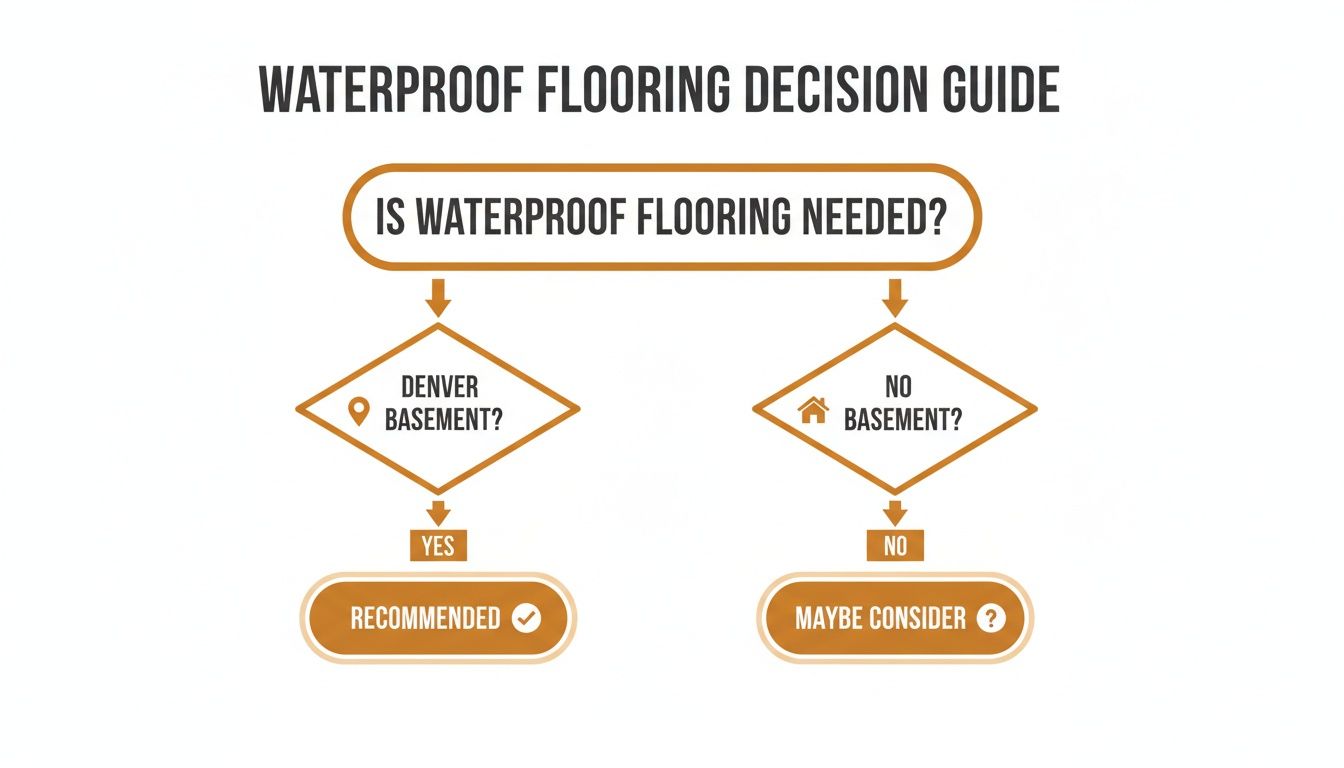
The takeaway here is simple: for any basement in the Denver area, waterproof flooring isn't just a nice-to-have. It’s a flat-out necessity for any renovation you want to last.
Luxury Vinyl Plank (LVP): The All-Around Champion
Luxury Vinyl Plank, or LVP, has become the go-to choice for basements, and for some very good reasons. It’s made from 100% synthetic materials, which means it’s completely immune to water damage. Spills, leaks, or condensation can't get into its core, so you’ll never see it swell, buckle, or warp.
On the style front, modern LVP offers shockingly realistic wood and stone looks that can elevate any design. It's also much warmer and more forgiving under your feet than tile, making it a comfortable choice for family rooms, playrooms, or home gyms where you spend a lot of time on the floor.
Another huge plus is how flexible it is to install. LVP is usually laid as a "floating floor," meaning it can go right over a concrete slab, even one with minor imperfections. This is a game-changer in older Denver homes where basement floors are rarely perfectly level.
Ceramic And Porcelain Tile: The Flood-Proof Fortress
When absolute, total water immunity is your number one priority, nothing beats ceramic or porcelain tile. These materials are made from fired clay, making them inherently waterproof. They can handle a major water event—like a burst pipe or a failed sump pump—without taking any damage.
This makes tile the perfect choice for high-risk areas like basement bathrooms, laundry rooms, or utility spaces. Its durability is legendary; it resists scratches, dents, and heavy foot traffic with ease, making it a true lifetime flooring solution. The design possibilities are practically endless, too, with a huge variety of colors, sizes, and patterns to choose from.
But tile does have its trade-offs. The surface is hard and cold, which isn't always ideal for a living space. Many homeowners in colder climates like Denver choose to install radiant heating systems underneath to make it more comfortable. Professional installation is also pretty much a must to get a perfectly flat surface and properly sealed grout lines, which adds to the overall project cost.
Key Consideration: While both are great, porcelain tile is denser and less porous than ceramic tile. That makes it the superior choice for maximum moisture protection in a basement.
Waterproof Laminate: The Durable And Budget-Friendly Contender
Today's waterproof laminate is a whole different beast from the stuff you might remember from the past. Modern versions are engineered with a water-repellent wear layer and a high-density core built to resist moisture. This makes it a solid and often more affordable alternative to LVP.
One of laminate’s best features is its incredible scratch resistance. The tough top layer is often more durable than LVP’s, making it an excellent pick for households with active pets or kids. Like LVP, it offers a wide range of realistic wood looks and is pretty easy to install with a click-lock system.
It's absolutely critical to make sure you're buying a product labeled as 100% waterproof, not just "water-resistant." Water-resistant laminate can handle spills on the surface, but water that seeps into the seams can still cause the core to swell. For a basement, only a truly waterproof option will give you the protection you need for the long haul. As you look at different styles, understanding the various types of hardwood flooring in Aurora can give you some great inspiration for the wood-look aesthetics you can get with waterproof laminate.
Waterproof Basement Flooring Side-by-Side Comparison
To make things easier, here’s a quick-reference table comparing our top basement flooring contenders. This should help you see at a glance how they measure up on the factors that matter most.
| Feature | Luxury Vinyl Plank (LVP) | Porcelain & Ceramic Tile | Waterproof Laminate |
|---|---|---|---|
| Waterproof Level | 100% Waterproof (synthetic core) | 100% Waterproof & Flood-Proof (inherently impervious) | 100% Waterproof (specialized core & sealant) |
| Durability | Very Good (resists dents & scratches) | Excellent (resists scratches, stains, & heavy loads) | Excellent (superior scratch & impact resistance) |
| Comfort | Warmer and softer underfoot | Hard, cold surface (can be paired with radiant heat) | Comfortable underfoot, similar feel to LVP |
| Installation | DIY-friendly (floating click-lock system) | Professional installation highly recommended | DIY-friendly (floating click-lock system) |
| Subfloor Needs | Forgiving of minor imperfections | Requires a perfectly flat, stable subfloor | Can be installed over slightly uneven surfaces |
| Typical Cost | $2 – $7 per square foot | $3 – $15 per square foot (plus installation) | $3 – $6 per square foot |
Each of these options brings something different to the table. LVP is the versatile all-star, tile is the indestructible fortress, and waterproof laminate is the tough, budget-savvy choice. Your final decision will really come down to your specific needs, your basement's conditions, and your personal style.
Preparing Your Subfloor for a Lasting Waterproof Installation
Let's be honest: even the most amazing waterproof flooring will fail if the foundation underneath it isn't right. The performance and lifespan of your new basement floor depend completely on the concrete slab it’s sitting on. Skipping this prep work is just asking for trouble down the road.
Taking the time to get your basement subfloor ready isn’t just a suggestion—it’s the single most important step to protect your investment. This is the groundwork that ensures your new floor looks and feels fantastic for years to come.
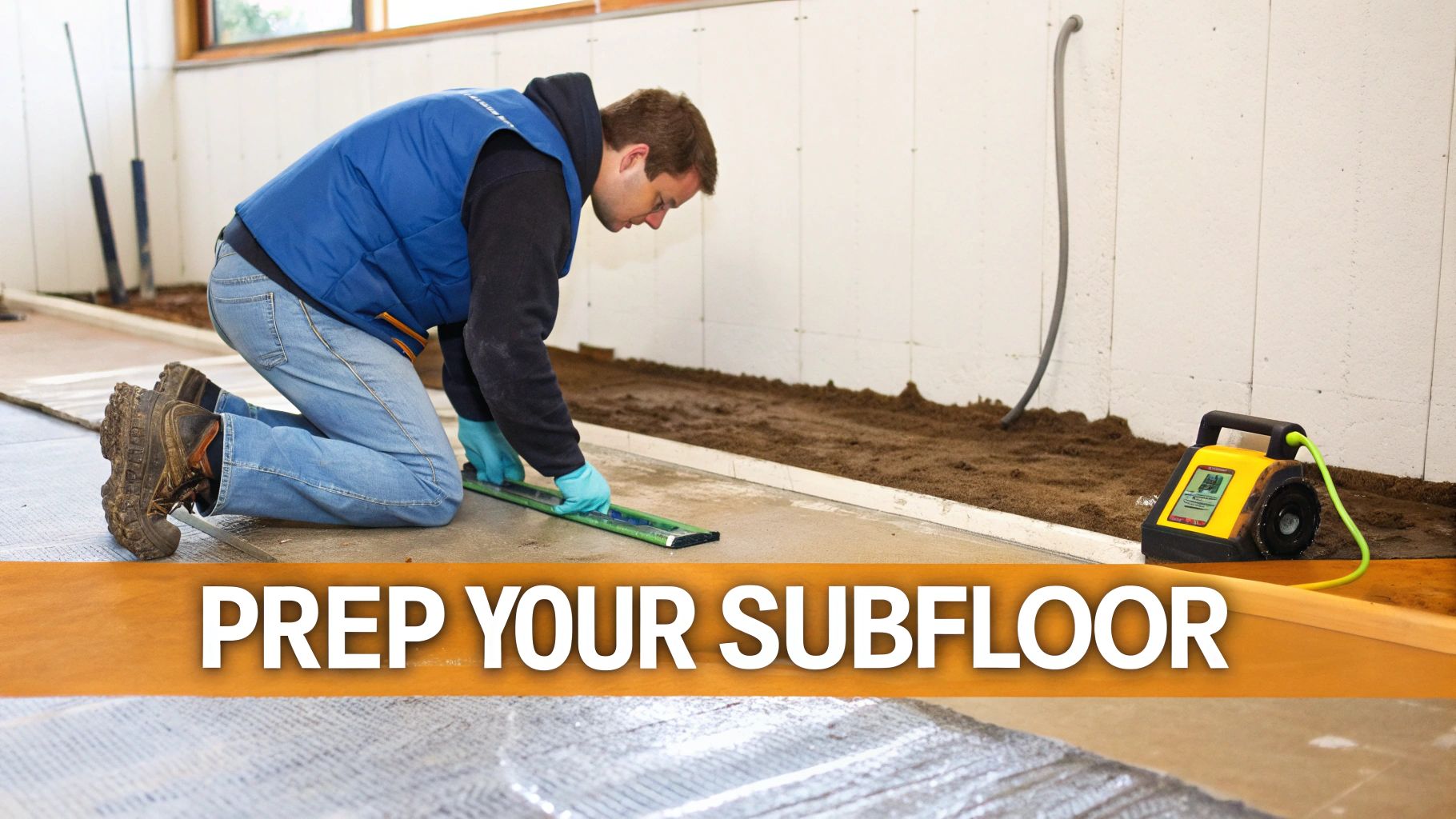
Assessing Your Basement Subfloor for Moisture
Before a single plank or tile goes down, you have to figure out how much moisture is coming up through that concrete. Your slab might look bone-dry, but concrete is porous and can pull a surprising amount of water vapor from the soil beneath it.
The easiest way to check this is with the classic plastic sheet test. It’s simple but incredibly effective:
- Grab a 2×2 foot square of clear plastic sheeting and some duct tape.
- Tape it down securely to a clean spot on your concrete slab, sealing all four edges completely.
- Now, just leave it alone for 24-48 hours.
- After a day or two, peel back the plastic and look for condensation on the underside.
If you see water droplets, you’ve got an active moisture issue that needs to be solved first. This simple test is a critical diagnostic that stops you from trapping damaging moisture right under your beautiful new floor.
Cleaning and Leveling The Concrete Slab
Once you’ve tackled any big moisture problems, it's time to prep the surface itself. For the best results, your subfloor needs to be perfectly clean, flat, and smooth.
Start by scraping and sweeping the entire area to get rid of any dirt, old glue, or random construction gunk. If it's looking a little grimy, a degreasing cleaner will take care of any oils or residues.
Next, check for levelness. Use a long, straight board or a level to find any high and low spots.
- High spots can usually be ground down with a concrete grinder.
- Low spots, cracks, and pits should be filled in with a cement-based patching compound or a self-leveling mix.
A perfectly flat and stable subfloor is especially critical for rigid materials like ceramic and porcelain tile. An uneven surface can lead to cracked tiles and failed grout lines over time.
When a Vapor Barrier Is Non-Negotiable
A vapor barrier is a sheet of plastic (usually 6-mil polyethylene) that you lay over the concrete. Its only job is to block any leftover water vapor from ever reaching your flooring. Simple, right?
For any below-grade basement here in the Denver area, a vapor barrier is almost always a smart move. In fact, most flooring manufacturers require it to keep your warranty valid. Think of it as cheap insurance—an essential line of defense that’s well worth the small effort. Some modern underlayments even have a vapor barrier built right in, which makes installation even easier. Many of these foundational steps are covered in our guide to professional hardwood floor installation, which has great info that applies to waterproof flooring, too.
Making a Smart Decision for Your Denver Basement
Choosing the best waterproof flooring for your basement really comes down to matching the right material to your family's lifestyle, your budget, and the specific quirks of your home. With all the options we've covered, you can move forward feeling confident, knowing exactly what to look for.
Every neighborhood in Denver has its own unique challenges—from high water tables near the Platte to the expansive soils out east. Nailing this choice means you get a beautiful, lasting result that stands up to whatever our Colorado climate throws at it.
So, What's the Right Fit for Your Home?
To make the final decision a little easier, let's walk through a few common scenarios we see all the time with homeowners in the Denver Metro Area:
-
The Active Family in Highlands Ranch: If your basement is destined to be a high-traffic playroom, a busy family den, or a home gym, Luxury Vinyl Plank (LVP) is the undisputed champ. It’s warm underfoot, unbelievably tough against dropped toys and spills, and the wood looks these days are so convincing they create a genuinely cozy and inviting space.
-
Homes in Flood-Prone Areas like Cherry Creek: Let's be real—if your home is near a high water table or has a history of moisture problems, you need absolute peace of mind. Porcelain tile is the ultimate fortress against water. It’s the smartest, most foolproof choice for any basement that needs maximum flood protection, period.
-
The Budget-Conscious Remodel in Aurora: When you need a solution for a finished laundry room or home office that's durable, stylish, and won't break the bank, waterproof laminate is a fantastic option. You get incredible scratch resistance and a high-end look that seriously outperforms its price tag.
Picking the right floor is a long-term investment in your home's value and your family's health. The goal isn't just to install something that looks good for a year or two; it's to create a dry, comfortable, and completely worry-free living space for years to come.
This focus on creating durable, dry basements is a huge deal right now. The global market for basement waterproofing is projected to hit $3.91 billion by 2025, driven by stricter building codes and unpredictable weather. For homeowners like you, that's great news—it means the products available today are better and more effective than ever.
Let the Pros Handle the Installation
No matter which waterproof flooring you fall in love with, professional installation is what makes it all work. A perfect floor can fail with a bad install, especially in the tricky below-grade environment of a basement. At J.R. Hardwood, we specialize in putting in these advanced waterproof systems with the precision they demand.
We make sure your subfloor is perfectly prepped and your new floor is laid down exactly to manufacturer specs. This guarantees a beautiful finish that actually lasts. Budgeting is a big part of the puzzle, and while this guide focuses on new installs, you can get a good idea of flooring costs by checking out our guide on floor refinishing cost per square foot.
Ready to get started? Contact us today for a consultation and let's build your perfect Denver basement from the ground up.
Got Questions About Waterproof Basement Flooring? We've Got Answers.
When it comes to finishing a basement, the flooring choice brings up a ton of questions. We hear them all the time from homeowners right here in Denver. Let's tackle some of the most common ones so you can feel totally confident in your decision.
What’s the Real Difference Between “Waterproof” and “Water-Resistant”?
This is probably the single most important question for any basement project. Think of it this way: waterproof flooring is like a submarine. Materials like LVP and porcelain tile are completely non-porous. You could leave them submerged in water, and their core simply won't swell or absorb a drop.
On the other hand, water-resistant flooring is more like a rain jacket. It can handle a quick spill on the surface, but if water sits too long or seeps between the planks, it's going to soak into the core and cause permanent damage. For any below-grade space in our area, you absolutely need a floor that is 100% waterproof. No exceptions.
Can I Just Install New Waterproof Flooring Right Over My Old Basement Floor?
Sometimes, yes—but you have to be careful. Floating floors like LVP are designed to go over a clean, flat, and dry concrete slab or even some existing hard floors. The key phrase there is "in excellent condition."
Trying to lay new planks over old, cracked, or uneven surfaces is just asking for trouble. It'll almost certainly void your warranty, and you'll end up with a floor that feels unstable, creaks, and fails way sooner than it should. A professional check is the only way to know for sure if your current floor is a solid foundation.
A successful installation is all about what’s underneath. The condition of your subfloor is just as important as the quality of the flooring you choose. A solid, dry, and level foundation is non-negotiable for a lasting result.
How Does This Stuff Hold Up to Kids and Pets?
Wonderfully. This is where most modern waterproof flooring really shines for busy families. A high-quality LVP, for example, has a seriously tough protective wear layer that shrugs off scratches from dog claws, dragged toys, and constant foot traffic.
The seamless, waterproof surface also means accidents—from muddy paws to spilled juice—are no big deal. You just wipe them up. This keeps stains from setting and, more importantly, prevents moisture from sneaking into the subfloor. It's the durable, low-stress solution that can handle the beautiful chaos of family life.
What's the Ballpark Cost to Get Waterproof Flooring Installed in a Basement?
The final price tag can swing quite a bit depending on the material you pick, the size of your basement, and how much prep work the subfloor needs.
Here's a quick breakdown of the typical cost hierarchy:
- Waterproof Laminate: Usually the most budget-friendly starting point.
- Luxury Vinyl Plank (LVP): Sits in that sweet spot of the mid-range, offering fantastic value and durability for the price.
- Porcelain or Ceramic Tile: This is your premium option, mainly because both the materials and the labor-intensive installation cost more.
We believe in total transparency, so we provide detailed quotes that break down every part of the job. You'll know exactly what you're paying for before we even start.