 Skip to content
When it comes to keeping your hardwood floors looking their best, the secret isn't scrubbing harder—it's cleaning smarter. The best hardwood floor cleaning products are always pH-neutral, water-based formulas made specifically for wood finishes. Think of it like this: you wouldn't wash a silk shirt with harsh laundry detergent, right? The same logic applies to your floors. These gentle cleaners lift dirt and grime without leaving a dull film or, worse, stripping away the protective finish that keeps your wood safe. That's why for homeowners in Parker, choosing the right product for hardwood floor refinishing maintenance is critical, especially when protecting a professional-grade finish like our UV-Cure System.
So, ditch the all-purpose cleaners, vinegar solutions, and especially those oily soaps that promise a quick "shine." They often do more harm than good, creating a sticky buildup that attracts even more dirt and can cause serious finish problems down the road.
Your Guide to the Best Hardwood Floor Cleaning Products in Parker, CO
Walking down the cleaning aisle can feel like a pop quiz you didn't study for. With dozens of bottles all claiming to be the best, how do you choose the right one? Pick wrong, and you could end up with a sticky, dull mess or even permanently damage your beautiful floors. For every homeowner—from those in historic Denver bungalows to modern builds in Parker neighborhoods like Stonegate—knowing what's inside that bottle is the first step to preserving your floor's natural warmth and beauty.
This guide is here to cut through all that noise. We'll break down exactly why a pH-neutral, finish-compatible cleaner is your floor's best friend. More importantly, we'll shine a spotlight on the sneaky ingredients you need to avoid—like ammonia, bleach, and vinegar—that can slowly eat away at your floor’s protective topcoat. Trust us, choosing the right product is just as important as your mopping technique.
Of course, daily cleaning is key, but sometimes your floors need a little more love than a simple wipe-down can provide. That’s where a professional touch makes all the difference. At J.R. Hardwood Floor Refinishing & Cleaning, we offer services that go way beyond what you can get from a store-bought kit.
For floors with grime that's settled deep into the grain or minor scuffs that just won't budge, a professional deep clean can bring back that original luster without the cost and hassle of a full refinish. Our specialized equipment and solutions gently lift away the dirt that regular mopping just spreads around, leaving you with a perfectly clean slate.
We’re proud to serve homeowners all across the Parker and Denver metro area, offering expert hardwood floor refinishing in Parker and advanced maintenance that keeps your floors looking incredible. Whether it’s a routine clean and buff to freshen things up or our game-changing UV-Cure System for an unbeatable finish, our mission is to protect your investment for years to come.
Understanding the best products is your first line of defense, but knowing when to call in an expert is the key to true long-term care. In the next section, we’ll dive into how to identify your floor’s finish—the single most critical piece of information for building your cleaning strategy.
Understanding Your Hardwood Floor's Finish: A Parker Hardwood Floor Refinishing UV-Cure System Perspective
Before you even think about picking from the hundreds of the best hardwood floor cleaning products out there, you need to know what you’re actually cleaning. Here’s a little industry secret: you’re not cleaning the wood. You’re cleaning the protective finish sitting on top of it.
Think of that finish as a crystal-clear shield. Using the wrong cleaner is like scrubbing that shield with sandpaper. You won't see the damage overnight, but you're slowly wearing down its defenses and exposing the vulnerable wood underneath.
This is why figuring out your floor’s finish is the single most important step you can take. A newer home in Parker might have a tough, water-based polyurethane, while a historic house in Highlands Ranch could have an old-school wax finish. Each one needs a totally different game plan to avoid permanent damage.
Common Hardwood Floor Finishes
Most floors you'll find in homes today are sealed with a surface finish, which is almost always some form of polyurethane. These create a durable top layer that keeps spills and dirt from ever touching the wood.
- Water-Based Polyurethane: This is the modern go-to. It has low odor, dries fast, and stays crystal clear without yellowing over time. It’s super durable, but you must use pH-neutral cleaners on it to keep it from getting cloudy or stripped.
- Oil-Based Polyurethane: Famous for its tough, warm amber glow, this finish is also a workhorse. It takes longer to cure, though, and can be seriously damaged by ammonia-based cleaners, which will soften and dull the surface in a heartbeat.
- Penetrating Finishes (Oils & Waxes): These are less common now. Instead of sitting on top, these finishes soak into the wood grain itself for a more natural, low-sheen look. The trade-off is less protection against moisture and scratches. They must never be cleaned with water-based products—you’ll end up with white spots and a damaged floor.
As hardwood floors have become more popular, the cleaning product industry has exploded. The global floor cleaner market is sitting at around $5.8 billion in 2024 and is expected to nearly double by the early 2030s. This isn't a coincidence. Homeowners are getting smarter, looking for specialized, pH-neutral products to protect their investment and keep their warranties intact. It’s a clear sign that people are moving away from those generic, all-purpose cleaners that do more harm than good.
How to Identify Your Floor's Finish
Not sure what kind of finish you’re dealing with? No problem. Here’s a simple, safe test you can do in a hidden spot, like inside a closet or under the sofa.
- Put a small amount of rubbing alcohol on a cotton ball.
- Gently rub it on that hidden spot.
- Does the finish get sticky or rub off onto the cotton ball? You probably have an older shellac, varnish, or wax finish. These need special care.
- If nothing happens, you almost certainly have a modern polyurethane finish. That’s great news! It means you can safely use the best water-based, pH-neutral hardwood cleaners on the market.
Want to go deeper on finishes? For a full breakdown of the different types and what makes them tick, check out our ultimate guide to hardwood floor finishes.
This little flowchart helps break down the very first question you should ask yourself when picking a cleaner.
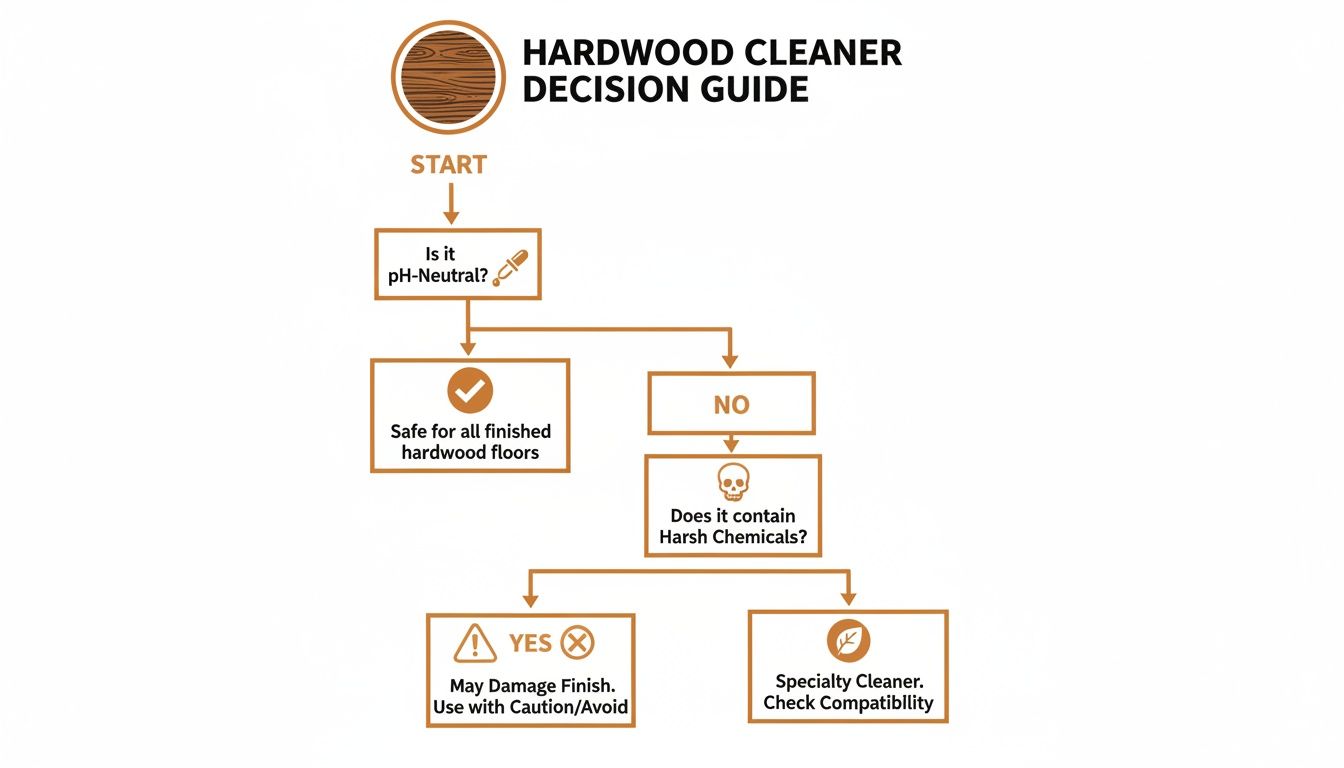
The main takeaway? Making sure a cleaner is pH-neutral is the number one safety check for protecting most modern hardwood floors.
Knowing your finish gives you the power to choose the right stuff for daily upkeep. It also helps you recognize when it’s time to call in the pros. At J.R. Hardwood, our hardwood floor refinishing services in Parker are tailored to protect and revive specific finishes. Our screen and recoat process is perfect for bringing a dull polyurethane surface back to life, while our advanced UV-Cure System delivers an incredibly durable, instantly cured shield to protect your floors for years.
Decoding Product Labels: What to Look For and Avoid
Walking down the cleaning aisle can feel overwhelming. Dozens of bottles scream bold claims, and it's tough to know which one won't secretly sabotage your beautiful hardwood floors. The key to finding the best hardwood floor cleaning products is learning to read the fine print.
Think of a product label like a recipe—the right ingredients create a masterpiece, while the wrong ones can be a disaster. Getting comfortable with a few key terms is the first step to protecting your investment.
When you spot phrases like "pH-neutral," "water-based," and "residue-free," you're heading in the right direction. These are signals that a cleaner is gentle enough to lift dirt without launching a chemical assault on your floor's protective finish. A pH-neutral formula is especially critical for modern polyurethane finishes because it prevents the cloudiness and premature wear that acidic or alkaline cleaners cause.
The Good Stuff: Must-Have Ingredients for a Safe Clean
Honestly, the best products often have the simplest, most transparent ingredient lists. You want to see cleaners that aren't afraid to tell you what's inside the bottle.
- Plant-Based Solvents: Often derived from things like corn or coconut, these are fantastic at breaking down grime without being harsh on your finish. They’re also biodegradable and way better for your home's air quality.
- Surfactants: These are the little workhorses that lift dirt and oil from the floor so your mop can whisk it away. In a quality cleaner, they’re mild and designed to rinse clean, leaving zero film behind.
- Water: The main ingredient in any safe hardwood cleaner should always be water. It's the carrier for the cleaning agents, ensuring they're diluted properly and gentle on the wood.
The Bad Stuff: Ingredients to Avoid at All Costs
Knowing what to look for is only half the battle; knowing what to run from is just as important. Some common cleaning agents are absolute wrecking balls for hardwood finishes. Using them is a surefire way to find yourself needing a costly hardwood floor refinishing service sooner than you’d like.
Here's a quick look at the most common ingredients that are bad news for your hardwood floors.
Hardwood Cleaner Ingredient Cheat Sheet
| Ingredient | Effect on Hardwood Finish | Verdict |
|---|---|---|
| Ammonia | Highly alkaline; softens and dulls polyurethane finishes over time, making them sticky and prone to scratching. | AVOID |
| Vinegar | Acidic; slowly eats away at the floor's finish, leaving it looking dull and unprotected against moisture. | AVOID |
| Bleach | Extremely harsh; can discolor the wood itself and will absolutely destroy the protective topcoat. | AVOID |
| Oil Soaps (e.g., Murphy's) | Leaves behind an oily residue that builds up, attracts dirt, makes floors slick, and interferes with future recoating. | AVOID |
| Silicone and Waxes | Creates a temporary shine that quickly turns into a cloudy, streaky mess that's difficult and expensive to strip. | AVOID |
| pH-Neutral Formulas | Gentle on modern finishes; cleans effectively without causing chemical wear, cloudiness, or dulling. | SAFE |
| Plant-Based Solvents | Effectively breaks down grime without harsh chemicals; biodegradable and safer for indoor air. | SAFE |
Steer clear of that "avoid" column, and you'll be in good shape.
Using the wrong cleaner can do more than just make your floors look bad—it can void your floor's warranty. Manufacturers are very specific about maintenance, and using unapproved chemicals gives them an easy out if problems arise. This is especially critical in Colorado's dry climate, where floors are already under environmental stress.
Professional-grade cleaners, like the ones we trust at J.R. Hardwood, are specifically formulated to be tough on dirt but gentle on your finish. They’re designed to work with modern finishes, including the advanced products used in our UV-Cure System.
If you're curious about how durable modern finishes can be, you can learn more by reading our guide to the top 10 questions answered about UV-curable finishes.
By decoding labels and sticking to products that respect your floor's chemistry, you’re ensuring the longevity and beauty of your investment, whether you're in a Boulder condo or a sprawling Castle Rock home.
The Best Tools and Techniques for a Flawless Clean
Having the best hardwood floor cleaning products is a great start, but even the perfect cleaner can't do its job without the right tools and techniques. It's a classic case of having the right ingredients but the wrong recipe. Using the wrong equipment can turn a simple cleaning session into a frustrating mess, leaving behind streaks, residue, or worse, damaging your floor's finish.
Mastering the 'how-to' is just as crucial as mastering the 'what-with'.
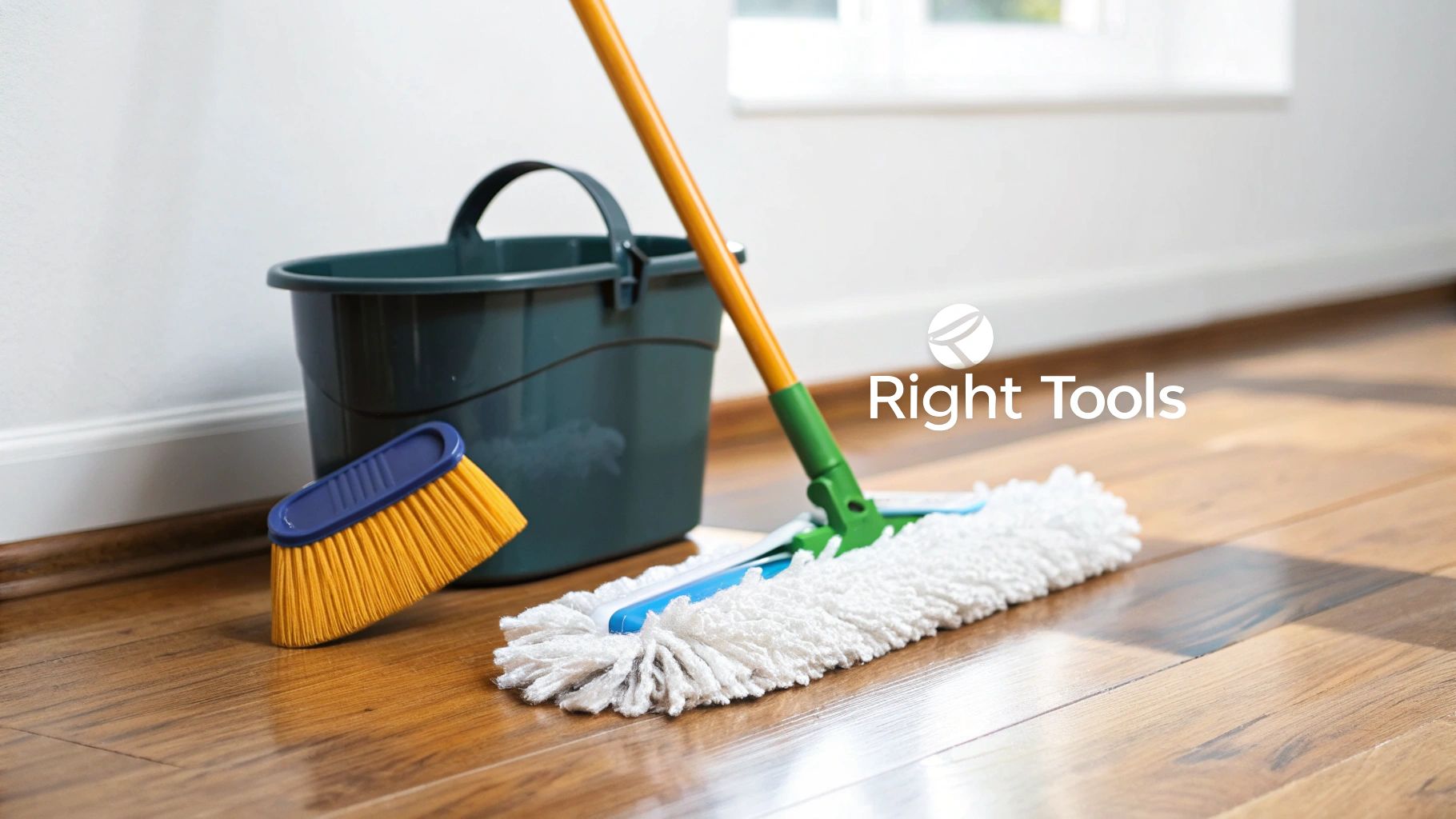
This section gets into the practical side of cleaning. We’ll break down the best tools for the job, explain why some popular methods are actually terrible for your floors, and give you a simple routine for a flawless, pro-level clean every single time.
Choosing Your Cleaning Arsenal: The Mop Matters Most
When it comes to your cleaning toolkit, nothing is more important than your mop. A high-quality microfiber mop is the undisputed champion for hardwood floors. Its super-fine fibers are designed to grab and trap dust, pet hair, and grime with a bit of electrostatic magic, rather than just pushing it all around.
- Microfiber Flat Mops: These are the gold standard, period. They use a minimal amount of water, glide effortlessly, and have removable, machine-washable pads. That makes them both incredibly effective and hygienic.
- String Mops: Just don't. Avoid these completely. They soak up way too much water—a hardwood floor's worst enemy—and tend to leave behind lint and spread dirty water everywhere.
- Sponge Mops: These are also a poor choice. They often just push dirt right into the grain of the wood and are a nightmare to rinse out completely, leaving a sticky residue from old cleaning solutions.
A Critical Warning About Steam Mops
Never, ever use a steam mop on your hardwood floors. The combination of intense heat and moisture forces water deep into the wood and between the planks. This can cause the finish to peel, the wood to warp, and the boards to cup. Using one will almost certainly void your floor’s warranty and can cause irreversible damage.
The Perfect Hardwood Cleaning Routine
Getting that spotless, streak-free finish is all about a consistent, two-part process. First, you get rid of the dry debris. Second, you tackle the grime with a damp mop. Skipping that first step is a rookie mistake that turns dust and grit into a muddy, abrasive paste.
- Dry Dust First: Before a single drop of liquid touches your floor, go over the entire surface with a dry microfiber dust mop or a vacuum with a soft-bristle hardwood attachment. This is non-negotiable. It removes all the loose particles like sand and pet hair that could scratch your finish when you start mopping.
- Prepare Your Solution: Lightly mist your pH-neutral hardwood cleaner directly onto the microfiber mop pad—not the floor. The goal is a damp, not wet, pad. If you can wring out even a single drop of water, it’s too saturated.
- Mop with the Grain: Always clean in the same direction as the wood planks. This little trick helps minimize streaks and ensures you’re cleaning inside the subtle grooves of the wood's natural texture. Work in small, manageable sections to keep things under control.
- Tackle Tough Spots: For stubborn scuffs or sticky spots, spray a small amount of cleaner directly on the area, let it sit for about 30 seconds, and then gently rub with your microfiber pad. Never scrub aggressively.
When DIY Isn't Enough
Regular cleaning is essential, but over time, dirt can get ground into the microscopic pores of the floor's finish, making it look dull no matter how much you mop. For homeowners in Parker and the surrounding communities, this is where a little professional help can make a huge difference.
A professional hardwood floor refinishing service like our Clean & Buff can bring back that lost shine. We use specialized equipment and professional-grade cleaners to gently lift deep-seated grime that DIY methods can't touch. We follow that with a high-speed buffing process that smooths out minor surface scratches and breathes new life into the finish.
To learn more, check out our guide on when and why to buff your hardwood floors. This service, often powered by our efficient UV-Cure System, gets your floor looking its best and ready for years of continued beauty.
Do DIY Hardwood Floor Cleaner Recipes Actually Work?
We’ve all seen them. Those online articles and Pinterest posts promising a sparkling, streak-free floor with a simple mix of vinegar and water. It sounds so easy, natural, and cheap. So, what’s the catch?
The honest answer? Those popular homespun recipes are a huge risk for the vast majority of modern hardwood floors. While they seem harmless enough, they often contain ingredients that cause slow, cumulative damage to your floor’s protective finish. Let’s break down the science behind why you should skip the pantry and stick to the pros.
Why Vinegar Is Your Floor’s Undercover Enemy
The most common DIY cleaner—that simple vinegar and water mix—is also the most destructive. Here’s the deal: vinegar is an acid. Your hardwood floors are almost certainly protected by a polyurethane finish, which acts as a durable shield for the wood underneath.
When you regularly wipe an acidic solution over this finish, you’re slowly eating it away. Think of it like using ultra-fine sandpaper; you won’t see the damage after one cleaning, but over months and years, you'll start to notice your floors look dull, cloudy, and lifeless. That’s the finish being chemically worn down, leaving the actual wood vulnerable to scratches and moisture.
A dulled finish isn't just a cosmetic problem; it's a sign that your floor's primary line of defense has been compromised. Once that protective layer is gone, dirt and water can penetrate the wood itself, leading to stains and damage that require a full hardwood floor refinishing service to fix.
The Hidden Dangers of Oil-Based DIY Cleaners
Okay, so vinegar is out. What about those other recipes that call for essential oils or oil soaps? They promise a great smell and a temporary shine, but they create a long-term headache.
These oils don't actually clean anything. Instead, they leave behind a sticky, oily residue that’s like a magnet for dust, pet hair, and grime. Over time, this builds up into a cloudy film that’s incredibly difficult to remove. Even worse, that oily layer can prevent a new coat of finish from adhering properly, potentially ruining a future screen and recoat job. We recently performed a wax removal on a red oak floor for a client in Parker that had years of DIY oil soap build-up; it's a labor-intensive process that can be easily avoided.
As homeowners have gotten wise to these risks, the demand for professionally formulated, eco-friendly cleaners has shot up. North America accounted for over 36.5% of the global hardwood flooring market in 2024, and manufacturers are setting strict maintenance standards to uphold their warranties. This is also fueling the demand for biobased cleaners, with some folks willing to pay premiums of 10–30% for certified green products.
So, if you’re absolutely committed to a DIY approach, the only truly safe option is a minimalist one.
- The Safest DIY Method: Mix one gallon of distilled water with just a few drops—no more than two or three—of a pH-neutral, plant-based dish soap.
- Application is Key: Lightly dampen a microfiber mop with this solution. It should never be wet enough to wring out water.
- When to Use It: This is strictly for light, routine cleaning. For tougher spots or a deeper clean, a professionally formulated product is always the safer bet.
Ultimately, while the appeal of homemade solutions is understandable, they just pose too great a risk to one of your home’s biggest investments. If you want to dive deeper into this topic, you can find more information in our articles about DIY floor cleaning. Using one of the best hardwood floor cleaning products formulated by experts is a small price to pay to protect your beautiful floors for years to come.
When It’s Time to Call in the Pros for Parker Hardwood Floor Refinishing with Our UV-Cure System
Even with the best hardwood floor cleaning products and a flawless routine, there comes a day when your floors need more than a quick mop. Life happens. Foot traffic, spills, and sunny days eventually leave floors looking tired, dull, or scratched in ways that no amount of elbow grease can fix. Knowing when to call in an expert is the key to protecting your investment for the long haul.
Sometimes, the problem is just years of stubborn, embedded grime. If your floors have lost their luster and look perpetually dirty even right after you’ve cleaned them, a professional deep clean and buff service can work wonders. This isn't just mopping—it’s a process that uses specialized equipment to gently lift away years of built-up residue and bring back that original sheen.
Deep Clean vs. Full Refinish: How to Know What Your Floors Need
Figuring out the right service is crucial. A simple rule of thumb? Look at the type of damage.
-
Dullness and Minor Scuffs: If the finish is still intact but just looks lifeless or has light surface scuffs, a professional clean and buff or a screen and recoat is often the perfect fix. This process lightly abrades the top layer of the finish and applies a fresh coat, restoring protection and shine without the dust and downtime of a full sanding.
-
Deep Scratches and Worn Patches: See scratches that have broken through the finish down to the bare wood? Or maybe you have spots where the finish has completely worn away, usually in high-traffic hallways or entryways? That’s your cue for a full hardwood floor refinishing service. It's the only way to properly repair deep gouges and restore a seamless, protective layer across the entire floor.
For example, we recently helped a family in Greenwood Village whose beautiful red oak floors had become faded and worn from years of sun exposure through their big windows. A simple cleaning wouldn't touch the discoloration. Our dust-free sanding system completely removed the damaged layer, and our advanced UV-Cure System gave them a durable new finish that was ready for furniture the very same day.
Deciding between a DIY attempt and calling in a professional can feel like a big decision. For a deeper look at what each path involves, check out our guide comparing DIY vs. professional hardwood floor refinishing.
At J.R. Hardwood, we help homeowners all over the Parker and Denver area make the right call. Whether it’s a simple wax removal or a full-blown restoration with our cutting-edge UV-curing technology, we have the expertise to bring your floors back to life. The goal is always a beautiful, long-lasting result that protects your home’s value.
Frequently Asked Questions About Cleaning Your Hardwood Floors
When it comes to keeping hardwood floors looking their best, a little bit of know-how goes a long way. We hear the same questions from homeowners all the time, so let's clear up some of the biggest myths and mysteries around the best hardwood floor cleaning products.
Can I Use Products Like Murphy Oil Soap or Pine-Sol on My Hardwood Floors?
That’s a hard no. Seriously, please don’t. Cleaners like Murphy Oil Soap and Pine-Sol are the arch-enemies of a modern hardwood floor finish.
They leave behind a sneaky, oily film that does three terrible things: it dulls your floor’s natural shine, attracts dirt and grime like a magnet, and can cause major headaches (and expenses) when it’s time for a professional hardwood floor refinishing. The new finish simply won’t stick. Always, always stick to a pH-neutral cleaner made specifically for sealed hardwood—it’s the only way to get a clean that’s truly clean, with no streaks or residue left behind.
How Often Should I Actually Be Cleaning My Hardwood Floors?
Consistency is your best friend here. A simple routine is all it takes to stop dirt from turning into sandpaper under your feet. Here’s a good rule of thumb:
- Dry Dusting or Vacuuming: At least 1-2 times per week is perfect for grabbing all that abrasive dust, pet hair, and tracked-in grit. Just be sure to use a vacuum with a soft-bristle attachment—never the beater bar, which can scratch the finish.
- Damp Mopping: For most homes, a light damp mop with the right cleaner every 2-4 weeks is more than enough. If you’ve got a busy kitchen or a high-traffic entryway, you might need to tackle those spots a little more often.
What's the Best Way to Clean Up Pet Accidents on Hardwood?
The number one rule? Speed. Get to the mess immediately with a dry cloth or paper towel before it has a chance to soak in and damage the wood or the finish.
Once you've blotted it up, use your go-to hardwood cleaner on a slightly damp cloth to wipe the area clean. Whatever you do, avoid ammonia-based cleaners. The lingering smell can actually encourage your pet to mark the same spot again. A proper clean removes the stain and the temptation without harming your floor.
Is There a Difference Between Cleaning and Polishing My Floors?
Yes, and it’s a huge one! Confusing the two can lead to some frustrating results. Think of it like this: cleaning is for health, and polishing is for looks.
- Cleaning is your regular routine—the sweeping, vacuuming, and mopping that removes everyday dirt and grime from the floor’s surface.
- Polishing is a temporary cosmetic fix. It adds a thin, shiny layer to fill in microscopic scratches and give the floor a temporary boost in shine.
Polishes should be used very rarely, maybe 1-2 times a year at most, and only on floors with a compatible polyurethane finish. If you overdo it, you’ll get a hazy, sticky buildup that’s a real pain to remove. For a shine that actually lasts and protects, a professional screen and recoat with our UV-Cure System is a far better investment.
Homeowners in Parker trust J.R. Hardwood Floor Refinishing & Cleaning to restore the natural beauty of their hardwood floors with our dust-free sanding system and advanced UV-curable finishes. Unlike traditional methods, our UV technology cures instantly, so you can move furniture back the same day with no lingering odor or downtime. Choose the perfect refinishing service to match your needs and home traffic. Our dust-free process ensures a clean, beautiful finish every time.
📞 Phone: 720-327-1127
🌐 Website: jrhardwoodfloorrefinishingandcleaning.com
📍 Service Area: Parker, Lone Tree, Castle Rock, Centennial, Highlands Ranch, and the surrounding Denver Metro area.
📺 YouTube: https://www.youtube.com/channel/UCLaTAi6KxwT-g8QCKqKTQ8Q?sub_confirmation=1