 Skip to content
Denver homeowners typically pay a wide range for professional laminate installation per square foot, with most standard rooms costing several thousand dollars depending on material grade and prep work. A small 12×12 room typically runs under a few thousand dollars, while a full 1,000-square-foot job can cost several thousand dollars depending on specifics. Material grade, subfloor condition, and removal needs drive most of that spread.
TL;DR:
- The cost of laminate installation in Denver varies significantly based on material AC rating, subfloor condition, and required prep work, with larger projects offering some economies of scale.
- Choosing higher AC ratings and premium moisture barriers increases material costs but can extend the floor’s lifespan, especially on concrete slabs prone to moisture issues.
- Contractors typically charge separately for removal, leveling, trim, and other add-ons, making itemized estimates crucial to avoid unexpected fees.
- Most Denver homes require only a simple permit for like-for-like laminate replacement, but larger structural or layout changes necessitate city approval, potentially delaying schedules.
- Ordering at least 10% more laminate than the measured area prevents batch mismatch problems and saves money on rush shipments or future repairs.
Table of Contents
- Denver cost breakdown: per-square-foot math, materials vs. labor, and common add-ons
- What affects price most: AC rating, underlayment, subfloor prep, and installation method
- Denver permit rules and practical payment/process notes
- Sample budgets: 12×12 room, living room, and whole-floor projects
- How to hire a Denver installer and what a reliable written estimate includes
- How we price laminate jobs and what Denver homes commonly need
- What actually matters when budgeting for laminate in Denver
- Get a free Denver laminate installation quote
- FAQ
- Sources
Denver cost breakdown: per-square-foot math, materials vs. labor, and common add-ons
Your total bill breaks into three buckets: materials, labor, and add-ons. Materials alone can range from budget-friendly to premium, and the biggest factor inside that range is the AC rating, which measures how well a laminate plank resists scratches, dents, and daily wear. Laminate flooring rated AC3 suits moderate residential traffic and tends to sit at the lower end of the price spectrum, while AC4 and AC5 products cost more but hold up better in busy households or light commercial spaces.
Labor is the other half of the equation, and Denver installers generally price it separately from materials so you can see exactly what you’re paying for skilled work versus product. According to our local pricing breakdowns in the laminate installation price guide, labor costs shift based on how much demo and prep a room needs before a single plank goes down.
Beyond the base install, several add-ons show up on almost every job:
- Underlayment: basic foam runs cheap, but moisture-barrier or acoustic versions add real cost per square foot.
- Old flooring removal: pulling up carpet, tile, or existing laminate adds labor hours and disposal fees.
- Subfloor leveling: uneven concrete or wood subfloors need compound or patching before installation can start.
- Trim and transitions: baseboards, quarter round, and thresholds between rooms are often quoted separately.
- Sales tax: Colorado sales tax applies to materials and, in many cases, labor, so ask your contractor to show it as a line item.
One number worth remembering before you order anything: buy at least 10% more laminate than your room’s measured square footage. Home Depot’s flooring guidance recommends this overage to cover cutting waste, mistakes, and future repairs. Skipping it is a common mistake that costs homeowners twice: once in rush shipping fees, and again when the replacement box comes from a different production batch with a visibly different shade. Batch mismatches are nearly impossible to fix without replacing an entire section, so ordering enough the first time saves both money and a headache.
For readers comparing laminate against a similar resilient option, our breakdown of LVP installation costs in Denver walks through how labor and base pricing differ between the two materials.
What affects price most: AC rating, underlayment, subfloor prep, and installation method
Four decisions move your quote more than anything else, and understanding them helps you spend money where it actually extends the life of your floor instead of where it just looks nice in a showroom.
AC rating is the first lever. AC3 laminate works fine in bedrooms and guest rooms with lower foot traffic. AC4 is the sweet spot for living rooms, hallways, and kitchens where kids, pets, and daily shoes wear down flooring faster. AC5 is built for heavy commercial traffic and is usually overkill for a typical home, though some property managers choose it for rental units that see frequent turnover.
Underlayment matters more in Colorado than in many other states because of how many Denver homes sit on concrete slabs, especially in basements and newer construction. A product like the ROBERTS AirGuard underlayment includes a built-in moisture barrier, which protects laminate from the slow moisture transfer that concrete slabs are known for. Premium moisture-barrier underlayment can add real cost to your material total, but it reduces the risk of warping or swelling down the road, which is a far more expensive fix than the underlayment itself.
Subfloor prep is where quotes diverge the most between contractors. A flat, dry subfloor needs almost nothing extra. A subfloor with dips, old nail-down flooring, or uneven patches needs leveling compound, floor grinding, or nail removal, each of which adds both material and labor cost. Manufacturer installation guidance for glueless laminate systems specifies subfloor flatness tolerances and acclimation steps, which is why experienced installers check the subfloor before finalizing a bid rather than after.
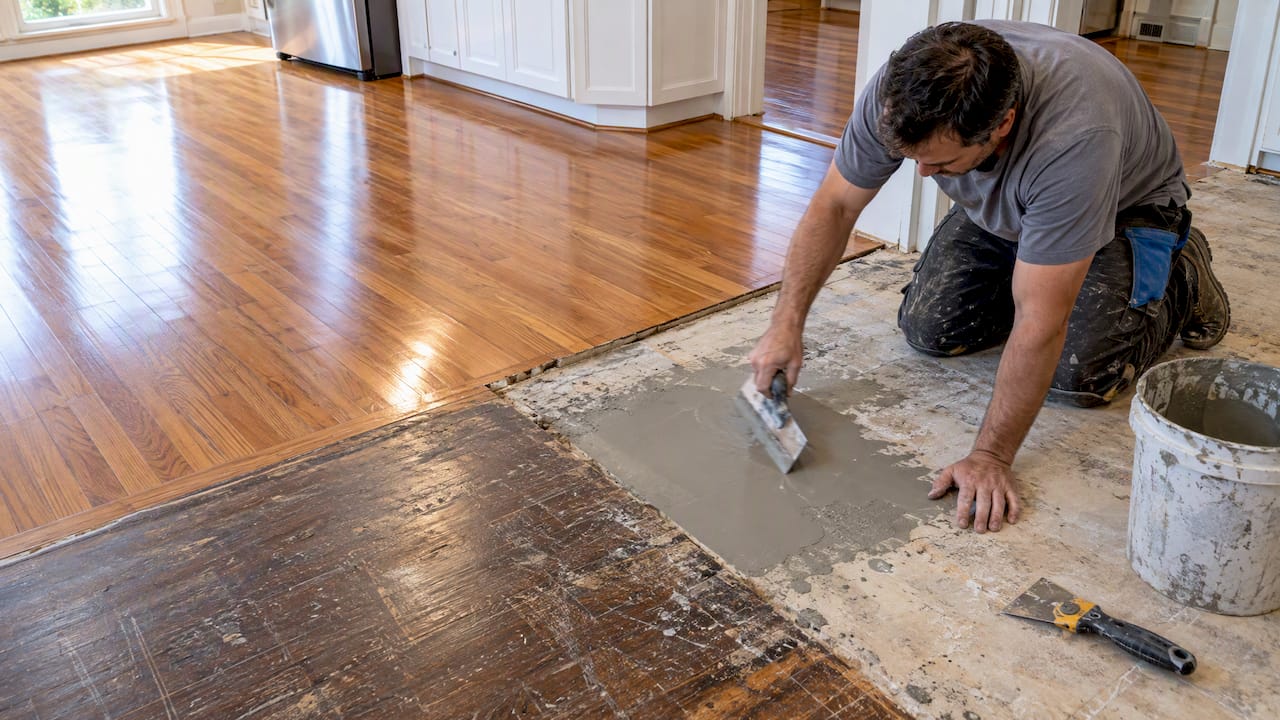
Installation method is the last major factor. Floating installation, where planks click together without glue or nails, is faster and generally cheaper, and it’s the method most residential laminate products use. Glue-down installation takes longer and costs more in labor, but it’s sometimes required for specific product lines or high-moisture areas.
Pro Tip: Ask your installer to walk the subfloor with you before they finalize your quote. A five-minute walkthrough can reveal prep costs that would otherwise show up as a surprise line item later.
Denver permit rules and practical payment/process notes
Most laminate installations in Denver do not require a building permit. According to Denver’s homeowner permit guidance, like-for-like interior floor covering replacement is generally excluded from permit requirements. If you’re simply swapping carpet or old laminate for new laminate in the same footprint, you can usually schedule your install without any city paperwork.
That changes if your project goes beyond a simple swap. Permits are required when:
- The work alters the floor plan or removes interior walls.
- Structural elements, like subfloor framing, are being modified.
- The flooring project is part of a larger remodel that touches plumbing, electrical, or load-bearing changes.
If your project does require a permit, Denver’s e-permit system handles fee payment online, and the city’s FAQ page explains that contractors need to be added to the permit record when payment is processed. Major credit cards are accepted for these payments, and the city provides contact details if you run into payment issues.
Permit timing can affect your installation schedule if your project triggers a review. Build in a buffer of a few extra days when your project crosses into remodel territory, and confirm with the city directly if you’re unsure whether your scope qualifies as like-for-like.
Sample budgets: 12×12 room, living room, and whole-floor projects
Seeing real numbers side by side makes it easier to map your own space to a realistic total. These scenarios assume a straightforward subfloor with no major repairs needed.
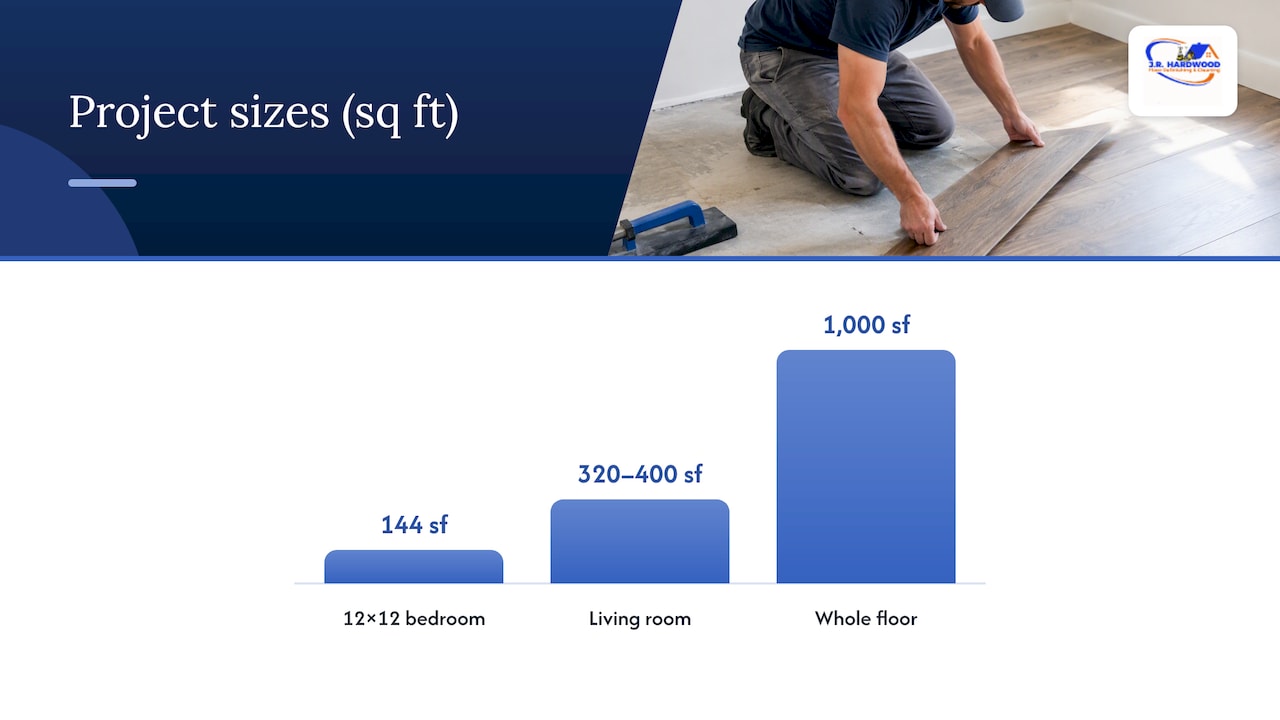
- 12×12 bedroom (144 sq ft): Entry-level AC3 laminate at a lower material cost plus basic underlayment keeps this project toward the lower end of the typical range. A mid-tier AC4 product with trim and standard labor pushes the total higher, and premium underlayment with a moisture barrier adds a modest amount more. Removal of old carpet or flooring, plus Colorado sales tax, rounds out the final number.
- Living room (320 to 400 sq ft): This size is where most Denver homeowners request quotes, since it covers the typical open-concept living and dining combination common in metro-area homes. A mid-tier laminate with standard underlayment and basic trim work lands this project in the middle of the citywide range, while upgrading to a higher AC rating and glue-down installation for added stability pushes the total closer to the top of that range. Our Colorado-specific pricing scenarios walk through three real examples at this scale with line-item detail.
- Whole floor (1,000 sq ft): Larger jobs benefit from economies of scale, since labor crews can move faster across open square footage and material suppliers often discount larger orders. Even with that efficiency, a 1,000-square-foot project with removal, leveling, premium underlayment, and trim throughout typically represents the largest single flooring expense most homeowners will face in a renovation. Ordering the recommended 10% material overage becomes even more important at this scale, since a batch mismatch on a job this size is far more expensive to fix than on a small room.
Pricing can also shift with the seasons. Material costs for laminate flooring commonly range from about $2 to $7 per square foot, according to Consumer Reports’ flooring buying guide, and that range tends to move with supply availability and seasonal demand for home renovation projects, particularly in spring and early summer when Denver’s remodeling season picks up.
For a deeper look at how these numbers apply across different home sizes and material tiers, our complete 2026 Denver laminate guide covers additional scenarios and product considerations.
How to hire a Denver installer and what a reliable written estimate includes
A good contractor conversation starts well before any work begins. Ask these questions before you sign anything:
- What’s included in the scope, and does it cover removal, disposal, and trim work?
- What AC rating and underlayment are being quoted, and why?
- What’s the expected subfloor prep, and is there a chance it could change once old flooring comes up?
- What warranty applies to materials and to the labor itself?
- What’s the estimated timeline, and how is cleanup handled at the end of each day?
- How are change orders handled if the project scope shifts mid-install?
A complete written estimate should list materials by brand and AC rating, underlayment type, labor cost separate from materials, removal and disposal fees, trim and transition costs, and applicable sales tax. Lowball quotes often omit removal fees, subfloor prep, or trim, which then appear as “surprise” charges once work is underway.
Timeline ranges depend heavily on prep work. A straightforward room with a flat subfloor can often be completed in a single day, while a project requiring leveling compound, moisture mitigation, or extensive removal can stretch to several days. If a contractor can’t explain why their estimate is faster or cheaper than others you’ve collected, that’s worth a direct follow-up question.
Red flags include estimates with no itemized breakdown, requests for full payment up front, and an inability to provide proof of insurance or local references. Always confirm licensing and insurance directly before work begins, and ask for references from recent Denver-area jobs.
Pro Tip: Get at least two written estimates before committing, and compare them line by line rather than by the bottom number alone. The cheaper total sometimes hides a missing scope item that turns into an added cost later.
How we price laminate jobs and what Denver homes commonly need
We provide quotes based on verbal details and photos to give Denver homeowners and property managers a realistic starting range before any site visit. In the Denver Metro Area and surrounding Colorado communities, it is common for homes built before the 1990s to need leveling compound over uneven wood subfloors, while newer construction on concrete slabs benefits from moisture-barrier underlayment.
Materials orders include the recommended overage from the start rather than leaving it to chance mid-project, which helps avoid batch-matching problems. That small step, decided before the first box is opened, is often the difference between a smooth install and a delayed one.
What actually matters when budgeting for laminate in Denver
Most online calculators treat laminate installation like a fixed-rate commodity, and that’s where they mislead homeowners. The real cost swing in Denver comes from subfloor condition and moisture exposure, not from the brand of laminate you pick. A $2 per square foot material choice paired with a slab that needs leveling and a moisture barrier can end up costing more than a $5 per square foot product installed over a clean, flat subfloor.
Conventional advice tells you to shop for the lowest per-square-foot material price first. We’d flip that priority: get your subfloor assessed first, because that number determines whether your “cheap” material choice stays cheap or balloons once prep work gets added. Spend your first conversation with a contractor talking about your subfloor, not your plank selection. The plank is the easy decision. The subfloor is where budgets actually go sideways.
— J.R.
Get a free Denver laminate installation quote
We handle laminate installation from start to finish, including subfloor leveling, moisture barrier underlayment, old flooring removal, and trim work, so you’re not coordinating multiple contractors for one room.

Here’s what you can expect when you reach out:
- A free quote based on a phone conversation and photos of your space, no in-person visit required to get started.
- Clear scheduling with realistic timelines based on your subfloor condition.
- Eco-friendly products and honest guidance, including when a simpler fix makes more sense than a full replacement.
If your project also involves door jambs that need trimming to clear new flooring height, our partner at One Day Doors Of Denver handles quick interior door adjustments and replacements across the metro area.
Ready to get a number for your space? Visit our LVP and laminate installation page to request your free quote and get on our schedule.
FAQ
How much does it cost to install 1,000 sq ft of laminate?
A 1,000-square-foot laminate installation in Denver typically costs several thousand dollars, depending on material grade, underlayment choice, and subfloor prep. Larger jobs often see some cost efficiency on labor since crews can work across open square footage faster than in smaller, broken-up rooms.
How much does it cost to laminate a 12×12 room?
A 12×12 room, or 144 square feet, generally costs under a few thousand dollars to install with laminate, depending on material tier and whether removal or subfloor leveling is needed. Choosing a higher AC rating or premium moisture-barrier underlayment pushes the total toward the higher end of the typical range.
How much does Home Depot charge to install laminate?
Home Depot does not publish a single installation rate publicly, and pricing depends on the specific product line, room size, and local installer network used for the project. For a direct, itemized quote in the Denver area, comparing a retailer’s installation service against a local specialist like our laminate installation services helps you see exactly what’s included.
How long does it take to install 400 sq ft of laminate flooring?
A 400-square-foot laminate installation with a flat, prepped subfloor typically takes one to two days to complete. Projects that require leveling compound, moisture mitigation, or extensive removal of old flooring can extend the timeline by an additional day or more.
Sources
These official and retail sources back the permit guidance, material pricing, and underlayment details referenced throughout this guide.
- Laminate flooring (Home Depot) — AC rating guidance
- Applying for Permits as a Homeowner – City and County of Denver
- E-permits FAQs – City and County of Denver