 Skip to content
Dark cherry wood floors stop people in their tracks. In a Denver home, that usually means one of two reactions. The first is admiration. The second is concern about scratches, sunlight, and whether the color will still work a few years from now.
Those are fair concerns, especially if you live with big windows, pets, kids, or the steady traffic that comes with an active Front Range household. In neighborhoods like Washington Park, Central Park, and Park Hill, I’ve seen dark floors make a room feel grounded and elegant. I’ve also seen homeowners get tripped up because they didn’t know whether they had real cherry, Brazilian cherry, or a cherry-colored stain on a completely different wood.
If you're thinking about Denver hardwood floor refinishing with a UV-Cure System, or you're trying to decide whether to preserve, update, or replace your current floors, it helps to understand what dark cherry wood floors are and how they behave in Colorado light.
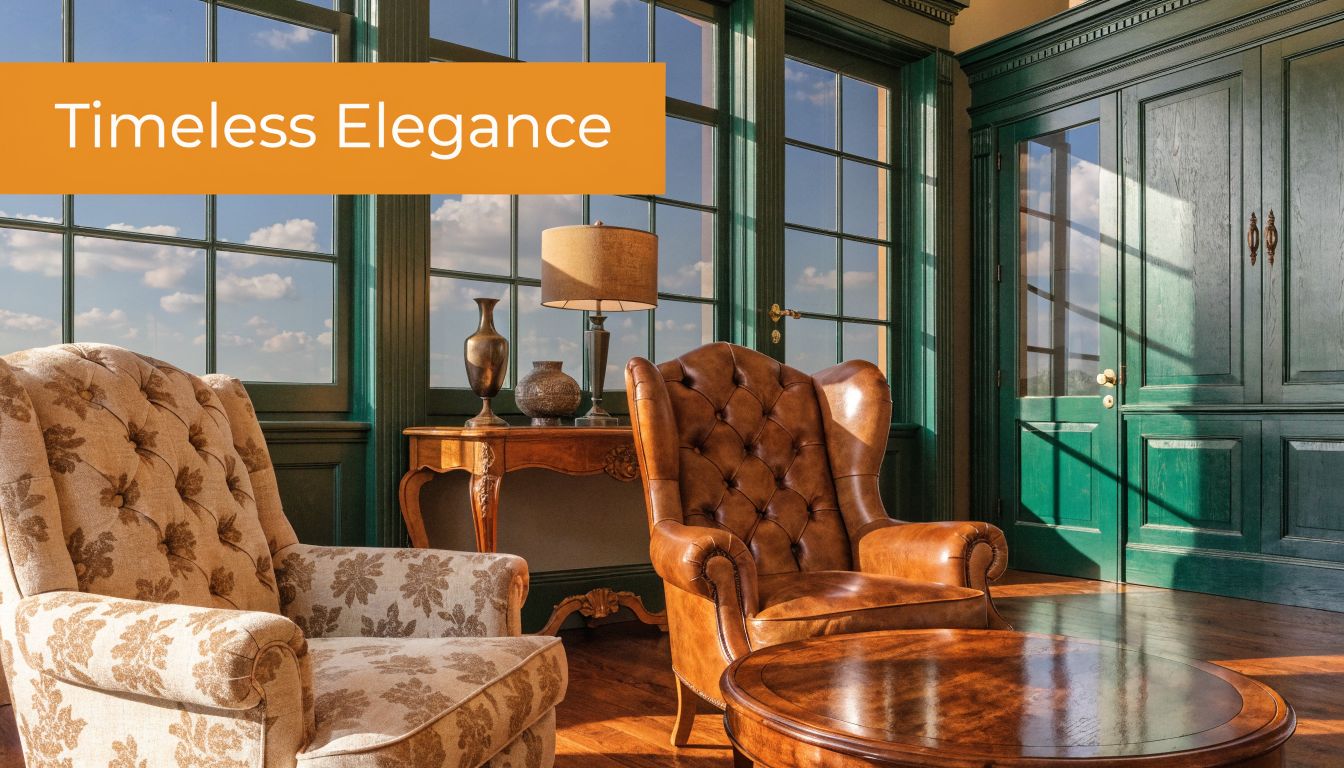
Embracing the Timeless Elegance of Dark Cherry Wood Floors
Dark cherry has stayed relevant for a simple reason. It has depth. Some floors look nice from a distance but flat up close. Cherry tends to do the opposite. The grain, warmth, and color shift give it character that reads as furniture-grade rather than builder-grade.
American black cherry has a long design history. Greeks and Romans used it for fine furniture as far back as 400 BC, and early American furniture makers later called it “New England Mahogany” because of its evolving color and upscale look, according to this history of cherry wood use.
Why homeowners still love it
Some materials feel trendy. Cherry usually feels intentional.
In a bungalow with original trim, dark cherry can echo older architectural details. In a newer home with white walls and clean lines, it can create contrast and warmth that keeps the space from feeling sterile. That’s why homeowners often hesitate before changing it. They know they have something distinctive. They just aren’t always sure how to manage it.
Practical rule: Cherry rewards homeowners who like natural materials that change over time. If you want a floor color to stay frozen forever, cherry can test your patience.
Where confusion starts
Many people say “dark cherry” when they really mean one of several different things:
- True American cherry with a softer, furniture-like feel
- Brazilian cherry with much more hardness and a bolder appearance
- Cherry-stained oak or maple that only looks like cherry at first glance
That distinction matters. It affects scratch resistance, refinishing options, stain matching, and resale decisions.
For Denver homeowners, it also affects how the floor responds to sunlight. Cherry’s beauty is tied to change. If you understand that from the beginning, the floor makes a lot more sense.
Identifying True Dark Cherry Wood Species and Stains
When someone tells me they have dark cherry wood floors, I never assume I know what’s in the house until I look closely at the grain. “Cherry” describes color in casual conversation, but on an actual floor it can mean very different things.
The two natural cherry categories
American black cherry is the domestic version commonly associated with classic cherry furniture. It starts lighter than many homeowners expect, often with pinkish or reddish tones, and gains richness as it ages. The grain is usually finer and calmer than oak.
Brazilian cherry, also called Jatoba, is a different animal. It became especially popular in the early 2000s to mid-2010s as a luxury flooring choice, and it’s much harder underfoot. It can reach a Janka hardness up to 2,820, making it nearly three times harder than American cherry, according to this Brazilian cherry flooring overview.
American Cherry vs. Brazilian Cherry Jatoba at a Glance
| Characteristic | American Black Cherry | Brazilian Cherry (Jatoba) |
|---|---|---|
| General appearance | Fine grain, softer visual movement, warm red-brown tone that deepens over time | Bolder variation, richer red-to-brown look, more dramatic overall |
| Hardness | Softer feel underfoot | Much harder and more resistant to dents and wear |
| Best fit | Lower to moderate traffic homes, design-focused spaces | Busy homes, pets, rentals, and heavier use areas |
| Color behavior | Darkens naturally with age and light exposure | Also darkens, often with stronger variation between boards |
| Common homeowner reaction | “Beautiful, but I worry about dents” | “Beautiful, but I need help balancing the bold color” |
How stained floors fool people
A lot of “dark cherry” floors in Denver are oak with a cherry-toned stain. That’s not a bad thing. It just changes the maintenance and refinishing conversation.
A simple way to understand this:
- Oak grain tends to show stronger cathedrals and more obvious patterning
- Cherry grain usually looks finer and smoother
- Stained floors may hold a cherry color without having cherry’s natural aging behavior
If you look at the floor and see strong, familiar oak grain but a red-brown tone, there’s a good chance the wood is oak wearing a cherry look.
Why proper identification matters before any work
Before any sanding, buffing, or color update, you need to know what’s under the finish. The wrong assumptions can lead to mismatched stain tests, patch repairs that stand out, or unrealistic expectations about how the color will age.
That’s especially true if you're considering hardwood floor installation services. Matching an existing cherry floor is different from matching a cherry-stained one. One is a species problem. The other is a color-matching problem.
If the floor color seems “red” but the grain looks like standard oak, trust the grain more than the color.
Is Dark Cherry Flooring Right for Your Colorado Lifestyle
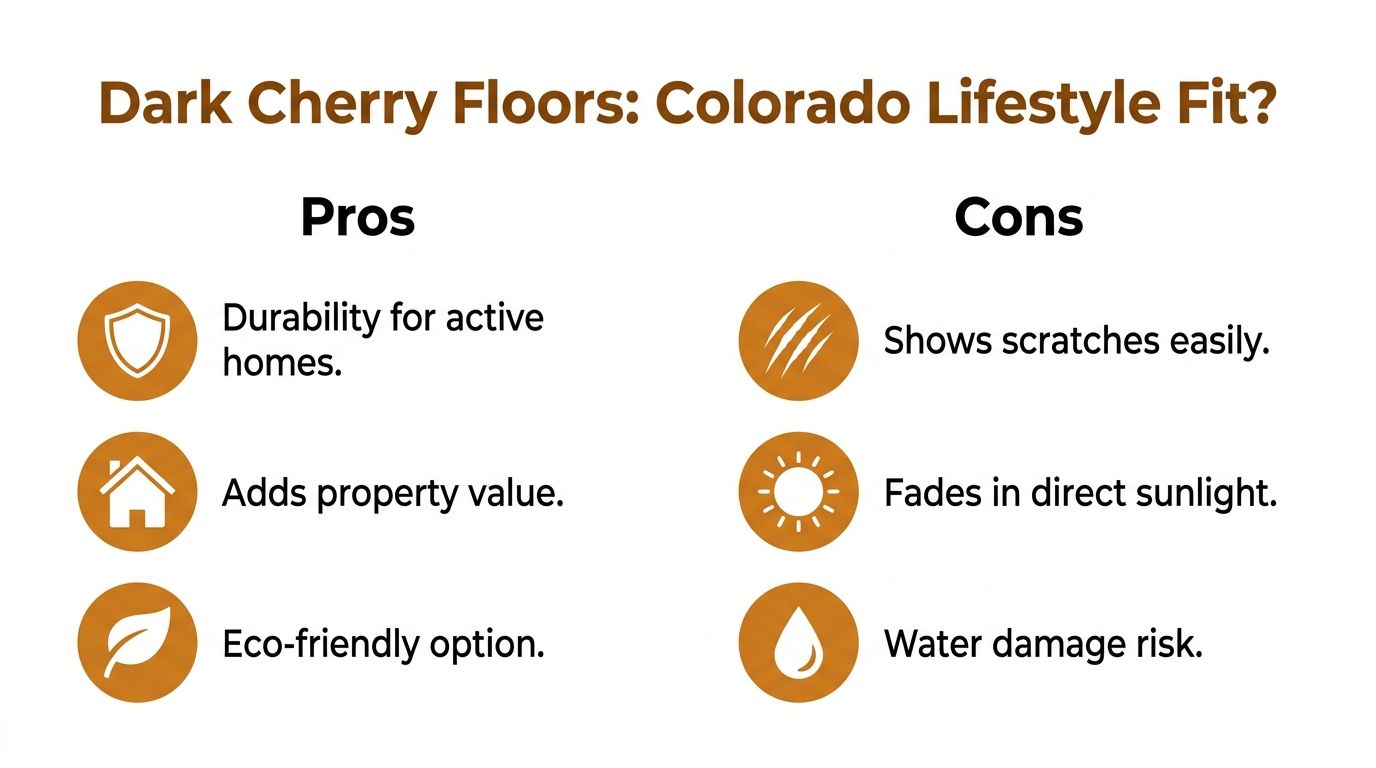
Dark cherry wood floors can be a great fit in Colorado. They can also be the wrong fit if your expectations don’t line up with your daily life. Softness, hardness, sunlight, and resale are the considerations that determine this.
The durability question matters most
American black cherry scores 950 lbf on the Janka scale, which makes it about 27% softer than red oak, while Brazilian cherry can reach 2820 lbf and showed reduced refinishing needs by 40-50% over 10 years in high-traffic simulations, according to this cherry flooring hardness guide.
That sounds technical, but here’s the practical translation.
If you have:
- a calmer household
- soft furniture pads
- no large dogs
- a preference for a warmer, more classic wood look
American cherry can work well.
If you have:
- a high-traffic entry
- pets that launch off corners
- kids dragging chairs
- rental or resale concerns
Brazilian cherry is usually better equipped for abuse.
For readers comparing domestic options in more detail, this page on American cherry wood floors is a useful next read.
Denver sun changes the equation
Colorado light is no joke. South-facing rooms in Denver, Littleton, and Highlands Ranch can age a floor fast. With cherry, that means the floor often deepens in color noticeably over time.
Some homeowners love that patina because it feels richer and more settled. Others feel boxed in once the room gets darker than they expected. Neither reaction is wrong. You just want to decide which camp you’re in before making a big flooring decision.
The same sunlight that makes a room feel cheerful can also change how your floor reads month by month.
Resale is more nuanced than people think
Dark cherry isn’t the universal default it once was. Lighter floors dominate a lot of current remodels. But quality still matters, and well-finished cherry still signals craftsmanship to buyers.
The issue usually isn’t “Is cherry bad?” It’s “Does this room feel balanced?” If the red tones are overpowering, refinishing may help bring the floor closer to the home’s architecture and the buyer pool you’re targeting.
Color Palettes and Decor to Complement Cherry Hardwood
Dark cherry wood floors look best when the rest of the room gives them breathing room. The mistake I see most often is stacking more warmth on top of warmth. That can make a room feel heavy fast.

Wall colors that calm the red tones
Cooler wall colors usually help cherry floors look more refined.
Good directions include:
- Soft sage for homes that want warmth without extra red
- Slate blue for contrast that still feels classic
- Cool gray if the space gets plenty of light
- Clean white when you want the floor to be the visual anchor
These shades don't fight the wood. They keep it from taking over.
If you're exploring finish directions before choosing paint, these cherry stain color ideas can help you see how undertones shift.
Furniture and rug choices that help
A simple rule works well here. If the floor is visually rich, furniture should either soften it or sharply contrast it.
Try:
- cream, beige, or gray upholstery
- black metal accents
- lighter rugs to break up the floor plane
- natural textiles like linen and wool
Be careful with orange-toned woods, red oak furniture, or pieces that compete with the same warm range. Too much of that can make the room feel stuck in one note.
A light rug on dark cherry doesn’t hide the floor. It frames it.
Mixing wood tones without making a mess
People often assume all woods need to match. They don’t. They just need to relate.
Dark cherry usually pairs better with:
- very dark espresso accents
- pale woods like maple
- painted cabinetry
- matte black or brushed metal hardware
That mix feels layered. Matching everything to cherry often feels forced.
Your Weekly and Monthly Cherry Floor Care Routine
Dark floors show more than light ones. Dust, paw prints, and fine grit stand out faster, especially in dry Colorado conditions. The fix isn’t complicated. It’s consistency.
What to do every week
Use a microfiber dust mop or a vacuum with a hard-floor setting. Skip the beater bar. It’s too aggressive for a finished wood surface.
For spot cleaning, lightly apply a hardwood-safe cleaner to a microfiber cloth, not straight onto the floor. That keeps moisture controlled and avoids puddling along seams.
A solid weekly routine looks like this:
- Dry remove grit first: Dust and sand are what dull the finish over time.
- Handle spills quickly: Water left sitting is never your friend on wood.
- Focus on paths: Entry routes, kitchen walkways, and pet zones need the most attention.
What to avoid
Cherry floors don’t respond well to harsh shortcuts.
Avoid:
- Vinegar solutions: They can dull or weaken the finish over time.
- Steam mops: Heat and moisture are a rough combination for hardwood.
- Oil soaps or waxy cleaners: They can leave residue that complicates future recoating.
- Oversaturated mops: Too much water causes problems slowly, then all at once.
Monthly check-ins that save trouble later
Once a month, walk the floor in daylight. Look for hazy traffic lanes, chair scratches, grit near sliders, and any dark spots around pet bowls or entry mats.
For wood surface issues beyond flooring, homeowners sometimes find practical crossover advice in guides like Miller Waldrop wood furniture care, especially when dealing with moisture marks and finish sensitivity on wood surfaces in general.
A professional clean-and-buff service can also help when the floor looks tired but isn’t ready for sanding.
Reviving Your Floors with Denver Hardwood Floor Refinishing
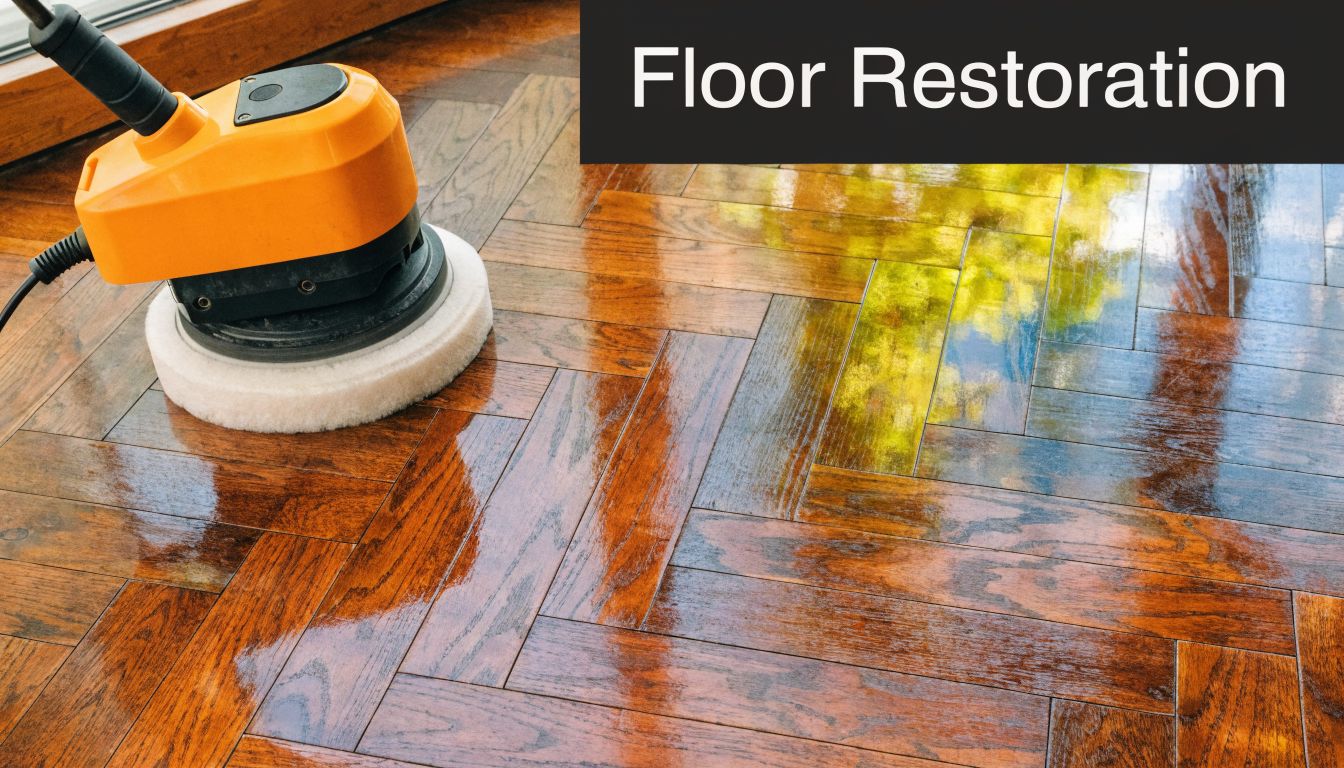
There comes a point where regular cleaning stops being enough. The floor may still be solid, but the finish looks worn, cloudy, scratched, or uneven. That’s when Denver hardwood floor refinishing becomes the smarter move, especially if you want to preserve the wood and improve how it fits the room today.
When a screen and recoat makes sense
If the wear is mostly in the finish, not deep in the wood, a screen and recoat can be the cleanest answer. This process lightly abrades the top finish layer and adds a new protective coat.
It’s a good fit when:
- the floor has light surface scratches
- traffic paths look dull
- the color still works for the space
- there’s no major pet damage or stain penetration
This is the “refresh the shield” option, not the “start over” option.
When full sanding is the better call
Full sanding and refinishing makes more sense when the problems go deeper. Think black water marks, old wax contamination, heavy scratches, uneven color, or a cherry tone that no longer fits the house.
That process gets the floor back to raw wood so the finish system can be rebuilt properly. It also gives homeowners more freedom if they want to soften an overly red look.
For anyone comparing protective systems before making that call, this guide to hardwood floor finishes lays out the differences in a practical way.
Why UV-Cure System finishes matter in Denver
One of the hardest parts of owning cherry floors in Colorado is controlling the speed of natural color change. A key challenge with cherry floors is rapid darkening from UV exposure, especially in Denver’s strong sunlight. Modern refinishing with UV-protectant topcoats can slow these changes, extend floor life by 20-30%, and create an instant, pet-friendly, durable surface without wait time, according to this cherry flooring and UV-protectant finish resource.
That matters in real life because homeowners don’t want to tiptoe around a curing schedule for days. They also don’t want a finish system that ignores the light conditions the floor lives in every day.
Here’s a closer look at the process in action:
Cherry floors don’t need guesswork. They need the right level of intervention. Sometimes that’s a recoat. Sometimes it’s a full reset.
Refinishing vs replacing
People often jump to replacement too quickly.
Refinishing usually makes more sense when:
- the wood is structurally sound
- the issue is appearance, not failure
- you want to preserve solid hardwood
- the home benefits from keeping original character
Replacement makes more sense when boards are failing, the layout is changing, or the floor material isn’t worth saving. But if you’ve got quality cherry underfoot, restoration is often the more thoughtful path.
Cost of Installing and Refinishing Cherry Floors in Denver
Budget matters, and flooring costs get easier to understand when you separate refresh work from full restoration and new installation. With dark cherry wood floors, the final price depends on the species, the floor’s condition, and the finish system you choose.
Service pricing that helps with planning
For refinishing and maintenance work, these price points give homeowners and property managers a clear starting place:
- Screen & Recoat starts at $2.50/sq. ft.
- Wood Floor Cleaning starts at $1.50/sq. ft.
- Wax Removal starts at $2.50/sq. ft.
- Instant UV-Curable Finish starts at $1.5/sq. ft.
For full refinishing systems, finish tiers include:
- Silver Traffic Plus at $4.20 per sqft with a 1K water-based finish and excellent wear resistance
- Gold Traffic Plus at $4.50 per sqft with scratch resistance and a 2K water-based finish
- Platinum Traffic Plus at $4.80 per sqft with a 2K water-based finish and Nano Wear Oxide additive
- Diamond Traffic Plus at $5.50 per sqft with UV-curing plus Nano Wear for unmatched wear and scratch resistance
How to think about value
A lighter-touch service like screen and recoat works best when the floor is still in good shape and you’re protecting what you have. A higher-tier finish makes more sense when the house gets constant traffic or you want stronger scratch resistance from the start.
Installation pricing is more variable because wood choice, layout, subfloor condition, and board availability all affect labor and materials. American cherry and Brazilian cherry also come with different sourcing realities, so the best path is usually a project-specific quote based on photos and room details.
For sellers, landlords, and busy households
Lifecycle thinking proves beneficial. Paying less upfront on a finish that can’t keep up with your house often costs more later in appearance, maintenance, and lost time. For Parker-area property managers and real estate professionals, durable finish selection can be just as important as color.
Frequently Asked Questions About Dark Cherry Floors
FAQ
| Question | Answer |
|---|---|
| Do dark cherry wood floors scratch easily? | It depends on what “dark cherry” actually is. American black cherry is softer, so it’s more vulnerable to dents and scratches. Brazilian cherry is much harder and better suited to heavy traffic. |
| Will cherry floors get darker in my Denver home? | Yes. Cherry is known for changing color with age and light exposure. In sunny Colorado rooms, that change can happen faster, which is why finish choice and window management matter. |
| Can dark cherry floors be refinished to look less red? | Often, yes. If the floor is solid wood and in restorable condition, sanding and refinishing can help shift the look. The result depends on species, existing stain, and the floor’s history. |
| Are dark cherry wood floors outdated? | Not automatically. Poorly balanced red tones can feel dated, but quality cherry floors still look sophisticated when paired with the right wall colors, furnishings, and finish sheen. |
| Do dark floors show more dust? | Yes, usually. That’s one tradeoff of a richer floor color. The upside is strong visual presence. The practical answer is a simple maintenance routine with microfiber dust removal. |
| Should I refinish or replace my cherry floors before selling? | If the wood is solid and the wear is mostly visual, refinishing is often the better move. If the floor has major structural problems or the material can’t be restored well, replacement may be the better option. |
| Is a UV-Cure System worth considering for cherry floors? | For many Denver homeowners, yes. It’s especially appealing when you want strong protection, fast usability, and better management of sunlight-related finish issues. |
For homeowners considering J.R. Hardwood Floor Refinishing & Cleaning, the smart next step is to compare your floor’s condition with the right service level, whether that means dust-free sanding, a screen and recoat, deep cleaning and buffing, wax removal, or a fast Instant UV-Curable Finish. You can review more project examples on the company’s YouTube channel, browse service details, check customer testimonials, or contact the team for a quote.
Homeowners on Parker trust J.R. Hardwood Floor Refinishing & Cleaning to restore the natural beauty of their hardwood floors with our dust-free sanding system and advanced UV-curable finishes. Unlike traditional methods, our UV technology cures instantly, so you can move furniture back the same day with no lingering odor or downtime. Choose the perfect refinishing service to match your needs and home traffic. Our dust-free process ensures a clean, beautiful finish every time.
📞 Phone: 720-327-1127
🌐 Website: jrhardwoodfloorrefinishingandcleaning.com
📍 Service Area: Parker, Denver, Aurora, Castle Rock, Highlands Ranch, Littleton, Boulder, and nearby Colorado communities.