 Skip to content
TL;DR:
- Durable, waterproof flooring like LVP offers the best long-term value for Colorado high-traffic rentals.
- Quick-installation options such as click-lock LVP or UV-cure hardwood reduce vacancy time and costs.
- In high-traffic areas, carpet typically needs replacement every 3 to 5 years, making hard surfaces more cost-effective.
Flooring is one of the biggest headaches in rental property management. Pick the wrong material and you’re looking at constant repairs, frustrated tenants, and a revolving door of maintenance calls. Pick the right one and your floors practically take care of themselves between tenants. Colorado’s climate adds another layer of complexity, with dry winters, occasional moisture swings, and heavy foot traffic from active residents. This guide walks you through exactly how to evaluate, choose, and maintain flooring that holds up in high-traffic rentals, so you can spend less time fixing floors and more time growing your portfolio.
Table of Contents
- How to evaluate flooring for Colorado rentals
- Best flooring options for high-traffic rentals
- Side-by-side comparison: Flooring types for rentals
- Smart installation and maintenance practices
- A property manager’s view: Prioritizing turnovers and ROI
- Discover durable flooring solutions for Colorado rentals
- Frequently asked questions
Key Takeaways
| Point | Details |
|---|---|
| Choose LVP for durability | Luxury Vinyl Plank offers the best mix of water resistance, scratch protection, and longevity for high-traffic rentals. |
| Limit carpet to bedrooms | Carpet works best in low-traffic areas like bedrooms due to its shorter life span in busy spaces. |
| Speed up turnovers | Opt for click-lock or UV-cure flooring to minimize downtime between tenants and keep rental income flowing. |
| Follow Colorado carpeting laws | Prorate carpet replacement charges as required by HB 1249 to stay compliant with state landlord-tenant regulations. |
How to evaluate flooring for Colorado rentals
Before you commit to any material, you need a clear set of criteria. Not all flooring performs the same in a rental setting, and Colorado’s unique conditions make some choices far smarter than others. Think of this as your pre-purchase checklist.
Here are the key factors to weigh:
- Durability: Can it handle heavy foot traffic, pet claws, and furniture dragging without showing serious wear within a year or two?
- Moisture resistance: Colorado may be dry overall, but spills, bathroom steam, and the occasional snow tracked inside can wreak havoc on the wrong floor.
- Ease of cleaning: Tenants won’t always follow your preferred cleaning routine. Choose a surface that forgives a little neglect.
- Repair and replacement costs: Can you replace a damaged section without redoing the entire floor? Modular options save serious money.
- Tenant appeal: A floor that looks great photographs well and helps you fill vacancies faster.
- Installation speed: Every day a unit sits empty costs you money. Faster installs mean faster move-ins.
Colorado’s seasonal temperature swings can cause certain flooring materials to expand and contract. Solid hardwood, for example, is more vulnerable to this than engineered options or best flooring for high-traffic areas like LVP. When you factor in lifecycle cost, LVP stands out clearly. As noted in our 2026 flooring guide, LVP is 100% waterproof with a 20+ mil wear layer that resists scratches and keeps lifecycle costs low, making it the top recommended choice for high-traffic rentals.
Pro Tip: Prioritize click-lock or floating flooring systems whenever possible. They install faster, require no adhesive cure time, and individual planks can be swapped out if a section gets damaged, no full replacement needed.
Best flooring options for high-traffic rentals
Now that you have your criteria, let’s break down the leading options for Colorado rentals. Each material has a sweet spot, and knowing where to use each one is half the battle.
Luxury Vinyl Plank (LVP)
LVP is the workhorse of rental flooring right now. It looks like real wood, feels comfortable underfoot, and is nearly indestructible in everyday rental conditions. Our landlord’s flooring guide confirms that LVP is 100% waterproof and scratch resistant thanks to a 20+ mil wear layer, making it the clear frontrunner for living rooms, hallways, and kitchens.
- Pros: Waterproof, scratch resistant, easy to clean, fast to install, low repair cost
- Cons: Can feel hollow underfoot without quality underlayment, not ideal for extreme temperature zones without expansion gaps
Carpet
Carpet still has a place in rentals, but it’s a limited one. Keep it in bedrooms where foot traffic is lower and tenants appreciate the warmth and softness. Avoid it in living rooms, hallways, or kitchens where it will wear out fast and trap odors. For high-traffic floor care, carpet simply can’t compete with hard surface options.
Tile
Tile is incredibly durable and waterproof, making it perfect for bathrooms and laundry rooms. The downside is installation. It requires thin-set mortar and grout, which takes time and skilled labor. A cracked tile mid-tenancy also needs professional repair, so factor that into your maintenance budget.
Refinished hardwood with UV-cure finishing
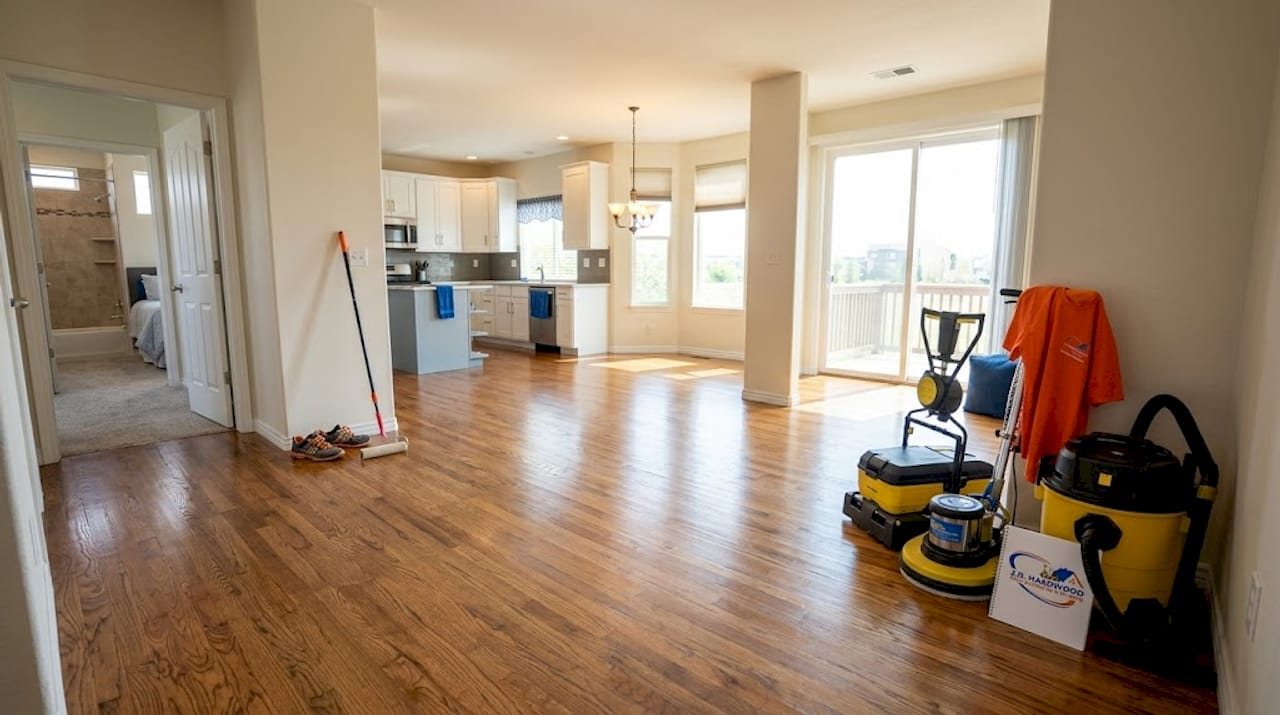
If your rental already has hardwood, don’t rip it out. A professional refinish using UV-curable finish is like giving your floors a turbo-charged spa day. The finish cures almost instantly under UV light, which means the unit can be ready for move-in the same day.
“The right floor for a rental isn’t the prettiest one. It’s the one that costs you the least over five years.”
Pro Tip: Use LVP in main living areas and hallways, carpet in bedrooms only, and tile in bathrooms and utility spaces. This hybrid approach balances cost, durability, and tenant comfort beautifully.
Side-by-side comparison: Flooring types for rentals
The next step is easy: compare your options at a glance to help make the best call.
| Flooring type | Lifespan | Waterproof | Maintenance level | Install speed | Avg. repair cost |
|---|---|---|---|---|---|
| Luxury Vinyl Plank | 15-20 years | Yes | Low | Fast | Low |
| Carpet | 3-10 years | No | High | Fast | Medium |
| Ceramic tile | 20+ years | Yes | Medium | Slow | Medium-High |
| Refinished hardwood | 10-25 years | No (sealed) | Medium | Fast (UV-cure) | Medium |
| Laminate | 10-15 years | Partial | Low-Medium | Fast | Low-Medium |
A few numbers worth knowing: carpet useful life in Colorado rentals is set at 10 years under HB 1249, meaning you can only charge tenants for damage prorated against that lifespan. That legal framework matters when budgeting for replacements.
Here’s the kicker: carpet lasts just 3 to 5 years in high-traffic rental areas. So while the law gives it a 10-year useful life for charging purposes, you may be replacing it far sooner in practice. That gap between legal life and real-world life is where landlords lose money.
For details on rental flooring costs and comparisons, LVP consistently wins on lifecycle value. Its low repair cost and long lifespan mean you’re not constantly reinvesting between tenants.
Statistic to remember: Carpet in high-traffic zones can require replacement every 3 to 5 years, while LVP in the same space can last 15 to 20 years. That’s potentially four carpet replacements for every one LVP install.
Smart installation and maintenance practices
Comparisons are only the start. Let’s look at how to keep your floors high-performing all year and how to handle tenant damage the right way.
Installation tips to reduce vacancy:
- Choose click-lock LVP for the fastest installs. No glue, no drying time, no waiting. Click-lock LVP installs quickly compared to tile, which requires labor-intensive thin-set and grout work, and UV-cure hardwood finishes allow same-day move-in.
- Schedule floor work immediately after a tenant vacates. Don’t wait until you’ve already listed the unit. Have your flooring contractor lined up in advance.
- Keep extra planks on hand. For LVP, store a box of matching planks so you can do quick spot repairs without hunting for discontinued stock.
- Use UV-cure finishing for hardwood. If your unit has existing hardwood, a UV-cure refinish is the fastest way to restore it and get the unit back on the market.
Ongoing maintenance practices:
- Schedule professional floor cleaning at least once per tenancy for hard surfaces.
- For carpet, professional cleaning yearly is essential in Colorado rentals to extend its already short useful life in high-traffic areas.
- Document floor condition with photos at move-in and move-out. This protects you legally and supports any damage claims.
Colorado tenant charging rules:
Under HB 1249, carpet has a legal useful life of 10 years. If a tenant damages carpet that is already 7 years old, you can only charge them for 30% of replacement cost. Know this before you try to deduct from a security deposit.
Pro Tip: Include specific floor care instructions in your lease agreement. Tell tenants which cleaning products are safe, whether shoes are preferred off, and how to report damage early. Prevention is always cheaper than repair.
A property manager’s view: Prioritizing turnovers and ROI
Here’s the angle most new property managers overlook: chasing visual appeal over practical performance is one of the most expensive mistakes you can make.
We see it often. A landlord installs beautiful hardwood throughout a unit, skips the protective finish upgrade, and within 18 months the floors look tired and scratched. Meanwhile, a property manager down the street put in mid-grade LVP, and it still looks sharp after three tenant cycles.
The uncomfortable truth is that tenants don’t treat floors the way owners do. The best floor for a rental is the one that looks good enough to attract quality tenants and holds up long enough to deliver real ROI. Our perspective on floor care is simple: minimize vacancy time, minimize repair costs, and choose materials that forgive everyday abuse. That formula beats premium aesthetics every single time when you’re running the numbers over a five-year horizon.
Discover durable flooring solutions for Colorado rentals
Ready to make a flooring upgrade easy and stress-free? Here’s where to start.
At J.R. Hardwood Floor Refinishing & Cleaning, we work with property managers and landlords across the Denver Metro Area to keep rental floors looking sharp and performing well between tenants. Whether you need a fast UV-cure hardwood refinish to cut vacancy time or a full LVP installation for a unit getting a fresh start, we’ve got you covered.
We offer free over-the-phone quotes and clear scheduling so you’re never left guessing. If you’re weighing the DIY vs. professional refinishing question or need a guide to hardwood refinishing before your next turnover, we have the resources to help you decide confidently. Reach out today and let’s get your floors rental-ready.
Frequently asked questions
How long does luxury vinyl plank flooring last in a rental property?
LVP often lasts 15 to 20 years in high-traffic rentals thanks to its scratch-resistant wear layer and fully waterproof construction, making it one of the best long-term investments for rental units.
Can landlords charge tenants for carpet replacement in Colorado?
Yes, but only for damage beyond normal wear, and the charge must be prorated based on the carpet’s age. Under HB 1249, carpet has a legal useful life of 10 years in Colorado rentals.
What flooring type reduces vacancy downtime the most?
Click-lock LVP installs the fastest with no adhesive or cure time, and UV-cure hardwood finishing allows same-day move-in, making both the top choices for minimizing vacancy between tenants.
Should carpet be used in living rooms of rental properties?
No. Carpet lasts only 3 to 5 years in high-traffic areas and is best reserved for bedrooms where foot traffic is lighter and the comfort factor is most appreciated by tenants.