 Skip to content
TL;DR:
- Proper cleaning routines can extend hardwood floor lifespan from 7 to over 15 years.
- Maintaining indoor humidity levels between 35 and 55 percent prevents damage in dry Colorado climate.
- Preventive measures like entry mats, felt pads, and pet nail trims effectively reduce surface scratches and wear.
Most homeowners assume their hardwood floors need a full refinishing every five to seven years. That’s simply not true. With the right habits in place, hardwood floors can last decades between full refinishing cycles, saving you thousands of dollars and a lot of disruption. Colorado’s dry climate adds a unique twist to the maintenance equation, making some routines more critical here than anywhere else. In this guide, we’ll walk you through the cleaning habits, humidity strategies, and preventive steps that genuinely extend floor life, so you can protect your investment without constantly reaching for the phone to schedule a refinishing.
Table of Contents
- How regular cleaning prevents abrasive wear and finish loss
- Managing humidity: The Colorado factor in hardwood floor care
- Preventive measures: Reducing scratches, dents, and fading
- Maintenance pitfalls: What most people miss about routine care
- A Colorado expert’s take: What truly extends hardwood floor life
- Solutions for professional hardwood floor maintenance in Colorado
- Frequently asked questions
Key Takeaways
| Point | Details |
|---|---|
| Routine cleaning matters | Daily sweeping and damp mopping remove abrasive grit that shortens floor life and reduces refinishing needs. |
| Humidity is critical | Maintaining proper indoor humidity prevents cracking, gapping, and costly structural damage, especially in Colorado. |
| Prevention beats repair | Entry mats, felt pads, and pet care stop most scratches and dents before they start. |
| Avoid common mistakes | Excess water, improper cleaners, and neglecting seasonal changes are the biggest threats to hardwood floors. |
How regular cleaning prevents abrasive wear and finish loss
Think of the grit and dust on your floor like tiny pieces of sandpaper. Every time someone walks across it, those particles grind against the finish, slowly wearing it down. Over time, this invisible damage adds up, and before you know it, your floors look dull and scratched. The good news? A simple cleaning routine stops this in its tracks.
Here’s a straightforward routine we recommend for any Colorado home or commercial space:
- Sweep daily using a soft-bristle broom or a dry microfiber mop. This removes the grit before it gets ground in.
- Vacuum weekly with a floor-brush attachment, never a beater bar, to pull up fine particles from between boards.
- Damp mop as needed using a barely damp microfiber mop, not a soaking wet one. Think of it as a light refresh, not a bath.
- Use pH-neutral cleaners specifically designed for hardwood. These clean without stripping the finish or leaving residue.
This kind of proper floor care is the single most powerful thing you can do to protect your investment. Research confirms that daily sweeping and damp mopping with pH-neutral cleaners can extend refinishing intervals from 7 to 15 or more years. That’s a huge difference in both cost and convenience.
For a deeper look at what works long-term, our maintenance guide for lasting beauty covers product recommendations and seasonal adjustments specific to Colorado.
Pro Tip: Never use steam mops or soaking-wet mops on hardwood. Excess moisture seeps into the seams and causes swelling, warping, and finish failure. A damp mop should feel almost dry to the touch.
Also, skip the multi-surface sprays and vinegar solutions you might see on cleaning blogs. These are often acidic and will slowly eat away at your floor’s protective finish. Check out these cleaning essentials for product guidance that actually holds up.
Managing humidity: The Colorado factor in hardwood floor care
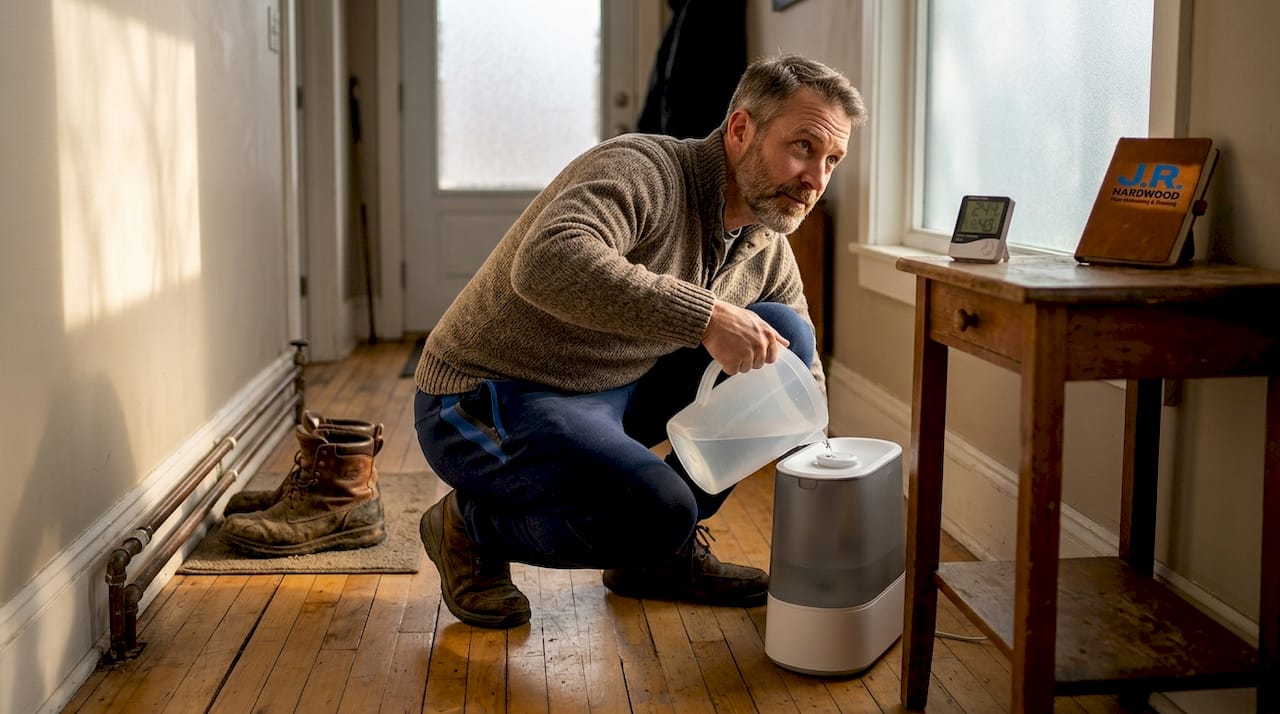
Colorado is beautiful, but it’s also one of the driest states in the country. During winter, indoor relative humidity (RH) can drop well below 20%. For hardwood floors, that’s like leaving a wooden cutting board in the desert. The wood shrinks, gaps form between boards, and in severe cases, cracks and splits develop.
Maintaining indoor RH at 35 to 55% prevents the expansion and contraction that causes structural damage, especially in Colorado’s dry winters. Here’s a quick look at what that means in practice:
| Season | Recommended RH | Typical Colorado Indoor RH |
|---|---|---|
| Winter | 35 to 45% | 15 to 25% |
| Spring/Fall | 40 to 50% | 30 to 45% |
| Summer | 45 to 55% | 35 to 50% |
As you can see, winter is the danger zone. Without intervention, your floors are spending months in conditions that cause real damage.
Here’s what we recommend to stay on top of it:
- Install a whole-home humidifier connected to your HVAC system for consistent, automatic control.
- Use portable humidifiers in rooms with hardwood floors if a whole-home system isn’t feasible.
- Monitor with a hygrometer (a small, inexpensive device that measures RH) placed in the main living area.
- Adjust seasonally as Colorado’s humidity swings between seasons, not just in winter.
Pro Tip: A basic digital hygrometer costs around $15 and gives you real-time RH readings. Place one in your main living area and check it weekly during winter. It’s the easiest way to catch a problem before it becomes expensive.
For a full breakdown of the longevity factors in Colorado and how our climate specifically affects different wood species, we’ve put together resources that go deeper. You can also explore our eco-friendly care tips and floor longevity best practices for more guidance tailored to Colorado homes. These floor cleaning tips also cover humidity-related care in detail.
Preventive measures: Reducing scratches, dents, and fading
Prevention is always cheaper than repair. Before a scratch happens, before a dent forms, there are simple steps that create a protective layer between your floors and daily life.
Entry mats capture 80% of tracked debris, making them one of the most cost-effective tools you have. Add felt pads, regular pet nail trims, and area rugs, and you’ve dramatically reduced the main sources of surface damage.
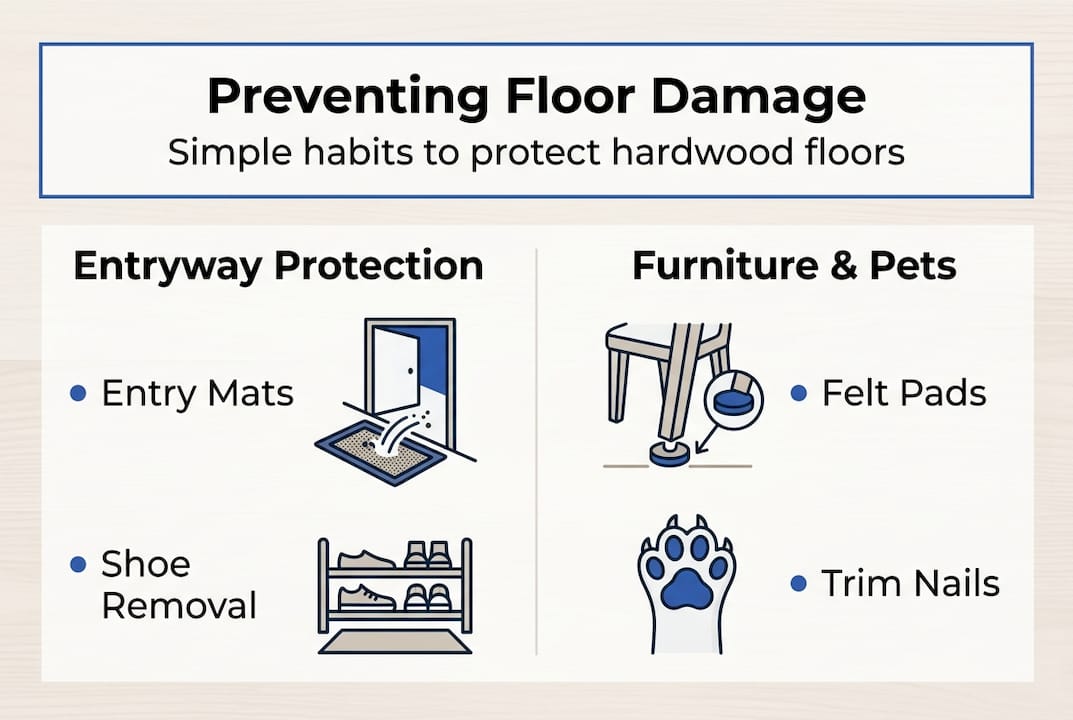
Here’s how these measures stack up:
| Preventive measure | What it protects against | Effectiveness |
|---|---|---|
| Entry mats (inside and outside) | Tracked grit, dirt, moisture | Very high |
| Felt pads on furniture legs | Scratches from chairs and tables | High |
| Area rugs in high-traffic zones | Wear patterns, surface scratches | High |
| Pet nail trimming | Deep scratches from claws | Moderate to high |
| UV-blocking window treatments | Fading and discoloration | Moderate |
Here’s a practical checklist to get you started:
- Place mats at every exterior door, both inside and outside.
- Add felt pads to all furniture legs, and check them every few months since they wear out.
- Keep pet nails trimmed short. Long nails on hardwood are like dragging a key across the surface.
- Use area rugs in hallways, living rooms, and dining areas where chairs move frequently.
- Install UV-filtering window film or use curtains during peak sun hours to prevent fading.
For Colorado homes with pets, our hardwood floor protection methods for pet owners guide covers specific strategies. And if you’re already seeing scratches forming, our prevent scratches guide walks through targeted fixes. More hardwood floor protection strategies are also available from industry experts.
Maintenance pitfalls: What most people miss about routine care
Even well-meaning homeowners make mistakes that quietly shorten their floor’s life. The tricky part is that these mistakes don’t always show up right away. The damage builds slowly, and by the time it’s visible, it’s often expensive to fix.
Here are the most common pitfalls we see in Colorado homes:
- Using too much water. Wet mopping feels thorough, but water is hardwood’s enemy. It seeps into seams, causes swelling, and breaks down the adhesive bond in engineered floors.
- Skipping humidity control. Cleaning is great, but if your home drops to 15% RH every winter, your floors are cracking from the inside out.
- Using waxes or oils on factory-finished floors. Many homeowners think these products add protection. They actually create a film that prevents future recoating, locking you into a costly full sand-and-refinish.
- Ignoring high-traffic areas. Entryways, hallways, and kitchen thresholds take far more abuse than other areas. These spots need more frequent cleaning and occasional touch-ups.
- Using the wrong cleaners. Products like vinegar, ammonia-based cleaners, or generic multi-surface sprays can strip the finish over time.
Pro Tip: Never apply wax or oil-based products to factory-finished hardwood floors. These finishes are sealed at the factory with aluminum oxide and don’t need added wax. Applying it creates a slippery, hazy layer that prevents future recoating and forces a full refinishing instead.
“Colorado’s dry winters are the number one hidden threat to hardwood floors. We see more gapping and cracking from low humidity than from any other cause. Homeowners who invest in a humidifier and a hygrometer protect their floors better than any cleaning product can.”
For a full picture of common risks in Colorado and how to avoid them, we’ve put together a detailed resource. Our best practice guide also covers these routine care tips in a simple, step-by-step format.
A Colorado expert’s take: What truly extends hardwood floor life
Here’s something we’ve learned after years of working on floors across Denver, Parker, Boulder, and Colorado Springs: most homeowners focus almost entirely on cleaning, and not nearly enough on environmental control. Cleaning is important, no question. But if your home’s humidity swings wildly between seasons, your floors are under stress every single day, no matter how often you sweep.
We once worked with a homeowner in Castle Rock whose floors had developed significant gapping after just six years. The floors were clean. The finish looked decent. But the home had no humidification system, and winter RH was consistently below 20%. Adding a whole-home humidifier and monitoring RH closely meant those floors lasted another twelve years without a full refinishing.
The uncomfortable truth is that why maintenance matters goes beyond the mop and bucket. In Colorado, environmental control is the foundation. Cleaning is the layer on top. Get both right, and your floors will genuinely outlast your expectations.
Solutions for professional hardwood floor maintenance in Colorado
Knowing what to do is a great first step. But sometimes, floors need more than a routine, and that’s where we come in.
At J.R. Hardwood Floor Refinishing & Cleaning, we serve homeowners and property managers across the Denver Metro Area and surrounding Colorado communities. Whether you’re weighing DIY vs. professional refinishing or ready to schedule a service, we make it easy to get started with a free over-the-phone quote. Our complete refinishing guide walks you through every option, and our refinishing Q&A answers the questions we hear most. We’re here to help you protect your floors and your investment, for the long haul.
Frequently asked questions
How often should hardwood floors be refinished in Colorado?
With consistent cleaning and humidity control, refinishing can be pushed back to every 10 to 15 years. Maintenance extends refinishing intervals well beyond the commonly assumed 7-year cycle.
What’s the best way to control humidity for hardwood floors?
Use a humidifier and a hygrometer to keep indoor RH between 35 and 55%. Maintaining proper RH prevents the wood movement that causes gapping and cracking, especially during Colorado’s dry winters.
Which preventive steps protect hardwood floors from scratches?
Entry mats, felt furniture pads, area rugs, and regular pet nail trims are your best tools. Entry mats alone capture up to 80% of the debris that would otherwise grind into your finish.
What cleaners should be avoided for hardwood floors?
Skip excessive water, vinegar, ammonia-based products, and any wax or oil on factory-finished floors. Waxes on factory finishes prevent future recoating and can force a costly full refinishing down the road.