 Skip to content
When you hear "scratch-resistant laminate," you might picture some space-age material that’s magically immune to damage. The reality is a lot cooler—and way more practical. It’s not a single substance, but a smartly engineered, multi-layer floor designed to stand up to real life. For homeowners in Parker, choosing the right flooring is a big decision, and understanding how these materials work is key. Unlike hardwood floor refinishing, which restores existing wood, laminate is an alternative product. Think of it like a high-tech sandwich, where every single layer has a crucial job. The real star of the show, though, is the invisible top layer that takes all the hits so the beautiful floor underneath doesn't have to.
What Exactly Makes Laminate Flooring Scratch Resistant?
To really get what makes this flooring so tough, you have to look past the surface. It's a system. From the core that shrugs off dents to the topcoat that fights off scuffs, each piece works together to create something incredibly durable. This is a different approach than our Parker hardwood floor refinishing service, which relies on protective coatings like our UV-Cure System.
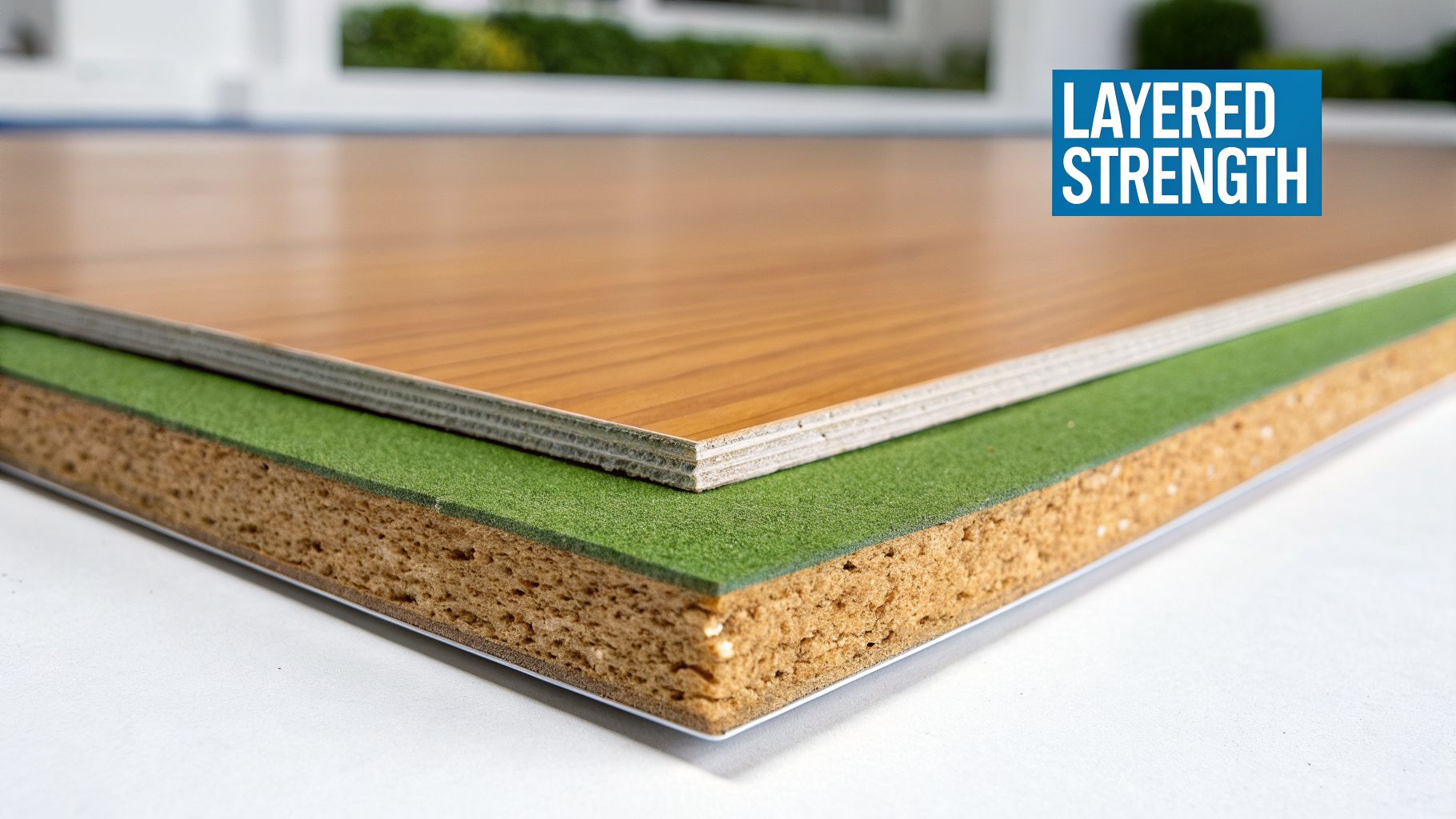
The secret is all in the layers. At the bottom, you have a layer for stability and moisture protection. Above that sits a high-density fiberboard (HDF) core, which gives the plank its backbone and impressive dent resistance against things like dropped pots or heavy furniture. On top of that is the design—a super high-resolution image that gives the floor its stunningly realistic wood or stone look.
But the part that does all the heavy lifting for scratch resistance is the wear layer.
The Unsung Hero: The Wear Layer
This is the floor's bodyguard. It's a completely transparent, ultra-hard shield that stands between the beautiful wood-look design and the daily chaos of life—whether that’s a golden retriever’s claws in your Parker home or chairs sliding around a busy Denver rental. This layer is infused with aluminum oxide, one of the hardest mineral compounds out there, which gives it its incredible ability to fend off abrasion. This built-in protection is different from the finishes we apply during hardwood floor refinishing, such as our Diamond Traffic Plus UV-Cure System.
When you’re shopping for quality laminate, a huge part of what you’re paying for is the thickness and quality of this protective wear layer. It’s the frontline defense that keeps your floors looking brand new for years.
This diagram breaks down how the key layers—Wear, Image, and Core—stack up to do their job.
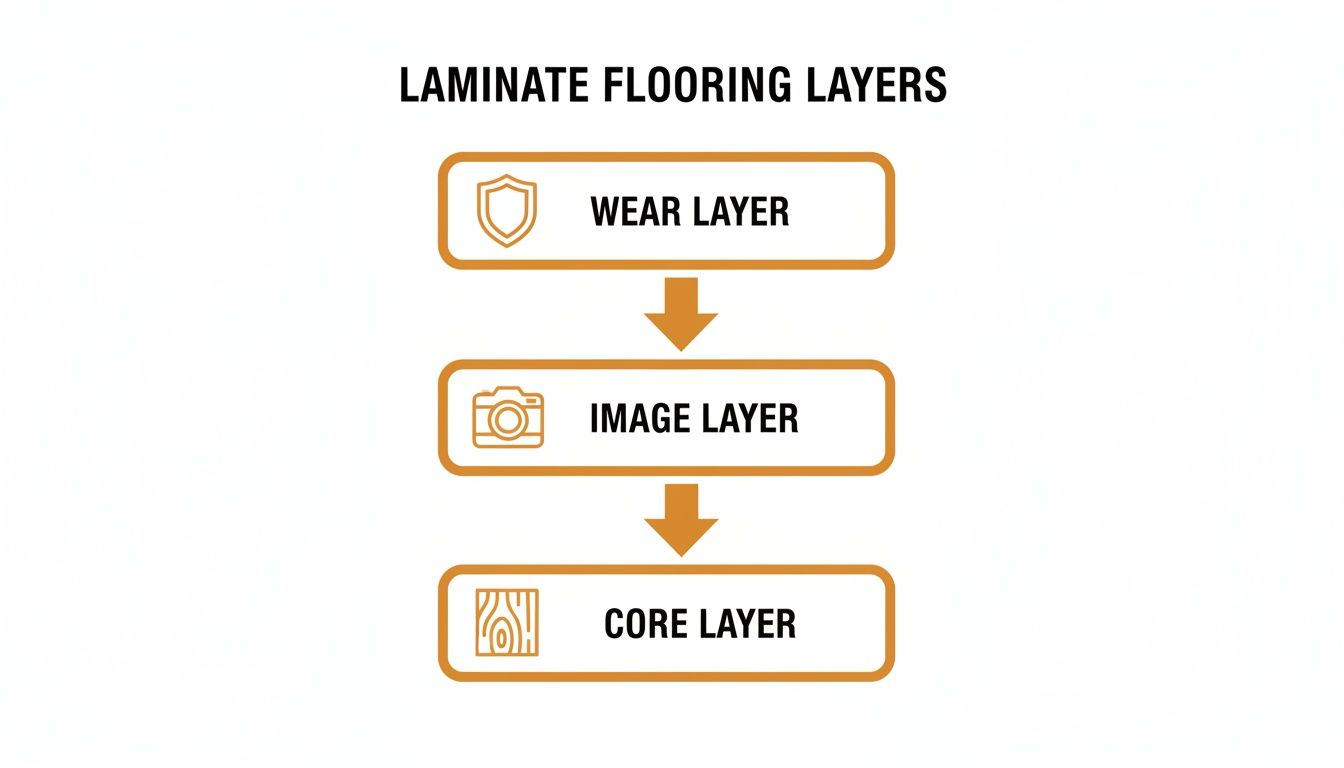
As you can see, it's not just one thing. Durability comes from the teamwork between that tough-as-nails wear layer, the beautiful image layer, and the sturdy core.
It's More Than Just Skin Deep
While the wear layer is getting all the credit for fighting scratches, the dense HDF core is quietly playing a huge role in the floor's overall toughness. A strong, rigid core prevents the plank from bending or denting when something heavy drops on it. If the core were to give way, the top layers would be compromised, leading to cracks and premature wear.
The Bottom Line: "Scratch resistant" is all about how well that top wear layer holds up to scuffs and scrapes. But the floor's true long-term durability—its ability to resist dents and damage—comes from the quality of its dense inner core.
This one-two punch of a fortified wear layer and a rock-solid core is what lets laminate perform so well in busy households and even commercial spaces. It’s a smart, budget-friendly choice for anyone who needs a floor that can handle an active family without giving you a heart attack every time something gets dropped. Knowing how it’s built is the first step to picking a floor that will actually go the distance.
Decoding AC Ratings: Your Secret Weapon for Durable Floors
If you really want to know how tough a scratch resistant laminate flooring product is, there’s one simple code to crack: the AC Rating. Short for Abrasion Class, this is the industry's universal standard for measuring a laminate floor’s durability. It cuts right through the marketing fluff and tells you exactly how much wear and tear a floor can truly handle. For comparison, when we perform hardwood floor refinishing, we talk about the durability of finishes like our UV-Cure System.
Think of it like the treadwear rating on a tire. A higher number means it’s built to take more punishment and last longer. A floor with a low rating might be fine for a quiet guest room in a Parker home, but it would get chewed up in a busy hallway in no time. The AC rating system gives you the power to match the floor's strength to your home's actual needs.
So how is it determined? Through a series of grueling tests. One key test involves a specialized machine that literally grinds away at the surface until the pretty decorative layer wears through. The number of rotations it can withstand determines its final rating, from light residential use all the way to heavy commercial applications.
Breaking Down the AC Ratings
Understanding these levels is the key to making a smart buy. You don’t want to overpay for durability you'll never use, or worse, install a floor that can't keep up with your family’s lifestyle.
Each rating corresponds to a specific environment, making it easy to find the right fit. Here’s a quick guide to what each level means for you.
Laminate Flooring AC Rating Guide
| AC Rating | Durability Level | Recommended Use | Example Location |
|---|---|---|---|
| AC1 | Moderate Residential | Very light foot traffic areas only. | Closets, guest bedrooms |
| AC2 | General Residential | Areas with moderate, infrequent traffic. | Formal dining rooms, sitting rooms |
| AC3 | Heavy Residential / Moderate Commercial | The sweet spot for most homes; handles daily life. | Kitchens, hallways, living rooms, small offices |
| AC4 | General Commercial | A big step up; great for busy homes or light commercial. | Homes with kids/pets, boutiques, cafes |
| AC5 | Heavy Commercial | The toughest laminate available; for extreme traffic. | Department stores, public buildings, showrooms |
For the vast majority of homeowners we work with in the Parker area, an AC3 or AC4 rating hits that perfect balance between long-lasting performance and a budget-friendly price. These floors are specifically engineered to endure the daily grind of an active family.
The secret to this toughness often lies in the high-density fiberboard (HDF) core. In 2026, HDF-based laminate flooring is projected to command a 63.61% share of the global market, and for good reason. Its superior density (typically 800-1000 kg/m³) is amazing at resisting scratches and dents from daily foot traffic—perfect for busy Parker homes with pets or kids, like those found in the Idyllwilde neighborhood. This robust HDF core, topped with an aluminum oxide wear layer rated AC4 or AC5, can withstand over 20,000 abrasion cycles in lab tests. You can discover more about these flooring market insights and see what's driving their popularity.
Choosing the Right AC Rating for Your Parker Home
Let's put this into a local context to make it even clearer. Are you renovating a ranch-style home near Salisbury Equestrian Park or a bustling modern townhome closer to downtown Parker? Your lifestyle dictates the right choice.
A household with two adults might be perfectly happy with a solid AC3 floor. But a family in Parker with a large dog, a couple of kids, and all their friends will get way more peace of mind from a beefier AC4-rated product.
The AC rating isn't just some number on a box; it's your guarantee of performance. By checking for an AC3 or higher rating, you ensure your investment in scratch resistant laminate flooring is protected against the demands of everyday life, keeping your floors beautiful for years to come.
Let's be real—no flooring is perfect. Every single material out there, from pricey Italian marble to good old-fashioned linoleum, comes with its own set of trade-offs. Even the toughest scratch resistant laminate flooring is no exception. While our Parker hardwood floor refinishing services can restore worn wood, laminate has different pros and cons.
Knowing both the good and the bad is the key to figuring out if it’s the right fit for your home. This honest look will help you know what to expect and see where laminate really shines, whether you're planning a remodel for a busy family kitchen in Parker or need something tough for a high-traffic entryway.
The Upside: Why People Love Scratch Resistant Laminate
There’s a reason laminate flooring has become such a popular choice for homeowners. It’s a workhorse that combines durability, good looks, and a friendly price tag, making it a seriously attractive option for modern life.
Incredible Durability: This is laminate's biggest selling point. Thanks to a super-tough wear layer and a dense core, a quality laminate with an AC3 or AC4 rating can shrug off scratches, scuffs, and fading from daily chaos. This is exactly what you want for homes with pets, kids, and constant foot traffic.
Budget-Friendly Price Point: You can get that high-end look of hardwood or natural stone for a fraction of the price. Laminate lets you achieve a beautiful, stylish aesthetic without having to take out a second mortgage, which is a huge win.
So Easy to Clean and Maintain: A quick sweep or vacuum, followed by a light pass with a damp mop and a pH-neutral cleaner, is pretty much all it takes. Unlike real wood that may need deep cleaning or a screen and recoat, there’s zero need for waxing or special treatments. You get to spend more time enjoying your floors and less time babying them.
The Downsides: What to Keep in Mind
While laminate is a fantastic product, it’s super important to know its limits. Understanding these potential drawbacks before you install means no nasty surprises down the road.
The biggest weakness, without a doubt, is its relationship with moisture. While lots of modern laminates are sold as "water-resistant," they are absolutely not waterproof.
Spills need to be wiped up right away. If water gets between the seams and soaks into that HDF core, it can cause the planks to swell up, warp, or buckle—and that kind of damage is almost always permanent.
Another key thing to remember is that you can't refinish laminate. If a plank gets a deep gouge or some other major damage, you can’t just sand it down and make it new again like you can with a hardwood floor using our dust-free sanding process. The only fix is to replace the entire damaged plank, which can sometimes be a tricky job.
Finally, some people notice that laminate feels harder underfoot and can sound a bit hollow compared to solid hardwood. Using a good quality underlayment when you install it makes a huge difference in reducing that "clacky" sound and giving it a more solid feel, but it’s never going to perfectly mimic the natural warmth and softness of real wood.
So, to sum it up: scratch resistant laminate flooring gives you awesome performance against daily wear and tear at a price that’s hard to beat. Its main weak spots are water damage and the fact that you can’t refinish it. For a lot of homeowners, the pros of durability and low cost easily outweigh the cons, especially in those busy parts of the house where practicality is king.
Laminate vs. Hardwood vs. LVP: A Practical Comparison
Choosing a new floor can feel like a high-stakes decision. You're staring at samples, and the acronyms are flying—LVP, HDF, AC ratings. When you’re looking for something that can stand up to real life, three contenders always enter the ring: scratch-resistant laminate, classic hardwood, and the ultra-versatile LVP.
Each one has its die-hard fans, but the right choice for your home, whether you're in Parker or Castle Rock, really boils down to your lifestyle, your budget, and where you plan to put it. Let’s cut through the marketing jargon and have a real-world showdown between these three heavyweights.
Laminate vs. Hardwood: The Battle of Old vs. New
This is the classic matchup. You’ve got the timeless, authentic charm of solid wood on one side and the engineered resilience of modern laminate on the other.
Scratch Resistance: Laminate wins this fight, hands down. A quality laminate with a high AC rating is built from the ground up to fend off scratches from dog claws, dropped keys, and scooted chairs. While some hardwoods are tough (think oak or hickory), they will eventually show wear. We recently restored a red oak floor in Parker that had significant wear, but our UV-Cure System made it incredibly durable.
Cost: If budget is a major factor, laminate lets you get that beautiful wood look for a fraction of the price. It's a fantastic choice for covering big areas or for anyone who wants a style upgrade without the hefty investment that comes with real timber. Hardwood refinishing, however, can be more cost-effective than replacing wood floors.
Long-Term Value and Repair: This is where hardwood truly pulls ahead. Real wood floors can be sanded down and refinished several times over their lifespan, essentially giving you a brand-new floor every decade or so. Our dust-free sanding and Instant UV-Curable Finish can restore floors to pristine condition. Laminate, however, can't be refinished. If a plank gets a deep gouge, your only option is to replace it.
Appearance: Modern laminate is pretty stunning—the high-resolution images of wood are incredibly realistic. But at the end of the day, it's still a picture of wood. Solid hardwood has a warmth, depth, and one-of-a-kind character that simply can't be faked. Every single plank is unique.
The Verdict: If your top priorities are maximum scratch resistance and a friendly upfront cost for a busy, high-traffic home, scratch-resistant laminate flooring is your champion. If you're after pure authenticity, the ability to refinish for decades to come with services like our Parker hardwood floor refinishing, and a boost in home value, hardwood is the undisputed classic.
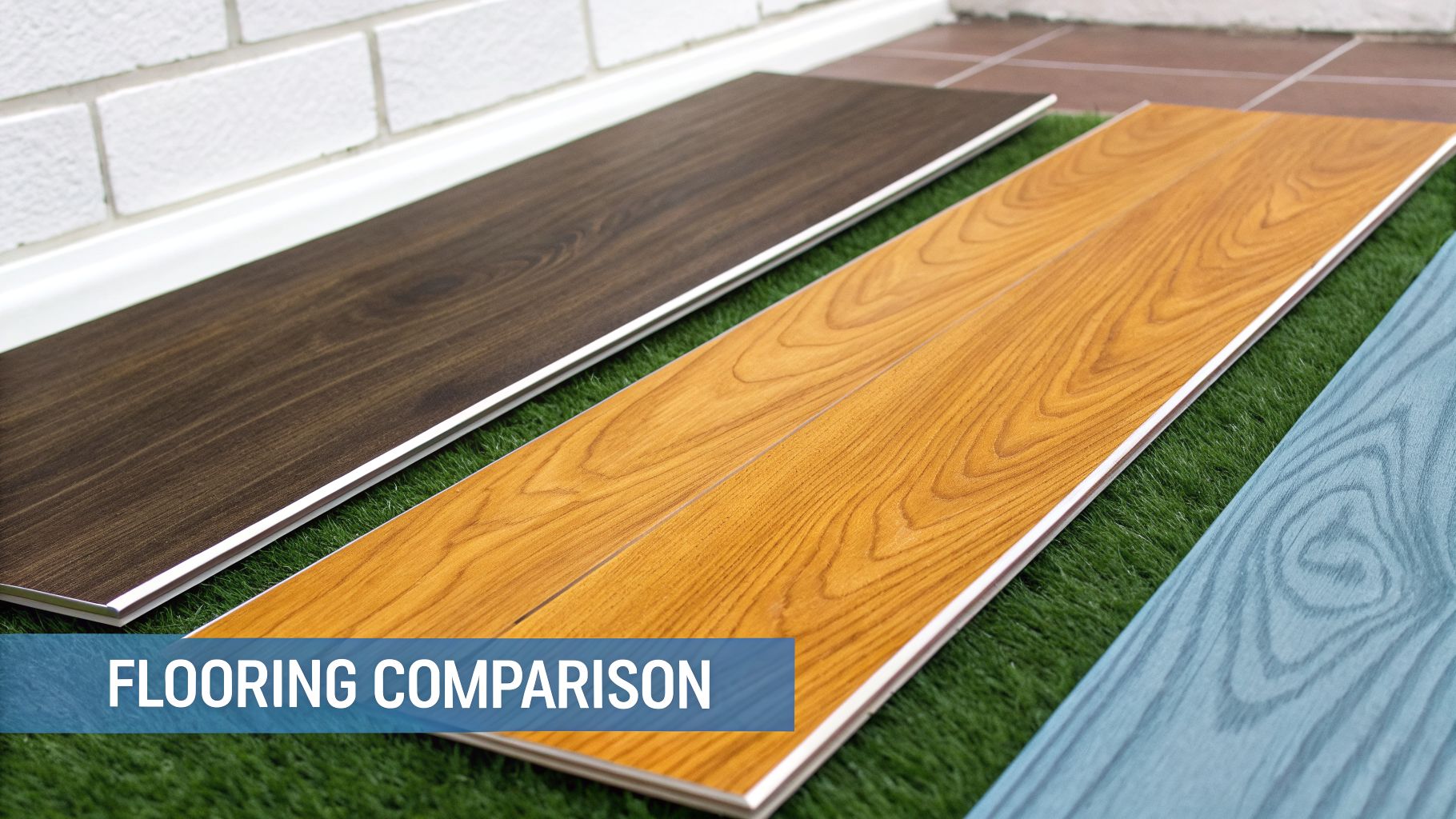
Laminate vs. LVP: The Engineered Flooring Showdown
Now we're pitting two modern marvels against each other: scratch-resistant laminate and Luxury Vinyl Plank (LVP). They often look alike and are used in similar spaces, but the way they're made creates some crucial differences.
Durability and Scratch Resistance: Both of these floors are tough, but they handle stress differently. Laminate’s super-hard wear layer gives it superior defense against surface-level scratches and scuffs. LVP, on the other hand, is made from PVC vinyl, which is a bit softer. It can be more vulnerable to deep scratches from sharp objects, but its flexibility makes it more resistant to dents from dropped items.
Water Resistance: This is the biggest differentiator. LVP is 100% waterproof. Because its core is made of vinyl, it’s completely unfazed by water, making it the perfect floor for basements, full bathrooms, and laundry rooms. While many newer laminates are labeled "water-resistant," their wood-based HDF core will still swell, warp, and get ruined if water sits on it for too long.
Realism and Appearance: Laminate often has a slight edge here. Its photographic layer tends to be a bit crisper, and the embossed textures can do a slightly better job of mimicking real wood grain. LVP has come a long, long way, but laminate sometimes just looks a little more convincing. If you’re weighing these materials, you might find our guide comparing engineered wood and laminate flooring a helpful resource for an even deeper dive.
Maintenance: Both are a breeze to clean. But with LVP, you can break out the wet mop without a single worry thanks to its waterproof nature. For laminate, you need to be more careful—use only a damp mop and wipe up any spills right away to keep water from getting into the seams.
Ultimately, the best floor is the one that fits your life. By thinking through what matters most—be it durability, water resistance, or long-term value—you can confidently pick the perfect material to handle everything your family throws at it.
Where Scratch Resistant Laminate Works Best
Knowing the technical specs of scratch resistant laminate flooring is one thing, but knowing where it truly shines is what makes it a smart investment for your home or business. This isn't a one-size-fits-all magic bullet, but in certain high-energy environments, its performance is simply unbeatable. For other situations, Parker hardwood floor refinishing might be the better choice.
Let's move past the lab tests and talk about the real-world spots where this flooring proves its mettle—from chaotic family homes to bustling commercial spaces.
The Ultimate Flooring for Homes with Kids and Pets
If your home doubles as a playground for kids and a racetrack for pets, you already know the floor takes a beating. Dropped toys, spilled juice, and the relentless click-clack of dog nails can turn a beautiful new floor into a battlefield of scuffs and scratches in no time. This is exactly where scratch-resistant laminate becomes a total game-changer.
Picture your golden retriever skidding around a corner without leaving a single mark. Imagine your toddler dropping a toy truck on the floor without you flinching, because you know that tough wear layer can take the hit. For so many families we work with in communities like Parker and Littleton, that peace of mind is priceless.
A quality laminate with an AC3 or AC4 rating is built for this kind of action. It offers:
- Superior scratch resistance to defend against pet claws and daily playtime chaos.
- Easy cleanup for spills and muddy paw prints, usually needing just a quick wipe.
- Dent resistance from dropped objects, thanks to its super-dense core.
You get the warm, inviting look of wood without the constant worry. It’s the perfect blend of style and toughness for an active household.
A Smart Investment for Rental Properties
For landlords and property managers, flooring is a tricky balancing act. You need something that looks great to attract tenants but is tough enough to handle frequent moves and varying levels of care. Scratch resistant laminate flooring hits this sweet spot perfectly.
Its rugged wear layer stands up to the stress of moving furniture, heavy foot traffic, and the general wear and tear that rental units see. Because it’s so easy to maintain, it stays looking fresh for the next tenant, cutting down on the need for costly replacements between leases. It's a low-maintenance, cost-effective solution that protects your investment year after year.
A Powerful Performer in Commercial Spaces
The demands of a commercial space are on a whole other level. Think about a retail store, a busy office, or a medical waiting room in areas like Downtown Denver or Parker. You need flooring that can handle a constant stampede of people while still looking clean and professional. This is where high-grade, commercially-rated laminate (AC4 and AC5) truly shines.
It’s no surprise that the global market for this tough flooring was valued at USD 1.84 billion in 2025 and is on track to hit USD 1.96 billion in 2026. This growth is fueled by its ability to take a beating. Advanced wear layers, sometimes 12-20 mil thick and beefed up with ceramic beads, can boost abrasion resistance by a whopping 30-50% over standard options. That makes them perfect for high-traffic zones where shopping carts and stiletto heels are a daily reality. You can read the full research on the commercial laminate market to see just how big its impact is.
In short, scratch-resistant laminate is the go-to choice for almost any area that demands serious durability without giving up on style. It's a versatile workhorse for active homes, a savvy pick for rental properties, and a dependable solution for high-traffic commercial spaces.
Installation and Long-Term Care for Your Laminate Floors
So you’ve picked out that gorgeous, tough-as-nails scratch resistant laminate flooring. Fantastic choice! But getting that showroom look to last for years isn't just about the planks you buy—it’s about how they’re installed and cared for day-to-day.
Even the world’s most durable floor can buckle, gap, or scratch if it’s not treated right. The great news? Keeping your laminate looking brand new is surprisingly simple once you know a few pro secrets.
Everyday Maintenance for Lasting Beauty
Think of daily care as your floor's first line of defense. You want to stop scratches before they even have a chance to happen. The number one enemy of any floor isn't foot traffic; it's the fine dirt and grit that gets tracked in, acting like sandpaper under every step.
- Use Doormats: A good-quality doormat at every door is a non-negotiable. It’s the easiest way to trap the sand, dirt, and moisture that chews up a finish.
- Add Felt Pads: This one is huge. Stick felt protectors on the bottom of everything that moves—chairs, tables, sofas, you name it. They’re cheap and prevent countless scratches.
- Lift, Don't Drag: When it's time to rearrange the living room, always lift furniture completely. Dragging even a light end table can create a gouge you can't unsee.
- Clean Up Spills Immediately: While your laminate is water-resistant, it’s not waterproof. Spills need to be wiped up right away to keep moisture from sneaking into the seams and damaging the core.
Fixing Blemishes and When to Call a Pro
No matter how careful you are, a dropped tool or a dragged chair can happen. For those minor heart-stopping moments, a color-matched laminate floor repair kit is your best friend. These usually contain a wax pencil or putty you can use to fill in a light scratch or tiny nick, making it all but disappear.
But what about a deep gouge, a chipped corner, or a plank that's swelled from a pet accident? That’s a different story. Since laminate planks lock together, replacing a single damaged board without wrecking the ones around it takes a lot of skill and specific tools. For this kind of surgical repair, it's always best to call a professional installer.
The Critical Role of Professional Installation
Laminate floors are famous for their click-lock systems, which can make DIY installation tempting. But honestly, most of the problems we see—like floors that peak, separate, or feel bouncy—are caused by installation mistakes, not a bad product.
A pro installer does two things that are absolutely essential. First, they ensure your subfloor is perfectly flat and clean. Second, they leave the correct expansion gap around the room's perimeter. This tiny, hidden gap lets the floor breathe, expanding and contracting with Parker’s wild temperature swings without buckling.
Skipping these crucial steps can turn your dream floor into a nightmare. For homeowners in spots like Castle Rock or Parker, having an experienced team handle the install is the best insurance policy you can buy for your scratch resistant laminate flooring. It guarantees your investment performs just as beautifully as it looks.
And while you might wonder about shortcuts, some are never a good idea. For instance, putting new flooring over old carpet is a recipe for disaster. You can find out exactly why in our guide on whether you can put laminate over carpet.
Your Top Questions About Scratch Resistant Laminate Answered
Even after digging into all the details, you probably still have a couple of questions kicking around in your head. That’s perfectly normal! We get these all the time from homeowners in Parker trying to make the right call.
Let’s tackle some of the most common questions we hear about scratch-resistant laminate flooring with some straight-up, honest answers.
Is All Laminate Flooring Scratch Resistant?
Nope, not even close. The scratch resistance of laminate can vary wildly, and it all boils down to its AC rating. A bargain-bin laminate without a rating will show scuffs and scratches almost immediately, while a quality plank with an AC3, AC4, or AC5 rating is built to take a beating.
Always, always check the product specs for that AC rating. It’s the single best number you have to gauge whether a floor can handle your family’s lifestyle.
Can I Use a Steam Mop on Laminate Floors?
Please don't. We strongly recommend you avoid steam mops on any kind of laminate flooring. The combination of intense heat and moisture is a recipe for disaster—it can force its way between the planks and make the HDF core swell up, warp, or even start to peel.
Damage from a steam mop is almost always permanent and will instantly void most manufacturer warranties. Your safest bet is a simple damp mop with a pH-neutral cleaner made specifically for laminate floors.
How Do I Fix a Deep Scratch in My Laminate?
This is one of the biggest trade-offs with laminate. Unlike hardwood, you can't sand and refinish it, which means a deep scratch is there to stay. For minor scuffs, you can do a pretty good job of hiding them with a laminate floor repair kit—they usually come with color-matched wax pencils or putty.
But for a really deep gouge or a big area of damage? The only real fix is to replace the damaged plank entirely. This is a delicate operation, and we’d recommend calling a pro to make sure the surrounding planks don't get damaged in the process.
How Is This Different From a UV-Cured Hardwood Finish?
This is a great question, and the answer is simple: they are two completely different worlds. Scratch-resistant laminate is a synthetic floor made of multiple layers with a high-definition photo of wood on top. Hardwood is, well, real wood.
A UV-cured finish is a high-tech liquid topcoat that’s applied directly to real hardwood and then instantly hardened with ultraviolet light, like the advanced UV-Cure System we use for Parker hardwood floor refinishing. While both offer fantastic durability, a UV finish protects a solid piece of wood, whereas laminate's wear layer protects a printed picture.
While laminate offers impressive durability for the price, a UV-cured finish on genuine hardwood delivers a premium, refinishable surface with truly unmatched scratch resistance.
If you're in the Parker area and looking for the absolute best in scratch resistance for your real hardwood floors, J.R. Hardwood Floor Refinishing & Cleaning offers a state-of-the-art finish that cures instantly. Learn more about our Instant UV-Curable Finish and give your authentic wood floors the protection they deserve.
Homeowners in Parker trust J.R. Hardwood Floor Refinishing & Cleaning to restore the natural beauty of their hardwood floors with our dust-free sanding system and advanced UV-curable finishes. Unlike traditional methods, our UV technology cures instantly, so you can move furniture back the same day with no lingering odor or downtime. Choose the perfect refinishing service to match your needs and home traffic. Our dust-free process ensures a clean, beautiful finish every time.
📞 Phone: 720-327-1127
🌐 Website: jrhardwoodfloorrefinishingandcleaning.com
📍 Service Area: Parker, Lone Tree, Centennial, Aurora, Elizabeth, and Franktown.
https://www.youtube.com/channel/UCLaTAi6KxwT-g8QCKqKTQ8Q?sub_confirmation=1