 Skip to content
Every spilled cup of coffee or pet accident can leave a mark that threatens the beauty of your hardwood floors. For Denver homeowners, quick and correct stain removal is more than cleaning—it protects your floor’s value and keeps your home looking its best. By understanding the nature of each stain and using the right approach for wood surfaces, you can prevent permanent damage and keep your floors shining year after year.
Table of Contents
- Defining Floor Stain Removal and Its Importance
- Types of Floor Stains and Affected Surfaces
- Stain Removal Methods for Various Floor Types
- Eco-Friendly Stain Removal Solutions and Benefits
- Common Risks and Mistakes in Floor Stain Removal
Key Takeaways
| Point | Details |
|---|---|
| Importance of Timely Stain Removal | Acting quickly on stains prevents chemical bonding, making removal easier and preserving floor integrity. |
| Understanding Stain Types | Different stains require specific removal methods; using the wrong technique can worsen damage. |
| Hardwood Care Techniques | Always blot fresh spills rather than rubbing, and minimal moisture is crucial to avoid damaging the wood. |
| Eco-Friendly Solutions | Green cleaning products effectively remove stains without toxins, benefiting both floors and indoor air quality. |
Defining Floor Stain Removal and Its Importance
Floor stain removal is the process of eliminating marks, spots, and discoloration caused by substances that have accumulated on your hardwood surfaces. It’s not just about cleaning—it’s about protecting your investment and maintaining the beauty your floors deserve.
When a stain sits on your hardwood floor, several things happen. The substance can begin to chemically bond to the material, making removal progressively harder over time. This is why timing matters so much in stain removal work.
Why Stain Removal Matters for Your Home
Your hardwood floors are one of the most visible features in your Denver-area home. Stains compromise that visual appeal immediately, but the real danger runs deeper.
Understanding stain types helps you address them correctly:
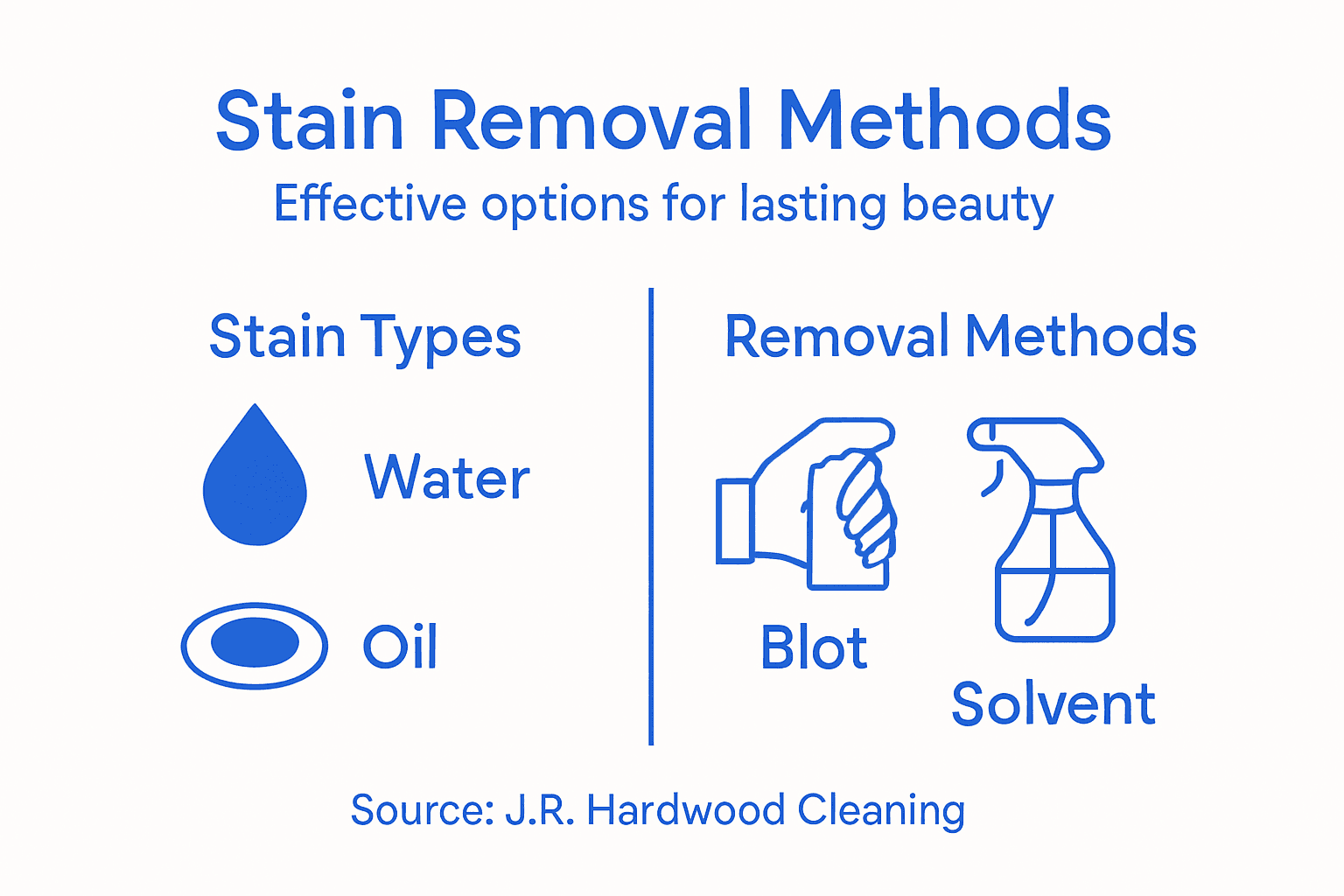
- Water-based stains (spills, humidity marks, pet accidents)
- Oil-based stains (cooking oils, furniture polish, automotive fluids)
- Organic stains (wine, coffee, food, plant matter)
- Chemical stains (dyes, bleach, ink)
Each requires different treatment approaches. Using the wrong solvent can actually damage your floor rather than save it.
The longer a stain remains untreated, the harder it becomes to remove—and the greater the risk of permanent damage to your hardwood’s finish and wood itself.
Stain removal preserves both the appearance and integrity of your floors. Left unaddressed, stains can set permanently, requiring expensive refinishing or complete floor replacement. When you act quickly with the right approach, you extend your floor’s lifespan significantly.
The Real Cost of Waiting
A fresh stain is almost always easier to remove than an old one. This connects directly to how substances interact with wood and finish materials over time.
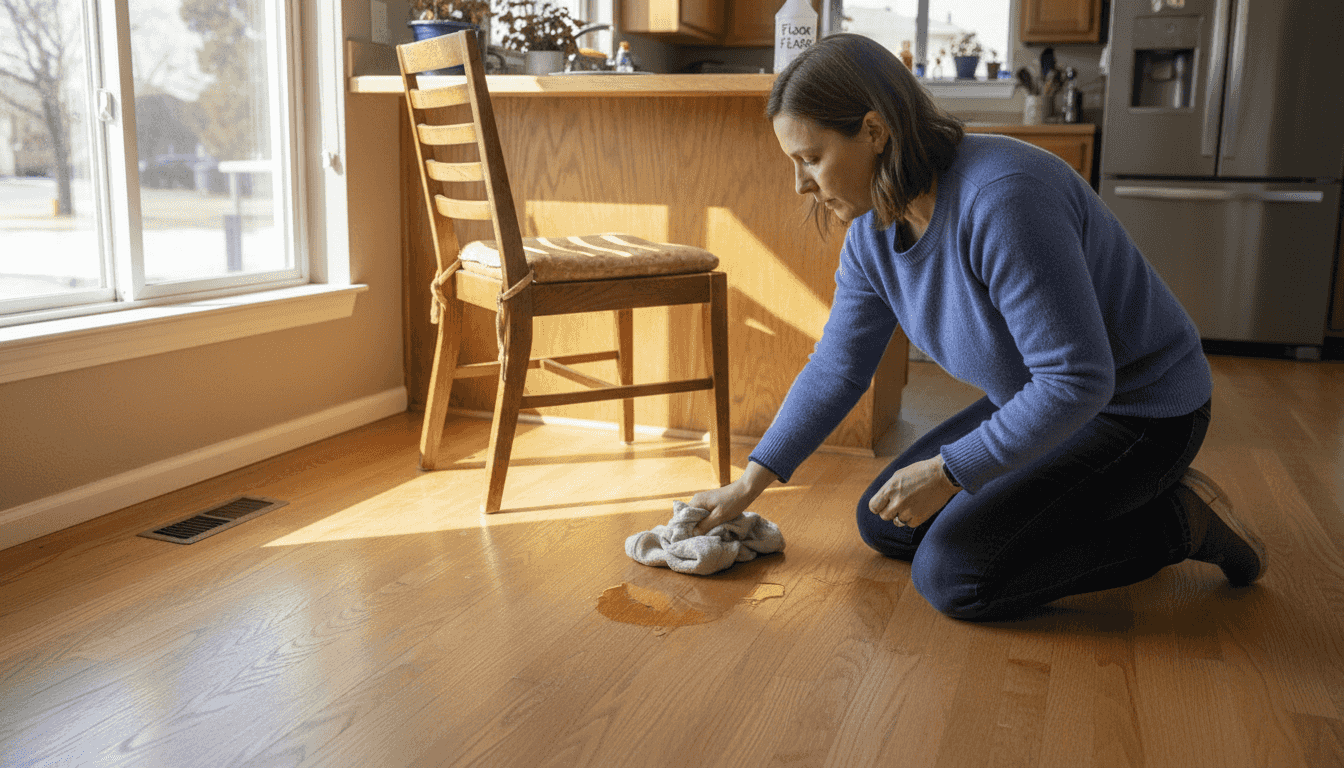
When you understand the nature of the stain and the surface, you can choose the proper solvent without harming the finish. This is where professional expertise matters—we know which solvents work for which stains, and which ones to avoid entirely.
For homeowners in Castle Rock, Parker, and Denver, stains happen constantly. Your family lives in your home, which means spills are inevitable. The question isn’t whether stains will appear—it’s whether you’ll address them promptly.
Pro tip: Blot fresh spills immediately with a dry cloth rather than rubbing, which can push the substance deeper into the wood grain and finish.
Types of Floor Stains and Affected Surfaces
Not all stains are created equal. The substance causing the stain and the type of floor surface it lands on determine how you’ll treat it. Understanding both factors is essential for effective removal without damaging your hardwood.
Floor stains fall into several distinct categories based on their chemical composition and origin. Each behaves differently on wood, requiring tailored removal approaches.
Common Stain Categories
Oil-based stains include grease, cooking oils, furniture polish, and cosmetics. These cling to floor finishes and wood fibers, creating visible discoloration that spreads over time.
Organic stains come from everyday household items:
- Coffee and tea
- Wine and juice
- Food spills and sauces
- Plant matter and grass
- Pet accidents
Water-based stains result from spills, humidity, and moisture exposure. They often appear as rings or cloudy patches on your finish.
Specialty stains include rust marks, ink, paint, and chemical damage. These typically require professional attention because standard cleaning methods won’t work.
Different stains have distinct characteristics requiring specific treatment approaches. For example, blood requires cold water treatment to avoid setting permanently, while pet urine responds better to neutralizing solutions.
How Your Floor Surface Affects Stain Behavior
Your hardwood floor responds to stains differently than tile or carpet would. Wood is porous and absorbent, meaning stains penetrate deeper and faster than on non-porous surfaces.
The finish on your hardwood—whether polyurethane, oil-based, or wax—affects how stains behave. A strong finish protects the wood underneath, but stains can still bond to the finish layer itself.
The surface material and finish type determine both how quickly a stain sets and which removal methods will work without causing additional damage.
When you recognize both the stain type and surface involved, you can apply the right solution immediately. This prevents the stain from advancing deeper into your floor.
Denver-area hardwood floors face unique stain challenges. Colorado’s dry climate and altitude create different moisture dynamics than other regions, affecting how stains develop and respond to treatment.
Pro tip: Identify the stain source first—knowing what caused the mark helps you choose the correct removal solvent, preventing trial-and-error that could worsen the damage.
Here’s a clear summary of how common floor stains interact with various surfaces:
| Stain Type | Hardwood Reaction | Stone/Tile Reaction | Carpet/Resilient Reaction |
|---|---|---|---|
| Oil-based | Penetrates finish, discolors | May leave oily residue | Soaks into fibers, hard to lift |
| Organic | Causes dark marks, odors | Can etch or dull surface | Staining and odor in fibers |
| Water-based | Causes warping, rings | Rarely damages, may stain grout | Fibers swell, may mildew |
| Chemical/Special | Damages finish, bleaches | Can etch or discolor stone | May cause permanent discoloration |
Stain Removal Methods for Various Floor Types
Your hardwood floor requires a different approach than tile or carpet. Each surface has unique characteristics that demand specific removal techniques, cleaning agents, and caution levels.
Choosing the wrong method can actually cause more damage than the stain itself. That’s why understanding your floor type is step one before tackling any stain.
Hardwood Floor Stain Removal
Hardwood requires the gentlest touch. The finish protecting your wood—whether waxed, oiled, or polyurethane—determines which cleaners are safe to use.
Polyurethane-finished hardwood is most common in Denver homes. This protective layer allows for more aggressive cleaning than oil or wax finishes.
Oil or wax-finished floors are sensitive to water and harsh chemicals. These need solvent-based approaches rather than water-based solutions.
For hardwood, always blot rather than rub, and avoid excessive moisture. Water is hardwood’s enemy—it causes swelling and warping that no amount of stain removal can fix afterward.
Stone and Tile Surfaces
Stone requires gentle liquid cleansers and thorough rinsing to prevent residue buildup. Tile is more forgiving but still needs pH-neutral cleaners to avoid damaging grout.
Specialized stain types need specialized treatments:
- Oil-based stains respond to solvent-based cleaners or detergent
- Organic stains often need peroxide or ammonia-based solutions
- Rust stains require poultice treatments to extract particles
- Ink and dye stains may need targeted chemical solvents
The method must be safe for your specific flooring material to prevent damage while effectively addressing the stain type.
Carpet and Resilient Flooring
Carpet fibers trap stains differently than hard surfaces. Vinyl, laminate, and resilient floors sit between hard and soft surface categories, requiring moderate care.
These surfaces are more forgiving than hardwood but still need moisture management. Excessive water can seep underneath and cause mold or deterioration.
Professional vs. DIY Removal
Deep or stubborn stains might require professional intervention to avoid permanent damage. Knowing when to call experts saves you from trial-and-error that worsens the problem.
For Denver-area homeowners, our team handles stains that resist standard cleaning, including color restoration and finish refinishing when needed.
Pro tip: Test any new cleaning solution on an inconspicuous corner first—this prevents surprise damage before treating the visible stain.
Eco-Friendly Stain Removal Solutions and Benefits
Going green doesn’t mean sacrificing results. Eco-friendly stain removal actually works better than harsh chemicals for many common spills while protecting your family, pets, and the environment.
At J.R. Hardwood Floor Refinishing & Cleaning, we use water-based, eco-friendly products throughout our stain removal and cleaning work. Your floors get cleaned thoroughly while your indoor air stays fresh and safe.
How Green Solutions Work
Natural ingredients tackle stains effectively. Baking soda mixed with apple cider vinegar can remove oxidizable and enzymatic stains without damaging wood fibers or finish.
Enzymatic cleaners break down organic matter like food, pet stains, and plant residue. These work naturally without harsh fumes or chemical residue.
Citrus-based solutions cut through oil and grease while smelling fresh. They’re safe for sealed hardwood and won’t create slip hazards from chemical buildup.
You don’t need toxic fumes to get clean floors. Eco-friendly products use natural, non-toxic ingredients to safely remove stains without chemical risk.
Real Benefits Beyond Cleaning
Green solutions offer multiple advantages over conventional products:
- Enhanced indoor air quality—no harsh chemical fumes
- Safer for children and pets playing on your floors
- Reduced environmental impact when cleaners drain away
- Less residue buildup that dulls your finish over time
- Supports sustainable cleaning practices long-term
Eco-friendly stain removers preserve your floor’s integrity while minimizing harm to human health and the environment.
Denver-area families appreciate that green cleaning aligns with Colorado values around environmental responsibility. When you remove stains with eco-friendly methods, you’re protecting your home’s indoor ecosystem.
The table below compares the benefits of eco-friendly versus traditional stain removal methods:
| Feature | Eco-Friendly Method | Traditional Method |
|---|---|---|
| Impact on Air Quality | No harsh fumes released | Can lower indoor air quality |
| Family & Pet Safety | Safe for all household members | Chemical exposure risks |
| Effect on Floor Finish | Gentle, preserves finish | Potential finish deterioration |
| Environmental Impact | Biodegradable, low toxicity | May persist in ecosystem |
Why Professional Green Cleaning Matters
Our team understands that sustainable stain removal supports fabric care while limiting chemical components. We apply the right eco-friendly solution for your specific stain and floor type.
DIY green cleaning works for fresh spills, but professional application ensures thorough treatment without over-saturating your hardwood. We know the concentration and contact time needed for stubborn stains.
Your hardwood floors deserve lasting beauty achieved responsibly. That’s the J.R. Hardwood commitment to your family and your community.
Pro tip: Mix baking soda with a small amount of water to create a paste for fresh organic stains—apply gently, let sit five minutes, then blot with a damp cloth.
Common Risks and Mistakes in Floor Stain Removal
DIY stain removal sounds simple until something goes wrong. One wrong move can turn a small stain into permanent damage that requires expensive refinishing.
Understanding common mistakes helps you avoid costly errors. Most damage happens when homeowners act without knowing their floor type or the stain’s nature.
The Most Dangerous Mistakes
Rubbing instead of blotting spreads the stain deeper into wood fibers and finish. This mistake is so common it deserves special emphasis: always blot.
Using heat sets certain stains permanently. Hot water on blood stains, for example, causes the protein to bond chemically to your wood. Once set, removal becomes nearly impossible.
Over-wetting your hardwood causes swelling, warping, and finish damage that no stain removal can fix. Water is your hardwood’s enemy—use minimal moisture.
Applying the wrong chemical worsens stains or damages the finish itself. Mistakes such as using incorrect products or failing to pre-test agents on inconspicuous areas lead to discoloration.
Critical Testing and Safety Steps
Always test before treating. Never apply a new cleaner directly to a visible stain without testing it first on a hidden area.
These precautions prevent disaster:
- Test all products on an inconspicuous floor section
- Ensure proper ventilation when using solvents
- Follow manufacturer recommendations exactly
- Wear protective equipment when handling chemicals
- Use gentle blotting techniques rather than aggressive rubbing
Acting quickly, using gentle blotting techniques, and selecting appropriate stain removers reduce the risk of damaging the floor or setting the stain permanently.
Timing matters enormously. Fresh spills respond to gentle treatment, but waiting allows stains to set chemically into your finish and wood.
When DIY Goes Wrong
Denver homeowners often discover they’ve made mistakes only after damage appears. By then, the stain has set, the finish is damaged, or discoloration spreads across the floor.
This is where professional help saves your investment. Our team removes stubborn stains that resist standard cleaning and prevents further damage during treatment.
Pro tip: Keep cleaning supplies minimal—blot with plain water first, then identify the stain type before applying any commercial or homemade cleaner.
Protect and Restore Your Hardwood Floors with Expert Stain Removal
Stains on hardwood floors can quickly damage the beauty and integrity of your investment if not addressed properly. Whether facing water-based rings, oil-based spots, or organic discolorations, timely and precise stain removal is key to preserving your floor’s lasting beauty and structural health. At J.R. Hardwood Floor Refinishing & Cleaning, we understand the challenges homeowners in Denver, Castle Rock, and Parker face with stubborn stains bonding chemically to wood and finishes. Our eco-friendly solutions and expert techniques ensure your floors receive the right treatment without harmful chemicals or risk of damage.
Don’t let a small stain turn into an expensive repair. Discover how our award-winning hardwood refinishing, restoration, and cleaning services can renew your floors and protect them for years to come. Visit J.R. Hardwood Floor Refinishing & Cleaning now to get your free over-the-phone quote and expert guidance tailored for your floor’s unique condition. Act now to reclaim your floor’s fresh, clean appearance with service you can trust.
Frequently Asked Questions
What is floor stain removal?
Floor stain removal is the process of eliminating marks, spots, and discoloration from hardwood surfaces, ensuring the protection and maintenance of your floors’ aesthetics and integrity.
Why is timely stain removal important for hardwood floors?
Timely stain removal is crucial because untreated stains can chemically bond to the wood, making them harder to remove over time, potentially leading to permanent damage that may require costly refinishing or replacement.
What types of stains can affect hardwood floors?
Common stains that can affect hardwood floors include water-based stains from spills, oil-based stains from cooking and cosmetics, organic stains from food and pet accidents, and chemical stains such as ink and dye.
What are some effective methods for removing stains from hardwood floors?
Effective methods for removing stains include blotting fresh spills immediately, using appropriate solvents tailored to the stain type, and avoiding excessive moisture to prevent warping and damage to the wood.