 Skip to content
Luxury vinyl plank (LVP) is a multi-layer, water-resistant flooring product engineered to mimic the look of real wood or stone. Unlike sheet vinyl, which comes in wide rolls with a single printed surface, LVP is cut into individual planks with realistic embossed texture and a rigid or semi-rigid core that makes it feel far more substantial underfoot. The short verdict: it’s one of the most practical flooring choices for kitchens, bathrooms, basements, and any high-traffic room where moisture or heavy use would damage hardwood or laminate.
- Best rooms: kitchens, bathrooms, basements, mudrooms, laundry rooms, and busy family spaces
- Key advantage over hardwood: fully waterproof core options (SPC/WPC) that won’t swell or buckle
- Key advantage over laminate: true moisture resistance, not just surface resistance
- One honest trade-off: LVP cannot be sanded and refinished the way solid hardwood can
Key Takeaways
Luxury vinyl plank is a multi-layer, water-resistant floor that delivers wood-look realism at a lower cost than hardwood, with the wear-layer mil being the single most important spec for long-term performance.
| Point | Details |
|---|---|
| Wear layer is the key spec | Choose 12 mil minimum for kitchens and living areas; 20 mil+ for high-traffic or pet households. |
| SPC vs WPC core matters by room | SPC suits basements and bathrooms; WPC offers a warmer feel for bedrooms and living rooms. |
| LVP cannot be refinished | When the wear layer is gone, planks must be replaced, not sanded down like hardwood. |
| VOC certification matters | Look for GREENGUARD Gold or FloorScore labels and ventilate well after installation per EPA guidance. |
| Jrhardwoodfloorrefinishingandcleaning installs LVP in Denver | Free quotes, moisture testing, and subfloor prep included for Denver Metro Area homeowners. |
Table of Contents
- What is luxury vinyl plank made of, layer by layer?
- What are the different types of LVP, and which core is right for you?
- Why do homeowners love LVP? The real benefits
- What are the real drawbacks of LVP you should know?
- What specs should you compare when shopping for LVP?
- How is LVP installed, and can you do it yourself?
- How do you clean and maintain LVP, and how long will it last?
- What does LVP cost, and what drives the price?
- How do you choose the right LVP for your home?
- When does hiring a professional installer make sense?
- What we think about LVP as a flooring choice
- Ready to get LVP installed the right way in Denver?
- Sources
What is luxury vinyl plank made of, layer by layer?
Think of LVP like a well-made sandwich. Each layer has a specific job, and together they create a floor that looks like wood, holds up to real life, and stays dry. According to the National Flooring Authority, LVP is a multi-layer engineered product with dimensional stability built into its construction.
The backing layer sits at the bottom and provides cushioning, sound absorption, and a moisture barrier between the subfloor and the rest of the plank. Some products include a pre-attached underlayment foam here, which saves a step during installation.
The core is the structural heart of the plank. Depending on the product, this is either a flexible vinyl core, a WPC (wood-plastic composite) foamed core, or an SPC (stone-plastic composite) rigid core. The core determines how the plank handles moisture, subfloor imperfections, and foot traffic.
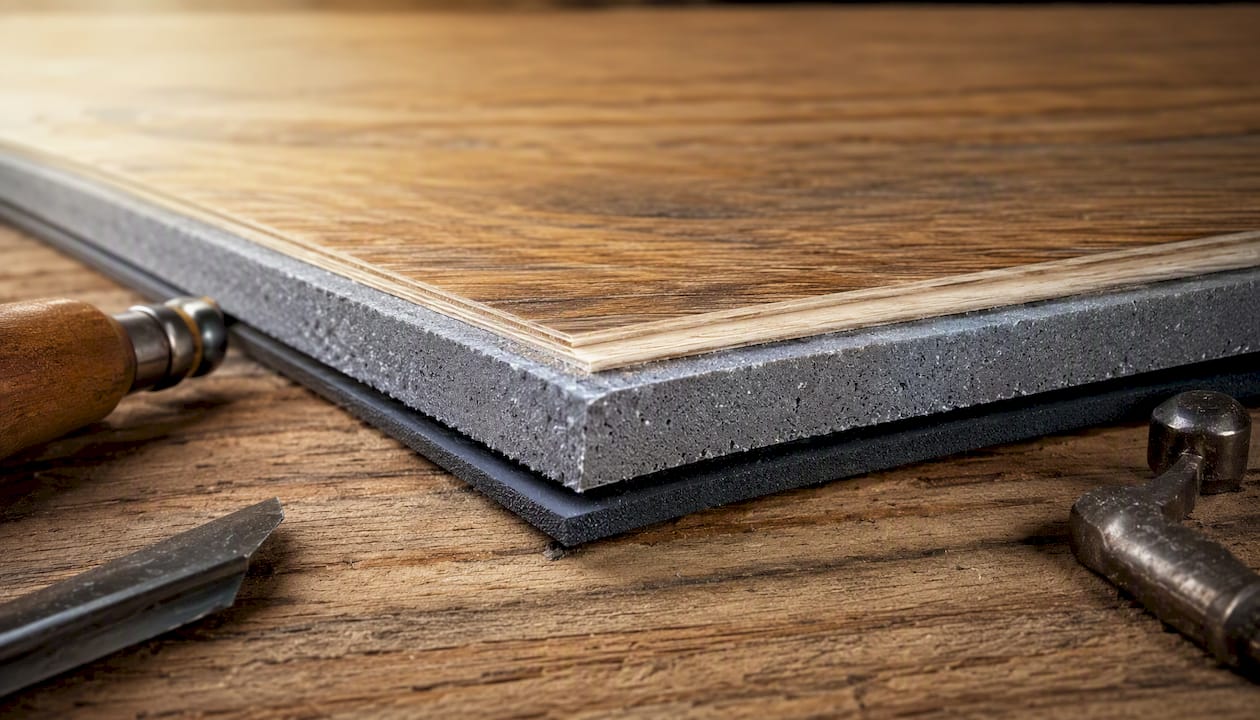
The printed design layer is a high-resolution photographic film that creates the wood grain, stone, or tile appearance. Modern printing technology has made this layer remarkably convincing, with grain patterns that vary plank to plank so the floor doesn’t look repetitive.
The wear layer is the clear protective film on top of the design layer. Measured in mils (thousandths of an inch), this is the single most important spec for long-term durability. A thicker wear layer resists scratches, scuffs, and surface wear far longer.
The topcoat is a UV-cured or aluminum-oxide finish applied over the wear layer. It adds gloss or matte sheen, protects against staining, and is what gives LVP its easy-clean surface. The Spruce notes that aluminum-oxide topcoats are common in quality LVP products.
Pro Tip: If a product advertises a pre-attached underlayment, check whether it’s compatible with radiant heating before you buy. Some foam backings reduce heat transfer efficiency.
What are the different types of LVP, and which core is right for you?
LVP vs. other vinyl formats comes down to shape and core. LVP (luxury vinyl plank) mimics wood in a long plank format. LVT (luxury vinyl tile) uses the same layer construction but in a square or rectangular tile shape, better for stone or ceramic looks. Both are resilient floors, but they serve different design goals.
The core type is where the real differences live:
| Core Type | Construction | Best For | Subfloor Tolerance | Underfoot Feel |
|---|---|---|---|---|
| SPC (stone-plastic composite) | Dense, rigid mineral-filled core | Basements, high-moisture rooms, commercial | Moderate imperfections | Firm, solid |
| WPC (wood-plastic composite) | Foamed, slightly softer rigid core | Main living areas, bedrooms, kitchens | Better than SPC | Warmer, cushioned |
| Flexible vinyl | Traditional vinyl, no rigid core | Low-budget installs, light residential use | Requires very flat subfloor | Softer, less stable |
SPC is the go-to for basements and bathrooms because its dense core is essentially impervious to moisture. WPC costs a bit more but rewards you with a warmer, quieter feel underfoot, which many homeowners prefer in living rooms and bedrooms. Flexible vinyl is the most affordable option but demands a near-perfect subfloor and won’t hold up as long under heavy use. This Old House covers these rigid-core distinctions in practical homeowner terms.
Why do homeowners love LVP? The real benefits
LVP has earned its popularity honestly. Here’s what actually matters to buyers:
- True waterproofing. SPC and WPC cores don’t absorb water. Spills, pet accidents, and humidity won’t cause swelling or buckling the way they would with hardwood or laminate. Martha Stewart’s flooring coverage highlights this as LVP’s defining advantage over wood.
- Scratch and dent resistance. A 12-mil or thicker wear layer handles kids, pets, and dropped items without showing it. Hardwood dents; quality LVP shrugs it off.
- Realistic appearance. Embossed-in-register (EIR) texture aligns the printed grain with a physical texture you can feel, making modern LVP genuinely convincing at a glance.
- Lower cost than hardwood or tile. Materials typically run less per square foot than solid hardwood, and installation is faster, which reduces labor costs.
- DIY-friendly installation. Click-lock floating planks don’t require adhesive or nails, making LVP one of the more approachable DIY flooring projects.
- Low maintenance. A damp mop and a pH-neutral cleaner handle most messes. No waxing, no refinishing, no special seasonal care.
For a deeper look at how LVP stacks up against solid wood on cost and longevity, our LVP vs. hardwood comparison breaks it down room by room.
What are the real drawbacks of LVP you should know?
No floor is perfect, and LVP has genuine trade-offs worth knowing before you commit.
The biggest limitation most buyers don’t consider upfront: LVP cannot be sanded and refinished. When the wear layer is gone, the plank is done. You replace it, you don’t restore it. For homeowners who want a floor that can be renewed every decade, solid hardwood still has a structural advantage LVP simply can’t match.
Low mil wear layers show wear faster. A 6-mil product in a busy entryway will look tired within a few years. Thin wear layers are also more vulnerable to denting from furniture legs and high-heeled shoes.
VOC and indoor air quality concerns. Some LVP products off-gas volatile organic compounds during and after installation. The EPA’s guidance on VOCs recommends choosing low-VOC certified products and ventilating rooms well after installation, especially in homes with children or anyone with respiratory sensitivities. Look for GREENGUARD Gold or FloorScore certifications as a practical shortcut.
Resale perception. Premium buyers in some markets still associate hardwood with quality. LVP reads as practical and modern, but it won’t carry the same emotional weight as wide-plank white oak in a luxury listing.
What specs should you compare when shopping for LVP?
The wear layer mil is the number that matters most. Here’s a practical guide:
| Wear Layer | Recommended Use | Typical Warranty |
|---|---|---|
| 6 mil | Light residential, low-traffic bedrooms | 5–10 years |
| 12 mil | Standard residential, kitchens, living rooms | 20 years |
| 20 mil+ | High-traffic homes, pets, commercial light use | 25 years to lifetime |
Overall plank thickness typically runs from 4mm to 8mm. Thicker planks (6mm+) feel more substantial underfoot and hide minor subfloor imperfections better. SPC cores tend to be thinner for the same rigidity because the material is denser; WPC cores are often thicker because the foamed material needs more depth to achieve comparable stability.
Manufacturer warranties vary widely. Look for warranties that cover wear-through, staining, and waterproofing separately. A lifetime residential warranty sounds impressive, but read the fine print for exclusions around pets, rolling loads, and sunlight fading.
Pro Tip: Order a physical sample and place it in the actual room you’re flooring. LVP looks different under natural light versus store lighting, and the embossed texture only reveals itself when you run your hand across it.
How is LVP installed, and can you do it yourself?
Installation method depends on the product and the room. Here’s the order of operations for a standard click-lock floating install, which is the most DIY-friendly approach:
- Acclimate the planks. Leave boxes in the room for 24–48 hours so the material adjusts to your home’s temperature and humidity.
- Test subfloor moisture. Use a moisture meter or calcium chloride test kit. High moisture readings mean you need a vapor barrier or, in severe cases, professional remediation before proceeding.
- Level the subfloor. LVP tolerates minor imperfections, but most manufacturers specify no more than 3/16 inch variation over 10 feet. Use floor-leveling compound for dips and sand down high spots.
- Install underlayment (if not pre-attached). A 2mm foam or cork underlayment adds cushion and sound dampening.
- Lay the first row along the longest, straightest wall, leaving a 1/4-inch expansion gap at all walls.
- Click and lock planks in a staggered pattern, offsetting end joints by at least 6 inches between rows.
- Cut the final row to width with a utility knife or jigsaw, maintaining the expansion gap.
- Install baseboards or quarter-round to cover the expansion gap. Never nail through the planks themselves.
Glue-down installation uses pressure-sensitive adhesive and is common for commercial spaces or rooms where a floating floor might shift. It requires more prep and is harder to reverse. Loose-lay uses a heavy, grippy backing without adhesive, making it easy to lift and replace planks but limiting it to smaller rooms. D and G Flooring’s complete guide covers installer vs. DIY decision points in detail.
How do you clean and maintain LVP, and how long will it last?
LVP is genuinely low-maintenance, but a few habits make a real difference in how long it stays looking sharp.
Daily and weekly care: Sweep or vacuum (no beater bar) to remove grit that acts like sandpaper on the wear layer. Damp-mop with a pH-neutral cleaner. Avoid steam mops, which can force moisture into seams and delaminate the layers over time. Our guide to smart floor maintenance covers eco-friendly product choices that work well on LVP.
What to avoid: Wax, polish, oil-based cleaners, and abrasive scrubbers all damage the topcoat. Bleach-based cleaners can dull the finish.
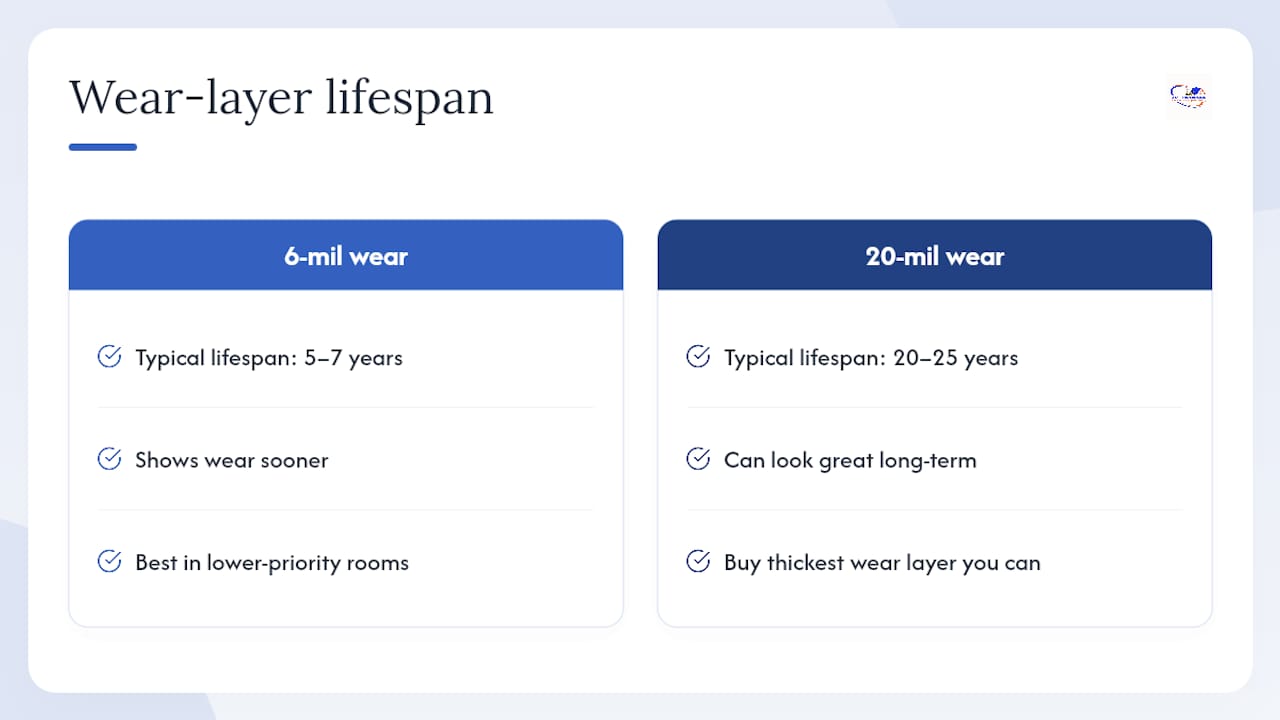
Lifespan reality check: A 6-mil product in a busy kitchen might show wear in 5–7 years. A 20-mil product in the same kitchen, properly maintained, can look great for 20–25 years. The wear layer is the clock. Buy the thickest wear layer your budget allows for the rooms that matter most.
Repairs: Individual planks in a floating floor can be replaced without disturbing the whole floor, which is a genuine advantage over tile (grout cracks) and hardwood (refinishing required). Glue-down planks are harder to swap out cleanly.
Radiant heating compatibility: Most SPC and WPC products are compatible with electric radiant heating systems, but check the manufacturer’s maximum temperature spec (typically 85°F surface temperature). Flexible vinyl is less reliable with radiant heat.
What does LVP cost, and what drives the price?
Material costs for LVP vary per square foot depending on wear-layer thickness, core type, plank size, and finish quality. Installed costs add labor, underlayment, and subfloor prep on top of materials.
| Price Tier | Material Cost (per sq. ft.) | Wear Layer | Core Type |
|---|---|---|---|
| Entry-level | low price range | 6 mil | Flexible vinyl |
| Mid-range | mid price range | 12 mil | WPC or SPC |
| Premium | higher price range | 20 mil+ | SPC rigid core |
The biggest cost drivers beyond the product itself are subfloor condition (leveling adds labor), room complexity (stairs, transitions, irregular shapes), and underlayment choice. For Denver-area homeowners, our LVP installation cost guide gives local pricing context.
Cheap LVP is often a false economy. A $1.50/sq. ft. product that needs replacing in five years costs more over a decade than a $4.00/sq. ft. product with a 20-year warranty. Factor in replacement labor when comparing quotes.
How do you choose the right LVP for your home?
Use this checklist before you buy or sign a contract:
- Bathroom or basement? Require SPC or WPC core with a waterproof warranty. Flexible vinyl is not sufficient for these rooms.
- Entryway, mudroom, or kitchen? Go 12 mil minimum; 20 mil if you have dogs or kids.
- Bedroom or low-traffic office? A 6–12 mil WPC product balances comfort and cost.
- Ask the seller: What is the exact wear-layer thickness in mils? What does the waterproof warranty cover specifically? Is the product FloorScore or GREENGUARD Gold certified?
- Test the sample in your room. Lay it on the actual subfloor, check it in morning and afternoon light, and run your hand across the texture.
- Underfloor heating? Confirm the product’s maximum surface temperature rating before purchasing.
- Transitions matter. Plan how the LVP will meet tile, carpet, or hardwood at doorways. T-moldings and reducers need to be ordered with the floor.
When does hiring a professional installer make sense?
Some LVP projects are genuinely DIY-friendly. A small bedroom with a flat subfloor and click-lock planks? Totally manageable. But certain conditions tip the scales toward calling a pro.
Hire a professional when you have:
- Subfloor moisture readings above manufacturer specs
- More than 3/16-inch variation in subfloor flatness over 10 feet
- A large open-plan space where alignment errors compound across long runs
- Stairs, complex transitions, or pattern-matched installations
- Glue-down product that requires precise adhesive application
An experienced installer brings moisture testing equipment, leveling compounds, and the kind of pattern-matching eye that only comes from doing this every day. Jrhardwoodfloorrefinishingandcleaning offers professional LVP installation across the Denver Metro Area, including moisture assessment and subfloor prep as part of the process.
When vetting any installer, ask for: a written start and end date, a cleanup clause, confirmation of who holds the warranty (installer vs. manufacturer), and whether they carry liability insurance. A contractor who won’t put those items in writing is a red flag.
Pro Tip: Ask your installer to show you the moisture readings before and after any remediation. A good pro documents this, and it protects you if a warranty claim ever comes up later.
What we think about LVP as a flooring choice
LVP gets oversold as a replacement for everything, and that’s where buyers get into trouble. It’s genuinely excellent in wet or high-traffic rooms where hardwood would suffer. But in a formal dining room or a master bedroom where you want warmth and the option to refinish in ten years, solid hardwood still earns its place.
The spec that separates a smart LVP purchase from a regrettable one is almost always the wear layer. We see floors installed with 6-mil products in kitchens and mudrooms, and they look tired within a few years. The homeowner saved $1.00 per square foot at purchase and spent twice that on early replacement. Buy the 12-mil or 20-mil product for any room that actually gets used.
One more thing: the VOC question is real but manageable. Choose a certified low-VOC product, open windows for the first few days after installation, and the risk is minimal for most households. Sensitive households with young children or respiratory conditions should treat this as a non-negotiable filter, not an afterthought.
Ready to get LVP installed the right way in Denver?
Jrhardwoodfloorrefinishingandcleaning gives Denver-area homeowners a straightforward path from “I’m thinking about LVP” to a finished floor they’re proud of. We handle the parts that trip up DIYers: moisture testing, subfloor leveling, precise installation, and clean transitions to your existing flooring. Every project starts with a free over-the-phone quote based on your room dimensions and photos, so you know what to expect before anyone shows up.

We use eco-friendly products and work across the Denver Metro Area, from Parker and Castle Rock to Boulder and Colorado Springs. Whether you’re replacing worn carpet in a basement or putting fresh LVP through an entire main floor, our team brings the same craftsmanship we apply to hardwood refinishing. Get your free quote and let’s figure out the right product and approach for your home.
Sources
The following references were used throughout this guide and are worth bookmarking for deeper research:
EPA — What Are Volatile Organic Compounds (VOCs)? The U.S. Environmental Protection Agency’s VOC guidance page explains indoor-air risks and practical mitigation steps, including product selection and post-installation ventilation. Essential reading for households with children or respiratory sensitivities.
- What are volatile organic compounds (VOCs)? – EPA
- Luxury vinyl plank (LVP) flooring: construction reference | National Flooring Authority
- Vinyl plank flooring: pros, cons, and how it differs from hardwood – Martha Stewart
- Vinyl plank flooring review: pros and cons – The Spruce
- Luxury vinyl plank flooring: The complete guide – D and G Flooring
- What to know about luxury vinyl flooring – This Old House