 Skip to content
TL;DR:
- Full floor installation bonds every inch of flooring to the subfloor using adhesive, preventing movement and gaps. It provides superior moisture resistance, durability, and noise reduction, making it suitable for Colorado’s climate. Proper preparation, including moisture testing and subfloor flatness correction, is essential for long-lasting results.
Full floor installation is defined as a flooring method where every inch of the floor covering is bonded directly to the subfloor using professional-grade adhesive, creating a stable, moisture-resistant surface from wall to wall. The industry term for this approach is full-adhesive-bonded installation, and it stands apart from floating or nail-down methods in one critical way: nothing moves. For Colorado homeowners and commercial property managers dealing with dry winters, humid basements, and wide-open floor plans, understanding this method can mean the difference between floors that last decades and floors that fail within years.
What is full floor installation and how does it differ from other methods?
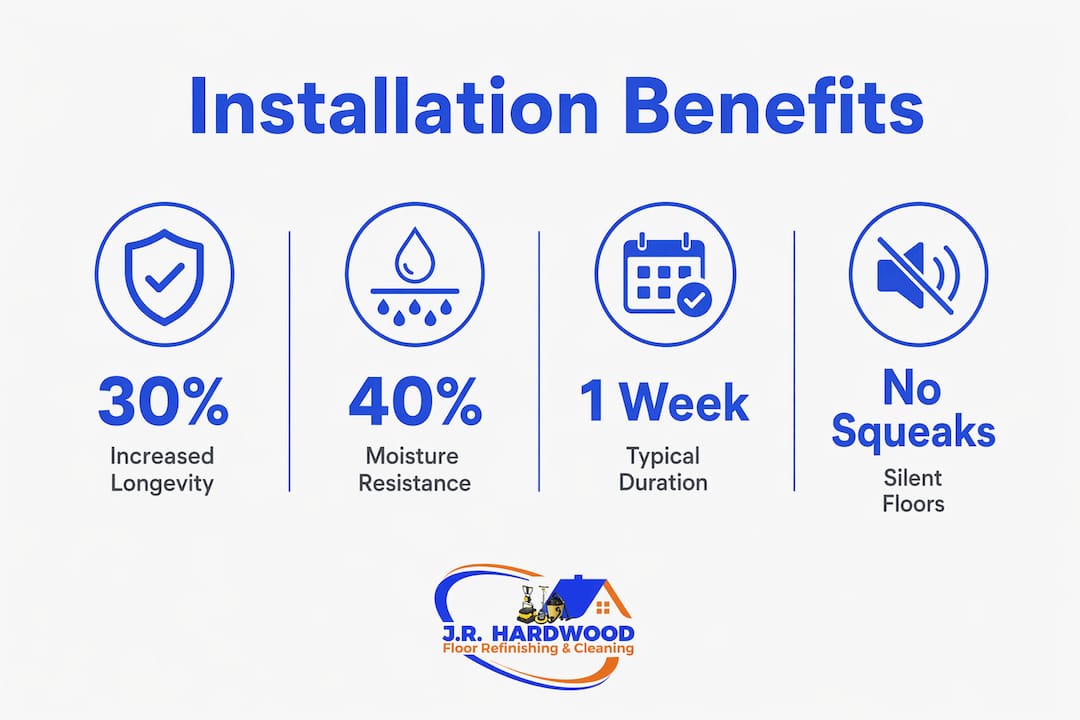
Full-adhesive-bonded installation covers the entire underside of your flooring material with adhesive, then presses it firmly against the subfloor. This creates a moisture-resistant barrier that reduces moisture-related issues by nearly 40% compared to floating floors. That number matters because floating floors trap humidity underneath, which is a real problem in Colorado basements and ground-level commercial spaces.
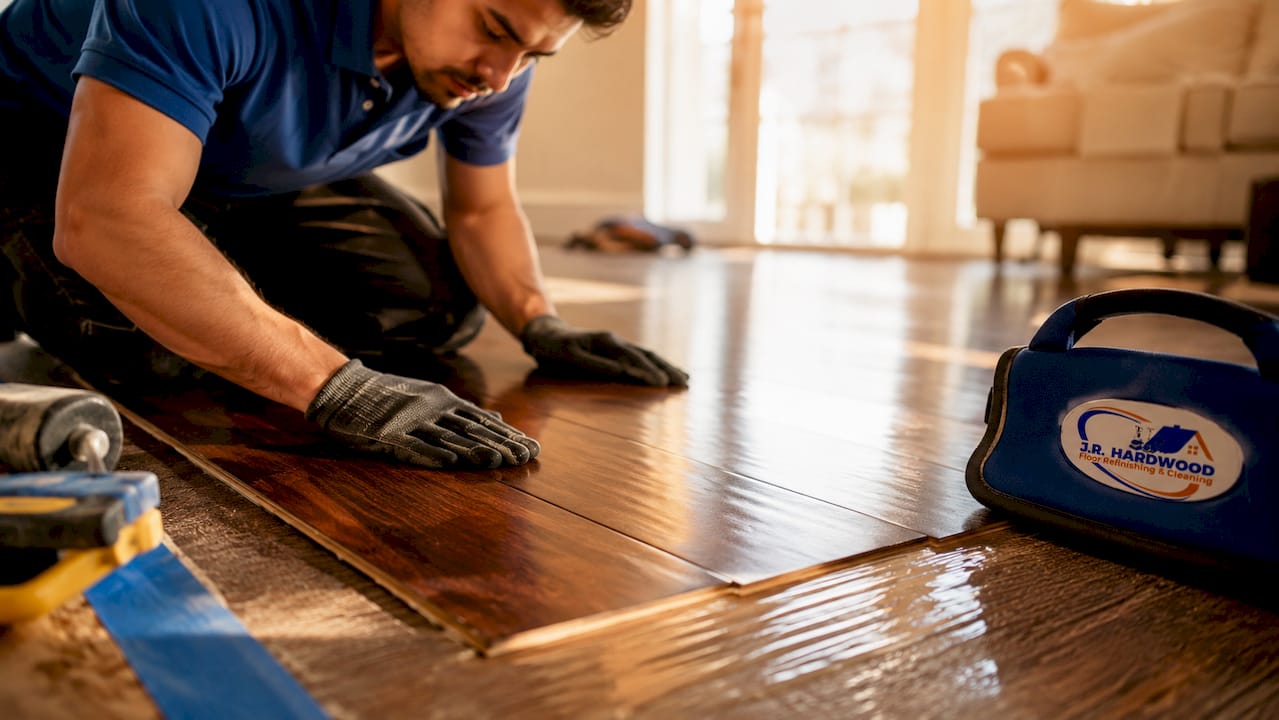
Floating floors, by contrast, click or lock together and rest on top of the subfloor without adhesive. Nail-down floors use fasteners driven through the tongue of each plank. Both methods allow some degree of movement. Full-adhesive bonding eliminates that movement entirely, which is why it produces a floor that feels solid underfoot, like walking on concrete wrapped in wood rather than a surface that flexes and shifts.
The result is also quieter. No hollow sound, no squeaks, no subtle bounce. For commercial property managers in Denver or Parker who manage high-traffic spaces, that solid feel is not just a comfort preference. It is a durability signal.
What does the full floor installation process involve?
A professional full floor installation follows a clear sequence. Skipping any step creates problems that compound across the entire surface. Here is what the process looks like from start to finish.
-
Site assessment. The crew evaluates the subfloor for moisture and flatness. Moisture must test below 3 lbs per 1,000 square feet using a calcium chloride test, or below 75% relative humidity using an in-situ RH probe. Colorado’s climate swings can push moisture levels higher than homeowners expect, especially in spring.
-
Subfloor preparation. Old adhesive residue, curing compounds, paint, and contaminants are removed completely. This step is non-negotiable. Residual materials prevent the new adhesive from bonding correctly, which leads to premature failure even when everything else is done right.
-
Material acclimation. Flooring planks or tiles are left in the installation space for 2–5 days. This allows the material to adjust to the room’s temperature and humidity before it is glued down. Skipping acclimation causes expansion or contraction after installation, which breaks the adhesive bond.
-
Mock-up installation. For large commercial projects, professional installers conduct mock-up tests on a small section to verify adhesive compatibility and substrate performance before committing to the full floor. This step catches problems that standard moisture tests miss.
-
Adhesive application and installation. The adhesive is spread using a notched trowel at the correct spread rate for the specific product. Planks are laid in a planned sequence, typically starting from the center of the room or a focal wall. Professional crews install 200–400 square feet of glue-down flooring per day, so a 1,000-square-foot project typically takes about one week including prep and acclimation.
-
Final inspection. The crew checks for lifted edges, uneven seams, and adhesive bleed-through before the floor is cleared for foot traffic.
Pro Tip: Ask your installer to show you the moisture test results before work begins. If they cannot produce them, that is a red flag worth taking seriously.
What are the benefits of full floor installation?
Full-adhesive bonding is a long-term investment, and the returns show up in ways you feel every day. Here is what you gain compared to floating or nail-down methods:
- Stability. A continuous adhesive layer locks the floor to the subfloor, eliminating gaps, shifting, and squeaking that develop over time in floating installations.
- Moisture resistance. The adhesive layer acts as a secondary barrier against moisture vapor rising from the subfloor, which is particularly valuable in Colorado basements and slab-on-grade commercial spaces.
- Longevity. Full-adhesive bonding increases floor longevity by about 30% compared to floating methods. That is a meaningful difference when you are investing in hardwood or engineered wood.
- Noise reduction. No hollow sound underfoot. No creaking. The floor feels and sounds like a permanent part of the building.
- Visual continuity. A glued-down floor stays flat and gap-free over years of use, which preserves the clean, seamless look across large open spaces.
“Full-adhesive bonding should be viewed as a long-term investment yielding quieter, more stable floors without gaps or shifting.” — Engineer Hardwood Flooring
The one honest tradeoff is upfront time. Proper prep, acclimation, and adhesive cure time mean you cannot rush the process. But that investment in preparation is exactly what makes the result last.
What full flooring options work best for Colorado homes and commercial spaces?
Not every flooring material suits full-adhesive installation equally well. Colorado’s climate, with its low humidity in winter and moisture swings in spring, narrows the best choices. Here is how the most popular options compare:
| Flooring Type | Best Use Case | Key Advantage | Colorado Consideration |
|---|---|---|---|
| Luxury Vinyl Plank (LVP) | Kitchens, bathrooms, basements | 100% waterproof core | Handles humidity swings without warping |
| Engineered Hardwood | Living rooms, bedrooms, offices | Real wood look with dimensional stability | Better than solid hardwood in dry Colorado winters |
| Solid Hardwood | Low-humidity above-grade rooms | Maximum refinish potential | Requires strict moisture control; not ideal for basements |
| Laminate | Budget-conscious whole-home projects | Cost-effective visual appeal | Moisture-sensitive; use only in dry, above-grade spaces |
LVP suits kitchens and bathrooms best because its waterproof core handles moisture that would destroy solid hardwood. Engineered hardwood offers the warmth of real wood with better dimensional stability, making it the preferred choice for Colorado living rooms and commercial lobbies where aesthetics matter. You can learn more about waterproof flooring for basements to match the right material to moisture-prone areas.
A whole-house installation using one consistent floor type across every room creates visual continuity that makes spaces feel larger and more orderly. This is especially effective in Colorado homes with open floor plans connecting the kitchen, dining area, and living room.
Pro Tip: If you are installing across multiple rooms, buy all your flooring from the same production lot. Color and texture can vary slightly between lots, and the difference becomes visible once the floor is down.
What mistakes should you avoid during full floor installation?
The most expensive flooring mistakes are the ones made before the first plank goes down. Here is what to watch for:
- Skipping moisture testing. Skipping subfloor assessment is the leading cause of installation failure. Residual adhesives, curing compounds, and moisture issues cause premature bond failure even when quality adhesives are used.
- Ignoring subfloor flatness. The subfloor must be flat within 3/16 of an inch over a 10-foot span. High spots and dips telegraph through the finished floor and stress the adhesive bond over time.
- DIY adhesive application. Full-adhesive installation requires precise trowel technique, correct spread rates, and proper open time management. Too much adhesive causes squeeze-up between planks. Too little causes bond failure. This is not a beginner task.
- Rushing acclimation. Planks installed before they acclimate to the room’s conditions will expand or contract after bonding, lifting edges and breaking seams.
- Ignoring layout planning. A slight misalignment in the first rows causes visible problems down the length of an open floor plan. In a 2,000-square-foot open commercial space, a half-degree error at the start becomes a two-inch gap at the far wall.
Pro Tip: Before hiring an installer, ask specifically about their subfloor prep process. A professional who cannot describe moisture testing, flatness correction, and adhesive residue removal in detail is not ready for a full-adhesive project.
For a deeper look at what preparation really involves, the hardwood installation workflow guide covers what Colorado homeowners should expect from a professional crew.
Key Takeaways
Full-adhesive-bonded installation is the most durable, moisture-resistant flooring method available, and its success depends almost entirely on subfloor preparation done right before the first plank is laid.
| Point | Details |
|---|---|
| Definition matters | Full floor installation bonds every inch of flooring to the subfloor using adhesive, eliminating movement and gaps. |
| Prep is everything | Moisture testing below 75% RH and subfloor flatness correction are required before any adhesive is applied. |
| Longevity advantage | Full-adhesive bonding increases floor life by about 30% compared to floating methods. |
| Material choice is climate-driven | LVP and engineered hardwood outperform solid hardwood and laminate in Colorado’s humidity-variable climate. |
| Professional installation pays off | Layout errors in the first rows amplify across large spaces, making professional precision critical for whole-home and commercial projects. |
Why I think full floor installation is the smartest long-term bet for Colorado properties
I have seen a lot of floors in Colorado, from Parker townhomes to Denver commercial lobbies to Castle Rock custom builds. The ones that hold up decade after decade almost always share one thing: they were glued down properly from the start.
What surprises most homeowners is how much Colorado’s climate works against floating floors. The air here is dry in winter and can swing humid in spring, especially at lower elevations. That seasonal movement is exactly what floating floors are not built to handle long-term. Planks shift. Gaps open. Squeaks develop. And by the time you notice, the damage is already compounded across the whole floor.
Full-adhesive bonding removes that variable entirely. The floor cannot move because it has nowhere to go. I have walked into spaces installed this way ten or fifteen years ago that still feel brand new underfoot. No bounce, no noise, no gaps at the seams.
The advice I give every homeowner and property manager who asks: do not cut corners on subfloor prep. The adhesive is only as good as the surface it bonds to. If you prepare before installing hardwood floors correctly, the rest of the project almost takes care of itself. If you skip it, you are just delaying a problem.
Hire someone who can show you their moisture test results, explain their adhesive selection, and walk you through their layout plan before they start. That level of preparation is what separates a floor that lasts from one that fails.
— J.R.
How Jrhardwoodfloorrefinishingandcleaning can help with your Colorado floor project
Ready to move from research to results? Jrhardwoodfloorrefinishingandcleaning serves homeowners and commercial property managers across the Denver Metro Area, including Parker, Castle Rock, Boulder, and Colorado Springs, with professional full floor installation of hardwood, LVP, and laminate.
Every project starts with a free over-the-phone quote based on your space details and photos. The team handles subfloor moisture testing, flatness correction, adhesive selection, and precision layout so your floor goes down right the first time. Eco-friendly products and premium finishes protect your investment for the long haul. Whether you are refreshing a high-traffic commercial space or installing new floors throughout your home, explore the complete hardwood installation guide to see exactly what professional installation looks like, or check out the DIY vs. professional comparison to make a confident decision for your project.
FAQ
What is full floor installation in simple terms?
Full floor installation, also called full-adhesive-bonded installation, is a method where every part of the flooring material is glued directly to the subfloor using professional adhesive. This creates a solid, stable, and moisture-resistant surface with no movement or gaps.
How long does a full floor installation take?
A 1,000-square-foot project typically takes about one week, including 2–5 days for material acclimation and subfloor prep. Professional crews install 200–400 square feet of glue-down flooring per day.
Is full floor installation better than floating floors?
Full-adhesive bonding increases floor longevity by about 30% and reduces moisture-related issues by nearly 40% compared to floating floors. It is the better choice for high-traffic areas, moisture-prone spaces, and large open floor plans.
What flooring types work with full-adhesive installation in Colorado?
LVP, engineered hardwood, and laminate are the most common choices. LVP is best for moisture-prone areas like basements and kitchens. Engineered hardwood suits living rooms and commercial spaces where a real wood look is preferred.
Can I do a full floor installation myself?
Full-adhesive installation requires precise trowel technique, correct adhesive spread rates, and proper open time management. Errors in the first rows amplify visibly across large spaces. Professional installation is strongly recommended for whole-home and commercial projects.