 Skip to content
TL;DR:
- Floor abrasion is the gradual wearing of flooring surfaces caused by friction from foot traffic, grit, and furniture movement. Proper maintenance, such as regular grit removal and choosing flooring with appropriate ratings, can prevent early damage and extend the floor’s lifespan. Recoating floors at the first sign of dullness is more cost-effective than full refinishing and helps preserve their appearance.
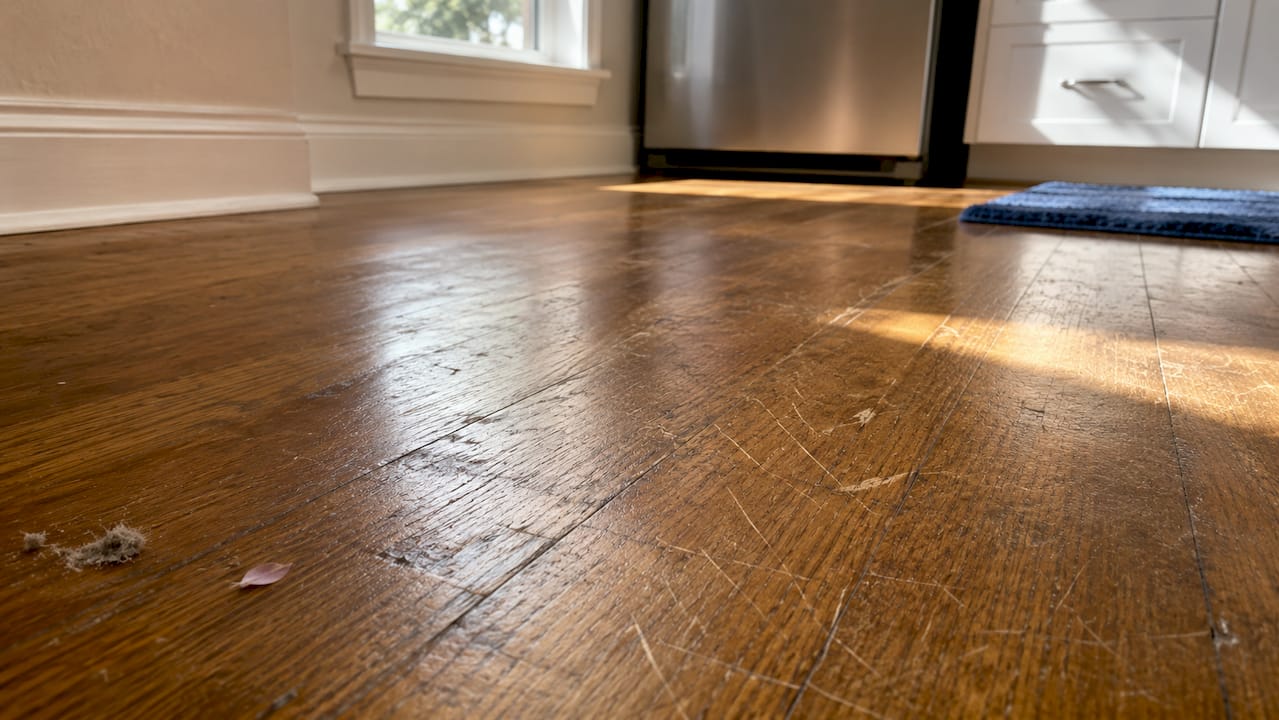
Floor abrasion is defined as the progressive surface wear caused by frictional forces, including foot traffic, grit, and moving furniture, acting repeatedly on flooring materials. Unlike impact damage, which is sudden and localized, abrasion builds gradually) through thousands of small friction events that scratch, dull, and erode your floor’s finish over time. Understanding what is floor abrasion matters because it shapes every decision you make about flooring selection, maintenance, and restoration. Industry standards like the Abrasion Class (AC) rating for laminate and the PEI scale for tile exist precisely to help you match a floor’s durability to your real-world traffic. We put this guide together so you can protect your floors before the damage becomes expensive.
What causes floor abrasion and how does it affect different floor types?
Abrasion damage progresses) through continuous friction rather than a single event. Every shoe sole, pet claw, chair leg, and grain of tracked-in dirt contributes to the total wear your floor absorbs each day. The cumulative effect is what turns a glossy finish into a dull, scratched surface over months and years.
The most common sources of floor abrasion are:
- Foot traffic and grit. One grain of sand underfoot acts like fine sandpaper, cutting microscopic grooves into your finish with every step. High-traffic areas like entryways, hallways, and kitchens show wear first.
- Moving furniture. Dragging chairs, tables, or appliances across a floor concentrates friction into a narrow path. Even a single move without felt pads can leave visible scratches.
- Pet claws. Dogs and cats scratch the finish constantly, especially on softer wood species like pine or cherry.
- Cleaning equipment. Stiff-bristle brooms, abrasive scrub pads, and improper floor machines all accelerate surface wear.
Different flooring materials respond to abrasion in very different ways. Hardwood floors lose their protective finish layer first. Once the finish is gone, the bare wood beneath absorbs moisture and stains easily. Laminate flooring has a photographic layer protected by a wear layer measured in AC ratings. When that wear layer erodes, the image beneath becomes visible and the floor cannot be refinished. Ceramic and porcelain tiles have a glazed surface rated on the PEI scale. Heavy abrasion scratches the glaze, making tiles look cloudy and harder to clean. Luxury vinyl plank (LVP) has a clear wear layer measured in mils. Thinner wear layers, typically 6 mil or less, show scratches faster than commercial-grade options at 20 mil or more.
Pro Tip: Place a piece of dark felt on a high-traffic area for one week, then examine it under bright light. The grit you find is exactly what your floor finish is grinding against every day.
How is floor abrasion resistance measured?
Standardized rating systems and laboratory tests give you a reliable way to compare flooring durability before you buy. Two systems dominate residential and commercial flooring decisions.
The AC rating for laminate flooring
The AC scale rates laminate from AC1 through AC6. AC1 suits light residential use like bedrooms. AC3 handles moderate residential traffic including living rooms and hallways. AC4 and AC5 are rated for commercial use, such as offices and retail stores. AC6 covers the most demanding environments, like airports and industrial spaces. Choosing the right AC rating for your traffic level is the single most important decision in laminate selection.
The PEI scale for ceramic and porcelain tile
The PEI (Porcelain Enamel Institute) scale runs from Class 0 to Class 5. Class 0 tiles are decorative only and cannot be used on floors. Class 3 handles normal residential foot traffic. Class 4 and 5 are specified for commercial and heavy-use environments. A tile rated below its actual traffic level will show glaze wear within a few years.
Laboratory testing methods
| Test Standard | What It Measures | Flooring Type |
|---|---|---|
| ASTM D4060 (Taber) | Surface wear resistance under rotating abrasive wheels | Laminate, resilient, coatings |
| ASTM C1027 | Visual surface wear of glazed tile | Ceramic, porcelain tile |
| ISO 10545-7 | Surface abrasion of glazed tiles | Ceramic, porcelain tile |
| ISO 10545-6 | Deep abrasion of unglazed tiles | Unglazed porcelain, stone |
Taber Abrasion testing applies rotating abrasive wheels under controlled loads to simulate wear. The test measures how much material is lost after a set number of cycles. It is widely used for laminate, resilient flooring, and protective coatings, though it does not predict exact field service life.
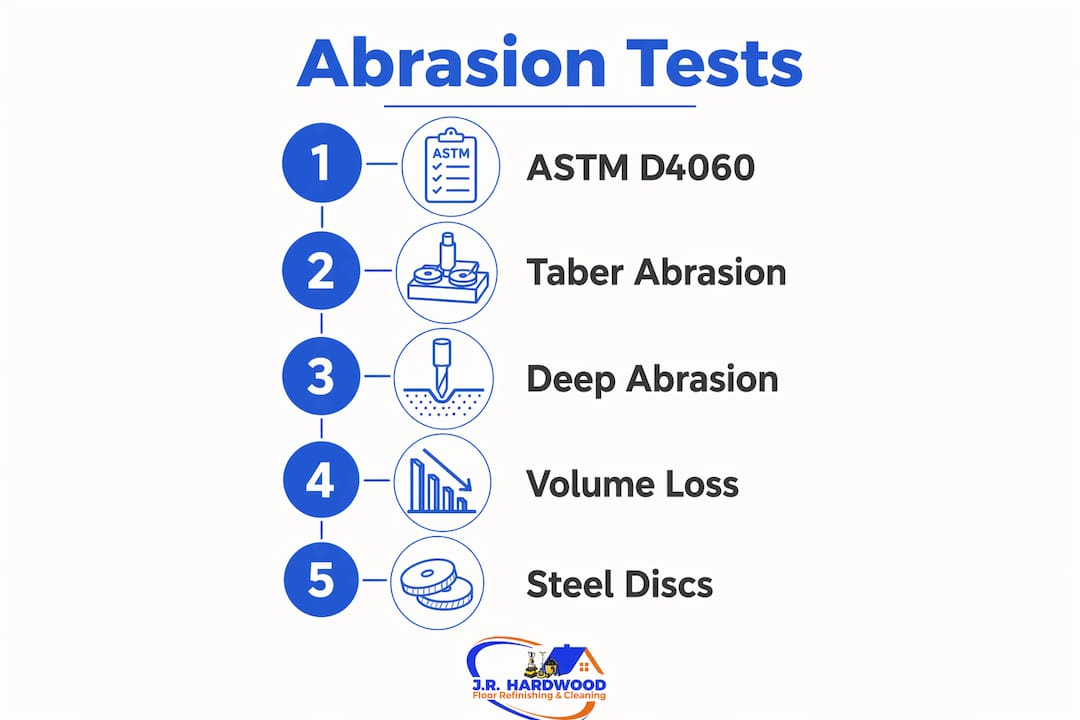
Deep abrasion testing measures volume loss in unglazed slabs using rotating steel discs with abrasive powder. This method reveals structural material loss that surface visual tests miss entirely. Deep abrasion data is critical for specifying floors in industrial and heavy commercial applications where surface glaze is absent.
What maintenance practices prevent and minimize floor abrasion?
Prevention is far cheaper than restoration. The good news is that most abrasion damage is avoidable with a consistent routine. Think of these steps as putting sunscreen on your floors before the damage sets in.
- Dust mop daily or every other day. Leaving grit on floors turns every footstep into a sanding session. A microfiber dust mop picks up fine particles without scratching. This single habit does more for floor longevity than any product you can buy.
- Damp mop weekly with a pH-neutral cleaner. Acidic or alkaline cleaners break down finish adhesion over time. Use a cleaner specifically formulated for your floor type and wring the mop nearly dry before contact.
- Avoid steam mops, vinegar, and ammonia. Steam mops and acidic cleaners weaken finish adhesion rapidly, leaving the surface more vulnerable to abrasion even under normal use. This is one of the most common mistakes homeowners make.
- Use high-quality entrance mats. Place a coarse-fiber mat outside your door and a softer mat inside. This two-mat system traps the majority of grit before it reaches your floor. Daily grit removal at entrances protects floors far better than chemical treatments alone.
- Add felt pads to all furniture legs. Replace them every six months because worn pads collect grit and become abrasive themselves. Use hard caster cups or chair mats under rolling office chairs.
- Control indoor humidity. Maintaining humidity between 35–55% prevents the expansion and contraction cycles that cause micro-cracks in your finish. Those cracks give abrasive grit a place to embed and accelerate wear.
Pro Tip: Set a recurring phone reminder every six months to check your furniture felt pads. A worn pad with embedded grit is worse than no pad at all.
Good floor maintenance habits extend the life of any finish significantly. The floors that age best are almost always the ones with the most consistent care routines, not the most expensive materials.
- Inspect high-traffic areas every three months for early signs of finish loss.
- Refinish or recoat before the bare wood or substrate is exposed.
- Schedule a professional clean and buff annually to restore surface protection without full sanding.
How to choose flooring and solutions based on abrasion resistance needs?
Matching your floor to your actual traffic level is the most practical application of abrasion science. A floor rated for light residential use will fail quickly in a busy kitchen or commercial lobby, regardless of how well you maintain it.
Matching ratings to traffic
For residential bedrooms and low-traffic rooms, AC1 or AC2 laminate and PEI Class 2 or 3 tile are sufficient. Living rooms, hallways, and kitchens need AC3 laminate and PEI Class 3 or 4 tile. Commercial spaces with consistent foot traffic require AC4 or AC5 laminate and PEI Class 4 or 5 tile. For LVP, choose a wear layer of at least 12 mil for residential use and 20 mil or more for commercial spaces.
Wear layer thickness and finish type matter
Hardwood floors with a thicker finish coat and harder species like hickory or white oak resist abrasion longer than softer species. Factory-applied aluminum oxide finishes are significantly harder than site-applied polyurethane. Abrasion resistance depends not only on floor material but also on installation quality and maintenance. Bond strength and surface hardness are both critical factors.
When to refinish, recoat, or restore
| Abrasion Level | Visible Signs | Recommended Solution |
|---|---|---|
| Light surface wear | Minor dullness, fine scratches | Screen and recoat |
| Moderate wear | Visible scratches, finish loss in spots | Clean and buff or recoat |
| Heavy wear | Bare wood exposed, deep scratches | Full sanding and refinishing |
| Structural damage | Gouges, warping, finish fully gone | Restoration or replacement |
A screen and recoat is like a spa day for your floor. It scuffs the existing finish lightly and applies a fresh coat, restoring the protective layer without removing wood. Full sanding and refinishing hits the reset button entirely, removing all old finish and scratches down to bare wood. Knowing which solution your floor actually needs saves you money and preserves more of the wood’s thickness for future refinishing cycles.
Pro Tip: Hardwood floors can typically be sanded and refinished 5–8 times over their lifetime, depending on the wood thickness. Every unnecessary full sand removes material you can never get back. When in doubt, start with a recoat.
For residential vs. commercial floor maintenance, the approach differs mainly in frequency and product selection. Commercial spaces need more frequent professional maintenance because traffic volume accelerates abrasion at a rate that routine home care cannot match.
Key Takeaways
Floor abrasion is a cumulative process driven by grit, traffic, and environmental factors, and the most effective defense combines the right floor rating, consistent grit removal, and timely professional refinishing.
| Point | Details |
|---|---|
| Abrasion vs. impact damage | Abrasion is gradual friction wear; impact damage is sudden and localized. They require different repair approaches. |
| Use AC and PEI ratings | Match laminate AC ratings and tile PEI ratings to your actual traffic level before purchasing. |
| Grit is the primary enemy | Daily dust mopping removes the abrasive particles that cause the most finish damage with every step. |
| Avoid harmful cleaners | Steam mops, vinegar, and ammonia weaken finish adhesion and accelerate abrasion damage. |
| Refinish before bare wood shows | Recoating at the first sign of dullness costs far less than a full sand and refinish later. |
What I’ve learned after years of fighting floor abrasion
Most homeowners I talk to are surprised when I tell them their floors are not wearing out from age. They are wearing out from grit. The sand and dirt tracked in from outside is doing the same job as sandpaper, just slower. By the time you see the scratches, thousands of those microscopic cuts have already happened.
The other misconception I run into constantly is the idea that a high AC or PEI rating makes a floor indestructible. Those ratings tell you how a floor performs in a lab under controlled conditions. They do not account for the homeowner who skips dust mopping for six months or uses a steam mop every week. Abrasion damage is cumulative, and even the most durable floor will fail early without proper grit removal and care routines.
What I have found actually works is simple: treat your entrance like an airlock. Two good mats, a no-shoes policy if you can manage it, and a microfiber mop used regularly will do more for your floor than any premium finish upgrade. The floors I see that still look great after 20 years almost always belong to people who are consistent about this one thing.
Environmental factors catch people off guard too. Colorado’s dry winters pull moisture out of wood and finish alike, creating micro-cracks that give grit a foothold. Keeping a humidifier running in winter is not just good for your sinuses. It is genuinely good for your floors.
My honest advice is this: do not wait until you can see the damage to act. A screen and recoat done at the right time costs a fraction of a full refinish. The floor that gets regular professional attention always outlasts the one that gets ignored until it looks bad.
— J.R.
How Jrhardwoodfloorrefinishingandcleaning helps you fight floor abrasion
Floor abrasion damage does not have to mean replacing your floors. At Jrhardwoodfloorrefinishingandcleaning, we assess your floor’s actual wear level and recommend the right solution, whether that is a clean and buff, a screen and recoat, or a full hardwood floor refinishing to remove deep scratches and restore protection.
We serve Denver, Parker, Castle Rock, Boulder, Colorado Springs, and the surrounding Colorado communities. Every job uses eco-friendly products and premium finishes that protect your floor from future abrasion. You get a free over-the-phone quote based on your floor’s condition, clear scheduling, and results you can see. Reach out to Jrhardwoodfloorrefinishingandcleaning today and give your floors the care they deserve.
FAQ
What is the floor abrasion definition in simple terms?
Floor abrasion is the gradual wearing away of a floor’s surface caused by repeated friction from foot traffic, grit, and furniture movement. It differs from impact damage because it builds slowly over time rather than occurring in a single event.
What are the most common causes of floor abrasion?
The leading causes are grit and sand tracked indoors, foot traffic, pet claws, and furniture movement without protective pads. Grit acts like sandpaper underfoot, cutting microscopic grooves into the finish with every step.
How do AC and PEI ratings help me choose the best flooring for abrasion resistance?
AC ratings (AC1 to AC6) grade laminate flooring durability from light residential to heavy commercial use. PEI ratings (Class 0 to 5) measure glazed tile resistance to surface wear. Matching these ratings to your traffic level prevents premature wear.
How do I prevent floor abrasion in high-traffic areas?
Use entrance mats at every door, dust mop daily, and apply felt pads to all furniture legs. Maintaining indoor humidity at 35–55% also prevents finish micro-cracks that accelerate abrasion damage.
When should I refinish my hardwood floor due to abrasion damage?
Refinish when you see bare wood exposed or deep scratches that a recoat cannot cover. For early-stage dullness and light scratches, a screen and recoat restores protection without removing wood, and it costs significantly less than a full floor restoration.