 Skip to content
TL;DR:
- Clean and buff is a hardwood floor maintenance method that cleans, applies a polish, and buffs to enhance shine without sanding. It is suitable for floors with intact finishes showing cosmetic wear and should be performed every 3 to 6 months to maintain surface gloss and smoothness. Proper preparation, including thorough grit removal and using compatible products, is essential to avoid damaging the finish and ensure effective results.
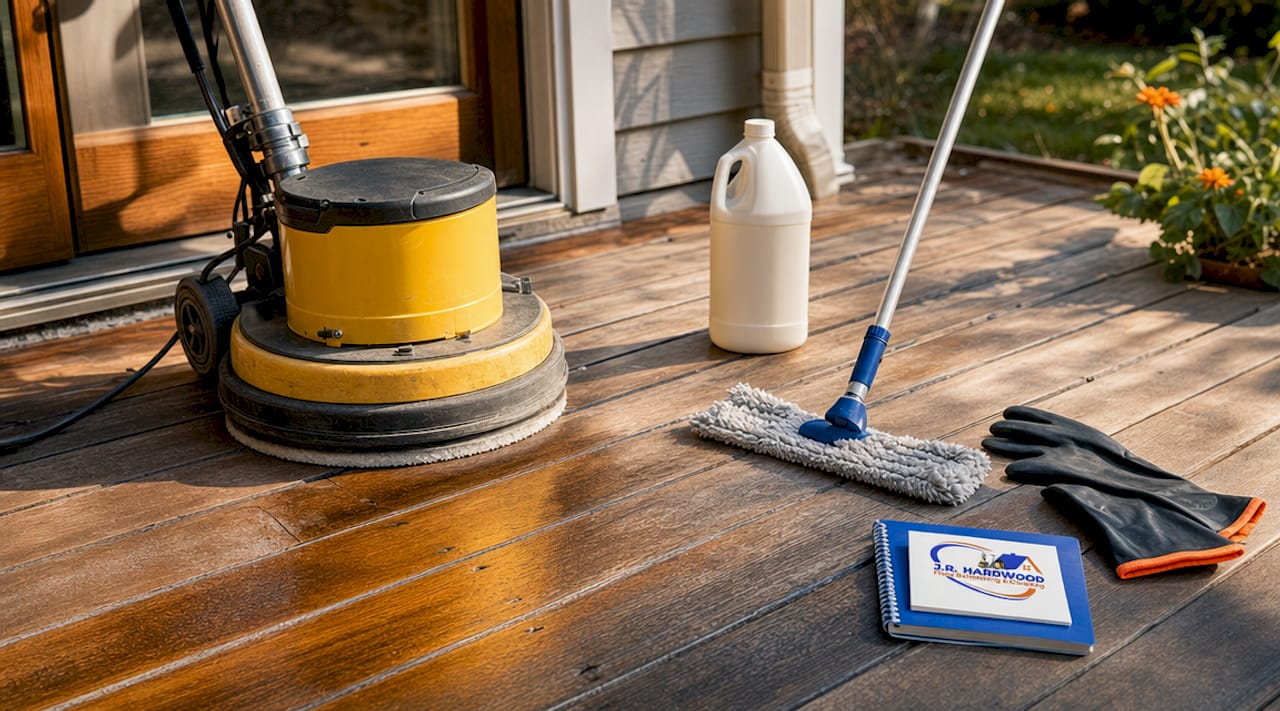
Clean and buff is defined as a hardwood floor maintenance process that cleans the surface, applies a finish restorer or polish, and then buffs the floor to restore shine and smooth out light surface wear without any sanding. The industry term you will also hear professionals use is “clean and recoat” or “buff and coat,” but clean and buff is the most common phrase homeowners search for. This method preserves your existing finish while giving your floors a fresh, glowing look. Think of it as a spa day for your hardwood floors. No heavy equipment, no days of downtime, just a targeted refresh that brings back that warm, inviting shine.
What is the clean and buff process and how does it work?
Clean and buff is intended for floors with an intact finish and mostly cosmetic wear, meaning no deep gouges, no delaminating finish, and no raw wood exposed. The process works by removing surface dirt and residue, applying a thin layer of polish or finish restorer, and then buffing the floor to lock in that renewed gloss. Here is exactly how it works, step by step.
-
Identify your floor’s finish type. Before you touch a single product, you need to know whether your floor has a polyurethane finish, a wax finish, or an oil finish. Using the wrong product on the wrong finish can cloud the surface or prevent future coats from bonding. A quick scratch test in an inconspicuous corner will tell you: if the finish flakes, it is likely wax; if it smears, it is likely oil or polyurethane.
-
Dust and vacuum thoroughly. Sweep with a microfiber dust mop, then vacuum along the grain of the wood. Pay close attention to corners and edges where grit collects. This step is not optional. Residue or grit left on the floor before buffing will scratch and damage the finish during the buffing pass. Think of it like sanding with sandpaper you did not ask for.
-
Damp-mop with a pH-neutral cleaner. Products like Bona Hardwood Floor Cleaner are specifically formulated to clean without degrading polyurethane finishes. Wring your mop almost dry. You want the floor damp, not wet. Excess moisture is one of the fastest ways to warp or dull hardwood over time.
-
Apply a thin coat of polish or finish restorer. Products like Bona Floor Polish or a water-based finish restorer go on in a thin, even layer. Work in sections, moving with the grain of the wood. Less is more here. A thick coat will dry unevenly and leave streaks.
-
Allow proper dry time. Most polish products need 30 to 60 minutes to dry before buffing. Keep the room ventilated to speed drying and prevent fumes from building up.
-
Buff with a microfiber pad or floor polisher. Move the buffer in the direction of the wood grain. Buffing with a microfiber pad removes any remaining residue and enhances the shine and smoothness of the finish. For large areas, a rotary floor polisher with a soft buffing pad makes the job faster and more consistent.
Pro Tip: Always do a small test patch in a low-traffic area before applying any polish or restorer to the full floor. This confirms product compatibility with your specific finish and saves you from a costly mistake.
How does clean and buff compare to sanding, polishing, and screen-and-recoat?
Buffing, polishing, sanding, and screen-and-recoat are four distinct methods, each suited for a different floor condition. Choosing the wrong one wastes money at best and damages your floor at worst. Here is a clear breakdown.
| Method | What it does | Best for | Durability of result |
|---|---|---|---|
| Clean and buff | Cleans surface, applies polish, buffs for shine | Dull finish, light scuffs, cosmetic wear | 3 to 6 months |
| Polishing | Adds a protective shine layer on top of finish | Urethane-finished floors needing gloss boost | 2 to 4 months |
| Screen-and-recoat | Lightly abrades finish, applies new topcoat | Worn finish, minor scratches, loss of protection | 3 to 5 years |
| Full sand and refinish | Removes all finish and wood surface, starts fresh | Deep scratches, stains, delaminating finish | 10 to 15 years |
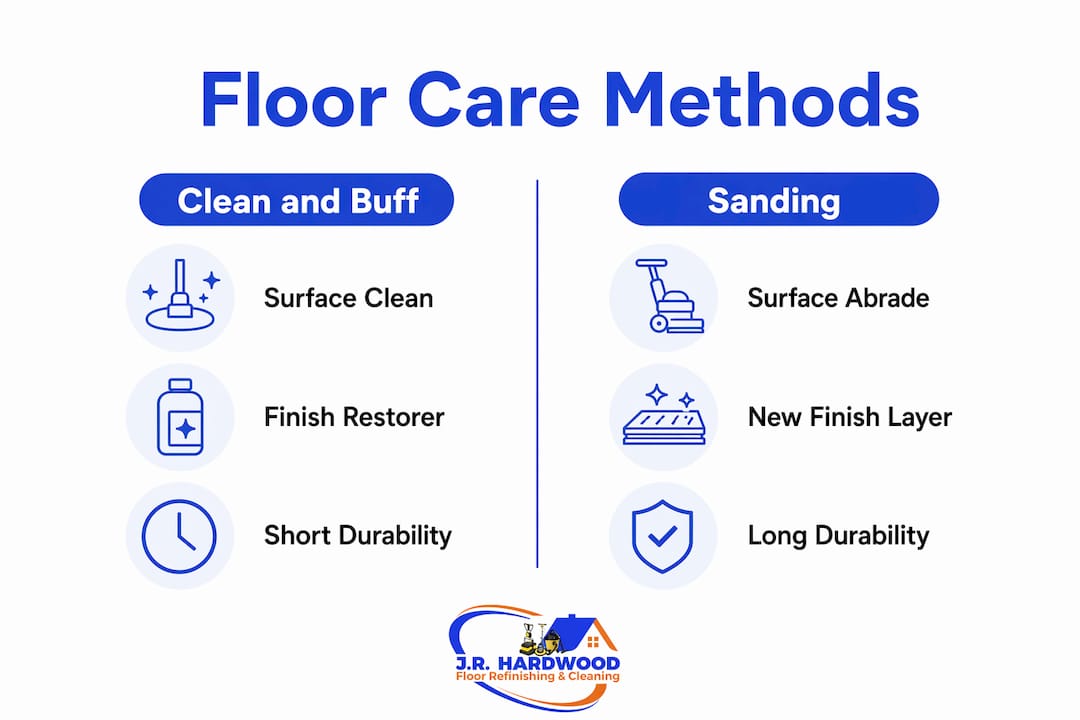
Clean and buff acts only on the finish surface. It does not abrade the finish or add a new protective layer the way screen-and-recoat does. Sanding goes much further, removing the finish entirely and taking a thin layer of the actual wood with it. Polishing adds shine and protection but depends heavily on finish type. Urethane-finished floors benefit from polish, while unsealed or wax-finished floors require a compatible wax product instead.
The risk of applying the wrong method is real. Applying a water-based polish over a wax finish, for example, can cause the finish to peel or cloud. Attempting a screen-and-recoat on a floor that actually needs sanding will result in poor bonding and a patchy appearance within months.
Pro Tip: If you are unsure whether your floor needs a clean and buff or a screen-and-recoat, run your hand across the surface in a well-lit room. If you feel texture or roughness along with dullness, screen-and-recoat is likely the better call. If the surface feels smooth but just looks flat and tired, clean and buff will do the job.
What products and tools do you need for an effective clean and buff?
Getting the right products on the shelf before you start makes the whole process smoother. Here is what you actually need.
Cleaning products:
- Bona Hardwood Floor Cleaner or another pH-neutral hardwood cleaner to avoid degrading polyurethane finishes over time
- Avoid vinegar, steam mops, and all-purpose household cleaners. These degrade polyurethane finishes and can void manufacturer warranties
Polish and finish restorers:
- Bona Floor Polish (water-based, compatible with most polyurethane finishes)
- Rejuvenate All Floors Restorer for a quick gloss refresh on urethane floors
- For wax-finished floors, use a paste wax product like Minwax Hardwood Floor Reviver
Buffing tools:
- A microfiber mop or pad for hand buffing in smaller rooms
- A rotary floor polisher or orbital floor buffer with a soft buffing pad for larger spaces
- A vacuum with a hardwood floor attachment for the prep stage
You can find Bona products at Home Depot, Lowe’s, and most flooring specialty stores. Professional-grade floor polishers are available for rent at Home Depot or U-Haul Equipment Centers if you do not want to buy one for occasional use.
Pro Tip: Never use a scrubbing or abrasive pad on a buffing machine for a clean and buff. You want a soft, clean microfiber pad only. An abrasive pad will scratch the finish and turn a simple refresh into a repair job.
How often should you clean and buff hardwood floors?
A light buff with floor polish is recommended every 3 to 6 months for most residential hardwood floors. High-traffic areas like hallways, kitchens, and entryways may need attention closer to the 3-month mark. This schedule keeps the finish looking fresh and prevents the kind of surface buildup that eventually requires more aggressive treatments.
Between buffing sessions, a consistent daily and weekly routine does most of the protective work. Here is a simple schedule that actually holds up in real homes.
- Daily: Dust mop with a microfiber mop to pick up grit, pet hair, and fine particles. This single habit prevents more finish damage than any product you can buy.
- Weekly: Damp-mop with a pH-neutral cleaner like Bona. Keep the mop nearly dry and work in sections.
- Monthly: Inspect high-traffic areas for dullness, scuffs, or areas where the finish looks thin. Catching wear early means a simple buff fixes it instead of a full recoat.
- Every 3 to 6 months: Perform a full clean and buff to restore gloss and surface smoothness.
- Annually: Have a professional assess the floor’s overall finish condition. A trained eye catches issues like finish delamination or moisture damage before they become expensive problems.
Avoid steam mops entirely on hardwood. The heat and moisture penetrate the finish and cause the wood to swell and warp over time. Vinegar is equally damaging. It is acidic enough to break down polyurethane finishes with repeated use, leaving floors dull and unprotected. Spot-clean stains with a damp cloth and a small amount of pH-neutral cleaner, working gently with the grain.
Key takeaways
Clean and buff restores hardwood floor shine by cleaning the surface, applying a finish restorer, and buffing without sanding, making it the most practical low-cost maintenance option for floors with intact but dull finishes.
| Point | Details |
|---|---|
| Clean and buff defined | A finish-safe process that cleans, polishes, and buffs hardwood floors without sanding or removing the existing finish. |
| Grit removal is critical | Any residue or grit left before buffing will scratch the finish, so thorough vacuuming and damp-mopping are non-negotiable. |
| Know your finish type | Polyurethane, wax, and oil finishes each require different compatible products to avoid damage or poor bonding. |
| Recommended frequency | Buff every 3 to 6 months for most homes, with daily dust-mopping and weekly damp-mopping in between. |
| Right method for the right problem | Clean and buff handles cosmetic dullness; screen-and-recoat addresses worn protection; full sanding fixes deep damage. |
What I have learned after years of clean and buff jobs
After working on hundreds of hardwood floors across Denver, Parker, and Castle Rock, the single biggest mistake I see homeowners make is skipping the prep. They buy the right polish, they rent the right buffer, and then they rush through the cleaning step. That leftover grit becomes an abrasive the moment the buffer starts spinning. What was supposed to be a refresh turns into a floor covered in fine circular scratches.
The second most common issue is product mismatch. A homeowner uses a water-based polish on a wax floor because the bottle looked right at the store. The finish clouds up, and now we are talking about wax removal before we can even start the real work. Knowing your floor’s finish type before selecting any product is not a minor detail. It is the whole game.
Here is my honest take on DIY versus professional service for this process: clean and buff is genuinely one of the more DIY-friendly floor care tasks, as long as you do the prep correctly and use compatible products. Where I see people get into trouble is when the floor actually needs a screen-and-recoat but they attempt a buff instead. The result looks okay for a few weeks and then deteriorates fast. If you are not sure which service your floor actually needs, a quick phone call or photo assessment from a professional saves you time, money, and frustration. Professional clean and buff services include a floor condition assessment that catches these mismatches before any product touches your floor.
— J.R.
Give your floors the care they deserve with Jrhardwoodfloorrefinishingandcleaning
Your hardwood floors are one of the most valuable features in your home, and a regular clean and buff is one of the simplest ways to protect that investment. At Jrhardwoodfloorrefinishingandcleaning, we serve homeowners and property managers across Denver, Boulder, Colorado Springs, Parker, and Castle Rock with professional clean and buff services tailored to your floor’s specific finish and condition.
We use eco-friendly, finish-compatible products and assess every floor before we start, so you never get the wrong treatment for your specific situation. Free over-the-phone quotes are available based on verbal descriptions and photos, and scheduling is straightforward with no surprises. Whether your floors need a simple buff to restore their glow or you are weighing your options between a buff and a full hardwood floor refinishing service, we will give you an honest recommendation. Reach out today and let us help your floors look their best.
FAQ
What does clean and buff mean for hardwood floors?
Clean and buff means cleaning the hardwood floor surface with a pH-neutral cleaner, applying a thin coat of polish or finish restorer, and then buffing with a microfiber pad or floor polisher to restore shine and smooth light surface wear without sanding.
How long does a clean and buff last?
A clean and buff typically lasts 3 to 6 months in a residential setting, depending on foot traffic and how consistently you maintain the floor with daily dust-mopping and weekly damp-mopping between treatments.
Can I clean and buff hardwood floors myself?
Yes, the DIY clean and buff process is manageable for most homeowners using a microfiber mop, a compatible floor polish like Bona, and thorough prep work. The most important step is removing all grit before buffing to avoid scratching the finish.
What is the difference between clean and buff and screen-and-recoat?
Clean and buff applies polish on top of the existing finish to restore shine, while screen-and-recoat lightly abrades the finish with a screen pad and applies a new protective topcoat. Screen-and-recoat provides longer-lasting protection and is better suited for floors with noticeable finish wear.
What products should I avoid when cleaning hardwood floors before buffing?
Avoid vinegar, steam mops, and all-purpose household cleaners. These products degrade polyurethane finishes over time and can leave residues that interfere with polish adhesion during the buffing step.