 Skip to content
Ever walked into a room and noticed your beautiful hardwood floors have developed strange, wave-like bumps? It feels like the floor is literally lifting up to meet you. That's a classic case of buckling, and it’s your floor’s way of screaming for help.
So, what's the culprit? Nine times out of ten, the answer to what causes hardwood floors to buckle is a single, powerful force: excessive moisture.
Think of a single wood plank like a dry sponge. When it gets wet, it expands. Now, imagine hundreds of those "sponges" laid tightly together across your floor. When they all absorb moisture at once, they have nowhere to go but up, pushing against each other and creating those frustrating buckled ridges.
Why Are My Hardwood Floors Lifting Up?
When you’ve invested in gorgeous hardwood, seeing it warp and pull away from the subfloor is the last thing you want. This buckling is a clear distress signal that something is seriously wrong with your floor's environment or installation. While the immediate cause is always wood expansion, the root problem is a significant moisture imbalance that needs to be found and fixed.
This guide will break down the science in simple terms, explaining how Colorado's unique climate and other hidden factors can create the perfect storm for buckling. Understanding the "why" is the first step toward a real solution for your Littleton home.
At J.R. Hardwood Floor Refinishing & Cleaning, we don't just put a band-aid on the problem; we diagnose the root cause to provide a lasting fix with our expert Littleton hardwood floor refinishing services. Whether it’s a full refinish or a more targeted repair, our expert team can restore your floors and help you prevent the issue from ever coming back. We even use an advanced UV-Cure System that adds a tough-as-nails layer of protection against future moisture.
Common Culprits Behind Buckled Floors in Littleton
Before we get into the nitty-gritty, it helps to see the big picture. Buckling can be caused by anything from slow, creeping humidity changes to a sudden plumbing disaster. We see these issues all the time in homes across the Front Range, from historic properties in Denver's Wash Park to modern builds in Littleton.
Often, homeowners don't realize that a small, seemingly harmless issue can escalate into major damage over time. To get a better sense of what can go wrong, you can explore our detailed guide on what damages hardwood floors.
First, here's a quick look at the main offenders we'll cover. This table gives you a snapshot of what might be happening under your feet.
Quick Guide to Hardwood Floor Buckling Causes
| Cause | Primary Mechanism | Common Triggers in Littleton, CO |
|---|---|---|
| Excessive Humidity | Wood planks absorb ambient moisture from the air, causing them to swell and expand. | Summer monsoons, poor ventilation, and running swamp coolers without enough airflow. |
| Installation Errors | Lack of proper expansion gaps or failing to acclimate wood before installation. | DIY jobs or inexperienced contractors who don't account for Colorado's dry climate swings. |
| Sudden Water Leaks | Direct water saturation from burst pipes, appliance failures, or flooding events. | Leaky dishwashers, overflowing sinks, or burst pipes during a hard winter freeze. |
| Subfloor Moisture | Moisture wicking up from a damp concrete slab or a humid crawl space. | Poorly sealed basements, missing vapor barriers, and high groundwater levels after a wet season. |
Now that you have a quick overview, let's dive deeper into each of these causes and figure out exactly what’s going on with your floors.
Excessive Moisture: The Silent Floor Killer
When it comes to figuring out what causes hardwood floors to buckle, one culprit stands head and shoulders above the rest: excessive moisture. Wood is a natural, porous material. Think of it like a sponge—it absorbs and releases moisture from the air around it. This is totally normal, but when moisture levels climb too high, the wood fibers swell up, expand, and run out of room. That’s when the trouble starts.
Here in the Littleton and Denver Metro Area, we see some pretty dramatic swings in humidity. The bone-dry winter air gives way to summer monsoons that can spike the moisture content inside your home. This constant cycle of expansion and contraction puts a ton of stress on your hardwood floors. Over time, that pressure can cause the planks to lift, warp, and pull away from the subfloor, creating that dreaded "buckled" wave.
Understanding Relative Humidity in Colorado
The secret to keeping your floors happy is managing your home's relative humidity (RH). For hardwood to stay stable and flat, the ideal indoor RH should hover between 30% and 50%. Once the humidity pushes past that range, your floors start soaking up that extra moisture from the air. This is especially true for the beautiful historic homes in Littleton or Denver neighborhoods like Capitol Hill, where older construction doesn't always have the same climate control as a modern build.
It’s not just the air, either. A slow, sneaky leak from a crawl space or a minor plumbing drip can quietly saturate the subfloor. This creates a constant source of moisture that wicks right up into your beautiful flooring. Unchecked moisture is a serious problem that goes beyond buckling—it can lead to much bigger issues. If you suspect a long-term leak, you need to know the signs of black mold on hardwood floors.
The infographic below breaks down the main culprits behind buckling, and you'll see moisture and humidity are front and center.
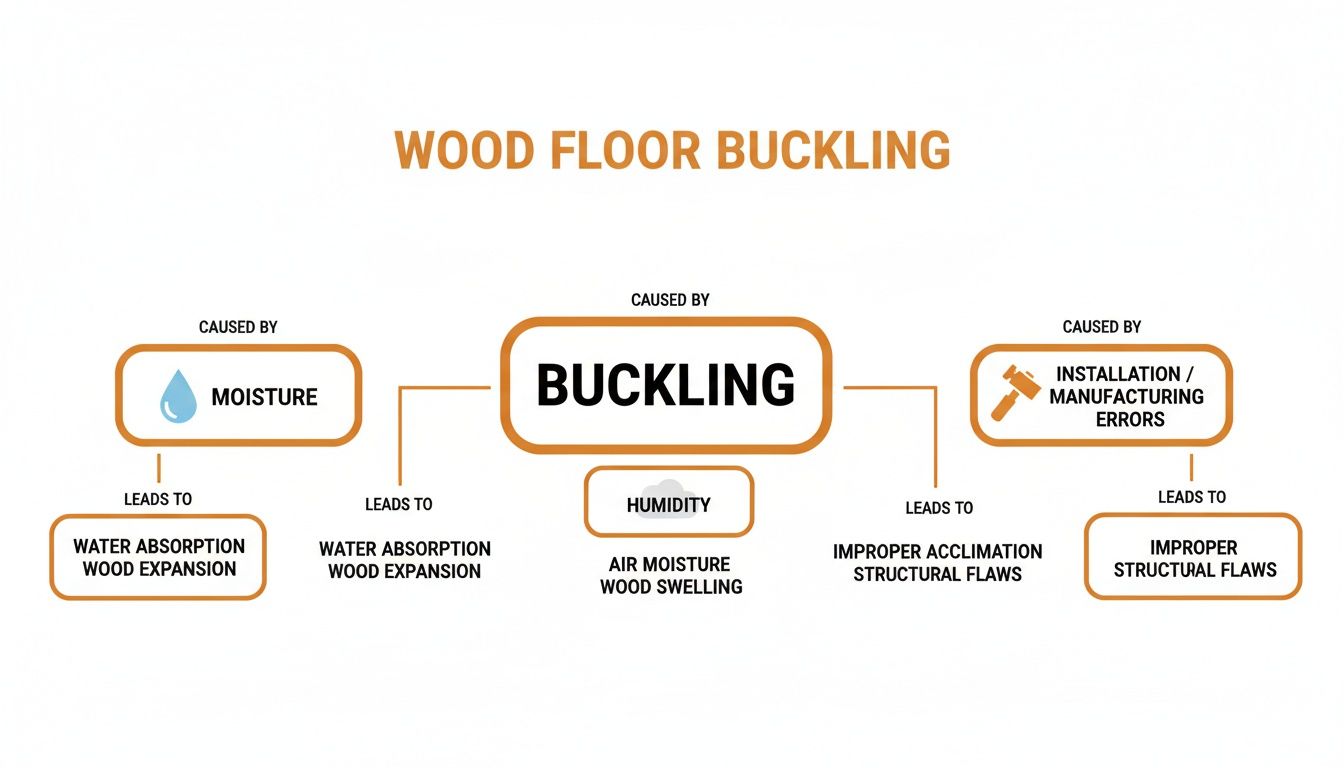
This visual guide really drives it home: while installation mistakes can cause problems, moisture from humidity and direct leaks is the primary reason floors fail.
The Importance of Professional Moisture Testing for Littleton Hardwood Floor Refinishing
Before we even think about a Littleton hardwood floor refinishing project, an installation, or a repair, taking a professional moisture reading is absolutely non-negotiable. Our technicians use a specialized meter to measure the moisture content of both your hardwood planks and the subfloor. This is a critical step. It ensures the wood is properly acclimated and that no hidden moisture bombs are waiting to ruin the project down the line. If you want to be proactive, learning how to read moisture meter readings can help you spot potential disasters before they happen.
Moisture imbalance is, without a doubt, the leading cause of hardwood floor buckling. It’s a factor in over 50% of cases where homeowners see this kind of damage. When indoor relative humidity climbs above 55%, the wood flooring absorbs moisture and expands, creating intense pressure that forces the planks to lift away from the subfloor—sometimes by several inches.
Applying a high-quality finish is another crucial layer of defense. Our advanced UV-Cure System, for example, creates an incredibly durable, water-resistant barrier right on the surface of your floor. Now, it's no substitute for controlling the humidity in your home, but this finish provides invaluable protection against everyday spills and surface moisture. It gives you precious time to clean up messes before they have a chance to soak in and cause permanent damage.
Costly Installation Mistakes That Cause Buckling
While moisture from the outside world is a huge player, sometimes the real reason your floors are buckling started on day one. A botched installation job can create a ticking time bomb right under your feet, setting up even the most beautiful floors for failure, no matter how carefully you treat them.
Think of your hardwood floor as a living, breathing part of your home. It needs room to move and adapt to its surroundings. When an installation is rushed or handled by an inexperienced crew, they often skip critical steps—and that leads to expensive, disruptive repairs for you down the road.
The Critical Role of Expansion Gaps
One of the most common—and damaging—mistakes is failing to leave proper expansion gaps. These are small, deliberate spaces left around the edge of the room, tucked away and hidden under your baseboards. They are absolutely essential. Why? Because they give the wood floor "breathing room" to naturally expand and contract with Colorado's wild seasonal humidity swings.
When those gaps are too small or, even worse, non-existent, the expanding planks have nowhere to go. They push against each other and the walls with incredible force until, eventually, they have no choice but to lift up and buckle. This is a problem we see all the time in homes across Highlands Ranch and Parker, usually the result of a DIY job or a cut-rate contractor who should have known better.
Why Wood Acclimation Is Non-Negotiable
Another fatal flaw is skipping the acclimation process. You can't just take a pallet of wood from a warehouse and start nailing it down in your house. The planks have to be brought inside and left to sit for several days to get used to your home’s specific temperature and humidity levels. It's a non-negotiable step.
- What happens if you skip it? If wood that was stored in a humid warehouse gets installed in a dry Denver home, it’s going to shrink after installation, creating ugly, visible gaps between the boards.
- What if it's the other way around? If wood from a dry storage facility is installed during a muggy Colorado summer, it will soak up that moisture and swell, leading straight to buckling.
This crucial waiting period ensures the wood is stable before it gets permanently fastened, preventing a massive percentage of future headaches.
Subfloor Preparation and Fastener Failures
The mistakes don't stop at the surface, either. An improperly prepared subfloor is another top cause of buckling. For instance, laying hardwood directly over a concrete subfloor—a common scenario in basements—without a proper vapor barrier is just asking for trouble. Moisture from the concrete will wick straight up into the wood, causing it to swell and fail.
Improper installation is behind a huge number of buckling floors, with missing expansion gaps being one of the most frequent screw-ups. When hardwood is installed without enough room to breathe or without a vapor barrier between it and a concrete slab, the wood has no way to handle natural expansion. You can learn more about how crucial these pre-installation steps are by exploring detailed investigations into hardwood floor claims.
Using the wrong type or number of fasteners can also doom an installation from the start. If the planks aren't secured correctly, they can shift and move under pressure, creating stress points that eventually lead to buckling. Investing in a pro team for your hardwood floor installation in Littleton is the single best way to make sure every one of these critical details is handled perfectly. For a deeper dive, check out our guide on professional hardwood floor installation and see for yourself why expertise matters so much.
How Sudden Water Damage Leads to Severe Buckling
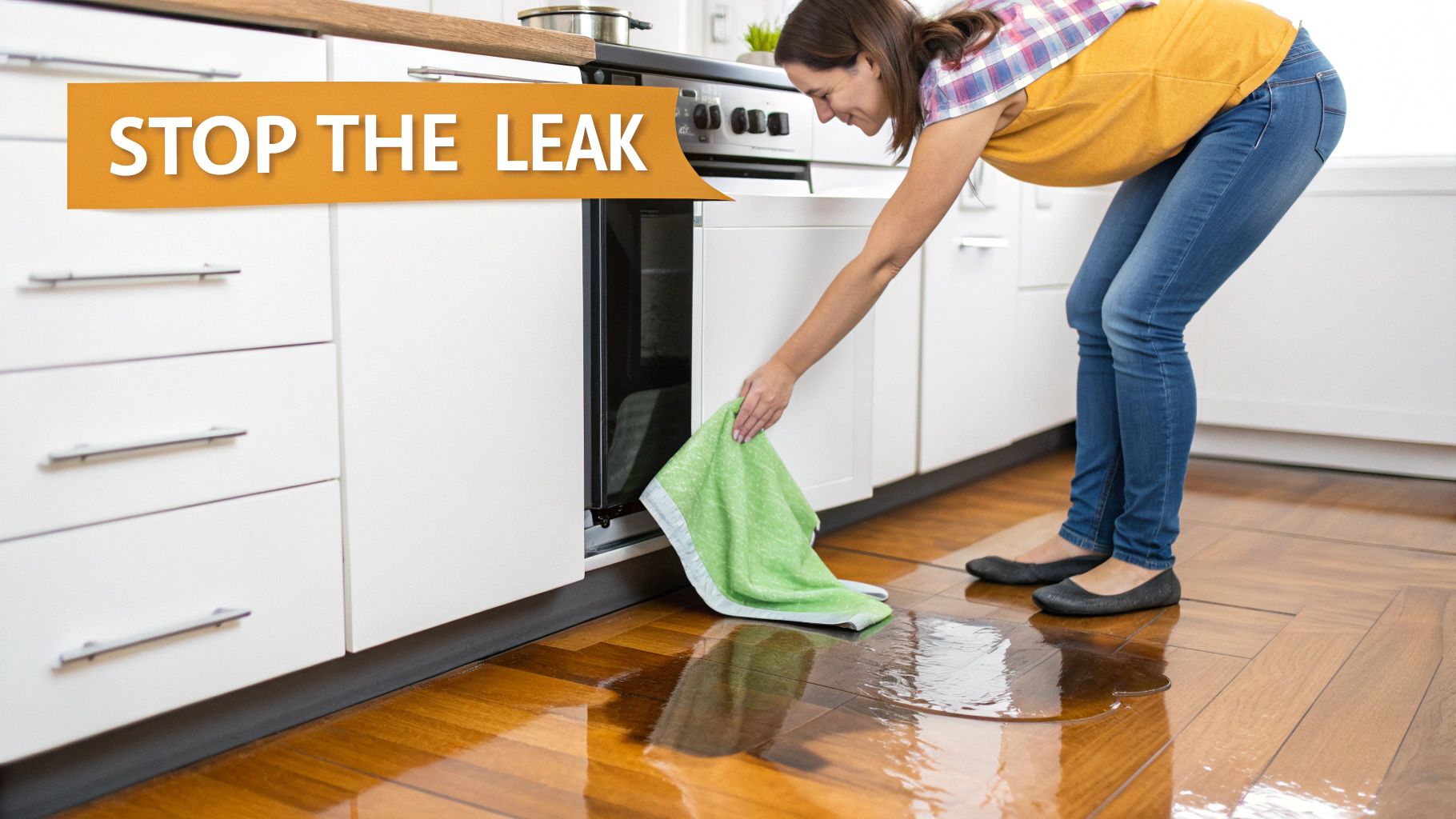
While high humidity is a slow-burn threat to your floors, a sudden flood or leak is an entirely different beast. This isn't a gradual swelling over a humid summer; this is a full-blown, five-alarm flooring emergency.
Events like a burst pipe, a rebellious dishwasher, or a flooded basement can cause extreme, dramatic buckling in just a few hours. Think of your hardwood planks like tiny, dry sponges. When they're suddenly submerged, they soak up water at an incredible rate.
This rapid absorption causes the wood fibers to expand violently, creating immense pressure between the boards. With nowhere else for that force to go, the flooring literally pushes itself up, creating those awful waves and peaks.
Common Household Water Disasters
We've seen it all, and trust me, it doesn't take much to ruin a beautiful floor. A classic scenario we've dealt with in Littleton homes is a tiny, slow leak from a refrigerator's ice maker line. It can go unnoticed for days, quietly feeding water under the flooring until you wake up one morning to a floor that looks like a miniature mountain range.
Other frequent culprits behind this kind of buckling include:
- Washing machine hose failures: A burst supply line can dump dozens of gallons of water in minutes, flooding a laundry room and creeping into adjacent hallways.
- Dishwasher leaks: A bad seal or a clogged drain can send a river of water pouring out from under your kitchen cabinets, saturating your floor from below.
- Plumbing failures: A burst pipe hidden in a wall or ceiling is one of the most destructive disasters, as the water can spread far and wide before you even know there's a problem.
When a pipe bursts, the damage is swift and severe. For immediate steps on how to handle the crisis, this emergency guide on what to do if a pipe bursts is a fantastic resource.
Your Immediate Action Plan
If you walk in and discover a water event, speed is everything. Every minute the wood sits in water, the swelling gets worse, and the chances of saving the floor go down.
Here’s what you need to do, right now:
- Stop the Water Source: First things first. Find your home's main water shut-off valve or the specific valve for the leaking appliance and turn it off completely.
- Remove Standing Water: Grab every towel you own. Use a wet-dry vacuum, mops, whatever it takes to get as much standing water up as fast as possible.
- Promote Air Circulation: Open up windows and doors (weather permitting!) and get fans aimed at the wet area. You need to start the drying process immediately.
- Call a Professional Immediately: This is not a "wait and see" situation. You need an expert on-site to assess the damage and tell you what can be saved.
For homeowners facing this crisis, our team provides a rapid response. Our first move is often to deploy specialized hardwood water damage repair equipment to start pulling moisture out of the wood and subfloor. From there, we might use wax removal and professional deep cleaning to get a clear look at the subfloor's condition.
This detailed evaluation is critical. It tells us whether a full Littleton hardwood floor refinishing using our UV-Cure System can bring your floor back, or if the damage is too severe and plank replacement is the only option.
Your Best Defense: Proactive Floor Protection Strategies
Knowing what makes hardwood buckle is one thing, but stopping it before it ever starts? That’s the real secret to long-lasting floors. The absolute best defense is a proactive one—a few smart habits that protect your investment from the moisture and wild humidity swings that cause so much trouble.
Think of it as floor insurance. A little bit of consistent effort goes a long, long way in keeping your beautiful hardwood flat, stable, and looking fantastic for years to come. This is especially true here in Colorado, where our climate can be all over the place.
Mastering Colorado's Climate Indoors
The single most important thing you can do to prevent buckling is to create a stable environment inside your home. Wood is a natural material, and it breathes. It’s happiest when the relative humidity stays in that sweet spot between 30% and 50%. When the air gets too damp in the summer or bone-dry in the winter, the wood expands and contracts, putting constant stress on your floors.
Here’s a simple game plan for wrangling our crazy Colorado weather:
- Summer Maintenance: During our monsoon season or those surprisingly humid weeks, run a dehumidifier. This pulls that excess moisture out of the air before your floors can soak it up. If you have a swamp cooler, make sure you've got plenty of ventilation to keep damp, stagnant air from building up.
- Winter Maintenance: The dry winter air is just as much of an enemy. It sucks the moisture right out of the wood, causing it to shrink and gap. A whole-home or even a good portable humidifier is your best friend here, adding that essential moisture back into the air to keep your planks happy and stable.
By managing your indoor climate, you're directly tackling one of the biggest culprits behind buckled floors. You're creating a healthier, more predictable world for your hardwood to live in.
Your First Line of Defense: Practical Daily Habits
Beyond keeping your humidity in check, a few simple, everyday routines can save you from a world of water-related headaches.
Think of your floor's finish as its raincoat. A strong, unbroken barrier is everything. A high-performance finish, like our Diamond Traffic Plus UV-Cure System, creates an incredibly tough, water-resistant seal right on the surface. Now, it's not a swimming pool liner—you still have to clean up spills. But it buys you that critical time to grab a towel and wipe up a mess before moisture has a chance to seep into the wood and start the swelling process.
Here are a few more must-do tips:
- Use High-Quality Mats: An absolute non-negotiable. Place good, absorbent mats at every single exterior door. They’re your frontline soldiers, catching the snow, slush, and mud before it ever gets tracked onto your floors.
- Wipe Spills Immediately: Don't let water sit. Ever. Whether it’s a tipped-over glass of water or a pet accident, clean it up right away with a dry or lightly damp cloth. The faster you act, the less chance moisture has to do damage.
- Check Your Appliances: Once or twice a year, take a peek behind your fridge and dishwasher. Check the hoses for the ice maker and water lines. Look for any signs of cracking, brittleness, or slow drips. A tiny leak can go unnoticed for months, causing massive damage.
These are simple steps, but they make a huge difference. For a deeper dive, check out our guide on how to protect hardwood floors.
Ultimately, it helps to start thinking of services like a screen and recoat not as a repair, but as proactive maintenance. A fresh coat of our UV-cured finish is one of the most powerful tools in your floor protection arsenal.
Expert Solutions for Repairing Buckled Hardwood Floors
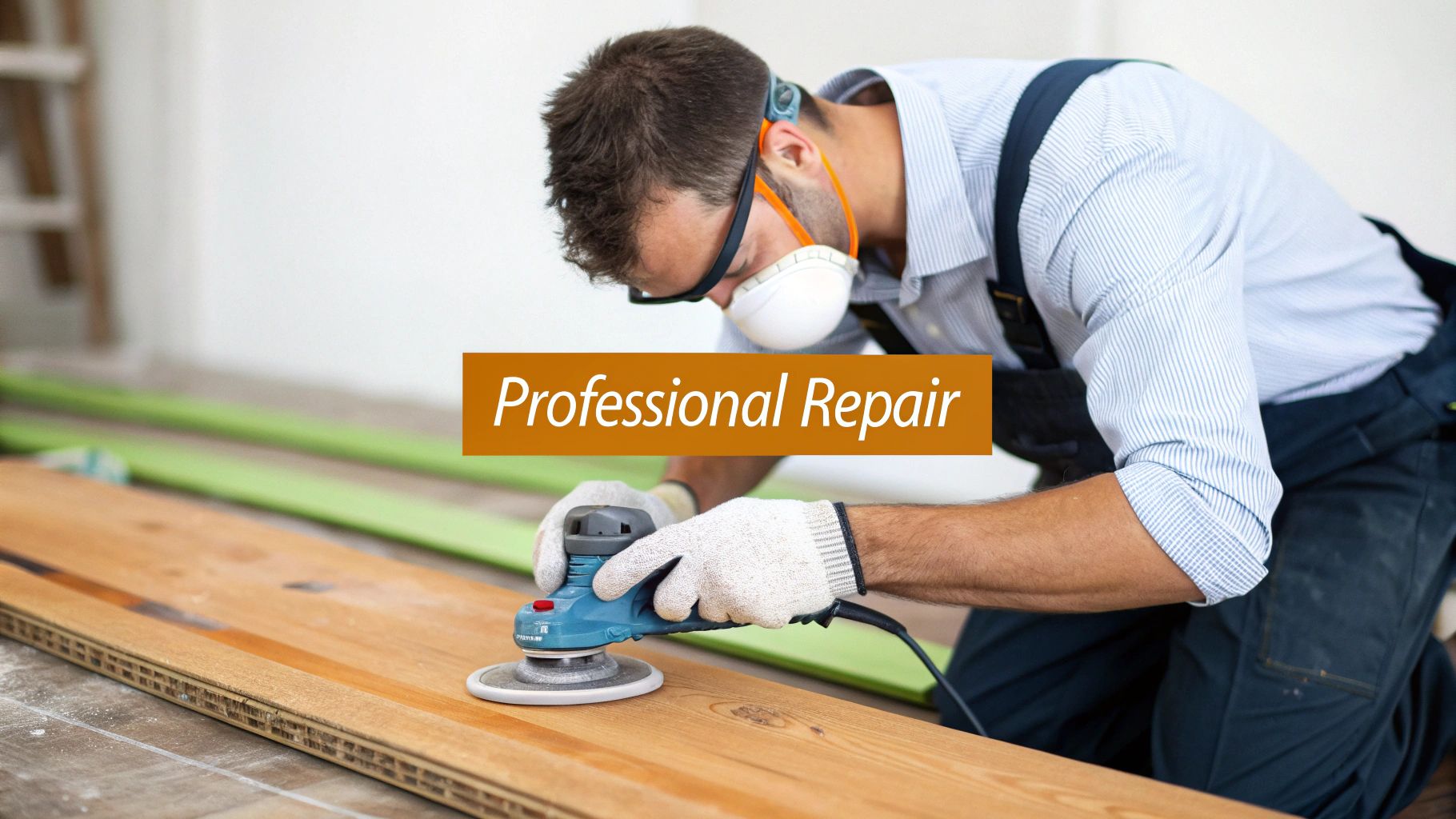
When you see those dreaded peaks and valleys in your hardwood, the first question is always, "Can this even be fixed?" The good news is, in most cases, the answer is a big, reassuring "yes." But the right fix depends entirely on how bad the buckling is and, crucially, how fast you take action.
If you catch it early, the solution can be surprisingly simple. Once the moisture source is gone and the wood hasn't been soaked for too long, we can sometimes use a combination of industrial fans, heavy-duty dehumidifiers, and strategically placed weights. This encourages the planks to relax and settle back down into place. It’s not a guarantee, but it’s always the first thing we try.
When Minor Fixes Aren’t Enough
Unfortunately, if the buckling is severe or has been there for a while, a more hands-on approach is needed. When planks are permanently warped or have completely popped free from the subfloor, they’ll have to be professionally removed and replaced. This is delicate, surgical work that demands real skill to avoid harming the healthy flooring around it.
This is where true craftsmanship makes all the difference. We recently restored a water-damaged red oak floor in a classic Denver Tudor home after a radiator pipe failed and caused a huge buckle. Instead of recommending a full tear-out of the gorgeous, historic floor, our team performed a precise repair.
The process for a significant repair like this involves a few key steps:
- Careful Removal: We meticulously cut out only the damaged planks, creating clean, straight edges for a perfect patch.
- Subfloor Assessment: With the damaged wood gone, we get a good look at the subfloor. We’ll dry it out, stabilize it, and treat any lingering moisture or mold issues before moving on.
- Plank Replacement: New, properly acclimated wood is then carefully "laced" or "woven" into the existing floor. We take incredible care to match the species, grain pattern, and plank width for a seamless transition.
Restoring a Seamless Look with Littleton Hardwood Floor Refinishing
Once the new planks are in, the final and most critical step is a full Littleton hardwood floor refinishing service. A simple patch job will always look like a patch. To make the repair truly disappear and bring the whole floor back to its original, uniform beauty, the entire surface must be sanded down to bare wood and refinished as one cohesive unit.
This is where our dust-free sanding system is a total game-changer for homeowners. A major repair and refinishing project can feel disruptive, but our advanced equipment captures virtually all the airborne dust, keeping your home clean and your family safe.
Comparing a professional repair and refinish to a full floor replacement is an easy choice for most homeowners. Expert Littleton hardwood floor refinishing is a far more cost-effective solution that saves the original character of your home while erasing any sign of the previous damage.
After sanding, we apply a durable finish to protect your newly restored floor. Our state-of-the-art UV-Cure System is a perfect choice here, as it cures instantly. This means you can get your furniture back in place the same day, with zero lingering odors or downtime. It’s the fastest, most durable way to wrap up the restoration and get your life back to normal.
FAQ: Questions About Buckled Floors in Littleton? We've Got Answers.
When you see your beautiful hardwood floors suddenly lifting up, it’s natural to have a million questions running through your head. It's a stressful situation, for sure. Here in Littleton, we hear the same worries from homeowners all the time, so we’ve put together some straight-to-the-point answers to the most common questions we get.
Can a buckled hardwood floor just fix itself?
Wouldn't that be nice? Unfortunately, the answer is no. If you’ve got a true buckle—where the wood planks have actually pulled away and lifted off the subfloor—it’s a sign of a bigger problem that won’t just go away.
Think of it like a bent car frame after an accident; it needs to be properly straightened out. While super minor swelling from a humid Colorado day might settle down a bit, a real buckle is a structural issue. We have to find and stop the moisture source, release the pressure, and then properly repair the damaged area to make sure it doesn’t get worse.
So, how much does it cost to fix a buckled floor in Littleton?
This is the big question, and the honest answer is: it really depends. The cost can swing quite a bit based on how bad the damage is. For a smaller issue that’s caught early, we might be able to do a simple fix and a screen and recoat, which could start around $2.00 per square foot. But if the buckling is severe and we need to replace whole sections of planks and do a full refinish with our dust-free sanding system, the price will naturally be higher. The best way to know for sure is to have us take a look. We provide clear, no-pressure quotes so you know exactly what you’re dealing with.
If I get it repaired, will my floor just buckle again?
That’s a fair concern, and it’s why a professional repair is about more than just flattening the boards. A real pro doesn’t just treat the symptom (the buckle); we hunt down and fix the cause (the moisture). As part of our Littleton hardwood floor refinishing services, we’ll pinpoint the root of the problem—maybe it’s poor ventilation in a crawl space or a leaky seal around a door. By fixing the underlying issue and using top-notch installation techniques, like finishing with our super-durable UV-Cure System, we dramatically cut down the risk of it ever happening again. We’re not interested in quick fixes; we deliver solutions that last.
Is this something my homeowners insurance will cover?
This one is tricky and depends entirely on your policy and what caused the buckle. Generally, if the damage was caused by a “sudden and accidental” event—like a dishwasher hose bursting or a pipe breaking—there’s a good chance it will be covered. However, if the buckling is the result of a slow, gradual problem like consistently high humidity, poor home maintenance, or a tiny leak that’s been dripping for months, insurance carriers typically won't cover it. The key is to check your specific policy right away and take plenty of photos and notes to document everything.
Homeowners in Littleton trust J.R. Hardwood Floor Refinishing & Cleaning to restore the natural beauty of their hardwood floors with our dust-free sanding system and advanced UV-curable finishes. Unlike traditional methods, our UV technology cures instantly, so you can move furniture back the same day with no lingering odor or downtime. Choose the perfect refinishing service to match your needs and home traffic. Our dust-free process ensures a clean, beautiful finish every time.
📞 Phone: 720-327-1127
🌐 Website: jrhardwoodfloorrefinishingandcleaning.com
📍 Service Area: Littleton, Denver, Highlands Ranch, Centennial, Englewood, and the surrounding communities.
📺 YouTube: https://www.youtube.com/channel/UCLaTAi6KxwT-g8QCKqKTQ8Q?sub_confirmation=1