 Skip to content
TL;DR:
- UV-curable floor finishing applies a liquid resin coating that hardens instantly with ultraviolet light, creating durable, wear-resistant floors in seconds. The process involves meticulous surface prep, thin coatings, and precise UV curing, offering a fast, eco-friendly alternative to traditional finishes. It is ideal for high-traffic commercial spaces and busy homes, providing quick turnaround and long-lasting protection.
The UV-curable floor finish process is defined as applying a liquid resin coating to a floor surface and instantly hardening it using ultraviolet light, producing a durable, wear-resistant layer in seconds rather than hours. This method, formally known as UV curing in the coatings industry, is the fastest way to get your floors back in service with minimal disruption to your home or business. The rapid curing advantage means no sticky floors, no overnight closures, and no waiting around. At Jrhardwoodfloorrefinishingandcleaning, we use this technology to give Denver Metro homeowners and business owners a floor transformation that fits their schedule, not the other way around.
What is the UV-curable floor finish process and how does curing work?
UV-curable floor finish is a liquid resin coating that polymerizes under UV light, creating a hard, crosslinked network on your floor surface. Think of it like sunscreen in reverse: instead of blocking UV rays, the coating absorbs them and uses that energy to lock itself into a solid, protective shell. The chemistry behind this is called photopolymerization, and it is what separates UV finishing from every traditional floor coating method.
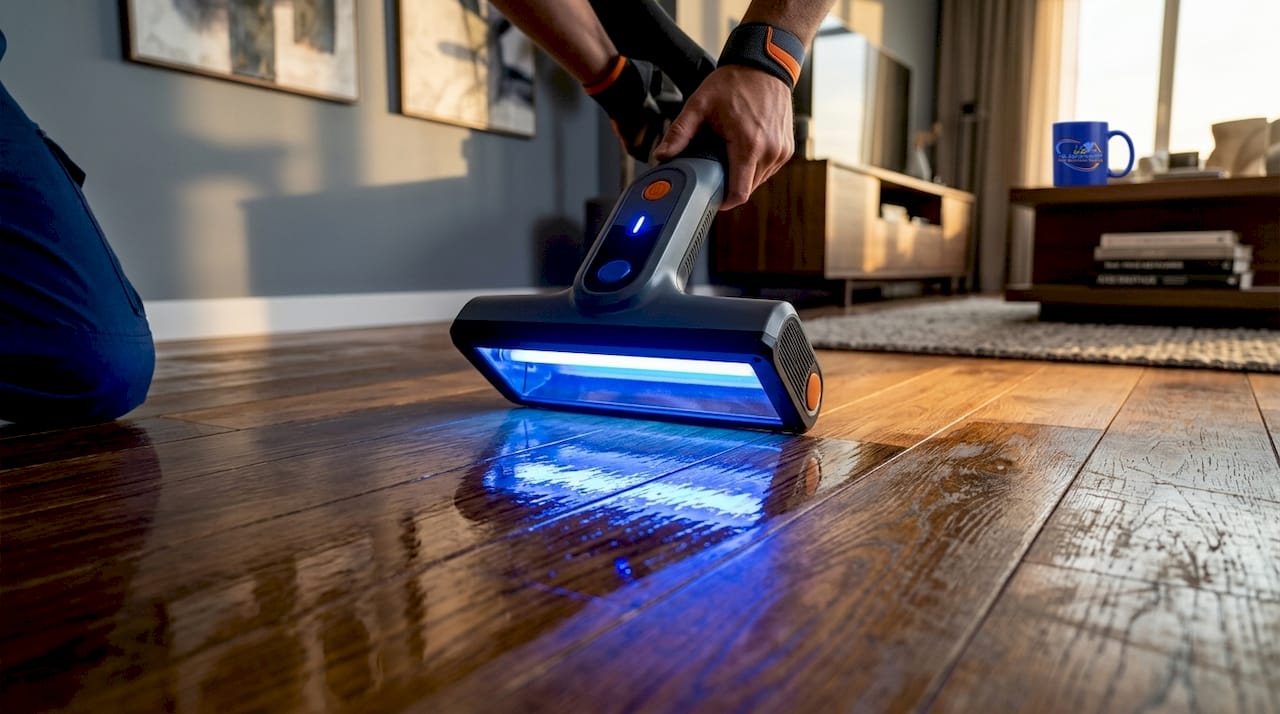
The key ingredient making this possible is the photoinitiator. Photoinitiators absorb UV light to trigger polymerization, controlling both cure speed and the final hardness of the coating. Without them, the resin would just sit there wet. With them, the coating transforms from liquid to solid in a matter of seconds. The process uses either radical or cationic polymerization chemistry, depending on the resin system chosen.
Here is what makes this genuinely different from traditional oil-based or water-based finishes. Conventional coatings dry through solvent evaporation or oxidation, which takes hours or even days. UV curing is not about evaporation at all. Curing speed depends entirely on delivering the correct UV dose, calculated as lamp intensity multiplied by exposure time. No heat, no waiting for solvents to off-gas, no humidity concerns slowing things down.
- Resins form the backbone of the coating and determine hardness and flexibility.
- Monomers dilute the resin and help control viscosity for smooth application.
- Photoinitiators are the trigger that starts the whole reaction the moment UV light hits.
Pro Tip: If you ever hear a floor finisher say the coating “needs to breathe,” they are talking about a traditional finish. UV-cured coatings do not breathe. They cure. That distinction matters when you are planning your schedule.
Step-by-step UV floor coating application process
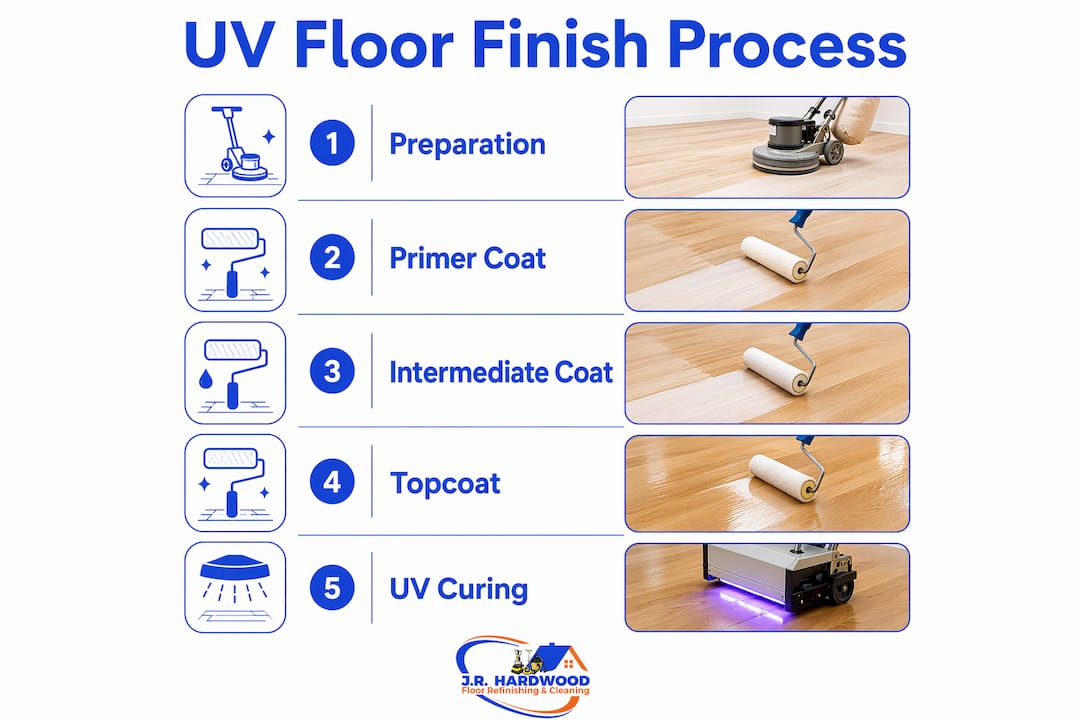
The UV floor coating process follows a clear sequence. Skipping or rushing any step is the most common reason a finish underperforms. Here is how it works from start to finish.
-
Surface preparation. Sand the floor to remove old finish, scratches, and surface irregularities. Vacuum and tack-cloth every inch of the floor. Any dust left behind will show up under the finish like a snow globe. Some systems also call for a light preheating of the floor to improve adhesion.
-
Primer coat application. Apply a UV-compatible primer at roughly 4 to 6 grams per square meter. This thin layer seals the wood and creates a bonding surface for the finish coats above it.
-
First UV cure. Pass the UV lamp over the primed surface. Full curing typically takes 1 to 2 seconds under proper UV exposure. The primer goes from wet to solid almost instantly. This is the moment most people see UV curing for the first time and cannot believe it is real.
-
Intermediate coat (if required). Some systems build thickness through multiple thin passes rather than one thick coat. Apply the intermediate layer, then cure again under UV light. Multiple coats with intermittent UV cures build a smoother surface and better overall aesthetics than a single thick application.
-
Topcoat application. Apply the final finish coat. This layer determines the sheen level, whether matte, satin, or high gloss, and provides the primary wear surface your family or customers walk on every day.
-
Final UV cure. The topcoat cures in 2 to 3 seconds under UV exposure. Once this step is complete, the floor is ready for foot traffic almost immediately.
| Stage | Coating Weight | Cure Time |
|---|---|---|
| Primer | 4 to 6 g/m² | 1 to 2 seconds |
| Intermediate coat | Varies by system | 1 to 2 seconds |
| Topcoat | Varies by system | 2 to 3 seconds |
Pro Tip: Keep your UV lamp moving at a consistent pace. Stopping mid-pass concentrates UV energy in one spot and can cause yellowing or cracking. Steady, even movement is the secret to a flawless finish.
How to choose the right UV floor coating for your space
Choosing the right UV floor coating comes down to three things: how much traffic your floor sees, what look you want, and what your maintenance routine will realistically be. Not every UV finish is built the same, and matching the product to the space makes a real difference in how long it lasts.
For high-traffic commercial areas like retail stores, restaurants, or office lobbies, you want a UV coating rated for heavy wear. UV-curable coatings produce hard, wear-resistant surfaces with stain-proofing, moisture resistance, and anti-yellowing properties built in. These are not just marketing claims. A properly cured UV finish in a commercial space genuinely outperforms most traditional polyurethane systems in daily wear tests.
For residential spaces, the choice often comes down to sheen level and feel underfoot. Matte and satin finishes hide everyday scuffs better than high gloss, which shows every footprint. High-gloss UV coatings look stunning in photos but require more frequent cleaning in busy family homes.
Here is a quick comparison to help you think through your options:
| Space type | Recommended finish | Key benefit |
|---|---|---|
| High-traffic commercial | Heavy-duty UV topcoat | Maximum wear and stain resistance |
| Residential living areas | Satin UV finish | Hides scuffs, warm appearance |
| Kitchen or entryway | Moisture-resistant UV coat | Handles spills and tracked-in dirt |
| Showroom or retail | High-gloss UV finish | Visual impact and easy mopping |
On the environmental side, UV coatings are solventless and produce very low VOC emissions compared to traditional solvent-based finishes. This matters if you have kids, pets, or anyone with respiratory sensitivities in the space. You can learn more about durable floor coatings for Colorado spaces to see how different systems perform in real local conditions.
Recoating is also simpler than most people expect. Maintaining UV-cured floors involves cleaning, light sanding, and applying a fresh UV layer with the same rapid cure. You are not stripping the floor back to bare wood every time. That means less disruption and lower long-term cost.
Common mistakes in UV floor finishing and how to avoid them
The UV-curable floor finish process is forgiving in many ways, but a few mistakes will undermine even the best products. Knowing what to watch for saves you from a redo.
-
Under-curing. This happens when the UV lamp moves too fast or the coating is applied too thick. Incomplete curing reduces hardness and leaves a soft, tacky surface that scratches easily. The fix is slowing down lamp movement and keeping coats thin.
-
Over-curing. Too much UV exposure causes the coating to become brittle. Excessive UV intensity can cause cracking or yellowing, which defeats the purpose of using a premium finish. Calibrating your lamp correctly before you start is non-negotiable.
-
Poor surface prep. Dust, oil, or uneven sanding creates weak spots where the coating cannot bond properly. These show up as bubbles, fish-eyes, or peeling within weeks of application. Prep is where most of the real work happens.
-
Uneven coating coverage. Thin spots cure fine but wear through faster. Thick spots may not cure fully. Consistent application technique, whether by roller, squeegee, or spray, is what separates a professional result from a patchy one.
“The floor does not lie. Every shortcut you take during prep or application shows up eventually. UV finishing rewards patience and punishes rushing.”
Pro Tip: Always do a test cure on a small, hidden section before committing to the full floor. This confirms your lamp intensity and coating thickness are dialed in before you cover 500 square feet.
Key takeaways
The UV-curable floor finish process delivers a durable, low-VOC, fast-curing floor coating by combining precise surface prep, thin resin layers, and calibrated UV lamp exposure to harden each coat in seconds.
| Point | Details |
|---|---|
| Curing speed | UV coatings cure in 1 to 3 seconds per pass, not hours or days. |
| Surface prep is critical | Dust, oil, or uneven sanding causes bonding failures that appear within weeks. |
| Eco-friendly chemistry | Solventless UV coatings produce very low VOC emissions, safer for families and staff. |
| Match finish to traffic | High-traffic spaces need heavy-duty UV topcoats; residential areas benefit from satin finishes. |
| Recoating is simple | Light sanding and a fresh UV layer restore appearance with minimal downtime. |
What I have learned from years of UV floor finishing in Colorado
I have been finishing floors across the Denver Metro Area for years, and UV curing is the single biggest shift I have seen in how we serve homeowners and businesses. The technology is genuinely impressive, but what I tell every customer is this: the finish is only as good as what happens before the UV lamp ever turns on.
The prep work, the sanding, the dust removal, the primer application, that is where the outcome is decided. The UV cure itself is almost anticlimactic once you have done it right. You pass the lamp, and the floor is done. What I find most satisfying is watching a business owner walk back into their space the same day we started, floors looking like new, no smell, no wet paint signs, no lost revenue from a two-day closure.
The eco-friendly benefits of UV finishing are also something I care about personally. We work in people’s homes and businesses. Low VOC emissions are not just a selling point. They are the right way to do the job. I have seen the difference it makes for families with young kids or pets who cannot vacate the space for 48 hours.
My honest advice: if you are weighing UV finishing against traditional polyurethane, think about your schedule first. If downtime costs you money or stress, UV is the answer. If you have a week to spare and a tight budget, traditional finishing still works. But for most of the homeowners and business owners we serve in Parker, Castle Rock, and Denver, getting their space back the same day is worth every penny.
— J.R.
Ready to get your floors finished the same day?
If you are tired of planning your life around floor refinishing timelines, Jrhardwoodfloorrefinishingandcleaning has a solution built for exactly that. We offer Instant UV-curable finishing for both residential and commercial spaces across the Denver Metro Area, using eco-friendly products and premium coatings that cure in seconds and last for years.
Call us for a free over-the-phone quote. We will ask about your floor’s condition, look at photos you send, and give you a clear, honest estimate with no surprises. Whether you are in Parker, Boulder, or Colorado Springs, our team brings the same craftsmanship and care to every project. See how DIY compares to professional refinishing and decide what makes sense for your space. We are ready when you are.
FAQ
What is UV-cured floor finishing?
UV-cured floor finishing is a process where a liquid resin coating is applied to a floor and hardened using ultraviolet light in seconds. The photoinitiators in the coating absorb UV energy and trigger polymerization, turning the liquid into a solid, durable surface almost instantly.
How long does the UV floor coating process take?
Each coat cures in 1 to 3 seconds under UV light, and the full process from sanding to final cure can often be completed in a single day. This makes UV finishing far faster than traditional polyurethane, which requires 24 to 48 hours of drying time between coats.
Is UV floor finish safe for homes with kids and pets?
UV-curable coatings are solventless and produce very low VOC emissions, making them a safer choice for homes with children, pets, or anyone with respiratory sensitivities. Once cured, the floor is ready for foot traffic with no lingering fumes.
Can UV-cured floors be recoated later?
Yes. Recoating UV-cured floors involves cleaning the surface, light sanding for adhesion, and applying a fresh UV coating layer that cures just as quickly as the original. This keeps your floors looking great without a full refinishing project.
What floors work best with UV coating?
UV-curable finishes work well on hardwood, engineered wood, and SPC flooring. They are especially well suited for high-traffic hardwood floors in homes and commercial spaces where wear resistance and fast turnaround are the top priorities.