 Skip to content
TL;DR:
- Proper subfloor prep and professional installation are crucial to long-lasting Denver commercial floors.
- Polished concrete, terrazzo, epoxy, and LVT are among the best options for durability and climate suitability.
- Local expertise is essential to select and install floors that withstand Denver’s unique freeze-thaw and grit conditions.
Choosing the wrong floor for your Denver commercial space is not just an aesthetic mistake. It is a financial one. Between the freeze-thaw cycles outside and hundreds of daily foot-traffic impacts inside, the wrong material can fail within a few years, costing you far more in repairs and replacements than a smarter upfront choice would have. Whether you manage a busy retail strip, a medical office, or a warehouse near downtown Denver, the flooring you pick will shape your maintenance budget, your liability exposure, and honestly, the first impression every customer gets when they walk through your door.
Table of Contents
- How to evaluate commercial flooring: What really matters
- 5 top commercial flooring examples for high-traffic spaces
- Commercial flooring comparison: Durability, maintenance, and cost
- How to match flooring to your Denver business: Real-world scenarios
- What most commercial flooring advice gets wrong: Our Denver-based take
- Denver’s flooring experts: Get the right commercial solution
- Frequently asked questions
Key Takeaways
| Point | Details |
|---|---|
| Durability dominates | Prioritize flooring types with decades-long life and low total cost of ownership for Denver settings. |
| Professional installation pays | Only expert install teams can guarantee compliance, warranty, and lasting results in commercial spaces. |
| Preparation prevents failure | Subfloor prep and climate-specific materials reduce risk of costly flooring problems in high-traffic areas. |
| Match flooring to use | Choose the best flooring type for your business activity, traffic, and maintenance needs. |
How to evaluate commercial flooring: What really matters
Most property managers start by looking at price per square foot. That is understandable, but it is also where a lot of costly mistakes begin. The smarter way to think about flooring is total cost of ownership (TCO), meaning the full picture: purchase price, installation, maintenance, and eventual replacement all added together over the life of the floor.
When we help Denver clients work through the best commercial flooring options, we always start with a few key evaluation criteria:
- Slip resistance: Look for a Dynamic Coefficient of Friction (DCOF) of at least 0.42, as required by ANSI A326.3. This is your safety baseline in high-traffic areas.
- Wear layer thickness: For vinyl products, ASTM F1700 Class III sets the standard at 20 mils or more. Anything less will not hold up in commercial use.
- Durability ratings: Ask for high-traffic flooring benchmarks specific to your expected daily foot count.
- Climate compatibility: Denver’s altitude and dry air create unique moisture dynamics. A product that performs beautifully in Houston might buckle or gap here.
- Warranty eligibility: Most manufacturer warranties require certified professional installation. Skipping this step voids your coverage.
“Installation requires site assessment (moisture and flatness testing), subfloor prep, and professional install to meet flooring system standards and warranty requirements.”
This is where Denver properties get into trouble. Many owners see a product they love, order it, and hand it to the cheapest installer available. Then six months later the floor is lifting at the seams because no one tested subfloor moisture levels before laying the material.
Pro Tip: Before any commercial install, ask your contractor for a written subfloor assessment. It should include moisture readings, flatness measurements, and a prep plan. If they cannot provide this, keep looking.
Our Denver flooring services include exactly this kind of site-first approach, because we have seen too many beautiful floors fail early due to skipped prep steps.
5 top commercial flooring examples for high-traffic spaces
Now that you understand how to evaluate your options, let’s look at the most effective commercial flooring materials used by Denver businesses.
According to flooring installation standards, each material comes with its own prep requirements and performance profile. Here is a breakdown of the five most proven options:
1. Epoxy coatings
Epoxy is poured directly over concrete and cures into a seamless, glossy surface. It is exceptional for warehouses, auto service centers, and retail spaces because it resists chemicals, moisture, and heavy equipment. It is also easy to sanitize, making it a top pick for food-service adjacent spaces.
2. Polished concrete
This is the workhorse of commercial flooring in Denver. It has the lowest lifecycle cost of any option, handles Colorado’s dry climate beautifully, and requires no adhesives or added materials. The catch: it needs expert surface preparation to perform as advertised.
3. Luxury Vinyl Tile (LVT)
LVT has come a long way. Today’s commercial-grade LVT offers realistic wood or stone looks, excellent wear layers, and individual tile replacement if a section gets damaged. It is one of the most versatile options for offices, healthcare, and retail.
4. Terrazzo
Terrazzo is the long-game champion. High upfront cost, yes, but terrazzo lasts 40+ years in heavy commercial use. It is poured in place, polished, and virtually maintenance-free once sealed.
5. Engineered hardwood
For upscale offices, boutique retail, or hospitality spaces, engineered hardwood delivers warmth and beauty that no synthetic can fully replicate. Our hardwood flooring solutions are specifically tailored for Denver’s climate control needs, since hardwood requires stable humidity to stay stable itself.
Pro Tip: For high-traffic entries and corridors, pair your primary flooring with transition strips that match or complement it. This protects edges and prevents trip hazards where materials meet.
For durable flooring tips that go beyond just product selection, our property manager guides walk through maintenance schedules and seasonal care specific to Colorado.
Commercial flooring comparison: Durability, maintenance, and cost
With each flooring type’s strengths in mind, let’s put them side by side to see how they stack up for Denver businesses.
| Flooring type | Lifespan (heavy use) | Slip resistance | Est. cost per sq ft | Maintenance level |
|---|---|---|---|---|
| Epoxy coating | 10 to 20+ years | High (can add grit) | $3 to $12 | Low |
| Polished concrete | 25 to 30+ years | Moderate to high | $2 to $10 | Very low |
| LVT (Luxury Vinyl) | 15 to 20 years | High (DCOF ≥0.42) | $4 to $14 | Low |
| Terrazzo | 40+ years | High when sealed | $20 to $50+ | Very low |
| Engineered hardwood | 20 to 30 years (refinishable) | Moderate | $8 to $20 | Moderate |
These durability benchmarks by flooring type give you a framework, but the real-world numbers depend heavily on how well the floor was installed and how consistently it is maintained.
“Most flooring failures in Denver commercial properties are not product failures. They are prep failures.”
Here is what we have found after working with dozens of local businesses: the product rarely lets you down. The installation process does. Moisture testing, subfloor leveling, and proper cure time all matter deeply, especially in Colorado’s variable climate. Learn more about protecting your investment with high-traffic floor care strategies that extend the life of any surface.
Here is a quick guide to match goals with materials:
- Ultra-low maintenance: Polished concrete or terrazzo
- Best long-term ROI: Polished concrete (low install cost, minimal upkeep)
- Premium aesthetics: Terrazzo or engineered hardwood
- Budget-conscious versatility: LVT or epoxy
For full compliance, reference flooring system standards to confirm your chosen product meets ASTM and ANSI requirements before purchase.
How to match flooring to your Denver business: Real-world scenarios
Having seen how the flooring types compare, let’s apply these insights to your unique Denver business situation.
Different businesses have very different needs. Here is a scenario-based guide:
| Business type | Best flooring match | Key reason |
|---|---|---|
| Restaurant or café | Epoxy or polished concrete | Easy to sanitize, slip-resistant with texture |
| Medical or dental office | LVT | Hygienic, cushioned, easy to replace sections |
| Boutique retail | Engineered hardwood or LVT | Warm aesthetics, refinishable |
| Warehouse or light industrial | Epoxy coating | Chemical resistance, seamless, durable |
| High-end office lobby | Terrazzo or engineered hardwood | Premium look, long lifespan |
Denver-specific factors make polished concrete and resilient prep critical, especially in entry areas where snow, ice melt chemicals, and grit are tracked in daily during winter months.
Here is a step-by-step process we recommend for Denver businesses selecting and installing commercial flooring:
- Assess your space: Measure square footage, note entry points, traffic flow, and any moisture-prone zones like kitchens or exterior entries.
- Set your TCO budget: Decide how long you plan to hold the property and what annual maintenance you can realistically commit to.
- Select your material: Match to your business type and climate exposure using the table above.
- Schedule a site assessment: Have a professional check subfloor moisture and flatness before ordering materials.
- Verify installation credentials: Confirm your installer is certified and that the install method meets manufacturer warranty requirements.
- Plan your maintenance schedule: Ask your installer for a written care plan from day one.
Pro Tip: For entries and vestibules, always upgrade to a heavier-duty spec than the rest of the floor. Entry zones take three to five times more abuse than the interior, so treating them the same is a recipe for early wear.
You can source materials and get guidance from our Denver flooring supply resources, and connect with our Denver flooring contractors who know local conditions inside and out.
What most commercial flooring advice gets wrong: Our Denver-based take
With these practical examples in mind, let’s step back and examine where most advice falls short and what matters most here in Denver.
Here is the honest truth: most national flooring guides are written for average U.S. conditions. They do not account for Denver’s altitude-driven dry air, freeze-thaw stress on building materials, or the grit and ice melt chemicals that get tracked inside every winter. Generic advice tells you to pick based on price and style. Local experience tells you to start with subfloor prep.
We have seen it firsthand. 80 to 90% of failures in high-traffic Denver facilities trace back to inadequate prep time, not the product itself. An installer who rushes the moisture testing phase to save a day will cost you thousands in bubbling, lifting, or cracking floors within the first year.
The properties that consistently get 20-plus years from their floors share one thing in common: they use expert flooring teams who know Denver. Local pros understand how to adjust cure times for Colorado’s low humidity and how to spec entry zones for real winter conditions. That knowledge is not something you can Google your way into.
Denver’s flooring experts: Get the right commercial solution
With the right knowledge and team, Denver managers can make flooring a lasting strength, not a recurring headache.
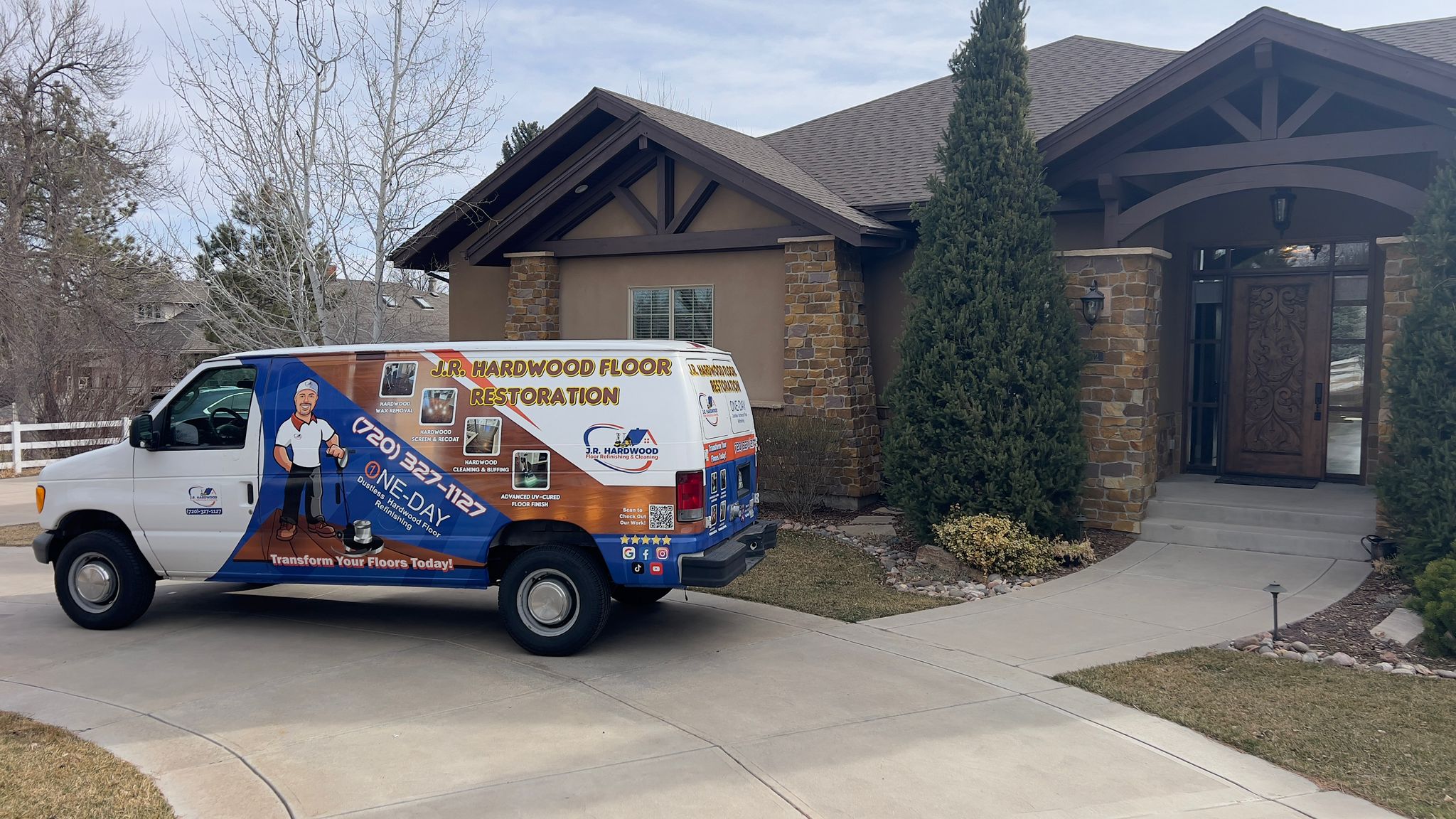
At J.R. Hardwood Floor Refinishing & Cleaning, we help commercial property managers across the Denver Metro Area choose, install, and maintain floors that hold up beautifully under real Colorado conditions. From site assessment to final finish, we bring local expertise and a track record of 5-star results to every project.
Ready to stop guessing and start planning? Explore our Denver floor restoration solutions and our professional hardwood floor installation guide to see exactly how we approach every commercial project. Or reach out today for a free over-the-phone quote tailored to your space.
Frequently asked questions
What is the most durable commercial flooring for Denver businesses?
Polished concrete and terrazzo consistently last the longest, from 25 to 40 or more years, even under the heaviest daily use in Denver commercial settings.
How important is professional installation for commercial floors?
It is critical. Professional installation is the only way to meet manufacturer warranty requirements, pass inspection standards, and avoid the subfloor failures that cause most early floor damage.
Are certain flooring types better for Denver’s climate?
Yes. Polished concrete and epoxy are particularly well suited to Denver because they handle freeze-thaw resilience and the chemical exposure from winter ice melt products without degrading.
How can I compare lifecycle costs between flooring types?
Add up the install cost, expected annual maintenance, and the cost of replacement over your target ownership period. Lifecycle cost prioritization over initial price almost always leads to better long-term savings.
What standards ensure safety and durability for commercial floors?
Look for a DCOF of at least 0.42 for slip resistance, a wear layer of 20 mils or more for vinyl products, and full ASTM and ANSI compliance on all materials before purchase.