 Skip to content
Laminate floors bring beauty and value to your home, but keeping them spotless without causing damage can feel tricky. Many homeowners worry about using the wrong products or methods that might dull the finish or warp the planks. This guide walks you through simple, eco-friendly cleaning steps that protect your floors while delivering a brilliant shine. You’ll learn exactly what tools to gather, how to clean effectively, and how to avoid common mistakes that shorten floor life. With the right approach, your laminate floors will look stunning for years.
Table of Contents
- Key takeaways
- What you need: tools and eco-friendly materials
- Step-by-step laminate floor cleaning process
- Avoiding common mistakes and troubleshooting
- Maintaining and verifying clean floors for long-term beauty
- Protect and enhance your floors with professional services
- Frequently asked questions
Key Takeaways
| Point | Details |
|---|---|
| Eco friendly cleaners | Choose eco friendly cleaners such as diluted white vinegar with water or store bought laminate cleaners and avoid ammonia to protect the finish. |
| Right cleaning tools | Equip a microfiber mop, bucket, soft microfiber cloths, a vacuum with a soft brush attachment, and a spray bottle to lift dirt without scratching the surface. |
| Water temperature guidance | Stick with lukewarm water for safer cleaning and avoid hot water that can warp the planks, following the cleaner dilution instructions. |
| Moisture safety practices | Place warning signs and work in sections, drying each area promptly to prevent slips from wet floors. |
What you need: tools and eco-friendly materials
Gathering the right supplies before you start makes cleaning faster and safer for your floors. You need tools that lift dirt without scratching and cleaners that won’t leave residue or harm the laminate surface. Start with a microfiber mop, which traps dust and grime effectively without abrasive fibers. Add a bucket for mixing your cleaning solution, plus several soft cloths for spot cleaning and drying.
For cleaning solutions, eco-friendly options work beautifully on laminate. Diluted white vinegar mixed with warm water creates a powerful, natural cleaner that cuts through dirt without chemicals. You can also choose store-bought green cleaners specifically labeled for laminate floors. These products avoid ammonia and harsh solvents that can cloud or damage the protective layer. Using gentle, eco-friendly cleaning agents prevents damage to laminate floors and indoor air pollution.
Water temperature matters more than you might think. Warm water dissolves dirt better than cold, but hot water can warp laminate planks by penetrating seams. Stick with lukewarm water for the safest results. When mixing your solution, use about one cup of vinegar per gallon of water, or follow the dilution instructions on commercial cleaners.
Safety deserves attention too. Wet floors become slippery quickly, so place warning signs or keep family members and pets out of the area while you clean. Work in sections so you can dry each area promptly, reducing slip hazards and preventing water from sitting too long on the surface.
Pro Tip: Always test your cleaning solution on a small, hidden area first to confirm it won’t discolor or damage your specific laminate finish.
Essential cleaning tools
- Microfiber mop with washable pads
- Large bucket for mixing solutions
- Soft microfiber cloths for spot cleaning
- Vacuum with soft brush attachment
- Spray bottle for targeted cleaning
Recommended eco-friendly cleaners
| Cleaner type | Mixing ratio | Best for |
|---|---|---|
| White vinegar solution | 1 cup per gallon of warm water | General cleaning and light grime |
| Commercial green cleaner | Follow label instructions | Heavy dirt and high-traffic areas |
| Plain warm water | No mixing needed | Quick daily maintenance |
Once you have everything ready, you’ll move through the cleaning process smoothly. Following floor care best practices ensures you protect your investment while achieving professional results. For deeper insights into maintaining different floor types, check out this hardwood maintenance guide that covers similar principles.
Step-by-step laminate floor cleaning process
Cleaning laminate floors works best when you follow a clear sequence. This method removes dirt without pushing moisture into seams or leaving streaks behind. Following a specific cleaning sequence improves efficiency and reduces risk of floor damage.
-
Remove loose debris first. Sweep or vacuum the entire floor using a soft brush attachment. Hard bristles or beater bars can scratch laminate, so choose gentle tools. Focus on corners and edges where dust accumulates.
-
Prepare your cleaning solution. Mix your eco-friendly cleaner in the bucket according to the ratios mentioned earlier. Dip your microfiber mop into the solution, then wring it out thoroughly until it’s just damp, not dripping. Excess water is laminate’s enemy.
-
Clean high-traffic areas first. Start mopping in the busiest zones like entryways and hallways. These spots collect the most dirt and benefit from extra attention. Work in small sections, about four feet square, so you can dry each area before moving on.
-
Use smooth, overlapping strokes. Mop in a figure-eight pattern or straight lines, overlapping each pass slightly. This technique ensures you don’t miss any spots and distributes the cleaner evenly. Rinse and wring your mop frequently to avoid spreading dirty water.
-
Dry immediately after mopping. Use a clean, dry microfiber cloth to wipe down each section right after mopping. This step prevents water spots and keeps moisture from seeping into seams. It also eliminates slip hazards faster.
-
Tackle stubborn spots separately. If you find sticky residue or scuff marks, spray a small amount of cleaner directly on the spot. Let it sit for 30 seconds, then wipe with a soft cloth. Avoid scrubbing hard, which can dull the finish.
Pro Tip: Clean high-traffic areas first when your mop and water are cleanest. This approach gives the dirtiest zones the most effective cleaning power.
This systematic approach keeps your floors looking fresh without risking damage. For a comprehensive view of maintenance timing and tasks, explore this hardwood maintenance checklist that applies to laminate care as well. You can also learn how to prevent hardwood floor damage with similar protective strategies.
Avoiding common mistakes and troubleshooting
Even with good intentions, homeowners often make mistakes that harm laminate floors. Recognizing these errors helps you avoid costly repairs and keeps your floors looking great. Using harsh chemicals or excessive water can degrade laminate flooring surface and shorten lifespan.
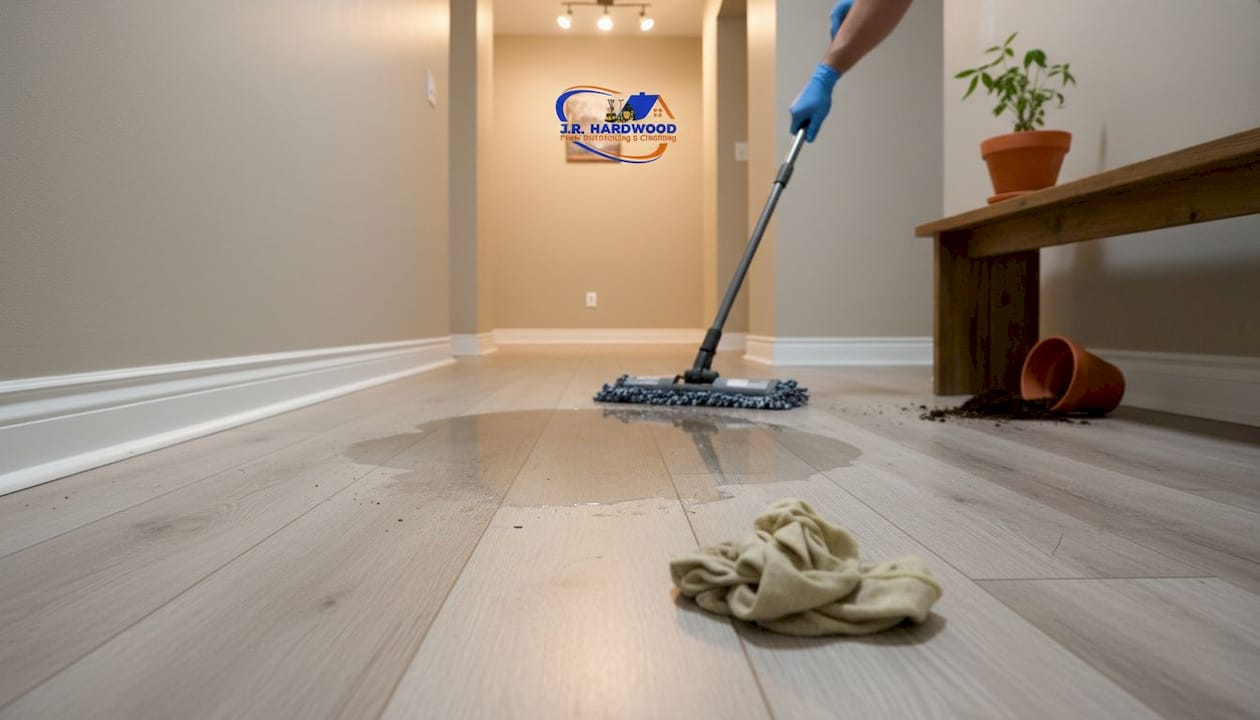
One major mistake is soaking the floor with too much water. Laminate planks have a wood core that swells when wet, causing warping and buckling. Always wring your mop until it’s barely damp. If you accidentally spill water, wipe it up immediately with a dry cloth.
Abrasive cleaners and tools create another problem. Steel wool, harsh scrub pads, and cleaners with grit scratch the protective layer, leaving permanent marks. Stick with soft microfiber materials and gentle, pH-neutral cleaners. Even some “all-purpose” cleaners contain ammonia or bleach that clouds laminate, so read labels carefully.
Steam mops seem convenient but pose serious risks. The high heat and moisture combination can loosen adhesive, warp planks, and damage the finish. Skip steam cleaning entirely for laminate floors.
Common cleaning mistakes to avoid
- Using too much water or soaking the floor
- Applying wax or oil-based products that leave residue
- Scrubbing with abrasive pads or stiff brushes
- Letting spills sit without immediate cleanup
- Using steam mops or excessive heat
When you notice dull spots or streaky residue, troubleshooting is straightforward. Dullness often comes from cleaner buildup. Fix this by mopping with plain warm water to rinse away residue, then dry thoroughly. Streaks usually mean you’re using too much cleaner or not drying fast enough. Reduce the amount of product in your solution and dry each section immediately after mopping.
Sticky spots indicate leftover cleaner or spilled substances. Spray a small amount of diluted vinegar directly on the sticky area, wait 30 seconds, then wipe clean with a damp cloth followed by a dry one. For scuff marks from shoes, try rubbing gently with a pencil eraser or a cloth dampened with your cleaning solution.
“Protecting your laminate floors means choosing the right products and methods every time. Small preventive steps today save you from expensive repairs tomorrow.”
Slippery floors after cleaning signal too much water or cleaner residue. Always dry floors completely and reduce the amount of solution you use. If floors remain slippery, mop again with plain water to remove excess cleaner, then dry thoroughly.
For persistent issues or concerns about your floor’s condition, following hardwood maintenance best practices provides additional guidance that applies to laminate care. These strategies help you maintain beautiful floors without guesswork.
Maintaining and verifying clean floors for long-term beauty
Once your floors are clean, ongoing maintenance keeps them looking new and extends their lifespan. A simple routine prevents dirt buildup and catches problems before they become serious. Regular maintenance and inspection help in early detection of floor damage and extending floor life.
Establish a cleaning schedule based on your household’s activity level. High-traffic homes need more frequent attention than quieter spaces. Daily tasks take just minutes but make a huge difference in appearance and longevity.
Maintenance schedule comparison
| Frequency | Tasks | Time required |
|---|---|---|
| Daily | Sweep or vacuum high-traffic areas; wipe up spills immediately | 5-10 minutes |
| Weekly | Damp mop entire floor with eco-friendly cleaner; spot clean as needed | 20-30 minutes |
| Monthly | Inspect for damage, check seams, deep clean under furniture | 45-60 minutes |
Spot cleaning deserves special attention because quick action prevents stains and damage. Keep a spray bottle of diluted cleaner and a microfiber cloth handy. When spills happen, blot them immediately rather than rubbing, which can spread the mess or push liquid into seams.
Protective measures reduce cleaning frequency and prevent damage. Place mats at exterior doors to catch dirt before it reaches your floors. Use felt pads under furniture legs to prevent scratches when moving chairs or tables. In sunny rooms, consider window treatments that reduce UV exposure, which can fade laminate over time.
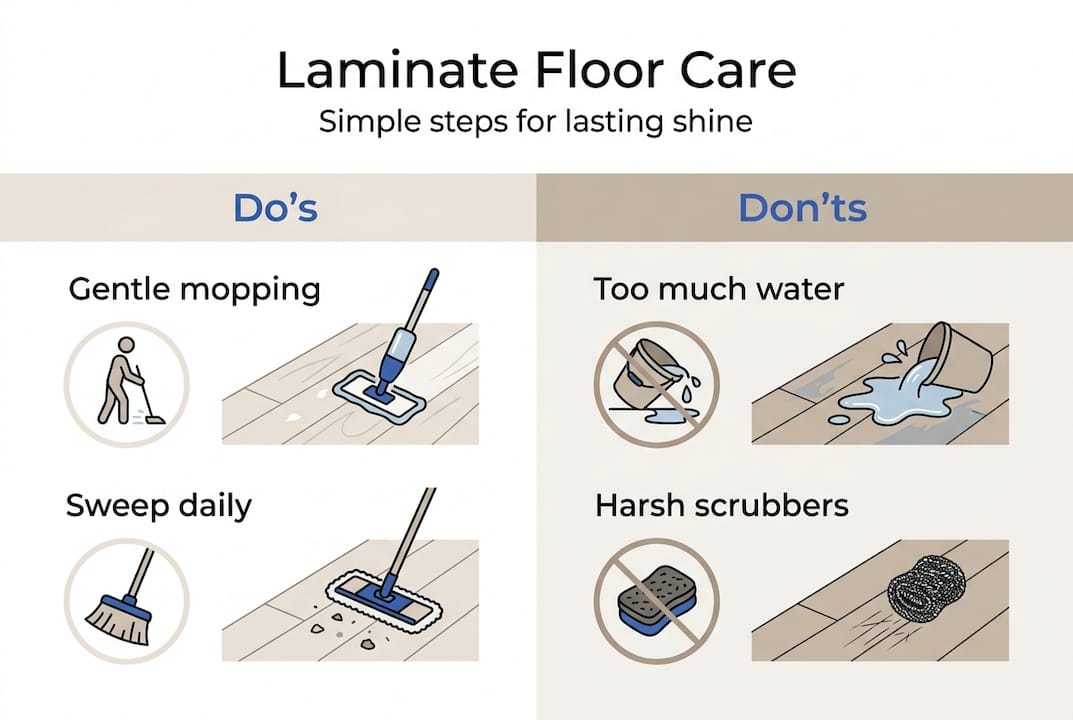
Verifying cleanliness means checking your work and ensuring no damage occurred. After cleaning, inspect the floor in good lighting. Look for streaks, missed spots, or any areas where water might have pooled. Run your hand across the surface to feel for sticky residue or rough patches.
Maintenance do’s and don’ts
- Do place mats at entryways to trap dirt and moisture
- Do use furniture pads to prevent scratches
- Do address spills within minutes of occurrence
- Don’t drag heavy furniture across floors
- Don’t use abrasive tools or harsh chemicals
- Don’t allow standing water on the surface
Check seams and edges monthly for signs of lifting or moisture damage. Catching these issues early allows for simple repairs before they spread. If you notice any planks lifting or gaps widening, address them promptly to prevent further problems.
For comprehensive floor care strategies, review these floor cleaning best practices that complement your routine. If you’re considering an upgrade, explore scratch resistant laminate flooring options that make maintenance even easier.
Protect and enhance your floors with professional services
While regular cleaning keeps your laminate floors looking great, professional services take care to the next level. Specialized refinishing and deep cleaning remove years of buildup and restore the original luster that home methods can’t always achieve. Professional teams use commercial-grade eco-friendly products and equipment designed specifically for laminate surfaces.

Expert floor care catches problems you might miss during routine cleaning. Professionals assess seam integrity, identify early signs of moisture damage, and apply protective treatments that extend floor life. When your floors need more than cleaning, services like screen and recoat or full refinishing bring back that showroom shine.
Combining your DIY maintenance with periodic professional attention creates the best long-term strategy. You handle daily and weekly care while experts tackle deep restoration and protection. This approach saves money compared to premature floor replacement while keeping your home looking its best. Learn more about hardwood floor refinishing services and explore this hardwood floor refinishing guide for detailed information. For comprehensive floor refinishing and cleaning services, reach out to discuss your specific needs.
Frequently asked questions
How often should I clean laminate floors to keep them looking new?
Dry clean high-traffic areas daily by sweeping or vacuuming with a soft brush attachment. Damp mop the entire floor weekly using an eco-friendly cleaner diluted properly. Spot clean spills immediately to prevent staining or moisture damage.
Can I use vinegar to clean laminate floors safely?
Yes, diluted white vinegar works safely and effectively on most laminate floors when mixed at one cup per gallon of warm water. Always use a damp, not wet, mop and avoid vinegar if your manufacturer specifically warns against acidic cleaners. Test in a hidden spot first.
What should I avoid when cleaning my laminate floors?
Avoid abrasive cleaners, steel wool, and stiff brushes that scratch the protective layer. Never use excessive water, steam mops, or wax products on laminate surfaces. Skip oil-based cleaners and harsh chemicals like ammonia or bleach that can dull or damage the finish.