 Skip to content
Many American homeowners in the Denver Metro Area are searching for safe ways to refresh their hardwood floors without harming the planet or their pets. Studies show that eco-friendly restoration methods can extend floor life by up to 30 years while reducing exposure to harsh chemicals. Investing in green solutions preserves the natural look and durability of your home’s hardwood, provides peace of mind for pet owners, and supports a healthier environment for everyone indoors.
Table of Contents
- Defining Floor Restoration And Common Misconceptions
- Types Of Floor Restoration Services Available
- How Floor Restoration Processes Work
- Benefits Of Eco-Friendly Restoration Methods
- Cost, Lifespan, And Key Avoidable Mistakes
Key Takeaways
| Point | Details |
|---|---|
| Understanding Floor Restoration | Floor restoration is a multi-step process that repairs and protects hardwood floors, requiring specialized knowledge for effective results. |
| Common Misconceptions | Many homeowners mistakenly believe that generic cleaning products can substitute for professional restoration, which can lead to damage and increased maintenance issues. |
| Types of Services Available | Restoration services vary from simple touch-ups to extensive repairs, with techniques tailored to the floor’s unique condition and damage level. |
| Eco-Friendly Approaches | Eco-friendly restoration methods prioritize health and sustainability, using low-VOC and neutral pH products to minimize environmental impact. |
Defining Floor Restoration and Common Misconceptions
Floor restoration is a comprehensive process of repairing, refinishing, and protecting hardwood floors to extend their lifespan and aesthetic appeal. Unlike simple cleaning, restoration involves addressing structural damage, removing worn finishes, and applying protective treatments that revive the floor’s original beauty.
Many homeowners mistakenly believe floor restoration is a one-size-fits-all solution, but professionals understand each floor requires a unique approach. Manufacturer specifications can vary significantly, and improper techniques might cause more harm than good. Different wood types, ages, and previous treatments demand specialized knowledge to restore effectively.
Common misconceptions about floor restoration include believing that generic cleaning products can replace professional refinishing. Industry experts warn against using so-called ‘finish revitalizers’ that often contain harmful oils and silicones. These products can actually contaminate floors and prevent future professional refinishing, creating long-term maintenance challenges.
Restoration involves multiple strategic steps: thorough inspection, surface preparation, repair of damaged areas, sanding, staining (if desired), and applying protective sealants. Each stage requires precision and understanding of wood’s unique characteristics. Professional floor restorers use specialized tools and eco-friendly products to ensure optimal results.
Pro Tip: Wood Floor Detective: Always request a detailed assessment of your specific floor type and condition before beginning any restoration project to avoid potential costly mistakes.
Types of Floor Restoration Services Available
Floor restoration services encompass a wide range of specialized techniques designed to address different levels of wood floor damage and aging. Professionals offer comprehensive solutions tailored to each floor’s unique condition, ranging from minor touch-ups to complete structural rehabilitation.
The most common floor restoration services include screen and recoat, which involves lightly sanding the existing finish and applying a new protective layer. This method works well for floors with minimal wear. More extensive full sanding and refinishing becomes necessary when floors have deep scratches, significant discoloration, or substantial surface damage. Certified installers can assess and correct underlying moisture and substrate issues that might compromise the restoration process.
For homes experiencing water damage or environmental challenges, comprehensive restoration goes beyond surface treatments. Professionals provide specialized services including water extraction, mold removal, subfloor repair, and complete refinishing. These advanced techniques ensure not just aesthetic renewal but also structural integrity and long-term floor health.
Additional restoration services include UV-curable finishing for rapid treatment, wax removal, deep cleaning, and color restoration. Some specialized services address pet damage, high-traffic area wear, and historical floor preservation. Each technique requires specific tools, expertise, and understanding of wood’s unique characteristics.
Here’s a comparison of common floor restoration methods and their typical applications:
| Method | Best For | Expected Durability | Typical Cost (per sq ft) |
|---|---|---|---|
| Screen and Recoat | Light wear, minor scratches | 3-5 years | $3-$4 |
| Full Sanding & Refinishing | Deep scratches, discoloration | 10-20 years | $6-$8 |
| UV-Curable Finishing | Quick turnaround, commercial spaces | 5-7 years | $5-$7 |
| Water Damage Restoration | Severe water/mold issues | Varies by damage | $7+ |
Pro Tip: Floor Restoration Detective: Always request a comprehensive assessment that includes substrate evaluation and moisture testing before beginning any restoration project to prevent potential long-term damage.
How Floor Restoration Processes Work
Floor restoration is a meticulous, multi-step process that transforms worn and damaged hardwood surfaces into pristine, like-new conditions. The journey begins with a comprehensive initial assessment, where professionals carefully evaluate the floor’s current condition, identifying specific damage types, wood species, and underlying structural issues.
Proper maintenance routines form the foundation of effective floor restoration, starting with thorough cleaning and preparation. Professionals use specialized techniques to remove old finishes, dirt, and grime, creating a clean surface ready for restoration. The sanding process is critical, involving progressively finer abrasives to smooth out scratches, level uneven areas, and prepare the wood for new finishes.
Once the surface is prepared, professionals select and apply specialized finishes like polyurethanes and protective sealants that not only enhance the wood’s appearance but also provide long-term protection. These finishes shield the floor from moisture, UV damage, and daily wear, ensuring the restored surface maintains its beauty and durability. Advanced techniques like UV-curable finishing offer rapid treatment and superior protection, minimizing downtime for residential and commercial spaces.
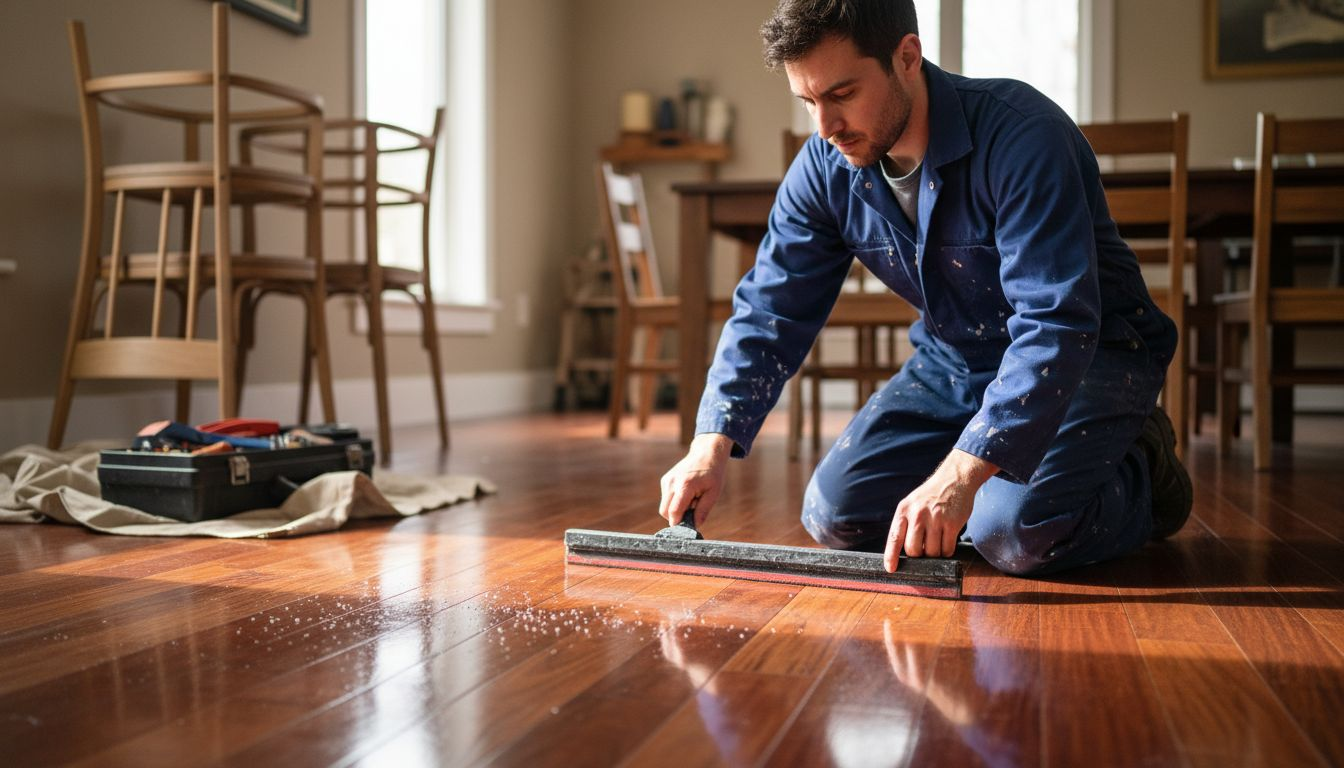
The final stages of restoration involve detailed quality checks, buffing, and final protective treatments. Professionals use precision tools to ensure even coating, smooth surfaces, and optimal finish adhesion. This comprehensive approach addresses not just surface appearance, but the underlying health and longevity of the hardwood floor.
Pro Tip: Floor Forensics: Always request a detailed moisture and substrate evaluation before restoration to prevent future issues and ensure the most effective, long-lasting treatment.
Benefits of Eco-Friendly Restoration Methods
Eco-friendly floor restoration represents a revolutionary approach to preserving hardwood surfaces while minimizing environmental impact and protecting indoor air quality. Green restoration techniques prioritize sustainable practices that not only revive floors but also support healthier living spaces and reduce ecological footprints.
Strategic protective measures can significantly reduce the need for harsh chemical treatments, making eco-friendly restoration more than just a trend. By implementing preventative strategies like using doormats, placing protective pads under furniture, and maintaining consistent cleaning routines, homeowners can naturally extend floor life while avoiding aggressive chemical interventions.
Professional eco-friendly restoration methods utilize specialized neutral pH cleaning solutions that effectively clean and protect surfaces without causing long-term damage. These advanced solutions prevent residue buildup, maintain the floor’s natural integrity, and reduce potential environmental contamination. Water-based finishes, low-VOC sealants, and sustainable wood restoration products represent cutting-edge approaches that deliver exceptional results while supporting environmental responsibility.
Beyond immediate floor preservation, eco-friendly restoration techniques contribute to broader environmental conservation efforts. By minimizing chemical usage, reducing waste, and selecting sustainable materials, homeowners make meaningful contributions to reducing their carbon footprint. These methods also create healthier indoor environments by eliminating toxic emissions and supporting natural wood preservation.
Key eco-friendly features and their benefits in floor restoration:
| Eco-Friendly Feature | Benefit | Environmental Impact |
|---|---|---|
| Water-based finishes | Low fumes, safer indoors | Lower VOC emissions |
| Neutral pH cleaners | Protects wood and air quality | Minimizes chemical runoff |
| Sustainable wood products | Supports responsible forestry | Reduces resource depletion |
| Low-VOC sealants | Maintains indoor air health | Promotes healthier environments |
Pro Tip: Green Guardian: Rotate area rugs and furniture periodically to ensure even wear and minimize the need for extensive restoration treatments.
Cost, Lifespan, and Key Avoidable Mistakes
Floor restoration represents a strategic investment that balances initial costs with long-term value preservation. Homeowners can expect restoration expenses ranging from $3 to $8 per square foot, depending on the floor’s condition, wood type, and required restoration techniques. Professional restoration typically extends a hardwood floor’s lifespan by 20-30 years, making it a financially prudent alternative to complete floor replacement.
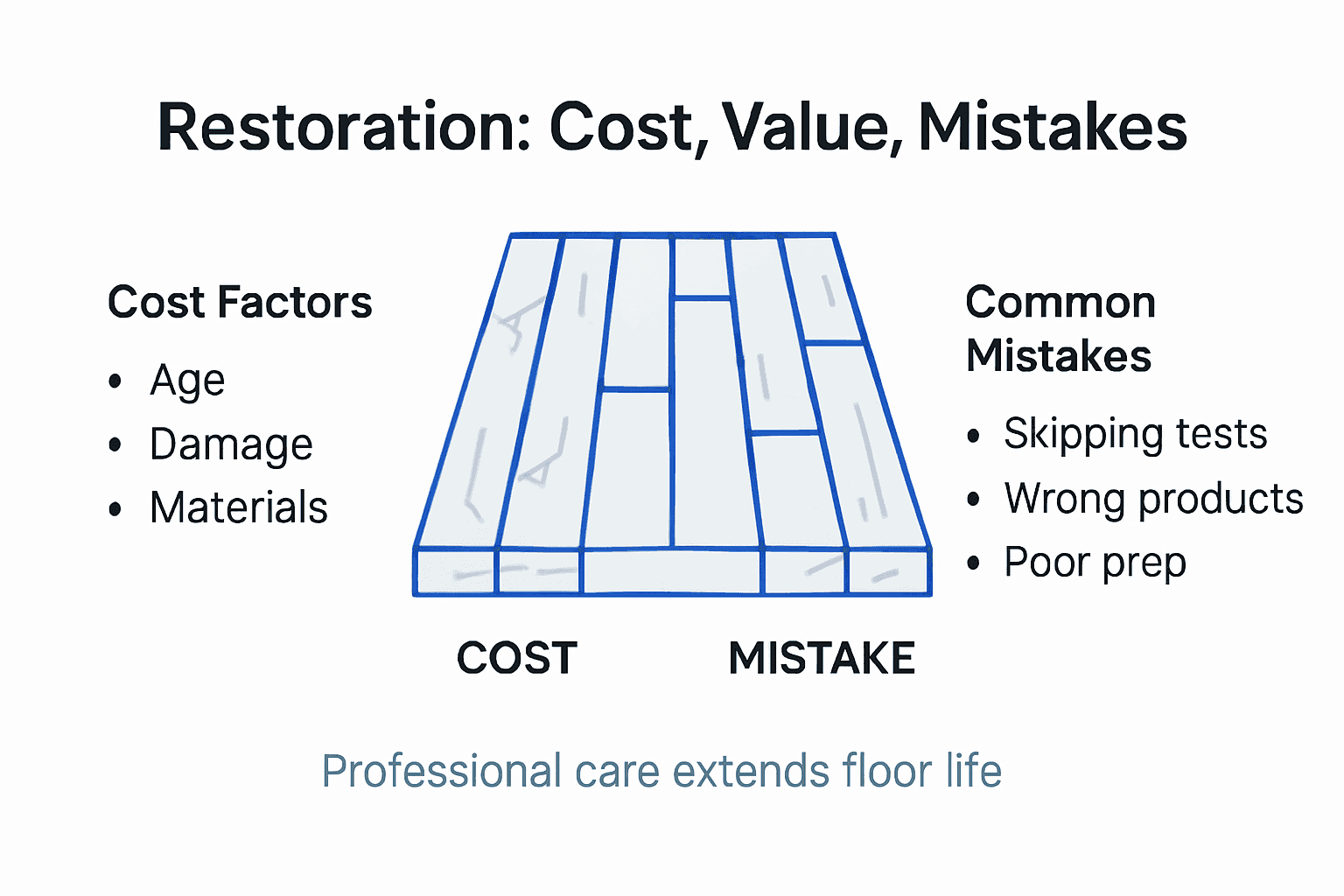
Neglecting crucial moisture and pH testing can lead to catastrophic and expensive flooring failures, transforming a manageable restoration project into a costly nightmare. Potential issues include adhesive breakdown, wood warping, mold growth, and structural damage that can dramatically increase repair costs. Professional assessments help identify and mitigate these risks before they escalate, protecting both the floor’s integrity and the homeowner’s financial investment.
Avoiding inappropriate cleaning products is critical to maintaining floor quality and preventing long-term damage. Products containing oils, silicones, or waxes can contaminate wood surfaces, preventing future refinishing and compromising the floor’s appearance. Common mistakes include using generic household cleaners, applying incorrect finishing techniques, and neglecting regular maintenance. These errors can void warranties, reduce floor longevity, and necessitate more expensive restoration procedures.
Cost considerations extend beyond immediate restoration expenses. Factors like wood species, floor age, damage extent, and chosen restoration method significantly impact overall pricing. Homeowners should obtain multiple professional assessments, compare detailed quotes, and understand the comprehensive scope of proposed restoration work. Some restoration techniques offer more cost-effective solutions, such as screening and recoating, which can be significantly less expensive than full sanding and refinishing.
Pro Tip: Budget Preservation Strategist: Always request a comprehensive written estimate that breaks down specific restoration steps, materials, and potential additional costs to avoid unexpected financial surprises.
Protect and Revive Your Floors with Expert Restoration Solutions
If you are concerned about protecting and restoring your hardwood floors from wear, scratches, or water damage this article highlights exactly why professional floor restoration is essential. The challenges of moisture damage, improper cleaning, and costly mistakes can put your flooring at risk. With terms like screen and recoat, full sanding and refinishing, and eco-friendly protective sealants, it is clear that specialized knowledge and tailored care are vital to extend the life and beauty of your floors.
At J.R. Hardwood Floor Refinishing & Cleaning, we understand the emotional value and investment behind your wood floors. Our comprehensive services cover everything the article mentions from detailed floor assessments to expert restoration steps that prevent future damage. Using premium, eco-friendly products and proven techniques, we remove dirt, wear, and scratches while delivering lasting protection. Serving Colorado communities including Denver, Boulder, and Castle Rock, we combine craftsmanship with clear communication to transform your floors. Learn more in our Uncategorized Archives where we share insights related to hardwood care.
Don’t wait until minor floor issues become costly problems. Visit J.R. Hardwood Floor Refinishing & Cleaning to get your free personalized quote and expert guidance today. Experience reliable restoration services that effectively protect and revive your floors with unbeatable quality and care.
Frequently Asked Questions
What is floor restoration?
Floor restoration is a comprehensive process that involves repairing, refinishing, and protecting hardwood floors to enhance their lifespan and restore their aesthetic appeal. It goes beyond cleaning by addressing structural damage and applying protective treatments.
How can I tell if my hardwood floors need restoration?
Signs that your hardwood floors need restoration include deep scratches, discoloration, structural damage, or worn finishes. An inspection by a professional can help assess the extent of damage and the best restoration method needed.
What are the common techniques used in floor restoration?
Common techniques in floor restoration include screen and recoat, full sanding and refinishing, and specialized services for water damage. Each technique is tailored to the specific condition and needs of the floor.
How often should hardwood floors be restored?
Hardwood floors typically benefit from restoration every 5 to 10 years, depending on wear and tear. Regular maintenance and cleaning can extend this period, but it is essential to evaluate the floor’s condition regularly for the best results.