 Skip to content
TL;DR:
- Floor care varies significantly between residential and commercial spaces due to differences in foot traffic and usage. Commercial floors require heavy-duty equipment, frequent protective coatings, and professional maintenance to withstand constant wear and ensure safety. Colorado homeowners should focus on climate-specific prevention, while professionals recommend regular assessments and tailored strategies for long-lasting, attractive floors.
Most people assume floor care is pretty straightforward. Sweep it, mop it, done. But the truth is, floor maintenance is not one-size-fits-all, and treating a busy retail space the same way you treat your living room is a recipe for worn-out floors and wasted money. Whether you own a Denver-area home or manage a commercial property in Colorado Springs, the approach you take to floor care has a massive impact on how long your floors last and how good they look. In this guide, we break down the real differences between residential and commercial floor maintenance so you can make smarter decisions for your space.
Table of Contents
- Key differences between residential and commercial floor maintenance
- Residential floor care: Best practices for Colorado homes
- Commercial floor maintenance: Solutions for high-traffic spaces
- How to choose the right maintenance strategy for your space
- Why most people misjudge their floor maintenance needs (and how to get it right)
- Professional floor maintenance: The Colorado advantage
- Frequently asked questions
Key Takeaways
| Point | Details |
|---|---|
| Different needs for homes and businesses | Residential and commercial floors require tailored strategies due to distinct traffic and usage patterns. |
| Professional care extends floor life | Investing in proven equipment and protective treatments can dramatically boost durability and appearance. |
| Schedule and equipment matter | Commercial spaces need frequent care with advanced tools, while homeowners benefit from regular, gentle cleaning. |
| Colorado climate impacts floors | Local weather calls for specific cleaning routines to counteract dryness and dust. |
Key differences between residential and commercial floor maintenance
Now that we’ve set the context, let’s break down the main differences between floor maintenance in homes and businesses.
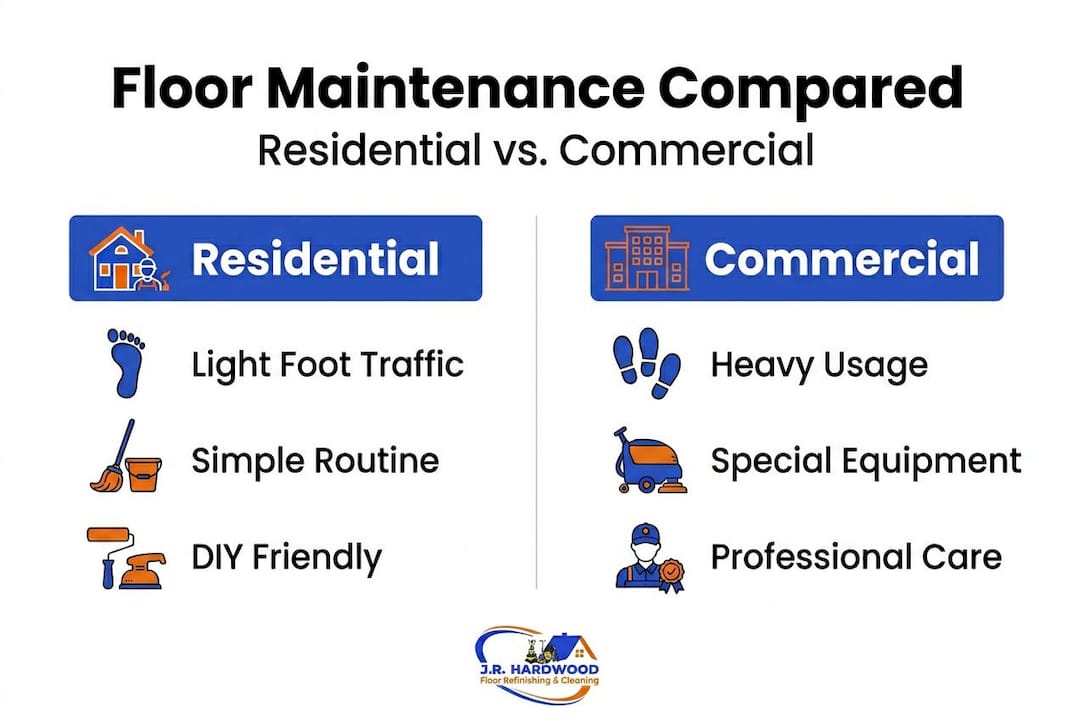
Think of it this way: a residential floor is like a country road, and a commercial floor is like an interstate highway. Both need care, but the volume, intensity, and wear they experience are completely different. Commercial floor maintenance involves heavier foot traffic, larger areas, and requires professional equipment like auto scrubbers, machine scrubbing, polishing, and protective coatings, while residential care typically relies on simpler household methods like vacuuming and occasional mopping.
Here is a quick comparison to make those differences crystal clear:
| Factor | Residential | Commercial |
|---|---|---|
| Daily foot traffic | Low to moderate | High to very high |
| Cleaning frequency | Weekly or biweekly | Daily or multiple times per day |
| Equipment used | Mop, broom, vacuum | Auto scrubbers, buffers, polishers |
| Protective coatings | Occasional | Frequent and specialized |
| Professional service need | Periodic | Regular and scheduled |
| Main risk | Surface scratches, dullness | Safety hazards, heavy wear, liability |
The differences go beyond just how often you clean. Commercial settings demand finishes that can hold up against constant pressure. Retail stores, restaurants, gyms, and office buildings see hundreds or even thousands of steps per day. A finish that works beautifully in your living room would break down fast under that kind of load.
Following floor care best practices at home is genuinely effective for keeping residential floors in great shape. But the moment you step into a commercial context, you are dealing with a different game entirely. The professional cleaning benefits in commercial settings include extending the usable life of the floor, reducing slip hazards, and maintaining a polished appearance that reflects well on your brand.
Key takeaway: Residential and commercial floor care share the same goal, which is protecting your floor, but the tools, frequency, and finishes required are worlds apart.
Here are the core differences at a glance:
- Traffic volume: Commercial spaces handle far more foot traffic, requiring tougher protective layers
- Cleaning equipment: Commercial maintenance uses industrial-grade machines that most homeowners never need
- Protective coatings: Commercial floors need more frequent recoating to handle constant wear
- Schedule: Commercial properties often require daily attention, while residential floors can follow a looser routine
- Liability: Damaged or slippery commercial floors create safety risks and legal exposure that homeowners typically don’t face
Residential floor care: Best practices for Colorado homes
Let’s look at how Colorado homeowners can protect and beautify their floors with everyday care.
Living in Colorado comes with some unique floor care challenges. The dry air, high altitude, and swings between snowy winters and dusty summers mean your floors take a beating that homeowners in more moderate climates don’t always deal with. Residential methods like vacuuming and occasional mopping are common, but they need adjustment for climate and use to truly protect your floors here.
Here is a recommended routine for Colorado homes:
- Dust or vacuum hardwood floors every 2 to 3 days. Colorado’s dry air kicks up fine particles that settle on floors quickly. Regular dry cleaning prevents micro-scratches from grit.
- Damp mop hardwood once a week. Use a barely damp mop with a pH-neutral cleaner. Excess water on wood causes swelling and warping, which Colorado’s dry conditions make even worse.
- Sweep or vacuum tile and laminate floors twice a week. These surfaces trap grit along grout lines and seams, which wears down the surface over time.
- Vacuum carpet every 3 to 5 days. Colorado dust and pet dander accumulate faster than most people expect, especially in dry winter months.
- Schedule a professional deep clean every 6 to 12 months. Following hardwood cleaning best practices with a professional visit gives your floors a reset that everyday cleaning simply cannot deliver.
Colorado-specific tips for homeowners:
- Place high-quality entry mats at every door. Tracked-in sand, gravel, and road salt from Colorado winters are some of the worst enemies of hardwood finishes.
- Use a humidifier in winter. Colorado’s indoor humidity can drop to dangerous lows, causing wood floors to shrink and crack. Keeping humidity between 35% and 55% is ideal.
- Avoid harsh cleaners. Many commercial-strength cleaners strip residential finishes. Stick to products designed for your floor type.
- Protect legs on furniture. Felt pads under chairs and tables prevent scratches that no amount of mopping can fix.
Pro Tip: The easiest way to extend the life of your hardwood floors in Colorado is prevention, not reaction. A doormat, felt pads, and a humidifier cost almost nothing compared to a full refinish. Learn more about extending hardwood lifespan with smart daily habits.
Commercial floor maintenance: Solutions for high-traffic spaces
For property managers, commercial floors are a business asset and a liability. Here’s how to manage them efficiently.
If you manage a commercial property, you already know that floors are one of the first things customers and clients notice. Scuffed, dull, or dirty floors create an immediate impression that is hard to shake. Commercial maintenance calls for professional equipment, protective coatings, and regular polishing due to heavy use and liability concerns.
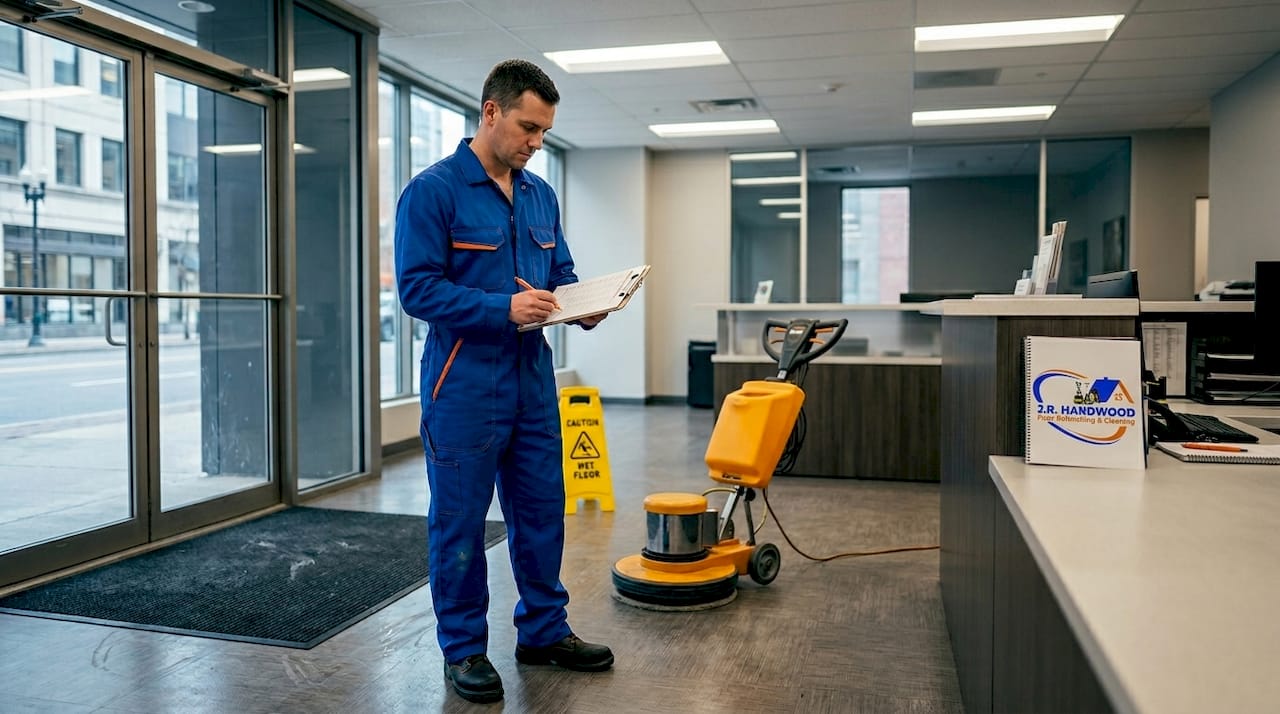
Here is a breakdown of what commercial floor maintenance typically looks like across different surface types:
| Floor type | Daily task | Weekly task | Monthly/Professional task |
|---|---|---|---|
| Hardwood | Dust mop, sweep | Damp mop with commercial cleaner | Screen and recoat, buff |
| Vinyl/LVP | Sweep, damp mop | Machine scrub | Strip and wax, protective coating |
| Tile and grout | Sweep, spot mop | Machine scrub | Grout sealing, deep clean |
| Polished concrete | Dust mop | Auto scrubber | Repolish, densifier treatment |
| Carpet | Vacuum, spot treat | Hot water extraction | Deep extraction clean |
A few things stand out here. First, the daily and weekly tasks for commercial floors require more labor and better equipment. Auto scrubbers, for example, clean large floor areas in a fraction of the time a mop would take, and they do a far more thorough job. Second, the protective coatings applied in commercial settings are specifically formulated to resist the kind of constant abrasion and moisture that a home floor rarely sees.
Here is a step-by-step approach to commercial floor maintenance planning:
- Assess your traffic zones. Entrances, hallways, and break rooms take more abuse than private offices. Identify high-wear zones and plan more frequent attention there.
- Choose the right finish for your floor type. Not every coating works on every floor. Talk to a professional about what coating system makes sense for your specific surface.
- Set a documented cleaning schedule. This is especially important in regulated environments like healthcare or food service, where floor hygiene is a legal requirement.
- Schedule regular professional maintenance. Periodic professional treatments using an essential floor cleaning checklist approach keep your floors looking sharp and extend their lifespan significantly.
- Train in-house staff on daily procedures. Your cleaning crew should know the difference between a light dust mop and a full wet clean to avoid doing more harm than good.
Pro Tip: Routine professional maintenance is not just a cosmetic investment. Worn or slippery commercial floors are a slip-and-fall liability waiting to happen. Staying on a consistent professional schedule can literally reduce your legal exposure and lower long-term repair costs by catching problems before they grow.
How to choose the right maintenance strategy for your space
With these differences clear, let’s help you build a maintenance plan that fits your property’s demands.
Choosing between residential and commercial-grade solutions often depends on scale, traffic, and expectations for longevity. But making that call does not have to feel overwhelming. Here is a simple framework to guide you.
Step-by-step: Assess your property’s needs
- Count the daily foot traffic. Less than 50 people per day is typically residential territory. More than that starts pushing you toward commercial-grade care.
- Identify your floor type. Hardwood, LVP, tile, laminate, and carpet each have different vulnerability levels and care requirements.
- Define your appearance goals. Is this a home you want to feel warm and lived-in, or a business where floors need to look pristine every single day?
- Evaluate your budget and time. DIY maintenance saves money upfront but requires consistent effort. Professional maintenance costs more short-term but often saves more long-term.
- Decide on in-house versus professional help. Some tasks, like daily sweeping, make perfect sense in-house. Others, like refinishing or applying protective coatings, almost always benefit from professional expertise.
When deciding whether to go DIY vs. professional floor care, consider these factors:
- Cost: DIY saves money upfront but risks damage that costs more to repair later
- Expertise: Professional teams have the tools and experience to do the job right the first time
- Time: Professional service frees you from the effort of researching methods and sourcing equipment
- Results: A professionally refinished or coated floor simply looks better and lasts longer
- Safety: Certain chemical strippers and floor coatings require training and ventilation to use safely
- Consistency: Professional crews deliver predictable results every visit, which matters a lot in commercial settings
The honest answer for most Colorado homeowners is this: handle the weekly routine yourself, but bring in professionals for anything involving sanding, refinishing, or protective coatings. For commercial property managers, a hybrid approach with daily in-house cleaning and monthly or quarterly professional maintenance tends to hit the sweet spot between cost and results.
Why most people misjudge their floor maintenance needs (and how to get it right)
Let’s step back and address a mistake many Colorado property owners make: misjudging what their floors actually need.
We see this pattern regularly. A homeowner with heavy foot traffic from kids, pets, and guests tries to treat their floors like a light-use space, cleaning infrequently until the finish is visibly gone. On the flip side, a small business owner rents an industrial-grade machine and over-aggressively scrubs a floor that just needed a gentle buff and a fresh coat. Both approaches cost more in the long run.
Here is the uncomfortable truth: harder is not always better. Floors do not need to be punished to be clean. They need the right treatment at the right frequency with the right products. Over-cleaning with harsh chemicals strips protective finishes faster than foot traffic does. Under-cleaning allows grit and debris to act like sandpaper under every footstep.
We also see people apply commercial-grade products in their homes thinking they are getting superior results. In reality, those heavy-duty solutions can damage residential finishes that were not designed for that level of chemical intensity. The same is true in reverse: using gentle residential products on a high-traffic commercial floor is like putting a bandage on a broken leg.
The smartest move any property owner can make is to get a professional assessment before committing to a maintenance routine. Following eco-friendly maintenance tips that are calibrated to your specific floor type and usage level delivers better results and protects your investment without unnecessary wear or chemical exposure. A tailored strategy always beats a generic one.
Professional floor maintenance: The Colorado advantage
Beautiful, long-lasting floors do not happen by accident. They are the result of consistent care and smart decisions about when to call in the pros.
At J.R. Hardwood Floor Refinishing & Cleaning, we work with Colorado homeowners and commercial property managers across Denver, Parker, Castle Rock, Boulder, and Colorado Springs to create floor care plans that actually fit their spaces. Whether you want to understand the difference between DIY and professional floor care or are ready to explore options with our hardwood floor refinishing guide, we are here to help. Our team offers free over-the-phone quotes and expert guidance tailored to your floor’s condition. Reach out to the Colorado floor maintenance experts at J.R. Hardwood today and let us help your floors look their absolute best.
Frequently asked questions
What is the main difference between residential and commercial floor maintenance?
Commercial floor maintenance uses specialized equipment and coatings for heavy use, while residential maintenance focuses on basic cleaning with less frequent professional treatments.
How often should commercial floors be cleaned in high-traffic areas?
High-traffic commercial floors benefit from daily cleaning and periodic professional treatments to maintain safety, appearance, and durability.
Do Colorado homes require special floor care because of the climate?
Yes, Colorado’s dry climate and airborne dust mean floors need more frequent dusting and humidity control to prevent cracking, shrinking, and surface wear.
Can residential floor cleaning products be used in commercial spaces?
Most residential products are not formulated for the demands of commercial environments, which require professional-grade solutions with stronger protective and cleaning properties.
Is professional floor maintenance really worth it for small businesses?
Absolutely. Routine professional maintenance enhances durability, reduces slip-and-fall liability, and keeps your space looking polished, all of which saves you money on repairs and replacements down the road.