 Skip to content
Busy homes in the Denver Metro Area often deal with scratches, fading, and worn surfaces on hardwood floors, especially when pets and foot traffic are part of daily life. Figuring out whether to refinish or replace makes a big impact on both budget and home value. This guide breaks down the practical differences, highlights refinishing as a less costly option averaging $1,000 to $2,500, and helps you find the smartest solution to keep your floors looking their best.
Table of Contents
- Replace vs Refinish Floors Defined
- Types of Flooring and Their Lifespan
- Signs Your Floors Need Attention
- Cost, Time, and Eco Impact Compared
- Choosing for Pets and Busy Homes
Key Takeaways
| Point | Details |
|---|---|
| Refinishing vs. Replacement | Understand the condition of your hardwood floors to decide between refinishing for minor damage or replacement for severe issues. |
| Lifespan of Flooring Materials | Different flooring types have varying lifespans; prioritize options that best match your usage and maintenance capabilities. |
| Signs of Floor Damage | Regularly inspect your floors for scratches, gaps, and warping to catch maintenance needs early and prevent costly repairs. |
| Cost and Environmental Impact | Refinishing is generally more cost-effective and eco-friendly than replacement, helping to preserve materials while reducing waste. |
Replace vs Refinish Floors Defined
Hardwood floors are a substantial investment for Denver homeowners, and understanding the difference between refinishing and replacing is crucial for maintaining their beauty and value. Refinishing and replacement represent two distinct approaches to floor restoration, each with unique characteristics and considerations.
Refinishing involves renewing the existing hardwood floor’s surface without removing the entire floor. This process typically includes:
- Sanding down the current floor surface to remove scratches, dents, and wear
- Applying new stain or finish to restore the wood’s original appearance
- Addressing minor surface-level damage without structural intervention
- Significantly less expensive than complete floor replacement
Floor replacement, in contrast, requires completely removing the existing floor and installing an entirely new hardwood surface. This method becomes necessary when hardwood floors exhibit extensive damage such as:
- Deep structural warping
- Significant rot or water damage
- Multiple broken or severely compromised planks
- Floors that cannot be effectively restored through traditional refinishing techniques
The primary differences between refinishing and replacing ultimately depend on the floor’s current condition, age, and extent of damage. Professional assessment becomes critical in determining which approach provides the most cost-effective and long-lasting solution for your specific hardwood flooring scenario.
Here’s a quick comparison of when to refinish or replace hardwood floors:
| Scenario | Best Approach | Reason | Impact |
|---|---|---|---|
| Minor scratches or dull finish | Refinish | Addresses surface issues | Restores appearance, saves cost |
| Severe water or rot damage | Replace | Structural floor compromised | Ensures safety, long-term stability |
| Multiple damaged planks | Replace | Local repairs insufficient | Guarantees consistent quality |
| Aging floor with good structure | Refinish | Structure remains intact | Prolongs floor lifespan |
Pro tip: Always consult a professional flooring expert who can conduct an in-depth evaluation of your specific hardwood floor condition before making a final decision.
Types of Flooring and Their Lifespan
Denver homeowners have multiple flooring options, each with unique characteristics and lifespans that impact long-term home maintenance and value. Different flooring materials offer varied durability and performance depending on specific environmental conditions and usage patterns.
Hardwood floors represent a premium flooring choice with significant longevity. Solid hardwood can typically last 30-100 years when properly maintained, with the ability to be refinished multiple times. Key hardwood varieties include:
- Oak
- Maple
- Walnut
- Cherry
- Hickory
Alternative flooring materials provide different lifespan expectations:
- Carpet: 10-15 years with average household use
- Laminate: 15-25 years depending on quality
- Vinyl: 20-30 years for luxury vinyl plank (LVP)
- Tile: 50-100 years with proper installation and maintenance
Factors influencing floor longevity extend beyond material type. Maintenance quality, installation precision, foot traffic, and environmental conditions play crucial roles in determining how long a specific flooring surface will remain functional and aesthetically pleasing.
Here’s how popular flooring materials compare in lifespan and maintenance needs:
| Flooring Type | Typical Lifespan | Maintenance Level | Notable Strengths |
|---|---|---|---|
| Solid Hardwood | 30-100 years | Moderate | Can be refinished repeatedly |
| Carpet | 10-15 years | High | Soft underfoot, easy replacement |
| Laminate | 15-25 years | Low | Scratch resistant, affordable |
| Luxury Vinyl Plank | 20-30 years | Low | Waterproof, pet-friendly |
| Porcelain Tile | 50-100 years | Low | Very durable, easy cleaning |
Professional installation and regular maintenance can dramatically extend the lifespan of any flooring material.
Pro tip: Invest in professional floor assessments every 5-7 years to identify potential wear issues and prevent costly future replacements.
Signs Your Floors Need Attention
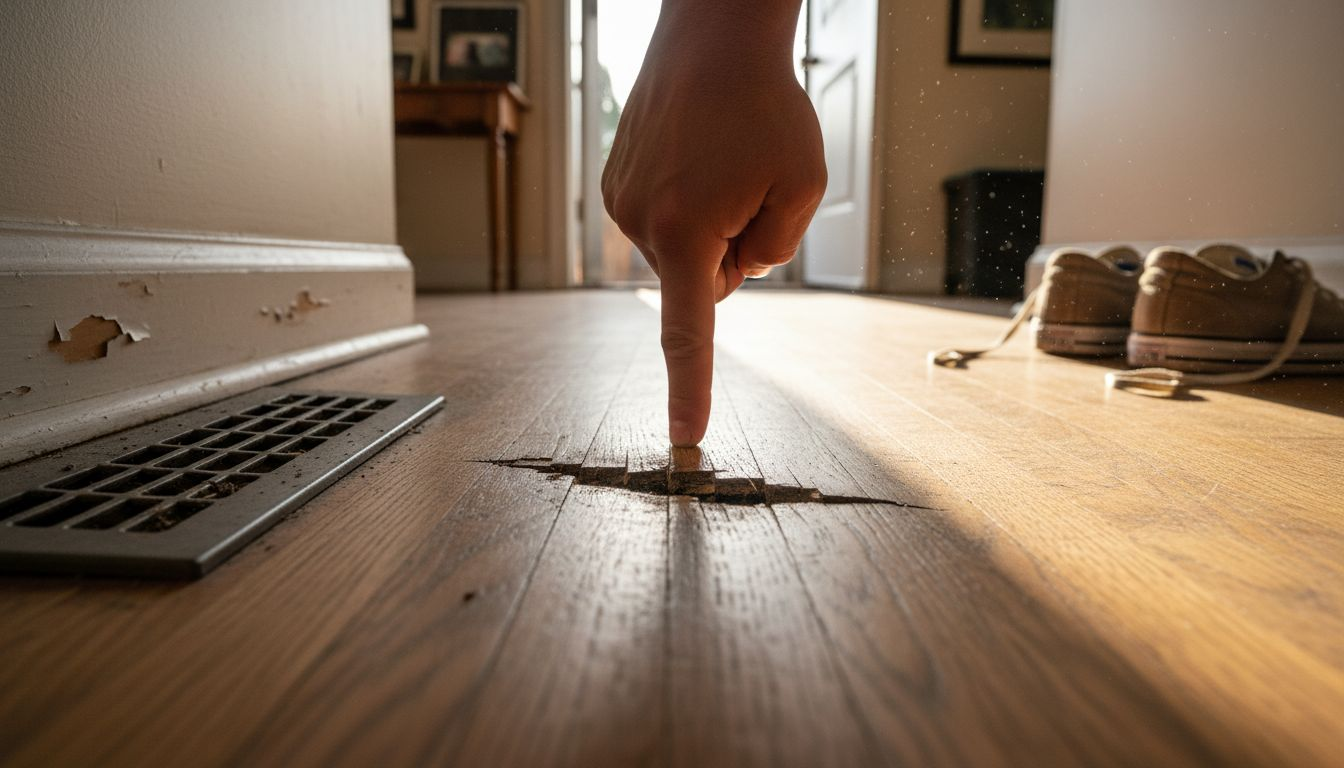
Hardwood floors can silently communicate their need for maintenance through various visible and subtle indicators. Wood floor damage signals require careful observation and timely intervention to prevent extensive deterioration and costly replacements.
Surface Warning Signs that Denver homeowners should watch for include:
- Deep or multiple scratches across floor surface
- Noticeable dullness in finish appearance
- Discoloration or uneven wood tone
- Visible gaps between floorboards
- Soft or spongy feeling when walking
Structural issues demand immediate professional attention, especially when experiencing:
- Significant board warping or buckling
- Persistent moisture damage
- Large cracks or splits in wood planks
- Widespread finish deterioration
Environmental Factors play a crucial role in hardwood floor degradation. Humidity fluctuations, direct sunlight exposure, pet traffic, and improper cleaning techniques can accelerate wear and compromise your floor’s integrity.
Early detection of floor issues can save thousands in potential replacement costs.
Pro tip: Conduct a thorough floor inspection every six months, using natural light to reveal subtle imperfections that might indicate underlying maintenance needs.
Cost, Time, and Eco Impact Compared
Denver homeowners face critical decisions when considering floor restoration, with hardwood floor refinishing costs presenting a compelling alternative to full replacement. Understanding the financial, temporal, and environmental implications helps make an informed choice.
Cost Comparison breaks down the financial investment for each approach:
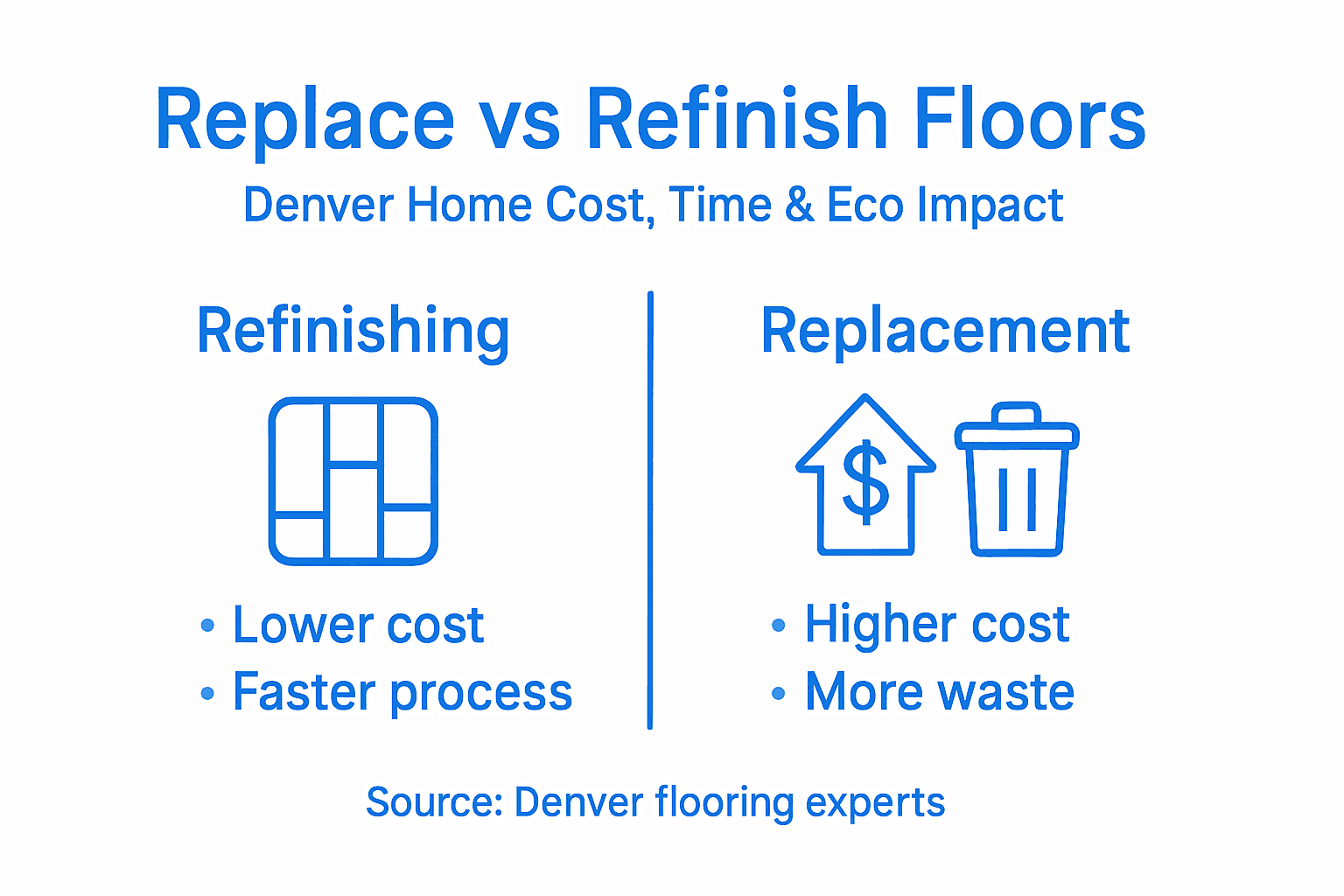
- Refinishing: $3-$8 per square foot
- Replacement: $8-$15 per square foot
- Total project refinishing: $1,000-$2,500
- Total project replacement: $3,500-$7,000
Time investment varies significantly between the two options:
- Refinishing: 2-4 days
- Replacement: 5-7 days
- Preparation time for refinishing: Minimal
- Preparation time for replacement: Extensive
Environmental Considerations reveal refinishing as the more sustainable choice. Preserving existing materials reduces waste, minimizes new resource consumption, and prevents unnecessary landfill contributions. The process requires fewer raw materials and generates substantially less construction debris compared to complete floor replacement.
Refinishing represents a responsible ecological choice that simultaneously preserves your home’s character and reduces environmental impact.
Pro tip: Request detailed written estimates from professionals that break down total costs, including labor, materials, and potential hidden expenses to avoid unexpected financial surprises.
Choosing for Pets and Busy Homes
Denver homeowners with pets and high-traffic areas require strategic flooring solutions that balance durability, aesthetics, and practicality. Flooring choices for active households demand careful consideration of wear resistance and maintenance requirements.
Pet-Friendly Flooring Options that stand up to furry friends and busy families include:
- Luxury Vinyl Plank (LVP)
- Porcelain tile
- Laminate with scratch-resistant coating
- Engineered hardwood with protective finish
- Commercial-grade vinyl
Key Performance Considerations for pet-heavy environments:
- Scratch resistance
- Moisture tolerance
- Easy cleaning capabilities
- Noise reduction
- Comfort underfoot
Surface Durability becomes paramount when managing pet-related challenges. Hardwood floors, while beautiful, can show significant wear from dog nails, muddy paws, and frequent traffic. Alternative materials offer more resilience and easier maintenance, reducing long-term repair costs.
Choose flooring that protects your investment while accommodating your lifestyle’s unique demands.
Pro tip: Consider applying protective area rugs in high-traffic zones to extend your floor’s lifespan and minimize direct wear from pets and daily activity.
Make the Right Choice for Your Denver Home’s Floors Today
Deciding whether to refinish or replace your hardwood floors can feel overwhelming. If your floors show signs like deep scratches or dull finishes but still have solid structure, refinishing saves time and money while restoring natural beauty. For extensive damage such as warping or rot, replacement is vital to protect your home’s safety and value. J.R. Hardwood Floor Refinishing & Cleaning understands these challenges and offers expert guidance tailored to your floors’ exact condition. Explore practical solutions and see real transformations in our Uncategorized Archives to learn how professional care can extend your floors’ life.
Don’t wait until costly repairs become inevitable. Get your free over-the-phone quote today from a trusted local specialist serving Denver and beyond. Experience eco-friendly, premium finishes combined with award-winning craftsmanship that brings your floors back to life. Visit J.R. Hardwood Floor Refinishing & Cleaning now for your personalized expert advice and take the first step toward transforming your floors the smart way.
Frequently Asked Questions
What is the difference between refinishing and replacing hardwood floors?
Refinishing involves sanding and applying a new finish to the existing hardwood floor, while replacement entails completely removing and installing new flooring. Refinishing is suitable for minor surface issues, while replacement is necessary for extensive damage.
When should I consider refinishing my hardwood floors?
You should consider refinishing your hardwood floors if you notice minor scratches, dullness in the finish, or slight discoloration. It’s a cost-effective way to restore the appearance without replacing the entire floor.
What are the signs that my hardwood floors need replacement?
Signs that indicate your hardwood floors may need replacement include severe water or rot damage, deep structural warping, multiple broken planks, and widespread finish deterioration that can’t be remedied through refinishing.
How much does it typically cost to refinish or replace hardwood floors?
Refinishing typically costs $3-$8 per square foot, while replacement costs range from $8-$15 per square foot. The total costs can vary based on project size and condition of the current flooring.