 Skip to content
TL;DR:
- A proper floor care workflow is a structured routine of daily, weekly, and periodic maintenance that protects floors and saves money. Different floor types require specific cleaning methods and regular inspections to prevent damage from moisture, dirt, and wear. Regular documentation and professional assessments are essential to maintain and restore floors effectively over time.
Your floors take a beating every single day. Foot traffic, spills, furniture movement, and seasonal moisture all chip away at what was once a beautiful surface. Without a defined real estate floor care workflow, property managers and homeowners often end up doing too much too late, spending far more on repairs than they would have on prevention. The good news? A consistent, well-planned floor maintenance process protects your investment, keeps your property looking sharp, and saves you real money over time. This guide walks you through exactly how to build and run one that actually works.
Table of Contents
- Key Takeaways
- Your real estate floor care workflow starts here
- Building your floor care plan before you clean anything
- Step-by-step floor care execution
- Monitoring your workflow and fixing what is not working
- What I have learned after years in the field
- Let us help you build a floor care system that lasts
- FAQ
Key Takeaways
| Point | Details |
|---|---|
| Match care to floor type | Wood, vinyl, and tile each need specific products and cleaning frequencies to avoid damage. |
| Document your workflow | Written procedures and inspection logs turn floor care into a repeatable, accountable process. |
| Clean in layers | Daily dry cleaning, weekly wet mopping, and periodic deep treatment protect floors at every level. |
| Monitor for early warning signs | Dullness, stickiness, and moisture warping signal that your workflow needs adjustment before damage worsens. |
| Know when to call a pro | Scratches, worn finish, or recurring stains often need professional refinishing, not more cleaning products. |
Your real estate floor care workflow starts here
Before you mop a single square foot, you need to know what you are working with. Different flooring materials behave differently under stress, moisture, and cleaning products. Treating all floors the same way is one of the most common and costly mistakes property owners make.
Here is a quick comparison of the three most common floor types found in real estate properties:
| Floor Type | Best Cleaning Method | Key Vulnerability | Protective Practice |
|---|---|---|---|
| Hardwood | Dry mop daily, damp mop weekly | Moisture and over-wetting | Annual sealing, humidity control |
| Vinyl (LVP/VCT) | Daily sweep, wet mop with neutral cleaner | Harsh chemicals, heavy abrasion | Scrub-and-recoat every 3 to 6 months |
| Tile & Grout | Regular mopping, grout scrubbing | Grout staining, cracked tiles | Grout sealing, pH-neutral cleaners |
For hardwood specifically, wood floors need daily dry mopping and careful moisture control, with annual sealing in normal-traffic areas and more frequent sealing where foot traffic is heavy. Vinyl composition tile (VCT) found in many commercial real estate spaces follows a more intensive schedule: scrub-and-recoat every 3 to 6 months and a full strip-and-wax cycle every 6 to 12 months in high-traffic zones.
Pro Tip: Place entry mats at all exterior doors. They catch grit and moisture before either reaches your floor surface, and grit is the number one enemy of finished wood and vinyl alike.
Understanding residential vs. commercial floor differences also matters here. A single-family rental and a commercial office suite may share the same floor type but need very different cleaning frequencies and product strengths.
Building your floor care plan before you clean anything
A solid property floor care guide starts with preparation, not products. Skipping this step is like painting a wall without priming it. The work happens, but it does not last.
Tools and products you actually need
You do not need a cabinet full of specialty cleaners. You need the right tools for each floor type and a few reliable products.
- Microfiber dry mop or dust mop (for hardwood and LVP daily cleaning)
- Flat mop with a wringer bucket (for wet mopping tile and vinyl)
- pH-neutral hardwood cleaner (avoid vinegar and anything ammonia-based)
- Scrubbing machine or rotary buffer (for periodic deep cleaning on commercial floors)
- Color-coded mop heads per zone (kitchen, bathroom, main living area) to prevent cross-contamination
Color-coded equipment prevents cross-contamination and keeps cleaning standards consistent across your property, whether you manage one unit or twenty.
Scheduling based on traffic
High-traffic areas like entryways, hallways, and kitchens need daily attention. Lower-traffic bedrooms and formal living spaces can typically go two to three days between dry cleanings. The key is writing this schedule down and sticking to it.
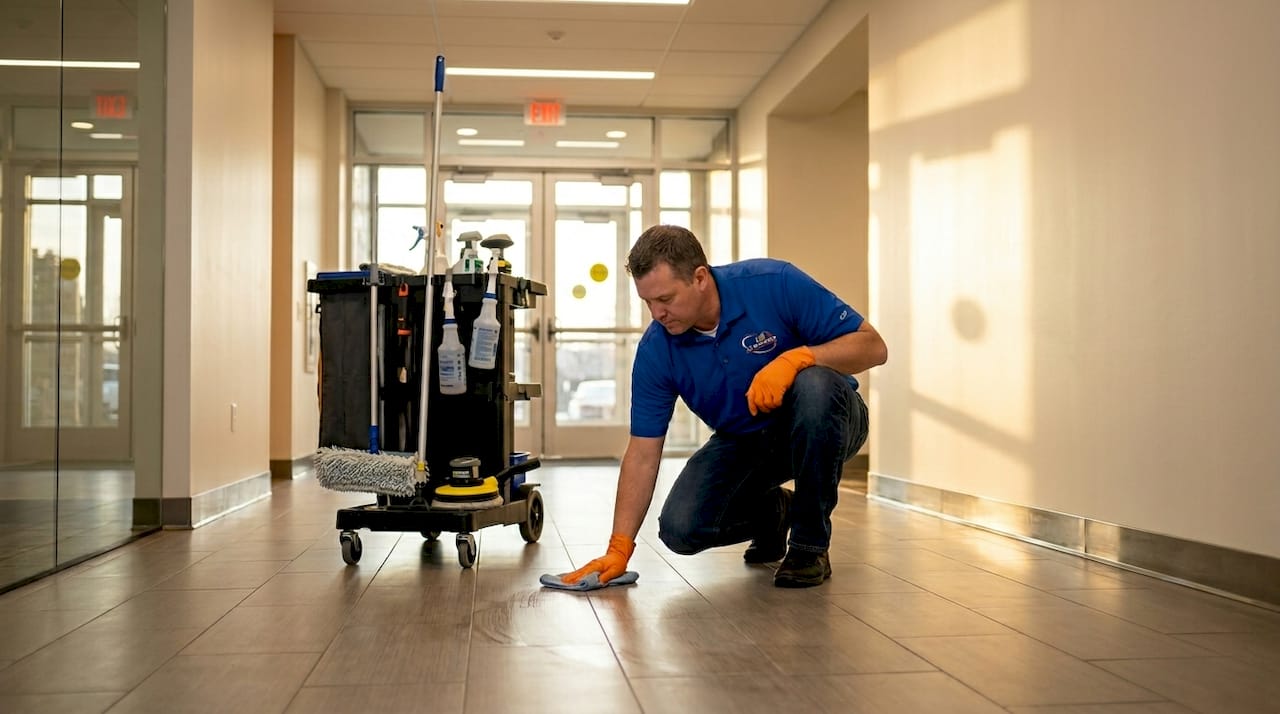
Documented workflows create repeatable, accountable processes that your team or household members can follow consistently. A good real estate maintenance checklist covers daily tasks, weekly tasks, and monthly or quarterly deep-clean triggers. Think of it as a recipe. You would not cook from memory every single time if the dish needed to turn out right.
Pro Tip: Create a simple one-page cleaning log for each property. Note the date, who cleaned, what products were used, and any issues spotted. This becomes your early warning system for floor problems.
Safety is also part of planning. Written procedures and staff training are critical to preventing slip hazards during the cleaning process itself. Block off wet zones with signage, and always sequence your cleaning to allow proper drying time before reopening traffic areas.
Step-by-step floor care execution
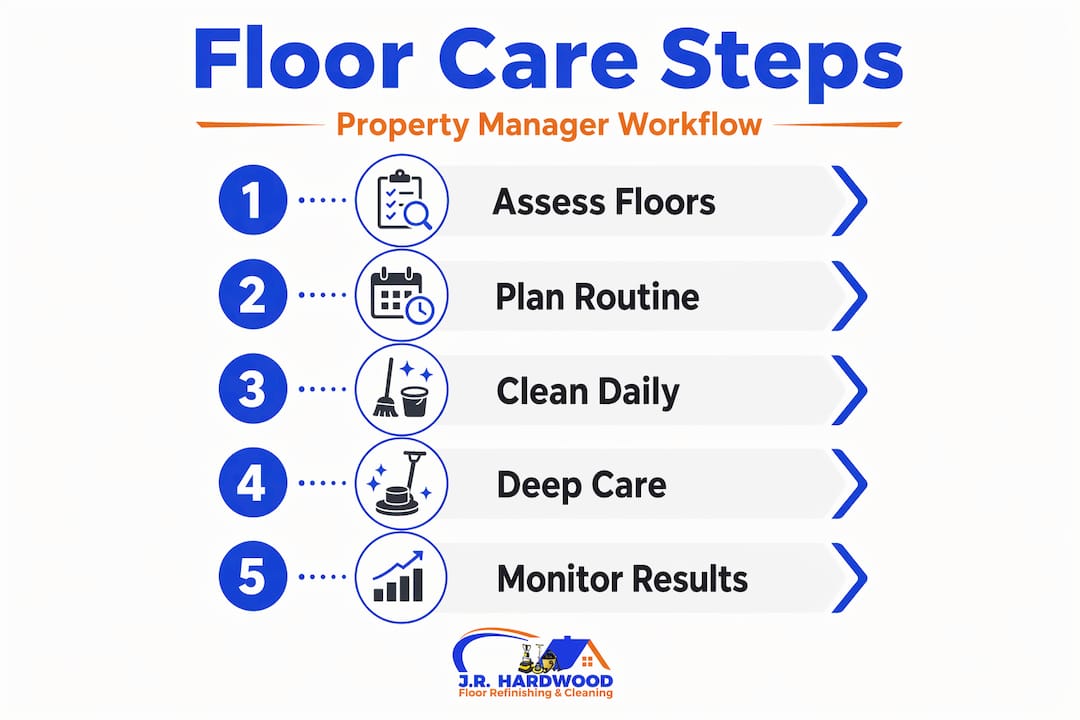
This is where your real estate cleaning routine becomes a physical reality. Think of your floor care workflow in three layers: daily, weekly, and periodic deep care.
Daily routine
- Dry mop or dust mop all hardwood and LVP surfaces using a microfiber pad to capture fine particles.
- Sweep tile floors with a soft-bristle broom, working toward a central point to avoid spreading dust.
- Spot-check high-traffic areas for spills or debris. Address spills immediately with a barely damp cloth.
- Replace entry mats if they are saturated or heavily soiled.
Weekly routine
- Wet mop hardwood with a hardwood-compatible cleaner. Damp mop with minimal moisture and never let standing water sit on wood surfaces.
- Scrub tile grout lines in kitchens and bathrooms using a stiff brush and a pH-neutral cleaner.
- Mop vinyl floors using a neutral cleaner diluted per the manufacturer’s instructions.
- Inspect baseboards and floor edges for moisture buildup or discoloration.
Periodic deep care (monthly to annually)
- Buff and recoat VCT or commercial vinyl every 3 to 6 months depending on traffic.
- Apply a screen-and-recoat treatment to hardwood when the finish begins to look dull but the wood itself is still in good shape. This is like giving your floor a quick spa day rather than a full renovation.
- Strip old wax from vinyl before applying a fresh coat, especially in rental properties between tenants.
- For hardwood with visible scratches and worn finish, professional refinishing cuts wear significantly and restores the surface to near-original condition.
Pro Tip: Managing moisture is the single biggest factor in wood floor health. Track indoor humidity with an inexpensive hygrometer and keep levels between 35% and 55%. Seasonal humidity control prevents the warping and gapping that no amount of cleaning can fix.
For stains, resist the urge to scrub aggressively. Start with a clean damp cloth. If the stain persists, use a manufacturer-approved spot cleaner. Harsh chemicals and abrasive pads are the floor equivalent of scrubbing sunburn. You will do more damage than good.
Monitoring your workflow and fixing what is not working
Even the best-planned floor care routine needs a reality check now and then. Floors tell you what they need if you know how to listen.
Here are the most common warning signs and what they mean:
- Dull or hazy finish on hardwood: The protective coat is wearing thin. Time for a buff and recoat before the wood itself gets exposed.
- Sticky residue after mopping: You are using too much cleaner or not rinsing thoroughly. Residue buildup also attracts more dirt, making the problem worse.
- Slippery surface during or after cleaning: Uncontrolled zone state during cleaning increases slip risk. Review your drying time sequencing and make sure wet zones are properly blocked off before reopening.
- Cupping or warping in wood: Moisture is getting in from below or above. Address the moisture source before any surface treatment.
- Recurring stains in the same spot: Look for a structural issue like a leaky appliance, poor drainage, or pet-related damage that cleaning alone will not solve.
Adjust your workflow every 90 days. Look at your cleaning logs, walk the property with fresh eyes, and ask whether the current frequency and products are matching the actual condition of the floors. Efficiency in floor cleaning is not about doing more. It is about doing the right things at the right intervals.
“The best floor care program is not the most aggressive one. It is the most consistent one, backed by documentation and regular inspection.”
Knowing when to stop cleaning and call a professional is part of a mature commercial floor care strategy. If you are seeing deep scratches, significant finish wear, or boards that are starting to separate, no mop will fix that. A professional assessment gives you a clear picture of what is needed and prevents you from spending money on products that only mask the problem temporarily.
Pro Tip: Schedule a professional floor inspection at the start of each year, or between tenants for rental properties. Catching problems early costs a fraction of what full restoration does.
What I have learned after years in the field
I have walked through hundreds of properties across the Denver Metro Area, and I can tell you that the floors in the worst shape almost never got that way from one big disaster. They got there slowly, through small daily neglect. A missed spill here, a skipped dry mop there, a cleaning product that was cheap but wrong for the floor type.
The homeowners and property managers who have the best-looking floors are not doing anything exotic. They have a written routine. They stick to it. They catch small issues before those issues become expensive ones. What I have found is that most people underestimate how much moisture does to a wood floor over time, and overestimate how much a generic cleaner can do. Vinegar, for example, seems natural and safe. But on hardwood, it slowly dulls and degrades the finish with every use.
I have also seen well-meaning property managers over-clean. Running a wet mop over hardwood every day because the floor looks dirty is one of the fastest ways to destroy it. Over-wetting damages wood as surely as ignoring it does. Balance is everything. A dry mop daily and a damp mop weekly is almost always the right rhythm for residential hardwood. Trust the process, and the floors will take care of themselves for years.
— J.R.
Let us help you build a floor care system that lasts
At Jrhardwoodfloorrefinishingandcleaning, we work with homeowners and property managers throughout the Denver Metro Area to design floor care routines that actually hold up. Whether your hardwood needs a full refinishing assessment or your commercial property floors need a deep clean and recoat, we bring the same craftsmanship and eco-friendly approach to every job. We offer free over-the-phone quotes based on your floor’s condition and photos, so there is no guesswork and no surprise costs. If your floors are telling you they need more than a mop, we are ready to help. Explore our floor restoration options or give us a call to get started.
FAQ
What is a real estate floor care workflow?
A real estate floor care workflow is a structured, documented routine covering daily cleaning, weekly maintenance, and periodic deep treatment to protect and preserve floors across residential or commercial properties.
How often should hardwood floors be professionally refinished?
Most hardwood floors in residential properties need refinishing every 7 to 10 years, but high-traffic areas or rental properties may need attention every 3 to 5 years depending on wear.
What products should I avoid on hardwood floors?
Avoid vinegar, ammonia-based cleaners, and steam mops on hardwood. These products break down the finish over time and can cause warping or cloudiness.
How do I know if my floor care routine is working?
Walk your floors monthly and look for dullness, residue, stickiness, or soft spots. A working routine keeps floors consistently clean, scratch-free, and dry to the touch after mopping.
When should a property manager call a professional floor care company?
Call a professional when you notice deep scratches, significant finish wear, board separation, recurring moisture damage, or stains that do not respond to standard cleaning products.