 Skip to content
TL;DR:
- Moisture cycling causes hardwood expansion and contraction, risking damage over time.
- Early signs include cupping, crowning, gapping, or buckling of floors.
- Proper moisture testing and humidity management are crucial for hardwood floor longevity.
Here’s a thought that surprises a lot of Denver homeowners: not every encounter with moisture means your hardwood floor is ruined. Many people assume that any water near wood spells instant disaster, but the reality is more nuanced than that. What actually matters is the type of wood, how much moisture is involved, how quickly you respond, and the specific climate conditions inside your home. Denver’s unique environment, with its altitude, bone-dry winters, and sudden summer humidity swings, creates a very particular set of challenges. In this article, we’ll walk you through exactly what happens when hardwood meets moisture, how to spot trouble early, and what you can do to keep your floors looking beautiful for decades.
Table of Contents
- The science behind moisture and hardwood
- Warning signs: How moisture damage shows up
- Solid vs. engineered hardwood: What survives and what doesn’t
- How to protect your hardwood from Denver’s unpredictable moisture
- The uncomfortable truth most Denver homeowners miss about moisture and hardwood
- Get expert help to protect and restore your hardwood floors
- Frequently asked questions
Key Takeaways
| Point | Details |
|---|---|
| Moisture swings matter | Even small changes in moisture content risk damage, especially in Denver’s variable climate. |
| Signs show early | Cupping, crowning, and gaps alert you to moisture issues before they become disasters. |
| Solid vs. engineered | Solid hardwood is more salvageable after water exposure, while engineered is often not. |
| Test and prevent | Routine moisture testing and climate control are essential steps for protecting floors. |
| Expert help pays off | Professional assessments and timely care prevent small problems from becoming costly repairs. |
The science behind moisture and hardwood
Wood is a living, breathing material, even after it’s been milled and installed. It constantly responds to the moisture in the air around it, absorbing humidity when the environment is wet and releasing it when conditions dry out. This process is called reaching equilibrium moisture content (EMC), which simply means the wood is adjusting its internal moisture level to match its surroundings.
Denver’s climate makes this cycle particularly intense. At 5,280 feet above sea level, the air is already drier than most American cities. Then, in winter, when your forced-air heating system kicks on, indoor humidity can drop to desert-level lows. Summer brings monsoon patterns that push moisture back up. Your hardwood floors are silently responding to every one of these shifts, expanding when humid and contracting when dry.
Here’s why that matters so much: wood shrinks about 0.1% in width per every 1% drop in moisture content. That might sound small, but with wide-plank flooring (boards 5 inches or wider), even a modest humidity change can cause visible movement. A 6-inch board, for example, can shift by nearly a quarter inch across a room over the course of a season.
The single most critical measurement to understand is the moisture content delta, which is the difference between the moisture in your wood floor and the moisture in your subfloor beneath it. A delta of more than 2 to 4% between those two surfaces puts your floor at serious risk for cupping, movement, and eventual failure. Following solid moisture guidelines for hardwood installation is one of the most important steps any homeowner can take before new floors go down.
“The floor and subfloor need to speak the same moisture language. When they don’t, the floor literally tries to move away from the problem.”
| Wood type | Width | Moisture sensitivity | Movement risk |
|---|---|---|---|
| Solid oak (narrow) | 2.25 inches | Moderate | Lower |
| Solid oak (wide plank) | 5 to 7 inches | High | Higher |
| Engineered hardwood | 5 inches | Moderate to high | Medium (risk of delamination) |
| Bamboo | 3 to 4 inches | High | Higher in humid climates |
Pro Tip: Before installation and again after acclimating your boards, use a moisture meter to check both the wood and the subfloor. Pin-style meters measure the exact surface, while pinless meters read deeper into the wood without causing damage. Both have their place, and using them together gives you the clearest picture.
It’s also worth knowing that moisture issues in homes often start invisibly, rising through concrete slabs or seeping under baseboards long before you see any visible damage. Denver homes with slab-on-grade construction or finished basements are especially vulnerable to this kind of hidden moisture migration.
With the basics covered, let’s break down the visual and structural warning signs moisture leaves behind.
Warning signs: How moisture damage shows up
Catching moisture damage early is like noticing a small roof leak before it becomes a ceiling collapse. The earlier you catch it, the more options you have. Your floors will usually give you signals before anything becomes permanent, so knowing what to look for makes all the difference.
Here are the most common symptoms to watch for:
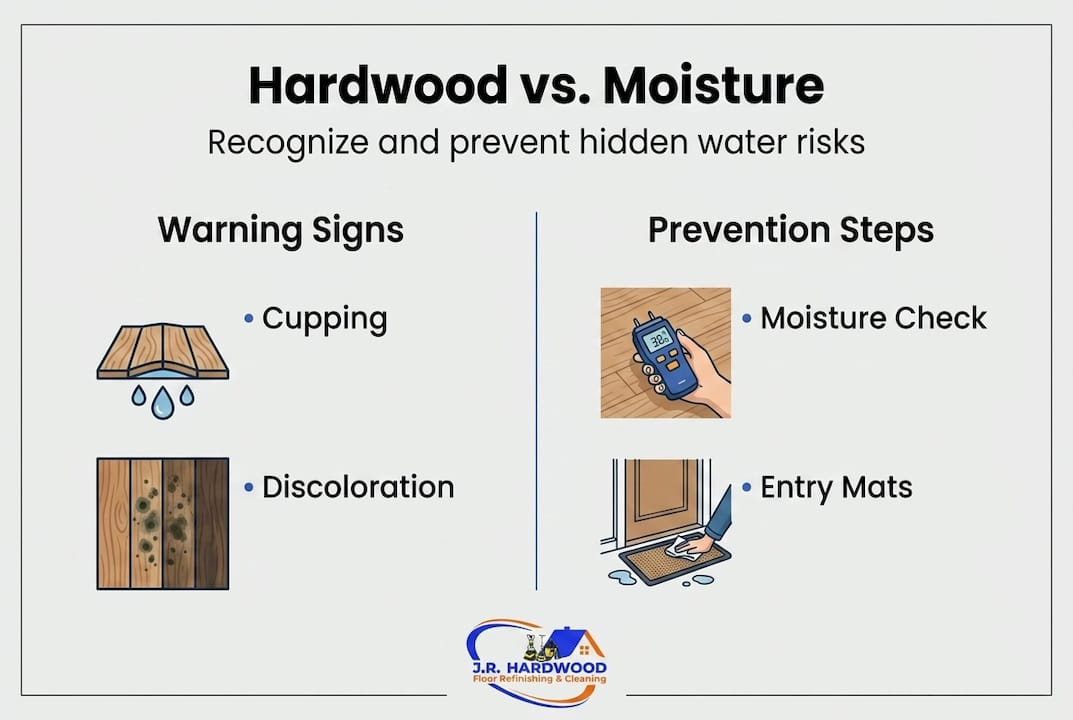
- Cupping: The edges of individual planks rise higher than the center, giving the floor a wavy, slightly concave look. This usually means the bottom of the board has more moisture than the top.
- Crowning: The opposite of cupping. The center of the board swells higher than the edges. This often happens when floors dry unevenly after a spill or after cupped floors are sanded too soon.
- Gapping: Visible spaces appear between boards. In Denver, this is especially common in winter when dry, heated air pulls moisture out of the wood and causes significant contraction.
- Buckling: Boards actually lift off the subfloor, sometimes dramatically. This is an emergency sign, usually caused by flooding or a significant plumbing leak.
- Mildew or musty odor: A sure sign that moisture has been sitting long enough to invite mold or mildew into the wood fibers or beneath the floor.
Denver homeowners often notice their floors look slightly wavy in March after a long heating season, then seem to recover once spring arrives and humidity rebounds. That cycle is normal to a point. But when you start seeing signs your floors need refinishing or warping that doesn’t bounce back, it’s a clear signal that the wood has been pushed too far.
“Ignoring a cupped floor and hoping it flattens out is like ignoring a check engine light and hoping it fixes itself. Sometimes it does. Often it doesn’t.”
Common risks in Colorado homes include everything from ice dam leaks near exterior walls to condensation from swamp coolers, two moisture sources that many homeowners overlook completely. Engineered hardwood faces an additional risk: when the layers inside the plank absorb different amounts of moisture, they can separate from each other in a process called delamination. Once that happens, the board can’t really be repaired. Understanding signs of floor restoration needs early keeps your options wide open.
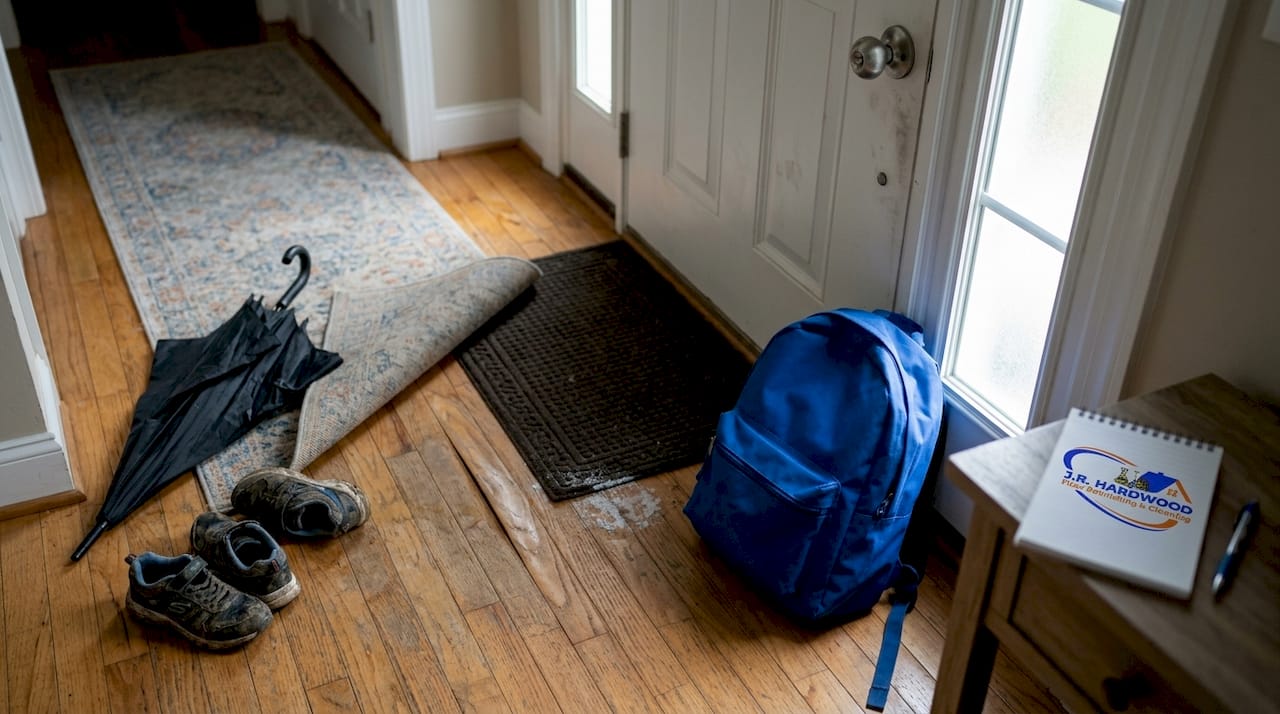
Watching for humidity damage symptoms in homes is especially important for homeowners with kids or pets who may track in snow melt, mud, or water from outside without anyone noticing right away.
Once you spot problems, the next critical question is how different types of hardwood respond and how to make the best repair decisions.
Solid vs. engineered hardwood: What survives and what doesn’t
This is where the conversation gets really practical, especially if you’re dealing with a leak, a dishwasher overflow, or any flooding situation. The type of flooring you have makes a massive difference in what’s possible after a moisture event.
| Factor | Solid hardwood | Engineered hardwood |
|---|---|---|
| Water resistance | Lower (more porous) | Slightly better surface seal |
| Post-flood salvage | Often possible with drying | Rarely possible; layers separate |
| Refinishing after damage | Yes, multiple times | Limited (thin wear layer) |
| Best locations in Denver homes | Main floors, bedrooms | Basements, kitchens (with caution) |
| Long-term durability | Excellent when maintained | Good but moisture-sensitive core |
Solid hardwood can often be salvaged after a flood, provided you act quickly, dry it thoroughly, and address the moisture source. The key word is “quickly.” Wood that sits wet for more than 24 to 48 hours starts developing mold and structural breakdown. But if you get industrial fans and dehumidifiers working fast, solid floors can be dried, re-acclimated, and then refinished to look like nothing ever happened.
Stat callout: Solid hardwood can be sanded and refinished 5 to 8 times over its lifetime, meaning even damaged floors have a long road ahead if they’re caught in time.
Engineered hardwood is built from layers of wood veneer glued together, which actually makes it more dimensionally stable under normal conditions. But that glue is the Achilles heel in a flooding scenario. Water breaks down the adhesive between layers, causing delamination that you simply cannot reverse. Once that process starts, replacement is usually the only answer.
Pro Tip: If you’re planning a renovation in a Denver basement or kitchen and you’re weighing flooring options, talk to a professional before committing to engineered hardwood. In spaces where moisture exposure is higher, LVP (luxury vinyl plank) or a properly sealed solid hardwood with the right subfloor prep may serve you better long-term. Check out our restoration tips for hardwood for more guidance on which products hold up best.
If you’ve already experienced water damage and aren’t sure what’s salvageable, our water damage floor repair resources walk through the assessment process step by step.
Now that you understand the differences, let’s dig into practical strategies to minimize moisture risks in the first place.
How to protect your hardwood from Denver’s unpredictable moisture
Protecting your floors is mostly about building good habits and staying one step ahead of the climate. Denver may be unpredictable, but your floor care routine doesn’t have to be. Here’s a step-by-step approach we recommend to every homeowner in the metro area.
- Acclimate your boards before installation. New hardwood should sit inside your home for at least 3 to 7 days before it’s installed. This lets the wood adjust to your home’s actual humidity levels before it gets nailed down.
- Test moisture before and after installation. Testing with moisture meters is not optional. It’s the only way to know your delta is within a safe range before the first board goes down.
- Maintain indoor humidity between 35% and 55%. This is the sweet spot that keeps wood stable year-round. In Denver’s winters, you may need a whole-home humidifier attached to your HVAC. In summer, a dehumidifier helps when monsoon humidity spikes.
- Respond immediately to spills and leaks. Don’t let water sit on hardwood for more than a few minutes. Dry it up, then run a fan to dry the surface completely. For bigger leaks, call a professional within 24 hours.
- Do seasonal floor checks. At least twice a year (once before winter heating season, once before summer humidity arrives), walk your floors and look for gaps, cupping, or any spots that feel soft or spongy underfoot.
- Seal and protect your finish. A good finish is like putting sunscreen on your floor. It doesn’t make the wood waterproof, but it slows moisture absorption dramatically. Keeping that finish in good shape is key.
You’ll find detailed guidance on each of these steps in our prevent hardwood floor damage guide, which is written specifically for Colorado conditions. For a big-picture view of long-term care, our restoring hardwood floors guide covers what to do when prevention wasn’t enough.
Pro Tip: Place moisture-absorbing mats at every entry point, especially during snow season. Colorado homeowners track in far more snow melt than they realize, and those entry zones are some of the most moisture-damaged areas we see on the job.
Looking for the floor care steps that actually work for long-term maintenance? We’ve laid them out in a detailed guide so you can follow along at home. And for general home moisture prevention, these tips to prevent home moisture apply beautifully to the Colorado climate as well.
With actionable tips in hand, see how our experience in the Denver area reveals what really matters for protecting and restoring hardwood floors.
The uncomfortable truth most Denver homeowners miss about moisture and hardwood
We’ve been working on floors across the Denver Metro Area for years, and we’ll be honest with you: the biggest enemy isn’t a burst pipe or a flooded basement. It’s the slow, invisible, season-after-season moisture cycling that most homeowners never think about until something goes wrong.
Here’s the pattern we see over and over. A homeowner installs beautiful new hardwood. The first winter, the heating system runs non-stop and indoor humidity drops into the low 20s. The floors shrink. Small gaps appear. In spring, humidity comes back and the gaps close. The homeowner relaxes. This cycle repeats for five or six years, and each time, the wood is stressed a little more. By year seven, the floors look tired, worn, and warped in ways that seem sudden but were actually building for years.
Denver homes with both forced-air heating and swamp coolers (evaporative coolers) have an extra layer of complexity. Those two systems push humidity in completely opposite directions, sometimes within the same week. Most homeowners never connect their swamp cooler use to their floor problems.
The other thing we wish every homeowner knew is this: moisture testing is almost never done by the homeowner. People will spend thousands on new floors and then skip the $50 moisture meter step. That 10-minute test before installation could have prevented $4,000 in repairs.
Following best floor care practices is not glamorous work. It’s checking humidity levels in January. It’s running the humidifier even when it feels like a hassle. It’s calling us when you notice a soft spot instead of waiting another year. But those small, consistent actions are what separate floors that look amazing at 20 years from floors that need replacing at 10.
Get expert help to protect and restore your hardwood floors
Moisture problems don’t have to mean the end of your hardwood floors. Whether you’re trying to prevent damage or recover from it, having the right expertise on your side makes all the difference.
We know that some homeowners want to try DIY vs. professional floor refinishing first, and we respect that. Our blog is full of detailed guides so you can make informed decisions either way. If you want a thorough walkthrough of the full process, our complete floor refinishing guide is a great place to start. And when you’re ready for a professional assessment, the hardwood floor restoration experts at J.R. Hardwood are just a call away. We offer free over-the-phone quotes and honest advice tailored to your floor’s exact condition. Let’s get those floors looking like new again.
Frequently asked questions
How much moisture is safe for hardwood floors?
A difference of more than 2 to 4% in moisture content between your floor and subfloor significantly increases the risk of damage, movement, or full floor failure.
Can engineered hardwood be saved after flooding?
Engineered hardwood is highly prone to delamination after flooding and usually needs to be replaced rather than restored, unlike solid hardwood which can often be dried and refinished.
What’s the best way to check hardwood moisture?
Use a pin or pinless moisture meter to get accurate readings from both the wood floor and the subfloor before installation and after any moisture event.
Does Denver’s climate increase hardwood floor risks?
Yes. Denver’s dry winters, high altitude, and sudden summer humidity swings create repeated expansion and contraction cycles that stress hardwood floors more than most homeowners realize, especially without proper humidity control in place.