 Skip to content
High foot traffic and rambunctious pets make hardwood floors in Denver homes vulnerable to scratches, moisture issues, and premature wear. Protecting your investment starts with understanding the unique risks your floors face, from bright Colorado sunlight to daily spills and furry companions. By applying industry-accepted floor assessment standards and practical, eco-friendly maintenance routines, you can safeguard your hardwood and keep it looking beautiful for years, no matter the challenge.
Table of Contents
- Step 1: Assess Floor Condition And Identify Risk Areas
- Step 2: Implement Eco-Friendly Cleaning And Protective Measures
- Step 3: Schedule Dustless Screen And Recoat For Added Protection
- Step 4: Verify Results And Maintain A Regular Care Routine
Quick Summary
| Key Takeaway | Explanation |
|---|---|
| 1. Assess floor regularly | Conduct monthly inspections to identify scratches or wear early, preventing larger repairs later. |
| 2. Use eco-friendly cleaners | Choose wood-specific, non-toxic cleaners that protect finishes and reduce chemical exposure. |
| 3. Schedule timely recoating | Plan a dustless screen and recoat every 5-10 years to maintain floor protection without major disruption. |
| 4. Implement moisture management | Use entrance mats and immediate spill cleanup to protect floors from moisture and humidity damage. |
| 5. Involve family in maintenance | Assign cleaning tasks to family members to establish a routine, making upkeep part of your household culture. |
Step 1: Assess floor condition and identify risk areas
Before you can prevent damage, you need to understand what you’re working with. This step involves a thorough walkthrough of your hardwood floors to spot current wear, potential problem zones, and conditions that could lead to future damage.
Start by examining your floors in natural light. Bright daylight reveals scratches, dull spots, and finish wear that overhead lighting might hide. Walk through each room slowly, paying attention to how the light reflects off the surface.
Look for these visible signs of wear and damage:
- Surface scratches and light gouges in the polyurethane layer
- Dull or worn areas where the protective finish is thinning
- Water stains or discoloration from spills or humidity
- Gaps between boards indicating moisture changes
- Soft or spongy spots that might suggest moisture damage beneath the surface
Now identify your high-risk zones. These are areas where damage happens fastest because of traffic patterns, environmental conditions, or household activities.
High-traffic zones include hallways, doorways, and spaces near the kitchen. Kitchens and bathrooms face moisture exposure, while rooms with large windows experience UV damage from sunlight. Pet areas take a beating from paws and accidents. Entryways are ground zero for dirt and moisture tracked in from outside.
Following industry-accepted floor assessment standards helps you recognize conditions that can lead to serious damage, such as moisture issues or structural deficiencies. Understanding these baseline conditions is crucial for planning effective maintenance.
Check for moisture problems by looking beneath furniture and in corners. Moisture is hardwood’s biggest enemy, causing warping and cupping. Dark spots, musty odors, or soft wood suggest active moisture damage.
Here’s a quick reference comparing typical hardwood floor issues and their causes:
| Issue Type | Likely Cause | Recommended Action |
|---|---|---|
| Surface scratches | Foot traffic, pets | Screening and recoating |
| Water stains | Spills, humidity | Immediate cleanup, assess |
| Gaps between boards | Seasonal moisture changes | Humidity management |
| UV damage | Sunlight exposure | UV-blocking treatments |
| Soft spots | Unseen moisture | Professional evaluation |
Your assessment right now becomes the foundation for all your prevention efforts—knowing your floor’s baseline condition tells you exactly what needs protection.
If you notice significant bare wood, deep gouges, or widespread warping, your floor may need professional restoration. That’s where a service like floor refinishing assessment can help determine whether screening and recoating or full refinishing is the right call.
Pro tip: Take photographs of your floors from multiple angles and in different lighting—this visual record helps you track changes over time and provides clear information if you contact a professional for assessment or service quotes.
Step 2: Implement eco-friendly cleaning and protective measures
Now that you know your floor’s condition, it’s time to establish a cleaning routine that protects without harming the environment. Smart cleaning and preventive measures are your daily defense against damage.
Start with the right cleaning approach. Sweep or vacuum regularly to remove dirt and debris that scratch floors when walked on. Use a microfiber dust mop for quick cleanups between deeper cleaning sessions.
When it’s time to clean, follow these practices:
- Use wood-specific cleaners designed for hardwood finishes, not all-purpose products
- Avoid wet mops or steam cleaners, which introduce excessive moisture that causes warping
- Quickly wipe spills with a barely damp cloth to prevent water damage
- Never let liquids sit on the surface
Choosing eco-friendly cleaning products specifically made for wood finishes keeps your floors safe while reducing chemical residue and environmental impact. These mild, non-toxic cleaners work effectively without compromising the floor’s integrity.
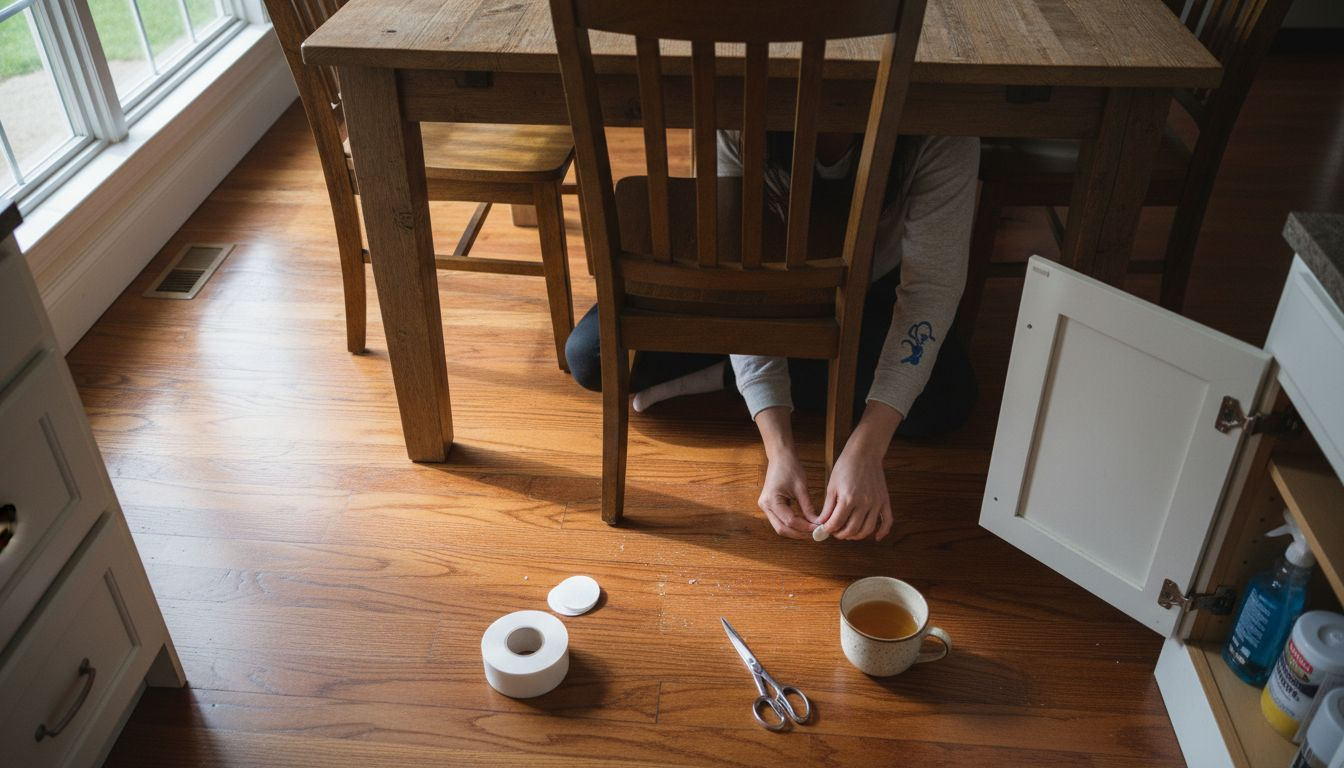
Protection goes beyond cleaning. Furniture pads are game-changers for preventing scratches. Place them under all chair legs, table bases, and furniture that moves frequently. Replace worn pads before they start dragging on the floor.
Manage moisture carefully in high-risk areas. Use entrance mats to catch dirt and moisture at doorways. In kitchens and bathrooms, wipe spills immediately and ensure proper ventilation to reduce humidity. Consider a dehumidifier in damp seasons or if you live in humid Colorado climates.
Sunlight causes UV damage and fading. Close blinds or install UV-blocking window treatments in rooms with large windows, especially during peak sun hours.
Regular preventive care using eco-friendly methods costs far less than damage repair and keeps your floors beautiful without toxic chemicals.
For high-traffic areas and pet zones, more frequent cleaning prevents dirt buildup that leads to scratches and dulling. Establish a routine that becomes second nature, not a burden.
Pro tip: Keep a small cleaning kit near your kitchen and bathrooms with microfiber cloths, wood cleaner, and absorbent towels so spill cleanup happens instantly before water can penetrate the finish.
Step 3: Schedule dustless screen and recoat for added protection
After months or years of daily wear, your floor’s protective finish starts breaking down. A dustless screen and recoat refreshes that protection without the disruption of full refinishing. This is your spa day for hardwood floors.
Understand what this service does. Screening lightly abrades the existing finish to remove surface imperfections, dull spots, and minor scratches. Recoating applies a fresh layer of finish that restores shine and protection. The result is a floor that looks revitalized while extending its lifespan by 3 to 5 years.
This approach works best when:
- Your floor shows light scratches but no bare wood is visible
- The finish is dull or worn in high-traffic areas
- You want protection without major disruption
- Pet damage or wear is noticeable but not deep
Timing matters. Don’t wait until your floor is severely damaged. Plan a screen and recoat when you notice dulling or light wear, not after deep gouges appear. Most homeowners benefit from scheduling this every 5 to 10 years depending on traffic and pets.
The dustless screening and recoating process involves carefully sanding the surface, cleaning thoroughly, and applying compatible finishes that restore protection and appearance with minimal disruption to your home. Following professional application standards ensures optimal results and proper durability of the new finish.
When you contact a professional, have information ready. Describe your floor’s current condition, any problem areas, and your preferred finish type (satin, semi-gloss, high gloss, or matte). Many services offer free quotes based on photos and simple descriptions.
A well-timed screen and recoat hits the reset button on your floor’s protection before damage becomes expensive.
The entire service typically completes in one day, letting your family return to normal routines quickly. This beats the inconvenience and cost of waiting until full refinishing becomes necessary.
Consider the season. Schedule during times when you can minimize floor traffic while finishes cure. Summer works well in Denver, but autumn avoids peak refinishing seasons when pros book faster.
Pro tip: Schedule your screen and recoat service right after deep cleaning when you can clearly see your floor’s condition, making it easier to spot problem areas and communicate them to the professional.
Step 4: Verify results and maintain a regular care routine
Your prevention efforts only work if you stick with them. This step involves checking that your protective measures are actually working and establishing a routine that becomes automatic.
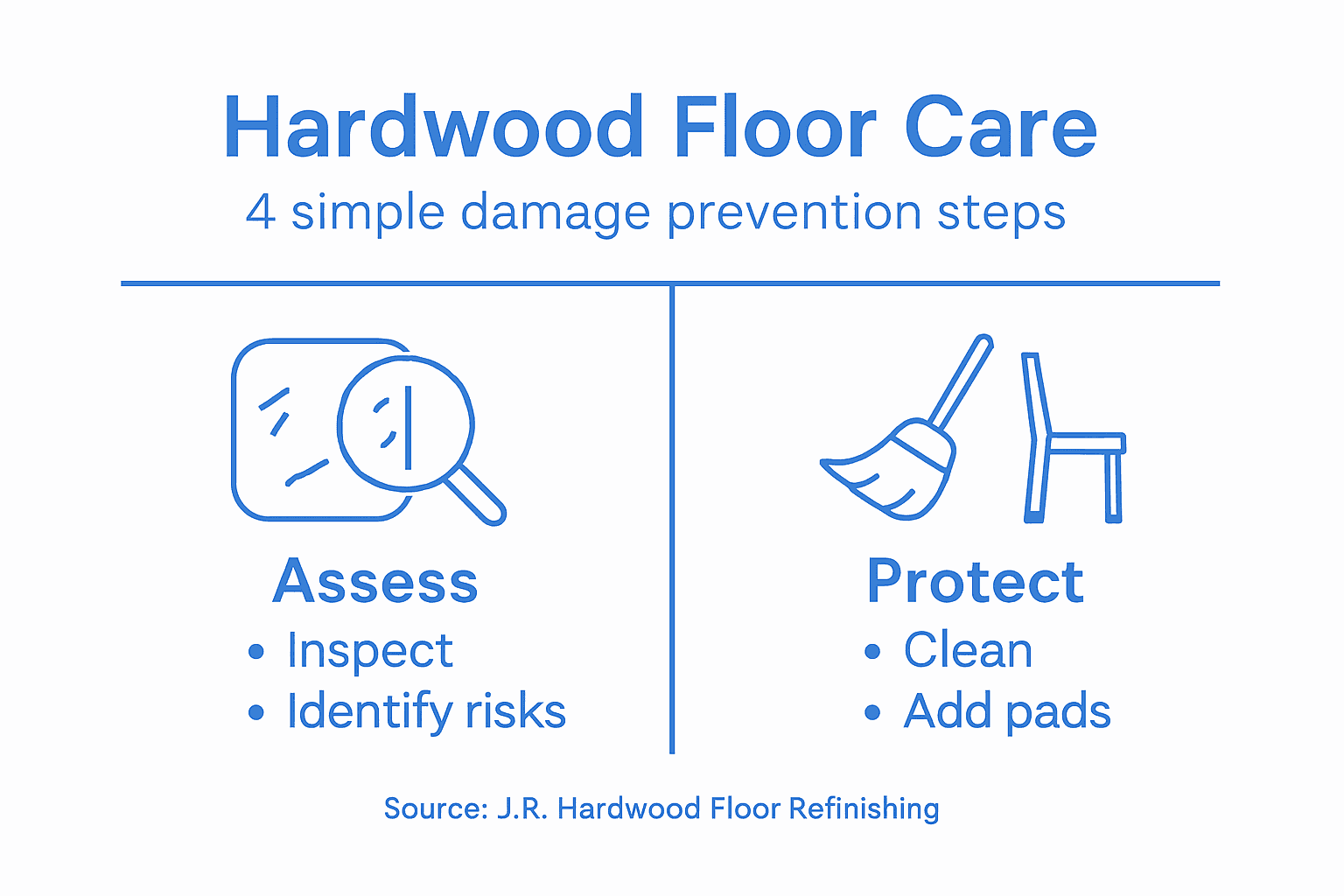
Start with visual inspections. Walk your floors in natural light every month to spot changes. Look for new scratches, dull patches, water stains, or areas where the finish is wearing faster than expected. Early detection prevents small problems from becoming expensive repairs.
Your monthly inspection checklist:
- Check for scratches or gouges in high-traffic zones
- Look for dull or worn finish areas
- Scan for water stains or discoloration
- Feel for soft spots indicating moisture damage
- Inspect furniture pads to ensure they’re still protecting
Now establish your daily and weekly routine. Daily dry cleaning through sweeping or dust mopping takes 10 minutes and prevents dirt buildup that causes scratches. Weekly vacuuming targets corners and under furniture where debris hides. Monthly cleaning with wood-specific products maintains shine and protection.
Following comprehensive hardwood floor maintenance guidelines ensures your care routine protects your investment over time. Consistent practices like immediate spill cleanup, controlled humidity, and preventive measures preserve your floor’s condition for years.
Documentation helps you stay accountable. Create a simple calendar marking when you vacuum, clean, and inspect. Note any areas of concern or changes you observe. This record proves invaluable if professional service becomes necessary.
To help establish a consistent care routine, here’s a summary of suggested maintenance intervals:
| Frequency | Task | Purpose |
|---|---|---|
| Daily | Sweep or dust mop | Remove dirt and particles |
| Weekly | Vacuum corners and edges | Prevent hidden debris |
| Monthly | Inspect in natural light | Spot early floor issues |
| Annually | Professional inspection | Catch unseen problems |
| 5-10 years | Screen and recoat | Refresh protective finish |
Adapt your routine seasonally. Colorado’s dry winters require humidity management with a humidifier to prevent gaps. Summer heat means closing blinds during peak sun hours. Spring and fall bring increased foot traffic and dirt tracked inside, so increase vacuuming frequency.
Consistency matters more than intensity. A quick daily sweep prevents more damage than occasional deep cleaning.
Involve your family in maintenance. Assign tasks, explain why they matter, and celebrate your beautiful floors. When everyone understands the routine, it becomes part of your household culture, not a chore.
Consider professional inspections annually. Experts spot issues you might miss and recommend when maintenance services become worthwhile.
Pro tip: Set phone reminders for your monthly inspection and weekly vacuuming schedule so prevention becomes automatic and your floors stay protected without requiring constant mental effort.
Protect Your Hardwood Floors with Expert Care from J.R. Hardwood Floor Refinishing & Cleaning
If you want to extend the life of your hardwood floors and prevent costly damage from scratches, moisture, and wear, professional maintenance is essential. At J.R. Hardwood Floor Refinishing & Cleaning, we understand how important it is to assess your floor’s condition accurately, implement eco-friendly cleaning, and schedule timely screen and recoat services to maintain lasting beauty. Explore our Uncategorized Archives to learn more about smart floor care solutions that match the prevention strategies you just read about.
Don’t wait until damage worsens and repairs become expensive. Visit https://www.jrhardwoodfloorrefinishingandcleaning.com/ now and request your free over-the-phone quote. Our expert team uses premium, eco-friendly products and modern techniques to restore and protect your floors with precision and care. Take action today to keep your hardwood floors beautiful and strong for years to come.
Frequently Asked Questions
How can I assess the condition of my hardwood floors?
To assess the condition of your hardwood floors, conduct a thorough inspection in natural light. Look for scratches, dull spots, water stains, gaps between boards, and any soft spots that could indicate moisture damage.
What are effective eco-friendly cleaning methods for hardwood floors?
Effective eco-friendly cleaning methods include using a microfiber cloth for dusting and wood-specific cleaners that are non-toxic. Sweep or vacuum regularly to remove dirt and debris that can scratch the surface, and quickly wipe up spills with a barely damp cloth to prevent water damage.
How often should I schedule dustless screening and recoating for my hardwood floors?
You should schedule dustless screening and recoating every 5 to 10 years, depending on foot traffic and pets. This process refreshes the protective finish and can extend the lifespan of your hardwood floors by 3 to 5 years.
What steps can I take to prevent UV damage to my hardwood floors?
To prevent UV damage, close blinds or install UV-blocking window treatments in rooms with large windows during peak sun hours. Regularly rotating rugs and furniture placement can also help minimize direct sunlight exposure on your floors.
How can I create a regular maintenance routine for my hardwood floors?
Create a regular maintenance routine by sweeping or dust mopping daily, vacuuming weekly, and inspecting for damage monthly. Document your maintenance tasks on a calendar to stay accountable and ensure your floors remain protected over time.
What should I do if I notice significant wear or damage on my hardwood floors?
If you notice significant wear or damage, such as deep gouges or widespread warping, consider contacting a professional for an assessment. They can help determine whether screening and recoating or full refinishing is appropriate to restore your floors.