 Skip to content
TL;DR:
- Hardwood offers a longer lifespan and higher resale value, but costs more initially than LVP.
- LVP is waterproof and low-maintenance, making it ideal for moisture-prone or high-traffic areas.
Luxury vinyl plank (LVP) is a fully synthetic, waterproof flooring made from PVC layers with a photographic wood-grain print on top, while hardwood is a natural wood product available as solid planks or engineered boards with a real wood veneer. The LVP vs hardwood comparison comes down to five core factors: cost, lifespan, water resistance, aesthetics, and resale value. Solid hardwood species like white oak and maple have been the gold standard for decades. Engineered hardwood adds a plywood core for better moisture stability. LVP has closed the visual gap considerably, but the two materials still perform very differently over time. Your home’s location, lifestyle, and long-term goals should drive the final call.
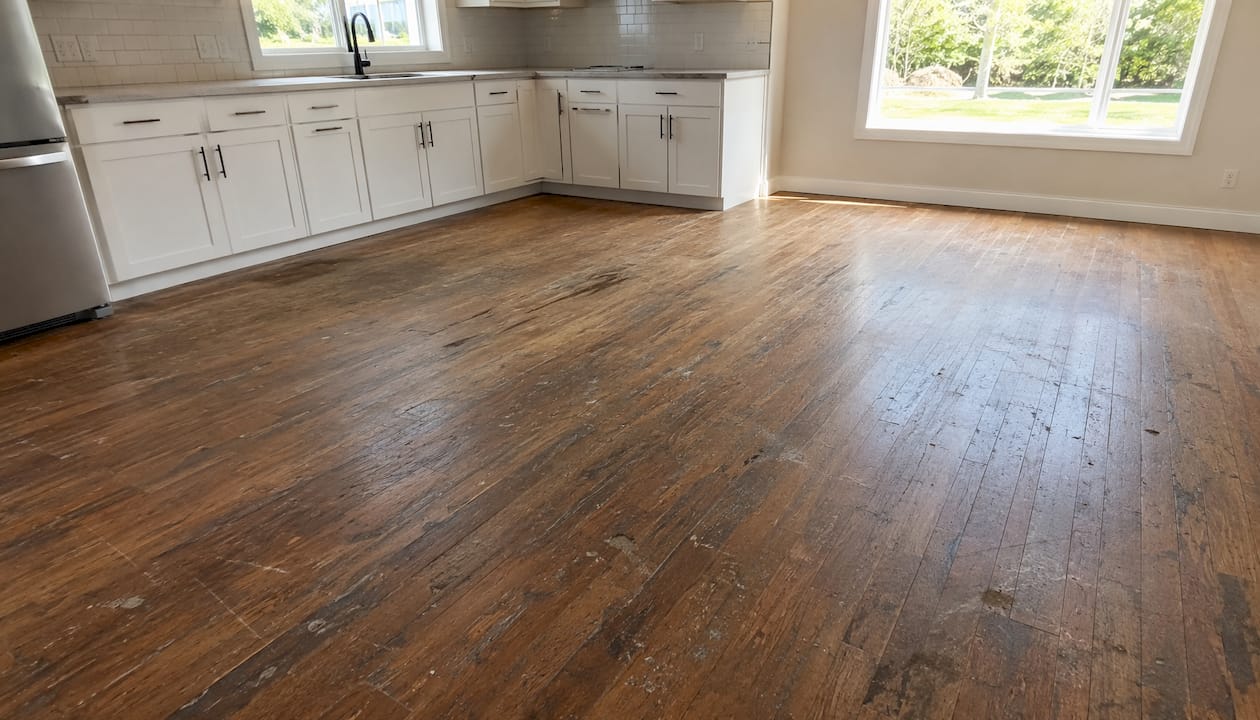
1. How do LVP and hardwood compare on cost and lifespan?
Cost is the first number most homeowners look at, and the gap is real. Installed LVP runs $4.50–$9.50 per square foot, while standard hardwood lands at $7.00–$18.00 per square foot. Exotic hardwood species can exceed $35.00 per square foot installed. On a 500-square-foot project, that translates to roughly $2,250–$4,750 for LVP versus $3,500–$9,000 or more for hardwood.
Lifespan changes the math significantly. Hardwood lasts 50–100+ years and can be refinished three to six times over its life. LVP lasts 15–25 years and cannot be refinished. When it wears out, you replace it entirely.
The 20-year math is where things get interesting. Over 20 years, total LVP costs run $10,400–$11,700 when you factor in one replacement cycle. Hardwood over the same period runs $10,400–$12,700 including one refinishing. The gap is smaller than most people expect.
Pro Tip: Before choosing based on sticker price alone, calculate your 20-year cost by adding installation, one refinishing for hardwood at $3–$5 per square foot, or one full replacement for LVP. The long-term numbers often surprise people.
| Category | LVP | Hardwood |
|---|---|---|
| Installed cost per sq ft | $4.50–$9.50 | $7.00–$18.00+ |
| Expected lifespan | 15–25 years | 50–100+ years |
| Refinishable | No | Yes, 3–6 times |
| 20-year total cost (500 sq ft) | $10,400–$11,700 | $10,400–$12,700 |
2. What are the key durability and maintenance differences?
Scratch resistance works differently for each material. LVP relies on its wear layer, a clear protective coating measured in mils. A wear layer below 12 mil dulls and scratches prematurely. Hardwood scratches more easily on the surface but can be sanded and refinished to look brand new. That refinishing ability is hardwood’s biggest durability advantage over time.
Here is how the two materials compare on common wear issues:
- Scratches: LVP resists light scratches better short-term. Hardwood shows scratches faster but recovers fully with refinishing.
- Dents: Both dent under heavy impact. Softer wood species like pine dent more easily than harder species like hickory.
- Fading: LVP can fade under prolonged UV exposure. Hardwood develops a natural patina that many homeowners find appealing.
- Noise: LVP floating floors can produce a hollow clicking sound underfoot. Acoustic underlayment costing $0.50–$1.50 per square foot reduces that noise significantly.
- Cleaning: LVP needs only sweeping and damp mopping. Hardwood requires pH-neutral cleaners and periodic refinishing to maintain its finish.
Maintenance commitment is a real lifestyle factor. Hardwood asks more of you over time, but it rewards that effort with a floor that can outlast the house’s other finishes. LVP is the low-maintenance option, but replacement is the only fix when it wears through.
Pro Tip: Choose a 20-mil or thicker wear layer for any LVP going into a home with pets or kids. For hardwood, harder species like white oak or hickory handle high-traffic areas far better than softer woods like pine.
3. How does water resistance influence the choice?
LVP is 100% waterproof. That single fact makes it the clear winner for kitchens, bathrooms, laundry rooms, and basements. Spills sit on the surface and wipe away cleanly. Even prolonged moisture exposure does not damage the planks themselves, though standing water can still seep into subfloor gaps at seams.
Hardwood and water are not friends. Hardwood requires 35–55% relative humidity indoors to stay stable. Drop below that range and planks shrink and crack. Exceed it and they swell, cup, or warp. This is a real concern in Colorado, where Denver Metro winters bring very dry indoor air and summer monsoons spike humidity quickly.
Engineered hardwood handles moisture better than solid hardwood because its plywood core is more dimensionally stable. Still, engineered hardwood is moisture-resistant, not waterproof. A flooded basement will ruin it just as surely as solid hardwood.
For moisture-prone rooms, LVP is the recommended choice by most flooring professionals. If you want the look of wood in a basement or bathroom, LVP is the practical answer. You can find detailed guidance on waterproof basement flooring options specific to Colorado homes.
4. What are the aesthetic and resale value considerations?
Hardwood has a visual quality that LVP still cannot fully replicate. Real wood grain varies plank by plank, develops a living patina over decades, and carries a warmth that feels different underfoot. That tactile quality matters to buyers and appraisers alike.
LVP has improved dramatically. Premium LVP products now use 10–20 unique plank prints to simulate random wood grain and reduce visible pattern repetition. Budget LVP with short pattern repeats looks artificial in large rooms, especially in open-plan spaces where the eye can scan a wide area. Opening planks from multiple boxes and blending them during installation reduces that repetition noticeably.
“Hardwood floors consistently rank in the top five features homebuyers want most. Hardwood adds 2–5% to home resale value, while LVP carries a neutral to positive but lower premium. For sellers, that difference can mean thousands of dollars at closing.”
The resale math favors hardwood in higher-end markets. Hardwood adds 2–5% to resale value, and buyers in the Denver Metro market respond strongly to real wood floors. LVP is increasingly accepted, but it does not carry the same prestige signal. If you are thinking about how hardwood affects home value, the premium is consistent and well-documented. A home renovation that factors in eco-friendly upgrades alongside flooring choices can further strengthen its appraisal position.
5. Where is each flooring type best suited?
The smartest approach most designers recommend is a hybrid strategy. Hardwood belongs in high-visibility areas like living rooms, dining rooms, and primary bedrooms. LVP belongs in moisture-prone and high-traffic zones. That combination gives you the aesthetic and resale benefits of hardwood where buyers look first, and the practical durability of LVP where water and wear are daily realities.
Here is a room-by-room breakdown:
- Living room and dining room: Hardwood. Buyers see these rooms first and they drive resale perception.
- Primary bedroom: Hardwood. Low moisture risk and high aesthetic payoff.
- Kitchen: LVP. Spills, steam, and foot traffic make waterproofing a priority.
- Bathrooms: LVP only. Hardwood should never go in a full bathroom.
- Basement: LVP. Even a finished basement carries moisture risk that hardwood cannot handle reliably.
- Rental units: LVP. Easier to clean, more resistant to tenant wear, and cheaper to replace between tenants.
- Home offices: Either works. Choose based on your subfloor condition and budget.
Lifestyle factors matter just as much as room type. Homes with large dogs or young children benefit from LVP’s scratch resistance and easy cleanup in active zones. Homes focused on long-term resale value benefit from hardwood in the rooms that appraisers and buyers notice most.
Pro Tip: When combining both flooring types, use a T-molding transition strip at doorways and match the LVP color tone as closely as possible to your hardwood. A cohesive color palette across both materials makes the home feel unified rather than patched together.
Key takeaways
The most practical flooring strategy for most homes combines hardwood in living spaces for resale value and LVP in wet or high-traffic zones for durability and waterproofing.
| Point | Details |
|---|---|
| Cost gap narrows over time | LVP is cheaper upfront, but 20-year total costs for both materials often converge. |
| Hardwood is refinishable | Hardwood can be sanded and recoated 3–6 times, extending its life to 50–100+ years. |
| LVP wins on water resistance | LVP is 100% waterproof and the right choice for kitchens, bathrooms, and basements. |
| Hardwood leads on resale value | Hardwood adds 2–5% to home resale value; LVP carries a lower premium with buyers. |
| Hybrid strategy works best | Use hardwood in visible living areas and LVP in wet or high-traffic zones for the best balance. |
What I’ve learned after years of working with both floors
After working on hundreds of floors across the Denver Metro area, I can tell you the biggest mistake homeowners make is treating this as a purely financial decision. The numbers matter, but so does how you actually live in your home.
I have seen people install LVP throughout a beautiful older home to save money, then feel a quiet disappointment every time they walk in. Real wood has a presence that is hard to quantify but easy to feel. On the flip side, I have seen hardwood installed in a basement rental unit that warped within two years because the owner did not account for Colorado’s humidity swings. That was an expensive lesson.
My honest recommendation is this: do not pick one material for your whole house. Use hardwood where it earns its keep, in the rooms that define how your home feels and how buyers will perceive it. Use LVP where practicality wins, in the rooms that take the most abuse. That hybrid approach gives you the best of both worlds without overpaying for aesthetics in a laundry room or sacrificing resale value in your living room.
One more thing. Whether you choose hardwood or LVP, professional installation and proper care make a bigger difference than most people realize. A well-installed and well-maintained hardwood floor at year 20 looks better than a poorly installed one at year five. The material is only half the story.
— J.R.
Jrhardwoodfloorrefinishingandcleaning: professional floor care for both materials
Whether you land on hardwood or LVP, the quality of installation and ongoing care determines how long your floor performs and how good it looks.
At Jrhardwoodfloorrefinishingandcleaning, we install both hardwood and LVP across the Denver Metro area, from Parker and Castle Rock to Boulder and Colorado Springs. We also refinish and restore hardwood floors using eco-friendly products and UV-curable finishes that protect your investment for years. If your existing hardwood needs a refresh rather than a full replacement, our screen and recoat or full sanding services can give it a new life at a fraction of replacement cost. Call us for a free over-the-phone quote and we will help you figure out the right path for your specific floor and budget.
FAQ
What is the main difference between LVP and hardwood?
LVP is a synthetic, 100% waterproof product made from PVC layers, while hardwood is a natural wood product that can be refinished but is sensitive to moisture. Hardwood lasts 50–100+ years with proper care; LVP lasts 15–25 years before needing replacement.
Is LVP cheaper than hardwood over time?
LVP costs less upfront, but over 20 years the total costs often converge. Hardwood’s refinishability means you avoid full replacement costs, which closes the gap significantly on longer timelines.
Can hardwood floors be installed in a kitchen or bathroom?
Solid hardwood is not recommended for kitchens or bathrooms due to moisture sensitivity. Engineered hardwood can work in kitchens with careful maintenance, but LVP is the safer and more practical choice for any moisture-prone room.
Does hardwood flooring increase home resale value more than LVP?
Hardwood consistently adds 2–5% to home resale value and ranks in the top five features buyers want most. LVP has growing buyer acceptance but does not carry the same resale premium in most markets.
What LVP wear layer thickness should I choose for a home with pets?
Choose a wear layer of 20 mil or thicker for homes with pets or children. Wear layers below 12 mil scratch and dull prematurely under heavy use, requiring earlier replacement.